Alaska Ownership Correction
Overview of this form
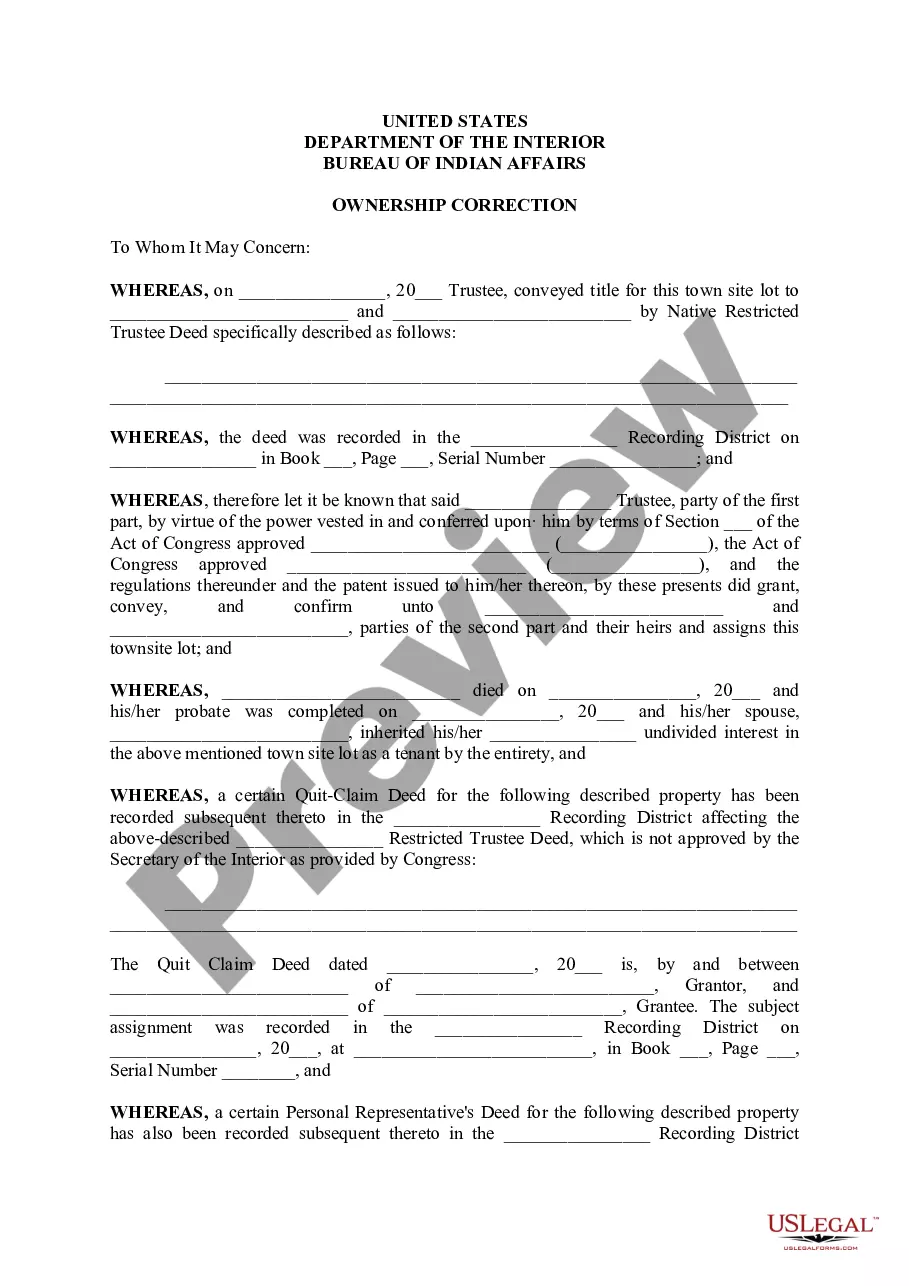
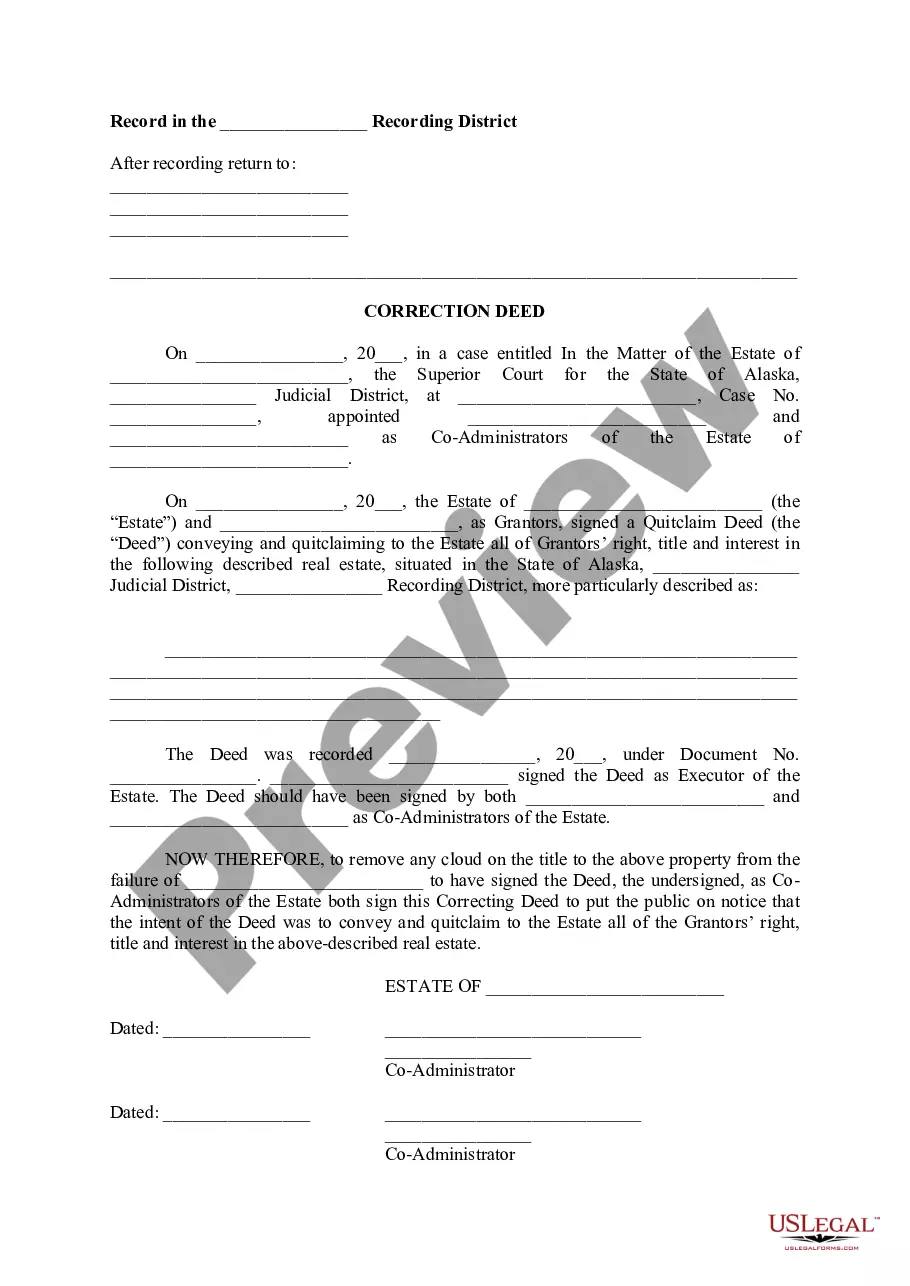
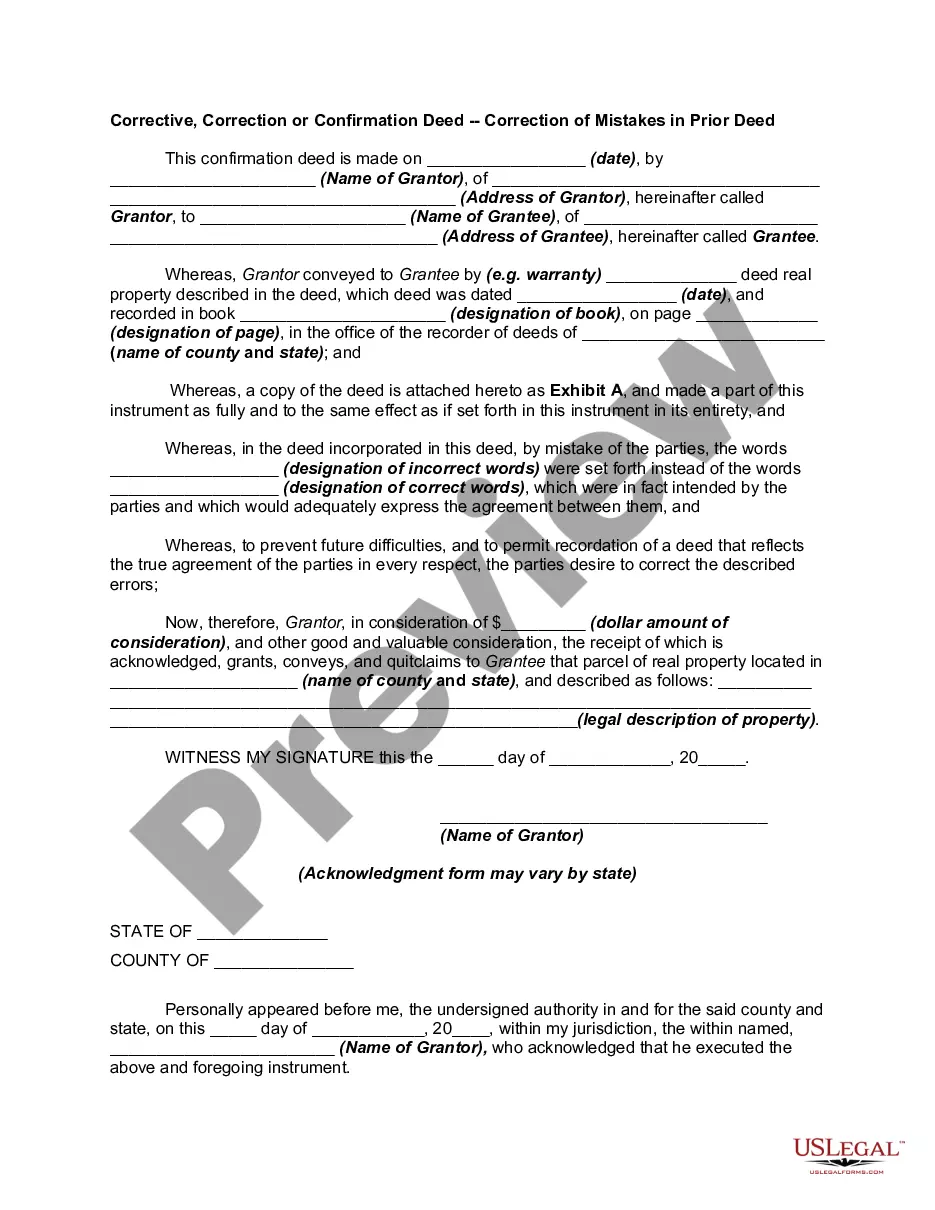
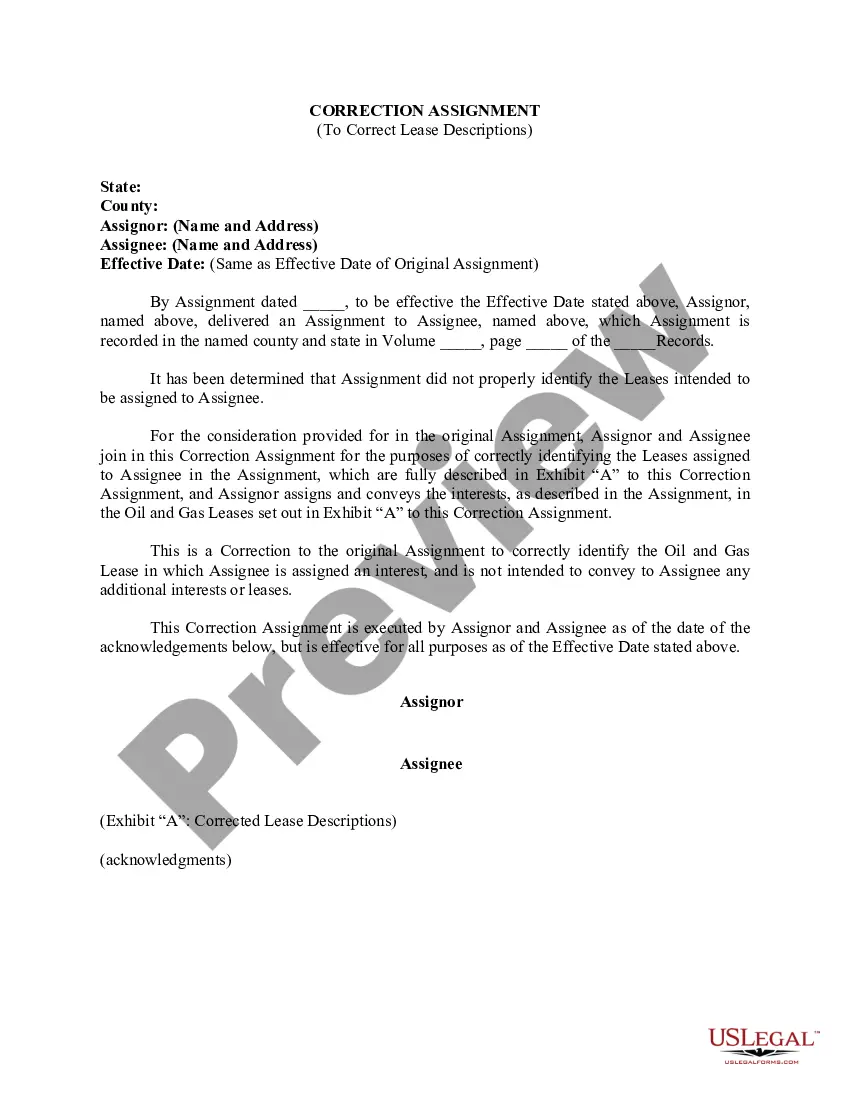
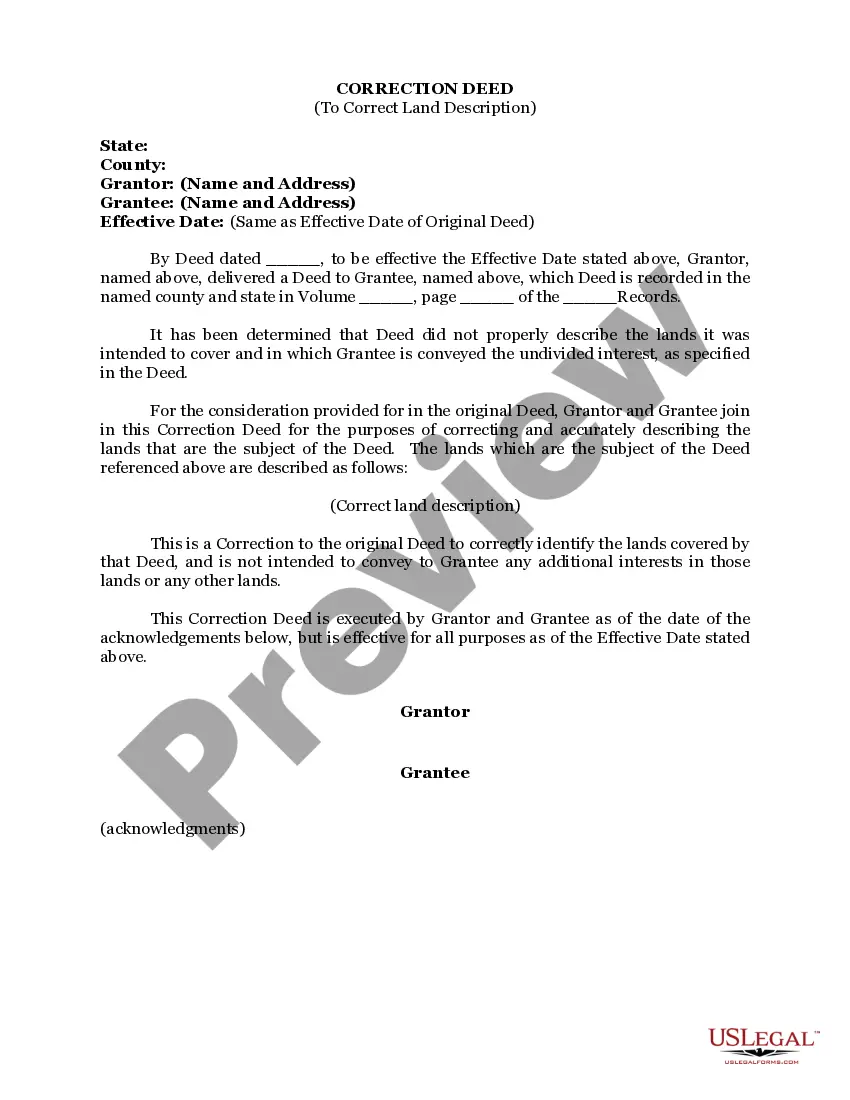
The Ownership Correction form is a legal document used to rectify defects in property deeds that may affect the title to real estate. This form is essential for addressing errors without transferring ownership on its own. It differs from other property transfer documents as it specifically targets correcting inaccuracies in existing deeds rather than facilitating a new transfer of ownership.
Key parts of this document
- Date of the original deed conveyance.
- Names of the parties involved in the original deed.
- Details of the townsite lot and its legal description.
- Information regarding recorded quit-claim and personal representative's deeds.
- Authority declaration from the Regional Director of the Bureau of Indian Affairs.
- Notary acknowledgment section for verifying signatures.



When this form is needed
This form should be utilized when there are discrepancies in a property deed, such as incorrect names, missing heirs, or unapproved transfers that affect the title. It is particularly relevant if one party passes away, leaving behind an undivided interest in the property, or if other deeds have been recorded that are not recognized by the law. Using this form helps clarify ownership and ensure compliance with legal requirements.
Who should use this form
- Property owners looking to correct errors in their title deeds.
- Heirs or beneficiaries needing to clarify inheritance rights following a relative's death.
- Legal representatives of estates dealing with unapproved conveyances.
- Anyone who has recently recorded a deed that requires official correction.
How to complete this form
- Identify the original deed's date and parties involved.
- Accurately provide the legal description of the property.
- List any other recorded deeds affecting the title.
- Have the Regional Director sign to affirm the ownership correction.
- Obtain notarization to validate the document.
Does this document require notarization?
Yes, this form must be notarized to be legally valid. Notarization confirms the identity of the signers and ensures the documentâs authenticity. US Legal Forms offers integrated online notarization services, providing secure video calls with notaries available 24/7 without the need for travel.
Get your form ready online
Our built-in tools help you complete, sign, share, and store your documents in one place.
Make edits, fill in missing information, and update formatting in US Legal Forms—just like you would in MS Word.
Download a copy, print it, send it by email, or mail it via USPS—whatever works best for your next step.
Sign and collect signatures with our SignNow integration. Send to multiple recipients, set reminders, and more. Go Premium to unlock E-Sign.
If this form requires notarization, complete it online through a secure video call—no need to meet a notary in person or wait for an appointment.
We protect your documents and personal data by following strict security and privacy standards.

Make edits, fill in missing information, and update formatting in US Legal Forms—just like you would in MS Word.

Download a copy, print it, send it by email, or mail it via USPS—whatever works best for your next step.

Sign and collect signatures with our SignNow integration. Send to multiple recipients, set reminders, and more. Go Premium to unlock E-Sign.

If this form requires notarization, complete it online through a secure video call—no need to meet a notary in person or wait for an appointment.

We protect your documents and personal data by following strict security and privacy standards.
Mistakes to watch out for
- Failing to include the correct names of all parties involved in the original deed.
- Omitting essential details about the property description.
- Not properly notarizing the document before submission.
- Using outdated or incorrect dates in the document.
Benefits of using this form online
- Convenient access to the form for quick downloading.
- Editable fields allow for easy customization to fit specific needs.
- Legal templates created by licensed attorneys ensure compliance with regulations.
- Eliminates the need for in-person visits to a lawyerâs office.
Key takeaways
- The Ownership Correction form is essential for resolving deed errors.
- It cannot transfer ownership but ensures clarity regarding title issues.
- Correctly completing the form can prevent future legal complications.
- Obtain notarization for the document to ensure its legal validity.
Looking for another form?

Form popularity
FAQ
Sign the title and date it. Print out an Application for Title and Registration, and take that along with the signed and dated title to the DMV office. Pay the $15 transfer fee. Note that if there is a lien on the vehicle, an additional $15 fee is charged.
Go to your local DMV office. Complete Form 809 (Affidavit of Lost, Stolen or Destroyed Title) while being witnessed by a DMV employee. If necessary, provide proof of the release of the lien on the car. Pay the fee ($15 per title, payable with cash, check, money order or credit/debit card in most instances)
On the title where it says Signature(s) of all purchaser(s), all persons who are buying the car should sign their names. Next to that, the seller should sign their name. On the next line, all buyers and sellers should print their names.
In simple situations where you own the vehicle outright and wish to transfer ownership to someone else, all you must do is complete a title certificate. Once you have filled out and signed the certificate, the buyer or recipient can take the title to a local DMV office and officially transfer ownership.
You can transfer it online if the previous owner has submitted the notice of disposal. If the notice of disposal has not been submitted by the seller you can still complete this transaction at a service centre within 14 days from the date of purchase to avoid a late transfer fee.
Only sign in the Seller's signature section, NEVER sign in the Buyer's section. Sign your title exactly as your name is listed on the front of the title.
Sign the title and date it. Print out an Application for Title and Registration, and take that along with the signed and dated title to the DMV office. Pay the $15 transfer fee. Note that if there is a lien on the vehicle, an additional $15 fee is charged.
Is a bill of sale required in California? While a bill of sale is not a legal requirement in California, it's a good idea to have one if you sell or purchase a vehicle. There is no specific form required, but the California Department of Motor Vehicles (DMV) has a bill of sale form.
Yes, an Alaska bill of sale is required to register a motor vehicle.If you're buying the vehicle from a private party, you will also need a lien release, an odometer disclosure statement, and proof of previous registration.