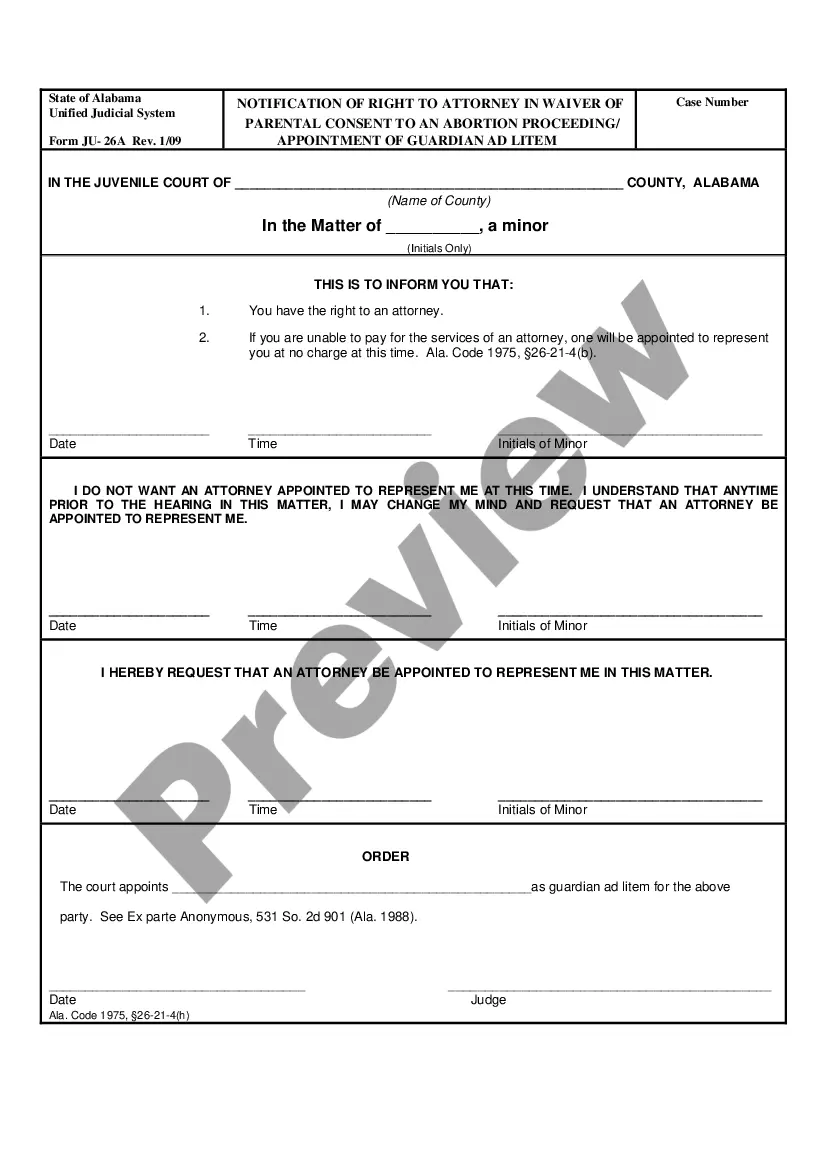
Alaska Owner's or Seller's Affidavit of No Liens
About this form
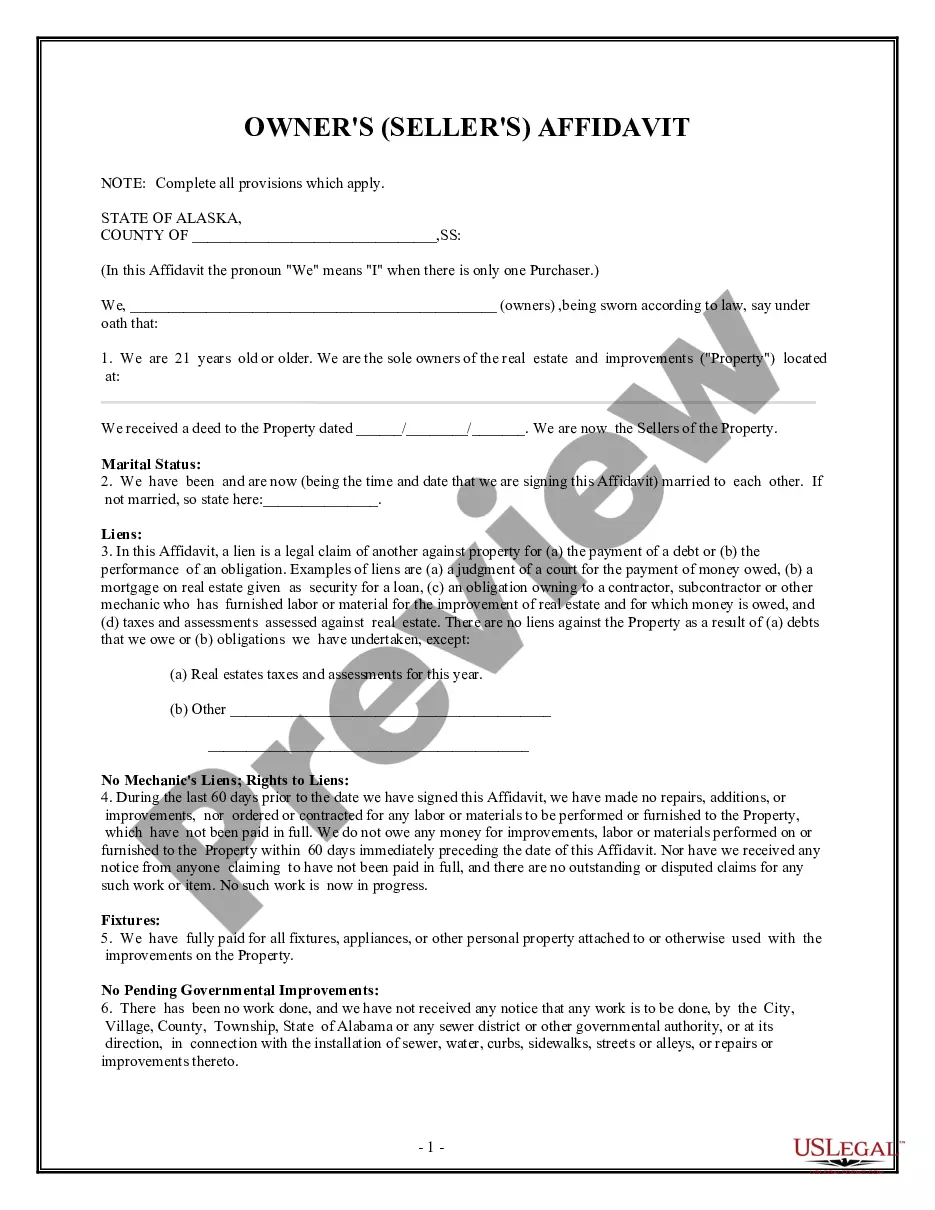
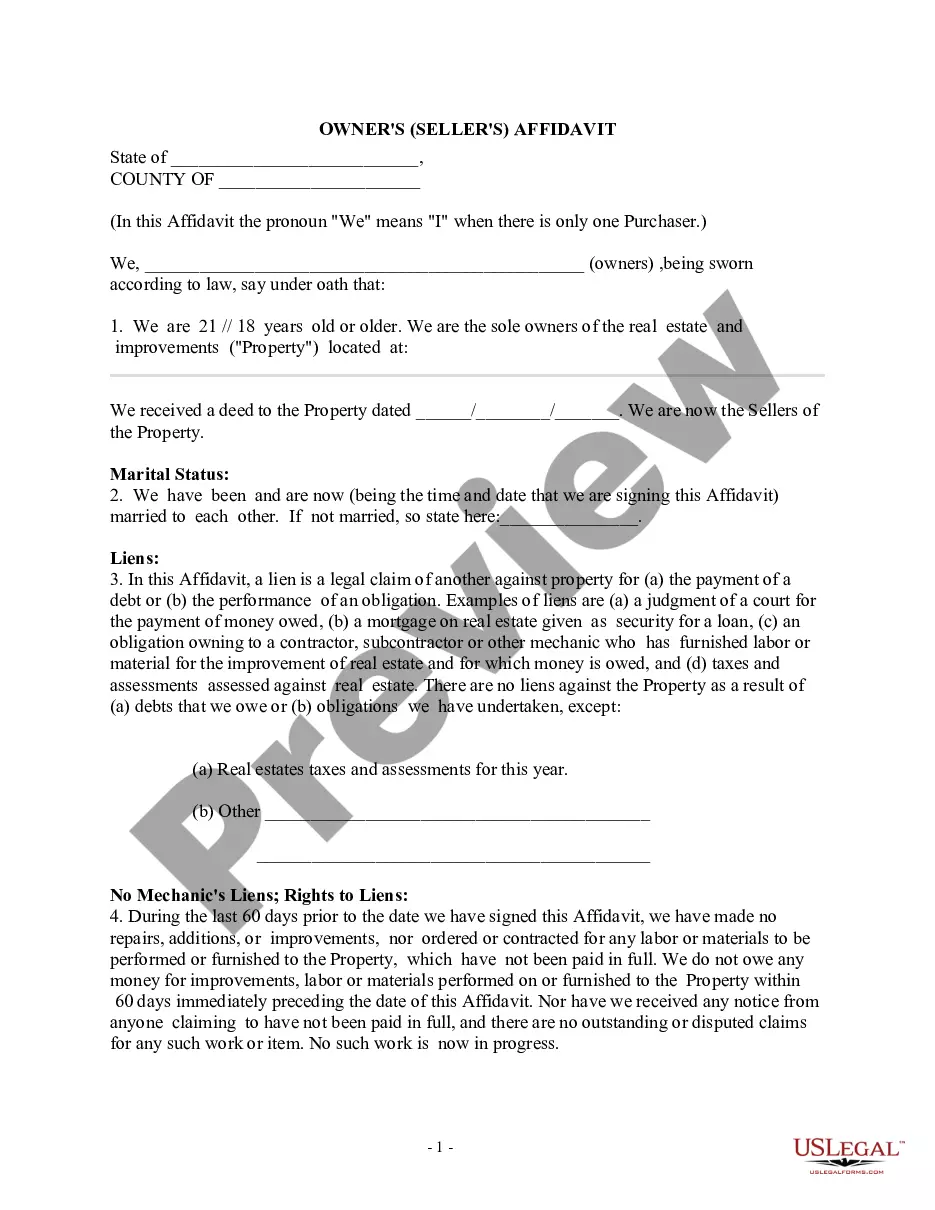
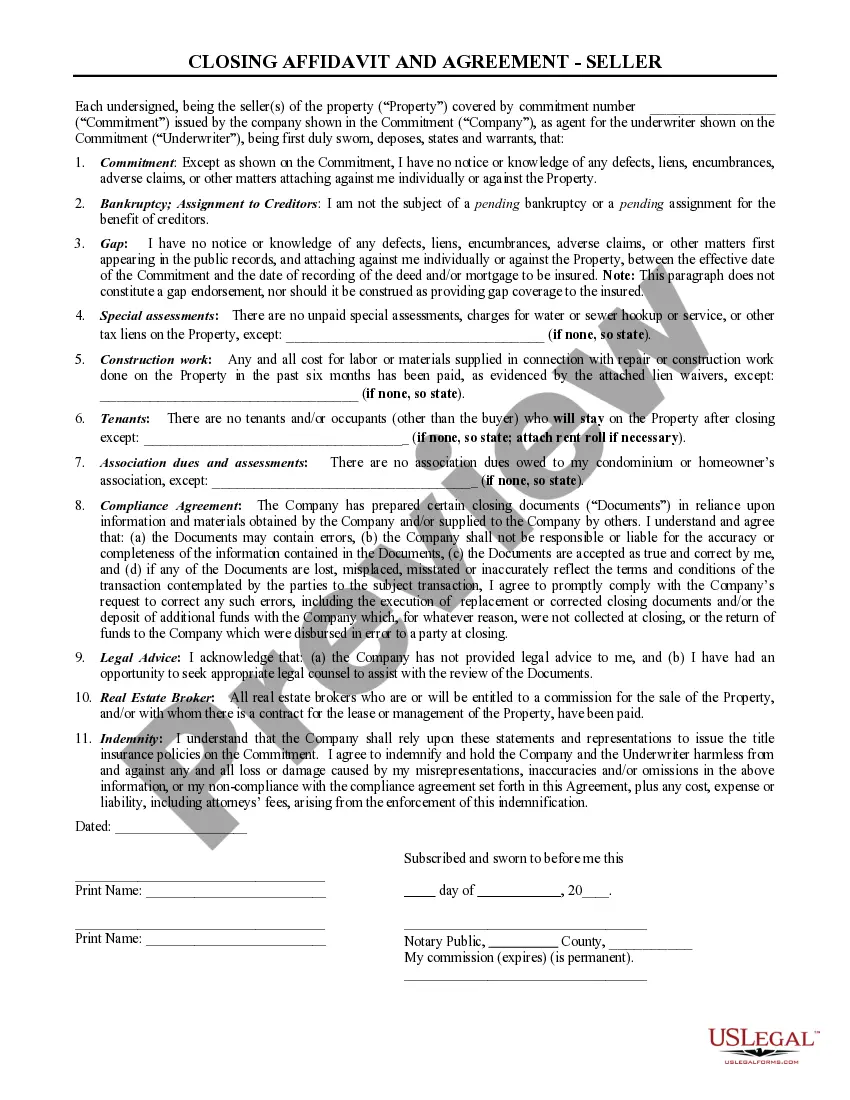
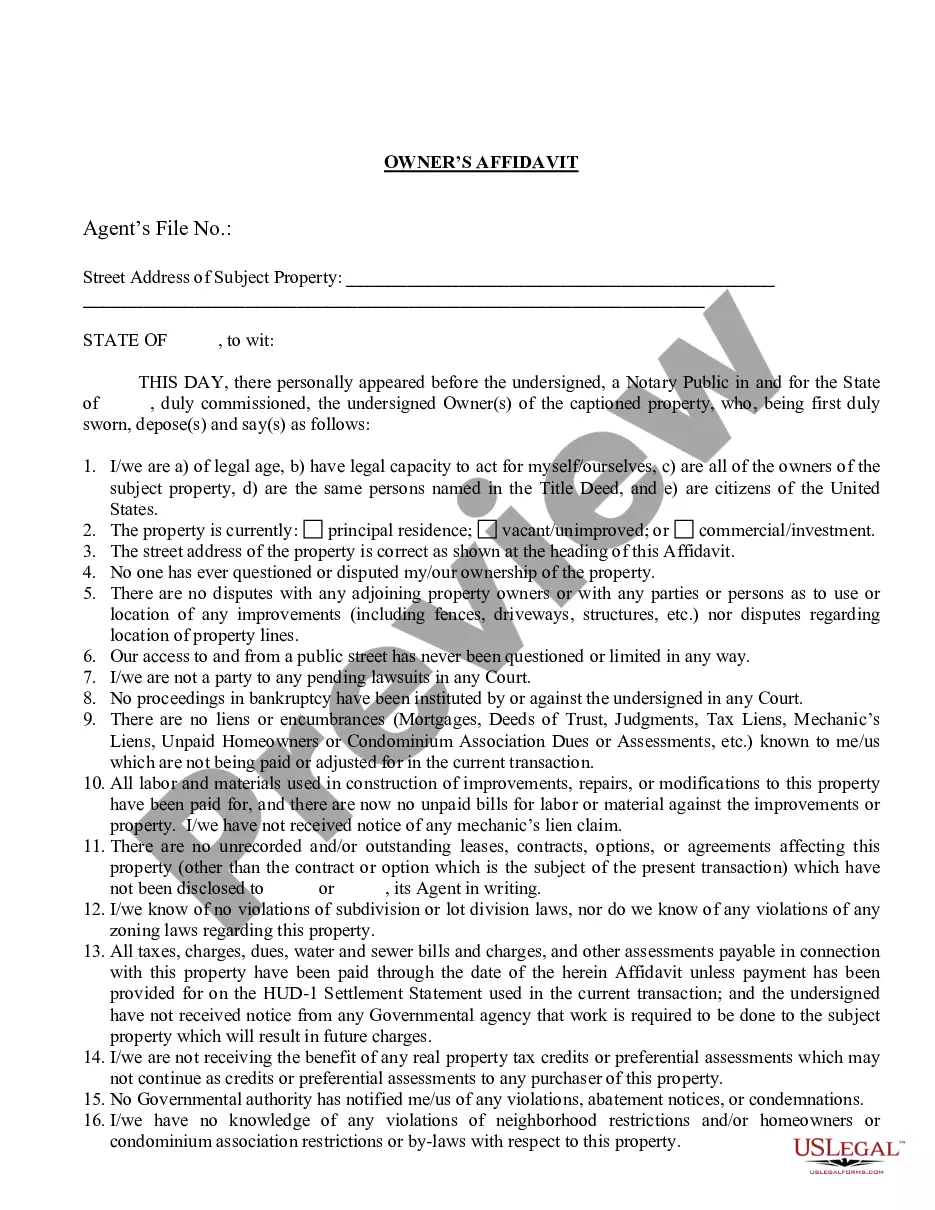
The Owner's Affidavit of No Liens is a legal document that a seller completes during the closing process of a property sale. It certifies that there are no outstanding liens against the property, indicating that the seller is the rightful owner. This form is essential for ensuring a clear title transfer to the buyer, distinguishing it from other forms that may not provide such specific guarantees about liens and ownership status.
What’s included in this form
- Identification of the owners and the property being sold.
- Certification that all parties are at least 21 years old.
- Confirmation of marital status if applicable.
- Disclosure of any existing liens or debts related to the property.
- Assurances regarding outstanding contractor claims or mechanic liens.
- Statement on property alterations or improvements in the last 60 days.
- Declaration of no pending lawsuits or bankruptcy proceedings.
- Notary acknowledgment for legal validation.


When this form is needed
This form should be used whenever a seller is closing on a real estate transaction. It is crucial when confirming that the property is free from liens, which protects the buyer from potential legal disputes related to outstanding debts. Typical situations include residential home sales, commercial property transactions, or any transfer of ownership where the condition of title is a concern.
Who needs this form
This form is intended for:
- Property sellers who are concluding a transaction.
- Real estate agents or brokers assisting in the sale.
- Buyers who wish to ensure the property is free from liens.
- Attorneys representing either party in the transaction.
How to prepare this document
- Identify the owners of the property and specify the property's address.
- Confirm the marital status of the sellers if applicable.
- List any existing liens, debts, or obligations associated with the property.
- Assure that no work has been done on the property within the last 60 days that has not been paid for.
- Sign the affidavit in the presence of a notary public for validation.
Does this document require notarization?
Yes, this form must be notarized to be legally valid. Notarization verifies the identity of the signers and ensures that the statements made in the affidavit are true. US Legal Forms offers integrated online notarization services, making it easy to complete this process securely and without needing to travel.
Get your form ready online
Our built-in tools help you complete, sign, share, and store your documents in one place.
Make edits, fill in missing information, and update formatting in US Legal Forms—just like you would in MS Word.
Download a copy, print it, send it by email, or mail it via USPS—whatever works best for your next step.
Sign and collect signatures with our SignNow integration. Send to multiple recipients, set reminders, and more. Go Premium to unlock E-Sign.
If this form requires notarization, complete it online through a secure video call—no need to meet a notary in person or wait for an appointment.
We protect your documents and personal data by following strict security and privacy standards.
Make edits, fill in missing information, and update formatting in US Legal Forms—just like you would in MS Word.
Download a copy, print it, send it by email, or mail it via USPS—whatever works best for your next step.
Sign and collect signatures with our SignNow integration. Send to multiple recipients, set reminders, and more. Go Premium to unlock E-Sign.

If this form requires notarization, complete it online through a secure video call—no need to meet a notary in person or wait for an appointment.
We protect your documents and personal data by following strict security and privacy standards.
Common mistakes to avoid
- Failing to accurately list all outstanding liens or debts.
- Not signing the affidavit in front of a notary.
- Leaving sections incomplete or unanswered.
- Submitting the affidavit without verifying state-specific requirements.
Why complete this form online
- Convenient access to a legally compliant template without the need for an attorney.
- Editable forms that can be customized to meet specific needs.
- Instant download and print capabilities for immediate use.
- Guided instructions ensure that all necessary sections are completed correctly.
What to keep in mind
- The Owner's or Seller's Affidavit of No Liens is vital for property transactions.
- Sellers must ensure all claims and details are accurate before signing.
- Notarization is a necessary step before finalizing the sale.
Legal terms and meanings
- Affidavit: A written statement confirmed by oath or affirmation for use as evidence in court.
- Lien: A legal right or interest that a lender has in the borrower's property, granted until the debt obligation is satisfied.
- Mechanic's lien: A claim placed on property by a contractor or repairman until payment is received for work done.
Looking for another form?
Form popularity
FAQ
A lien lasts as long as a car has an outstanding balance on it, so if you purchase a car with a lien on it, you must pay it out in full.The DMV will have details on the title holders of the vehicle, so it's a good place to start when it comes to buying or selling a car with a lien on it.
A lien is a claim on property to ensure payment of a debt. When you borrow money to purchase a car, the lender files a lien on the vehicle with the state to insure that if the loan defaults, the lender can take the car. When the debt is fully repaid, a release of the lien is provided by the lender.
Can someone stop my lien sale? YES. Any person known to have an interest in the vehicle may stop your lien by filing a Declaration of Oppisition with the California Department of Motor Vehicles within the timeframe allowed by law (Typically within 10 days of mailing the Notice of Pending Lien Sale.)
A lien sale is the sale of the claimor a holdplaced on an asset to satisfy an unpaid debt. Typically, lien sales are conducted as public auctions, and the lien is on real estate, automobiles, and other personal property.
A lien is often granted when an individual takes out a loan from a bank to purchase an asset. For example, if an individual purchases a vehicle, the seller would be paid using the borrowed funds from the bank. In turn, the bank would be granted a lien on the vehicle.
To remove a lien, you must send the DMV: form Application for Duplicate Title (MV-902), checked to show that a lien release is included with the application, and. the $20 fee for a duplicate title certificate, and.
Once you pay off the loan, the lender removes its name from the title. You then receive a copy of the title.It doesn't matter who has the paper title because if there's a lienholder's information provided on the title, that lienholder can have a right to the vehicle.
Congratulations on owning your vehicle free and clear. Now that your loan is paid off, you should receive a "letter of lien release" from the bank or financial institution that financed your vehicle.You cannot transfer ownership of a vehicle until the lien is cleared from the title.
Once you have paid your loan in full, the lender can sign the title over to you to signify they have released the lien. Once this process is complete, you will receive your title in the mail or you can pick it up in person. You then have a free and clean title, according to TFC Title Loans.