Alaska 10 Day Notice of Termination for Tenant's Refusing Lawful Access to Premises for Residential from Landlord to Tenant
Overview of this form
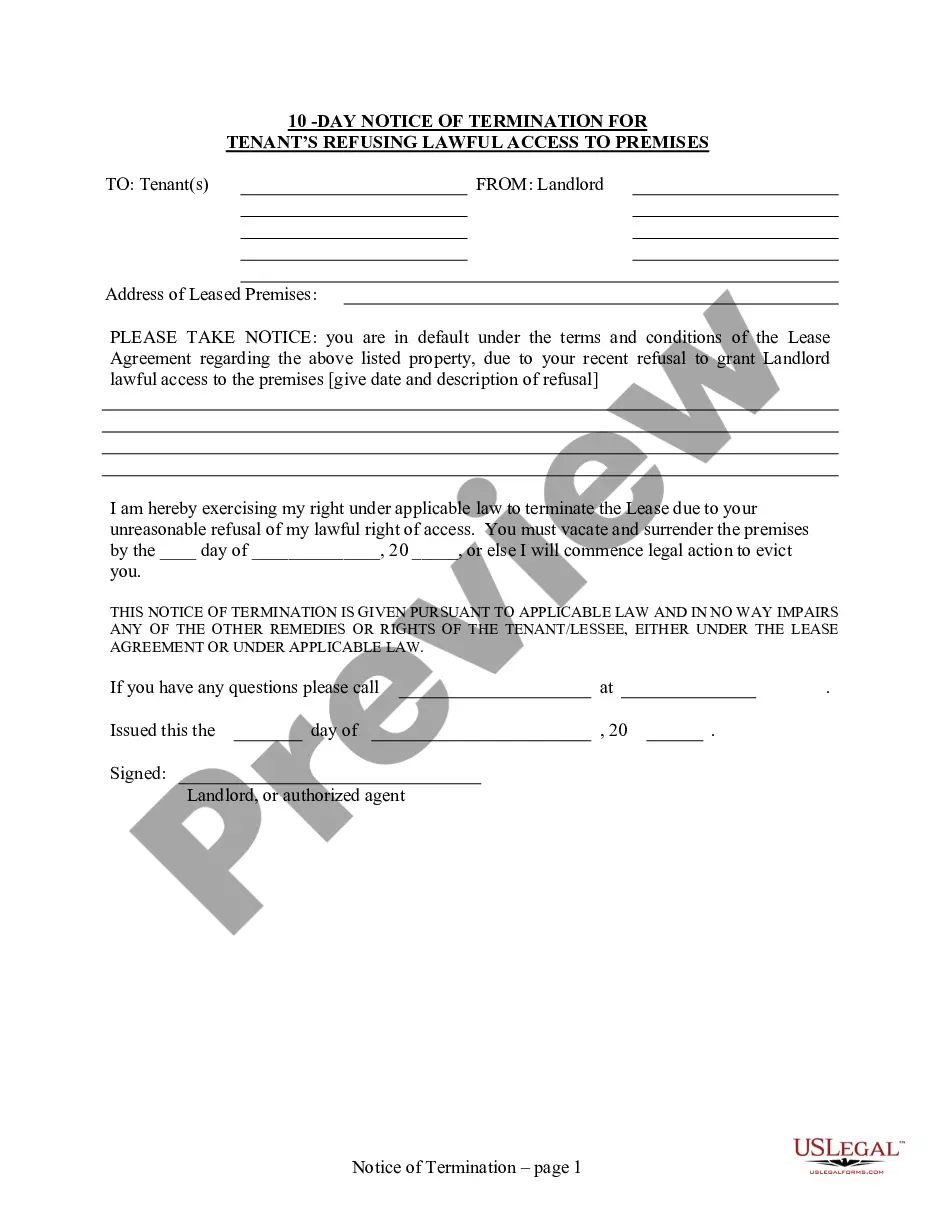
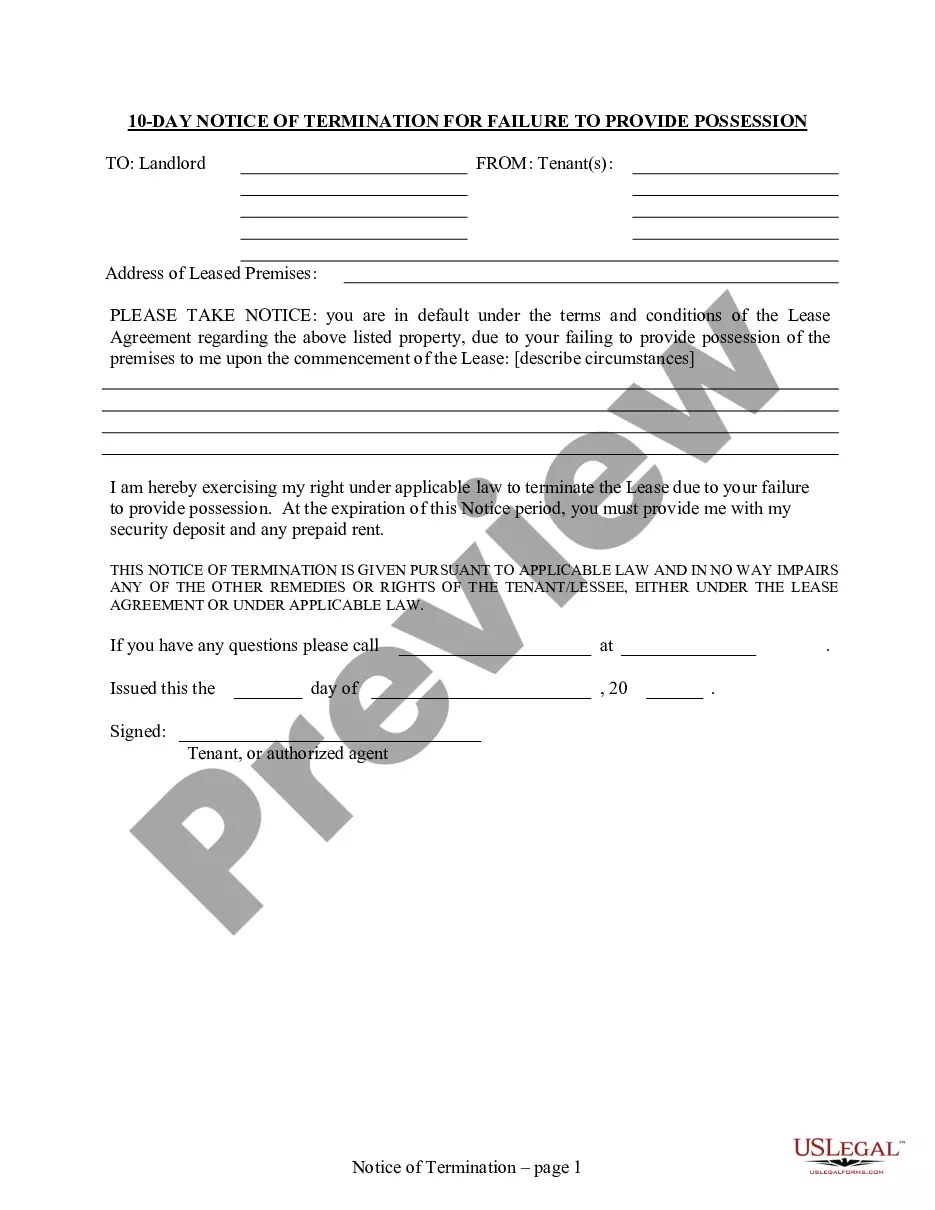
The 10-Day Notice of Termination for Tenant's Refusing Lawful Access to Premises is a legal document used by landlords to formally notify tenants that their lease will be terminated. This notice is issued when a tenant has denied the landlord lawful access to the rental property, which is typically required for necessary inspections or repairs. Unlike other types of notices, this form specifically addresses situations where the tenant's refusal to grant access constitutes a breach of the lease agreement.
Key components of this form
- Identification of the landlord and tenant involved in the lease agreement.
- Details of the property being rented.
- Statement regarding the tenant's refusal to grant access, including dates and descriptions.
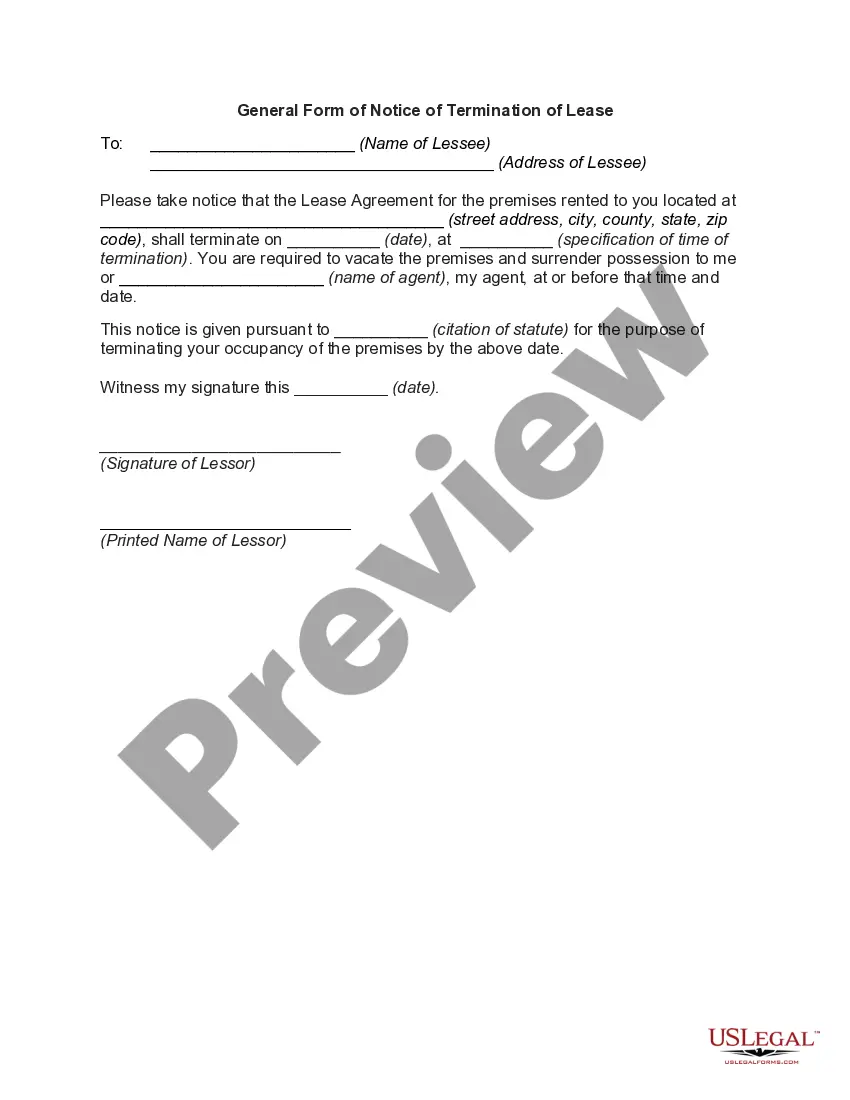
- Notice of termination specifying the deadline for vacating the premises.
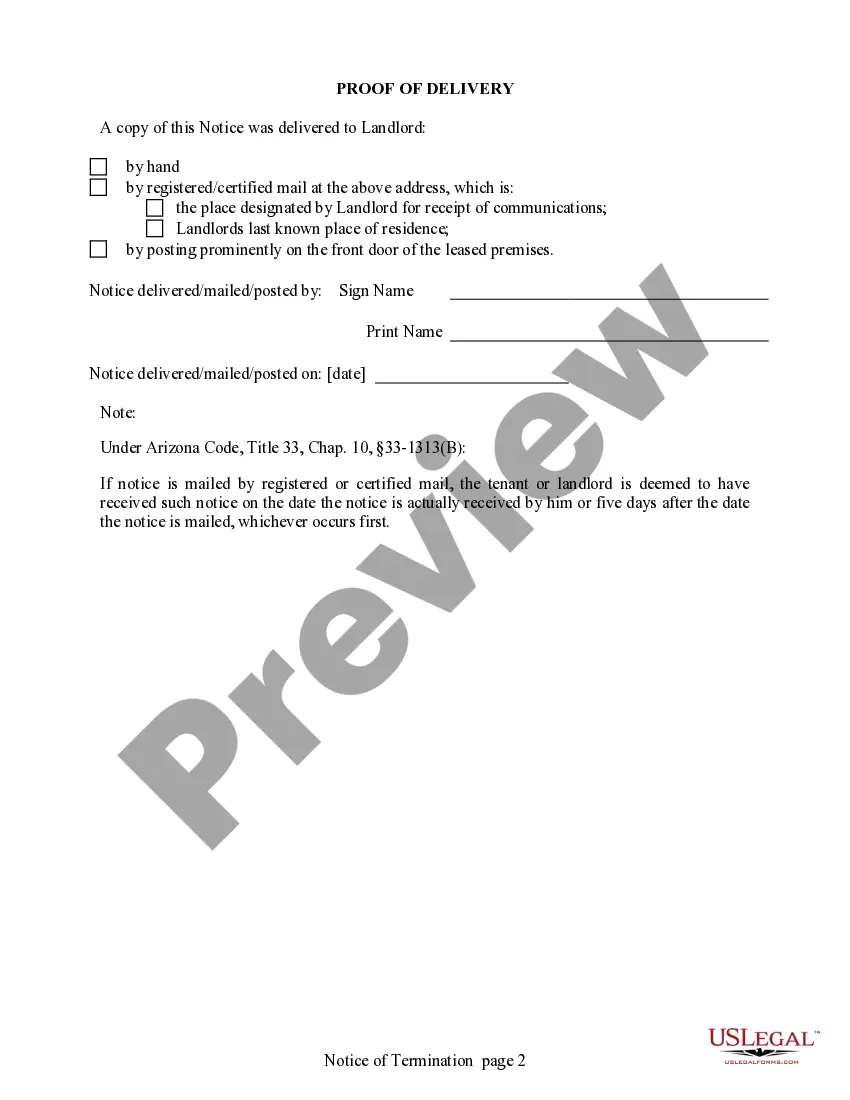
- A section for proof of delivery methods, including options for hand delivery and mail.

When to use this form
This form should be used when a tenant has denied the landlord lawful access to the rental property, which is necessary for inspections, repairs, or other legitimate purposes. It serves as a formal notification that the lease will be terminated if the tenant does not vacate the premises within ten days of receiving this notice. Common situations may include a refusal to allow maintenance work or inspections that are outlined in the lease agreement.
Who needs this form
- Landlords who need to terminate a tenancy due to tenants refusing access to the premises.
- Property managers acting on behalf of landlords.
- Landlords dealing with residential rental agreements.
Completing this form step by step
- Identify the landlord and tenant by entering their full names in the designated fields.
- Specify the address of the leased premises clearly.
- Enter details describing the tenant's refusal to grant access, including specific dates and circumstances.
- Complete the termination date by indicating the deadline for the tenant to vacate the property.
- Provide proof of delivery by selecting the method of delivery and including appropriate signatures.
Notarization guidance
Notarization is not commonly needed for this form. However, certain documents or local rules may make it necessary. Our notarization service, powered by Notarize, allows you to finalize it securely online anytime, day or night.
Get your form ready online
Our built-in tools help you complete, sign, share, and store your documents in one place.
Make edits, fill in missing information, and update formatting in US Legal Forms—just like you would in MS Word.
Download a copy, print it, send it by email, or mail it via USPS—whatever works best for your next step.
Sign and collect signatures with our SignNow integration. Send to multiple recipients, set reminders, and more. Go Premium to unlock E-Sign.
If this form requires notarization, complete it online through a secure video call—no need to meet a notary in person or wait for an appointment.
We protect your documents and personal data by following strict security and privacy standards.

Make edits, fill in missing information, and update formatting in US Legal Forms—just like you would in MS Word.

Download a copy, print it, send it by email, or mail it via USPS—whatever works best for your next step.

Sign and collect signatures with our SignNow integration. Send to multiple recipients, set reminders, and more. Go Premium to unlock E-Sign.

If this form requires notarization, complete it online through a secure video call—no need to meet a notary in person or wait for an appointment.

We protect your documents and personal data by following strict security and privacy standards.
Common mistakes to avoid
- Failing to specify the exact reasons the tenant denied access.
- Not delivering the notice correctly, which could affect its legal standing.
- Leaving out signatures or dates, which could render the notice invalid.
- Using outdated legal language that may not comply with current laws.
Benefits of completing this form online
- Immediate access to legally vetted forms crafted by licensed attorneys.
- Convenience of completing the form at your own pace and from any location.
- Easy editing options to tailor the document to your specific situation.
- Secure storage of your completed documents for future reference.
Looking for another form?
Form popularity
FAQ
When responding to the notice to quit, there are several options available to the tenant: Pay any delinquent rent that is due to the landlord within the allotted time of the notice. Move out of the premises within the allotted time of the notice. File an answer with the judicial court.
An eviction is a legal proceeding in which a landlord asks a court to order the tenant to leave the property. Giving a tenant a notice to terminate is often a first step in the eviction process, but it isn't the same as an eviction.
A landlord cannot legally evict you without a court order, whether or not you have a lease.) How long does it take for a landlord to evict a tenant? A landlord can evict a tenant only by going through a formal eviction proceeding, which can take a few weeks from start to finish.
Evicting a tenant in Pennsylvania can take around 1-2 months, depending on the reason for the eviction. If tenants file an appeal, the process can take longer (read more).
Eviction notices When written by a landlord, a notice to vacate is commonly known as an "eviction notice," which tells the tenant they must move out of the rental property.
If the tenant does not leave by the date and time given in the notice, then the landlord must apply for a court order within 10 days to end the tenancy. If the landlord does not apply within 10 days, the tenancy stays in place and the tenant can continue living in the property.
Pennsylvania law requires that the tenant be given 10 days from the date of service of the Notice to Quit to either pay the rent due or move out of the property. This deadline can be changed if previously agreed to by the tenant in the lease or rental agreement.
A Notice to Vacate is a notice written by the landlord or property manager giving a notice to leave the premises within a specified time frame. This type of notice is typically given during the end of a lease period, or due to an infringement of the lease agreement.
After winning a residential eviction case, a landlord must wait at least 10 days, but not more than 120 days, to file a Request for Order of Possession of the property. This Request for Order of Possession is the order that allows a landlord to have the tenant actually removed from the property.