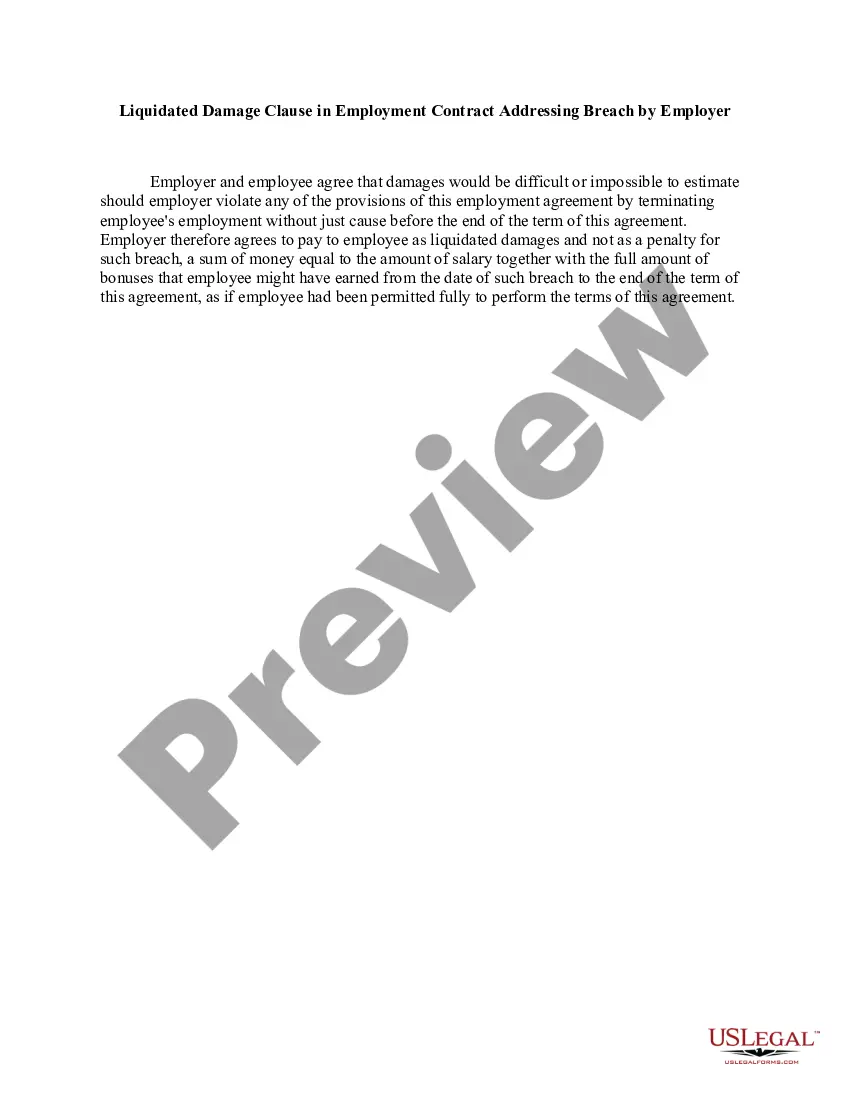
Wyoming Warranty Deed from two Individuals to LLC
What is this form?
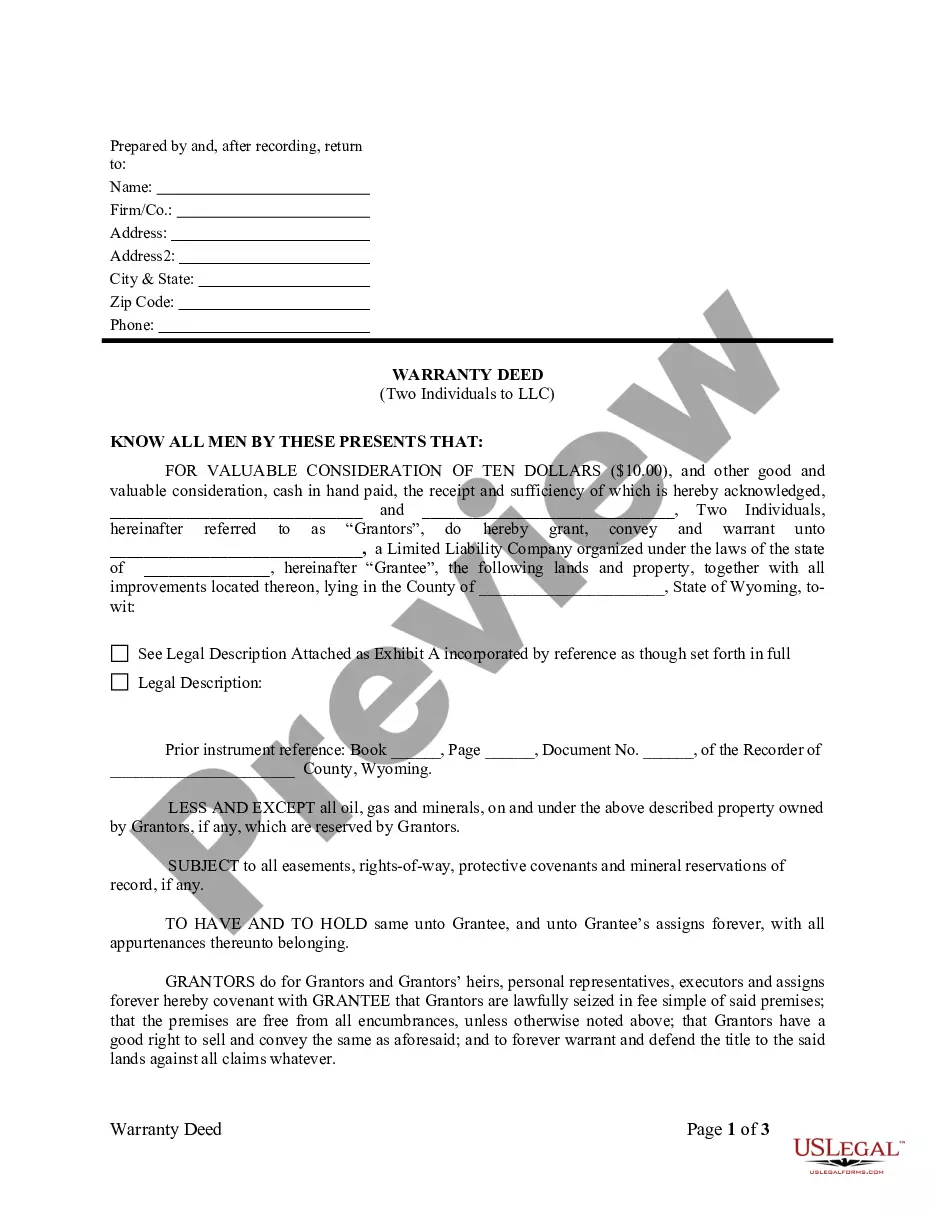
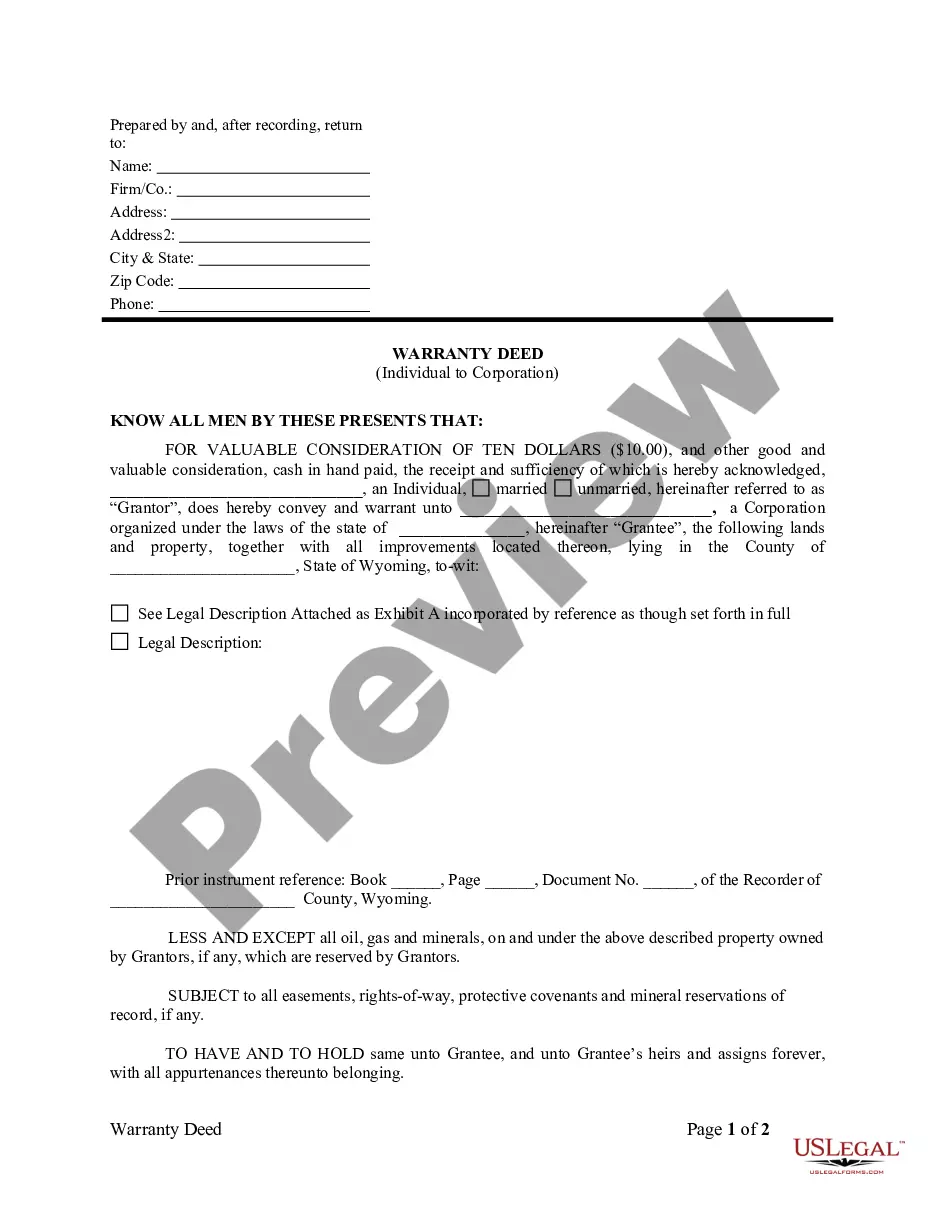
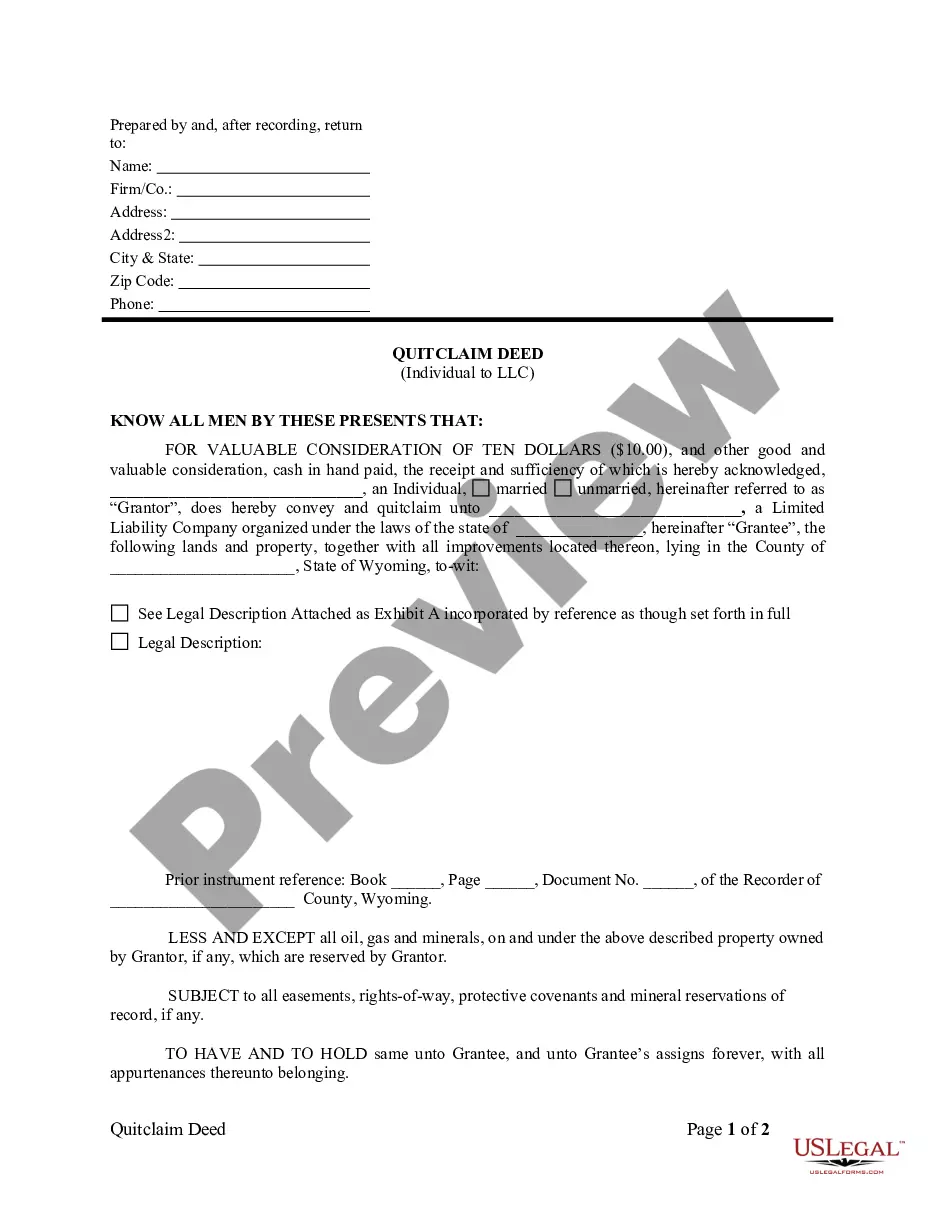
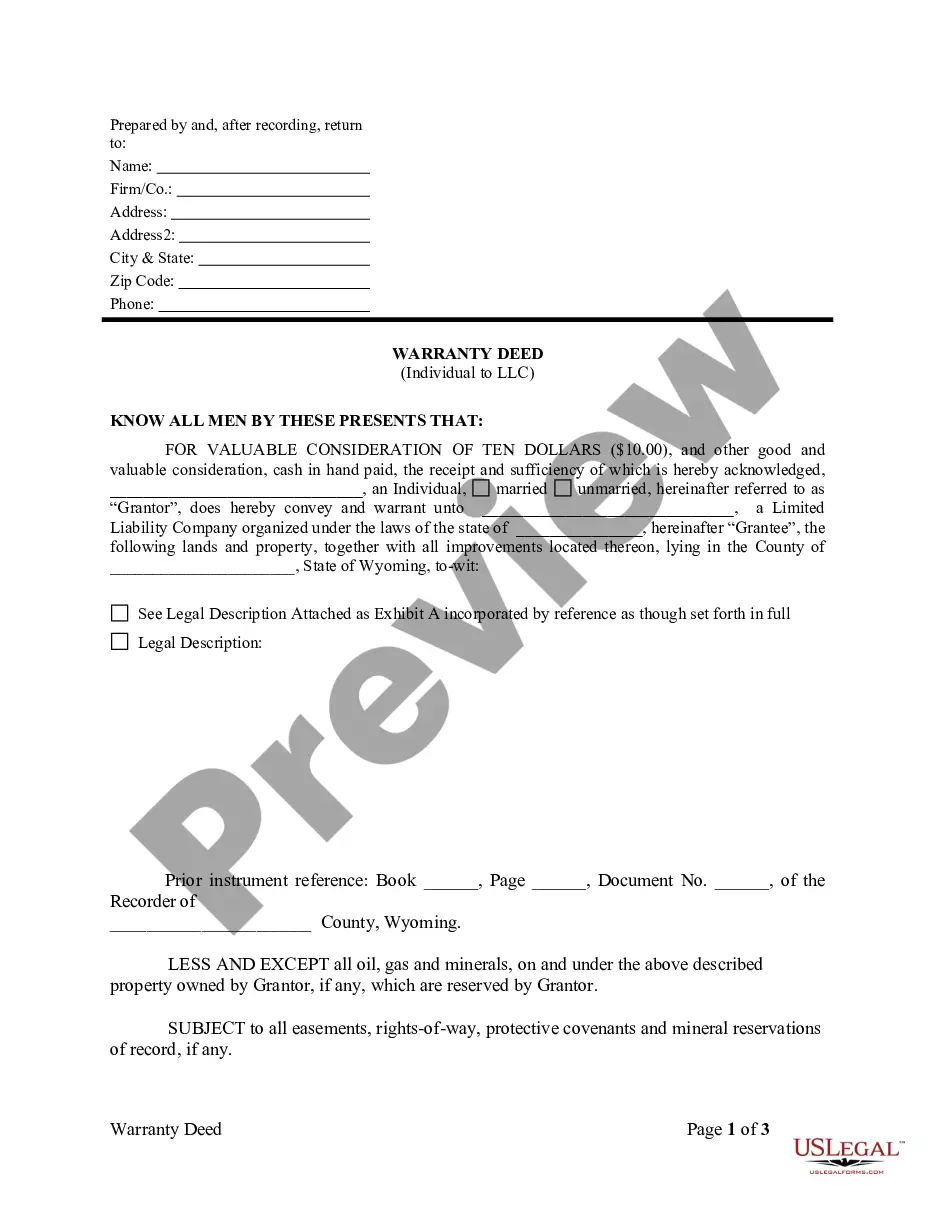
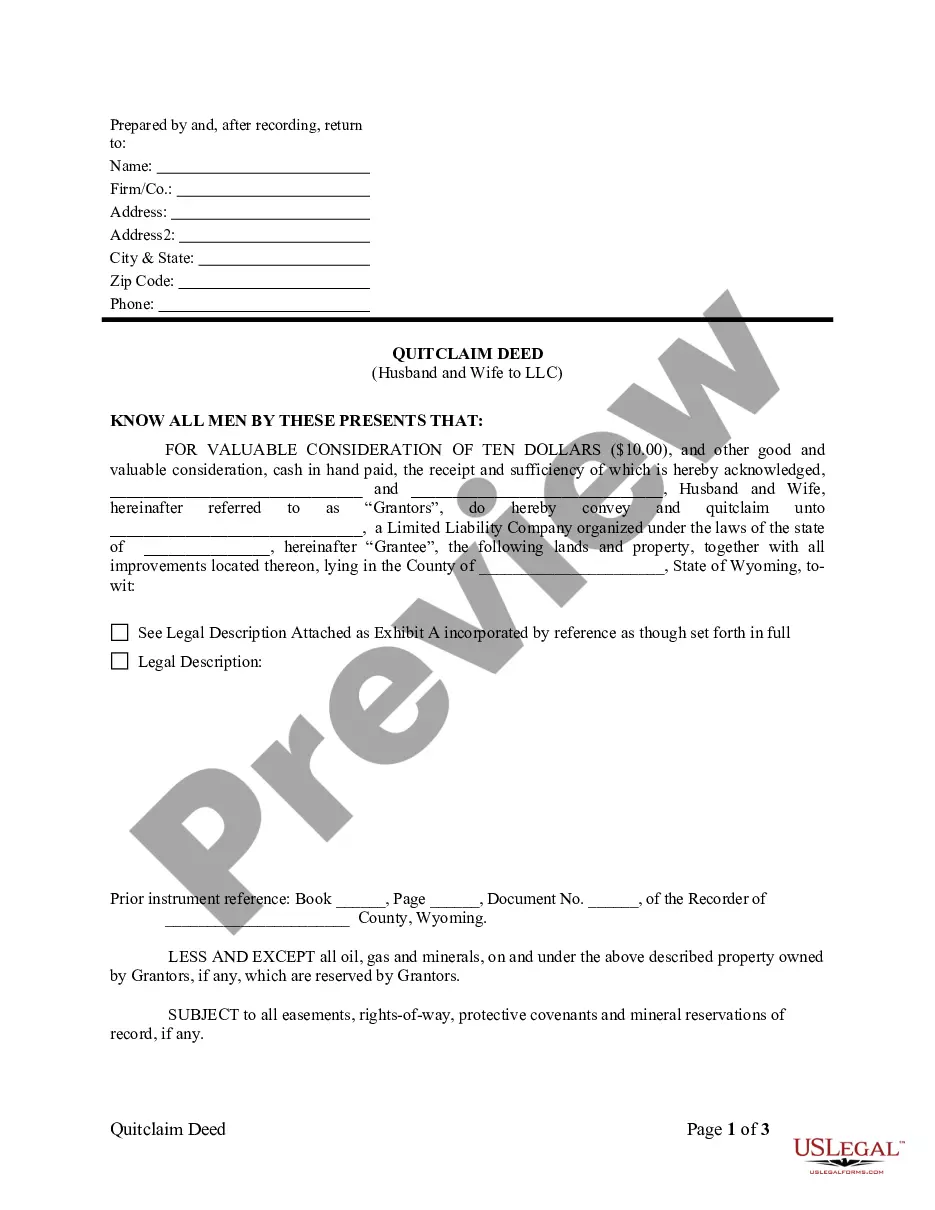
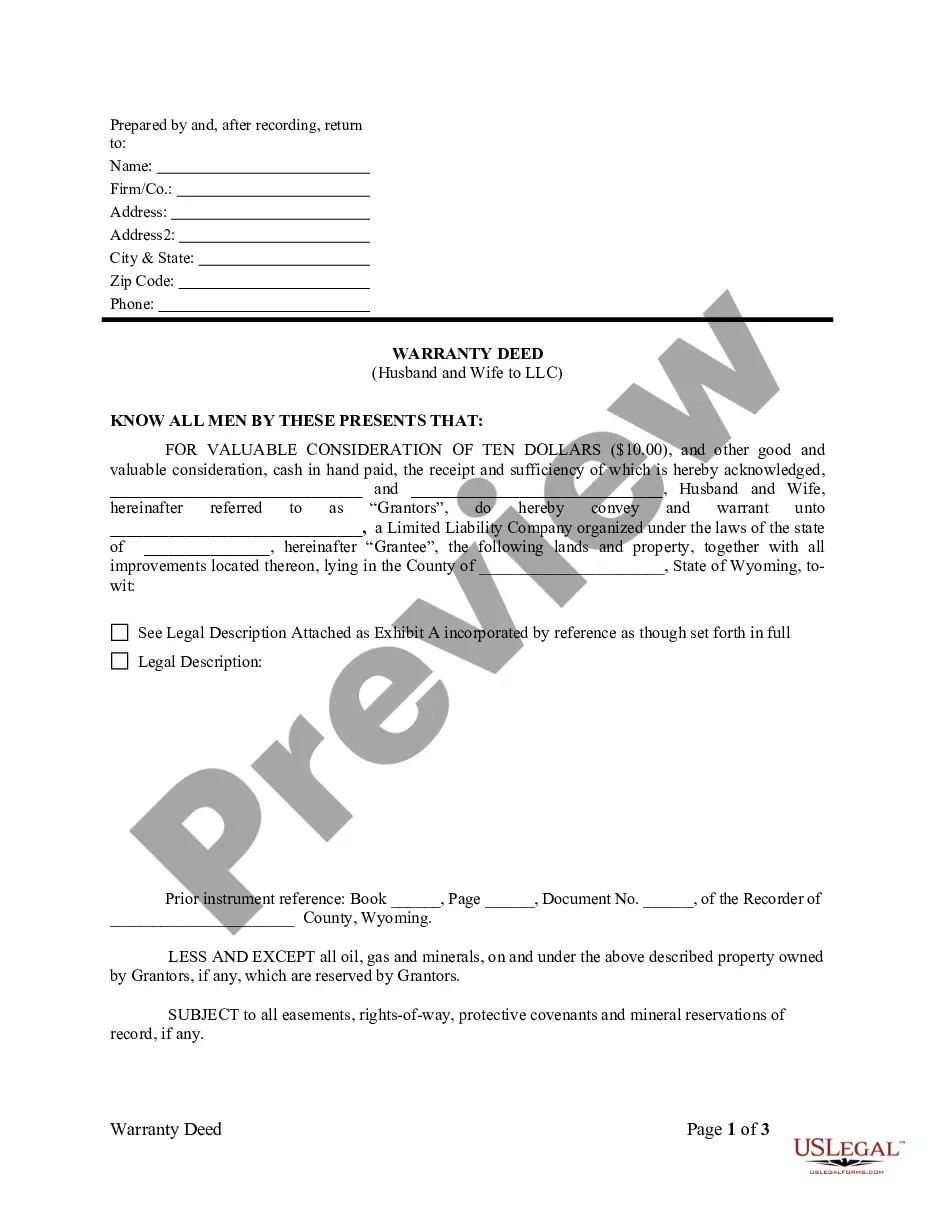
This Warranty Deed from two Individuals to LLC is a legal document where two individuals, known as Grantors, transfer ownership of real property to a limited liability company (LLC), known as the Grantee. The deed conveys and warrants the property, except for any oil, gas, and minerals that the Grantors wish to retain. This form is essential for officially documenting the transfer of property rights, ensuring that the title is clear and encumbrances are disclosed.
Main sections of this form
- Identification of Grantors and Grantee.
- Legal description of the property, usually attached as Exhibit A.
- Reference to prior instruments related to the property.
- Clauses regarding reservations for oil, gas, and minerals.
- Covenants ensuring the Grantors have the legal right to transfer the property.
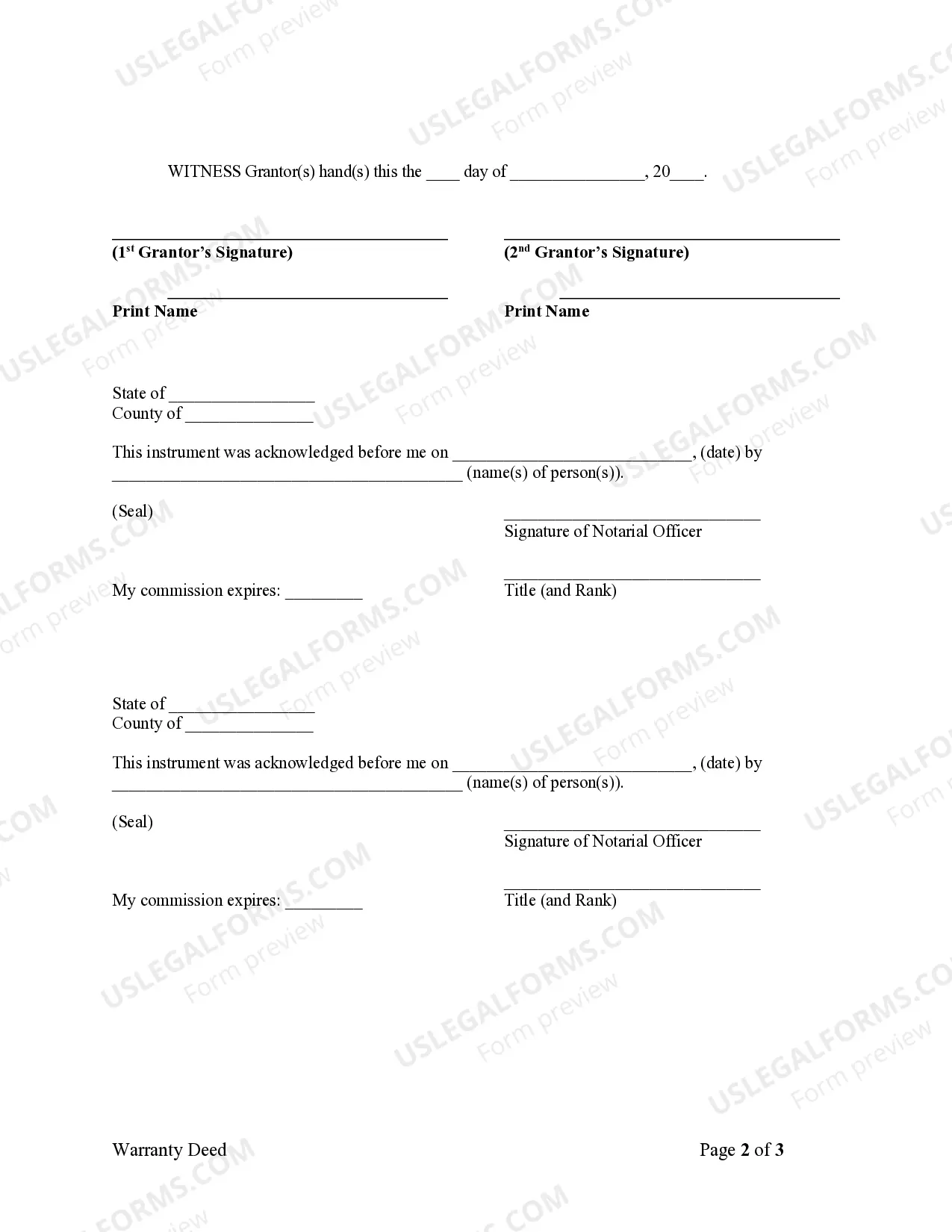
- Signatures of both Grantors and a date of execution.

When this form is needed
This form is necessary when two individuals plan to transfer real estate ownership to an LLC, particularly when they want to retain rights to any oil, gas, and minerals beneath the property. Ideal scenarios include business partnerships forming an LLC, estate planning, or reorganizing personal property into a business structure.
Who can use this document
- Two individuals looking to transfer real estate to an LLC.
- Members of an LLC who need to formalize property ownership.
- Individuals involved in estate planning or asset management.
- Real estate professionals managing property transfers for clients.
How to prepare this document
- Identify the parties involved: list the names of the two individuals and the LLC.
- Specify the legal description of the property, ensuring it is attached as Exhibit A.
- Fill in the prior instrument reference, including book, page, and document number.
- State any reservations for oil, gas, and minerals if applicable.
- Have both Grantors sign and date the form to execute the transfer.
Does this form need to be notarized?
This document requires notarization to meet legal standards. US Legal Forms provides secure online notarization powered by Notarize, allowing you to complete the process through a verified video call, available 24/7.
Get your form ready online
Our built-in tools help you complete, sign, share, and store your documents in one place.
Make edits, fill in missing information, and update formatting in US Legal Forms—just like you would in MS Word.
Download a copy, print it, send it by email, or mail it via USPS—whatever works best for your next step.
Sign and collect signatures with our SignNow integration. Send to multiple recipients, set reminders, and more. Go Premium to unlock E-Sign.
If this form requires notarization, complete it online through a secure video call—no need to meet a notary in person or wait for an appointment.
We protect your documents and personal data by following strict security and privacy standards.

Make edits, fill in missing information, and update formatting in US Legal Forms—just like you would in MS Word.

Download a copy, print it, send it by email, or mail it via USPS—whatever works best for your next step.

Sign and collect signatures with our SignNow integration. Send to multiple recipients, set reminders, and more. Go Premium to unlock E-Sign.

If this form requires notarization, complete it online through a secure video call—no need to meet a notary in person or wait for an appointment.

We protect your documents and personal data by following strict security and privacy standards.
Common mistakes to avoid
- Failing to include the complete legal description of the property.
- Not attaching Exhibit A or providing an inaccurate prior instrument reference.
- Omitting signatures or dates from either Grantor.
- Not understanding or specifying ownership reservations properly.
Why use this form online
- Convenient access to downloadable forms at any time.
- Editable templates allows users to customize information easily.
- Templates drafted by licensed attorneys ensure legal validity.
- Immediate access helps expedite property transfer processes.
Looking for another form?
Form popularity
FAQ
A warranty deed contains a guarantee that the grantor has legal title and rights to the real estate. A quitclaim deed offers little to no protection to the grantee.Warranty deeds ensure that the grantor has the right to sell the property, and guarantees that there are no liens or encumbrances against the land.
Quitclaim Deeds are used when the transfer of ownership in the property does not occur as the result of a traditional sale.Under a warranty deed, if it turns out that the property is not what the seller promised or there's an uncleared lien or other block to the title, the buyer can sue the seller and recover damages.
In order to transfer ownership of the marital home pursuant to a divorce, one spouse is going to need to sign a quitclaim deed, interspousal transfer deed, or a grant deed, in order to convey the title to the property.
Special warranties allow the transfer of property title between seller and buyer. The purchase of title insurance can mitigate the risk of prior claims to the special warranty deed.
A special warranty deed to real estate offers protection to the buyer through the seller's guarantee that the title has been free and clear of encumbrances during their ownership of the property. It does not guarantee clear title beyond their ownership.
A deed, of course, is a legal document representing property ownership. But you might be wondering if an owner can transfer a deed to another person without a real estate lawyer. The answer is yes. Parties to a transaction are always free to prepare their own deeds.
A warranty deed guarantees that: The grantor is the rightful owner of the property and has the legal right to transfer the title.The title would withstand third-party claims to ownership of the property. The grantor will do anything to ensure the grantee's title to the property.
It's important to note that a warranty deed does not actually prove the grantor has ownership (a title search is the best way to prove that), but it is a promise by the grantor that they are transferring ownership and if it turns out they don't actually own the property, the grantor will be responsible for compensating
It will not protect against title issues that arose prior to the time the seller took occupancy. Consequently, it offers less protection to buyers, and more protection to sellers, than a general warranty deed, which is the most common option for selling or buying a property.