West Virginia Landlord Agreement to allow Tenant Alterations to Premises
Understanding this form
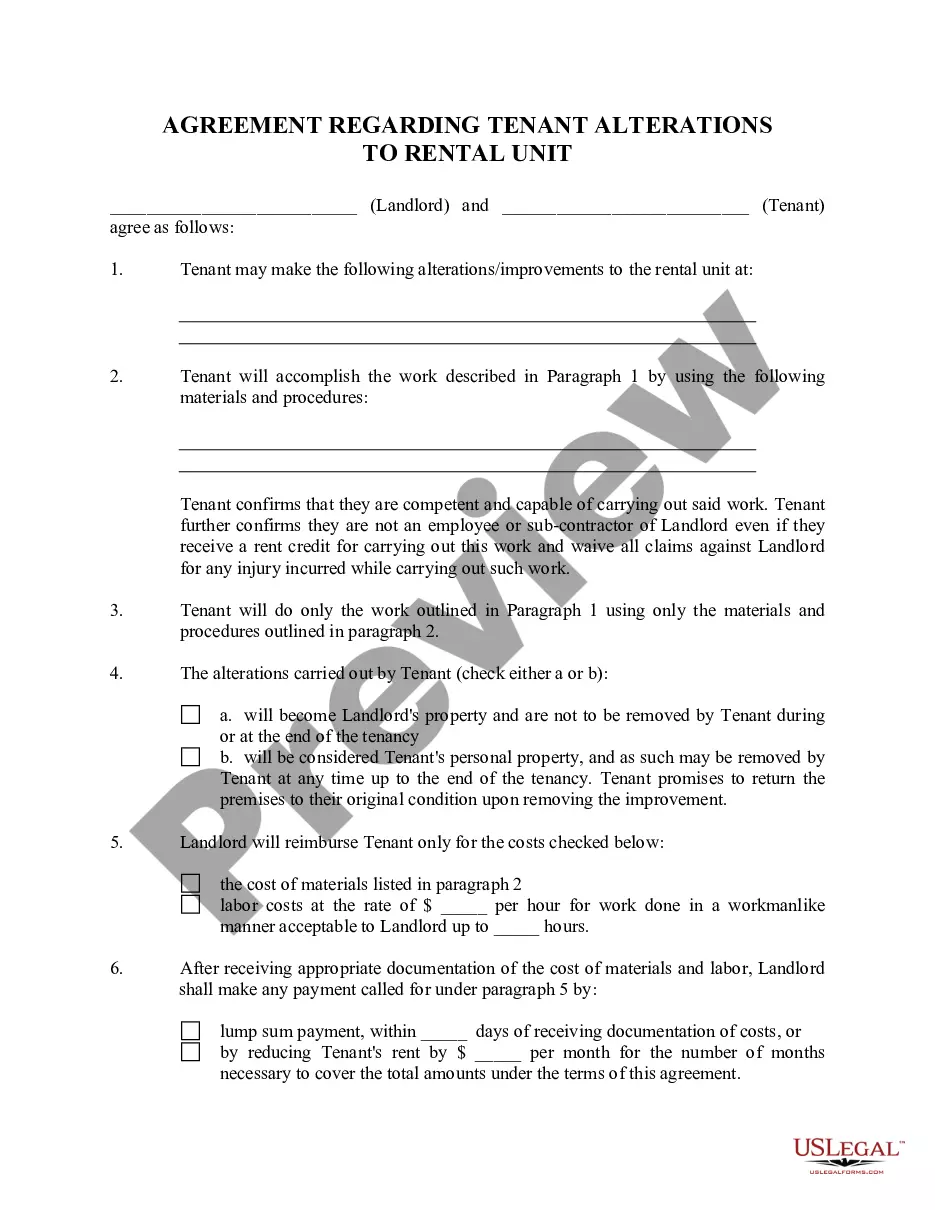
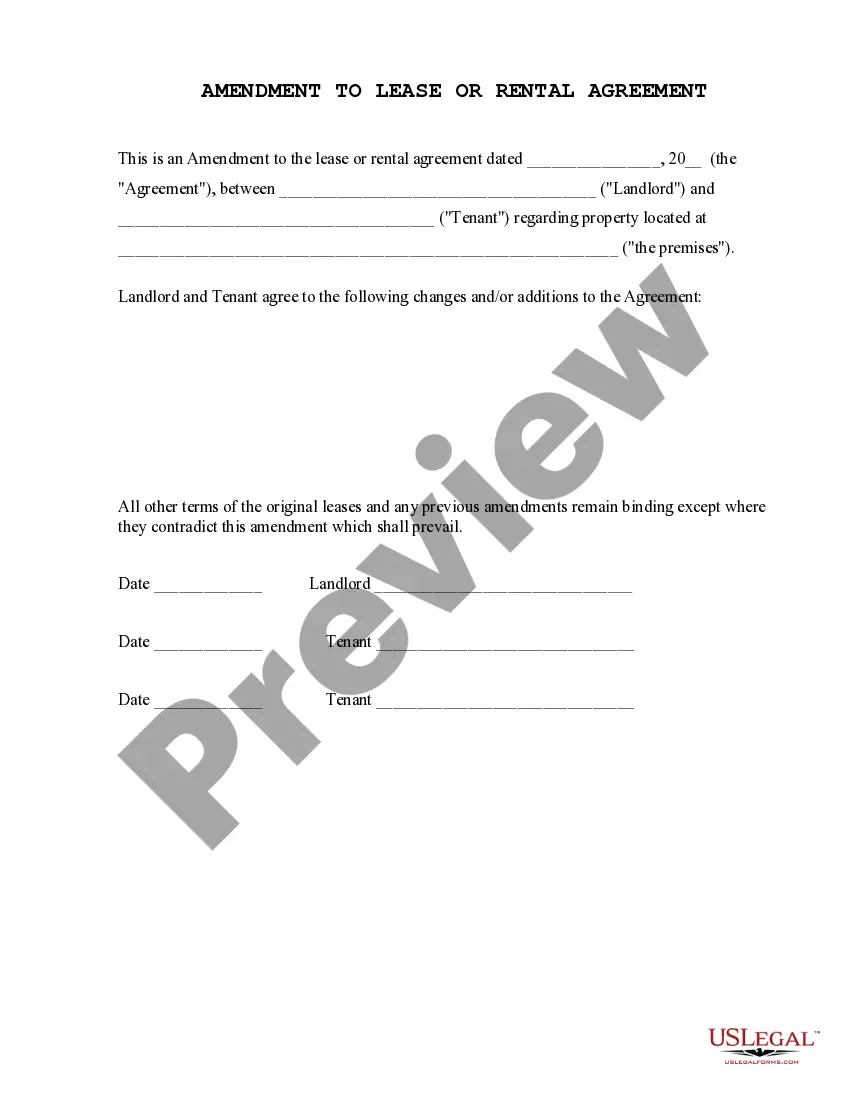
The Landlord Agreement to allow Tenant Alterations to Premises is a formal contract that outlines the terms under which a tenant may make alterations to a rental property. This document serves to clarify the responsibilities and rights of both the landlord and tenant, helping to prevent misunderstandings. Unlike generic rental agreements, this form specifically addresses the modifications a tenant wishes to implement and includes details about ownership of those changes, costs involved, and what happens to the alterations at the end of the tenancy.
Form components explained
- Identification of the landlord and tenant
- Details of the specific alterations or improvements allowed
- Agreement on ownership of the alterations (property of landlord or tenant)
- Terms for reimbursement of costs related to alterations
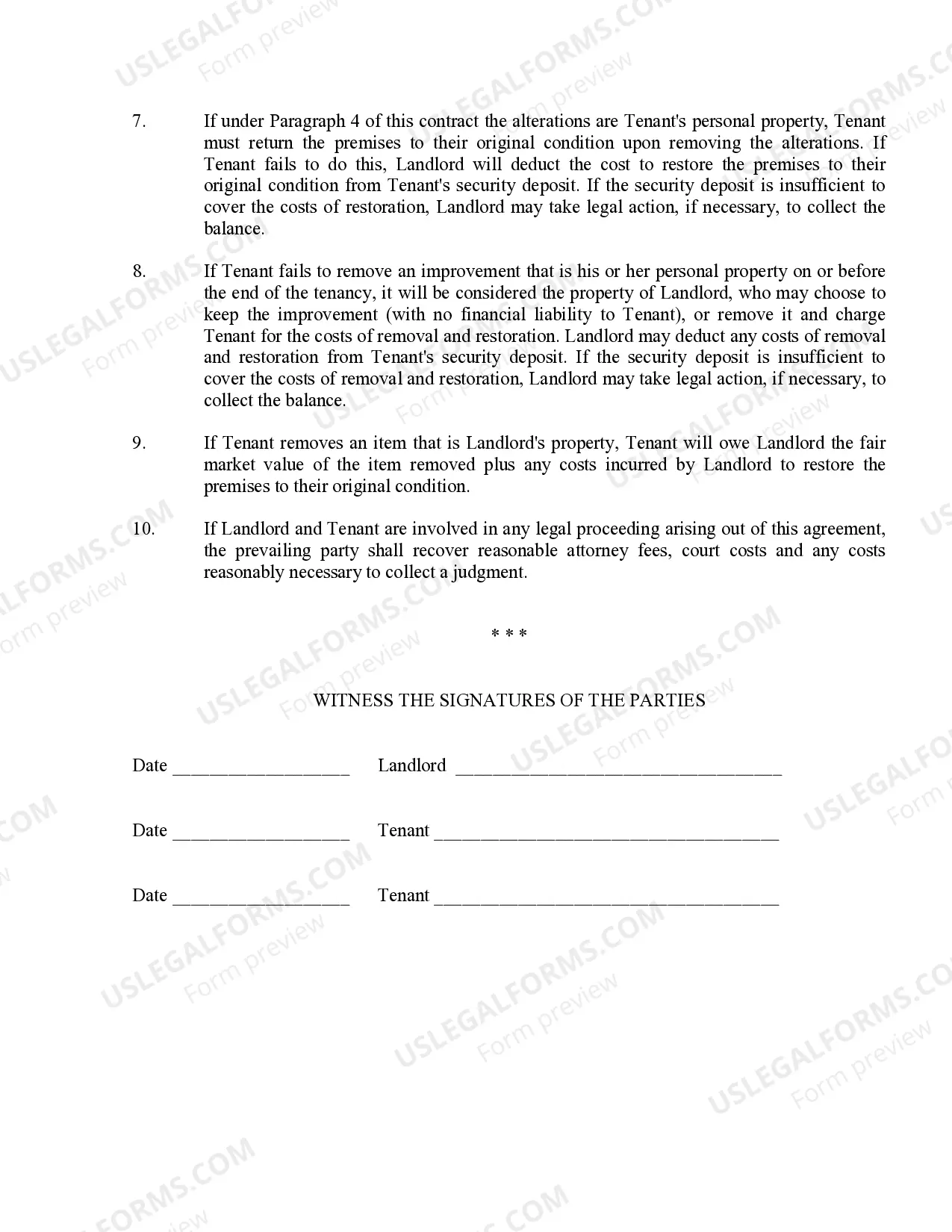
- Conditions under which alterations must be removed or restored
- Legal provisions for disputes and attorney fees
When to use this document
This form is necessary when a tenant wishes to make changes to a rented property, such as renovations or installations, and wants to ensure that both parties agree on the terms. It is especially useful in situations involving significant updates like painting, structural changes, or the addition of fixtures. Using this form helps protect the interests of both the landlord and tenant by outlining responsibilities clearly.
Who needs this form
- Landlords who want to maintain control over alterations made to their property
- Tenants seeking permission to make changes that enhance their living space
- Property managers handling rental agreements for landlords
Completing this form step by step
- Identify and enter the names of both the landlord and tenant at the beginning of the document.
- Clearly specify the alterations or improvements the tenant is permitted to make.
- Select whether the alterations will remain the landlord's property or the tenant's personal property.
- Fill in the terms regarding reimbursement for costs, including the amount and method of payment.
- Both parties should sign and date the document to make it legally binding.
Is notarization required?
Notarization is generally not required for this form. However, certain states or situations might demand it. You can complete notarization online through US Legal Forms, powered by Notarize, using a verified video call available anytime.
Get your form ready online
Our built-in tools help you complete, sign, share, and store your documents in one place.
Make edits, fill in missing information, and update formatting in US Legal Forms—just like you would in MS Word.
Download a copy, print it, send it by email, or mail it via USPS—whatever works best for your next step.
Sign and collect signatures with our SignNow integration. Send to multiple recipients, set reminders, and more. Go Premium to unlock E-Sign.
If this form requires notarization, complete it online through a secure video call—no need to meet a notary in person or wait for an appointment.
We protect your documents and personal data by following strict security and privacy standards.
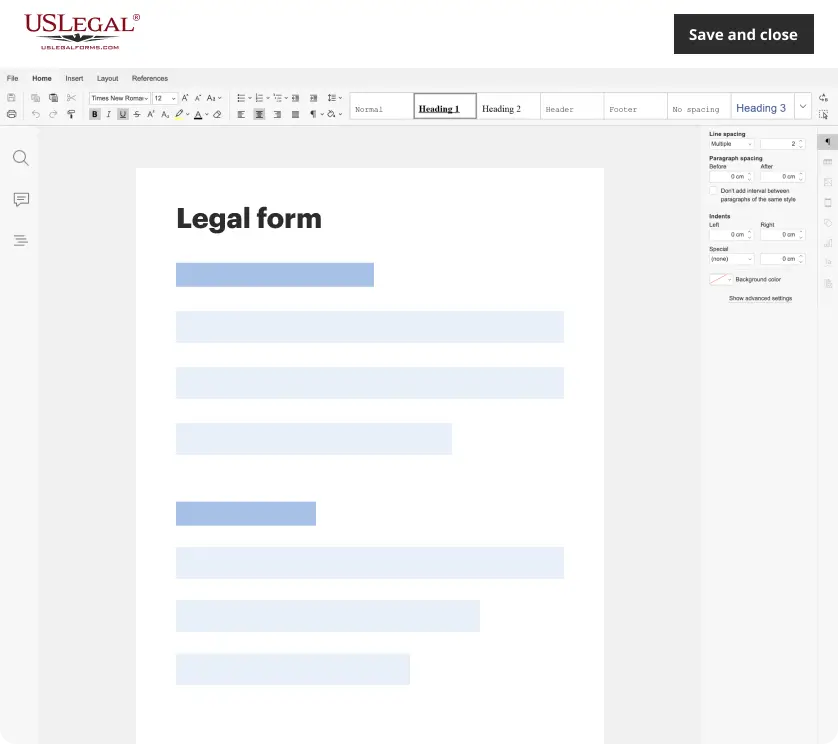
Make edits, fill in missing information, and update formatting in US Legal Forms—just like you would in MS Word.
Download a copy, print it, send it by email, or mail it via USPS—whatever works best for your next step.
Sign and collect signatures with our SignNow integration. Send to multiple recipients, set reminders, and more. Go Premium to unlock E-Sign.

If this form requires notarization, complete it online through a secure video call—no need to meet a notary in person or wait for an appointment.
We protect your documents and personal data by following strict security and privacy standards.
Common mistakes
- Failing to specify the nature of alterations allowed, leading to disputes.
- Not understanding the implications of ownership of alterations.
- Missing signatures, which can invalidate the agreement.
Why use this form online
- Immediate access to a downloadable template tailored by licensed attorneys.
- Easy to edit and customize based on individual needs and agreements.
- Ensures compliance with typical legal requirements, providing peace of mind.
Looking for another form?
Form popularity
FAQ
Louisiana. Property Taxes: Louisiana has a median property tax rate of 0.18% and is the lowest in the nation. West Virginia. Property Taxes: West Virginia has a median property tax rate of 0.49%, making it the state with the sixth-lowest property taxes in the country. Arkansas.
This question is about Virginia Landlord Tenant RightsVirginia is a moderately landlord-friendly state as there is no rent control and landlords have a large amount of freedom when picking tenants.
Tenants may be able to file their complaints with their city or county rent control board, local tenant association, rental housing association, district attorney's office and consumer protection agency. California residents can find the appropriate agencies based on the nature of their complaint by contacting the
State law prohibits landlords from entering rental housing without either the consent of the tenant or providing reasonable notice in advance, unless circumstances require the landlord to perform emergency repairs.
Tenants may also file a complaint with the Attorney General's Consumer Protection Division if landlords fail to return damage deposits. Complaint forms may be obtained by calling the consumer protection hotline, toll-free, at 1-800-368-8808.
Indiana. Indiana laws allow landlords to hold on to security deposits for 45 days to give them time to determine any damages caused by tenants. Colorado. Colorado is one of few states that allow landlords to access the rental property without an advance notice requirement. Georgia.
Indiana. Indiana laws allow landlords to hold on to security deposits for 45 days to give them time to determine any damages caused by tenants. Colorado. Colorado is one of few states that allow landlords to access the rental property without an advance notice requirement. Georgia.
Yes, West Virginia is an extremely landlord-friendly state because there are virtually no restrictions on evictions and there are no limits on rental pricing or increases.
Injury at Rental Property: You could have a case for a lawsuit against your landlord if you are injured at the rental property due to a landlord's neglect. Filing an Illegal Eviction: You can countersue your landlord if you feel your landlord is trying to evict you illegally.