West Virginia Letter from Landlord to Tenant as Notice to remove Wild Animals in Premises
What is this form?
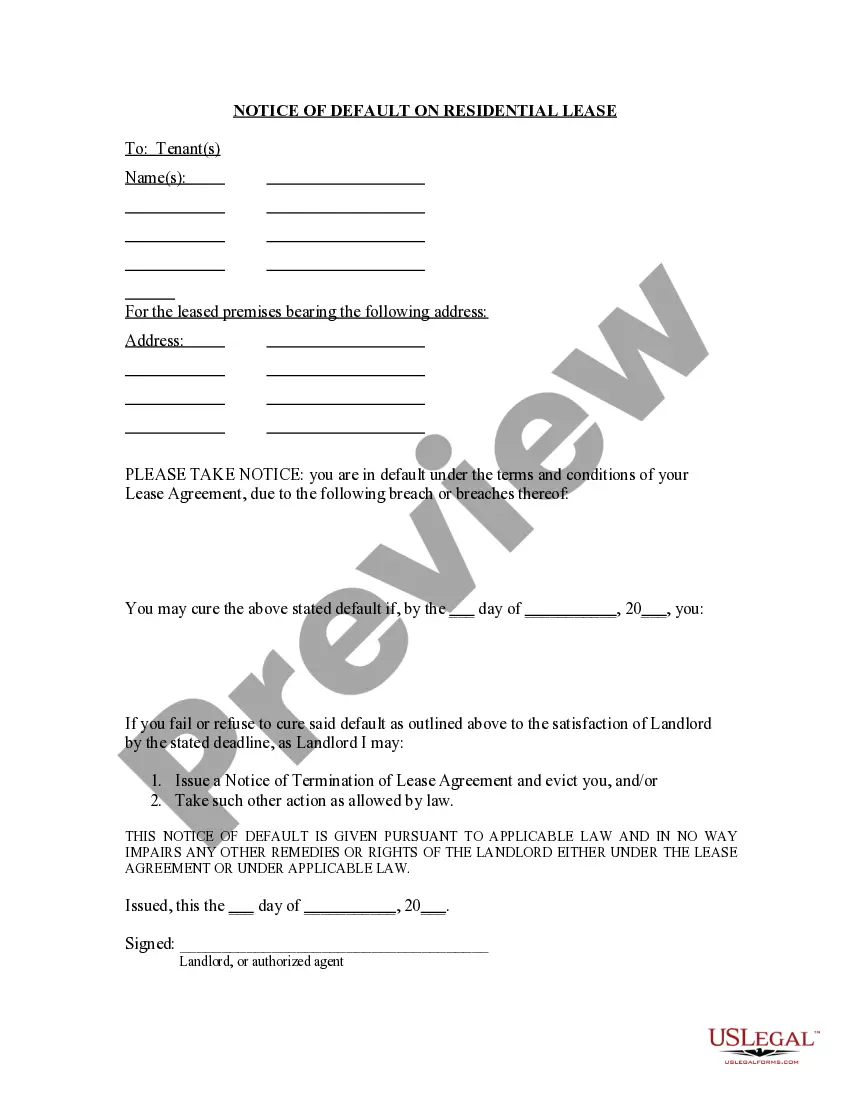
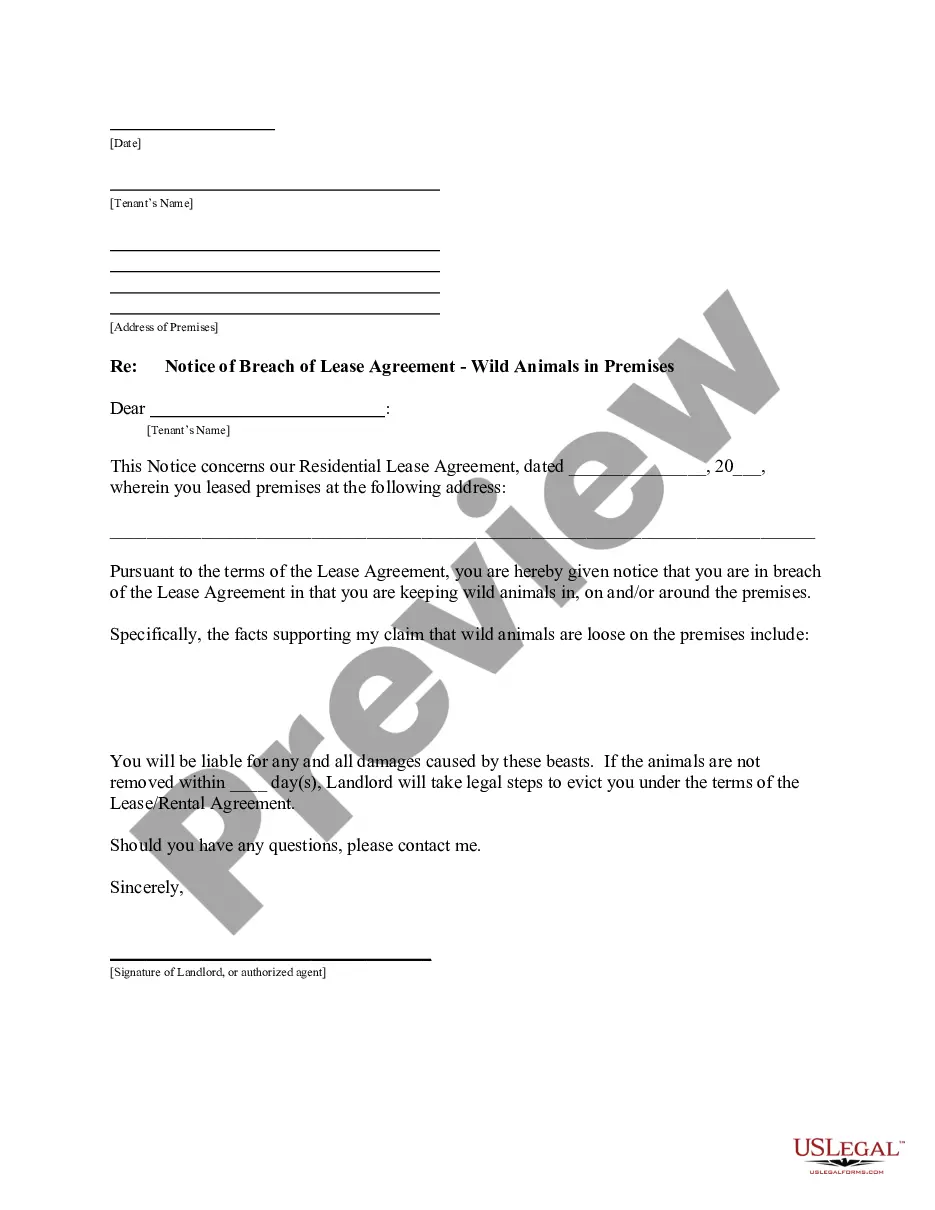
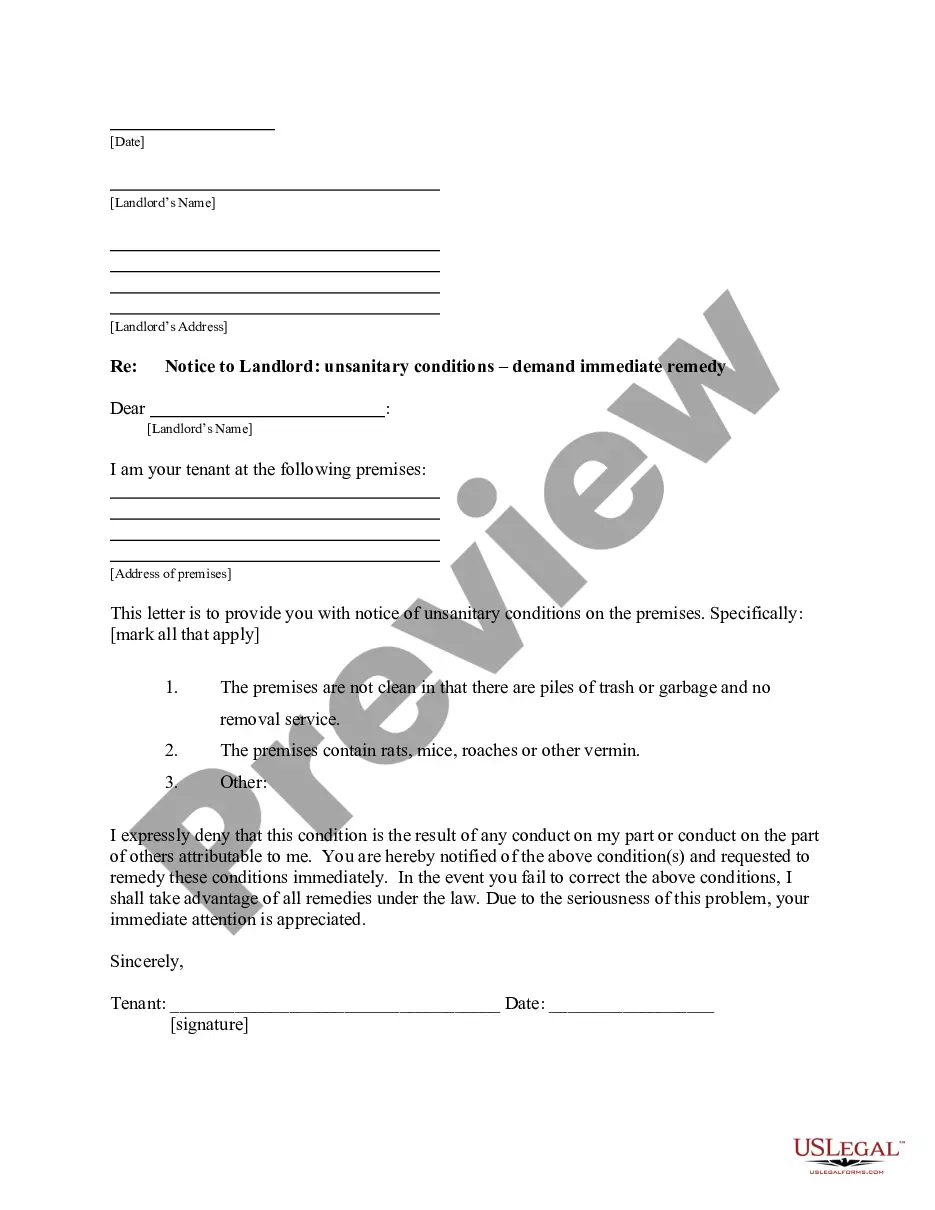
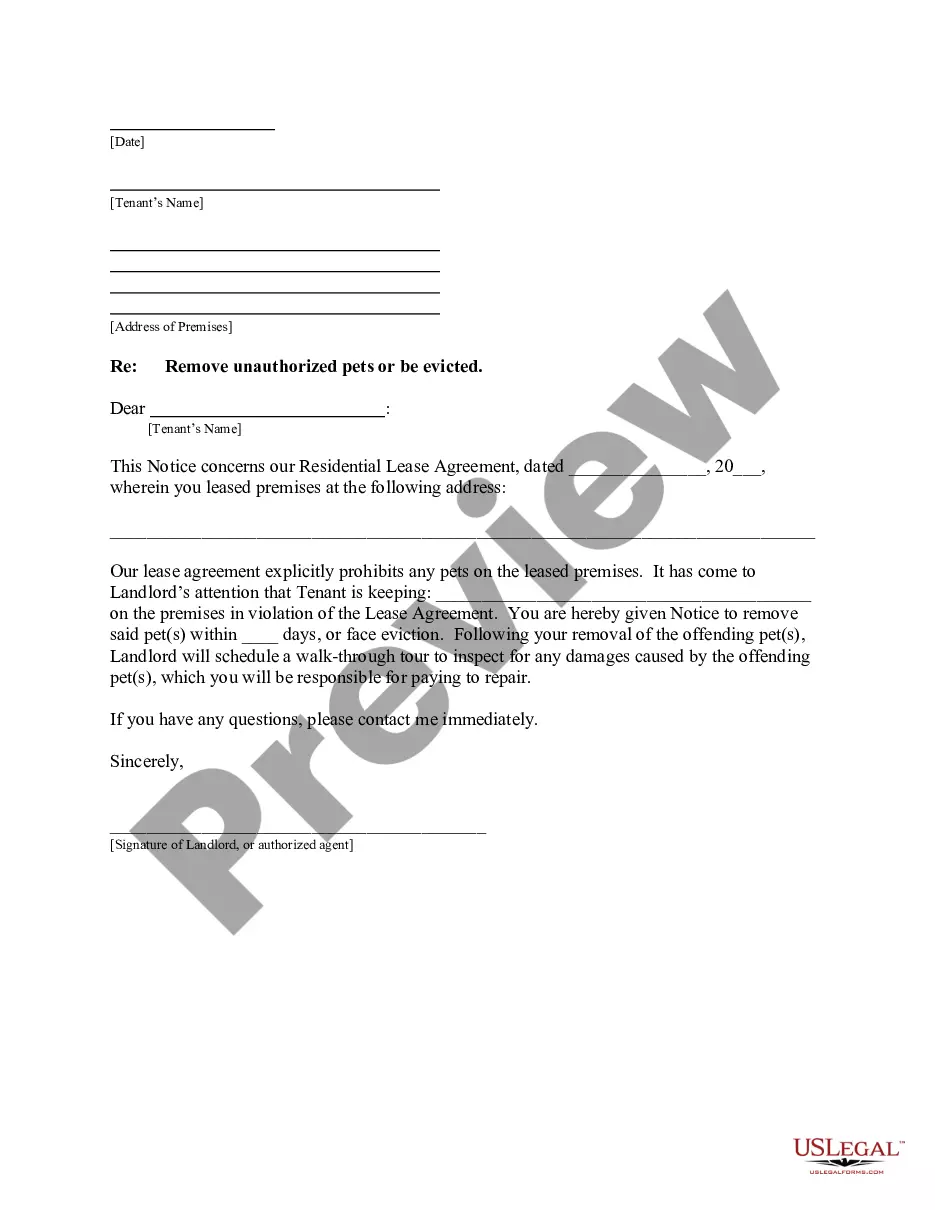
This Letter from Landlord to Tenant as Notice to remove Wild Animals in Premises is a legal document used by landlords to inform tenants of a breach of lease terms related to keeping wild animals on the property. This form helps to clearly communicate the specific violations and provides a formal notice that can be followed up with further action if necessary. Unlike more general notices, this letter addresses the particular issue of wild animals, ensuring clarity and legal standing in the notification process.
What’s included in this form
- Identification of the landlord and tenant
- Details of the lease agreement terms violated
- Notice of the breach regarding wild animals
- Signature field for the landlord or authorized agent
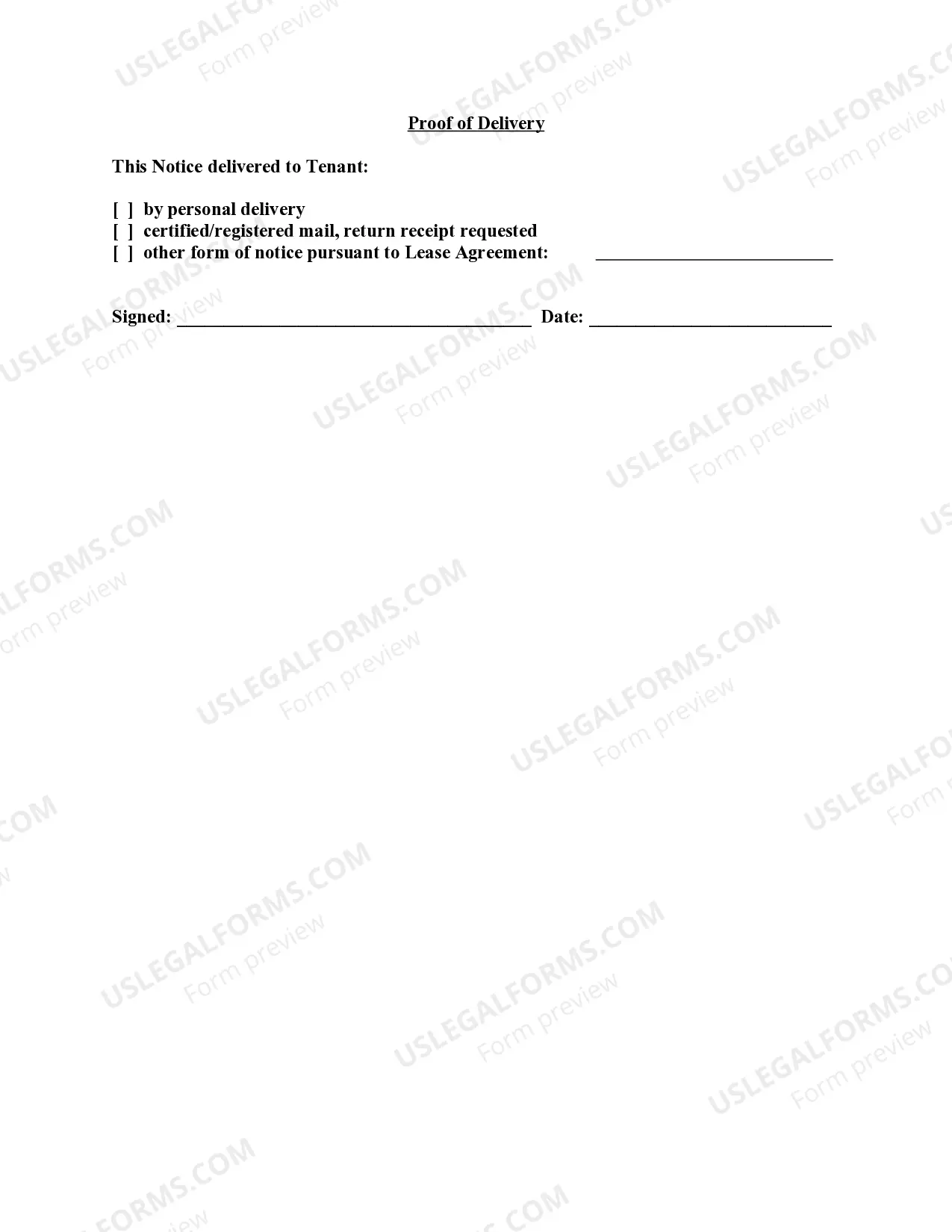
- Proof of delivery options (personal delivery, certified/registered mail)
When to use this document
This notice should be used when a landlord discovers that a tenant is keeping wild animals on the rental premises, which violates the lease agreement. It is important to formally notify the tenant of this breach to initiate discussions about removing the animals and avoiding potential conflicts or legal issues in the future.
Intended users of this form
- Landlords looking to enforce lease agreement terms
- Property managers acting on behalf of property owners
- Legal representatives representing landlords
Steps to complete this form
- Identify the landlord and tenant by entering their names and addresses.
- Specify the terms of the lease agreement that have been violated.
- Clearly state the nature of the breach involving wild animals.
- Sign the letter, providing your signature as the landlord or authorized agent.
- Choose the method of delivery for the notice to the tenant.
Is notarization required?
In most cases, this form does not require notarization. However, some jurisdictions or signing circumstances might. US Legal Forms offers online notarization powered by Notarize, accessible 24/7 for a quick, remote process.
Get your form ready online
Our built-in tools help you complete, sign, share, and store your documents in one place.
Make edits, fill in missing information, and update formatting in US Legal Forms—just like you would in MS Word.
Download a copy, print it, send it by email, or mail it via USPS—whatever works best for your next step.
Sign and collect signatures with our SignNow integration. Send to multiple recipients, set reminders, and more. Go Premium to unlock E-Sign.
If this form requires notarization, complete it online through a secure video call—no need to meet a notary in person or wait for an appointment.
We protect your documents and personal data by following strict security and privacy standards.

Make edits, fill in missing information, and update formatting in US Legal Forms—just like you would in MS Word.

Download a copy, print it, send it by email, or mail it via USPS—whatever works best for your next step.

Sign and collect signatures with our SignNow integration. Send to multiple recipients, set reminders, and more. Go Premium to unlock E-Sign.

If this form requires notarization, complete it online through a secure video call—no need to meet a notary in person or wait for an appointment.

We protect your documents and personal data by following strict security and privacy standards.
Typical mistakes to avoid
- Failing to specify which terms of the lease have been violated.
- Not providing clear evidence of the breach if applicable.
- Neglecting to properly sign and date the notice.
- Using incorrect methods of delivery that do not meet legal standards.
Benefits of completing this form online
- Easy access to professionally drafted legal language.
- Convenient to download and print for immediate use.
- Editable fields to customize the document to your specific situation.
- Reliable source ensuring legal compliance with lease notices.
What to keep in mind
- This form empowers landlords to address lease breaches formally.
- Maintaining a documented process is crucial for legal protection.
- Understanding local regulations enhances compliance and effectiveness.
Looking for another form?
Form popularity
FAQ
State law prohibits landlords from entering rental housing without either the consent of the tenant or providing reasonable notice in advance, unless circumstances require the landlord to perform emergency repairs.
The big take-away is that in most circumstances a landlord cannot enter a property without agreement from the tenant. And If the landlord ignores the law and enters the property without permission, the tenant may be able to claim damages or gain an injunction to prevent the landlord doing it again.
Dear (Name of landlord or manager), This letter constitutes my written (number of days' notice that you need to give based on your lease agreement)-day notice that I will be moving out of my apartment on (date), the end of my current lease. I am leaving because (new job, rent increase, etc.)
Be in writing, Say the full name of the tenant or tenants, Have the address the notice is about, Say everything that the tenant did to break the lease or deserve a 3 day notice to leave, and include details and dates, Say clearly that the tenant has to move out as soon as the 3 days are up, and.
Your name, and the landlord's name and address. The date you're writing the letter. Informing the landlord you're breaking your lease early. The reason why you're breaking your lease. The building and apartment you're vacating. The date by which you're vacating.
Dear (Name of landlord or manager), This letter constitutes my written (number of days' notice that you need to give based on your lease agreement)-day notice that I will be moving out of my apartment on (date), the end of my current lease. I am leaving because (new job, rent increase, etc.)
TERMINATING OR ENDING YOUR TENANCY If you have no written lease and you pay rent by the month, the tenancy can be terminated by either you or the landlord for any reason or no reason at all, by giving at least 30 days written notice before the next rental due date.
Step 1: Mention the Reason for Giving a Notice. Step 2: Use Formal Language. Step 3: Mention the Date for Vacating. Step 4: Address the Formalities to Be Taken Care Of. Step 5: Proofread the Letter.
Write the title for your pay or quit notice across the top of the letter. If not included in the title, the number of days for the notice must be specified. Include the names of each of the tenants. Specify the address of the rental property.