Wisconsin Letter from Tenant to Landlord with Demand that landlord repair floors, stairs or railings
What this document covers
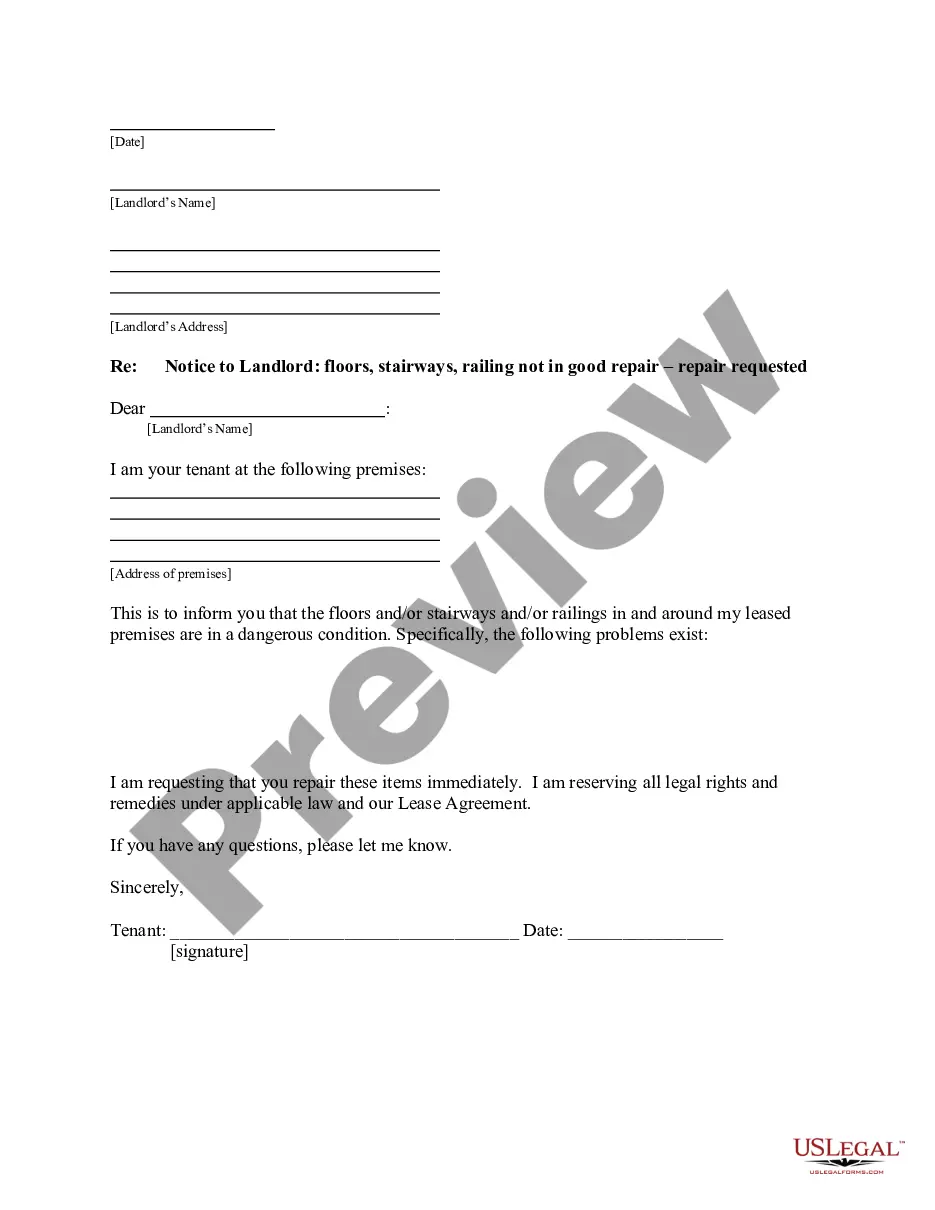
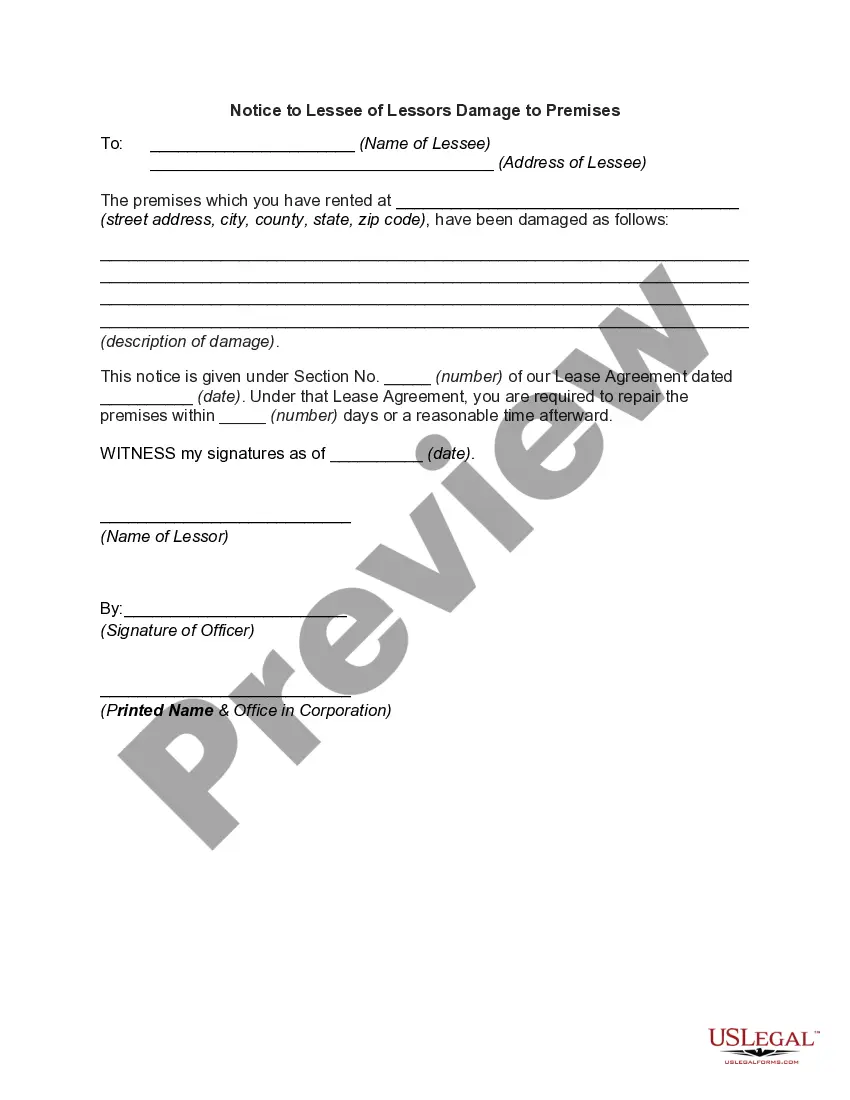
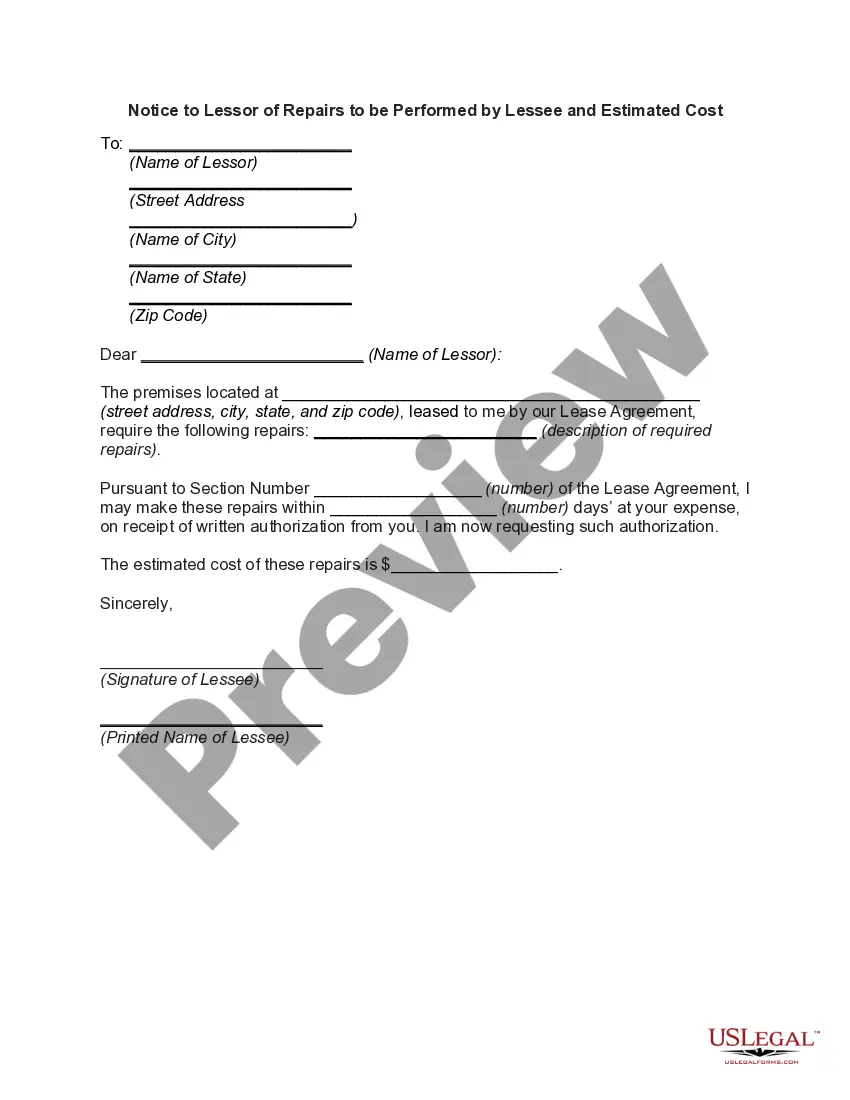
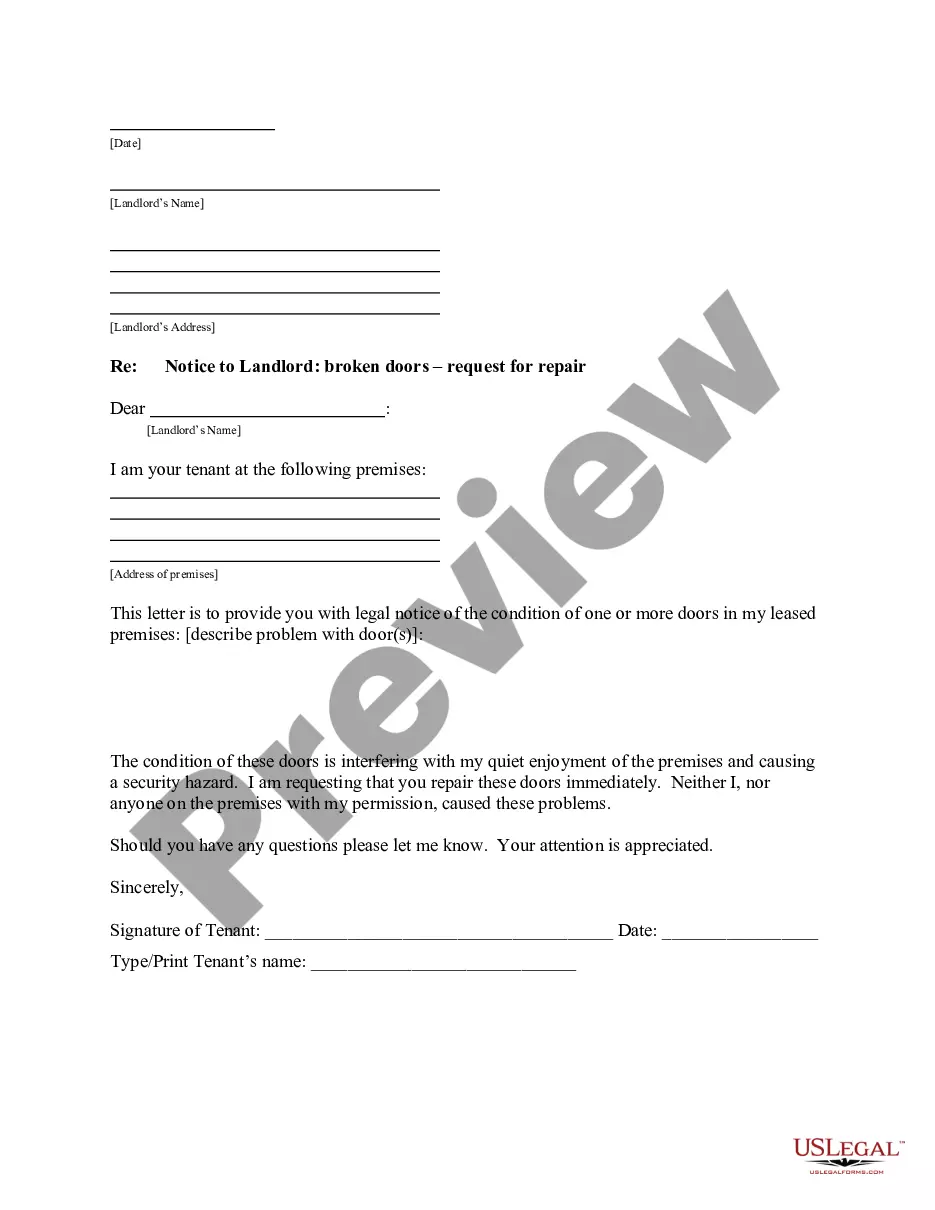
This form is a Letter from Tenant to Landlord with Demand that landlord repair floors, stairs or railings. It serves to notify the landlord about necessary repairs related to the lease premises, specifically issues with floors, stairways, or railings that are not in good condition. This letter highlights the landlord's breach of the statutory duty to maintain the property in a tenantable condition and demands that proper repairs be made to ensure tenant safety and satisfaction.
Main sections of this form
- Tenant information: Includes the name and contact details of the tenant sending the letter.
- Landlord information: Provides the name and address of the landlord or their authorized agent.
- Property details: Specifies the address and relevant details of the rental property.
- Repair issues: Clearly states the specific issues with the floors, stairs, or railings that require attention.
- Demand for action: A section outlining the demand for repairs, including a reasonable deadline for completion.
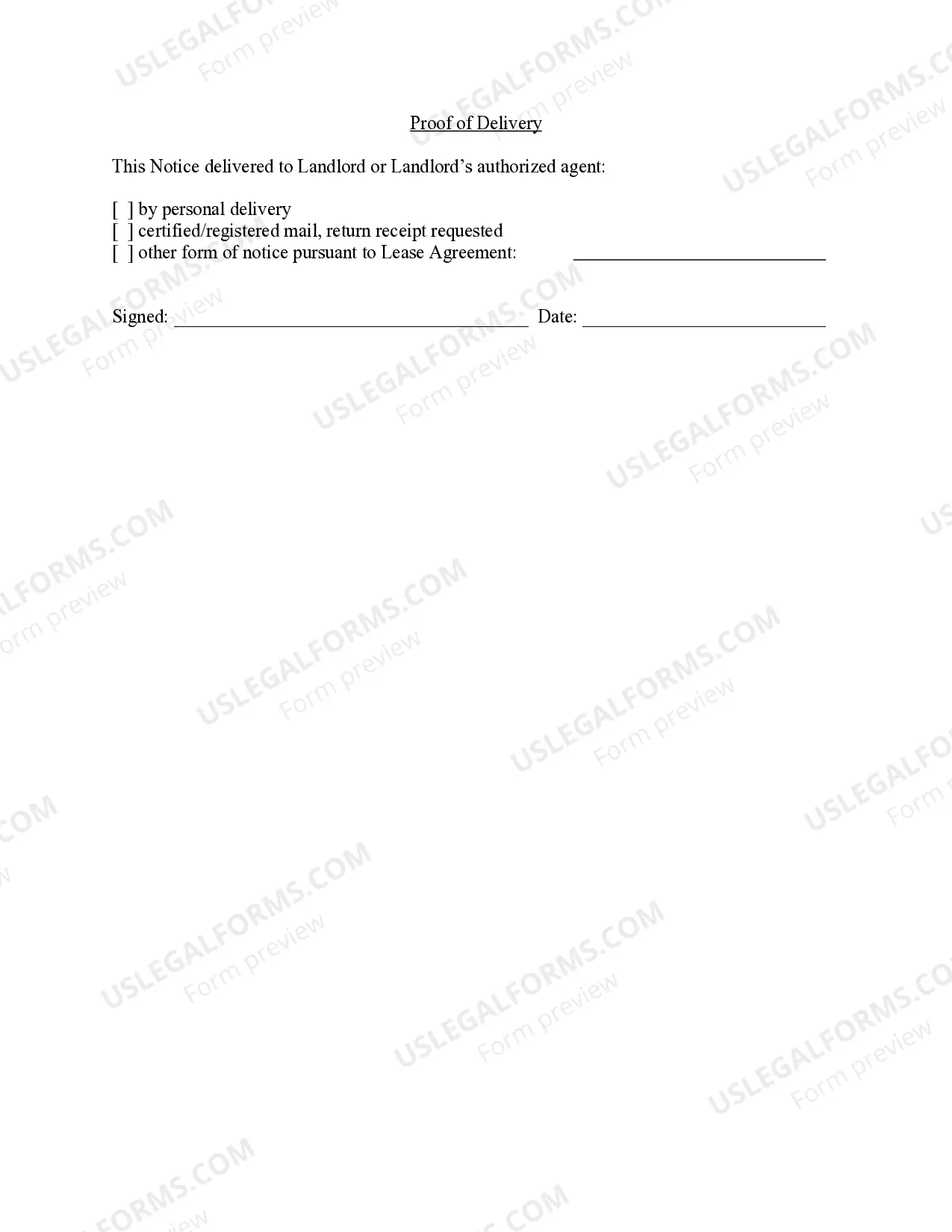
- Proof of delivery: Documents the method of how the letter was delivered to the landlord.


Situations where this form applies
This form should be used when a tenant identifies issues with the safety or functionality of floors, stairs, or railings in their rental property. It is particularly important to send this letter when the landlord has not responded to previous repair requests or when the tenant believes that the landlord is neglecting their duty to maintain the property. This can help initiate prompt repairs and protect the tenant's rights.
Who needs this form
- Any tenant experiencing issues with their rental propertyâs floors, stairs, or railings.
- Individuals seeking to formally document their demands to landlords regarding necessary repairs.
- Tenants who have previously communicated repair needs to their landlord but received no adequate response.
- Renters wishing to protect their rights and ensure their living environment is safe and well-maintained.
Instructions for completing this form
- Enter your name and contact information at the top of the letter.
- Provide the landlordâs name and address in the next section.
- Specify the property address where the repairs are needed.
- Clearly describe the issues with the floors, stairs, or railings that require repair.
- Clearly state your demand for repairs and include a reasonable deadline for completion.
- Sign and date the letter to finalize it, and make note of the delivery method for proof.
Notarization requirements for this form
This form does not typically require notarization unless specified by local law. It is important to verify local regulations to ensure compliance.
Get your form ready online
Our built-in tools help you complete, sign, share, and store your documents in one place.
Make edits, fill in missing information, and update formatting in US Legal Forms—just like you would in MS Word.
Download a copy, print it, send it by email, or mail it via USPS—whatever works best for your next step.
Sign and collect signatures with our SignNow integration. Send to multiple recipients, set reminders, and more. Go Premium to unlock E-Sign.
If this form requires notarization, complete it online through a secure video call—no need to meet a notary in person or wait for an appointment.
We protect your documents and personal data by following strict security and privacy standards.

Make edits, fill in missing information, and update formatting in US Legal Forms—just like you would in MS Word.

Download a copy, print it, send it by email, or mail it via USPS—whatever works best for your next step.

Sign and collect signatures with our SignNow integration. Send to multiple recipients, set reminders, and more. Go Premium to unlock E-Sign.

If this form requires notarization, complete it online through a secure video call—no need to meet a notary in person or wait for an appointment.

We protect your documents and personal data by following strict security and privacy standards.
Typical mistakes to avoid
- Failing to include all necessary information about the property and issues.
- Not setting a reasonable timeline for repairs, which can delay action.
- Sending the letter without ensuring proof of delivery, which is important for records.
- Using vague language when describing the repair needs, leading to confusion.
Benefits of completing this form online
- Convenient access to a legally vetted template that saves time.
- Easy download and customization to fit specific situations.
- Provides a clear, formal method of communication with landlords.
- Helps ensure that your rights as a tenant are documented clearly and professionally.
Looking for another form?
Form popularity
FAQ
If you're seeking damages for emotional distress caused by a landlord's discrimination, or punitive damages for especially blatant and intentional discrimination, a lawsuit may well be your best bet. Understand what's involved in suing your landlord. You may file a lawsuit in either federal or state court.
Uninhabitable conditions can include dangerous ones, such as holes in the floor, unsafe or exposed wiring, or non-working air conditioning in dangerously hot summer months. Gross infestations of roaches, fleas or other pests are also uninhabitable conditions.
Uninhabitable conditions can include dangerous ones, such as holes in the floor, unsafe or exposed wiring, or non-working air conditioning in dangerously hot summer months. Gross infestations of roaches, fleas or other pests are also uninhabitable conditions.
Landlords Must Fix Major Problems Your landlord must keep the structure of the building sound, including stairways, floors, and roofs; keep electrical, heating, and plumbing systems operating safely; supply hot and cold water in reasonable amounts; and exterminate infestations of pests such as cockroaches.
You can file a lawsuit for negligence against the manager of a real estate property in the same way you can sue the owner of any type of business. Generally speaking, with certain exceptions, filing a lawsuit for negligence against a property manager is a straightforward process.
So when is your landlord responsible for repairs? When you rent, your landlord is responsible for maintaining the functional aspects of your home such as plumbing, electricity, and heating. Landlords must also generally take action when flooding, a clogged pipe, pest infestation, or other problems occur.
Know your state's landlord/tenant laws. Read and respond to the court summons. Try to work out a settlement. Consider legal counsel. Show up for court. Look sharp and provide evidence.
Property Needs to Meet Local Health and Building Codes. Visible Mold. Pests. Changing Locks. Heat, Electric, Hot and Cold Water. Structural Integrity and Weather Protected. Regularly Discarding Trash. Damage Caused by the Tenant or Their Guests.
The landlord had a duty to reasonably maintain the property; The landlord knew or should have known of the dangerous condition; The landlord breached their duty by failing to repair/fix the dangerous condition;