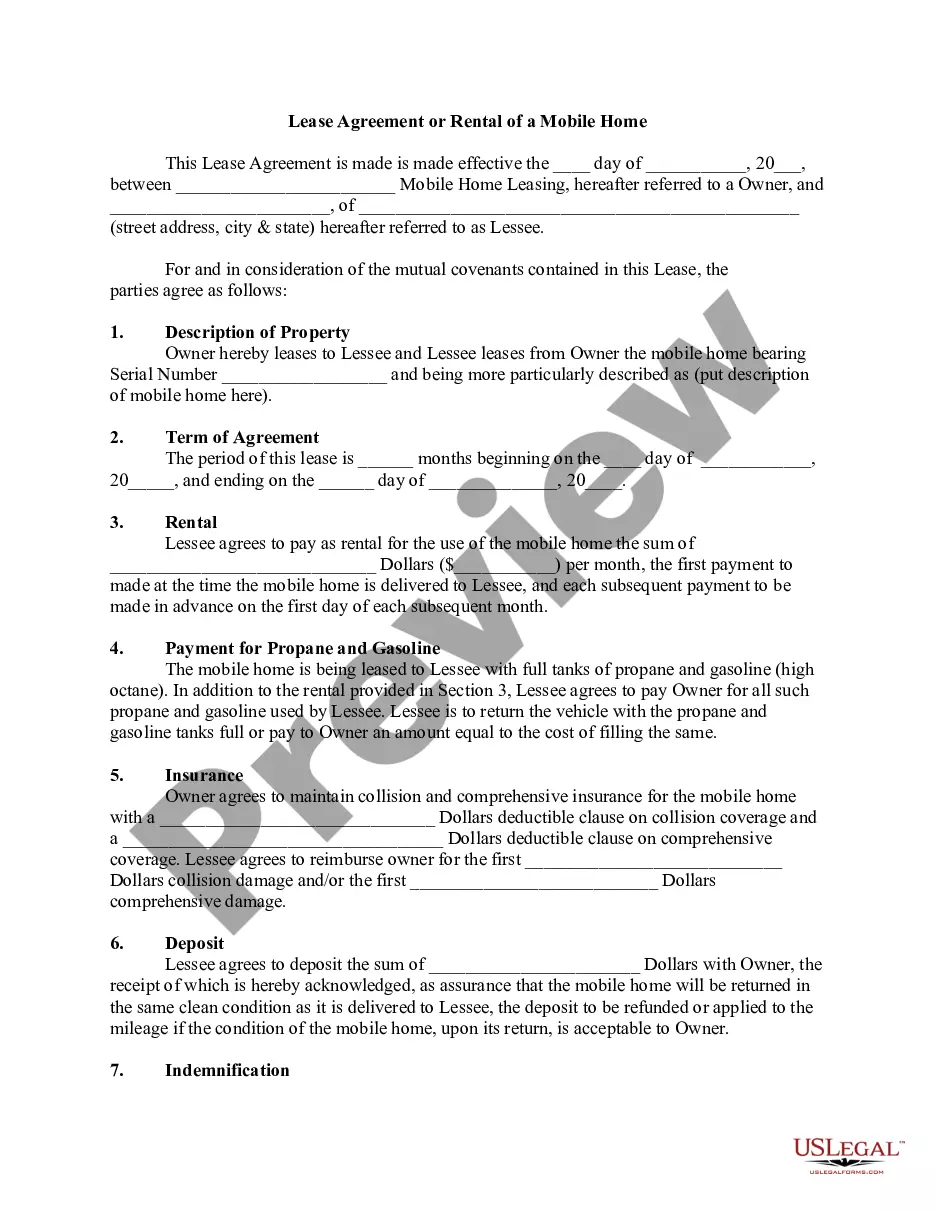
Wisconsin Bylaws for Corporation
Overview of this form
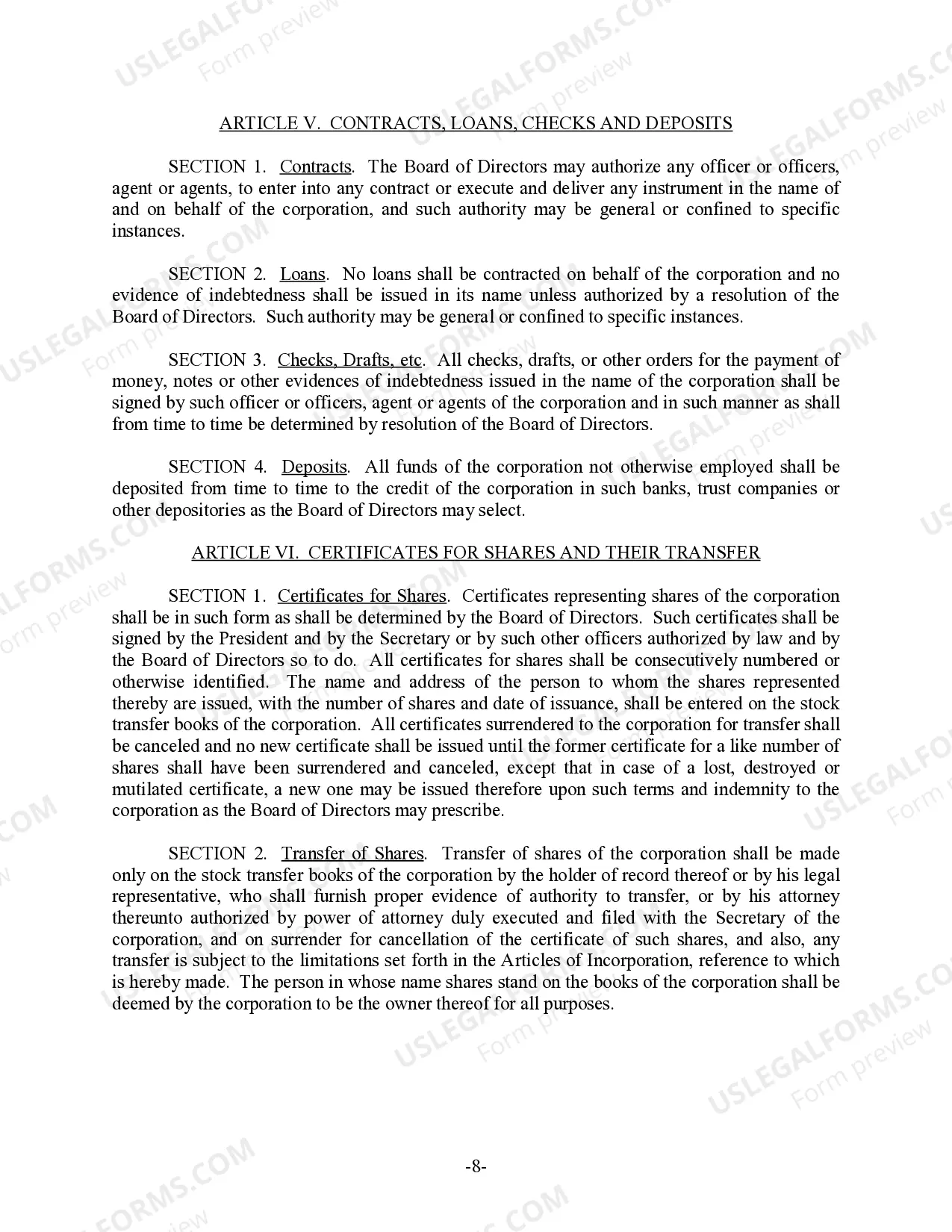
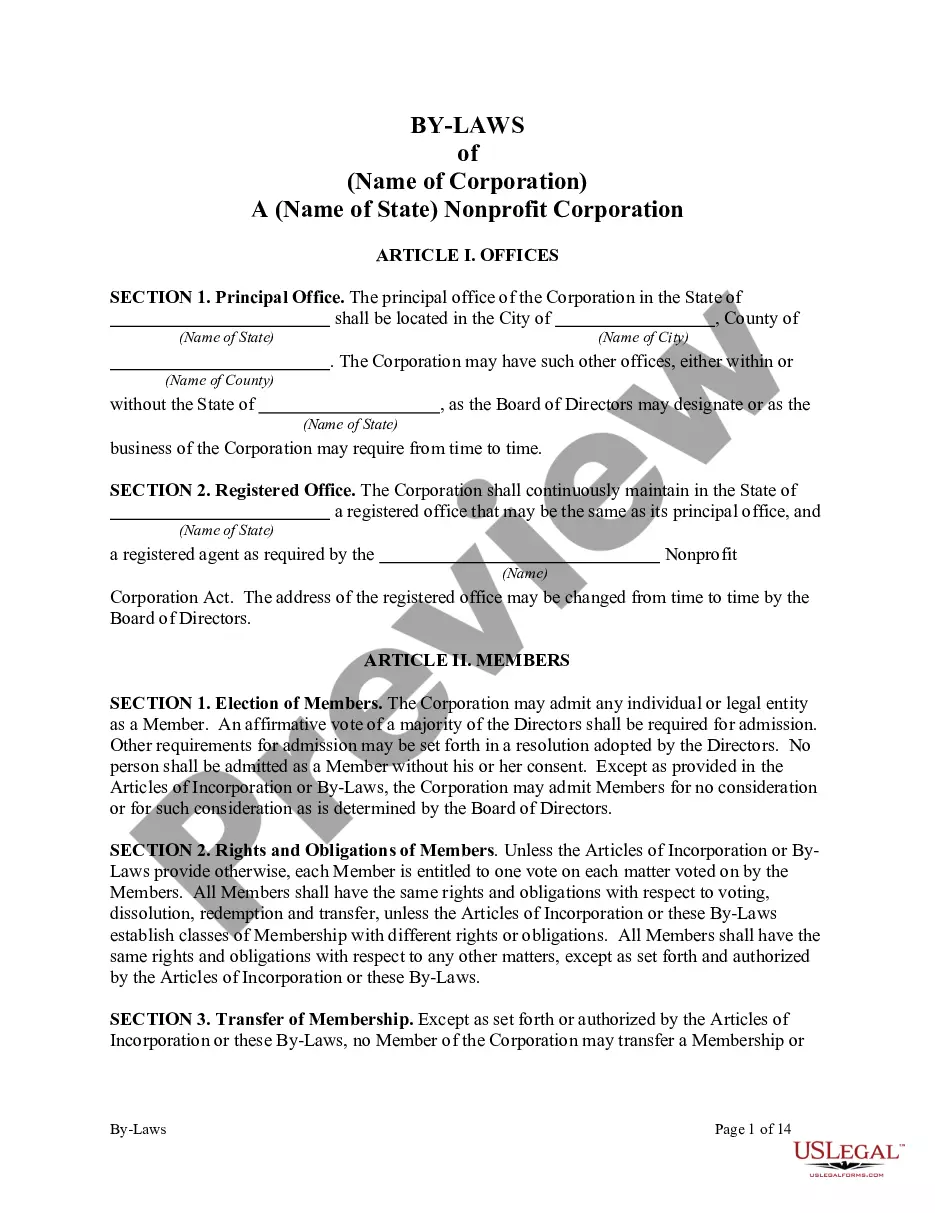
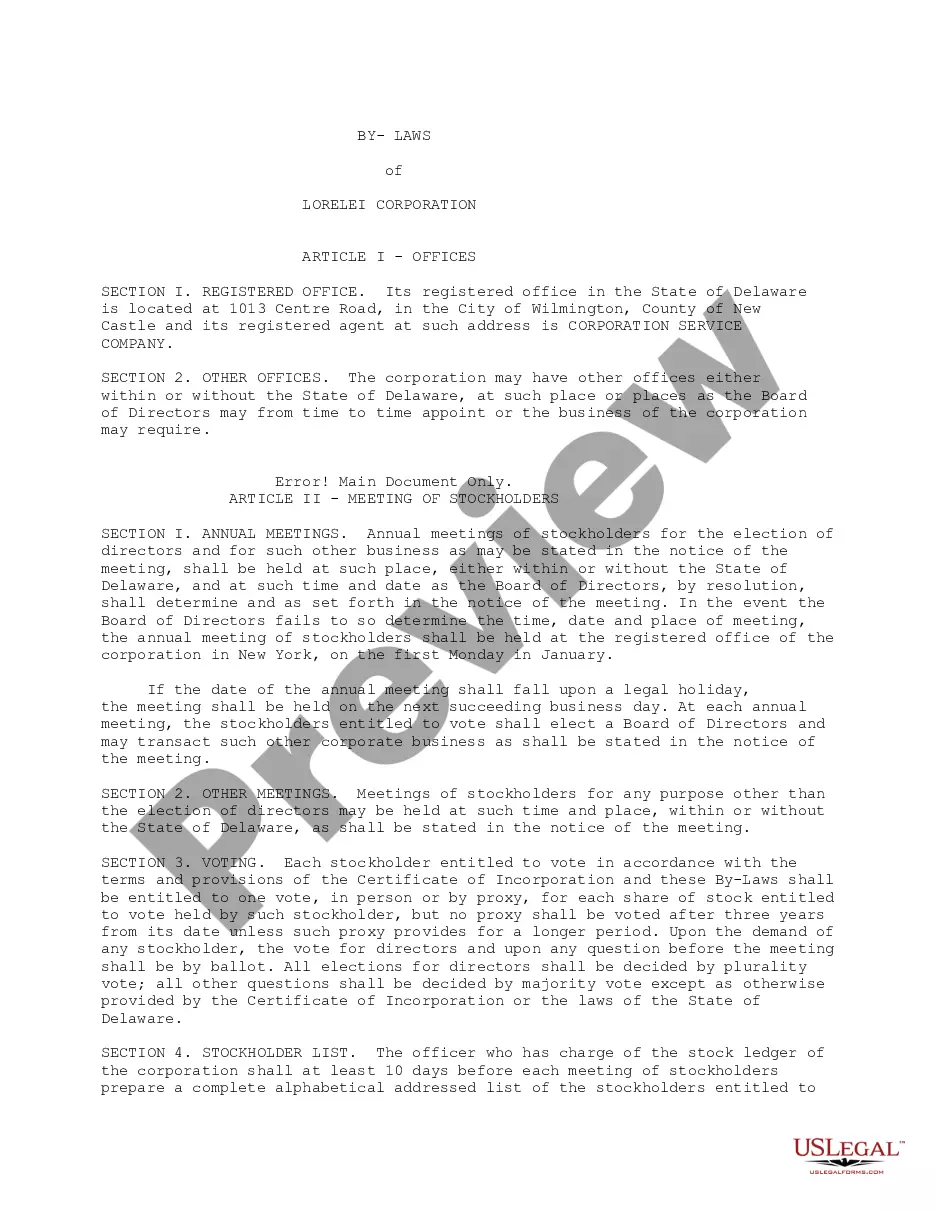
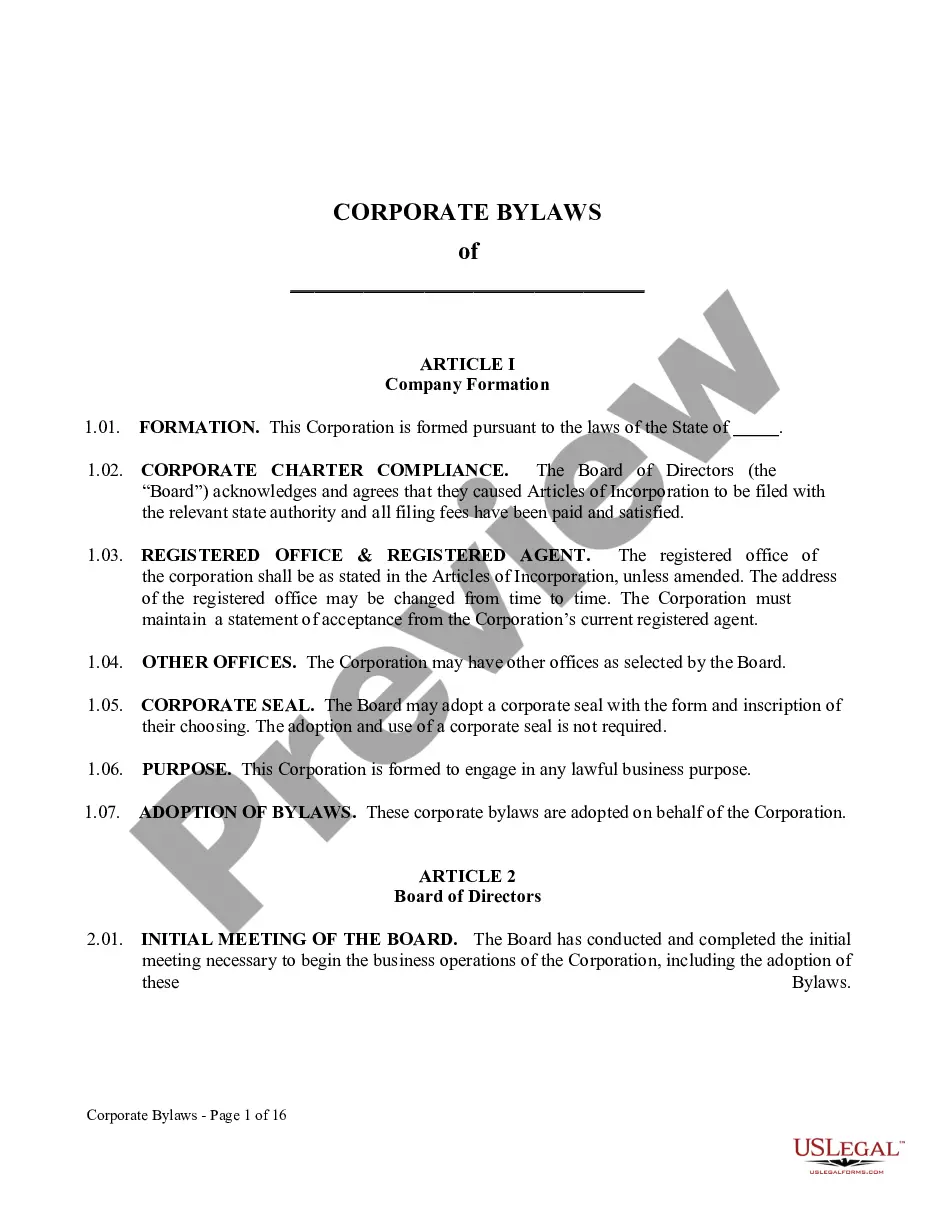
The Wisconsin Bylaws for Corporation is a legal document that outlines the rules for the internal management of a business corporation in Wisconsin. This form serves to establish how the corporation will operate, detailing provisions related to shareholders meetings, officers, directors, voting rights, and stock records. It is critical for defining the operational framework and governance of the corporation, ensuring compliance with Wisconsin laws.
Main sections of this form
- Name and location of the corporation
- Annual meeting schedule for shareholders
- Provisions for directors, including their number and qualifications
- Officers' roles and responsibilities
- Voting procedures and requirements for shareholders
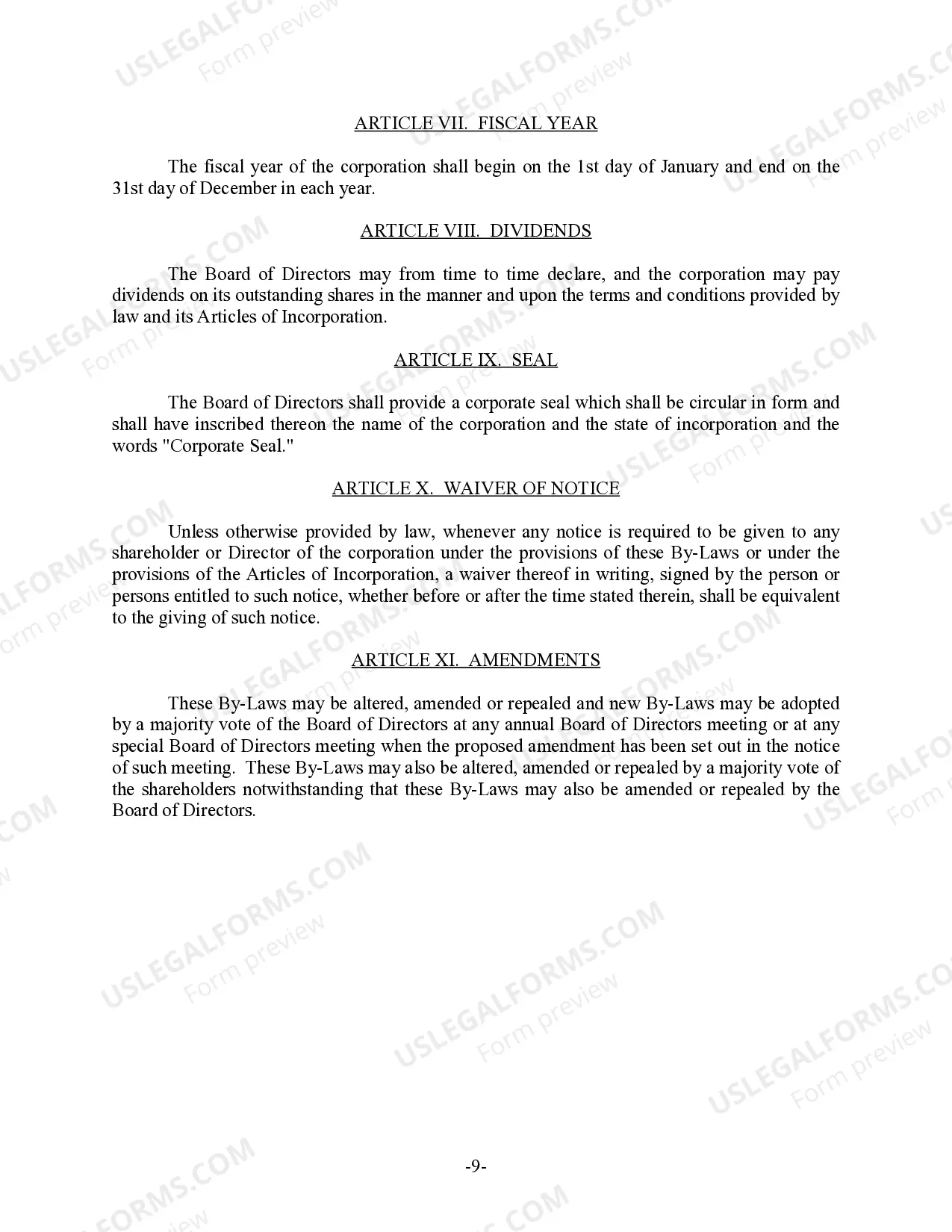
- Amendment process for the bylaws



Situations where this form applies
This form is needed when establishing a new corporation in Wisconsin or when existing corporations need to update their bylaws. It is especially important for organizing the first board meeting, defining officer roles, and setting up guidelines for shareholder meetings. Corporations seeking to ensure transparency and proper governance should complete this form to maintain legal compliance.
Intended users of this form
- Business owners or entrepreneurs forming a new corporation in Wisconsin
- Existing corporations looking to revise their bylaws
- Board members involved in corporate governance and compliance
- Shareholders wishing to understand their rights and responsibilities
Completing this form step by step
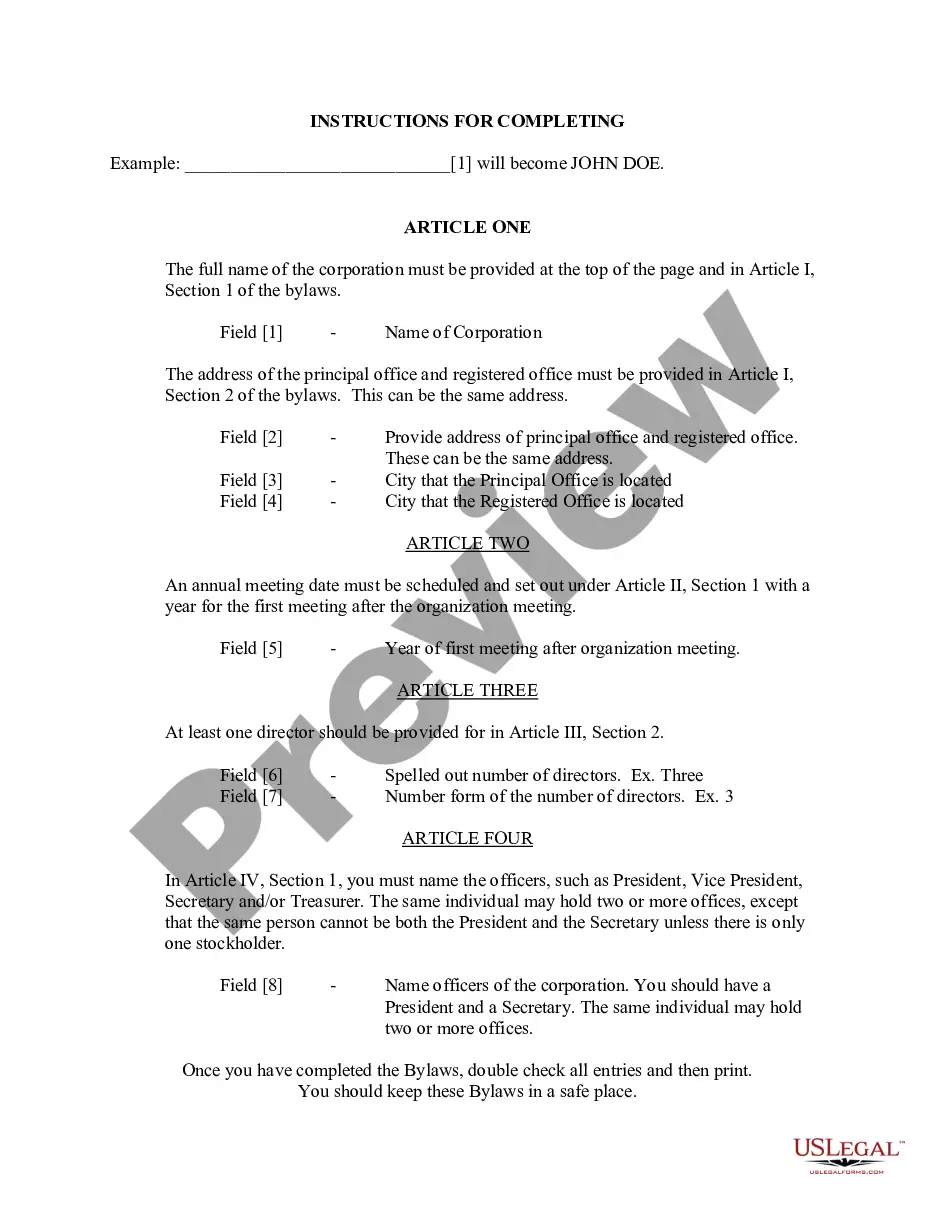
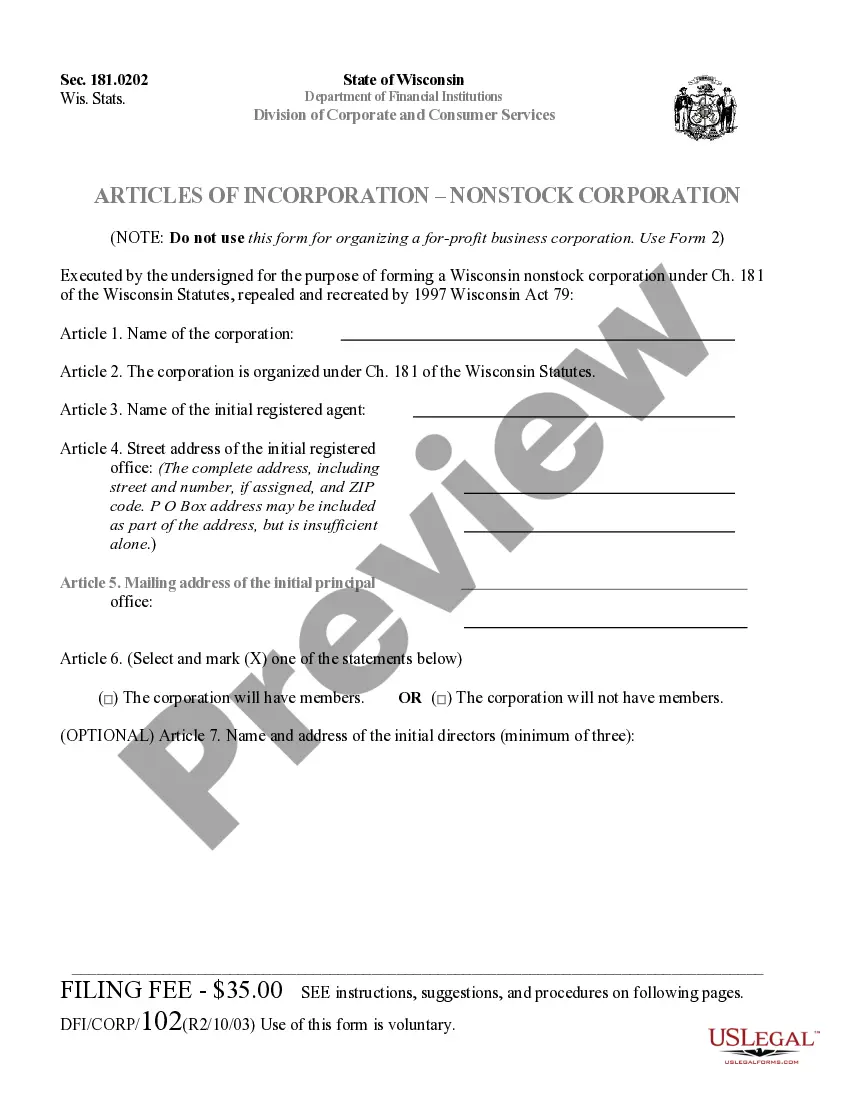
- Enter the full name and address of the corporation at the beginning of the bylaws.
- Specify the date of the first annual meeting after the organization meeting.
- Indicate the number of directors and list their names.
- Name the officers of the corporation, including at least a President and a Secretary.
- Review all entries for accuracy, then print and store the bylaws in a secure location.
Does this form need to be notarized?
This form does not typically require notarization to be legally valid. However, some jurisdictions or document types may still require it. US Legal Forms provides secure online notarization powered by Notarize, available 24/7 for added convenience.
Get your form ready online
Our built-in tools help you complete, sign, share, and store your documents in one place.
Make edits, fill in missing information, and update formatting in US Legal Forms—just like you would in MS Word.
Download a copy, print it, send it by email, or mail it via USPS—whatever works best for your next step.
Sign and collect signatures with our SignNow integration. Send to multiple recipients, set reminders, and more. Go Premium to unlock E-Sign.
If this form requires notarization, complete it online through a secure video call—no need to meet a notary in person or wait for an appointment.
We protect your documents and personal data by following strict security and privacy standards.

Make edits, fill in missing information, and update formatting in US Legal Forms—just like you would in MS Word.

Download a copy, print it, send it by email, or mail it via USPS—whatever works best for your next step.

Sign and collect signatures with our SignNow integration. Send to multiple recipients, set reminders, and more. Go Premium to unlock E-Sign.

If this form requires notarization, complete it online through a secure video call—no need to meet a notary in person or wait for an appointment.

We protect your documents and personal data by following strict security and privacy standards.
Mistakes to watch out for
- Failing to provide complete addresses for the corporation's offices.
- Incorrectly stating the number of directors or their qualifications.
- Not specifying the date for the annual meeting.
- Omitting necessary signatures or approvals before finalizing the bylaws.
Advantages of online completion
- Convenient access to state-specific bylaws tailored for Wisconsin corporations.
- Editable format allows for personalized customization to meet specific corporate needs.
- Reliable document structure ensures compliance with legal requirements.
- Instant download means users can start the corporate formation process immediately.
Legal use & context
- This form is legally binding and enforceable in a Wisconsin court.
- Bylaws provide clarity on governance and can prevent disputes among shareholders.
- Failure to adopt clear bylaws may expose the corporation to legal challenges.
Key takeaways
- The Wisconsin Bylaws for Corporation outlines essential governance rules.
- Properly completed bylaws are crucial for compliance and operational clarity.
- Regular review and updates of bylaws are necessary to reflect any corporate changes.
Looking for another form?

Form popularity
FAQ
Corporate bylaws commonly include information that specifies, for example, the number of directors the corporation has, how they will be elected, their qualification, and the length of their terms. It can also specify when, where, and how your board of directors can call and conduct meetings, and voting requirements.
The bylaws are the corporation's operating manual; they describe how the corporation is organized and runs its affairs. You do not file the bylaws with the state, but you need to explain the roles of the corporation's participants, and technology can play a role in carrying out the bylaws.
For a corporation, it's the articles of incorporation. The second concerns the internal operating procedures of the company. For corporations, these are bylaws, and for LLCs, this is an operating agreement. Corporate bylaws give a clear structure to a business, helping it run smoothly.
Bylaws are required when the articles of incorporation do not specify the number of directors in a corporation. Any corporation whose articles of incorporation do not specify the number of directors must adopt bylaws before the first meeting of the board of directors specifying the number of directors.
Most states require you to memorialize your bylaws and, even in the states where there is no such requirement, having bylaws is a great idea. After all, corporate bylaws define your business' structure, roles, and specifies how your company will conduct its affairs.
Taxes. Corporations must file their annual tax returns. Securities. Corporations must issue stock as their security laws and articles of incorporation mandate. Bookkeeping. Board meetings. Meeting minutes. State registration. Licensing.
Bylaws are required when the articles of incorporation do not specify the number of directors in a corporation.Aside from number of directors, all the matters typically covered in the bylaws are otherwise covered by California statute, which would apply in the absence of any contrary lawful bylaw provision.
Step 1: Request a copy from the secretary of state in the business's registered state. Depending on your location, there may be a small fee. Step 2: Contact the company for a copy of its bylaws. Step 3: Search the EDGAR database. Step 4: Work with a business attorney.
Bylaws generally define things like the group's official name, purpose, requirements for membership, officers' titles and responsibilities, how offices are to be assigned, how meetings should be conducted, and how often meetings will be held.