Utah Affidavit of Occupancy and Financial Status
Overview of this form
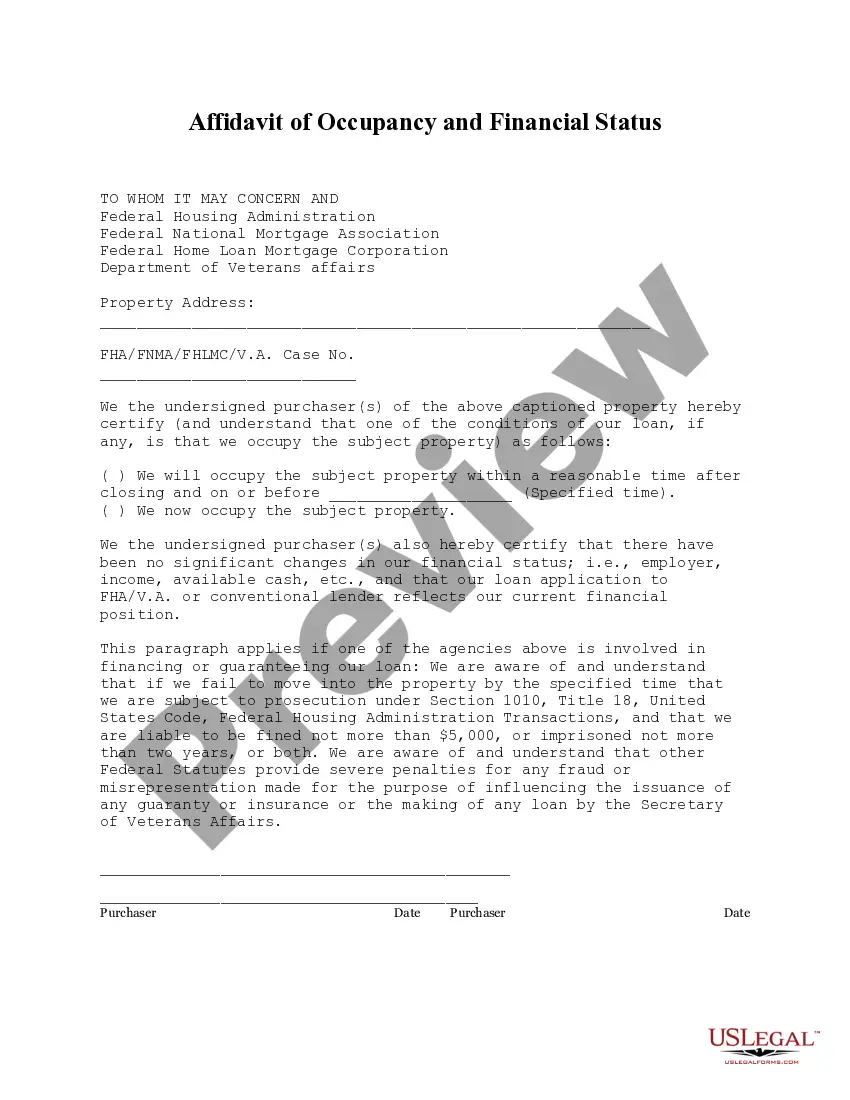
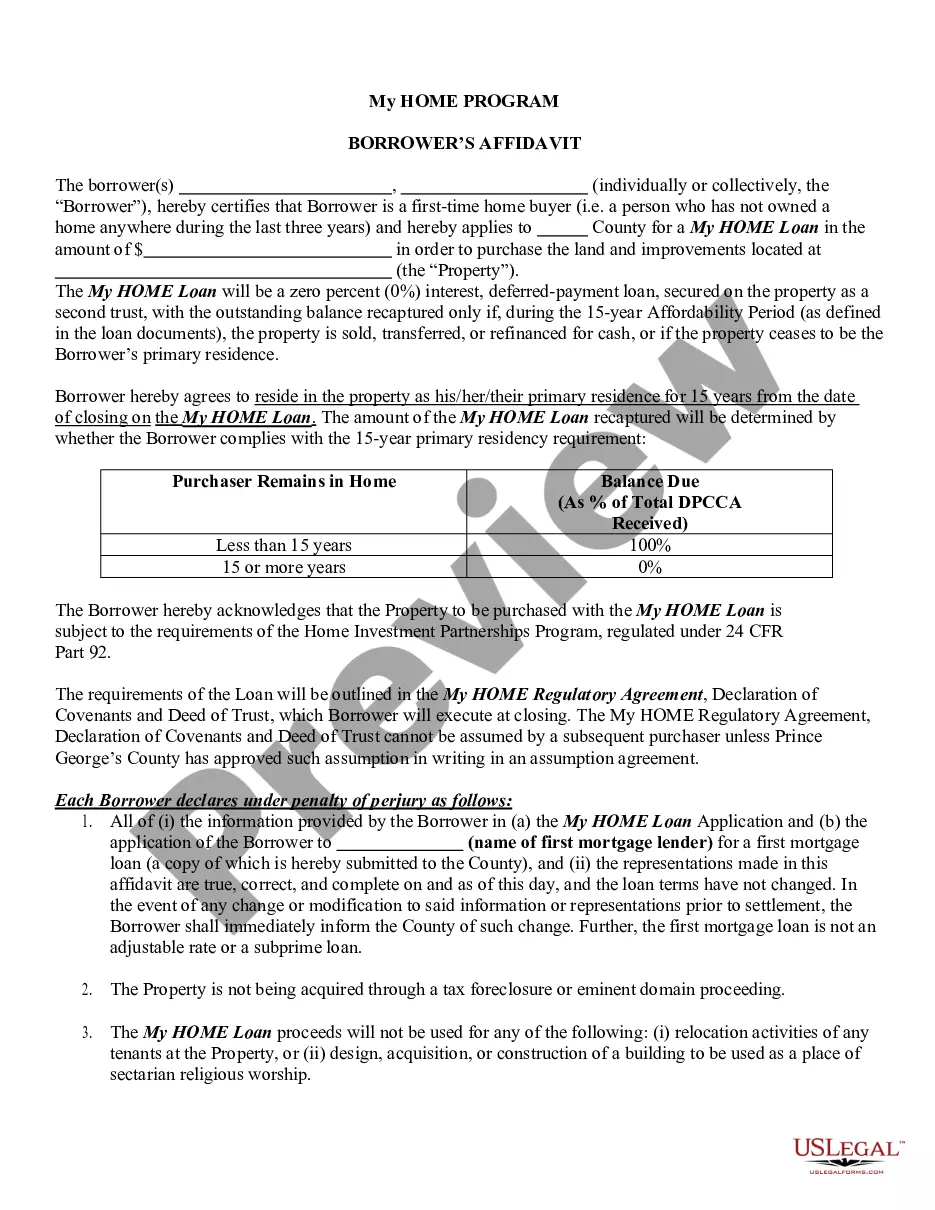
The Affidavit of Occupancy and Financial Status is a legal document used by property buyers to certify their intent to occupy the property as their principal residence. This affidavit ensures that buyers disclose their current financial condition while affirming that no significant changes have occurred since their loan application. Unlike other forms, this affidavit focuses specifically on the buyer's commitment to occupy the property and maintain the financial status initially reported.
Key parts of this document
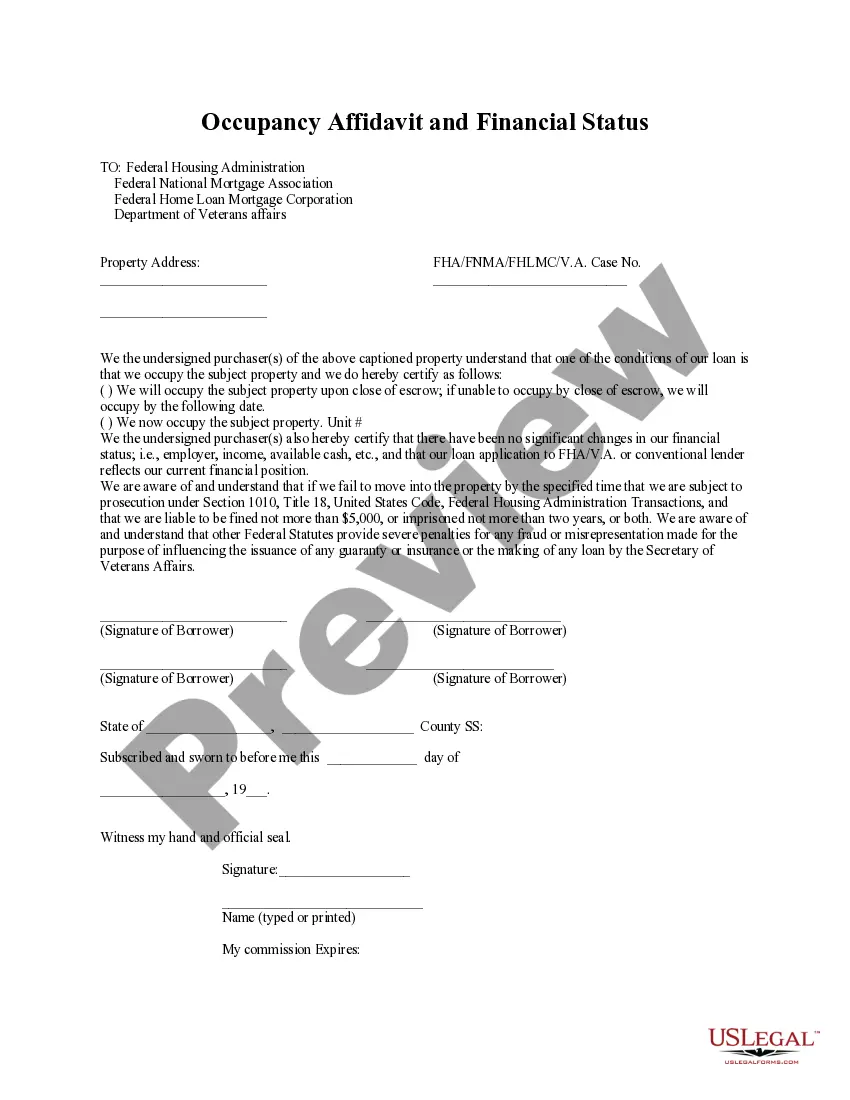
- Property address: Identification of the property being purchased.
- Occupancy certification: A declaration confirming when the buyer intends to occupy the property or if they are currently occupying it.
- Financial status declaration: A statement affirming that the buyer's financial situation has not changed since the loan application was submitted.
- Understanding of penalties: A warning regarding potential legal consequences for misrepresentation or failure to occupy the property as stated.
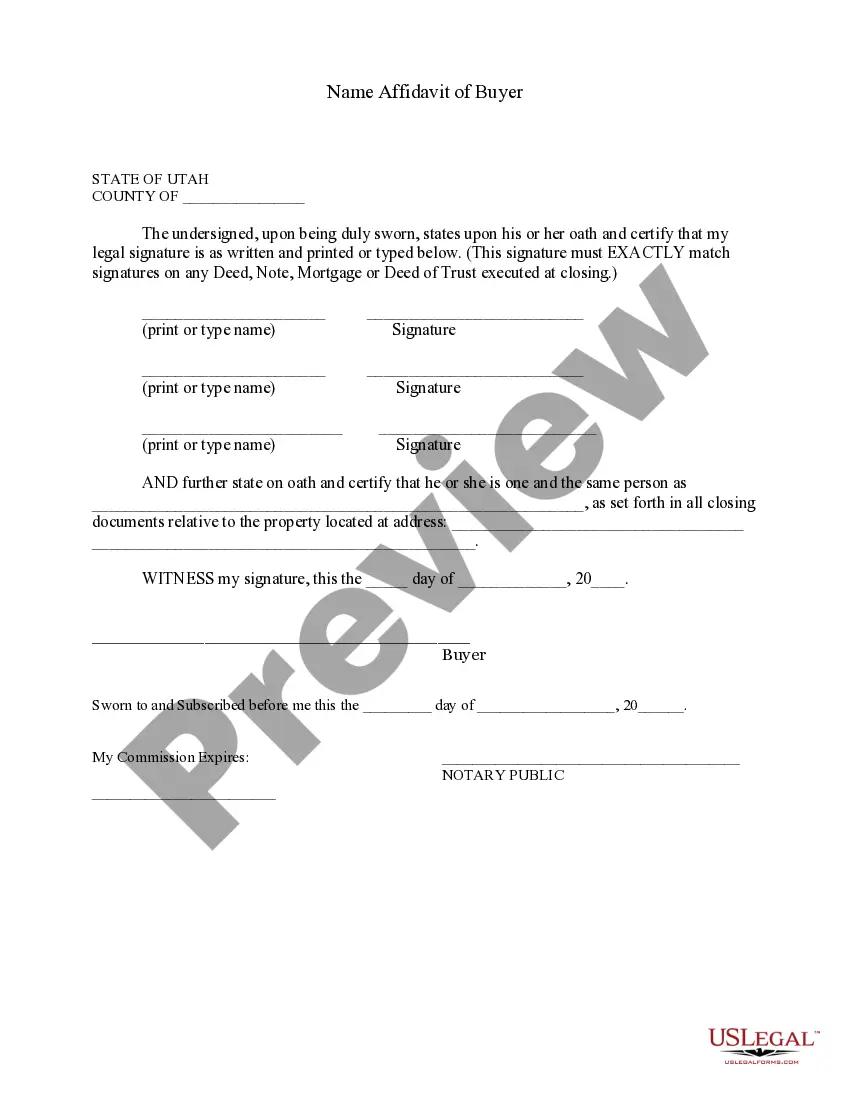
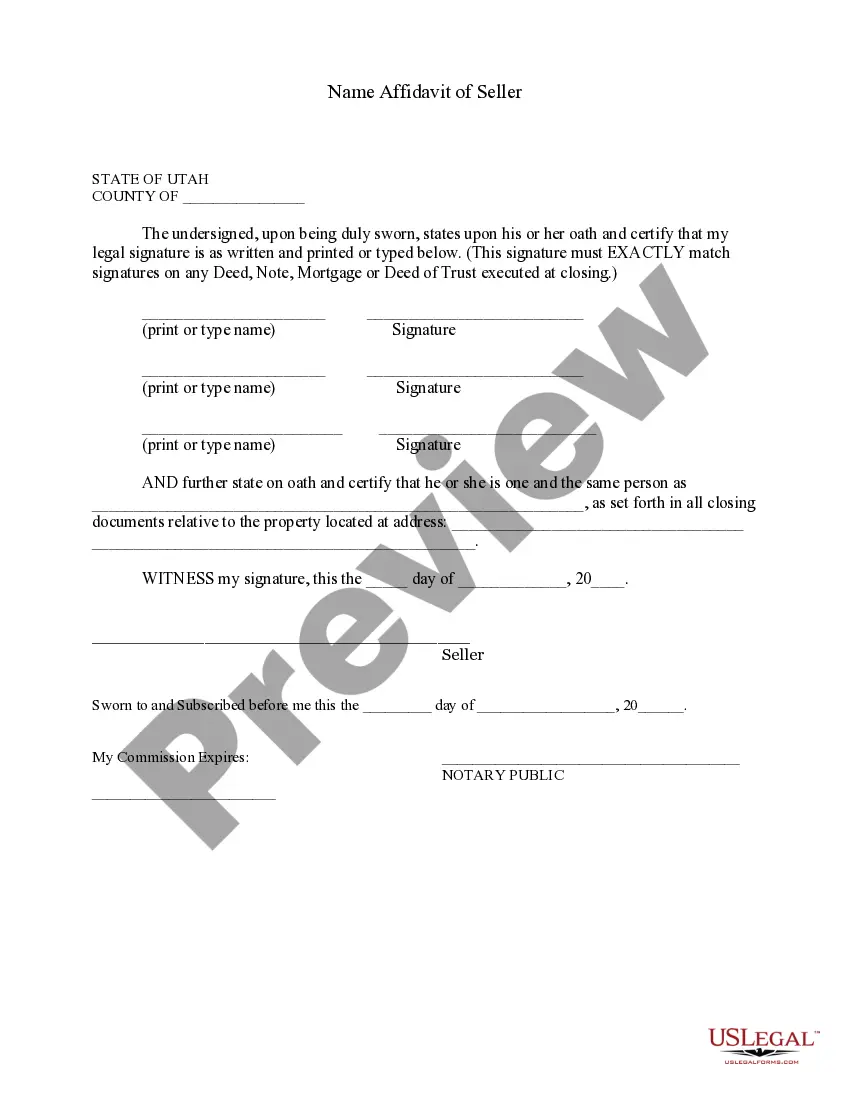
- Signatures: Signature lines for all buyers, along with dates to validate the affidavit.
Common use cases
This affidavit should be used at the time of closing a property sale, particularly when financing is involved. It is essential for fulfilling lender requirements that buyers confirm their commitment to reside in the property as their primary dwelling and maintain transparency about their financial status. This form is commonly required for FHA, VA, and conventional loans.
Who needs this form
- Property buyers who are securing a mortgage for their new home.
- Individuals applying for government-backed loans through FHA or VA.
- Anyone who needs to affirm financial stability and intent to occupy the purchased property.
How to prepare this document
- Identify the property: Enter the property address accurately on the form.
- Indicate occupancy status: Choose whether you will occupy the property within a specified timeframe or if you already occupy it.
- Declare financial status: Certify that there have been no changes in financial situations since the loan application.
- Review legal implications: Acknowledge understanding of the consequences for misrepresentation regarding occupation or financial status.
- Sign and date the affidavit: Ensure all buyers sign the document and enter the date of completion.
Is notarization required?
This form needs to be notarized to ensure legal validity. US Legal Forms provides secure online notarization powered by Notarize, allowing you to complete the process through a verified video call, available anytime.
Get your form ready online
Our built-in tools help you complete, sign, share, and store your documents in one place.
Make edits, fill in missing information, and update formatting in US Legal Forms—just like you would in MS Word.
Download a copy, print it, send it by email, or mail it via USPS—whatever works best for your next step.
Sign and collect signatures with our SignNow integration. Send to multiple recipients, set reminders, and more. Go Premium to unlock E-Sign.
If this form requires notarization, complete it online through a secure video call—no need to meet a notary in person or wait for an appointment.
We protect your documents and personal data by following strict security and privacy standards.
Make edits, fill in missing information, and update formatting in US Legal Forms—just like you would in MS Word.
Download a copy, print it, send it by email, or mail it via USPS—whatever works best for your next step.
Sign and collect signatures with our SignNow integration. Send to multiple recipients, set reminders, and more. Go Premium to unlock E-Sign.

If this form requires notarization, complete it online through a secure video call—no need to meet a notary in person or wait for an appointment.
We protect your documents and personal data by following strict security and privacy standards.
Common mistakes to avoid
- Failing to accurately specify the property address.
- Not indicating the correct occupancy status, leading to potential lender penalties.
- Omitting signatures of all buyers, which can render the affidavit invalid.
- Neglecting to review financial changes, which could lead to legal repercussions.
Why use this form online
- Convenience of immediate access and easy downloads anytime.
- Editability allows for personal adjustments before finalizing.
- Reliability with templates drafted by licensed attorneys to ensure legal validity.
Looking for another form?
Form popularity
FAQ
Although affidavits are considered legal documents, anyone can draft one. As long as it is signed, witnessed, and notarized correctly, it will be valid. That means that you do not have to use a lawyer to create an affidavit.
Step 2: Write the purpose of the Affidavit or the Heading. Step 3: Write the name of the parties in case of an affidavit being filled in Court or Write the name of the Deponent in case of other affidavits. Step 4: Write the complete address of the deponent.
I ____ (Applicant Name as per id proof), residing at _______(Address as per address proof) do solemnly affirm and stated as under: I am _____ and my name _______, appearing on the enclosed ID proof, is single name. My father's name is ________________.
An affidavit is used for the purpose of proving in court that a claim is true, and is typically used in conjunction with witness statements and other corroborating evidence. Through an affidavit, an individual swears that the information contained within is true to the best of their knowledge.
In the sentence, the person writing the statement must state that he or she is stating that the information is accurate. (Example: I, Jane Doe, solemnly swear that the contents of this document are true and correct, and that I agree to abide by the terms in this affidavit.)
Title the affidavit. First, you'll need to title your affidavit. Craft a statement of identity. The very next section of your affidavit is what's known as a statement of identity. Write a statement of truth. State the facts. Reiterate your statement of truth. Sign and notarize.
An affidavit is a written statement. It considers having a format under oath. It's only valid when it is on a voluntary basis and without coercion. When you sign an affidavit, you say that the evidence is accurate and that you are aware of the details in the affidavit personally.
In a nutshell, an affidavit is a sworn statement that is in writing. Affidavits are usually used in a court or in negotiations. They are common in family law cases and bankruptcy cases. They are also used in civil and criminal cases, though not as often as family or bankruptcy law cases.