Utah Bill of Sale with Warranty by Individual Seller
What this document covers
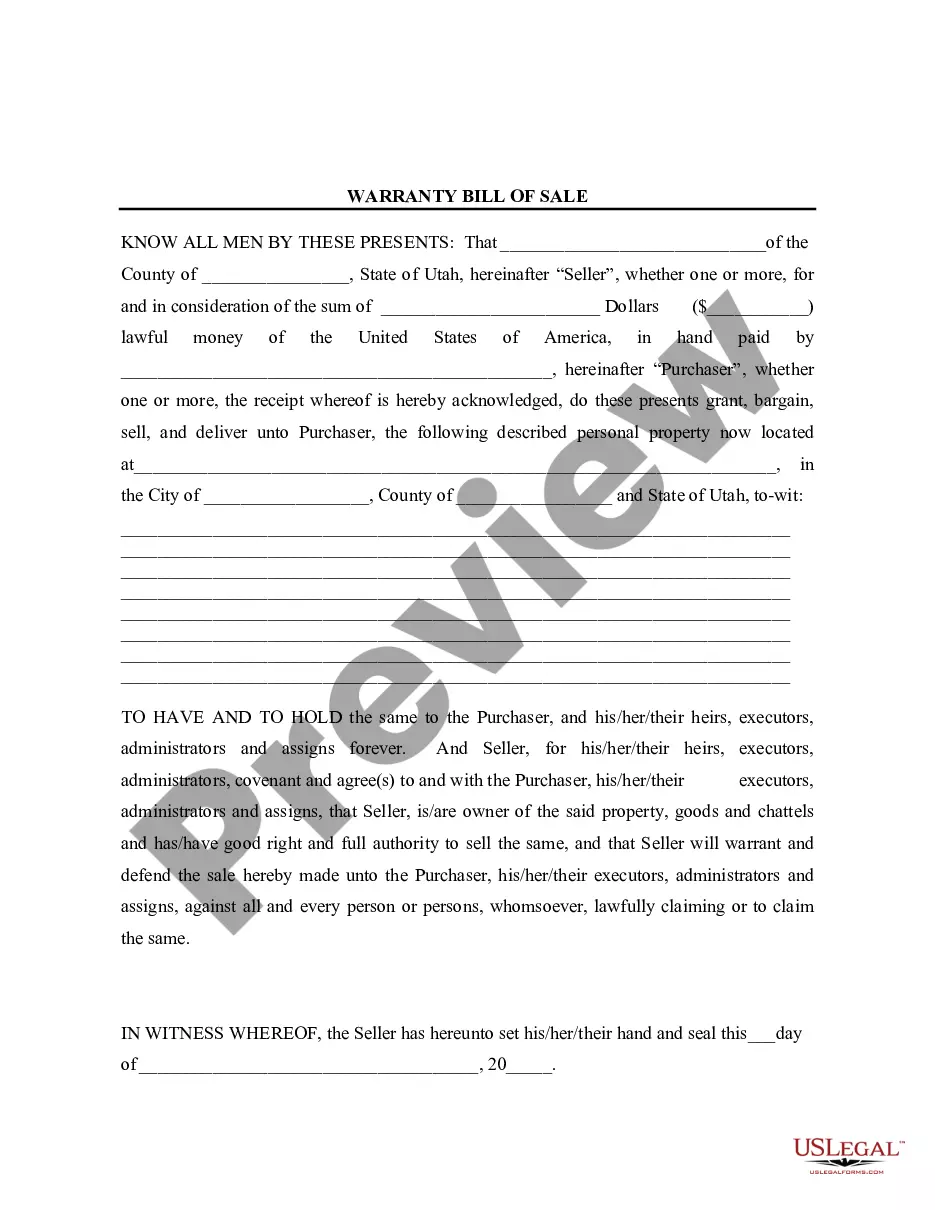
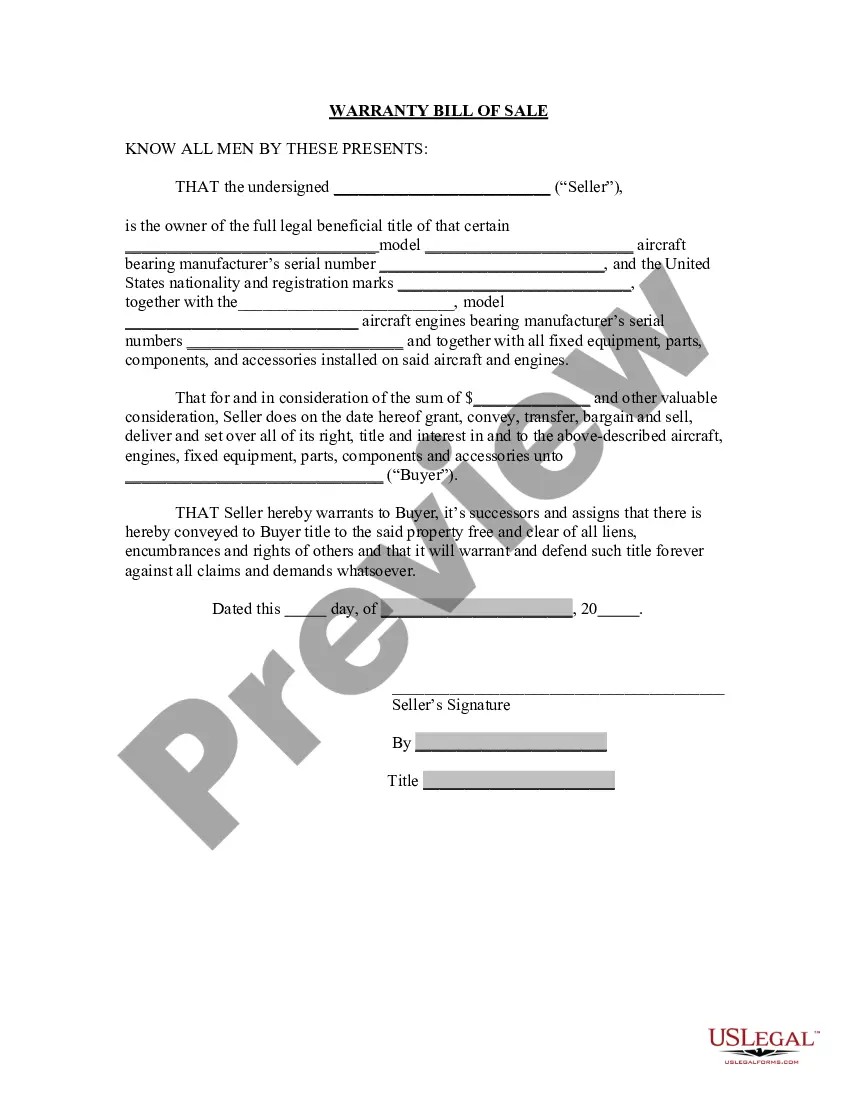
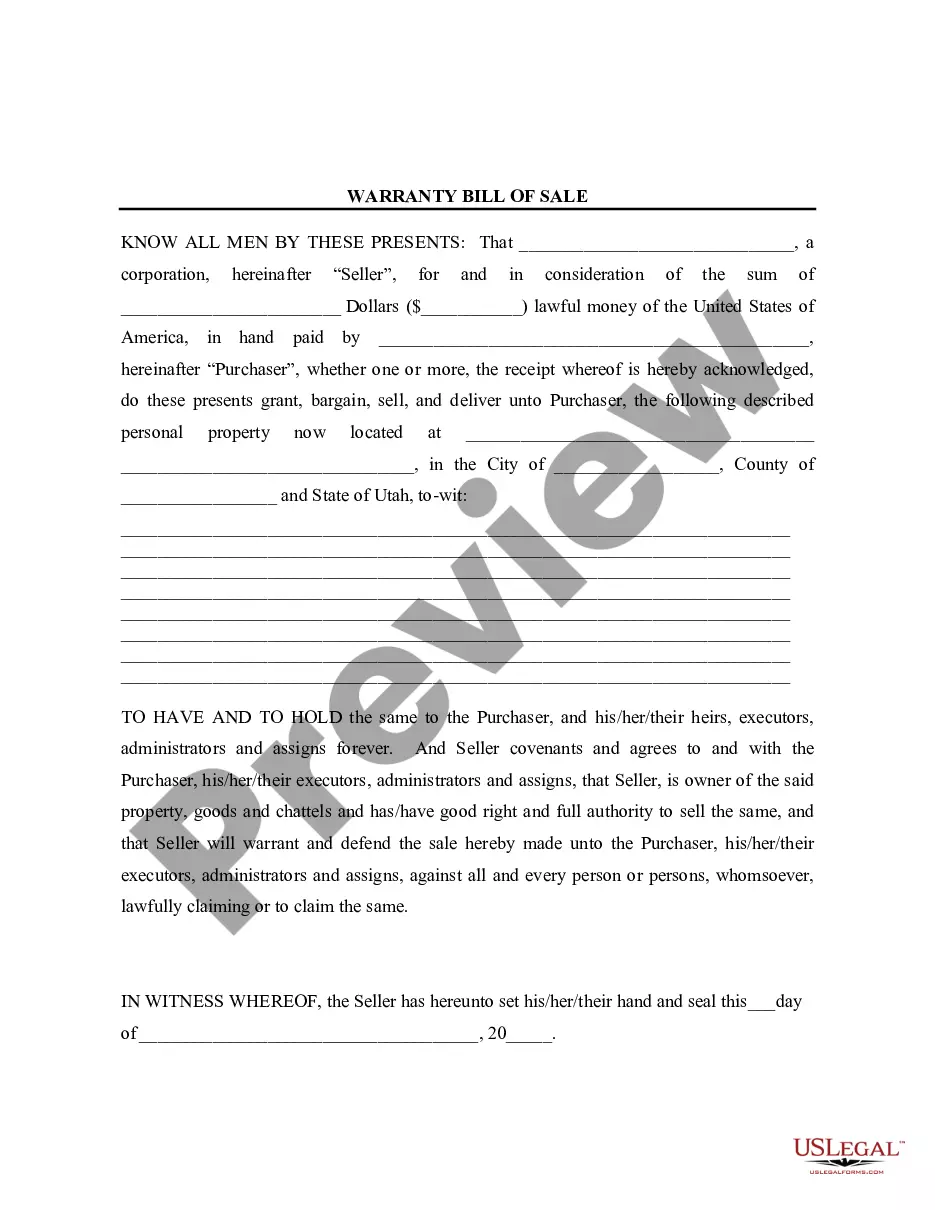
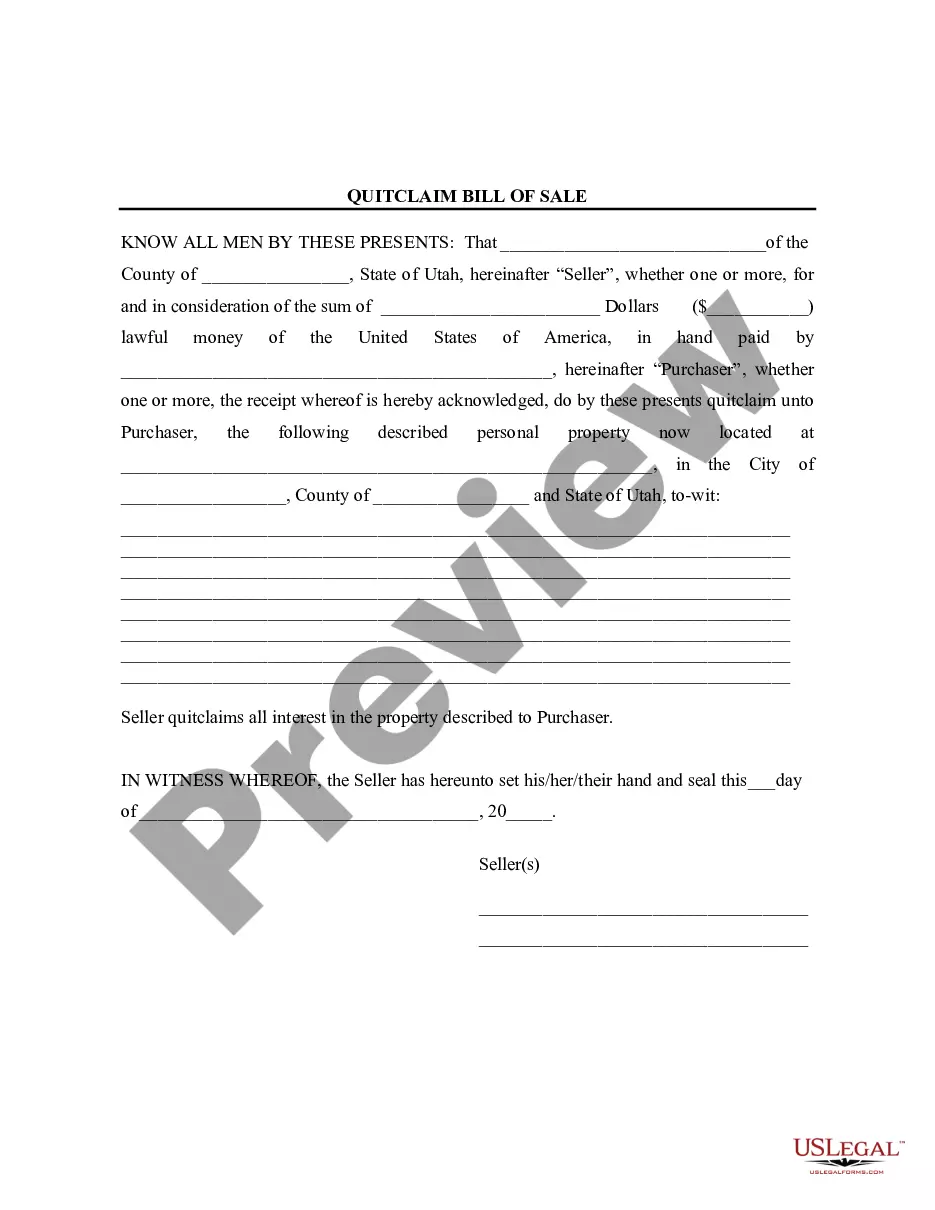
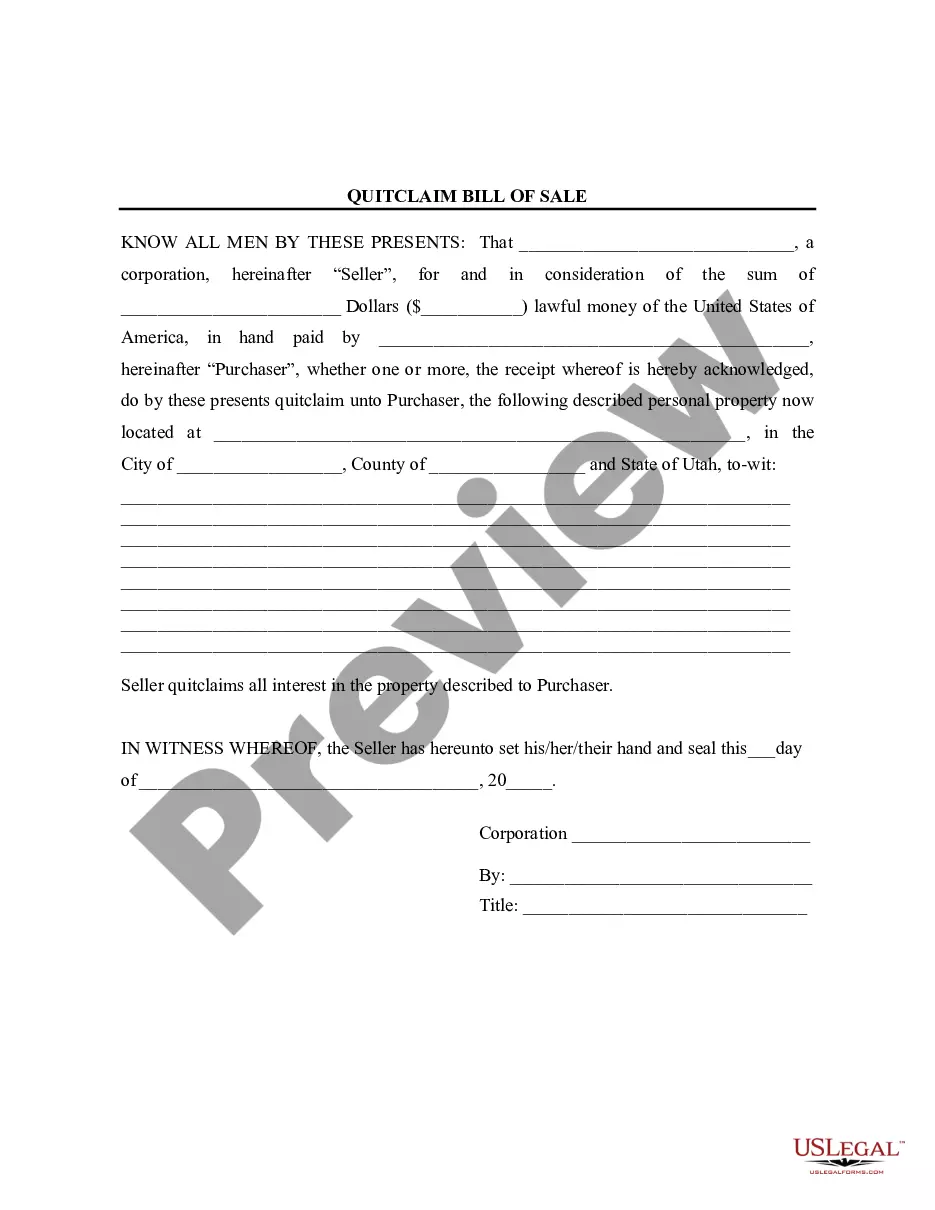
The Bill of Sale with Warranty by Individual Seller is a legal document used to transfer ownership of personal property, ensuring the seller provides a warranty against any claims to the property. Unlike a Quitclaim Conveyance, this form guarantees that the seller has the right to sell the item, thus providing additional protection to the purchaser. This form is essential for individuals looking to buy or sell personal property securely.
Main sections of this form
- Identification of the seller and purchaser, including names and addresses.
- Description of the personal property being sold.
- Statement of the total sale price and acknowledgment of payment.
- Warranty clause guaranteeing the seller's authority to sell the property.
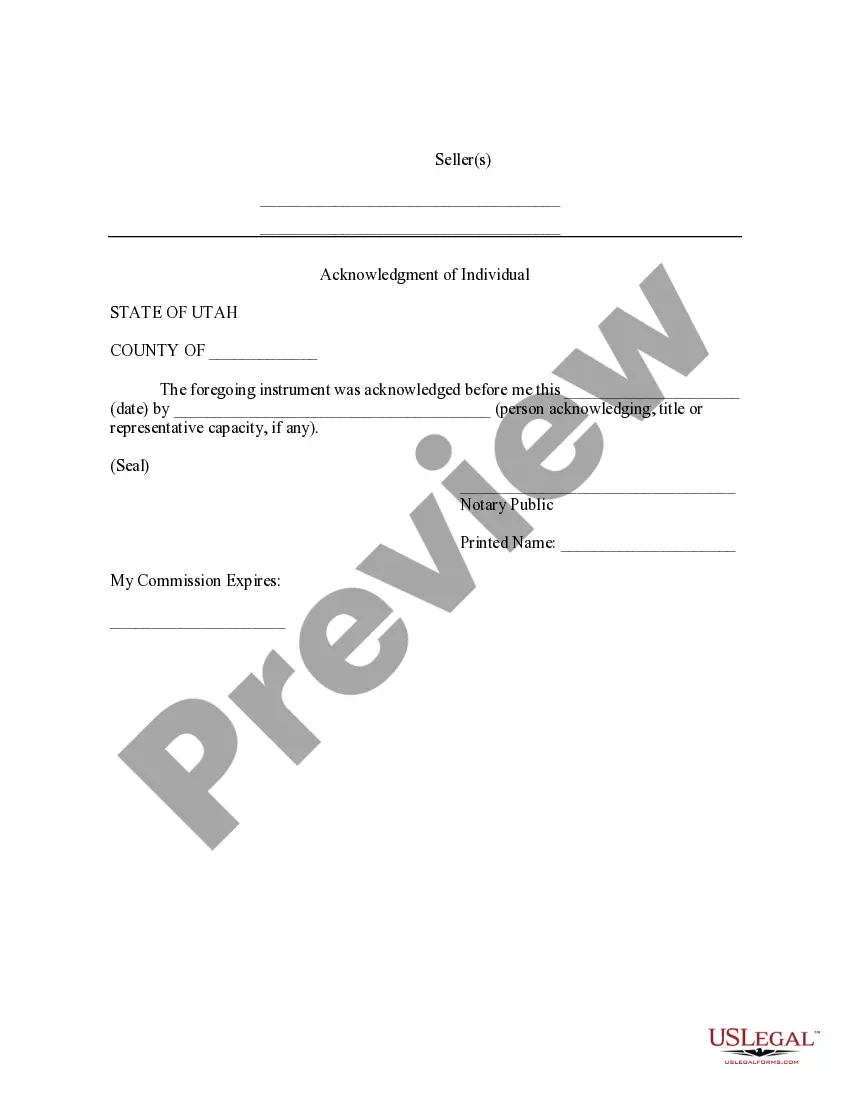
- Signatures of the seller and acknowledgment by a notary public.
Situations where this form applies
This form should be used when an individual seller is transferring ownership of personal property to a purchaser. It is appropriate for scenarios involving the sale of items such as vehicles, equipment, or furniture. Using this form protects both parties by clarifying ownership and ensuring the seller warrants the title to the property.
Who this form is for
- Individuals selling personal property without the involvement of a business.
- Buyers seeking assurance of ownership and warranty from the seller.
- Anyone needing a formal record of the transaction for future reference or legal protection.
How to prepare this document
- Identify the parties: clearly state the full names and addresses of both the seller and the purchaser.
- Specify the property: provide a detailed description of the personal property being sold.
- Enter the sale price: indicate the total amount paid for the property.
- Add the date: include the date of the sale and the signatures of all parties involved.
- Obtain notarization: have the form acknowledged by a notary public to validate the transaction.
Notarization guidance
Notarization is required for this form to take effect. Our online notarization service, powered by Notarize, lets you verify and sign documents remotely through an encrypted video session, available 24/7.
Get your form ready online
Our built-in tools help you complete, sign, share, and store your documents in one place.
Make edits, fill in missing information, and update formatting in US Legal Forms—just like you would in MS Word.
Download a copy, print it, send it by email, or mail it via USPS—whatever works best for your next step.
Sign and collect signatures with our SignNow integration. Send to multiple recipients, set reminders, and more. Go Premium to unlock E-Sign.
If this form requires notarization, complete it online through a secure video call—no need to meet a notary in person or wait for an appointment.
We protect your documents and personal data by following strict security and privacy standards.
Make edits, fill in missing information, and update formatting in US Legal Forms—just like you would in MS Word.
Download a copy, print it, send it by email, or mail it via USPS—whatever works best for your next step.
Sign and collect signatures with our SignNow integration. Send to multiple recipients, set reminders, and more. Go Premium to unlock E-Sign.

If this form requires notarization, complete it online through a secure video call—no need to meet a notary in person or wait for an appointment.
We protect your documents and personal data by following strict security and privacy standards.
Typical mistakes to avoid
- Failing to provide a complete description of the property can lead to disputes.
- Not obtaining the required notarization may invalidate the document.
- Leaving out signatures from either party complicates the transfer of ownership.
Advantages of online completion
- Convenience: Download and fill out the form at your own pace.
- Editability: Customize the document as needed before finalizing.
- Reliability: Forms are drafted by licensed attorneys to ensure legal compliance.
Legal use & context
- The Bill of Sale with Warranty serves as a legal proof of ownership transfer.
- This document can be enforceable in court if any disputes arise regarding the property.
- It is advisable to keep several copies of the signed document for future reference.
Key takeaways
- This form is essential for individuals selling personal property with a warranty.
- Accurate completion is vital for it to be legally binding.
- Notarization is necessary to enhance the form's legitimacy in Utah.
Looking for another form?
Form popularity
FAQ
Remove your license plates from the vehicle. Give the new owner the signed title, current registration certificate, and current safety and emission certificates. Report the vehicle as sold to the Division of Motor Vehicles.
Both the buyer and seller should receive copies of the bill of sale form. It's important for the buyer to keep the bill of sale with the title of the vehicle for registration and licensing purposes, if necessary. However, all parties should keep them for their own personal records.
A signed bill of sale provides important legal protections to the buyer and even to the seller. For the buyer, the bill of sale proves that a transaction took place. This information is extremely important if something serious is wrong with the vehicle that the seller knew about but failed to notify the buyer of.
No, a Utah bill of sale is not required to register a motor vehicle.However, the Utah State Tax Commission provides a bill of sale for your use. You must have a properly assigned title to register a car in the State of Utah. Depending on your county, you may also need a VIN inspection and an emission inspection.
A bill of sale has been defined as a legal document made by the seller to a purchaser, reporting that on a specific date at a specific locality and for a particular sum of money or other value received, the seller sold to the purchaser a specific item of personal property, or parcel of real property of which he had
Louisiana. Maryland. Nebraska. New Hampshire. West Virginia. Montana.
If there are 2 owners listed on the front of a title, the majority of the time, both people will need to sign as the seller. If there is an 'or' in between the names, typically only 1 signature is required.
For example, many states require that a vehicle bill of sale include an odometer reading; some states require it to be notarized. Both parties can sign a bill of sale but, in many instances, only the seller needs to sign it. Things can get complicated when a bill of sale is provided as security for a loan.
Alabama. Arkansas. Colorado. Connecticut. Hawaii. Idaho. Maine. Nebraska.