Tennessee Bylaws for Corporation
What this document covers
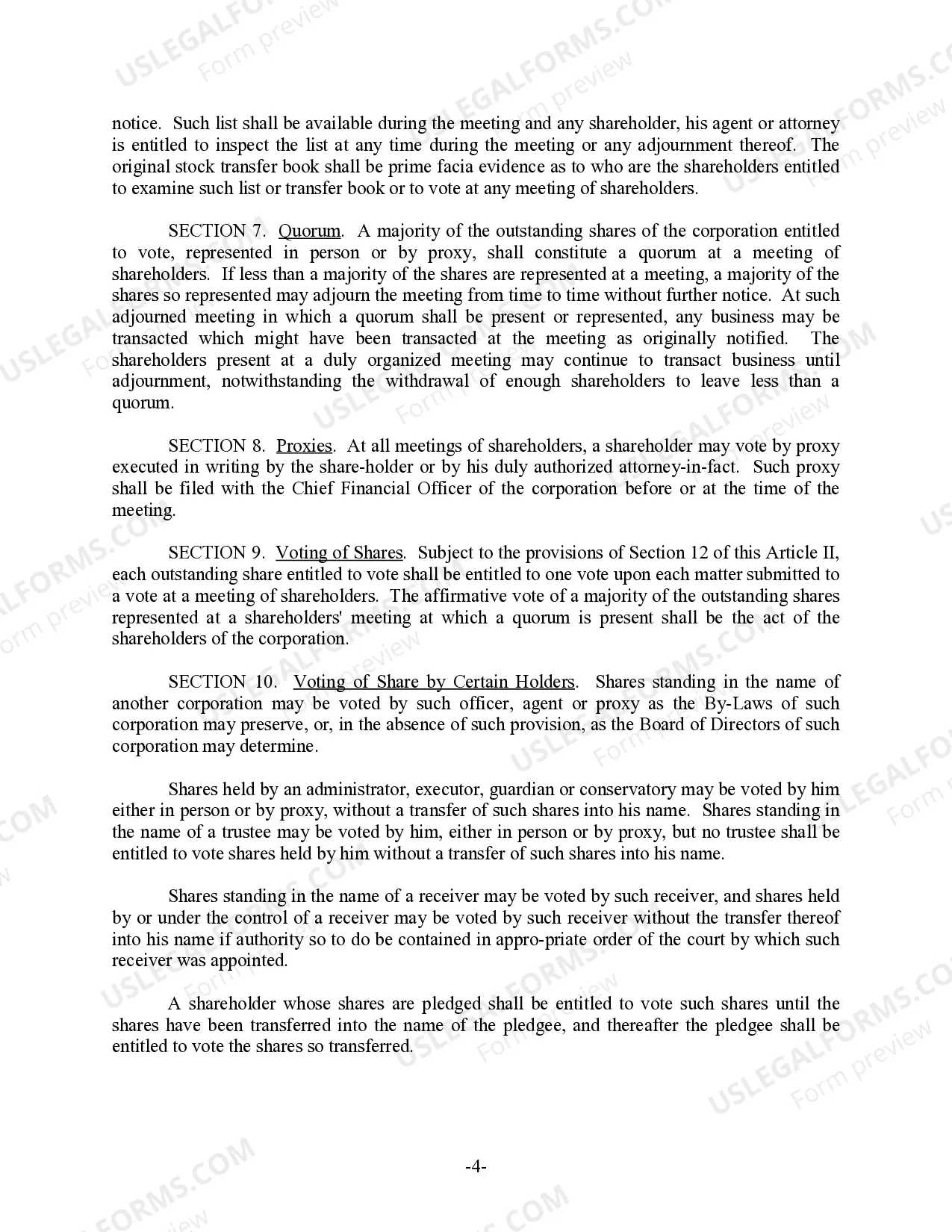
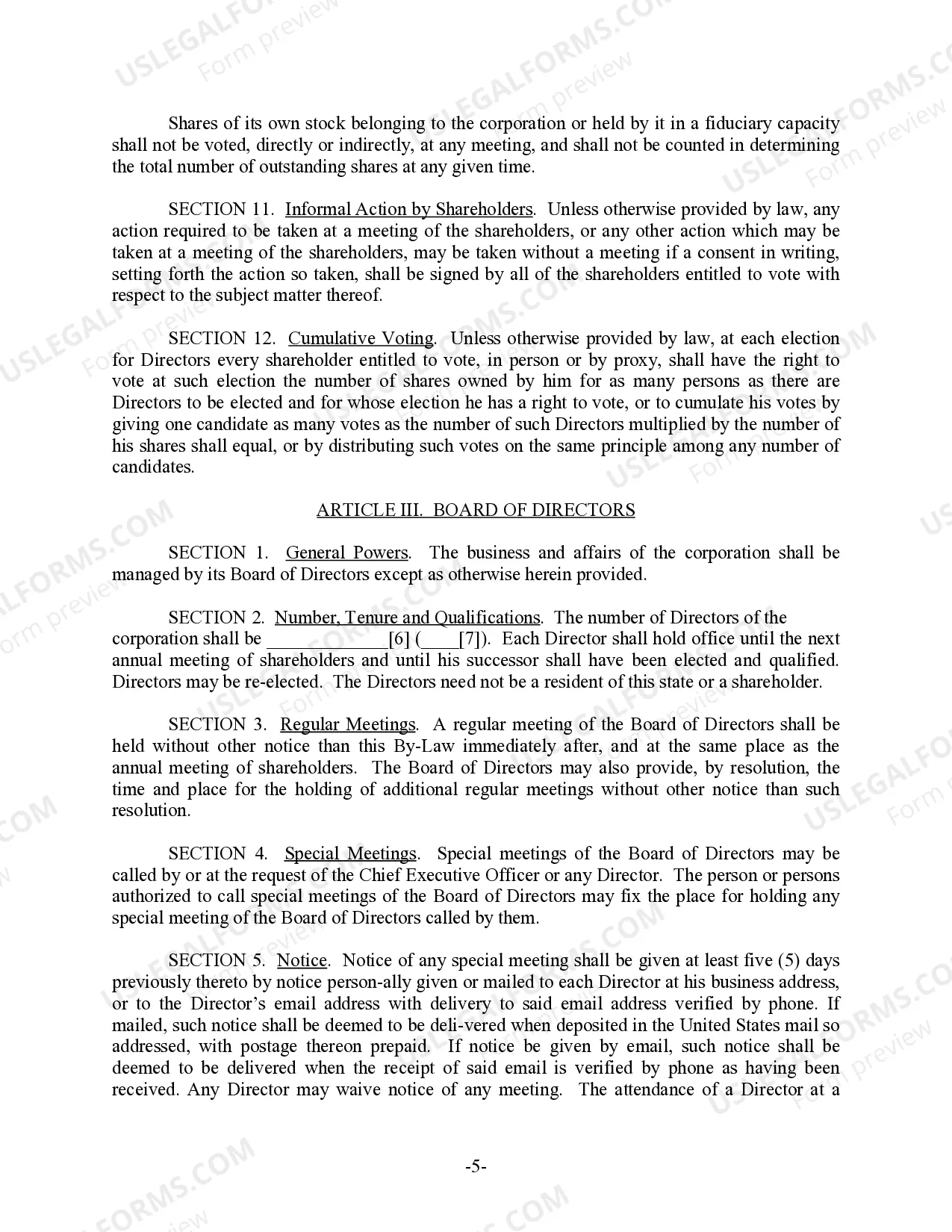
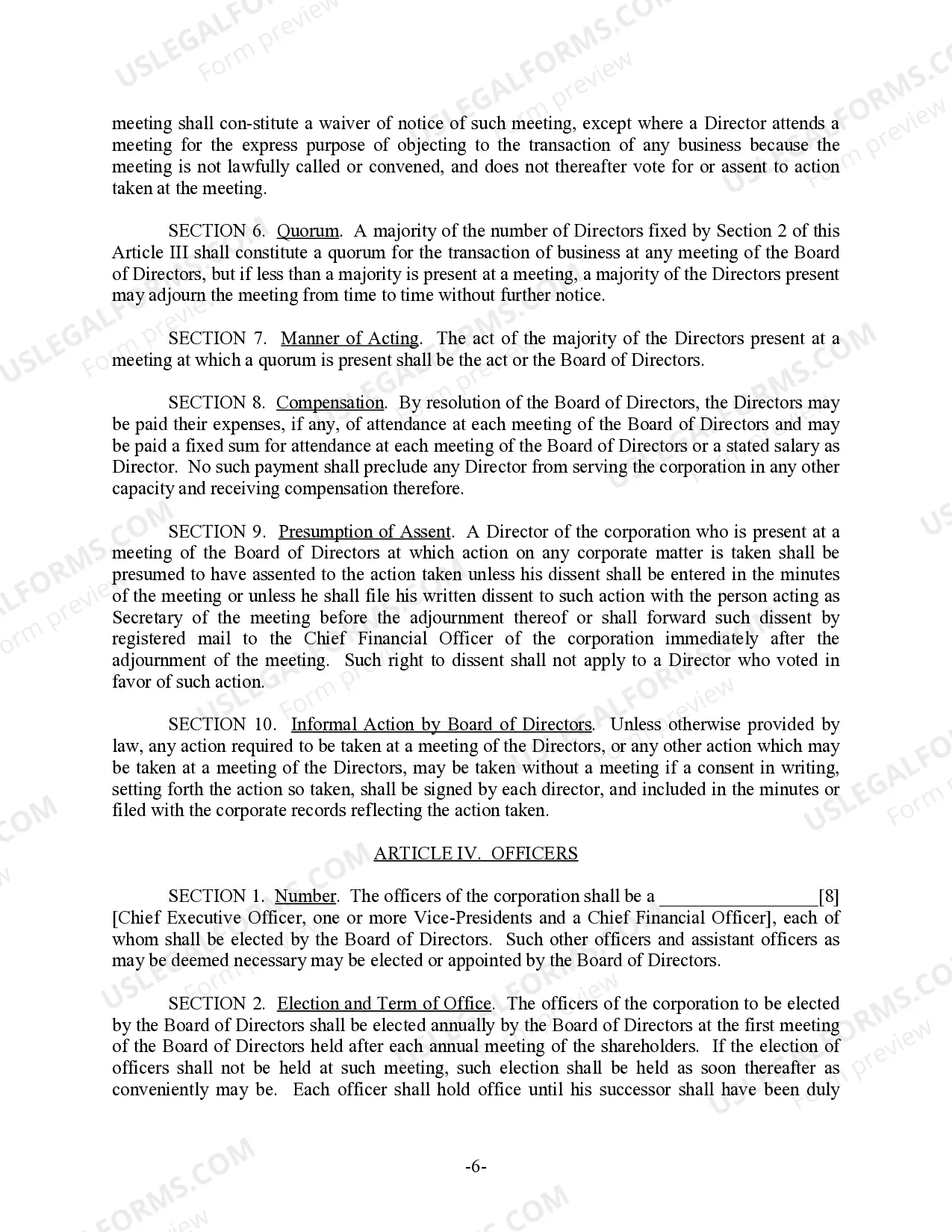
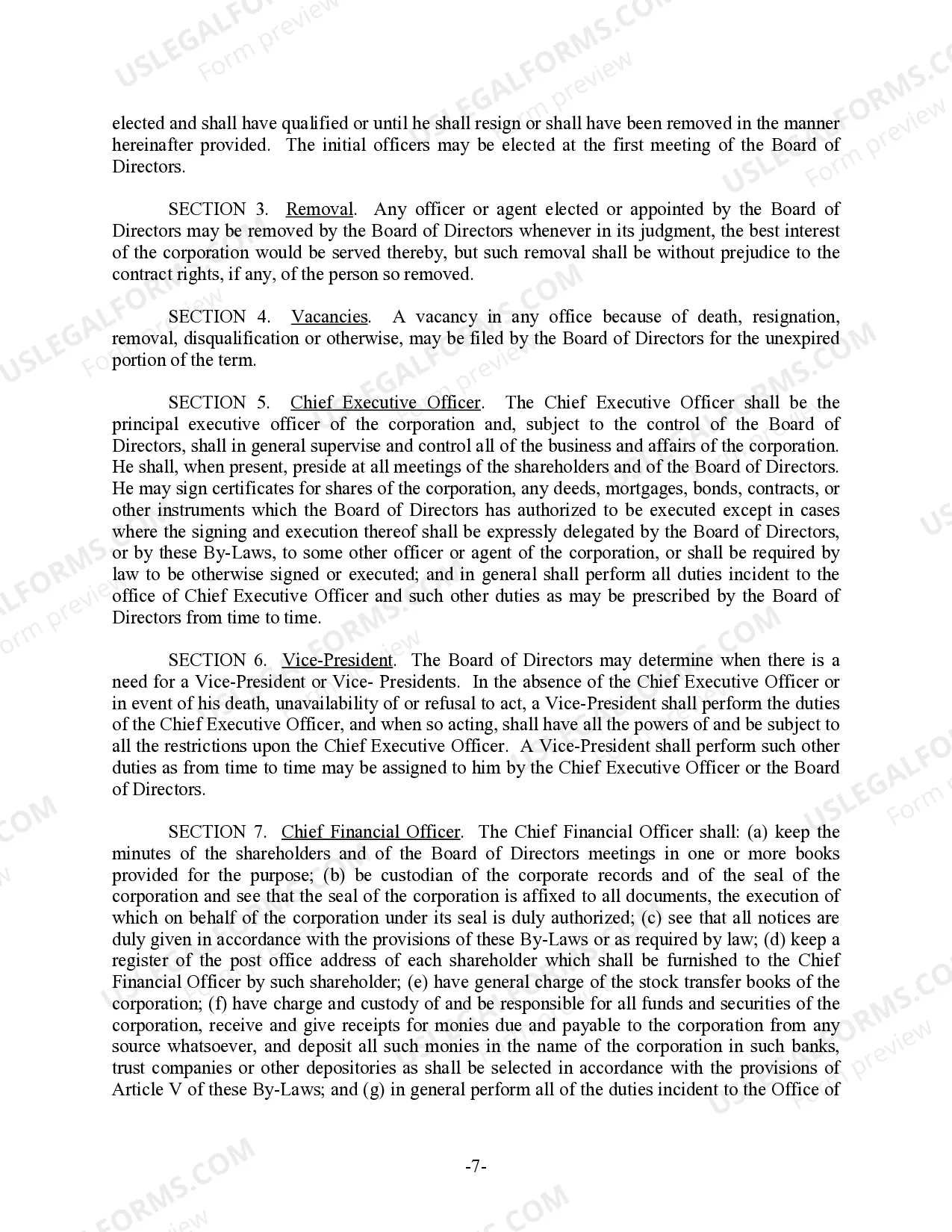
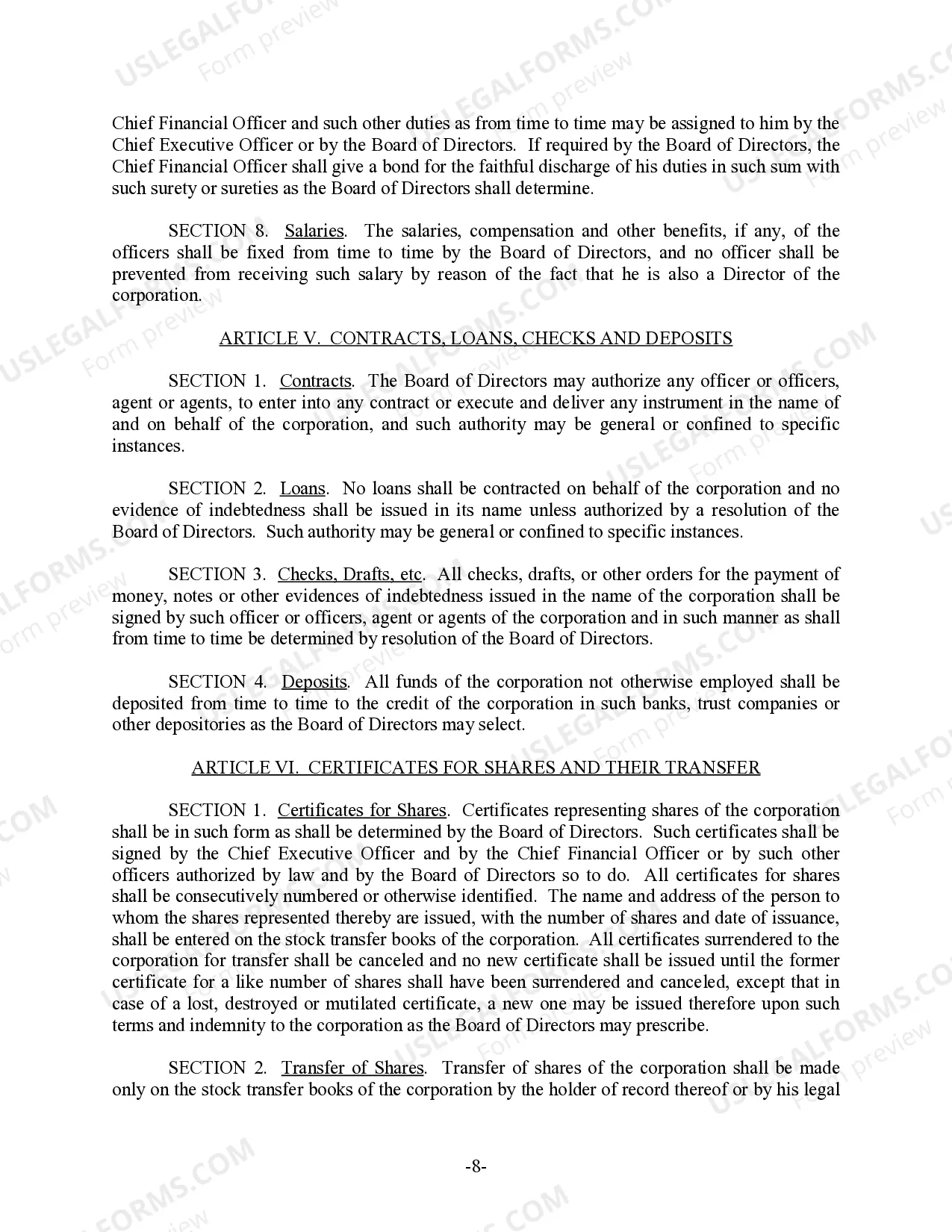
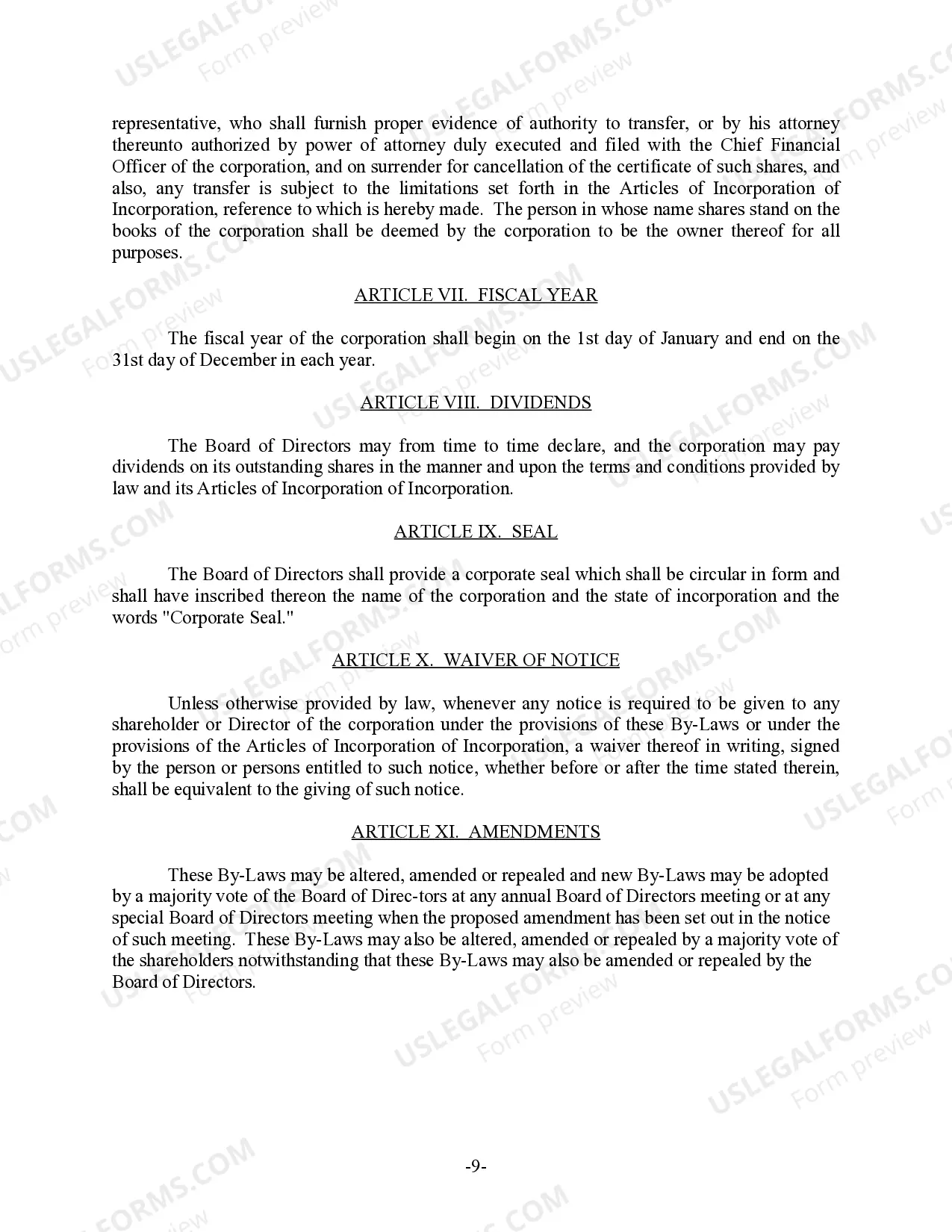
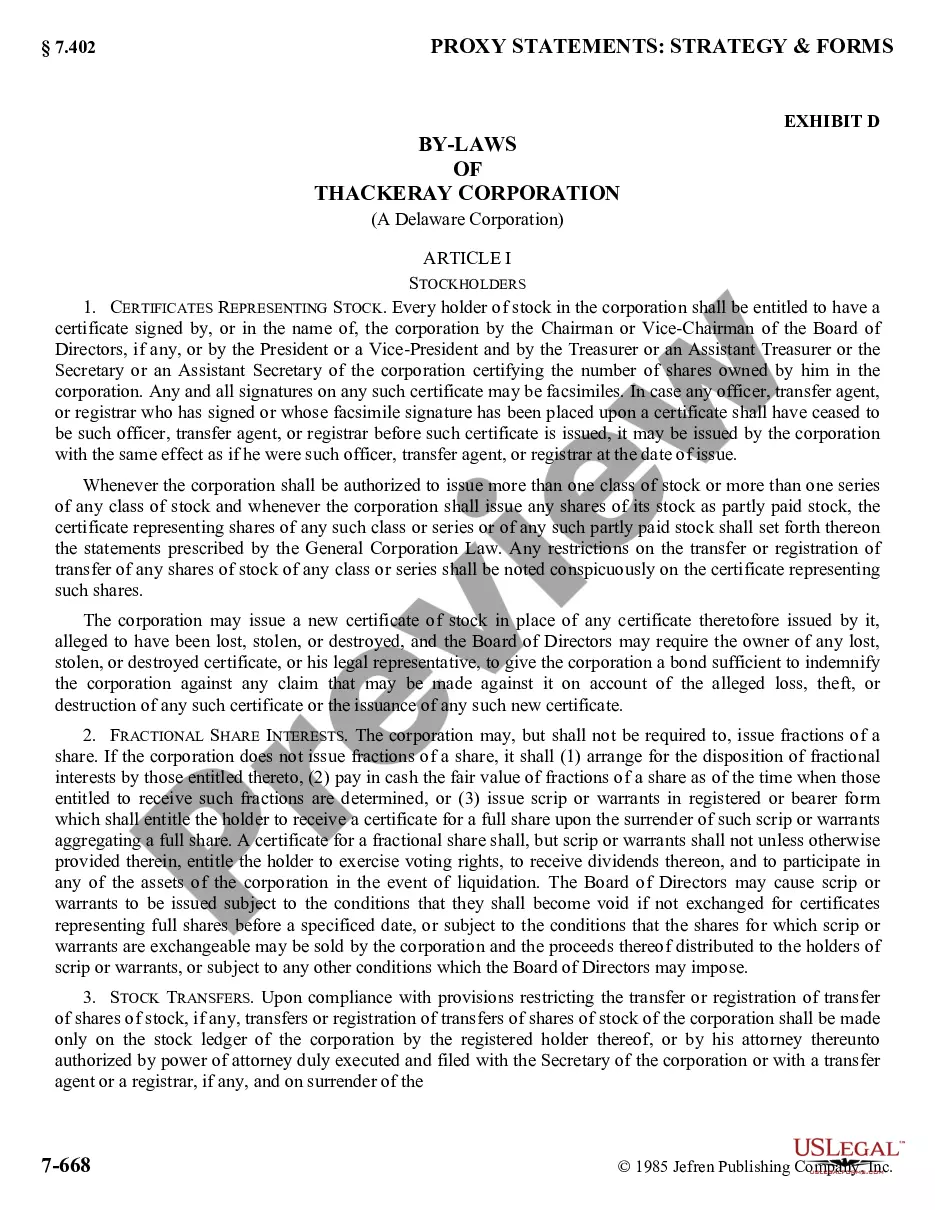
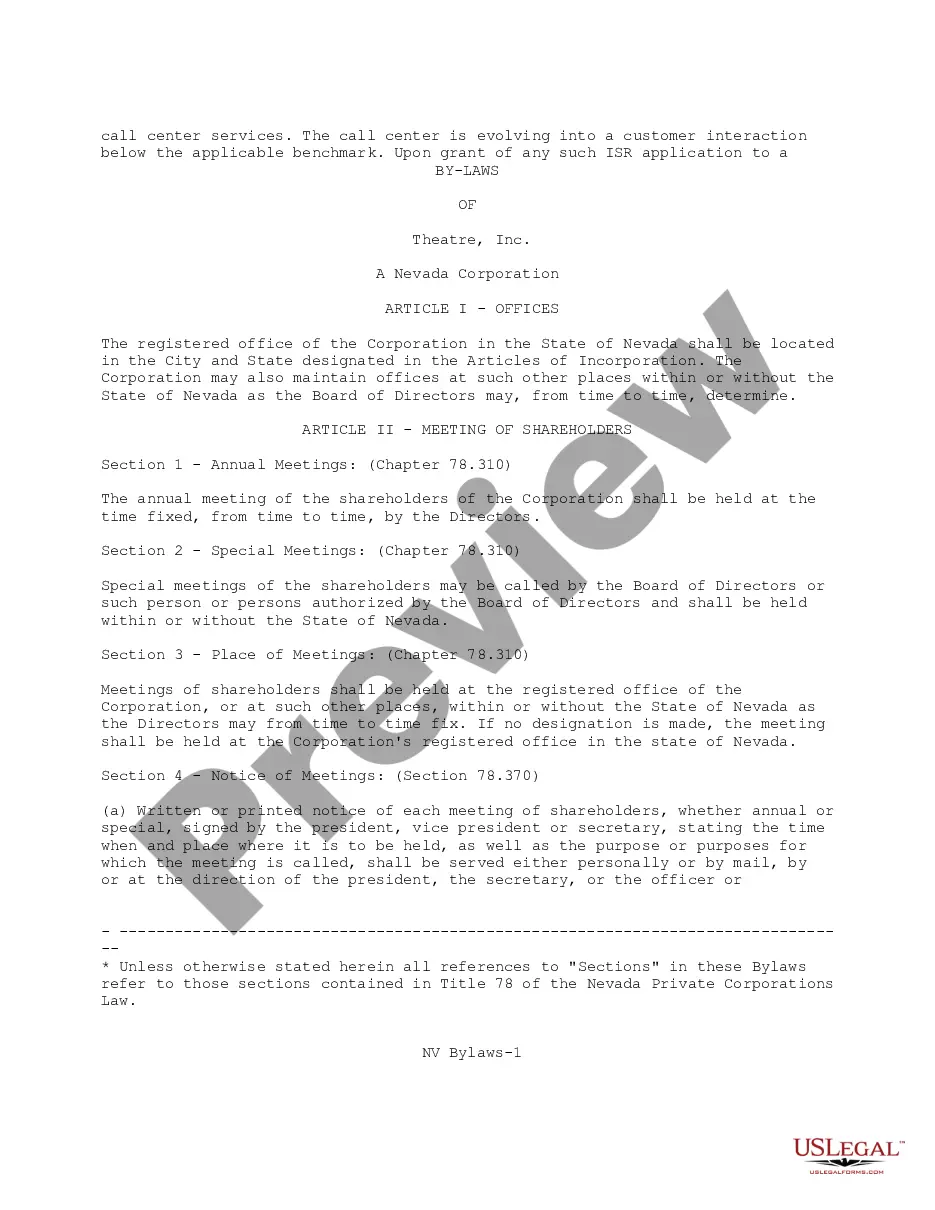
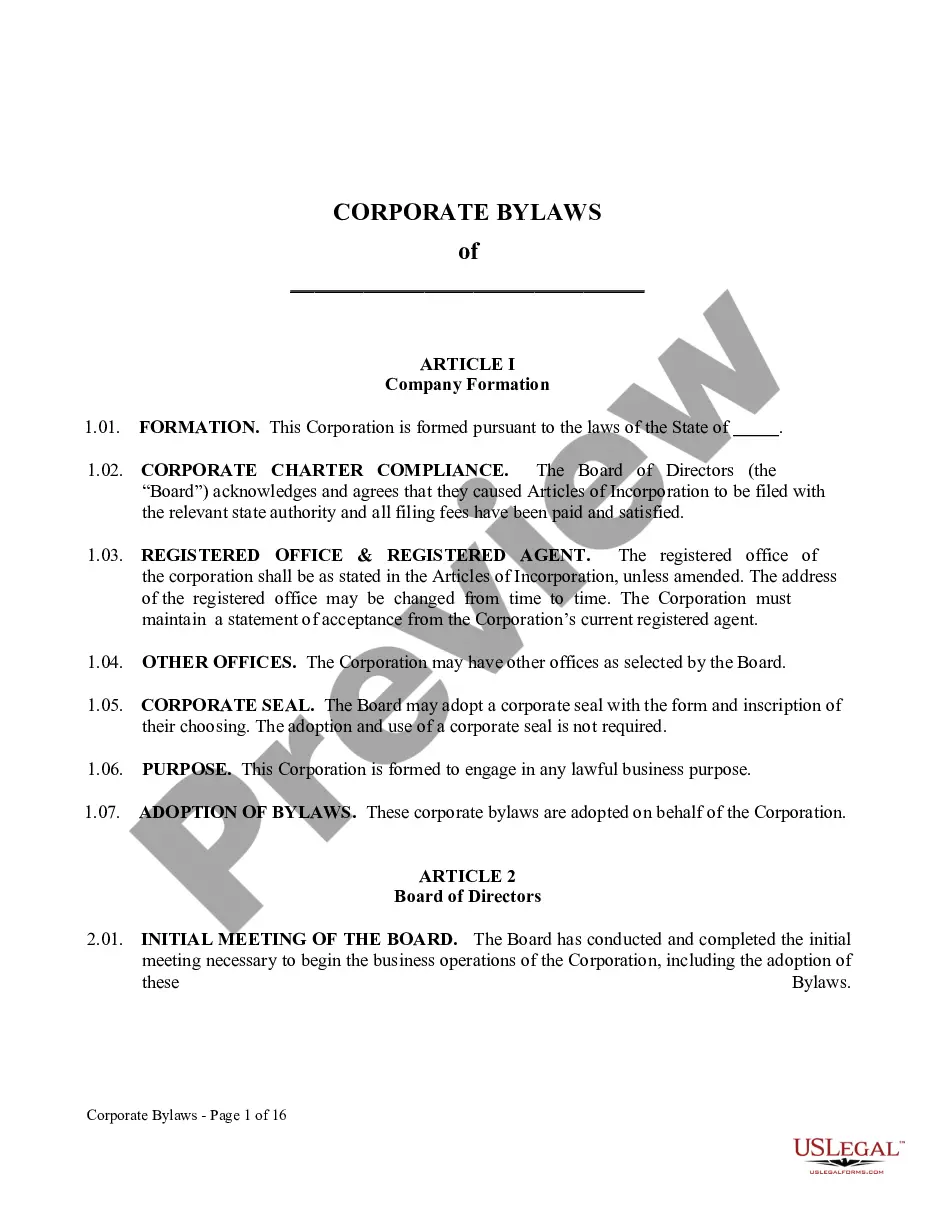
The Tennessee Bylaws for Corporation is a legal document that outlines the operational rules for a business corporation in Tennessee. This form ensures that shareholders and directors understand their rights and responsibilities during meetings and decisions regarding the corporation. Unlike simple organizational documents, these bylaws include detailed provisions about shareholder meetings, officer roles, and voting rights, which are essential for proper corporate governance.
Key parts of this document
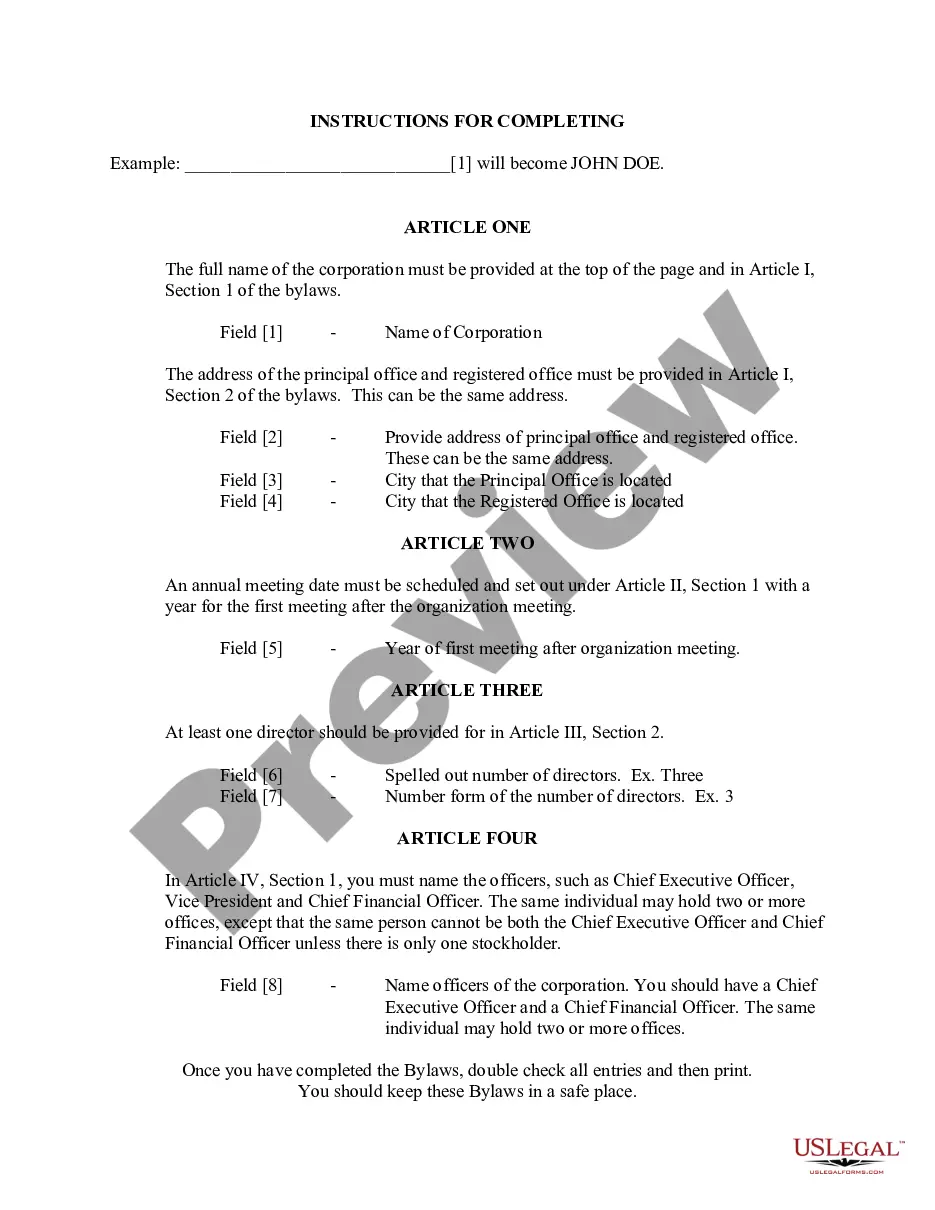
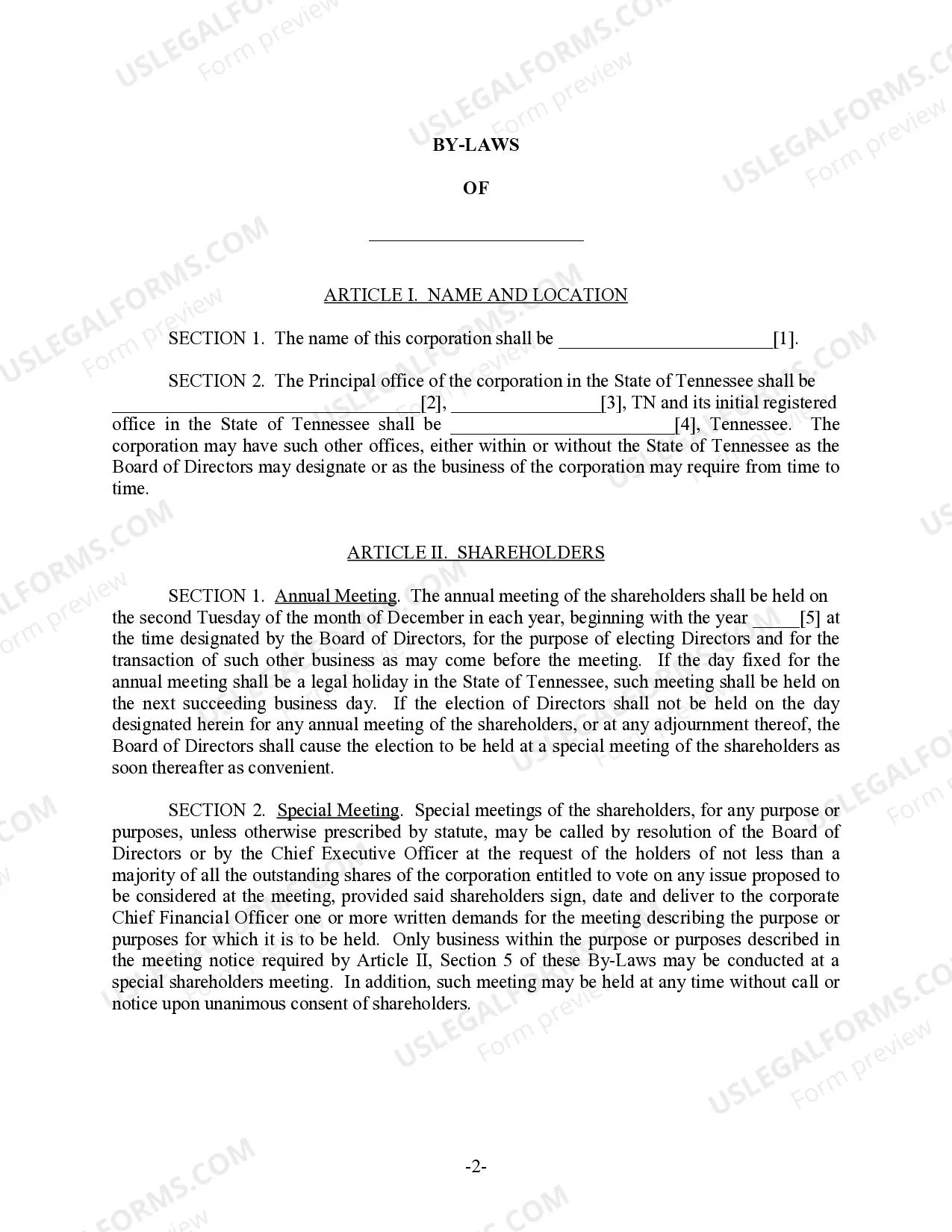
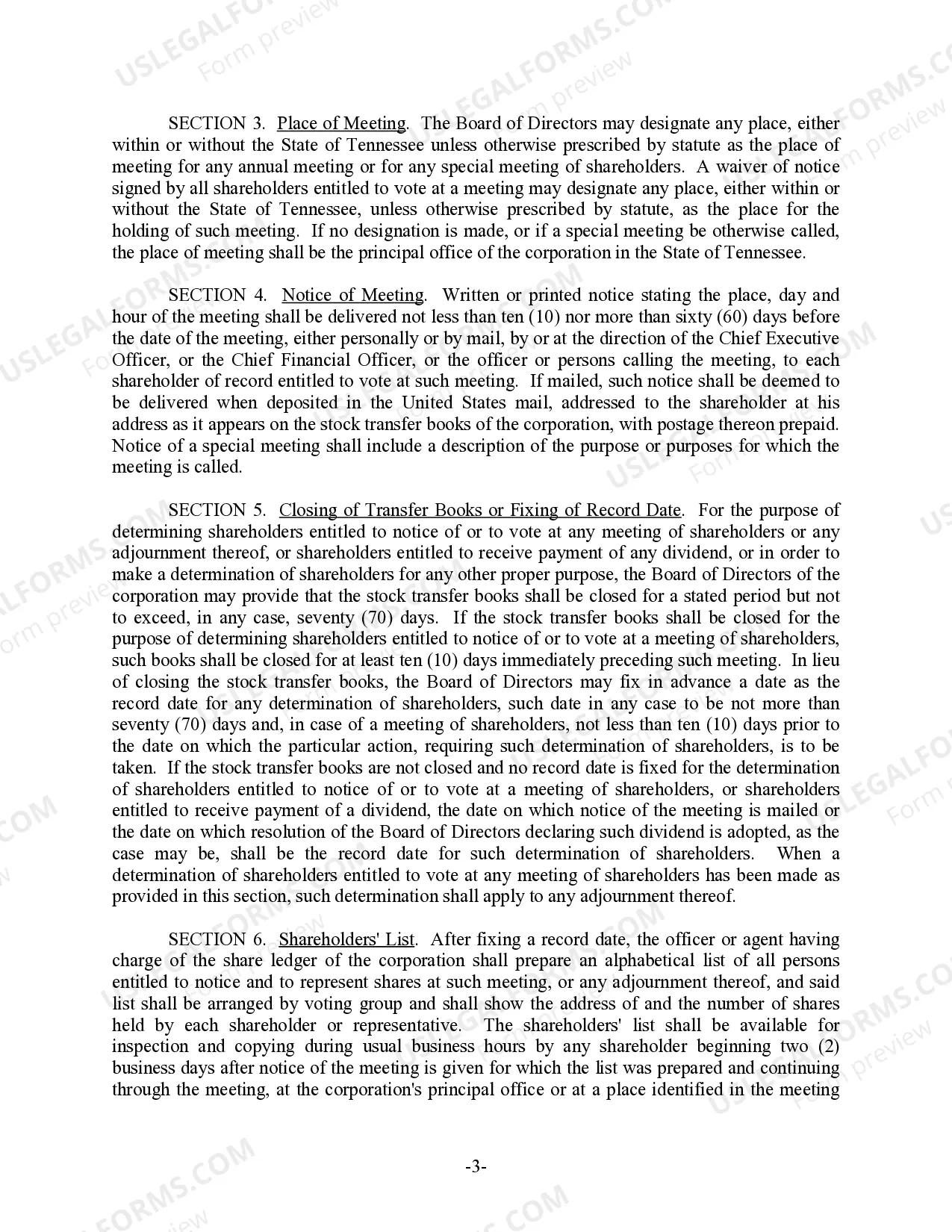
- Name and address of the corporation
- Schedule for annual shareholder meetings
- Details on the number and roles of directors
- Officer designations and responsibilities
- Provisions for voting and proxy rights
- Regulations on amending the bylaws

When to use this form
This form should be used when establishing a new corporation in Tennessee. It can also be utilized by existing corporations that need to formalize their governance structure or update their bylaws to comply with any changes in state law or corporate structure. Corporations in need of clarity regarding internal operations and shareholder interactions should also adopt these bylaws.
Intended users of this form
- Business owners forming a new corporation in Tennessee
- Corporate officers involved in governance and compliance
- Shareholders seeking clarity on rights and responsibilities
- Legal advisors assisting corporations with their operational structures
How to complete this form
- Identify and enter the full name of the corporation.
- Provide the address of the principal office and registered office in Tennessee.
- Schedule the date for the first annual shareholder meeting.
- Specify the number of directors and list their names.
- Designate the officers of the corporation, such as the Chief Executive Officer and Chief Financial Officer.
Is notarization required?
Notarization is not commonly needed for this form. However, certain documents or local rules may make it necessary. Our notarization service, powered by Notarize, allows you to finalize it securely online anytime, day or night.
Get your form ready online
Our built-in tools help you complete, sign, share, and store your documents in one place.
Make edits, fill in missing information, and update formatting in US Legal Forms—just like you would in MS Word.
Download a copy, print it, send it by email, or mail it via USPS—whatever works best for your next step.
Sign and collect signatures with our SignNow integration. Send to multiple recipients, set reminders, and more. Go Premium to unlock E-Sign.
If this form requires notarization, complete it online through a secure video call—no need to meet a notary in person or wait for an appointment.
We protect your documents and personal data by following strict security and privacy standards.

Make edits, fill in missing information, and update formatting in US Legal Forms—just like you would in MS Word.

Download a copy, print it, send it by email, or mail it via USPS—whatever works best for your next step.

Sign and collect signatures with our SignNow integration. Send to multiple recipients, set reminders, and more. Go Premium to unlock E-Sign.

If this form requires notarization, complete it online through a secure video call—no need to meet a notary in person or wait for an appointment.

We protect your documents and personal data by following strict security and privacy standards.
Common mistakes to avoid
- Failing to specify the correct number of directors.
- Not scheduling the annual meeting on time.
- Omitting essential officer roles or incorrectly naming them.
- Neglecting to review and update the bylaws as needed.
Benefits of using this form online
- Convenient access to legal documents that can be downloaded anytime.
- Editable templates allow for customization to suit specific corporate needs.
- Reliability of legally compliant forms drafted by licensed attorneys.
Looking for another form?

Form popularity
FAQ
The Tennessee Bylaws for Corporation is a governance document that sets the internal rules for a Tennessee corporation. It covers how shareholders and directors conduct meetings, the duties and authority of officers, voting and proxy rights, and the process for amending the bylaws. It should be used when forming a new Tennessee corporation or updating governance to reflect changes in structure or state requirements.
Corporate bylaws should include the name and address of the corporation; a schedule for annual shareholder meetings; the number and roles of directors; officer designations and responsibilities; provisions for voting and proxy rights; and regulations on amending the bylaws.
The bylaws of a Tennessee corporation govern internal operations, outlining how meetings are run, the structure and duties of directors, officer responsibilities, voting and proxy procedures, and how the bylaws can be amended. They provide a framework for rights and responsibilities of shareholders and directors.
Common mistakes include not specifying a clear schedule for annual meetings, failing to define the number and roles of directors, unclear officer duties, vague voting or proxy procedures, and lacking a clear process to amend the bylaws.
To update existing bylaws, use the Tennessee Bylaws for Corporation to formalize governance changes, including amending provisions and any updates to meeting schedules, director roles, officer responsibilities, or voting rules as needed.
This form is tailored for Tennessee and includes provisions like a schedule for annual shareholder meetings and explicit amendment procedures, addressing Tennessee-specific governance considerations that generic bylaws may not cover.