Tennessee Buyer's Home Inspection Checklist
What this document covers
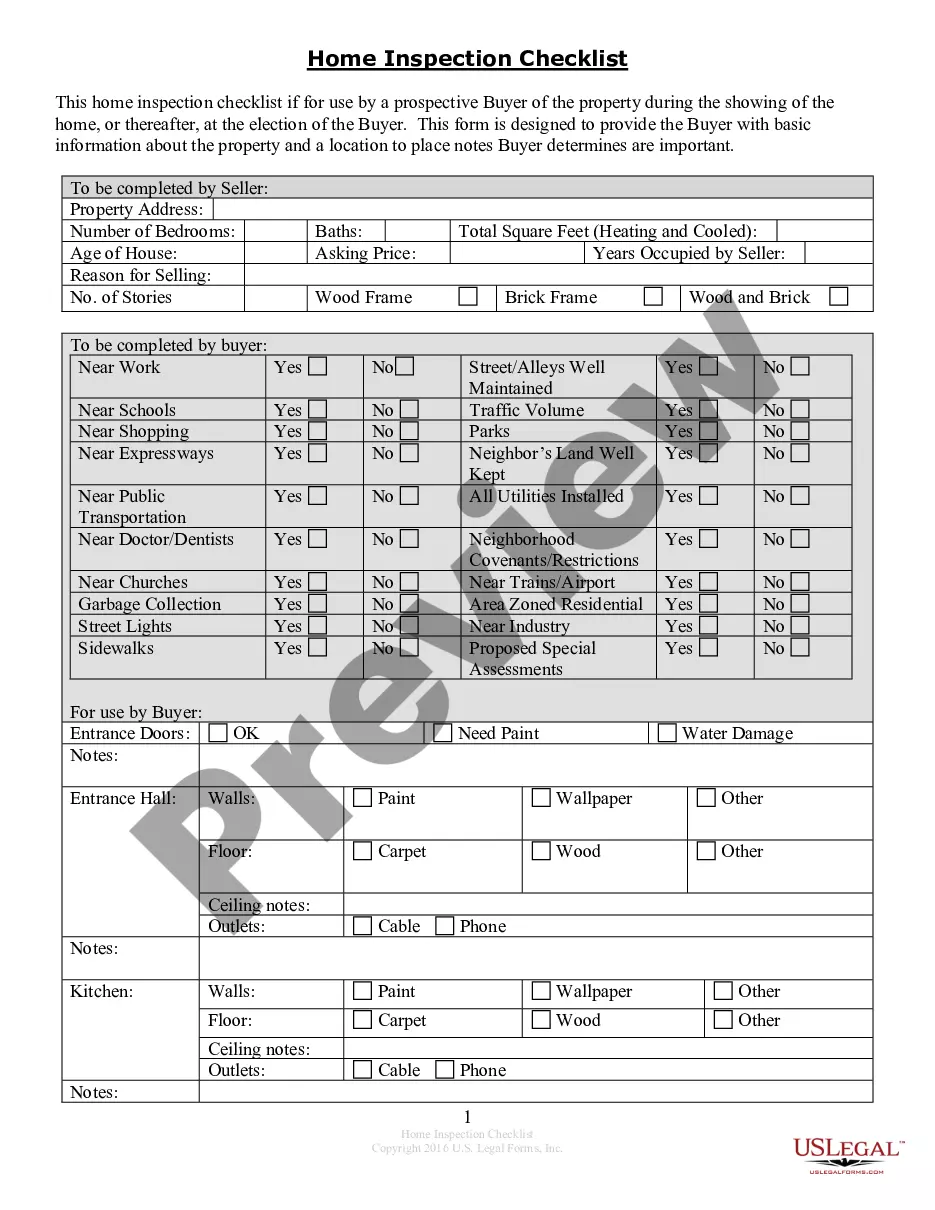
The Buyer's Home Inspection Checklist is a vital tool for homebuyers in Tennessee. This form assists buyers in evaluating a property during initial viewings by providing a comprehensive list of items to inspect and questions to ask the seller. Unlike other real estate documentation, this checklist specifically focuses on the condition and features of the home, ensuring informed decision-making prior to making an offer.
Form components explained
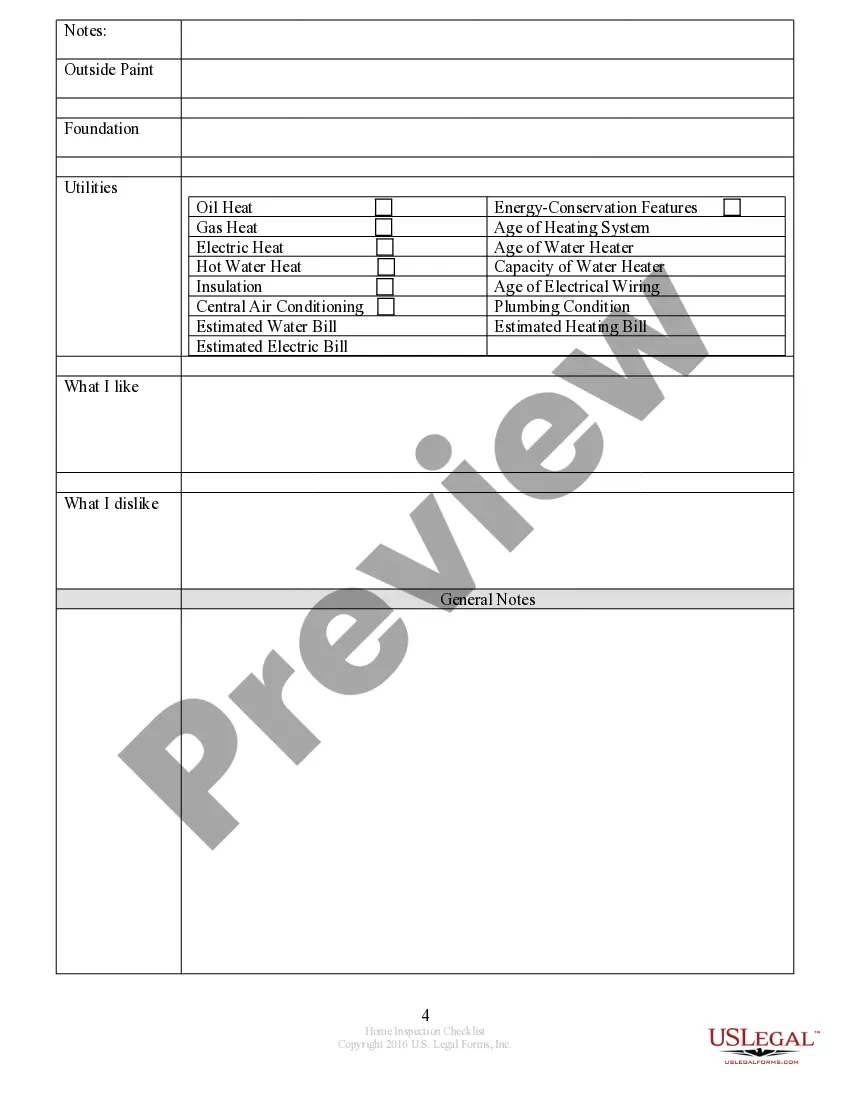
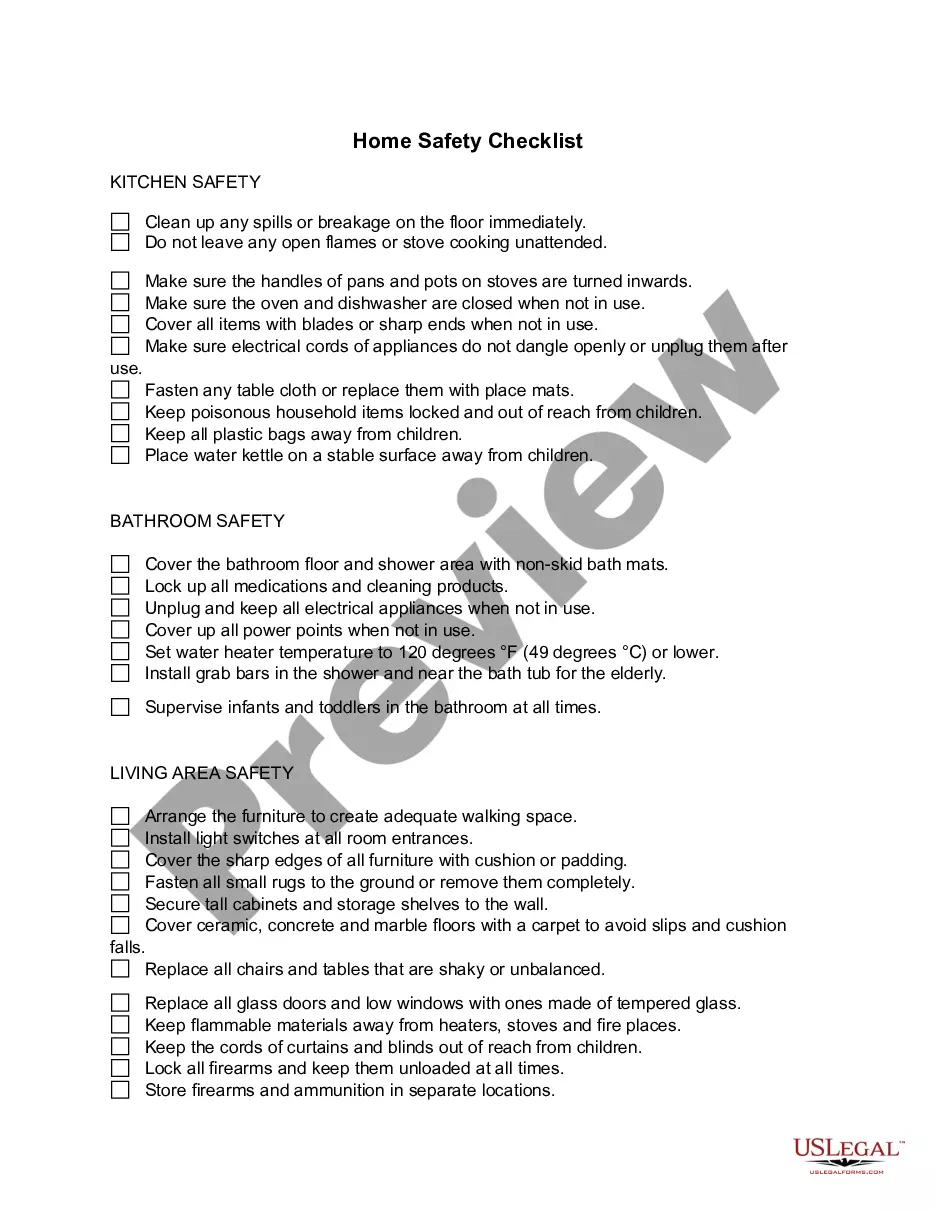
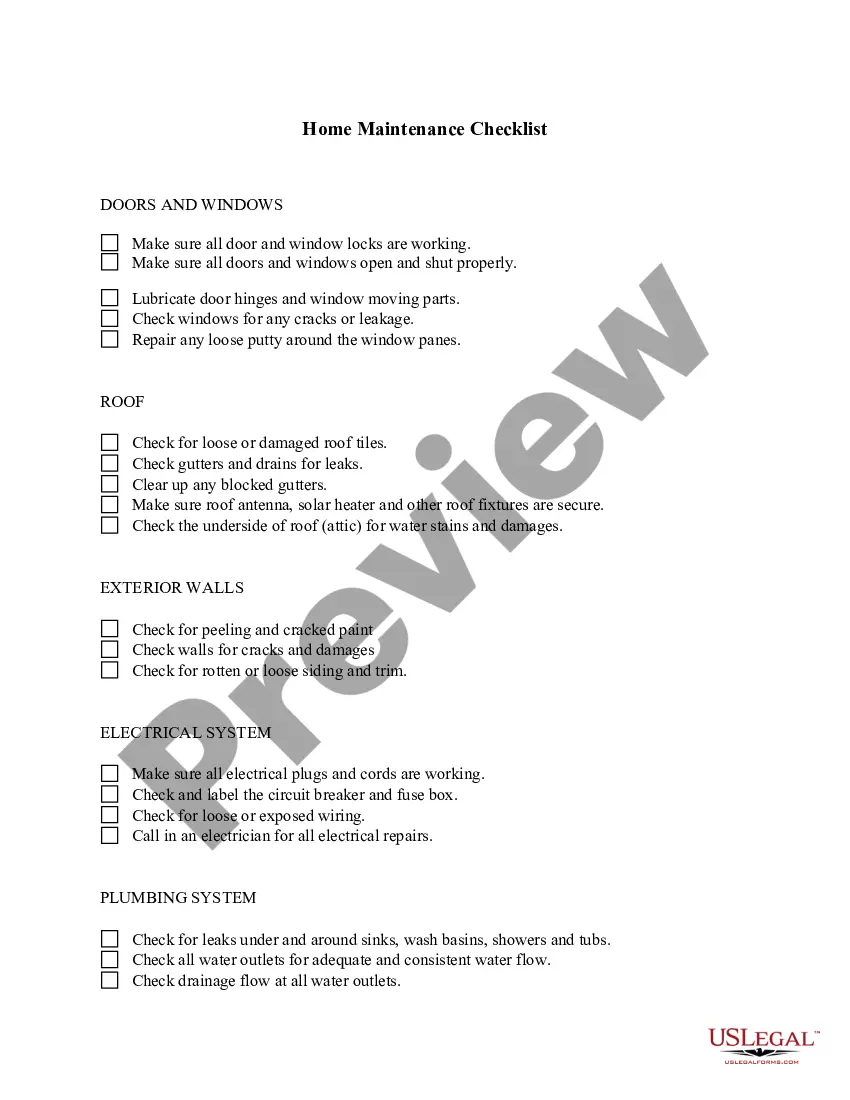
- Property assessment items including neighborhood factors, utility installations, and proximity to essential services.
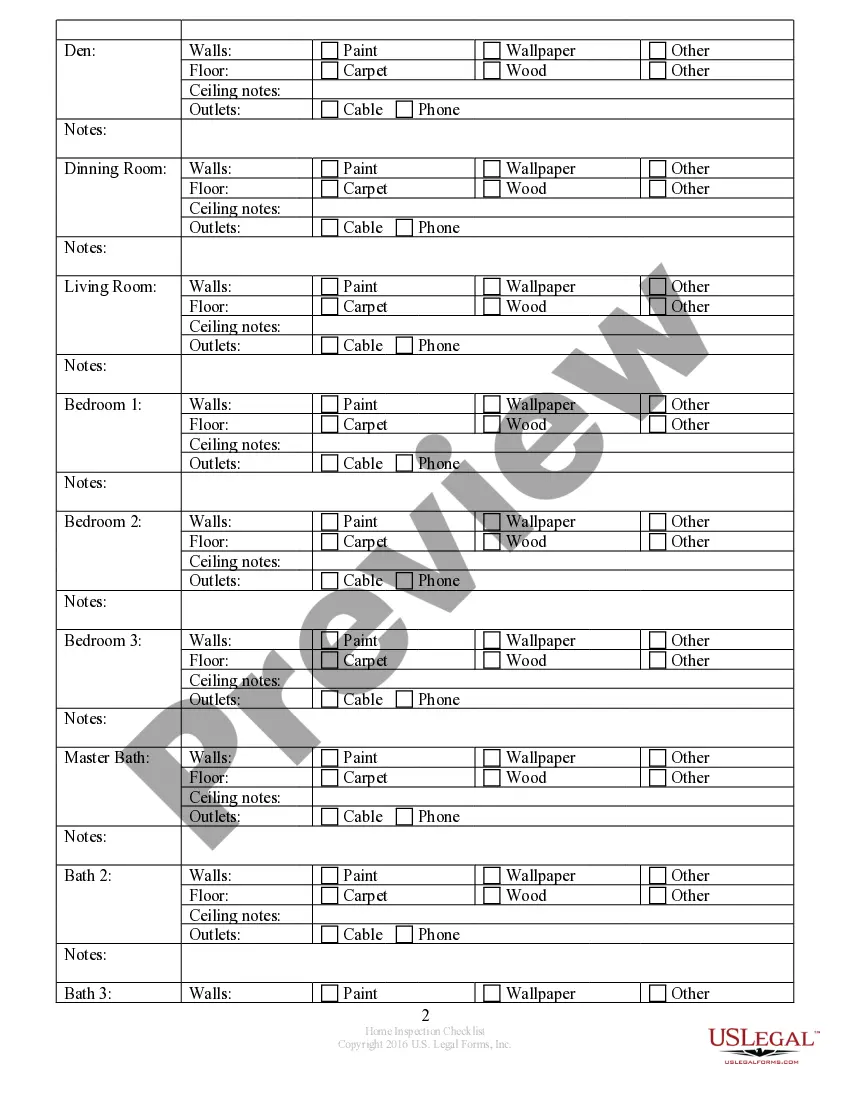
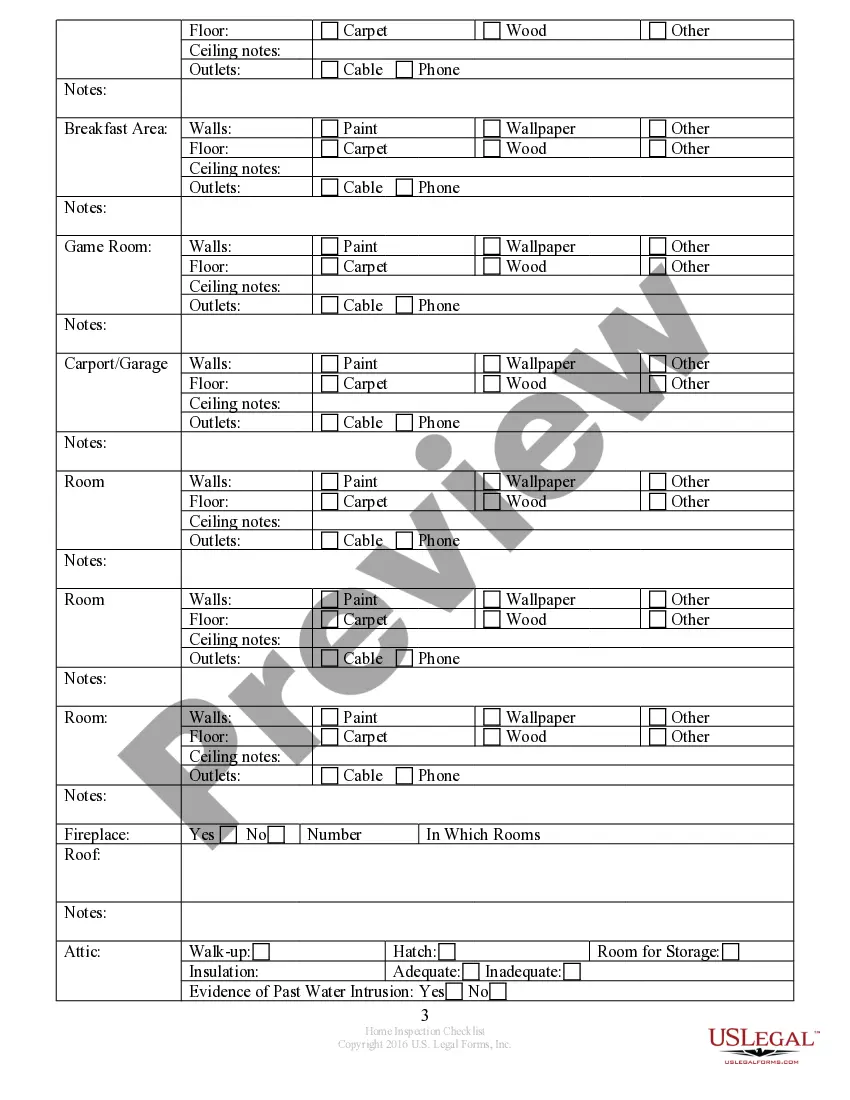
- Sections for recording the buyer's observations and notes during the home viewing.
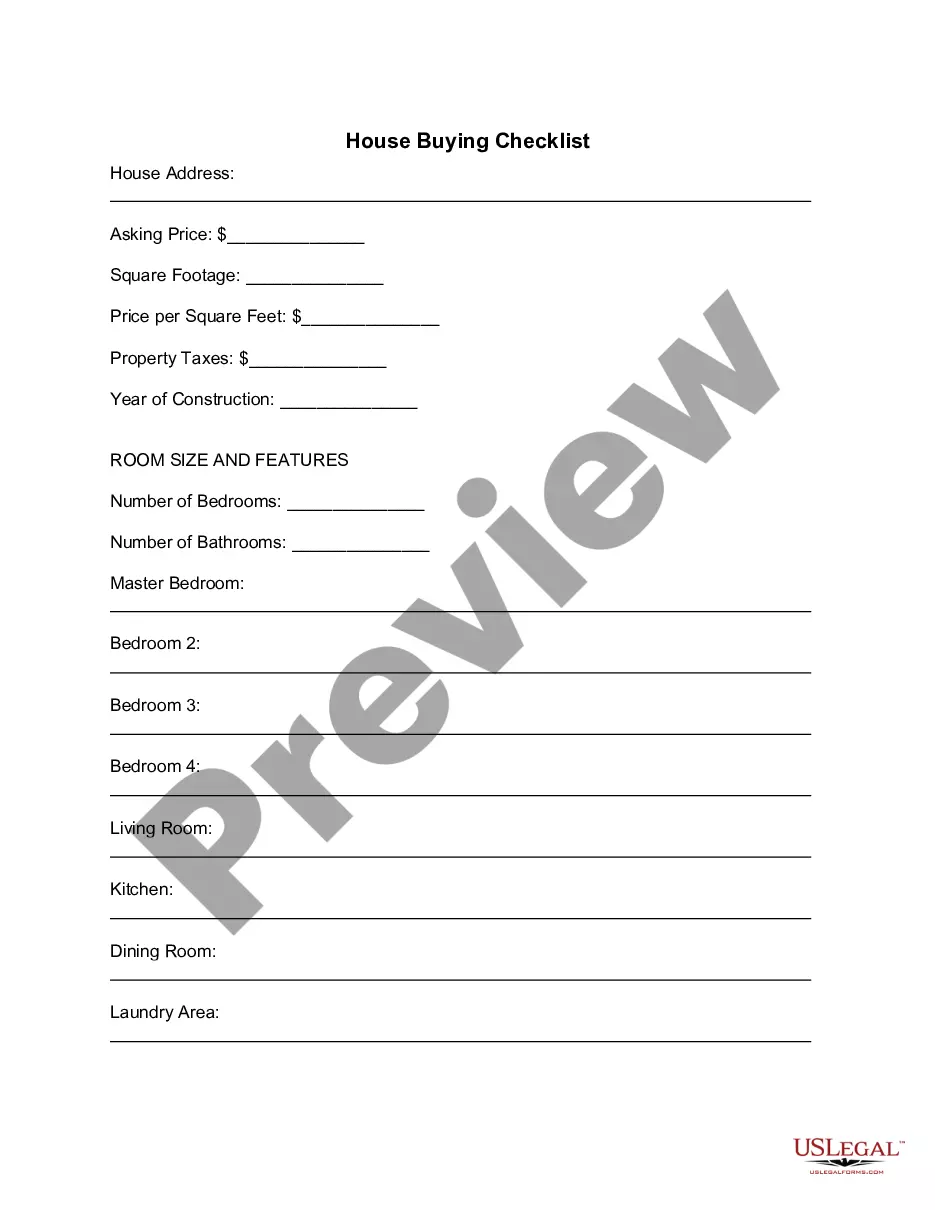
- Checklist format to simplify the process of evaluating multiple aspects of the home.
- Options to indicate the condition of items and whether they meet the buyer's needs.
When to use this form
This form should be used during the showing of a home or shortly after for buyers who are considering making an offer. It is particularly helpful when assessing multiple properties or when the buyer needs a structured way to compare homes based on key factors.
Who this form is for
- Prospective homebuyers looking to purchase residential property in Tennessee.
- Individuals or families assessing properties during their home search.
- Real estate agents assisting clients in evaluating multiple homes.
How to prepare this document
- Begin by identifying the property address and date of the inspection.
- Review the checklist items and evaluate each aspect of the home, marking "Yes" or "No" as appropriate.
- Record any additional observations or notes in the provided space for context and future reference.
- Discuss your findings with your real estate agent or relevant parties after the inspection is complete.
- Use this checklist as a reference when making an offer or negotiating terms with the seller.
Is notarization required?
Notarization is not commonly needed for this form. However, certain documents or local rules may make it necessary. Our notarization service, powered by Notarize, allows you to finalize it securely online anytime, day or night.
Get your form ready online
Our built-in tools help you complete, sign, share, and store your documents in one place.
Make edits, fill in missing information, and update formatting in US Legal Forms—just like you would in MS Word.
Download a copy, print it, send it by email, or mail it via USPS—whatever works best for your next step.
Sign and collect signatures with our SignNow integration. Send to multiple recipients, set reminders, and more. Go Premium to unlock E-Sign.
If this form requires notarization, complete it online through a secure video call—no need to meet a notary in person or wait for an appointment.
We protect your documents and personal data by following strict security and privacy standards.

Make edits, fill in missing information, and update formatting in US Legal Forms—just like you would in MS Word.

Download a copy, print it, send it by email, or mail it via USPS—whatever works best for your next step.

Sign and collect signatures with our SignNow integration. Send to multiple recipients, set reminders, and more. Go Premium to unlock E-Sign.

If this form requires notarization, complete it online through a secure video call—no need to meet a notary in person or wait for an appointment.

We protect your documents and personal data by following strict security and privacy standards.
Common mistakes
- Overlooking smaller details that could lead to bigger issues.
- Failing to ask the seller important questions during the viewing.
- Not using the checklist to its full potential by leaving sections blank.
Benefits of using this form online
- Convenient access to download and print the form at any time.
- Editability allows customization specific to each property being viewed.
- Reliable, attorney-drafted content ensures legal safety and completeness.
Looking for another form?

Form popularity
FAQ
This checklist helps Tennessee buyers evaluate a home during initial viewings by listing property assessment items (including neighborhood factors, utility installations, and proximity to essential services) and providing sections to record the buyer’s observations. It’s designed to help buyers compare homes and decide whether the property meets their needs before making an offer, during showings or shortly after.
Using the checklist, buyers can flag items that signal potential problems—such as utilities or critical systems not meeting needs, or concerns about neighborhood factors—and note them in the observations section for discussion with the seller or a professional inspector. The form itself helps prioritize issues and guide follow-up steps.
While the form does not define red flags, buyers use it to document items that fail to meet essential needs or raise safety concerns. The observations and 'condition' indicators help highlight potential major issues, guiding conversations with the seller or a licensed professional inspector during next steps.
Major red flags commonly involve structural problems, water intrusion, electrical hazards, or major system deficiencies. In this checklist, buyers use the 'condition' and 'meets needs' options to flag these concerns and add notes. The form helps prioritize issues for negotiation or further professional evaluation, not to diagnose or fix them.
No, Tennessee does not require a home inspection by law; the choice to inspect is voluntary and often based on buyer preference or lender requirements. This checklist is designed to help buyers evaluate a property during showings and document concerns to discuss with the seller or an inspector before making an offer.
This checklist is tailored to Tennessee buyers, emphasizing items like neighborhood factors, utility installations, and proximity to essential services. It includes dedicated sections for recording observations and indicating whether items meet the buyer’s needs, plus a checklist format that supports quick comparison across multiple properties at the showing stage.