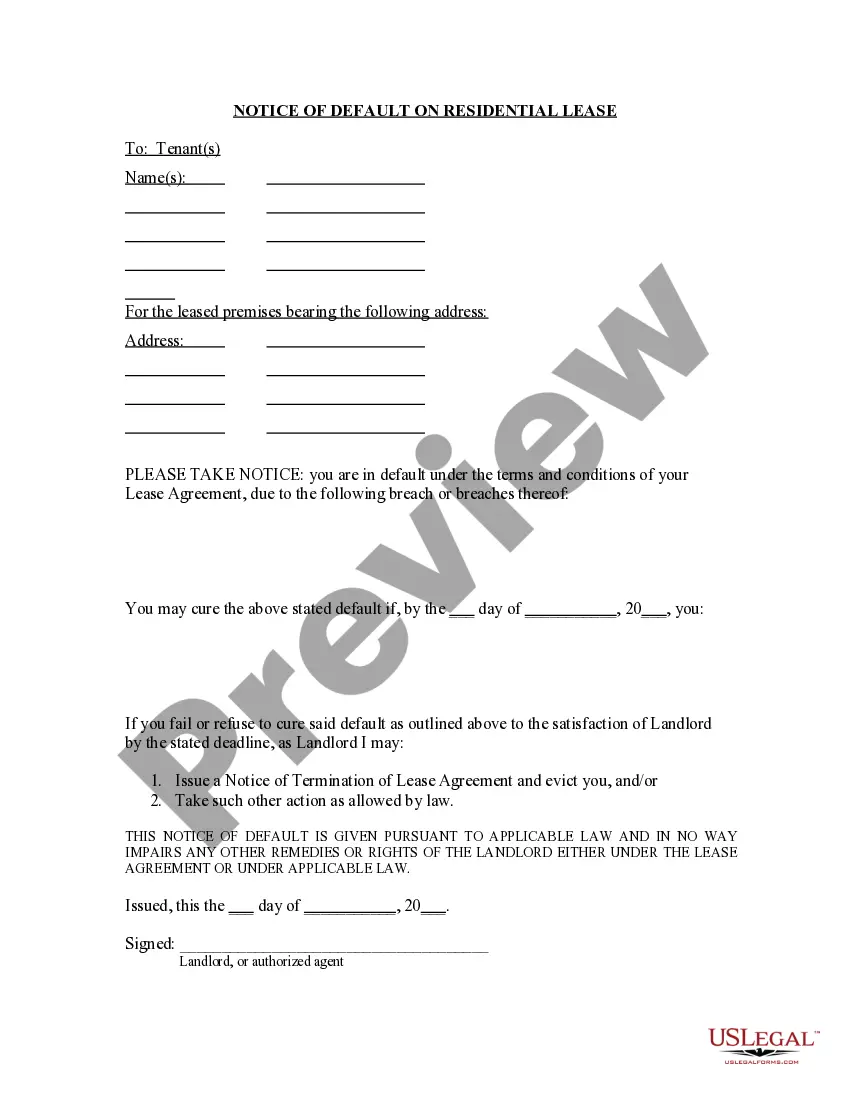
South Dakota Notice of Default on Residential Lease
Understanding this form
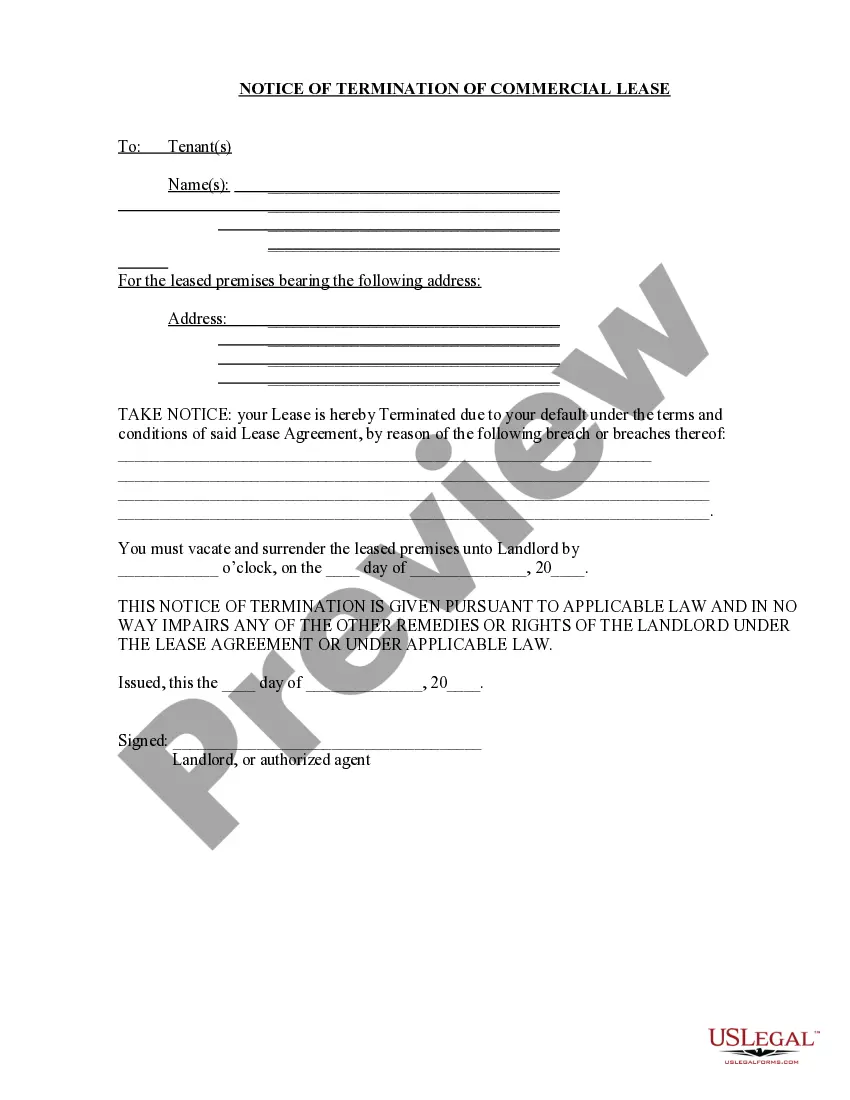
The Notice of Default on Residential Lease is a legal document that notifies a tenant of specific defaults related to their lease agreement, such as failure to pay rent on time. This form is essential for landlords who must inform tenants of their default, providing a clear deadline to remedy the situation before further legal actions, such as eviction, are taken. It is an important step in the landlord-tenant relationship and helps ensure compliance with applicable laws, contrasting with other forms that may address termination or eviction without prior notice of default.
Key parts of this document
- Date of issuance
- Specific reasons for the default
- Deadline for the tenant to cure the default
- Landlord's signature or authorized agent's signature
- Statement of possible further actions if the default is not cured


When this form is needed
This form should be used when a tenant has failed to meet their obligations under the lease, particularly in terms of timely rent payment. A landlord may issue this notice when they wish to formally document the default and provide the tenant an opportunity to correct the issue before initiating a termination of lease or eviction proceedings. It is a necessary action in maintaining the legal standing of the landlord's rights.
Intended users of this form
- Residential landlords experiencing payment issues with tenants
- Property management companies overseeing rental properties
- Landlords seeking to comply with local rental laws and regulations
Steps to complete this form
- Identify the parties involved, including landlord and tenant names.
- Specify the property address covered by the lease agreement.
- Enter the specific reasons for the default clearly and concisely.
- Fill in the deadline date for the tenant to cure the default.
- Sign the form to validate it as the landlord or authorized agent.
Notarization guidance
This form does not typically require notarization unless specified by local law. It is essential to check your stateâs regulations to ensure compliance. Always consult with a legal professional if uncertain about your obligations.
Get your form ready online
Our built-in tools help you complete, sign, share, and store your documents in one place.
Make edits, fill in missing information, and update formatting in US Legal Forms—just like you would in MS Word.
Download a copy, print it, send it by email, or mail it via USPS—whatever works best for your next step.
Sign and collect signatures with our SignNow integration. Send to multiple recipients, set reminders, and more. Go Premium to unlock E-Sign.
If this form requires notarization, complete it online through a secure video call—no need to meet a notary in person or wait for an appointment.
We protect your documents and personal data by following strict security and privacy standards.
Make edits, fill in missing information, and update formatting in US Legal Forms—just like you would in MS Word.
Download a copy, print it, send it by email, or mail it via USPS—whatever works best for your next step.
Sign and collect signatures with our SignNow integration. Send to multiple recipients, set reminders, and more. Go Premium to unlock E-Sign.
If this form requires notarization, complete it online through a secure video call—no need to meet a notary in person or wait for an appointment.
We protect your documents and personal data by following strict security and privacy standards.
Common mistakes
- Failing to provide specific reasons for the default.
- Not including a clear deadline for the tenant to address the default.
- Omitting the signature of the landlord or authorized agent.
- Using outdated language that may not comply with current laws.
Advantages of online completion
- Accessible and easy to download, providing immediate usefulness.
- Edit and customize your form quickly without legal jargon.
- Reliable templates crafted by licensed attorneys, ensuring legal compliance.
Legal use & context
- The Notice of Default is typically a prerequisite to eviction proceedings.
- It ensures that tenants are informed and given a fair chance to resolve defaults.
- This notice must comply with local and state laws governing landlord-tenant relationships.
Looking for another form?
Form popularity
FAQ
In landlord-tenant law, default refers to the failure of a tenant to timely pay rent due.In general, the landlord is required to give the tenant notice of the default before bringing eviction proceedings or applying security deposit proceeds to the payment in default.
Default by landlord The most common form of landlord default is failure to provide services and maintain the property condition. When a landlord defaults on the terms of the lease, tenants may sue for damages.
Step 1: Speak to your tenant. Step 2: Provide notice of contract breach. Step 3: Decide between an interdict or cancellation. Step 4: Eviction process. Step 5: Eviction notice. Final advice.
Protect your rental income. Even the most reliable tenants sometimes struggle to pay their rent.Tenant default insurance from Simply Business provides vital back-up for landlords it can cover your rental income if your tenant fails to pay rent.
Dear your landlord or property manager's name, I am writing to inform you I will be vacating my rental unit on date you intend to vacate. This letter meets the 30-day notice requirement outlined in my lease agreement.
Tenant default occurs when a Tenant breaches one of the tenant's covenants in its lease. Tenant default can arise in a number of different ways but will typically be for one of the following: Non-payment of rent or other sums reserved under the lease.
Your name, and the landlord's name and address. The date you're writing the letter. Informing the landlord you're breaking your lease early. The reason why you're breaking your lease. The building and apartment you're vacating. The date by which you're vacating.
Dear (Name of landlord or manager), This letter constitutes my written (number of days' notice that you need to give based on your lease agreement)-day notice that I will be moving out of my apartment on (date), the end of my current lease. I am leaving because (new job, rent increase, etc.)
Pay any delinquent rent that is due to the landlord within the allotted time of the notice. Move out of the premises within the allotted time of the notice. File an answer with the judicial court. File a motion to stay with the court.