South Dakota Quitclaim Deed from Individual to Corporation
Understanding this form
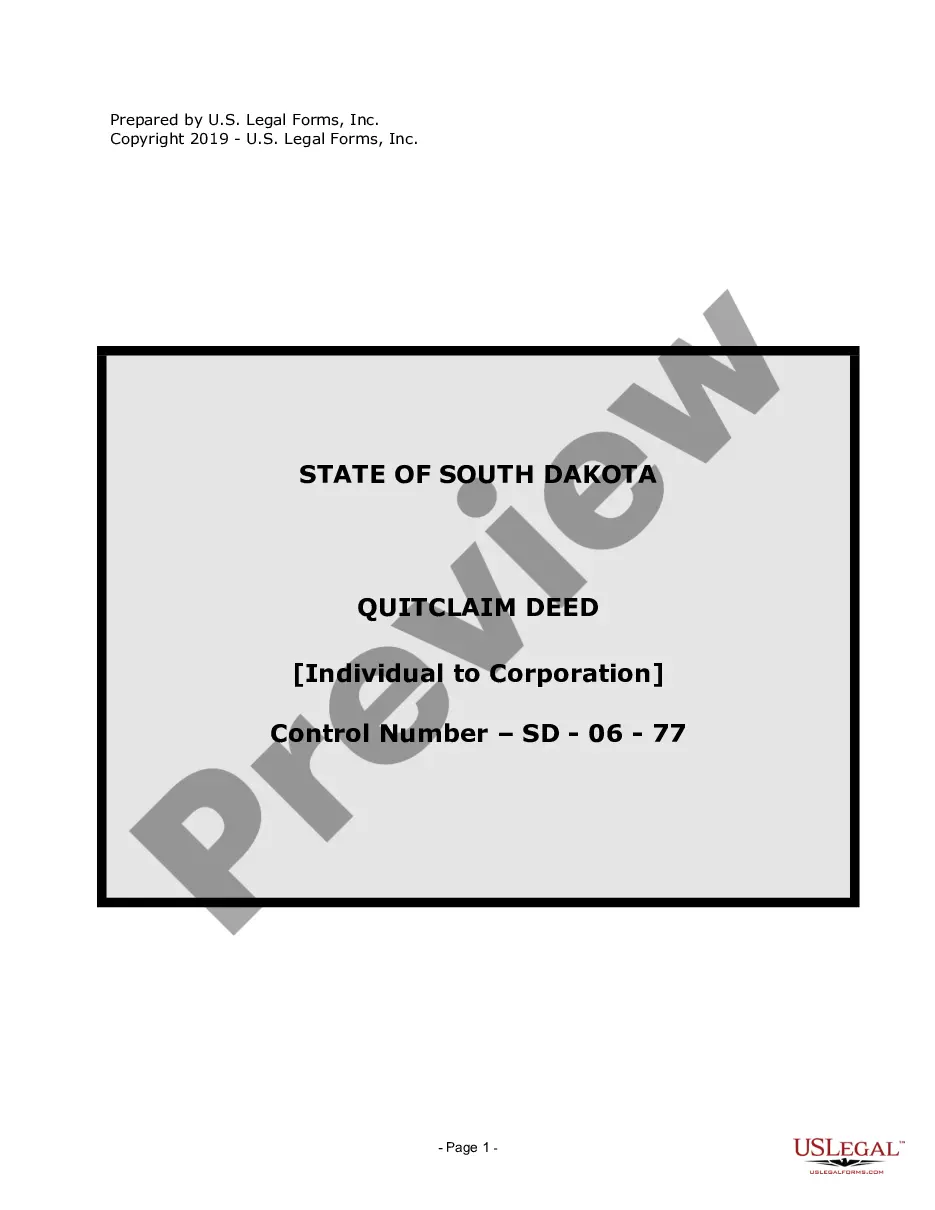
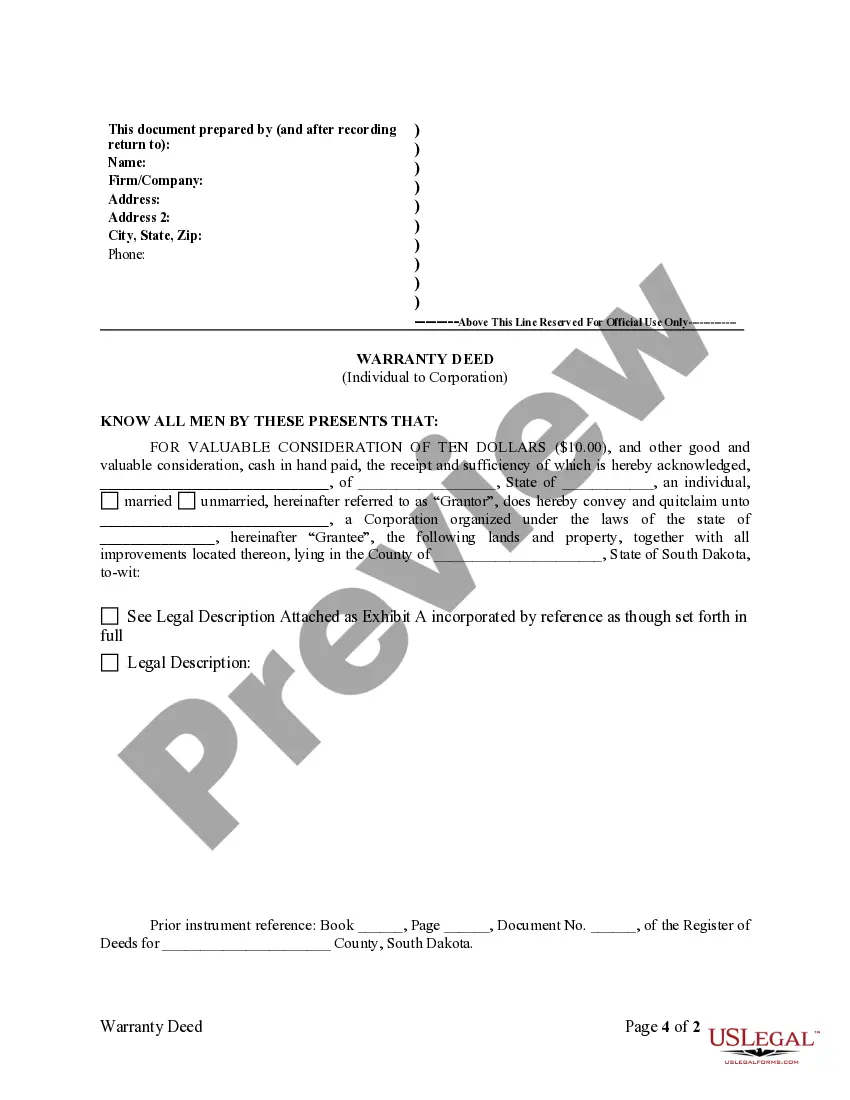
The Quitclaim Deed from Individual to Corporation is a legal document used by an unmarried individual (the grantor) to transfer ownership of real estate to a corporation (the grantee). Unlike warranties, quitclaim deeds do not guarantee the transferor holds clear title to the property. This form is essential in real estate transactions where a quick transfer is needed without the complexities of title research, making it different from a warranty deed which provides more assurances to the grantee.
What’s included in this form
- Grantor and grantee information: Includes names and addresses.
- Property description: Clearly outlines the property being transferred.
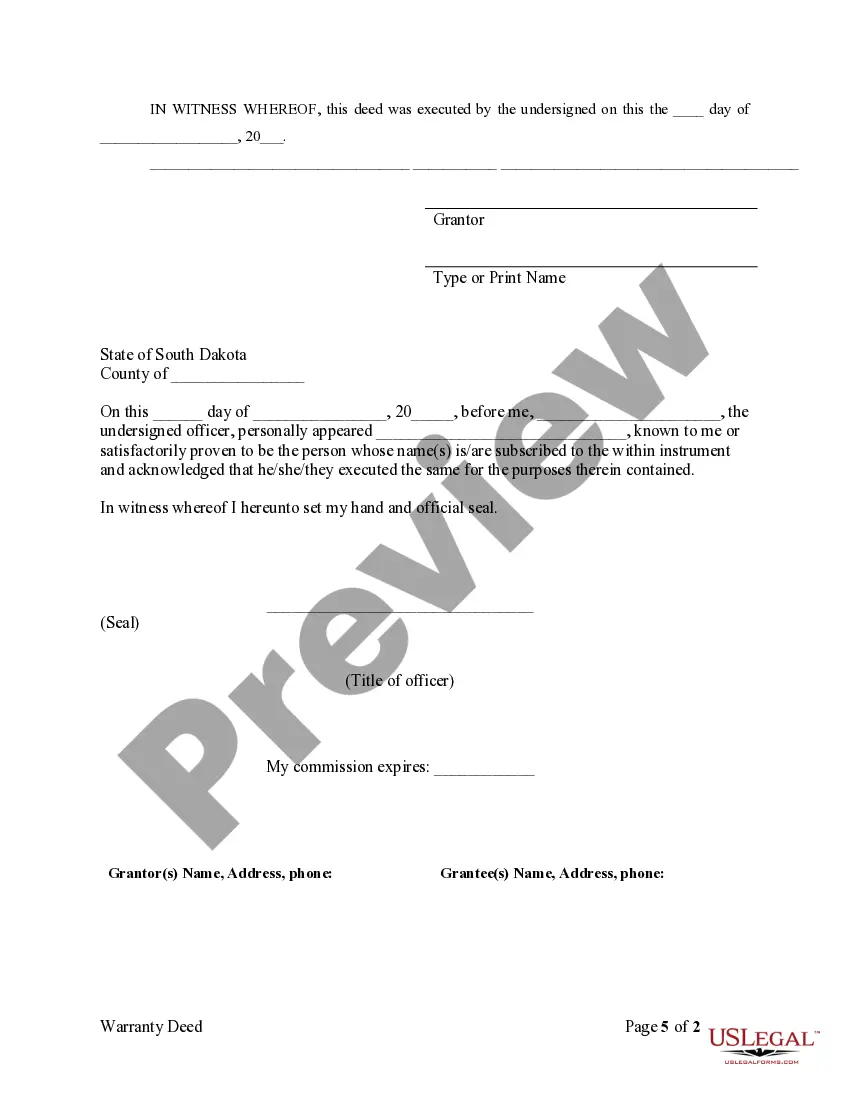
- Execution date: Specifies when the deed is signed.
- Notary section: For official witnessing of the document.
- Legal descriptions: Attachments for clear identification of the property.




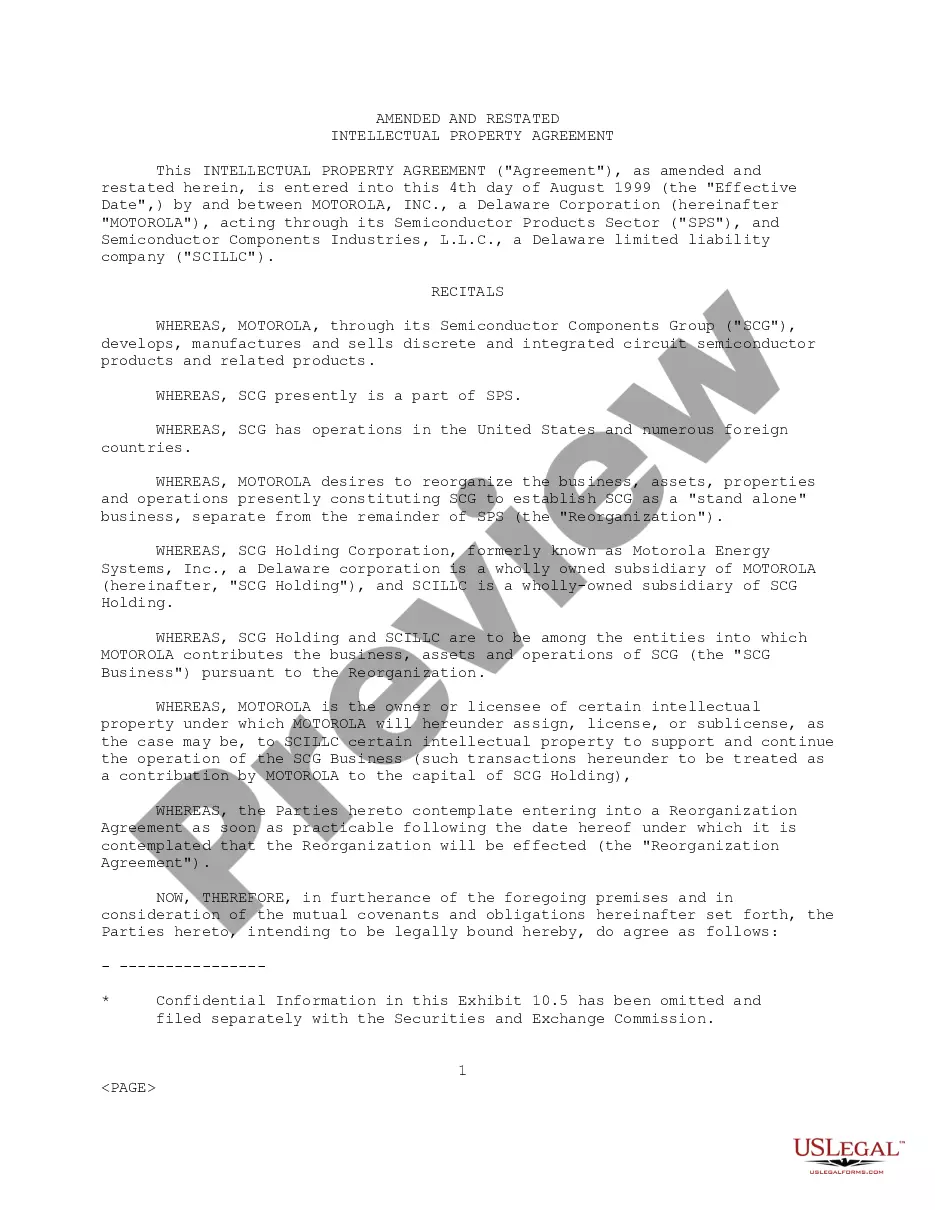
When to use this form
This form is used when an individual wishes to transfer real property ownership to a corporation. It's commonly utilized in situations such as estate planning, business transactions, or simplifying property titles within corporate structures. If you are transferring property to establish or reorganize company ownership, this quitclaim deed is appropriate.
Who should use this form
This quitclaim deed is suitable for:
- Unmarried individuals transferring property they own to a corporation.
- Business owners looking to simplify or formalize property ownership within their corporation.
- Individuals involved in estate planning who need to reassign property titles quickly.
How to prepare this document
- Identify the parties: Fill in the names and addresses of both the grantor and the corporation as the grantee.
- Specify the property: Clearly describe the real estate being transferred, using accurate legal descriptions.
- Enter the date of execution: Indicate the date when the deed is signed.
- Provide notary details: Include the notary's information and ensure they witness the signing of the deed.
- Finalize the form: Review all entries for accuracy before printing or saving the document.
Notarization guidance
Yes, this form must be notarized to be legally valid. U.S. Legal Forms offers integrated online notarization services, providing a secure video call with a licensed notary, ensuring you can complete the process conveniently and legally from anywhere.
Get your form ready online
Our built-in tools help you complete, sign, share, and store your documents in one place.
Make edits, fill in missing information, and update formatting in US Legal Forms—just like you would in MS Word.
Download a copy, print it, send it by email, or mail it via USPS—whatever works best for your next step.
Sign and collect signatures with our SignNow integration. Send to multiple recipients, set reminders, and more. Go Premium to unlock E-Sign.
If this form requires notarization, complete it online through a secure video call—no need to meet a notary in person or wait for an appointment.
We protect your documents and personal data by following strict security and privacy standards.

Make edits, fill in missing information, and update formatting in US Legal Forms—just like you would in MS Word.

Download a copy, print it, send it by email, or mail it via USPS—whatever works best for your next step.

Sign and collect signatures with our SignNow integration. Send to multiple recipients, set reminders, and more. Go Premium to unlock E-Sign.

If this form requires notarization, complete it online through a secure video call—no need to meet a notary in person or wait for an appointment.

We protect your documents and personal data by following strict security and privacy standards.
Common mistakes to avoid
- Failing to include a complete legal description of the property.
- Not having the document notarized before submission.
- Leaving out the date of execution.
- Incorrectly specifying grantor or grantee information.
Why complete this form online
- Immediate access to professionally drafted legal forms.
- Convenient download options in various formats for compatibility.
- Easy-to-use form fields that streamline the completion process.
- Reliable, up-to-date legal templates to ensure compliance with current laws.
Legal use & context
- This quitclaim deed effectively transfers any interest the grantor may have in the property to the corporation.
- It does not provide protection or guarantees related to the property's title.
- The form must comply with South Dakota laws regarding property transfers.
Key takeaways
- The Quitclaim Deed from Individual to Corporation is a straightforward way to transfer property ownership.
- Ensure all requirements, including notarization and property descriptions, are thoroughly completed.
- Using this form online can save time and streamline the process of property transfer.
Looking for another form?

Form popularity
FAQ
A quitclaim deed is a legal instrument that is used to transfer interest in real property.The owner/grantor terminates (quits) any right and claim to the property, thereby allowing the right or claim to transfer to the recipient/grantee.
Step 1: Download the SD quitclaim deed form. Step 2: List information about the grantor, who is the person selling or giving away the property. Step 3: List information about the grantee, the person receiving the property.
But you might be wondering if an owner can transfer a deed to another person without a real estate lawyer. The answer is yes. Parties to a transaction are always free to prepare their own deeds.A quitclaim deed, for example, is far simpler than a warranty deed.
How to Quitclaim Deed to LLC. A quitclaim deed to LLC is actually a very simple process. You will need a deed form and a copy of the existing deed to make sure you identify titles properly and get the legal description of the property.
When done properly, a deed is recorded anywhere from two weeks to three months after closing. However, there are many instances where deeds are not properly recorded. Title agents commit errors, lose deeds, and even go out of business. Even county offices sometimes fail to record deeds that were properly submitted.
A Quitclaim Deed must be notarized by a notary public or attorney in order to be valid.Consideration in a Quitclaim Deed is what the Grantee will pay to the Grantor for the interest in the property.
Quitclaim deeds are most often used to transfer property between family members. Examples include when an owner gets married and wants to add a spouse's name to the title or deed, or when the owners get divorced and one spouse's name is removed from the title or deed.