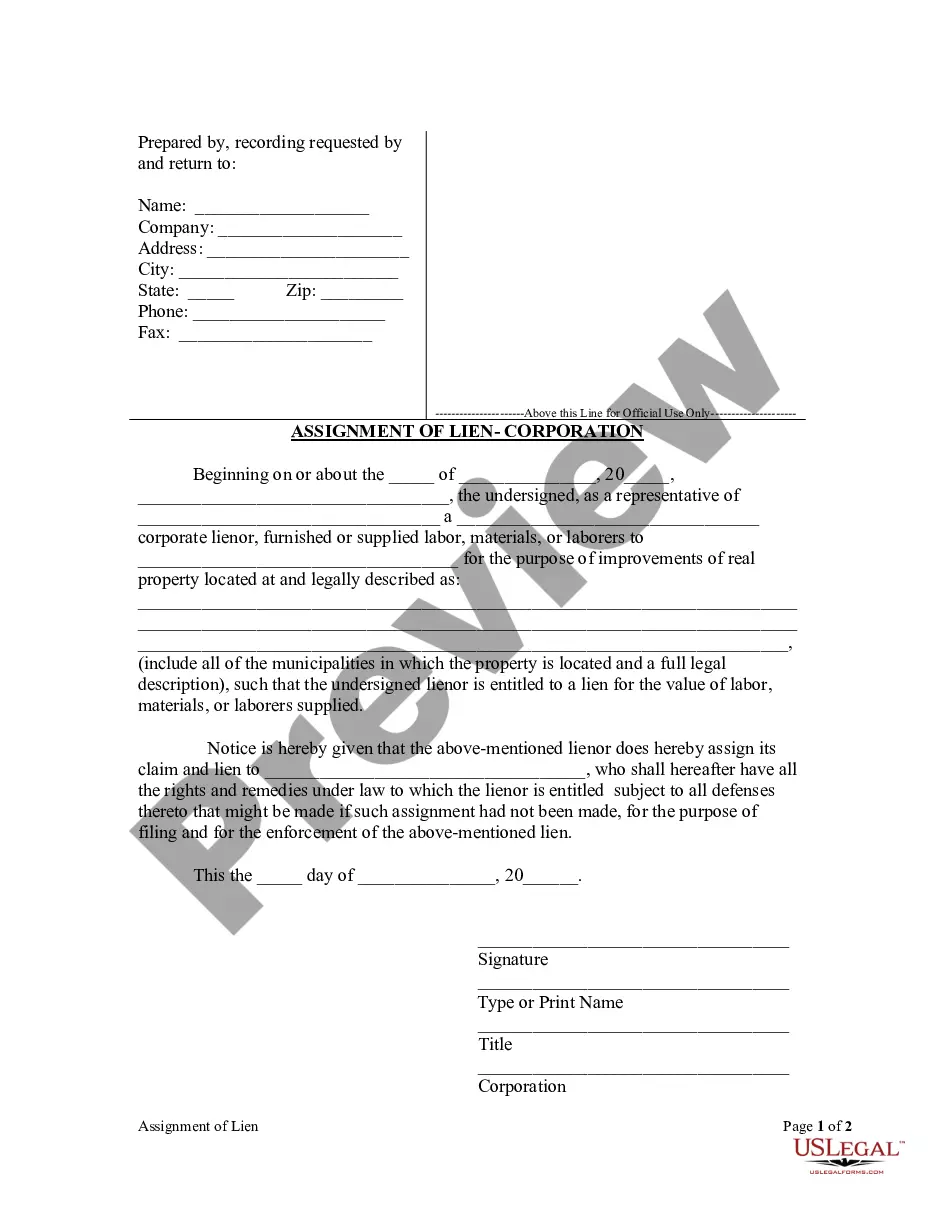
South Carolina Owner's or Seller's Affidavit of No Liens
Overview of this form
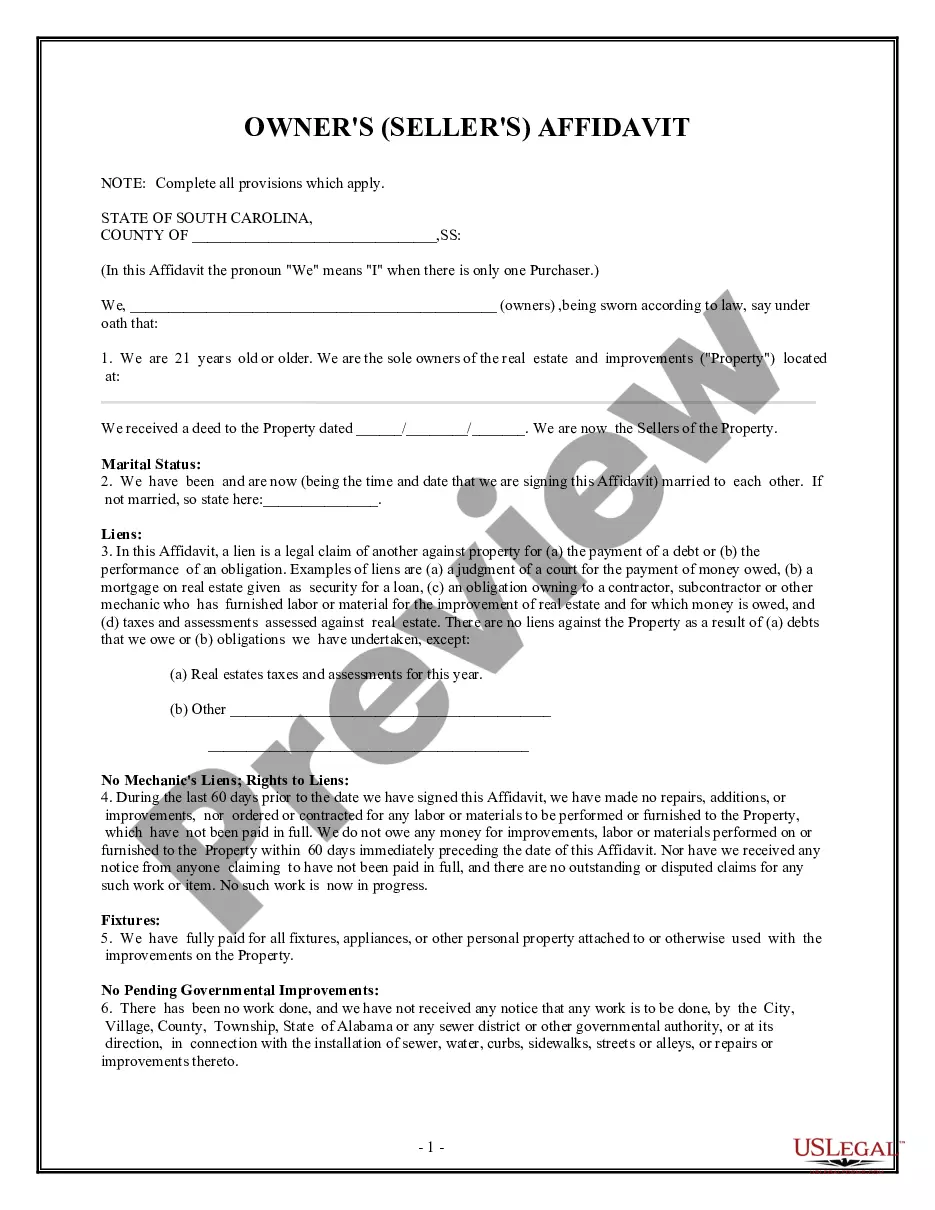
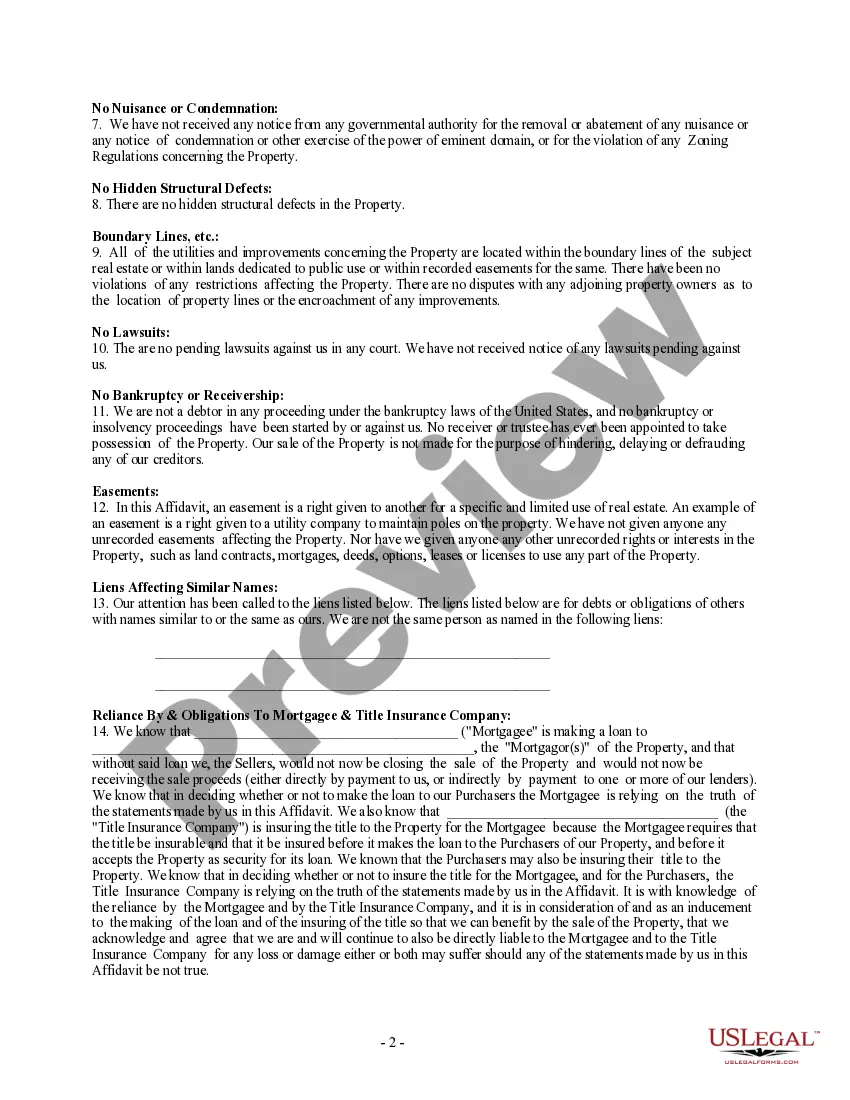
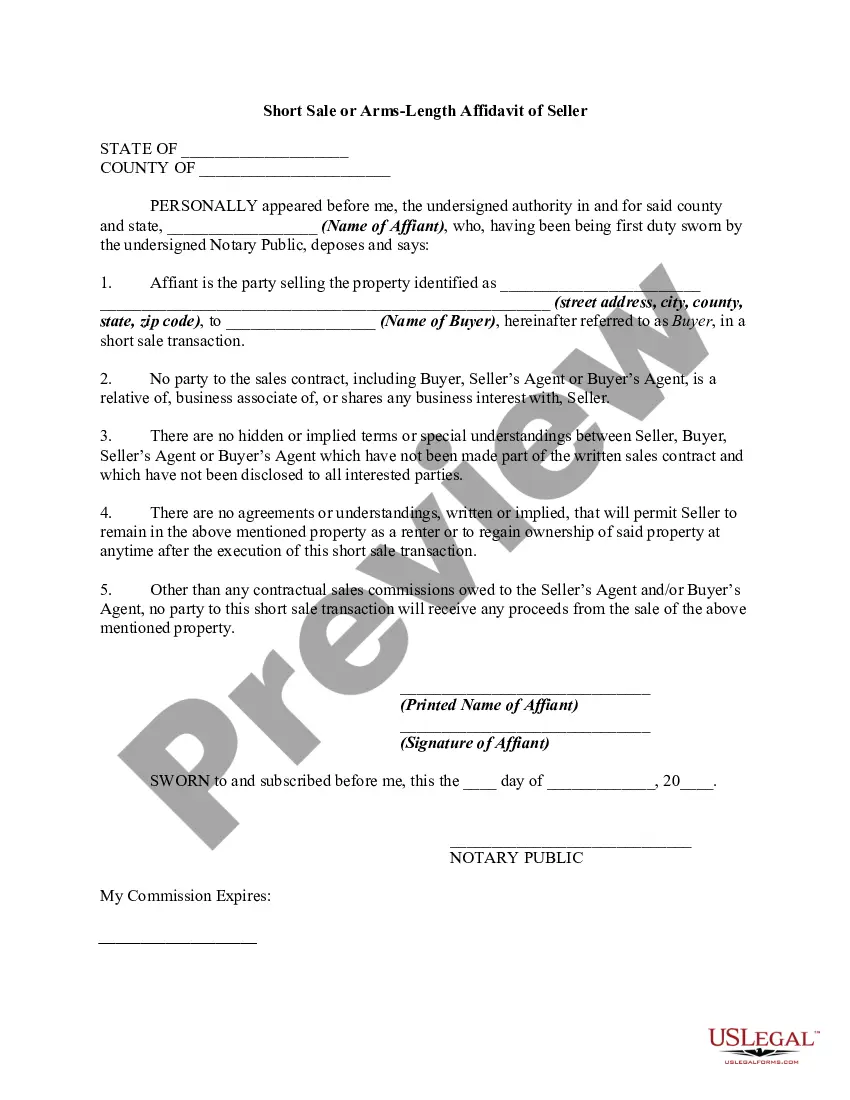
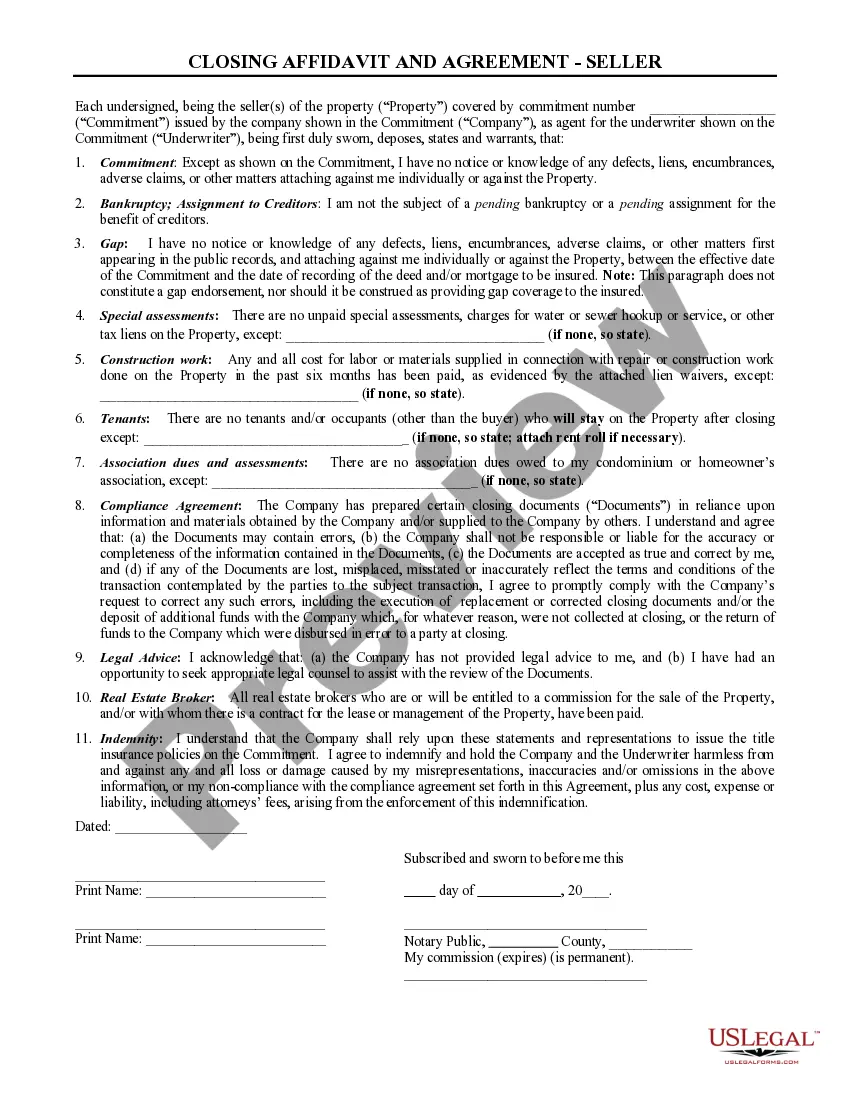
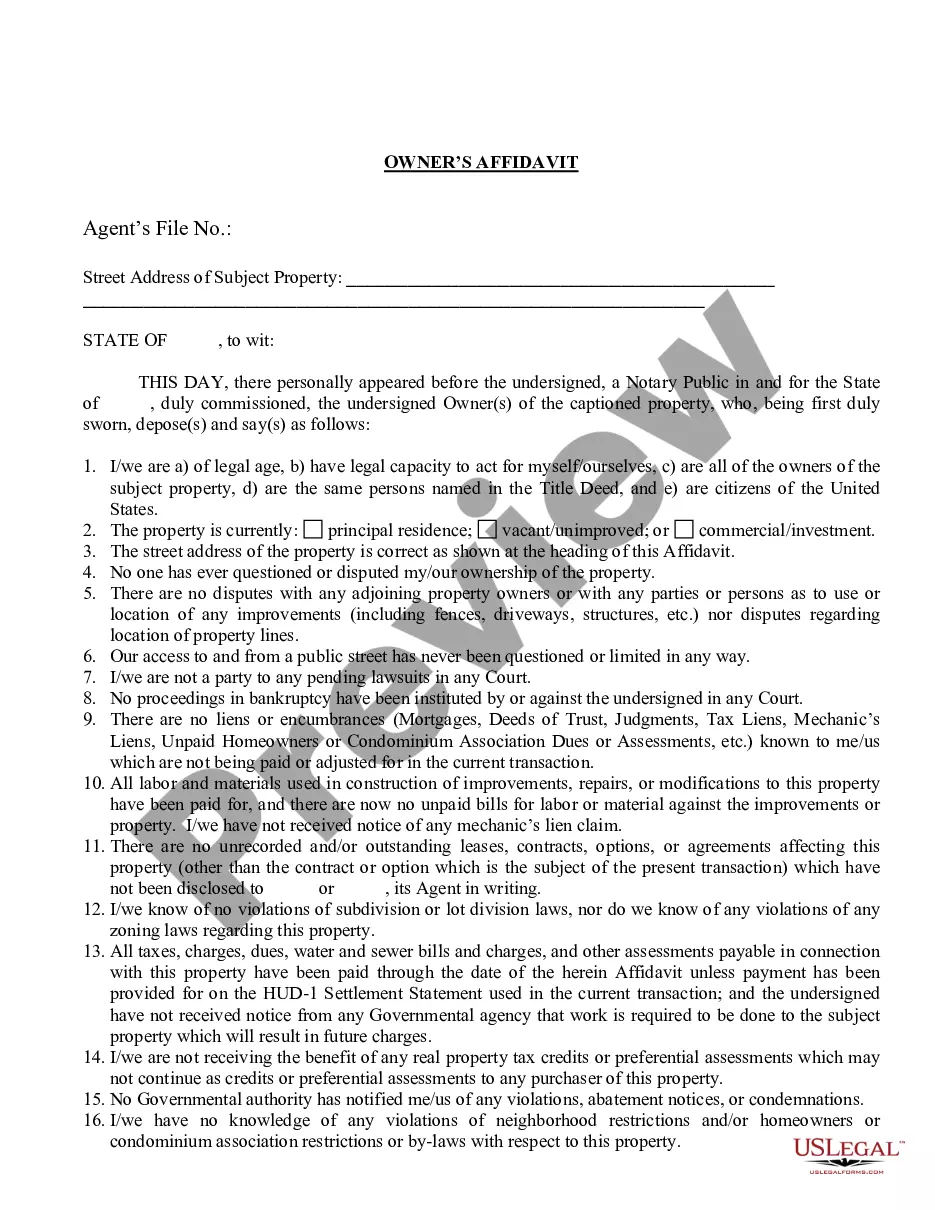
The Owner's or Seller's Affidavit of No Liens is a legal document used by property sellers to affirm that there are no outstanding liens on the property being sold. This affidavit certifies the seller's ownership, the absence of mechanic's liens, and other liabilities related to the property. It is crucial during the closing process as it provides essential assurances to the buyer and any involved financial institutions, distinguishing it from other property sale documents.
What’s included in this form
- Declaration of ownership and personal information of the sellers.
- Statement confirming there are no liens against the property.
- Affirmation of no mechanic's liens or pending repairs within a specified timeframe.
- Disclosure of government notices or actions regarding the property.
- Warranties regarding structural defects and boundary lines.
- Details about any potential unrecorded easements affecting the property.

Common use cases
This affidavit is typically used during the closing process of a real estate transaction. Sellers should complete this form when selling residential or commercial property to assure the buyer that the property is free from liens or claims. It is also essential when securing loan financing or title insurance, as lenders and insurers rely on the information provided in this affidavit to assess risk.
Who should use this form
- Property sellers looking to confirm the absence of liens on their property.
- Real estate professionals involved in property transactions.
- Lenders and title insurance companies needing assurances from sellers regarding property conditions.
- Owners who have made improvements or repairs and need to certify no pending debts related to those enhancements.
Instructions for completing this form
- Identify the sellers and provide their personal information, including marital status.
- Specify the property address and include the date of the property deed.
- Disclose any liens or obligations linked to the property, if applicable.
- Confirm no repairs or improvements have been contracted or remain unpaid within the last 60 days.
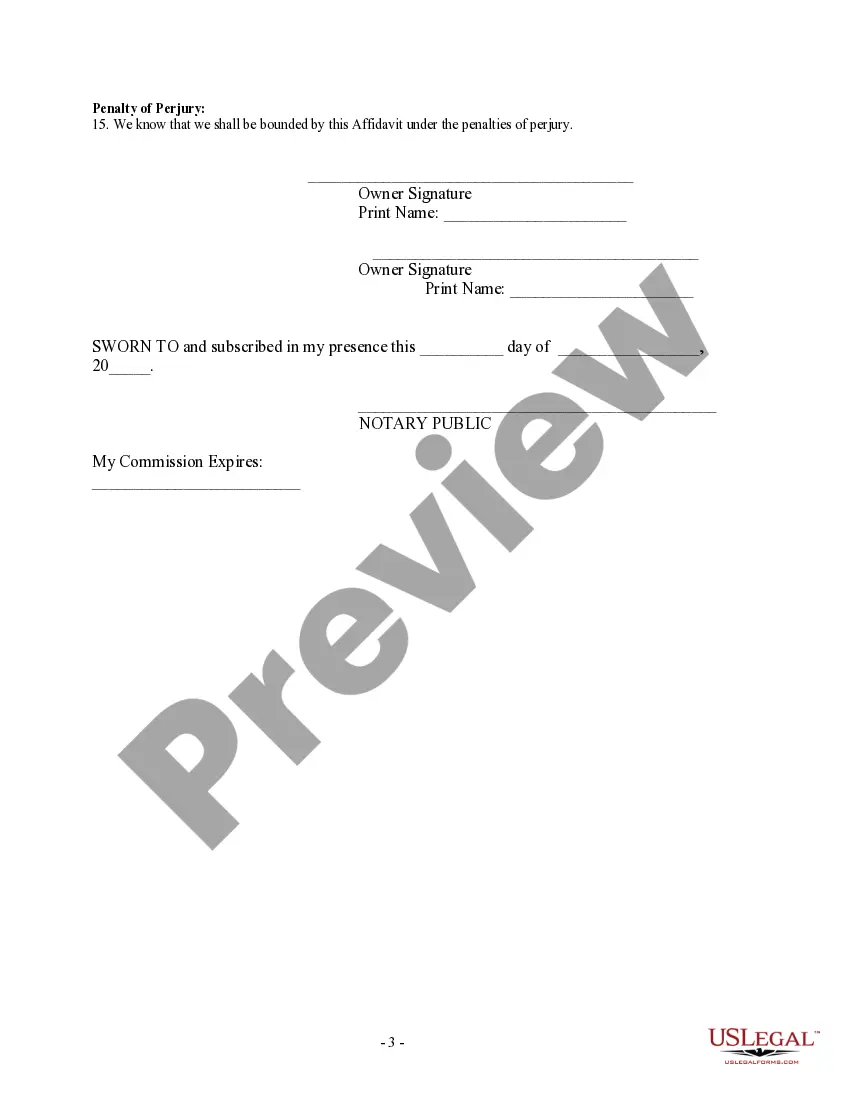
- Ensure all required signatures are obtained and the document is notarized.
Does this document require notarization?
This form needs to be notarized to ensure legal validity. US Legal Forms provides secure online notarization powered by Notarize, allowing you to complete the process through a verified video call, available anytime.
Get your form ready online
Our built-in tools help you complete, sign, share, and store your documents in one place.
Make edits, fill in missing information, and update formatting in US Legal Forms—just like you would in MS Word.
Download a copy, print it, send it by email, or mail it via USPS—whatever works best for your next step.
Sign and collect signatures with our SignNow integration. Send to multiple recipients, set reminders, and more. Go Premium to unlock E-Sign.
If this form requires notarization, complete it online through a secure video call—no need to meet a notary in person or wait for an appointment.
We protect your documents and personal data by following strict security and privacy standards.
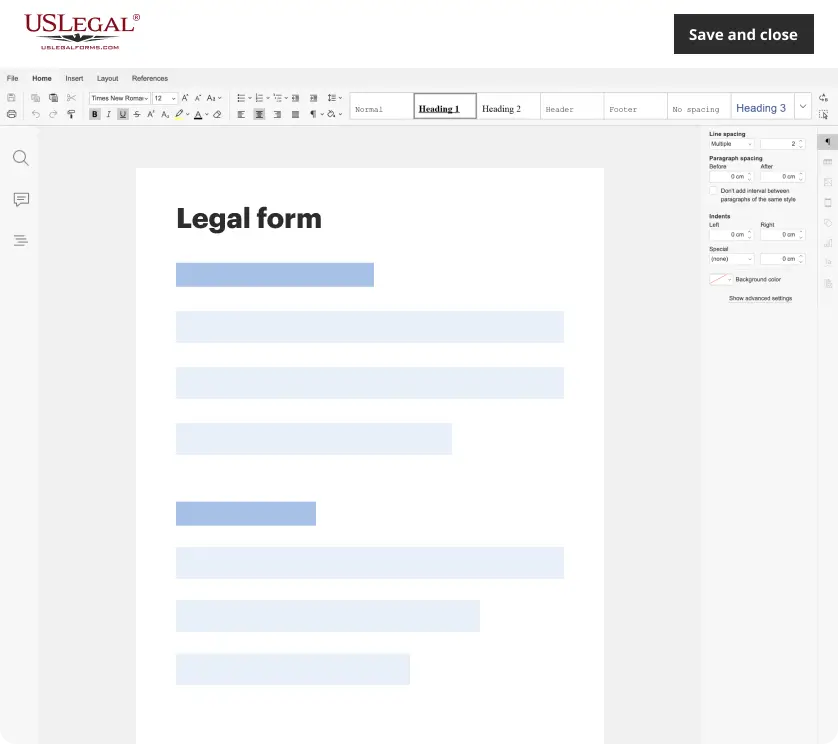
Make edits, fill in missing information, and update formatting in US Legal Forms—just like you would in MS Word.
Download a copy, print it, send it by email, or mail it via USPS—whatever works best for your next step.
Sign and collect signatures with our SignNow integration. Send to multiple recipients, set reminders, and more. Go Premium to unlock E-Sign.

If this form requires notarization, complete it online through a secure video call—no need to meet a notary in person or wait for an appointment.
We protect your documents and personal data by following strict security and privacy standards.
Avoid these common issues
- Failing to disclose existing liens or obligations, leading to potential legal issues.
- Not notarizing the affidavit, which is required for the document to be legally valid.
- Omitting signatures from all property owners, invalidating the affidavit.
- Providing incorrect or incomplete property information, which can complicate the sale.
Why use this form online
- Convenience of immediate access and easy downloads.
- Editability allows sellers to customize the form according to their specific situation.
- Reliability, as the form is crafted by licensed attorneys to ensure legal compliance.
Summary of main points
- The Owner's or Seller's Affidavit of No Liens is vital for assuring buyers that no liens are on the property.
- This form must be notarized to ensure its legal standing during the sale process.
- Accurate completion of the affidavit is essential to prevent future disputes or legal action.
- Sellers should understand their obligations and liabilities when completing this document.
Looking for another form?
Form popularity
FAQ
A skilled abstractor can complete a comprehensive title search in as little as one to two days. Check the title report for accuracy. Keep the full report in your house records.
Most states now have additional tools available for free property title searches. You can find these on your state government sites under "county assessor." You will have to select your county, and you can then search through the listed properties.
An affidavit and Indemnification agreement is a signed statement in which the affiant agrees to indemnify the holder of the agreement.
The general warranty deed is the standard instrument for home sales. Your notarized warranty deed is proof of ownership, and that the grantor transferred complete and clear title to you. A quitclaim deed also proves full land ownershipif the person who conveyed the interest to you had full ownership.
An Owner Affidavit is a document used by title and closing agencies to ensure that the current owner of a property is in ownership of the property free and clear of any encumbrances.The Owner Affidavit places the seller on the hook for any claims that may arise that are not covered by the title insurance policy.
A statement showing that your balance is paid in full. Your canceled promissory note. A certificate of satisfaction. Your canceled mortgage or deed of trust.
In most states, you can typically search by address with the county recorder, clerk, or assessor's office online. The search for liens is free, though you may have to pay a small fee for a copy of the report, which will vary by county.
The title search performed in the prelim title discovers whether or not there are any liens against the title, which would typically be placed by a lender on the property. They also may have you sign a document stating that there are no liens that are not recorded. If there are not, just sign it. Bingo.
Address of the property; Full names of the owner and the transferee, who will receive the property; Personal details of both parties; All costs the new proprietor assumes.