Pennsylvania Residential or Rental Lease Extension Agreement
Overview of this form
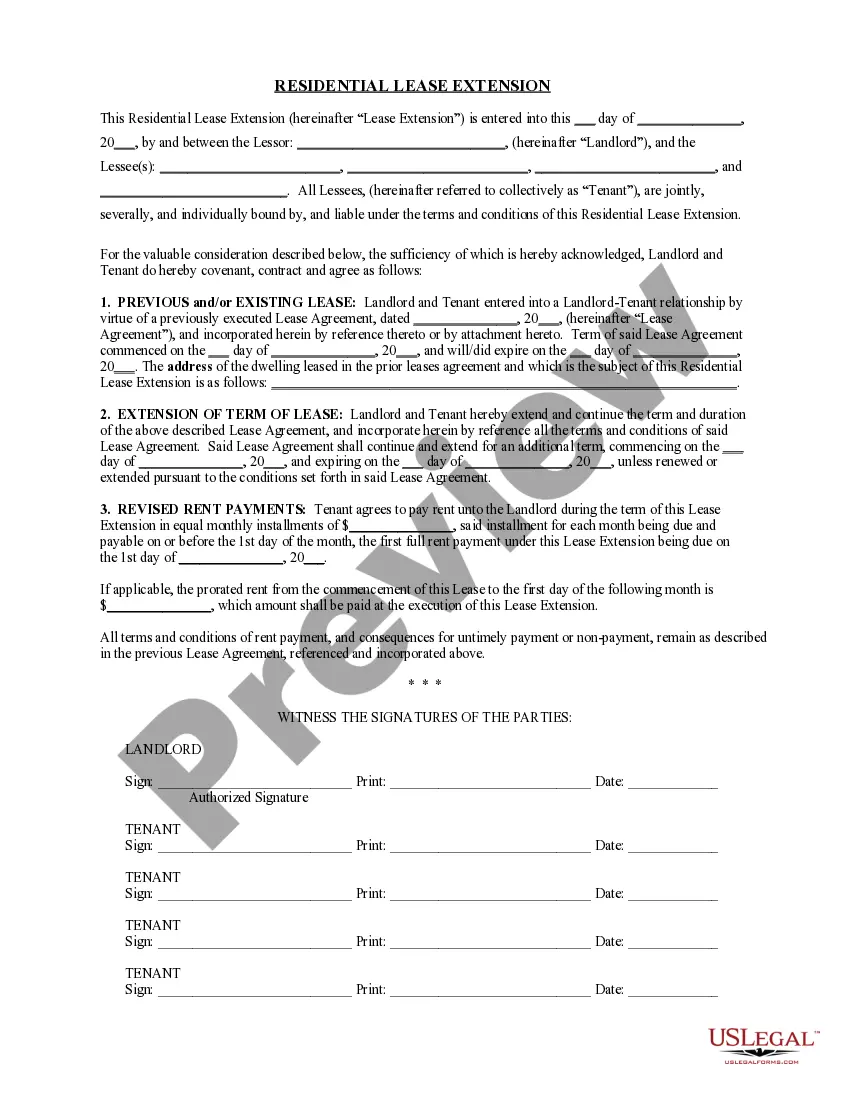
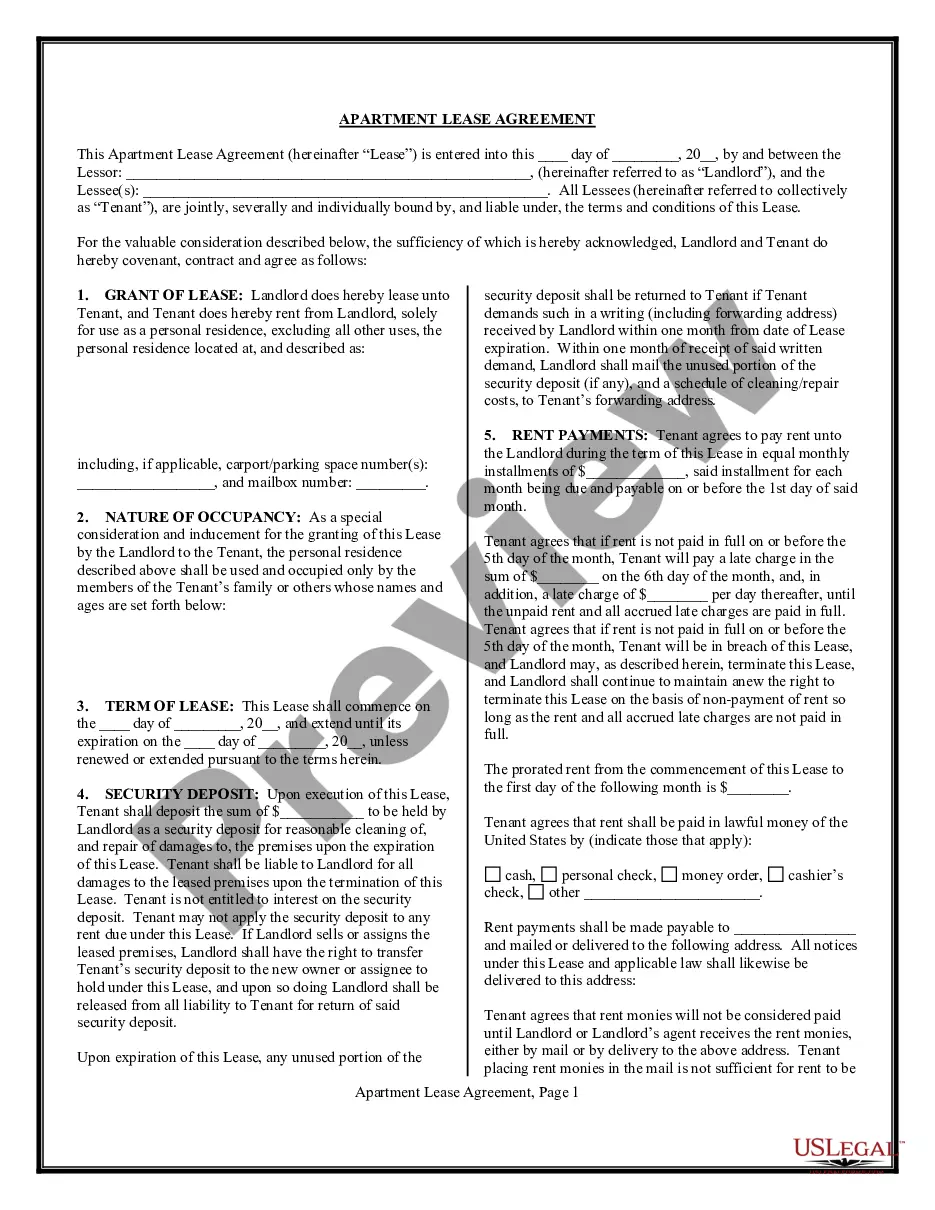
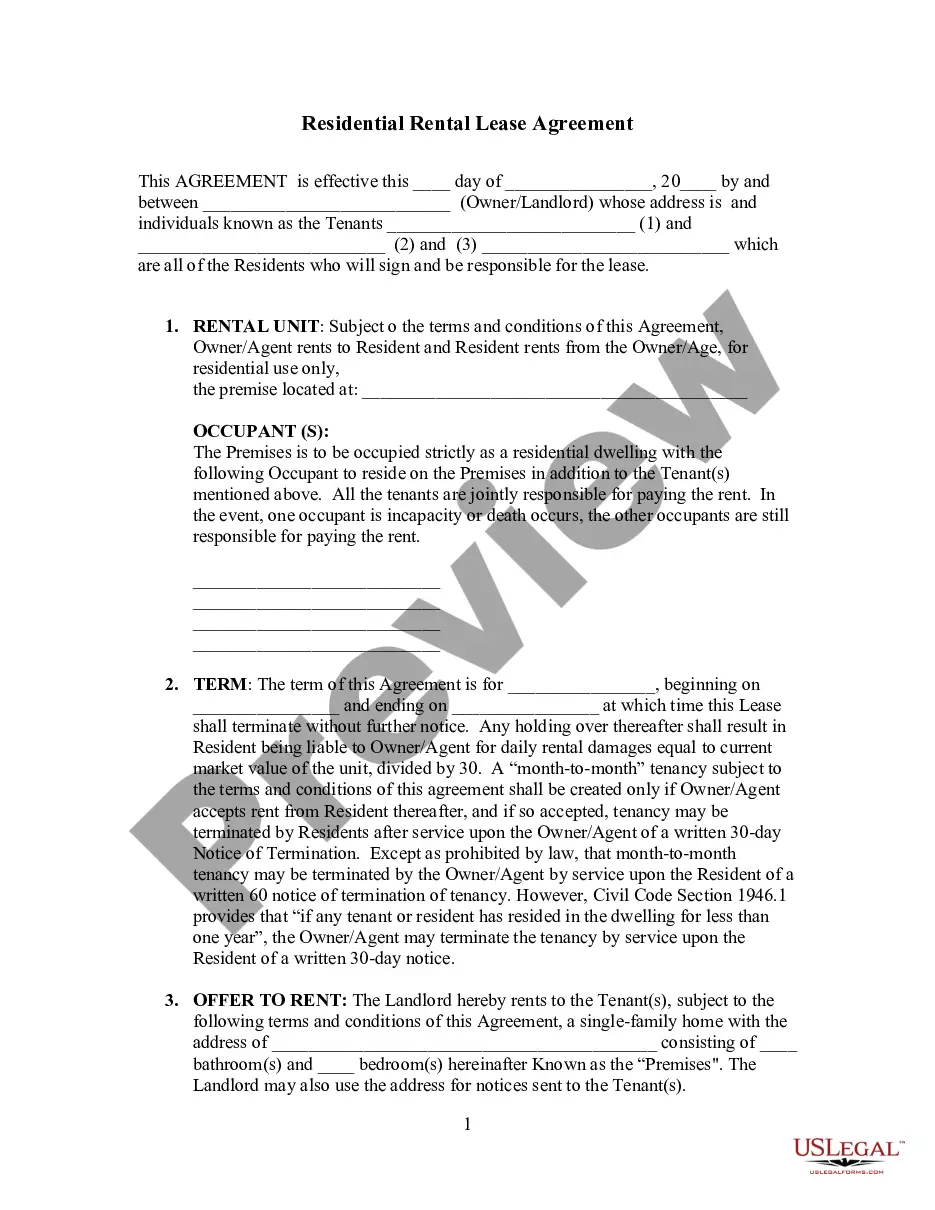
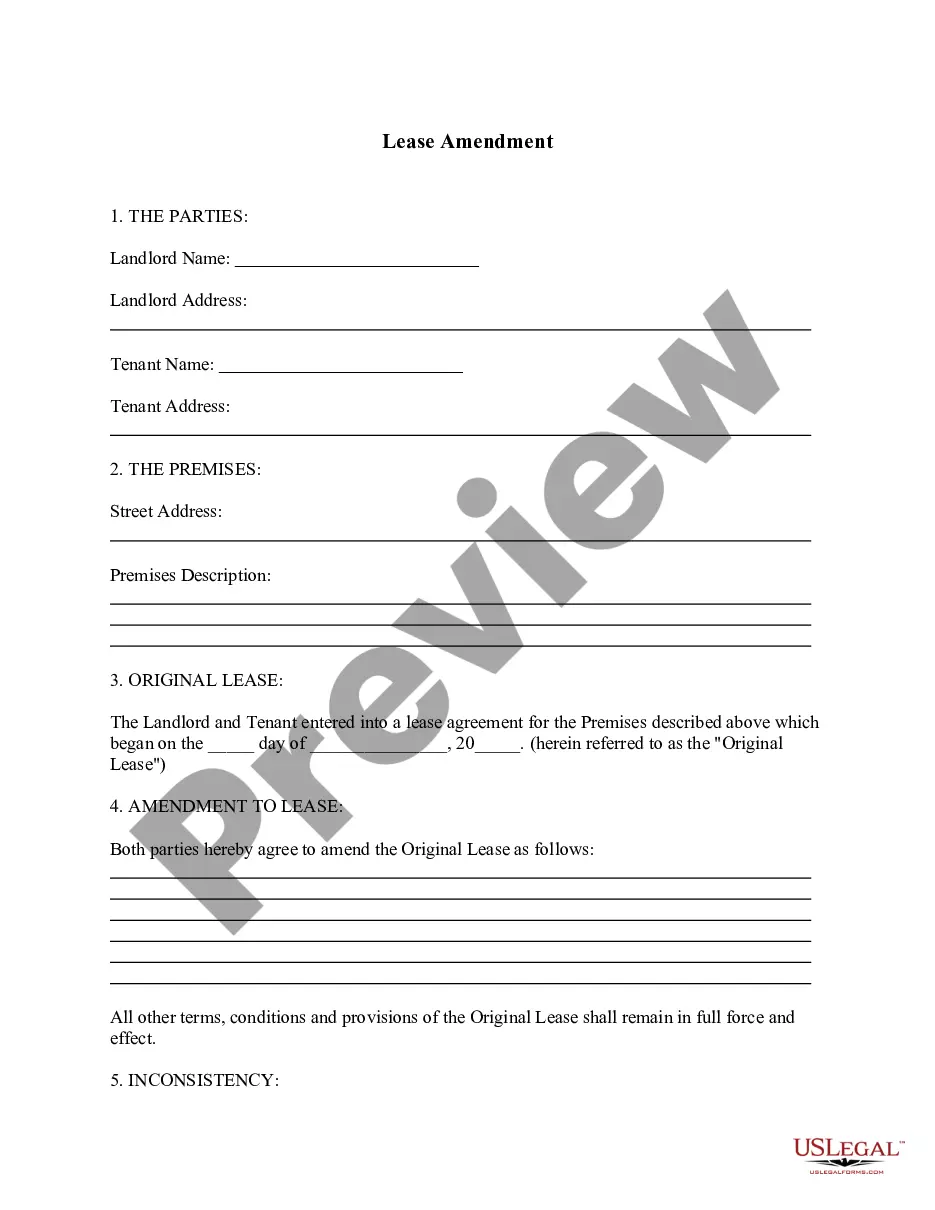
The Residential or Rental Lease Extension Agreement is a legal document that allows a landlord and tenant to extend the term of an existing lease without creating a new one. This form typically preserves all terms of the original lease, allowing for an easier transition and continued rental arrangement. It is particularly useful when both parties agree to maintain their existing conditions but wish to prolong the rental period, often with updated rent amounts.
What’s included in this form
- Identification of the landlord and tenant along with their responsibilities.
- Reference to the prior lease agreement, including its start and end dates.
- Extension of the lease term, specifying new ending dates.
- Agreement on revised rent payments, including due dates and amounts.
- Liability terms indicating that all tenants are jointly and severally liable.
When this form is needed
This form is helpful in various scenarios, such as when a tenant wishes to continue renting a property beyond the original lease term without entering into a new lease. It is also beneficial when both parties agree to revise rental terms, such as adjusting the monthly rent, while keeping the lease in effect. Using this agreement helps avoid confusion and ensures legal clarity during the extension period.
Who can use this document
This form is typically used by:
- Landlords looking to extend the rental period for a property they lease.
- Tenants wishing to continue residing at a property beyond the previous lease's expiration.
- Both parties who wish to modify rental terms while maintaining the previous agreement.
- Individual and joint tenants who are cumulatively responsible for lease obligations.
Instructions for completing this form
- Identify the parties involved by entering the names of the landlord and tenants.
- Specify the details of the previous lease, including its start and end dates, along with the property address.
- Clearly state the new lease term dates, including the commencement and expiration.
- Enter the revised rent amount and the payment schedule, including the first payment due date.
- Ensure all parties sign and date the form to validate the agreement.
Notarization guidance
Notarization is generally not required for this form. However, certain states or situations might demand it. You can complete notarization online through US Legal Forms, powered by Notarize, using a verified video call available anytime.
Get your form ready online
Our built-in tools help you complete, sign, share, and store your documents in one place.
Make edits, fill in missing information, and update formatting in US Legal Forms—just like you would in MS Word.
Download a copy, print it, send it by email, or mail it via USPS—whatever works best for your next step.
Sign and collect signatures with our SignNow integration. Send to multiple recipients, set reminders, and more. Go Premium to unlock E-Sign.
If this form requires notarization, complete it online through a secure video call—no need to meet a notary in person or wait for an appointment.
We protect your documents and personal data by following strict security and privacy standards.

Make edits, fill in missing information, and update formatting in US Legal Forms—just like you would in MS Word.

Download a copy, print it, send it by email, or mail it via USPS—whatever works best for your next step.

Sign and collect signatures with our SignNow integration. Send to multiple recipients, set reminders, and more. Go Premium to unlock E-Sign.

If this form requires notarization, complete it online through a secure video call—no need to meet a notary in person or wait for an appointment.

We protect your documents and personal data by following strict security and privacy standards.
Common mistakes
- Failing to specify the correct start and end dates for the lease extension.
- Neglecting to include or incorrectly stating the updated rental payment amounts.
- Not having all required tenants sign the agreement, leading to future disputes.
- Overlooking local laws that may affect the terms of the lease extension.
Why use this form online
- Convenience: Easily access and download the form anytime from wherever you are.
- Editability: Tailor the document to your specific needs with simple fill-in fields.
- Legal reliability: Use forms drafted by licensed attorneys to ensure compliance with applicable laws.
- Time-saving: Quickly complete and print the agreement to expedite the lease extension process.
Legal use & context
- A lease extension is legally binding as long as both parties agree to the terms outlined.
- All conditions in the original lease remain in effect unless explicitly modified.
- This document can help prevent disputes regarding rental terms by clearly establishing expectations.
Main things to remember
- The Residential or Rental Lease Extension Agreement extends an existing lease without creating a new one.
- It includes updated rental terms while retaining prior conditions.
- Both landlords and tenants benefit from using this agreement for clarity and legal effectiveness.
- Proper completion and signing by all parties solidify the extension legally.
Looking for another form?
Form popularity
FAQ
Dear Name of Landlord: This letter is a formal request to renew the lease on the property at the above address for another year. The lease expires on DATE and I would like to renew it until DATE.
Find a solicitor. The Leasehold Advisory Service lists solicitors specialising in the field. Value the lease. Professional valuation advice is crucial. Negotiate the price. Your solicitor may approach the freeholder informally first. Apply to a tribunal.
We recommend offering your tenant a lease renewal 90 days before the lease expires. You can offer in-person, send via email, or send a letter. The goal is to receive a reply within 30 days so that you have at least 60 days to find a new tenant if your current tenant declines the renewal offer.
Generally speaking, in Pennsylvania most aspects of a residential landlord-tenant relationship are controlled by the Landlord and Tenant Act of 1951.Most written leases automatically renew themselves unless the tenant gives written notice to the landlord several months before the end of the lease.
An estate from period to period, or periodic tenancy, is a type of leasehold estate that automatically renews at the end of a specific period of time unless either party gives notice of termination.A tenancy at will is also known as a freehold estate.
Contract extension: an existing contract is continued for a period of time.Contract renewal: an existing contract endsby, for example, expiringand the parties agree to enter into a new contract (usually for the same or very similar services).
Renewing a lease locks a tenant in so a landlord knows (if all goes to plan) that they will receive rent for a predictable period of time. Likewise, as the PM, it means your revenue is also guaranteed to remain stable because you only get your cut, when the landlord gets their rent!
Your rights as a tenant when a lessor proposes changes to your lease depend on whether you have an option to renew when the lease expires.That is, a new lease is created, and both parties are legally bound to that agreement. Until both parties sign the new lease, there is only an 'agreement to lease'.
By definition, a lease renewal is a new lease agreement, whereas a lease extension is a continuation of the original lease agreement. Generally speaking, the practical effect of either is that the parties to the lease continue the landlord-tenant relationship beyond the expiration of the original term of the lease.