Oregon Identity Theft Prevention Package
Understanding this form package
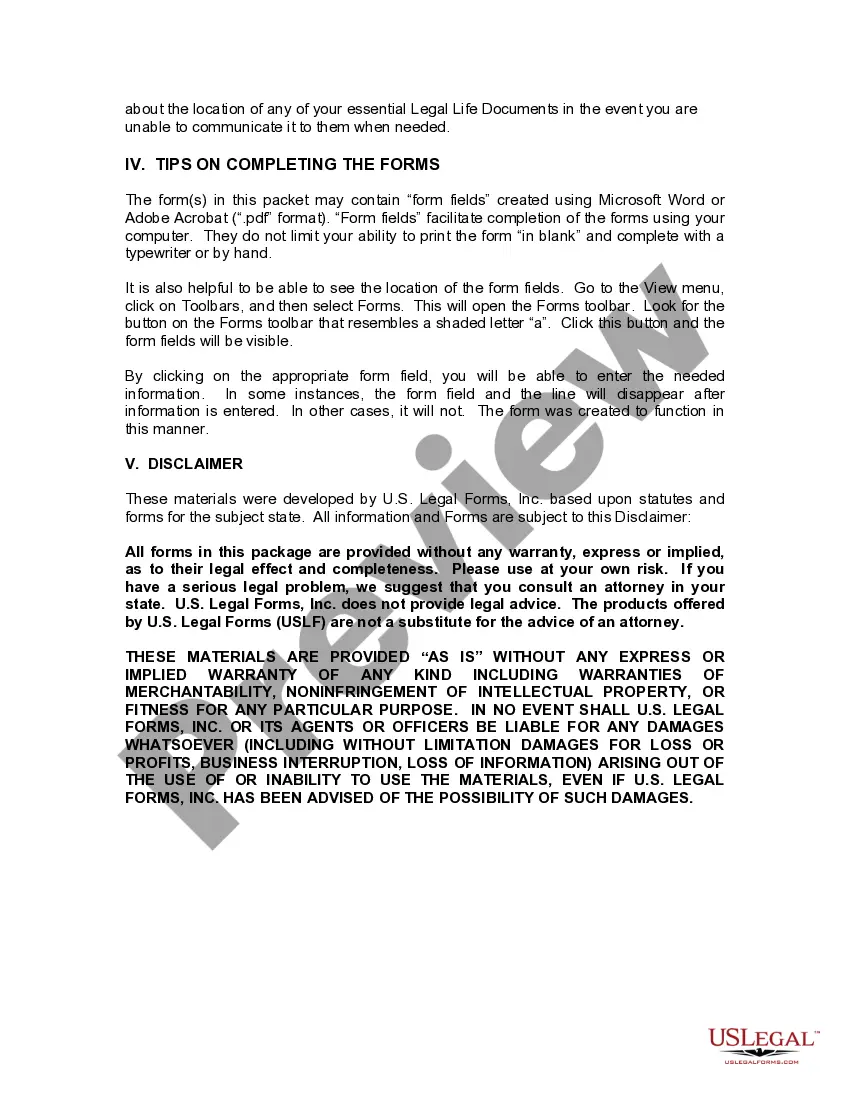
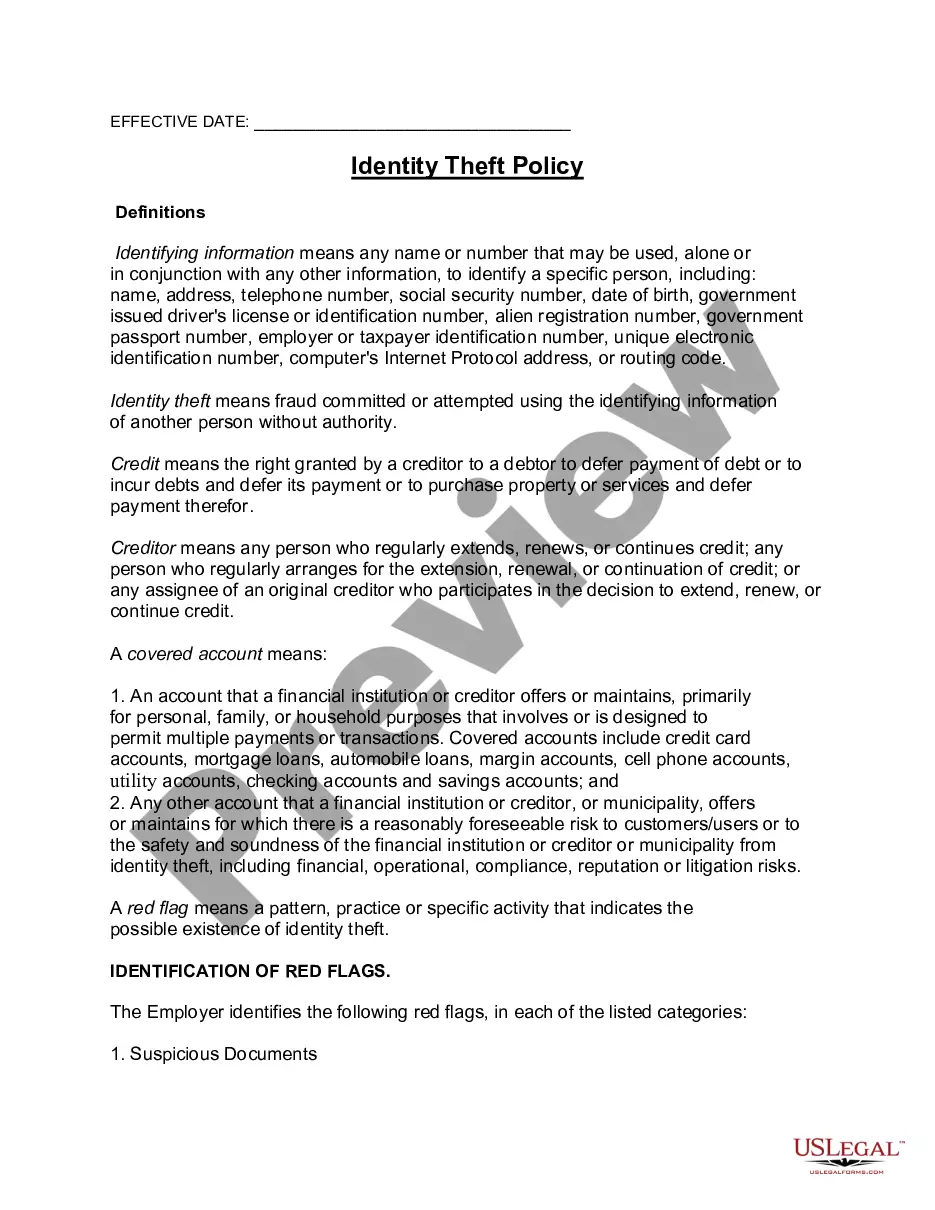
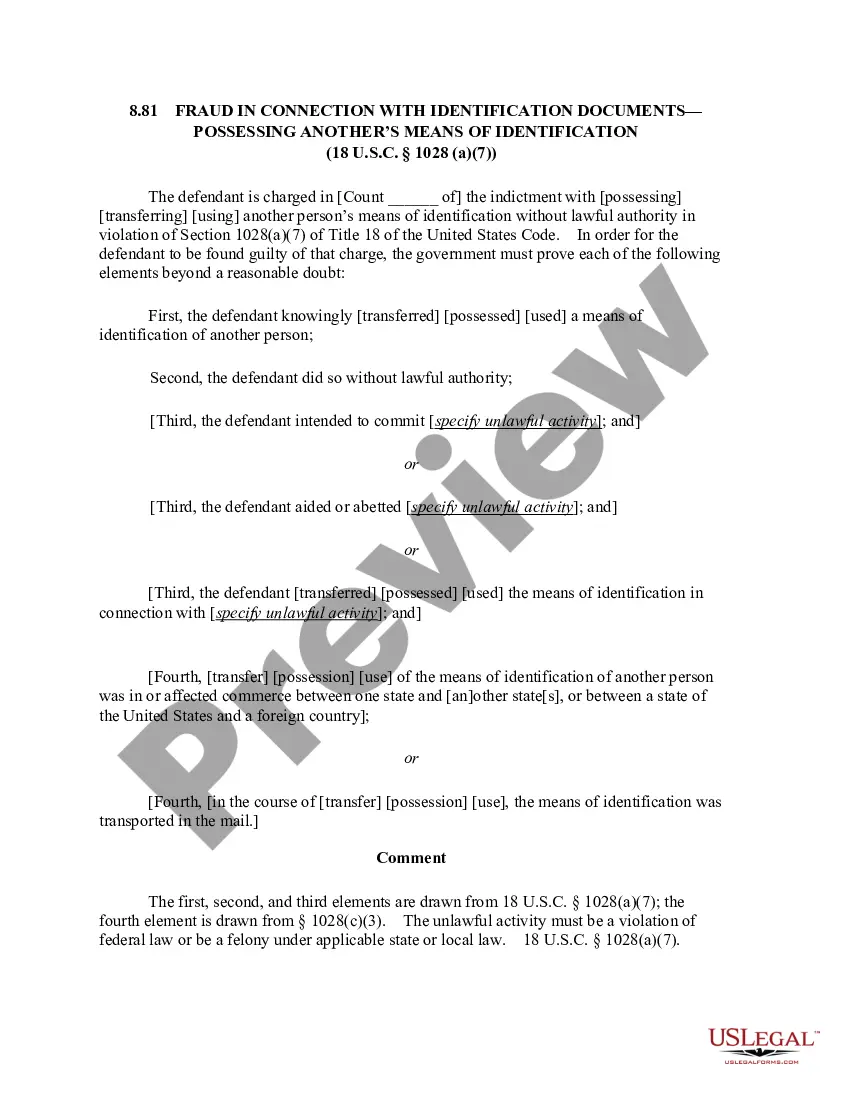
The Oregon Identity Theft Prevention Package is designed to help individuals protect their personal information from being misused and to minimize the risk of identity theft. This package contains essential forms and a protective guide that differentiate it from standard legal documentation, enabling proactive steps to secure credit, finances, and personal identity. By using this package, individuals can take comprehensive actions to safeguard against fraudulent use of their identities.
What’s included in this form package
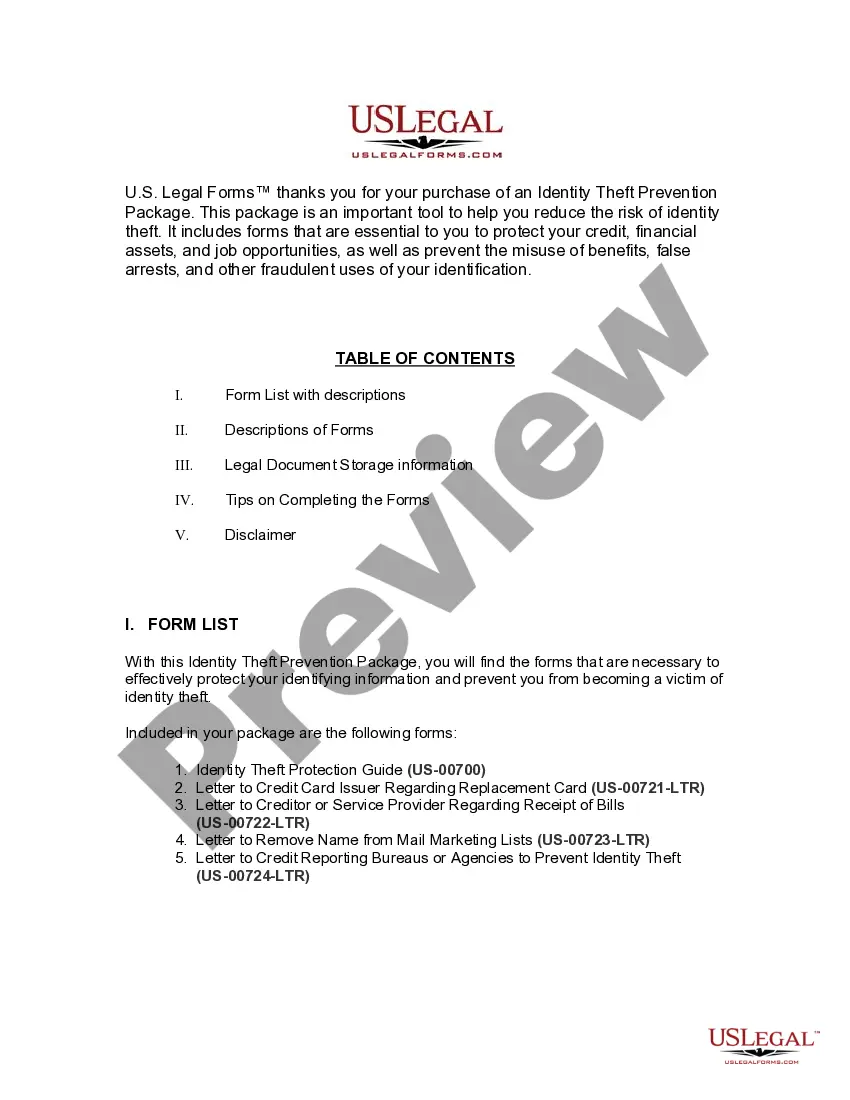
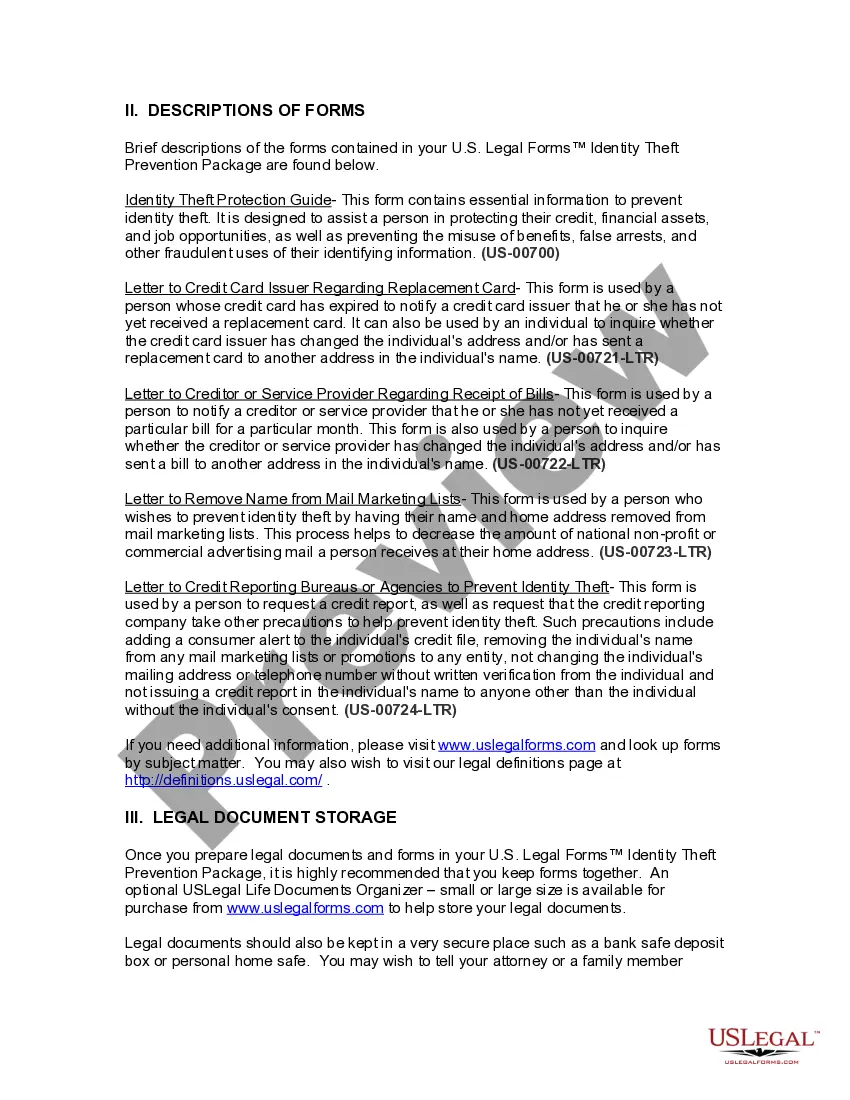
- Identity Theft Protection Guide
- Sample Letter to Credit Card Issuer Regarding Replacement Card
- Sample Letter to Creditor or Service Provider Regarding Receipt of Bills
- Sample Letter to Remove Name from Mail Marketing Lists
- Sample Letter to Credit Reporting Bureau or Agency to Help Prevent Identity Theft
Common use cases
This package is particularly useful in various scenarios, including:
- When you believe your personal information has been compromised.
- If you want to limit exposure to identity theft by removing your name from marketing lists.
- After you have not received expected bills and suspect they may have been sent elsewhere.
- When you need to request a new credit card or replacement card.
- If you want to alert credit reporting agencies to prevent misuse of your credit profile.
Intended users of this form package
- Individuals concerned about the risk of identity theft.
- People who receive bills at incorrect addresses.
- Anyone wanting to take precautionary steps against potential fraud.
- Those who have received suspicious communication regarding credit or personal information.
How to prepare this document
- Review all forms included in the Oregon Identity Theft Prevention Package.
- Fill in your personal details where necessary in each form.
- Check the guidelines provided alongside the Identity Theft Protection Guide to understand your rights.
- Ensure all forms are signed and dated as required.
- Store copies of completed forms in a secure location.
Notarization requirements for forms in this package
Most forms in this package do not require notarization. However, local laws or specific situations may demand it. Our online notarization service, powered by Notarize, lets you complete the process through a verified video call, available anytime.
Get your form ready online
Our built-in tools help you complete, sign, share, and store your documents in one place.
Make edits, fill in missing information, and update formatting in US Legal Forms—just like you would in MS Word.
Download a copy, print it, send it by email, or mail it via USPS—whatever works best for your next step.
Sign and collect signatures with our SignNow integration. Send to multiple recipients, set reminders, and more. Go Premium to unlock E-Sign.
If this form requires notarization, complete it online through a secure video call—no need to meet a notary in person or wait for an appointment.
We protect your documents and personal data by following strict security and privacy standards.

Make edits, fill in missing information, and update formatting in US Legal Forms—just like you would in MS Word.

Download a copy, print it, send it by email, or mail it via USPS—whatever works best for your next step.

Sign and collect signatures with our SignNow integration. Send to multiple recipients, set reminders, and more. Go Premium to unlock E-Sign.

If this form requires notarization, complete it online through a secure video call—no need to meet a notary in person or wait for an appointment.

We protect your documents and personal data by following strict security and privacy standards.
Avoid these common issues
- Failing to sign and date forms before submitting them.
- Not keeping a copy of submitted documents for personal records.
- Overlooking specific instructions in the Identity Theft Protection Guide.
- Using outdated contact information for creditors or agencies.
Benefits of completing this package online
- Instant access to necessary legal forms without the need for physical appointment visits.
- Editability allows for customization to meet individual situations.
- Forms are drafted by licensed attorneys, ensuring legal reliability.
- Convenience of downloading and completing at your own pace.
Legal use & context
- This package helps in officially communicating with financial institutions about identity theft concerns.
- Utilizing these forms aids in establishing documented evidence of your identity theft protection efforts.
- Failure to properly use these forms may leave individuals vulnerable to identity theft.
Main things to remember
- The Oregon Identity Theft Prevention Package is essential for anyone looking to protect their personal information.
- Completing the forms accurately and promptly is crucial in preventing potential identity theft issues.
- Online access allows for easy customization and immediate use of critical legal documents.
Looking for another form?
Form popularity
FAQ
Go to your local police office with: A copy of your FTC Identity Theft Report. Tell the police someone stole your identity and you need to file a report. Ask for a copy of the police report. You may need this to complete other steps.
Generally, you may deduct casualty and theft losses relating to your home, household items, and vehicles on your federal income tax return if the loss is caused by a federally declared disaster declared by the President.
The cost of identity theft protection is a personal expense and is not tax deductible.
Aggravated identity theft is punishable by a mandatory minimum sentence of imprisonment for two years or by imprisonment for five years if it relates to a terrorism offense. At least thus far, the government has rarely prosecuted the five-year terrorism form of the offense.
A credit freeze (also known as a security freeze) restricts access to your credit reports, helping safeguard against fraudsters opening new accounts in your name, but a credit freeze may not stop misuse of your existing accounts or some other types of identity theft.
If you receive a notice from the IRS and you suspect your identity has been used fraudulently, respond immediately by calling the number on the notice.Report incidents of identity theft to the Federal Trade Commission at www.consumer.ftc.gov or the FTC Identity Theft hotline at 877-438-4338 or TTY 866-653-4261.
Password-Protect Your Devices. Use a Password Manager. Watch Out for Phishing Attempts. Never Give Out Personal Information Over the Phone. Regularly Check Your Credit Reports. Protect Your Personal Documents. Limit Your Exposure.
In short, they do provide a benefit, but it's worth noting that nearly everything an identity theft protection service offers, you can do on your own.For many people though, it's worth the cost simply knowing someone else is watching out for their sensitive information.
You may be able to have your identity theft charges dropped if: You didn't obtain use a person's information unlawfully If you did not obtain or use someone else's personal information unlawfully, you are not guilty of identity theft.