Oregon Letter from Landlord to Tenant for Failure to use electrical, plumbing, sanitary, heating, ventilating, air conditioning and other facilities in a reasonable manner
What this document covers
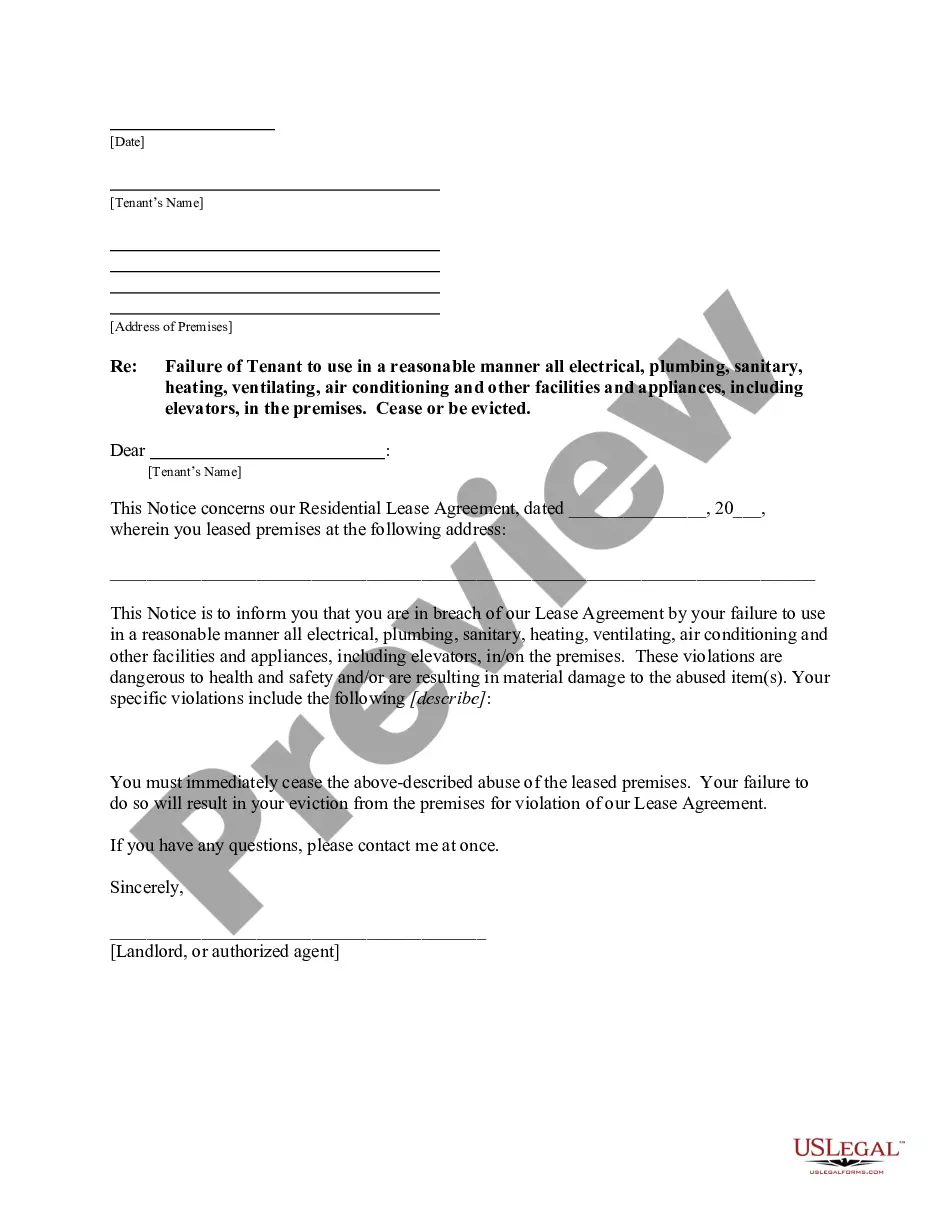
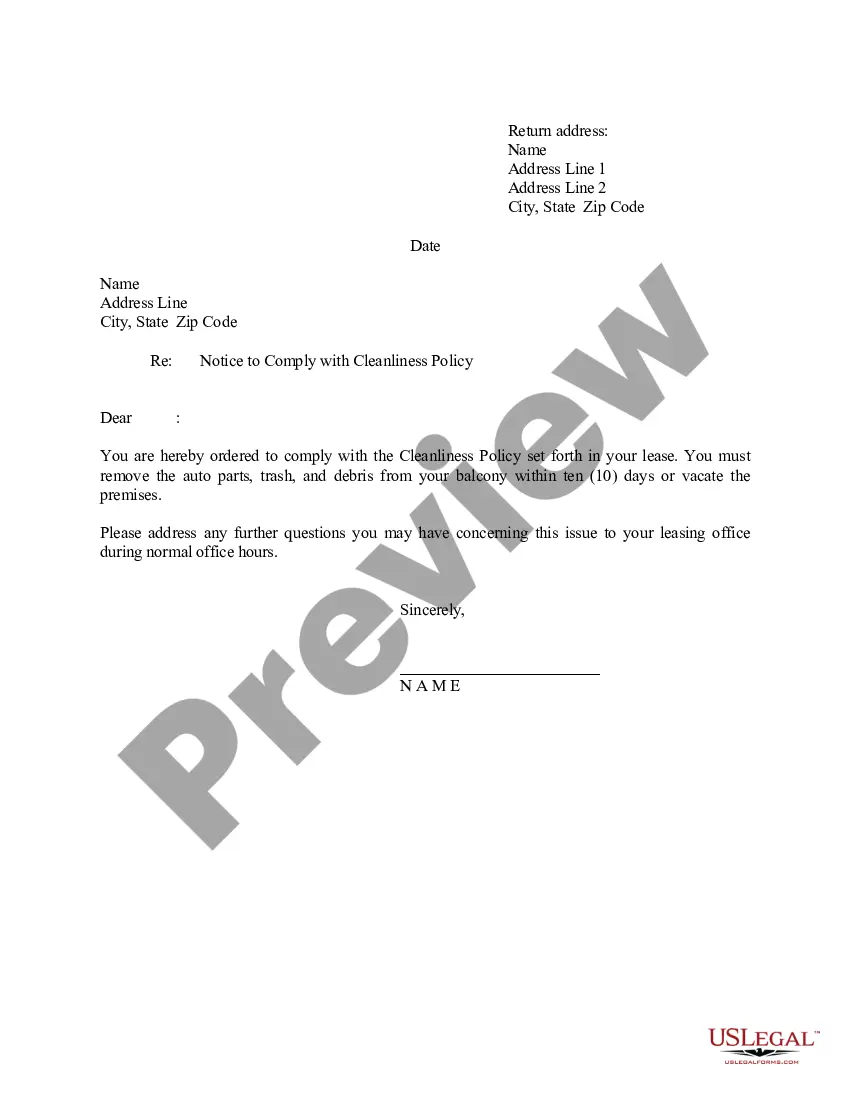
This form is a notice issued by a landlord to a tenant regarding the improper use of necessary facilities such as electrical, plumbing, and heating systems. It serves as a warning for the tenant to correct their behavior, as continued misuse may lead to eviction. This form is essential in maintaining the integrity of the rental agreement and ensuring that tenants follow the established rules for property use.
Key components of this form
- Identification of the landlord and tenant involved.
- Specific details about the facilities or appliances being misused.
- A statement warning of possible eviction for continued violations.
- Signature line for the landlord or authorized agent.
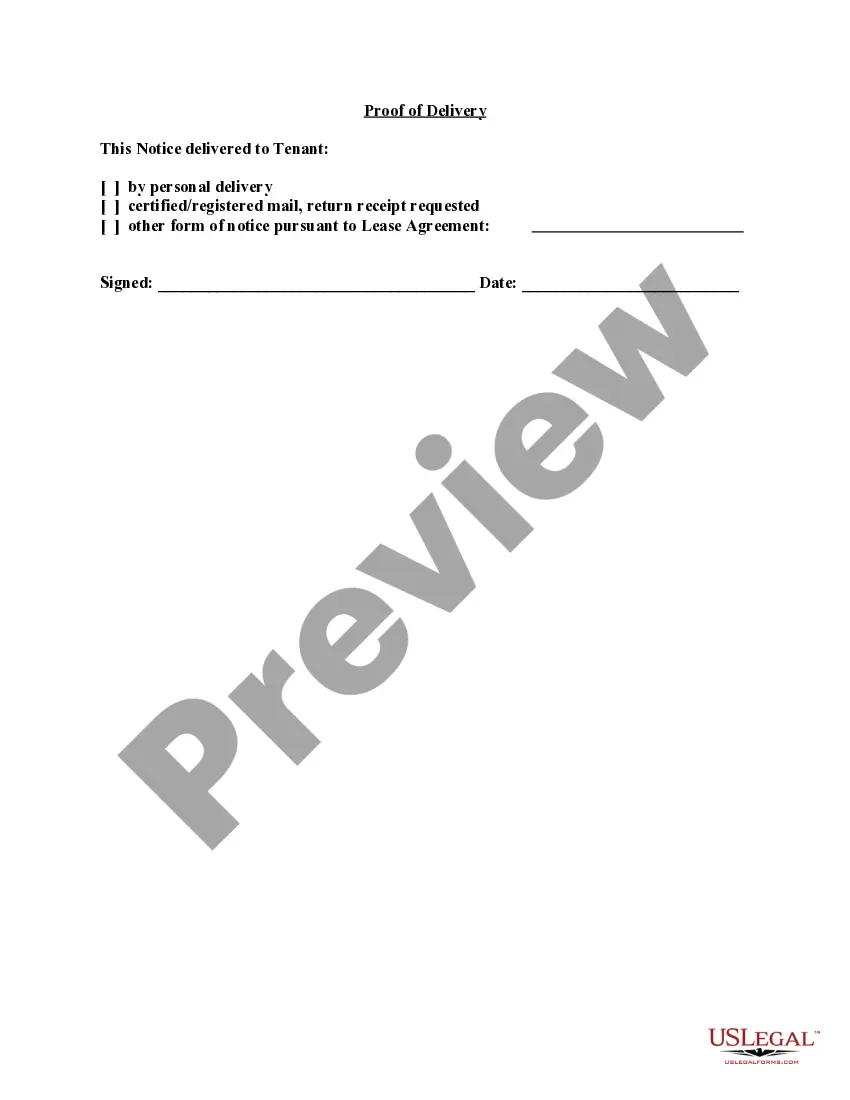
- Proof of delivery method, confirming that the notice was provided to the tenant.



When to use this document
This form should be used when a tenant fails to use electrical, plumbing, sanitary, heating, or cooling facilities in a reasonable manner as specified in the lease agreement. If issues arise, such as damage or excessive misuse of these systems, this notice serves as a crucial step before initiating eviction proceedings.
Who can use this document
- Landlords managing rental properties.
- Property managers acting on behalf of the landlord.
- Legal representatives assisting landlords in lease enforcement.
How to complete this form
- Identify the landlord and tenant by entering their names and contact information.
- Specify the property address associated with the lease agreement.
- Detail the specific facilities or appliances that are being misused.
- Write the date of the notice issuance.
- Sign the document, including the name of the landlord or authorized agent.
- Choose the method of delivery and document the proof of delivery.
Is notarization required?
In most cases, this form does not require notarization. However, some jurisdictions or signing circumstances might. US Legal Forms offers online notarization powered by Notarize, accessible 24/7 for a quick, remote process.
Get your form ready online
Our built-in tools help you complete, sign, share, and store your documents in one place.
Make edits, fill in missing information, and update formatting in US Legal Forms—just like you would in MS Word.
Download a copy, print it, send it by email, or mail it via USPS—whatever works best for your next step.
Sign and collect signatures with our SignNow integration. Send to multiple recipients, set reminders, and more. Go Premium to unlock E-Sign.
If this form requires notarization, complete it online through a secure video call—no need to meet a notary in person or wait for an appointment.
We protect your documents and personal data by following strict security and privacy standards.
Make edits, fill in missing information, and update formatting in US Legal Forms—just like you would in MS Word.
Download a copy, print it, send it by email, or mail it via USPS—whatever works best for your next step.
Sign and collect signatures with our SignNow integration. Send to multiple recipients, set reminders, and more. Go Premium to unlock E-Sign.
If this form requires notarization, complete it online through a secure video call—no need to meet a notary in person or wait for an appointment.
We protect your documents and personal data by following strict security and privacy standards.
Common mistakes to avoid
- Failing to clearly identify the specific misuse by the tenant.
- Not adhering to local laws regarding notice periods or required language.
- Omitting the proof of delivery, which is vital for eviction proceedings.
- Not signing the notice, which may invalidate the form.
Why complete this form online
- Easy access and instant download for quick use.
- Editability to customize details specific to your situation.
- Reliability, ensuring that the form meets legal requirements.
- Time-efficient; complete it at your convenience without delays.
Legal use & context
This notice must be delivered according to the terms of the lease and local laws. It establishes a formal record of the landlord's concerns and allows the tenant an opportunity to correct their behavior to avoid eviction, serving as a critical step in the legal eviction process if required.
Main things to remember
- It serves as a formal warning to tenants about facility misuse.
- Proper completion and delivery are crucial for legal enforcement.
- Landlords should adapt the form according to local laws and regulations.
- Consulting a legal professional is advised for clarity on jurisdiction-specific terms.
Looking for another form?

Form popularity
FAQ
Fundamental responsibilities of landlords include: providing and maintaining the property in a clean and reasonable standard; giving proper receipts and maintaining records of all transactions pertaining to the tenancy; paying council rates and taxes; maintaining locks to ensure the property's security; and lodging the
The second way a tenant's personal belongings are considered abandoned is when the tenant has been gone from the rental unit continuously for at least 7 days after a court has ordered an eviction of the tenant, even though the sheriff's department has not executed the court order or judgment.
Examples of utilities or services are electricity, natural or liquid propane gas, water, heat, air conditioning, cable television, sewer service, and garbage collection. The landlord cannot charge you more for the utility than the landlord was billed by the provider.
The landlord is required to keep the units kept up nicely and in safe order. They are responsible for keeping up the heating, plumbing and hot water and making sure that all of those amenities stay in working and safe order. All landlords should abide by their state and federal laws, including health and safety codes.
Absolutely not - it is completely illegal for a landlord to intentionally shut of your electricity to try to force you out of your home.
In a month-to-month tenancy, that time period is 7 days for essential services such as water, plumbing and heat, and 30 days for all other kinds of repairs. In a week-to-week tenancy, your notice must give the landlord 7 days to repair the problem. The notice period starts when the landlord receives the notice.
If the repairs are not made, you can sue the landlord in Small Claims Court. You cannot repair these things and deduct the cost or stop paying rent without the landlord's permission.
This includes keeping the property clean, safe and habitable. The landlord must adhere to all building codes, perform necessary repairs, maintain common areas, keep all vital services, such as plumbing, electricity, and heat, in good working order, must provide proper trash receptacles and must supply running water.
For 2020, the maximum rent increase is 9.9%. Between tenants, there is no limit to how much the rent can go up (except if a short-term tenant was just evicted from the unit, a provision that discourages a revolving door of tenants for rent increases.)