Oregon Claim of Lien by Individual
About this form
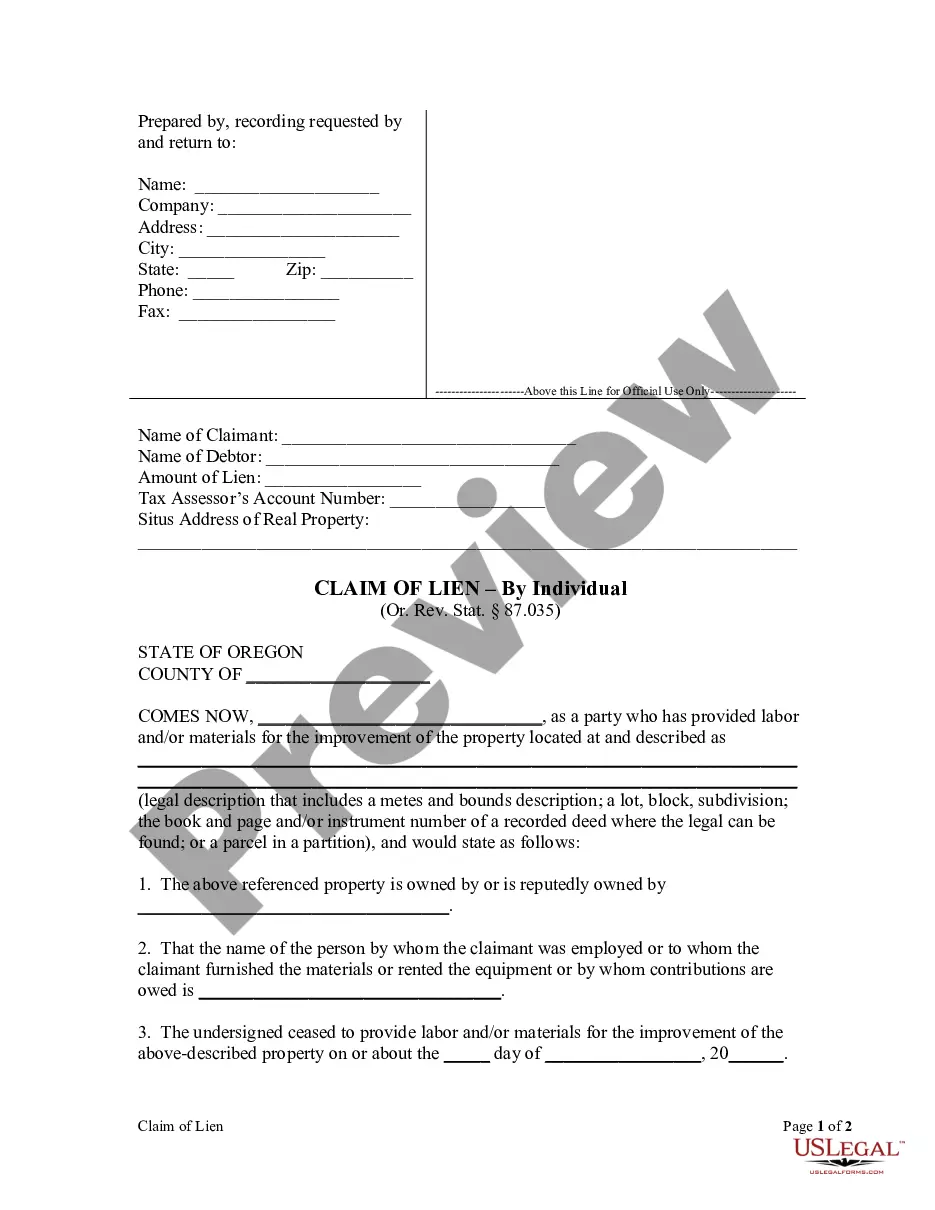
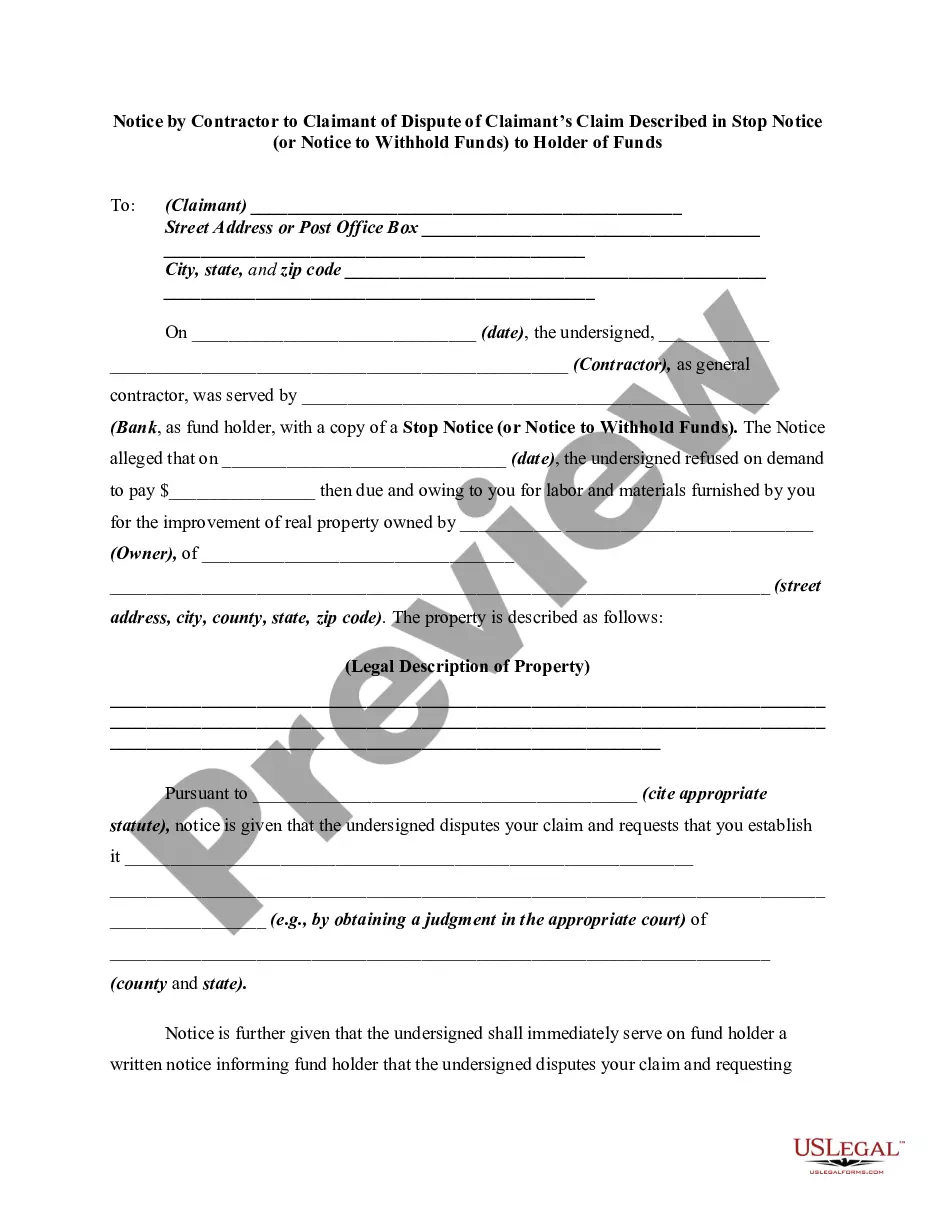
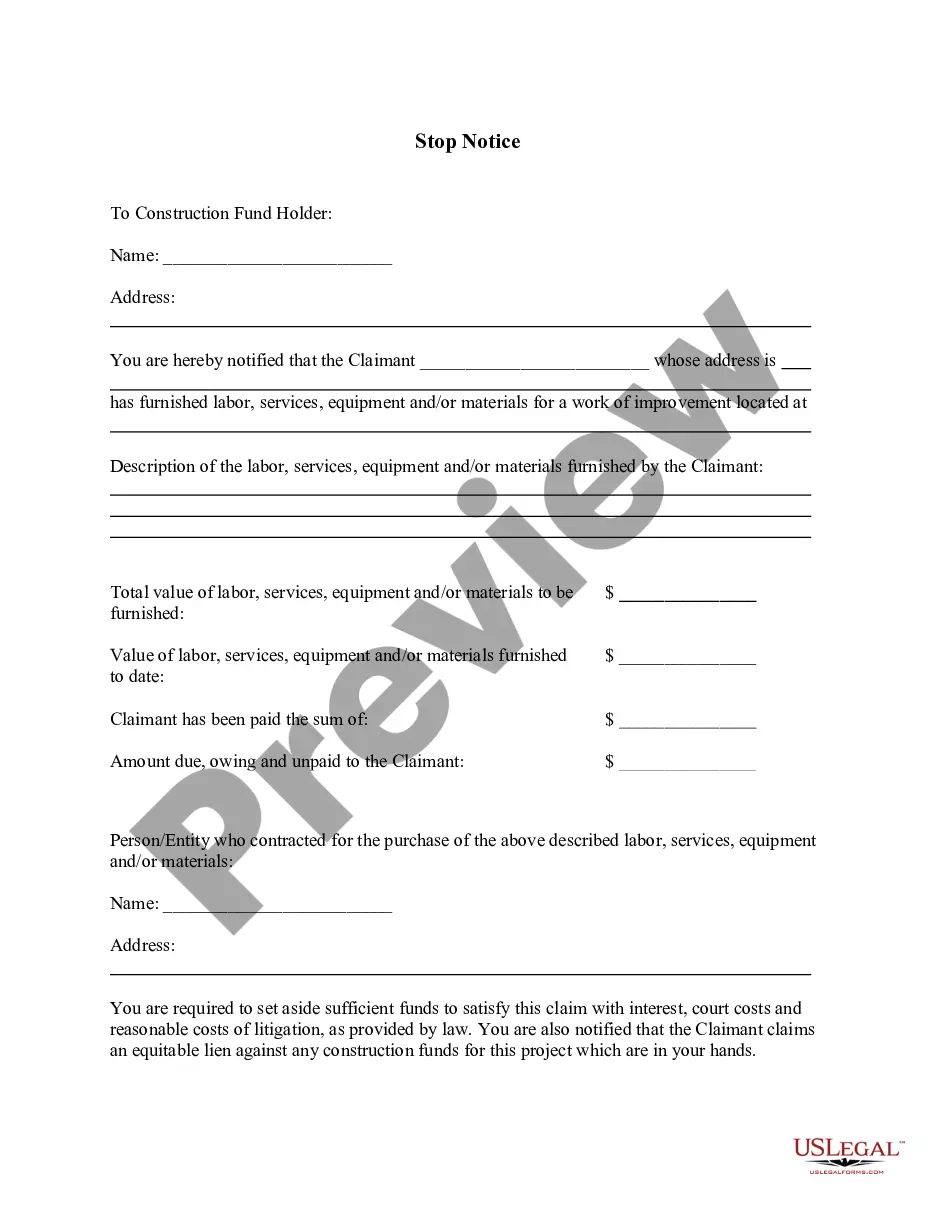
The Claim of Lien by Individual is a legal document used by individuals who have provided labor, materials, or equipment for property improvements in Oregon. This form allows the claimant to formally assert a lien against the property to secure payment owed for their contributions. Unlike other documents, this specific claim must be filed within a strict timeline to be enforceable, ensuring that claimants protect their rights effectively under Oregon law.
Main sections of this form
- Name and contact information of the claimant.
- Details of the debtor responsible for the payment.
- Amount of the lien being claimed.
- Legal description of the property in question.
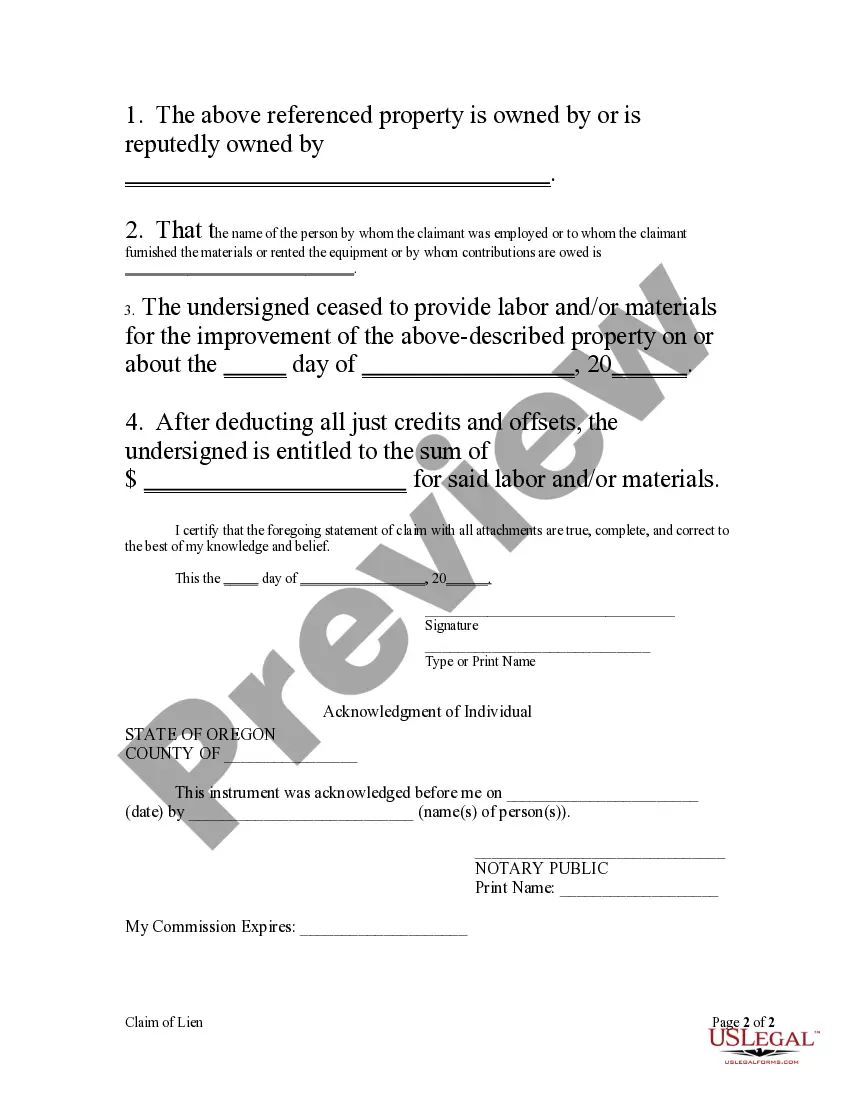
- Certification of the accuracy of the claim under penalty of law.
- Acknowledgment by a notary public, if required.
Situations where this form applies
This form should be used when an individual has provided labor, materials, or rented equipment for improvements on real property and has not received payment. It is essential to file the Claim of Lien within seventy-five days of the last day of work or the completion of construction to secure the right to payment through the lien process.
Intended users of this form
- Contractors who supplied labor or materials for a construction project.
- Subcontractors who have not been compensated for work performed.
- Individuals who have rented equipment for property improvements and are seeking payment.
- Anyone legally entitled to claim a lien under Oregon Revised Statutes.
How to prepare this document
- Identify the parties involved by entering the claimant's and debtor's names and contact information.
- Specify the property by providing the legal description and situs address.
- State the amount of the lien owed after deducting any credits or offsets.
- Enter the date you ceased providing labor or materials to the property.
- Sign the form in front of a notary public to validate the claim.
Notarization guidance
Notarization is required for this form to take effect. Our online notarization service, powered by Notarize, lets you verify and sign documents remotely through an encrypted video session, available 24/7.
Get your form ready online
Our built-in tools help you complete, sign, share, and store your documents in one place.
Make edits, fill in missing information, and update formatting in US Legal Forms—just like you would in MS Word.
Download a copy, print it, send it by email, or mail it via USPS—whatever works best for your next step.
Sign and collect signatures with our SignNow integration. Send to multiple recipients, set reminders, and more. Go Premium to unlock E-Sign.
If this form requires notarization, complete it online through a secure video call—no need to meet a notary in person or wait for an appointment.
We protect your documents and personal data by following strict security and privacy standards.
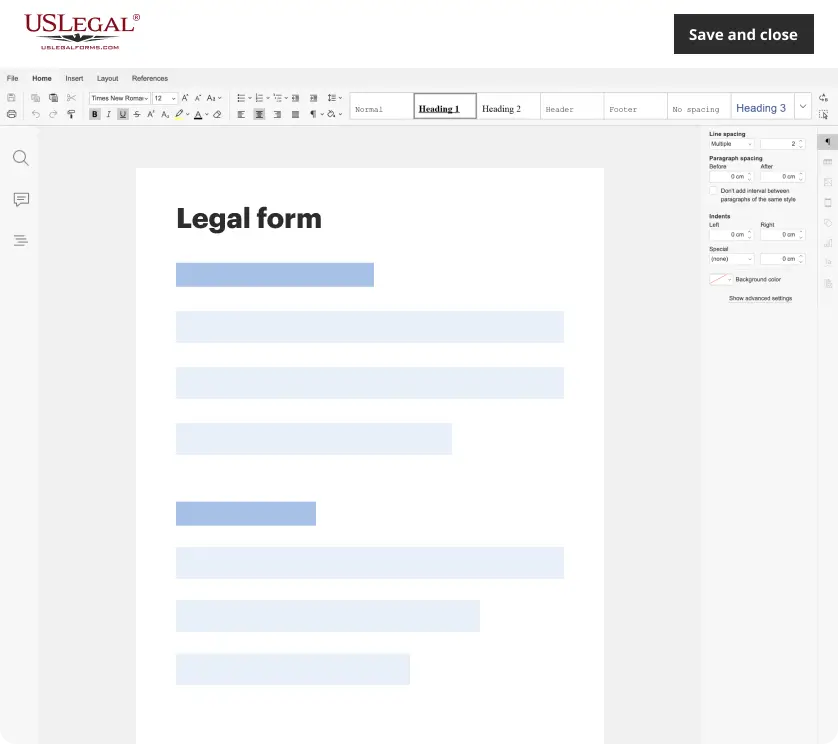
Make edits, fill in missing information, and update formatting in US Legal Forms—just like you would in MS Word.
Download a copy, print it, send it by email, or mail it via USPS—whatever works best for your next step.
Sign and collect signatures with our SignNow integration. Send to multiple recipients, set reminders, and more. Go Premium to unlock E-Sign.

If this form requires notarization, complete it online through a secure video call—no need to meet a notary in person or wait for an appointment.
We protect your documents and personal data by following strict security and privacy standards.
Common mistakes to avoid
- Missing the filing deadline of seventy-five days.
- Inaccurate legal description of the property.
- Failing to properly sign or notarize the document.
- Not providing all required information, such as the amount owed or claimant details.
Advantages of online completion
- Easy access to the form for quick completion and filing.
- Editable sections allow claimants to fill in specific details accurately.
- Reliable templates drafted by licensed attorneys to ensure compliance with local laws.
- Immediate availability of the form without the need for physical visits to legal offices.
Looking for another form?


Form popularity
FAQ
What does 'Bonding Off a Lien' mean? Typically, in order to move forward with the project, the lien must first be removed. To remove a lien as registered against a property without resolution, an applicant has to deliver to the court acceptable security which stands in place of the lien registered on such property.
In the state of Oregon, a lien must be filed within 75 days after the last day of performing labor or providing materials or within 75 days after the completion of construction.
To perfect its lien, the lender must record or file the mortgage with the appropriate legal authority. Usually, the mortgage is recorded in the land records in the county where the property is located.
Your lawyer will help you decide whether to fight the lien in court or negotiate a settlement.In some, you may be able to fend off a lien if: You prove that you've paid your construction bills fully and on time. You prove that the contractor who filed the lien has breached his contract and doesn't deserve to be paid.
Therefore, liens are not officially recorded, and personal property could be sold off to a third party who is unaware of the lien's existence. In most states, judgment liens must be filed by the creditor through the county or state.
Step 1: Determine if you have the right to file a lien. Step 2: Send notice of right to lien. Step 3: Prepare the lien document. Step 4: File the lien. Step 5: Send notice of lien. Step 6: Secure payment. Step 7: Release the lien.
Maximize the Homestead Exemption. Protect the Home with Tenancy by the Entirety. Implement an Equity Stripping Plan. Create a Domestic Asset Protection Trust (DAPT) Put the Home Title in the Low-Risk Spouse's Name. Purchase Umbrella Insurance.
The simplest way to prevent liens and ensure that subcontractors and suppliers are paid is to pay with joint checks. This is when both parties endorse the check. Compare the contractor's materials or labor bill to the schedule of payments in your contract and the Preliminary Notices.
Step 1: Determine if you have the right to file a lien. Step 2: Send notice of right to lien. Step 3: Prepare the lien document. Step 4: File the lien. Step 5: Send notice of lien. Step 6: Secure payment. Step 7: Release the lien.