Oklahoma Letter from Landlord to Tenant for Failure of to dispose all ashes, rubbish, garbage or other waste in a clean and safe manner in compliance with community rules
Understanding this form
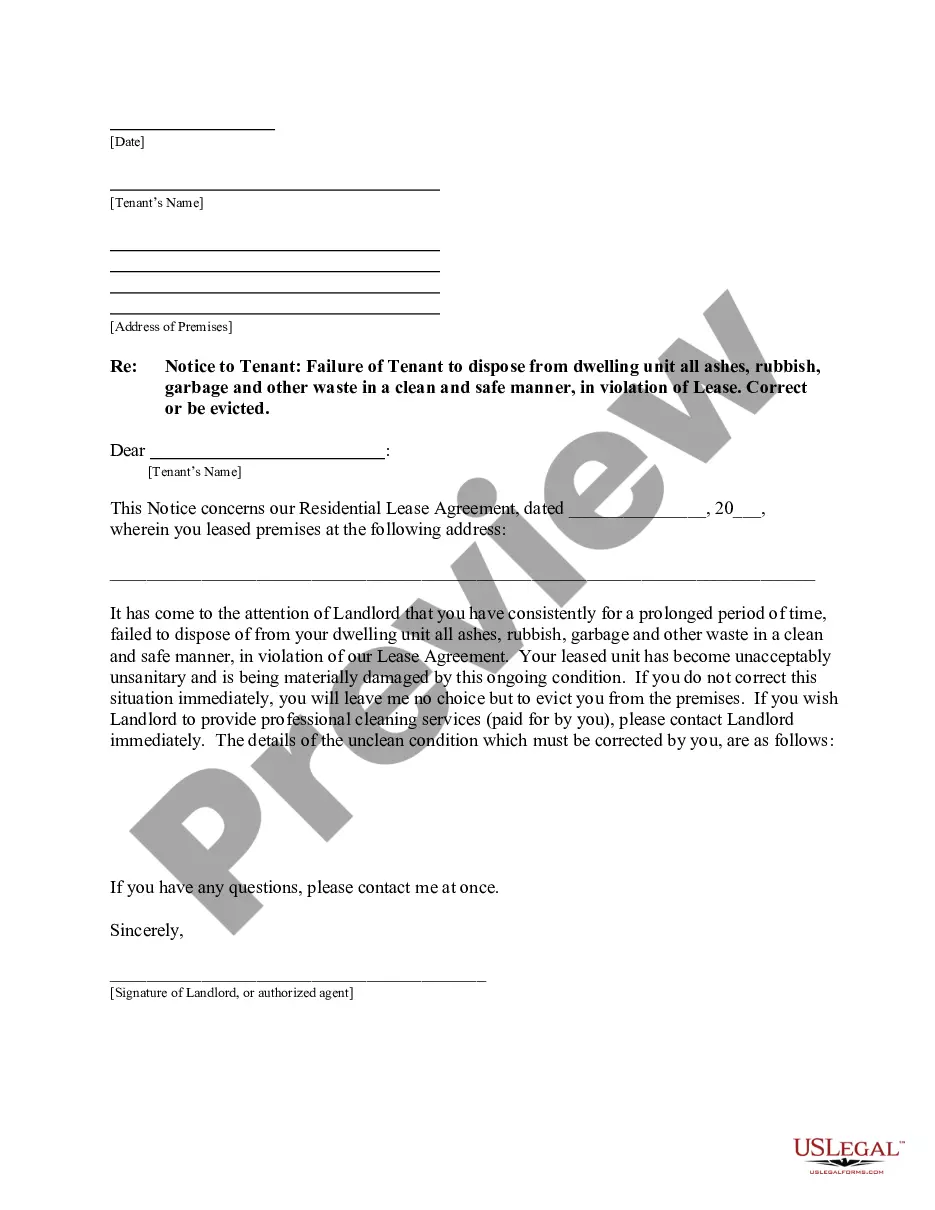
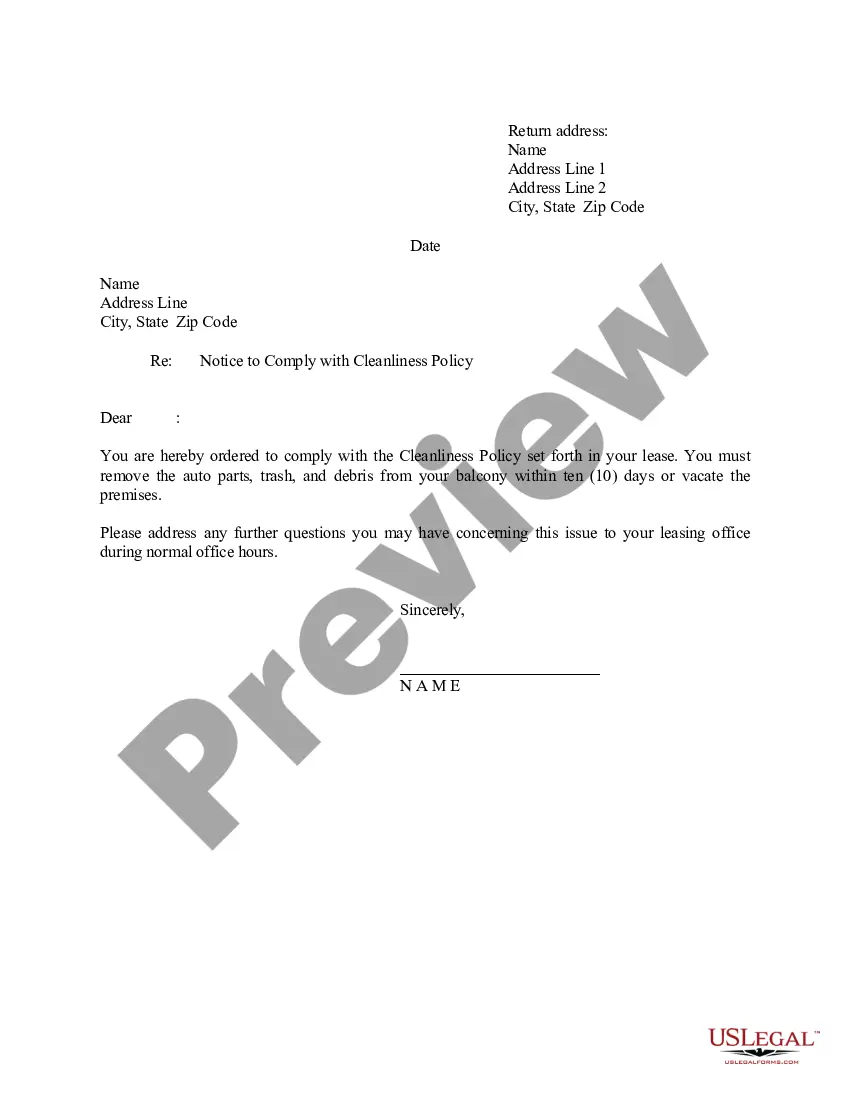
This form serves as a formal notice from a landlord to a tenant regarding their failure to dispose of waste in a clean and safe manner, in accordance with community rules and lease agreements. It specifies the legal obligations of the tenant to maintain cleanliness and safety within their leased dwelling. Should the tenant fail to rectify the situation, this letter can be a precursor to eviction proceedings, distinguishing it from general tenant eviction notices by focusing specifically on sanitation issues.
Key parts of this document
- A statement of the landlord's observation about the tenant's waste disposal habits.
- Identification of the specific lease agreement violations related to cleanliness.
- A warning that failure to comply may lead to eviction.
- Option for the tenant to request professional cleaning services at their expense.
- Details outlining the unclean conditions that must be addressed by the tenant.


Common use cases
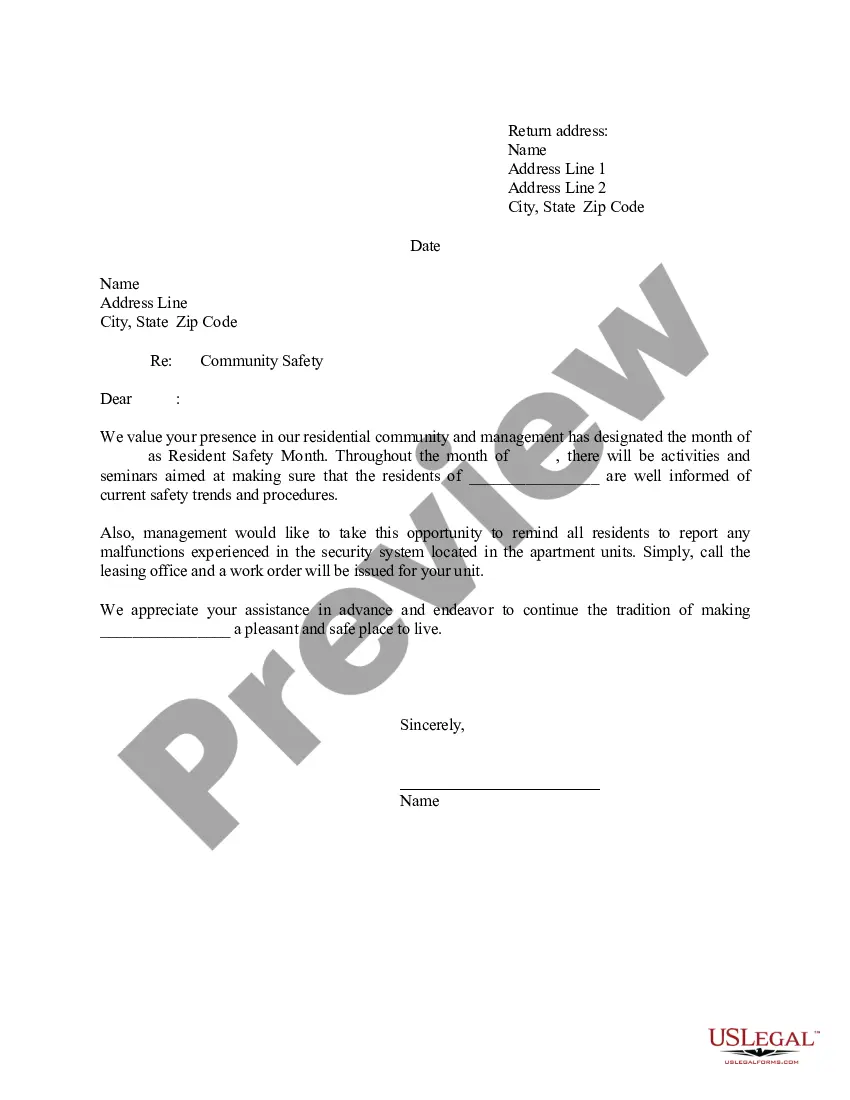
This form should be used when a landlord notices persistent neglect by a tenant in disposing of refuse, which violates community standards and lease terms. Situations may include excessive garbage accumulation, unclean living conditions, or failure to manage waste properly, all of which could lead to health and safety concerns for other residents.
Intended users of this form
- Landlords seeking to address cleanliness violations by their tenants.
- Property managers responsible for maintaining community standards in residential properties.
- Tenants who receive this notice and need guidance on compliance and next steps.
Instructions for completing this form
- Identify the parties involvedâinclude the names of both landlord and tenant.
- Specify the property address and any relevant lease agreement details.
- Detail the observed sanitation issues and violations of the lease agreement.
- Clearly state the consequences of failing to resolve the issues, including potential eviction.
- Provide contact information for the tenant to discuss cleaning services if needed.
Notarization guidance
This form usually doesn’t need to be notarized. However, local laws or specific transactions may require it. Our online notarization service, powered by Notarize, lets you complete it remotely through a secure video session, available 24/7.
Get your form ready online
Our built-in tools help you complete, sign, share, and store your documents in one place.
Make edits, fill in missing information, and update formatting in US Legal Forms—just like you would in MS Word.
Download a copy, print it, send it by email, or mail it via USPS—whatever works best for your next step.
Sign and collect signatures with our SignNow integration. Send to multiple recipients, set reminders, and more. Go Premium to unlock E-Sign.
If this form requires notarization, complete it online through a secure video call—no need to meet a notary in person or wait for an appointment.
We protect your documents and personal data by following strict security and privacy standards.
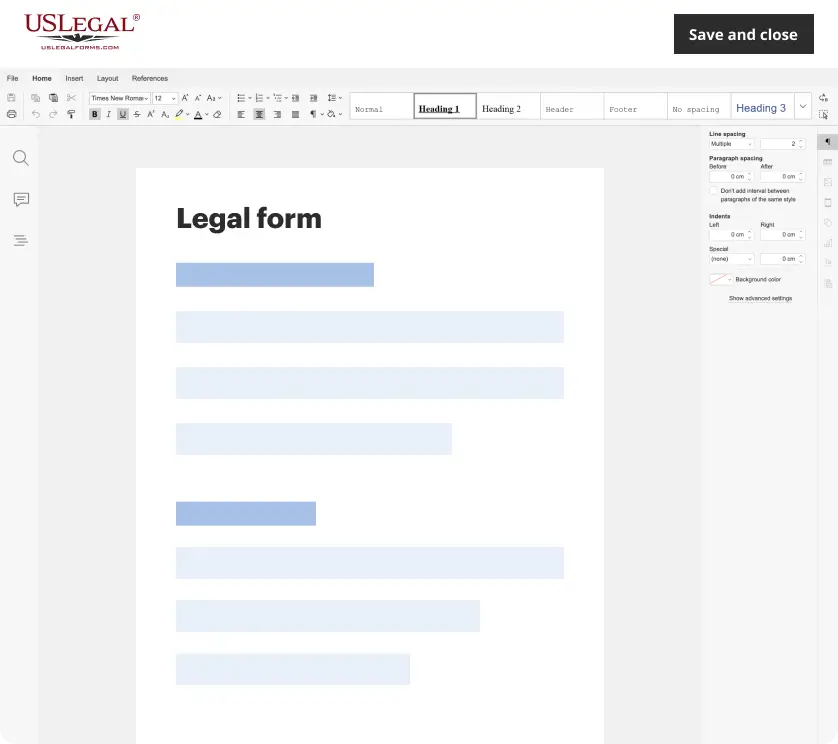
Make edits, fill in missing information, and update formatting in US Legal Forms—just like you would in MS Word.
Download a copy, print it, send it by email, or mail it via USPS—whatever works best for your next step.
Sign and collect signatures with our SignNow integration. Send to multiple recipients, set reminders, and more. Go Premium to unlock E-Sign.

If this form requires notarization, complete it online through a secure video call—no need to meet a notary in person or wait for an appointment.
We protect your documents and personal data by following strict security and privacy standards.
Mistakes to watch out for
- Failing to document the specific conditions and violations clearly.
- Not providing a deadline for the tenant to remedy the situation.
- Using vague language that does not convey the seriousness of the violations.
- Neglecting to mention potential eviction consequences clearly.
Why complete this form online
- Convenience of accessing and completing the form from anywhere at any time.
- Editable format allows landlords to personalize the letter for each tenant situation.
- Reliable templates ensure compliance with legal standards and language.
Looking for another form?
Form popularity
FAQ
Tenants also have certain rights under federal, state, and some local laws. These include the right to not be discriminated against, the right to a habitable home, and the right to not be charged more for a security deposit than is allowed by state law, to name just a few.
If you are behind on rent due to COVID, the CDC has ordered an eviction moratorium extended through June 30, 2021 that may apply to your situation. The form to give your landlord is linked to this information.You can still be evicted for lease violations or criminal activity!
Sue the landlord and whoever for up to $10,000 in small claims court for trespassing, breach of contract, invasion of privacy, and breach of quiet enjoyment; if you are two or more tenants, each can separately sue them for up to $10,000, and a joint action is not required.
A: Except in the case of a single family residence, your landlord must keep all common areas used by more than one tenant safe and clean; keep your premises in a safe, livable condition; keep all electrical, plumbing, sanitary, heating, ventilation, air-conditioning and other facilities and appliances supplied by the
Tenants must be reasonable about the landlord's right to enter. The Landlord must give you at least 24 hour's notice to enter your apartment. He may enter only during reasonable times, unless it is an emergency, like a fire, a flood or to make emergency repairs.
If you think your landlord is violating the Fair Housing Act, you can get that landlord in trouble by filing a complaint at HUD.gov. Your remedy for breach of quiet enjoyment is to terminate the lease and move or sue in small claims court.
The big take-away is that in most circumstances a landlord cannot enter a property without agreement from the tenant. And If the landlord ignores the law and enters the property without permission, the tenant may be able to claim damages or gain an injunction to prevent the landlord doing it again.
Tenant Rights to Withhold Rent in OklahomaTenants may withhold rent or exercise the right to repair and deduct if a landlord fails to take care of important repairs, such as a broken heater. For specifics, see Oklahoma Tenant Rights to Withhold Rent or Repair and Deduct.
When you rent a property from a landlord it becomes your home. They should only enter the property without you being present, if you have given permission for them to do so, or in a genuine emergency.