Oklahoma Release of Liability Owner Rider - Horse Equine Forms
Understanding this form
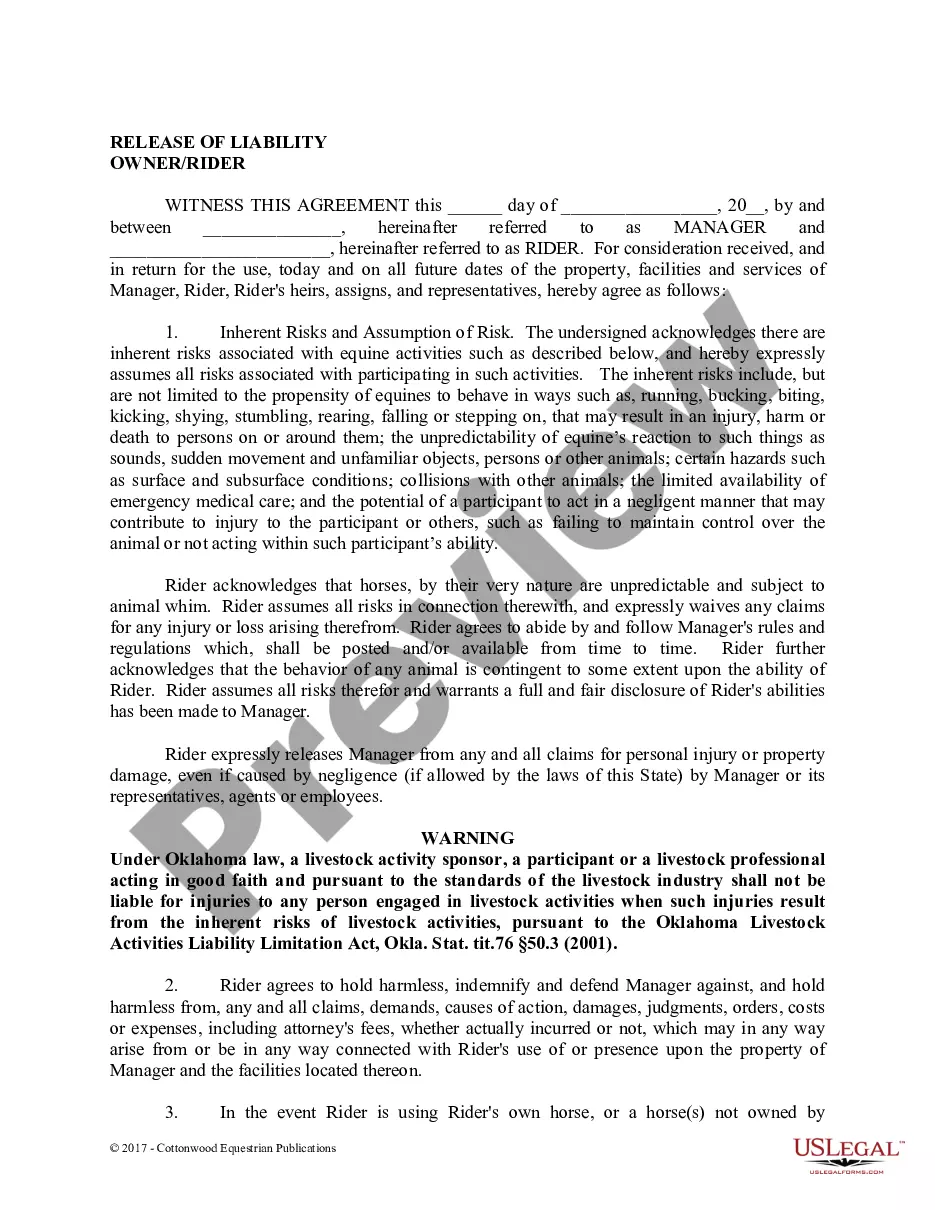
The Release of Liability Owner Rider - Horse Equine Form is a legal document designed to protect equine facility managers from claims arising from injuries related to horse riding activities. When a rider signs this form, they acknowledge the inherent risks associated with equine activities and agree to release the facility from liability for any injuries or damages that may occur. This form is distinct from other liability waivers due to its specific focus on the equine environment and the detailed assumptions of risk inherent to horse riding and related activities.
What’s included in this form
- Inherent Risks and Assumption of Risk: Acknowledgment of the unique dangers involved in equine activities.
- Release of Liability: Waiver of claims against the facility for injuries or damages, even in cases of negligence.
- Indemnification Clause: Agreement to hold the facility harmless from claims arising out of the rider's use of the property and facilities.
- Health Assurance: Requirement that any horse used by the rider must be free from infections and diseases.
- Limitation of Damages: Specifies maximum amounts for property damage and pain and suffering claims against the facility.


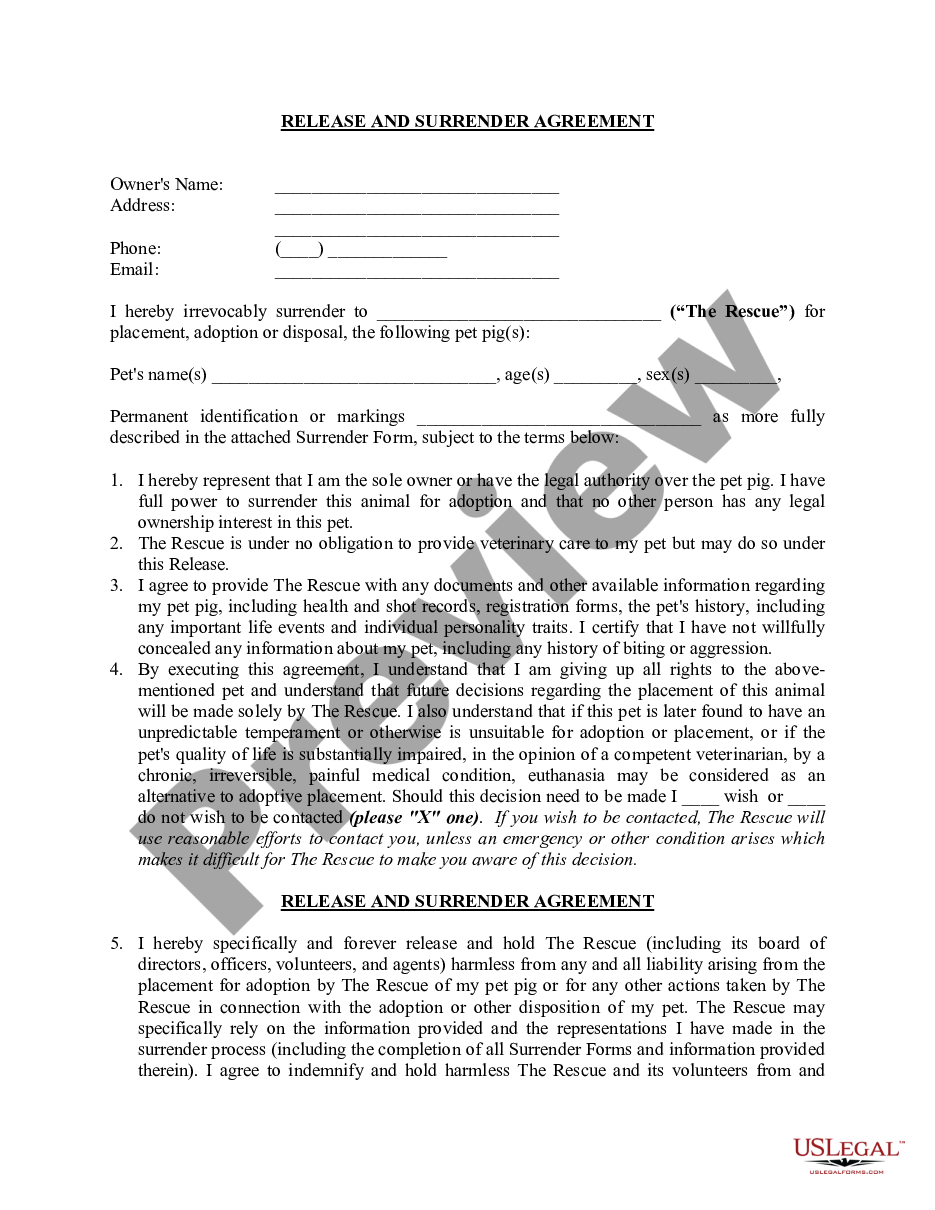
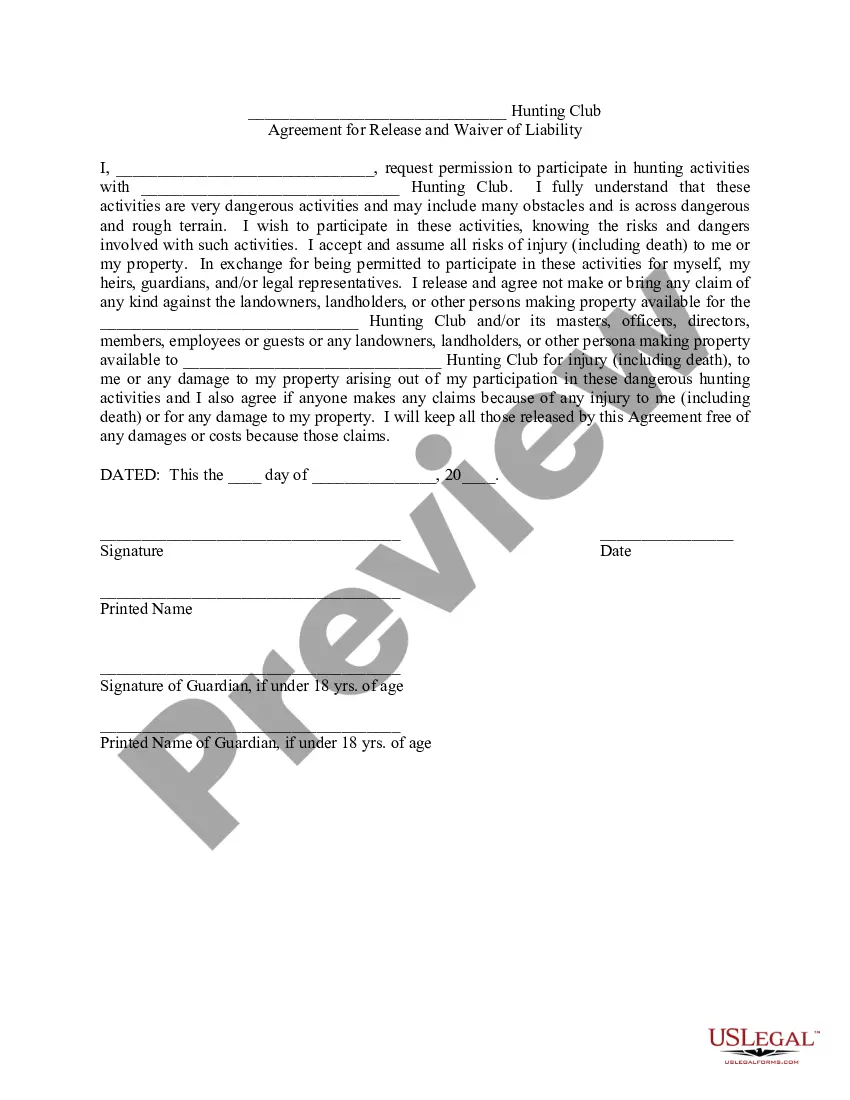
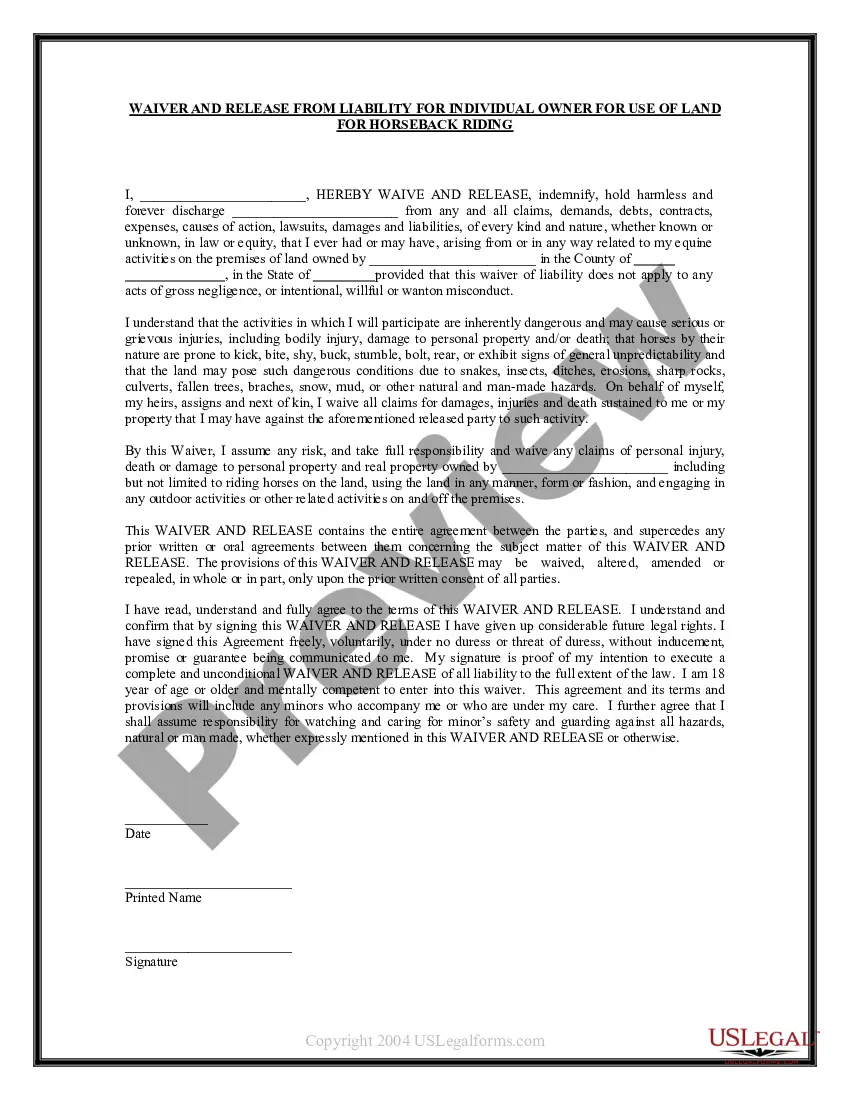
When to use this document
This form should be used whenever a rider intends to participate in horse riding activities that take place on a facility's grounds. It is essential for situations such as riding lessons, recreational riding, or any usage of equine facilities to ensure that both the rider and the facility have a clear understanding of the risks involved and the protections afforded by this agreement.
Intended users of this form
This form is intended for:
- Riders who utilize horse riding facilities for lessons or recreational riding.
- Equine facility managers who need a legally binding agreement to limit their liability.
- Horse owners who may be bringing their own horses to a facility.
How to prepare this document
- Identify the parties involved: Enter the names of the manager and the rider clearly.
- Specify the date of agreement: Include the current date where indicated.
- Acknowledge inherent risks: Read and understand the risks outlined in the form.
- Sign the form: Both parties must sign and date the document to make it legally binding.
- Keep a copy: Ensure that both the manager and the rider hold copies of the signed form for their records.
Does this form need to be notarized?
This form does not typically require notarization unless specified by local law. However, having it notarized can add an extra layer of validity and protection.
Get your form ready online
Our built-in tools help you complete, sign, share, and store your documents in one place.
Make edits, fill in missing information, and update formatting in US Legal Forms—just like you would in MS Word.
Download a copy, print it, send it by email, or mail it via USPS—whatever works best for your next step.
Sign and collect signatures with our SignNow integration. Send to multiple recipients, set reminders, and more. Go Premium to unlock E-Sign.
If this form requires notarization, complete it online through a secure video call—no need to meet a notary in person or wait for an appointment.
We protect your documents and personal data by following strict security and privacy standards.

Make edits, fill in missing information, and update formatting in US Legal Forms—just like you would in MS Word.

Download a copy, print it, send it by email, or mail it via USPS—whatever works best for your next step.

Sign and collect signatures with our SignNow integration. Send to multiple recipients, set reminders, and more. Go Premium to unlock E-Sign.

If this form requires notarization, complete it online through a secure video call—no need to meet a notary in person or wait for an appointment.

We protect your documents and personal data by following strict security and privacy standards.
Common mistakes to avoid
- Failing to read the entire form before signing.
- Not providing accurate personal information.
- Overlooking the requirement for both parties to sign and date the document.
- Assuming the form is not necessary for every visit or activity at the facility.
Advantages of online completion
- Easy access: Download and print from anywhere, anytime.
- Editable templates: Fill in necessary details without hassle.
- Expertly drafted: Forms are created by licensed attorneys to ensure legal validity.
Looking for another form?

Form popularity
FAQ
Get help. Writing a waiver should not be complicated. Use the correct structure. Proper formatting. Include a subject line. Include a caution! Talk about the activity risks. Do not forget an assumption of risk. Hold harmless.
200bStart the letter off with a clear explanation regarding your request. For instance, explain that you're requesting certain fees or charges to be waived or to be released from a previous engagement. Communicate any supporting or relative dates, names of parties, monetary figures, or venues as facts.
A liability waiver, or release of liability, is a legal document that a company or organization has you sign in order to protect them from being sued in the event that you are injured.
A liability waiver, or release waiver, is a legal document that a company or organization requires members of the public to sign in order to protect their organization from being sued if you sustain an injury.Depending on the facts of your case, you may still be able to file a lawsuit and recover damages.
Saddle with girth or cinch. A saddle pad or blanket. Bridle and bit. Helmet. Stirrups and stirrup leathers. Optional: lunge line. Optional: tendon boots, bell boots, any other leg support or protection the horse may need.
A release and waiver agreement is an enforceable promise not to pursue legal action in exchange for compensation. The releasee gives money or some other form of compensation to the releasor, who then agrees not to press charges, sue, or take any other legal action against the releasee.
If you've been injured due to negligent actions, you can sue even if you signed a waiver. Winning a lawsuit concerning negligence is not uncommon. Many celebrities have sued for negligence even though they signed documents stating they understood the risks.
There really is no set definition. Basically, it can be defined as the practice of law that involves all types of horses, horse-related activities, horse businesses, horse organizations, and horse facilities.Others handle disputes and litigation arising from an equine transaction.