Ohio Timber Sale Contract
About this form
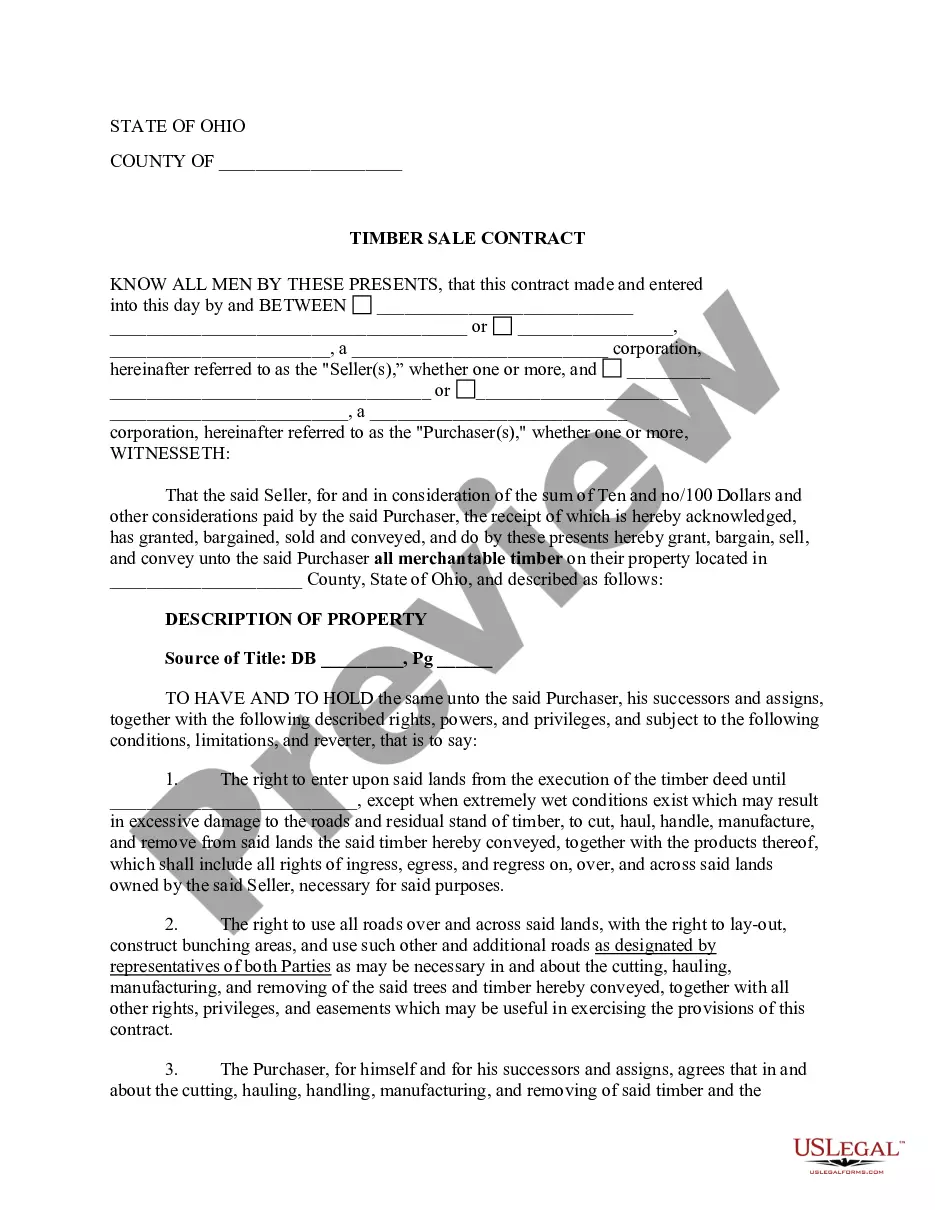
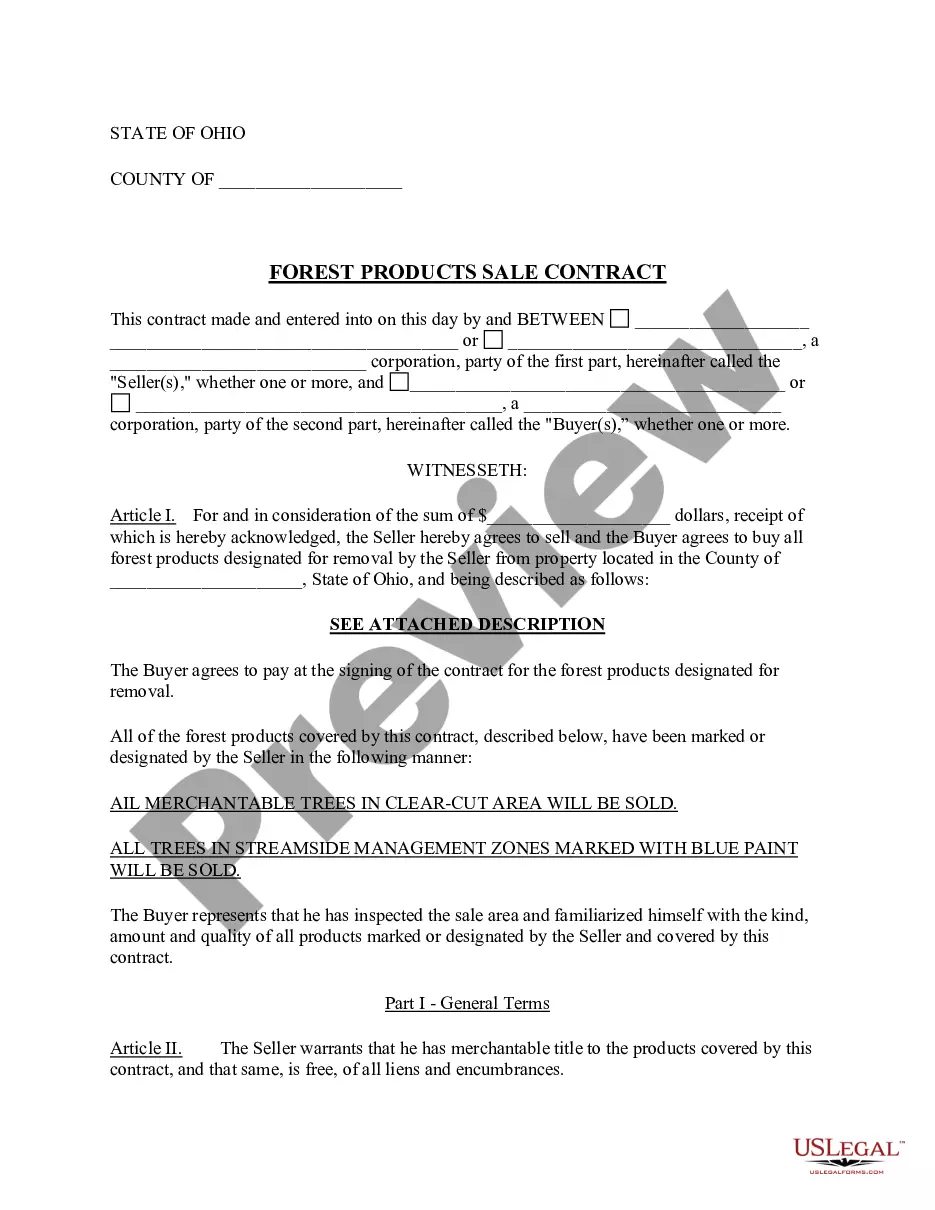
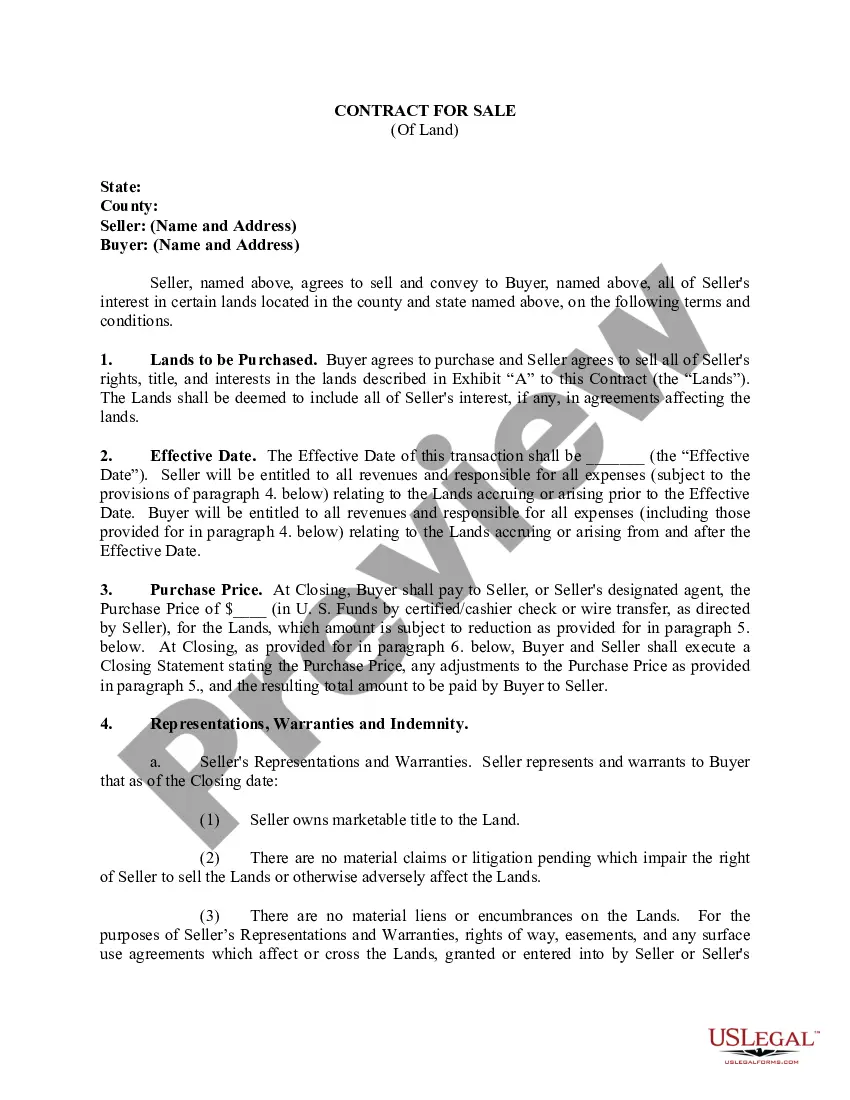
The Ohio Timber Sale Contract is a legal document that outlines the agreement between a seller and a purchaser for the sale of timber on the seller's property. This contract grants the buyer the right to access the property to remove the designated timber and includes terms regarding the management and protection of the property during the removal process. Unlike general contracts, this form specifically addresses the rights and responsibilities involved in timber sales, ensuring compliance with local regulations and good forestry practices.
Form components explained
- The identification of the seller and purchaser, including their contact information.
- A detailed description of the property where timber is being sold.
- Terms regarding the rights of ingress and egress for timber removal.
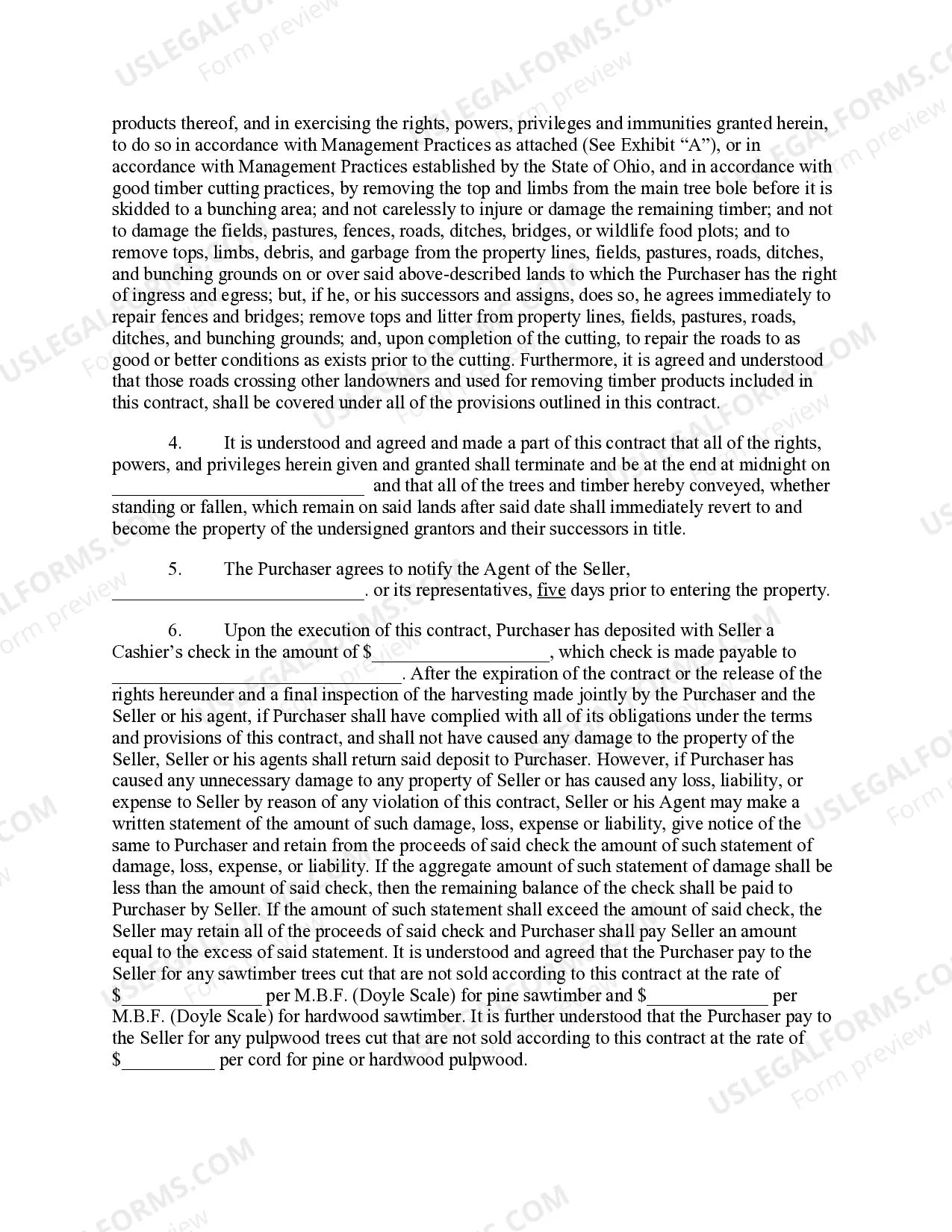
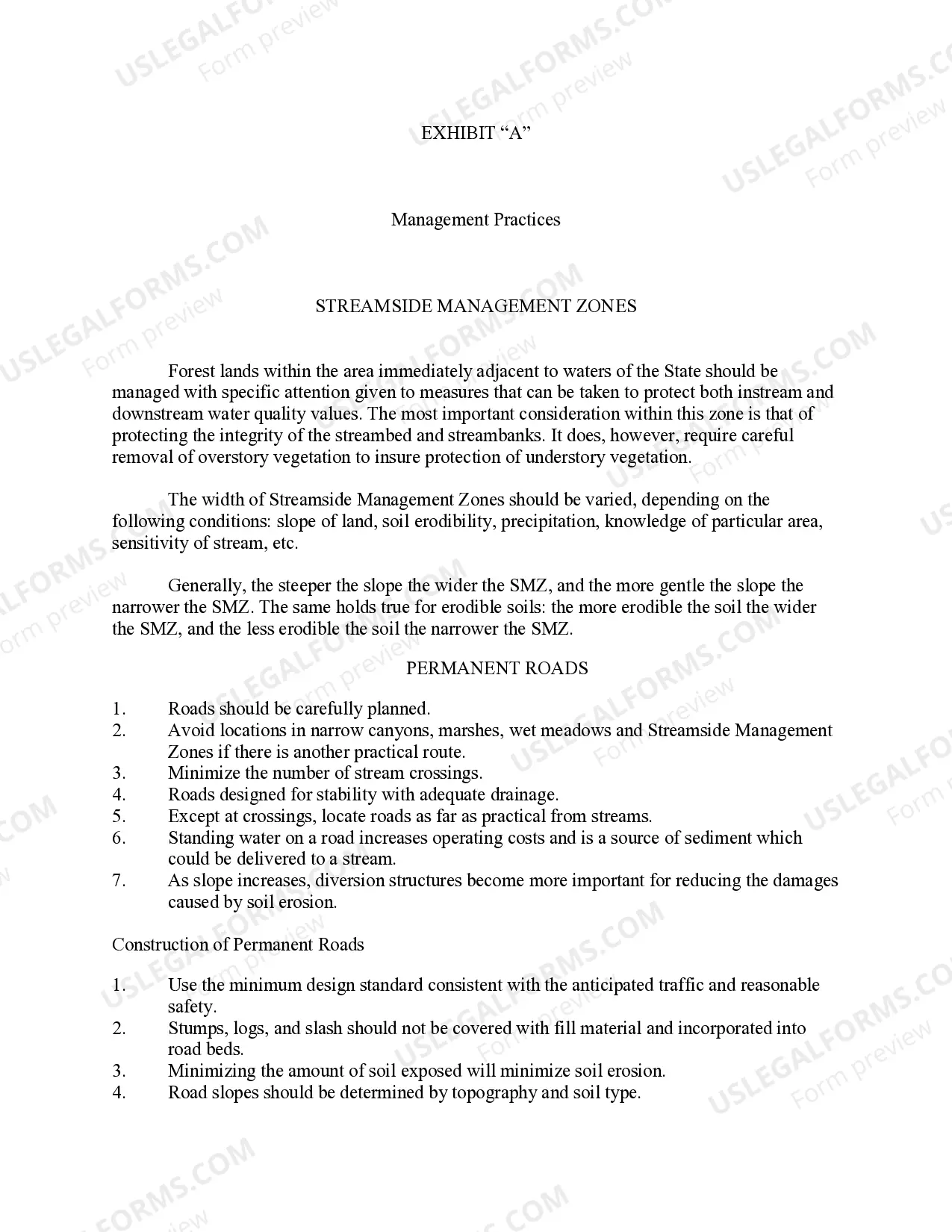
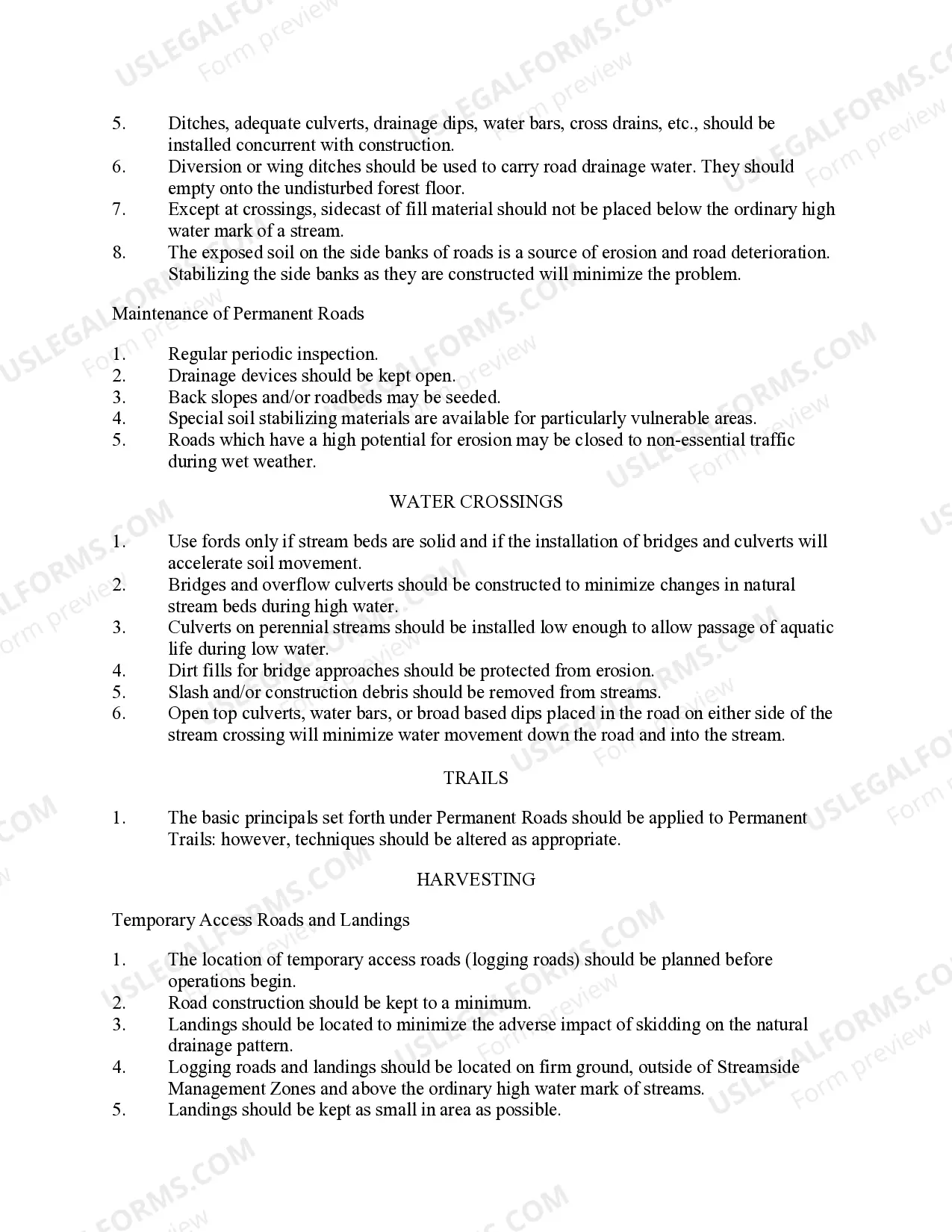
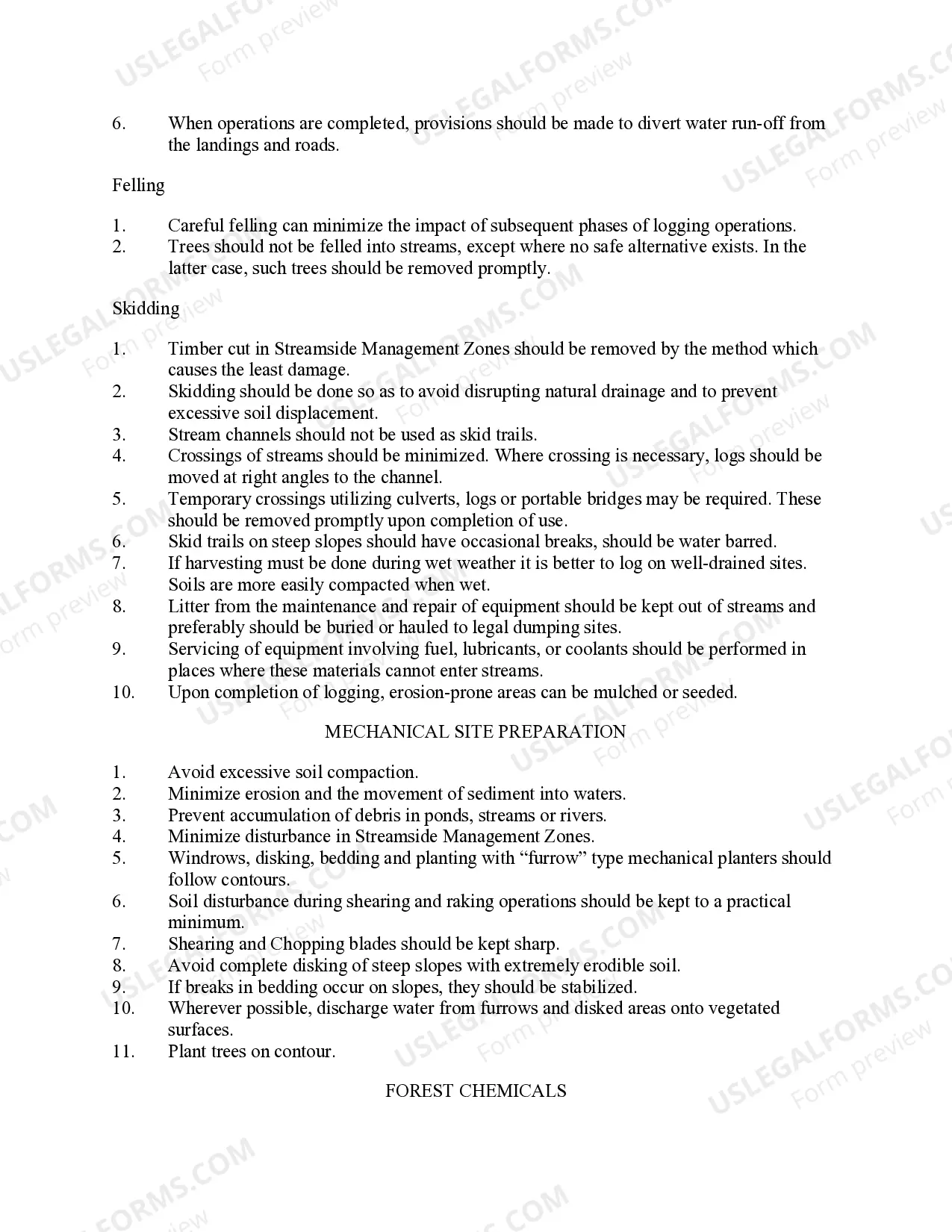
- Management practices that must be followed during timber removal operations.
- Conditions for the termination of the rights granted under the contract.
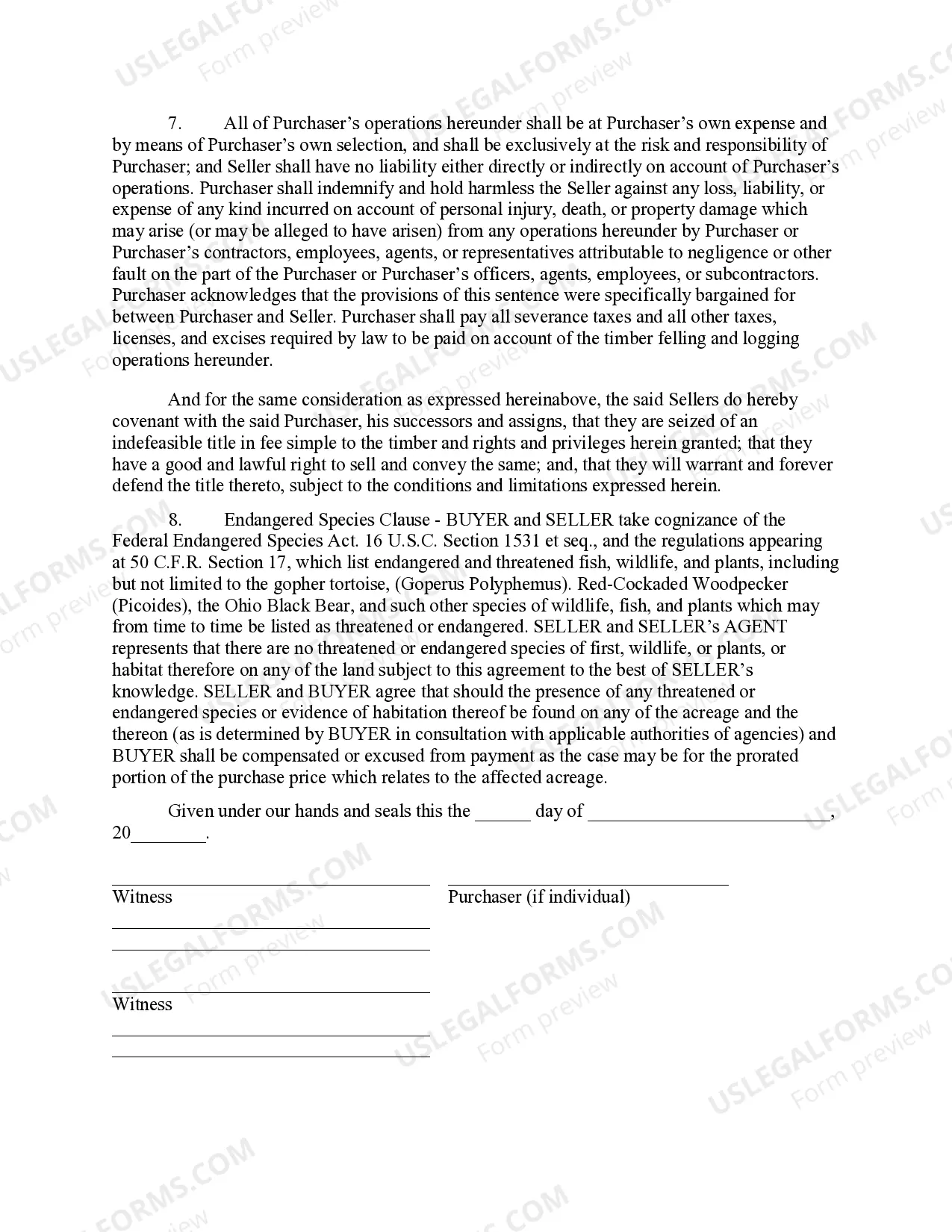
- Agreements regarding the handling of deposits and liabilities.

Situations where this form applies
This form should be used when a landowner in Ohio wants to sell timber from their property to a buyer. It is particularly useful for those looking to conduct logging operations in a manner that is legally compliant and responsible with regard to environmental practices. The contract is essential for establishing clear terms to protect both parties and ensuring that timber is removed without damaging the surrounding land.
Who should use this form
- Landowners wishing to sell timber on their land.
- Buyers interested in purchasing timber while ensuring legal compliance.
- Forestry companies planning logging operations in Ohio.
- Individuals or organizations needing clarity on their rights and responsibilities regarding timber sales.
Instructions for completing this form
- Identify the parties involved by entering the names and contact details of the seller and purchaser.
- Specify the property by providing a detailed description and any necessary documentation regarding the title.
- Fill in the terms regarding the rights to access the property, including time frames and any conditions.
- Include the deposit amount and conditions regarding its return or retention after timber operations.
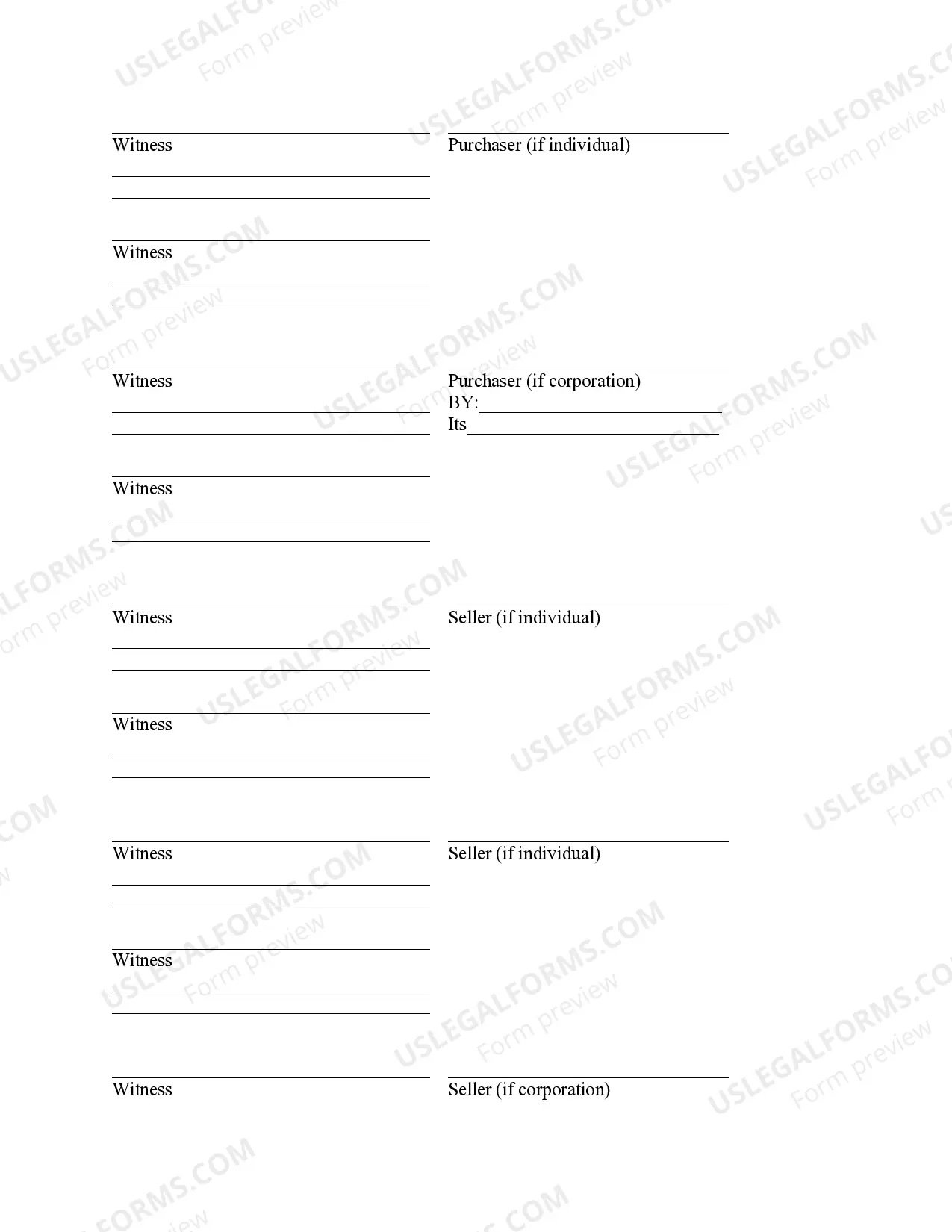
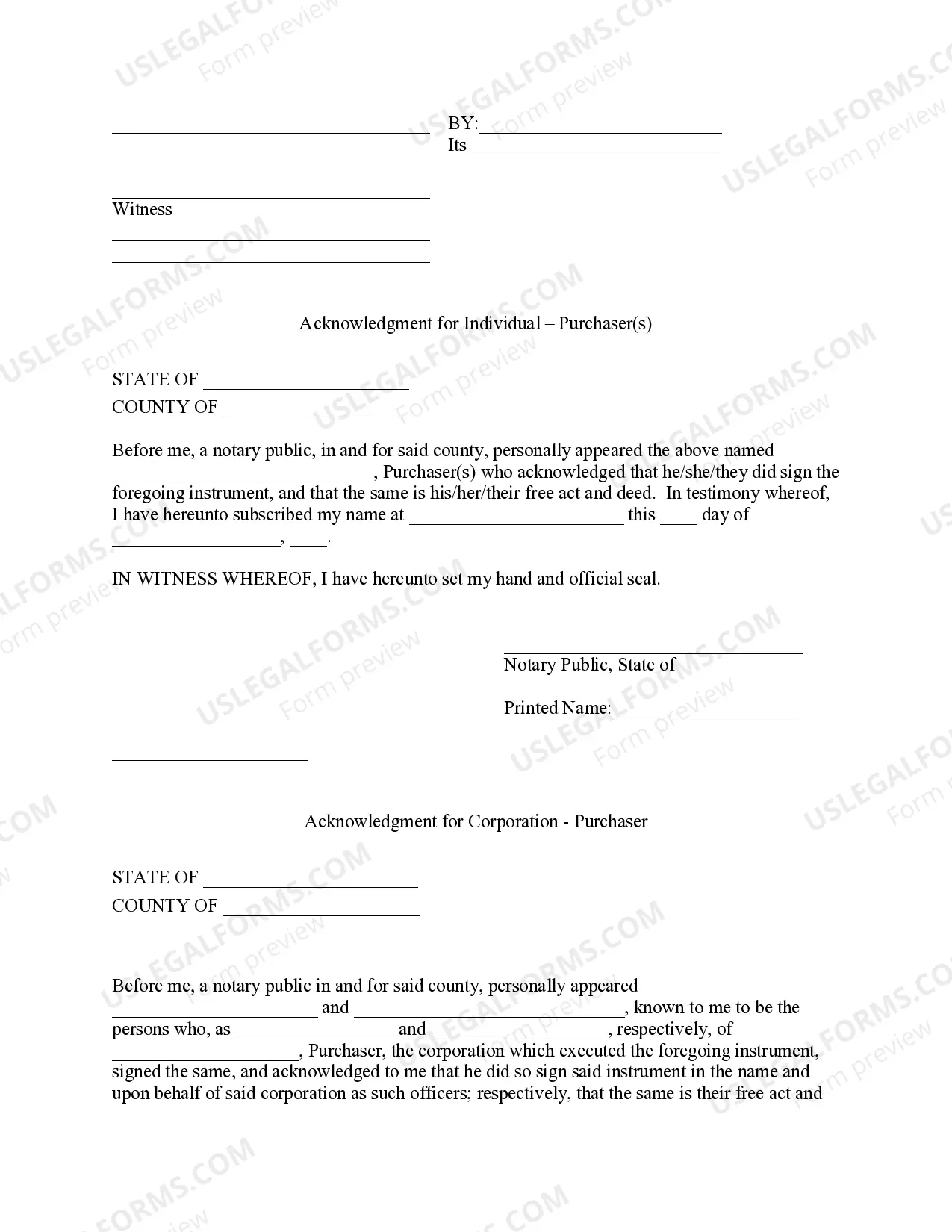
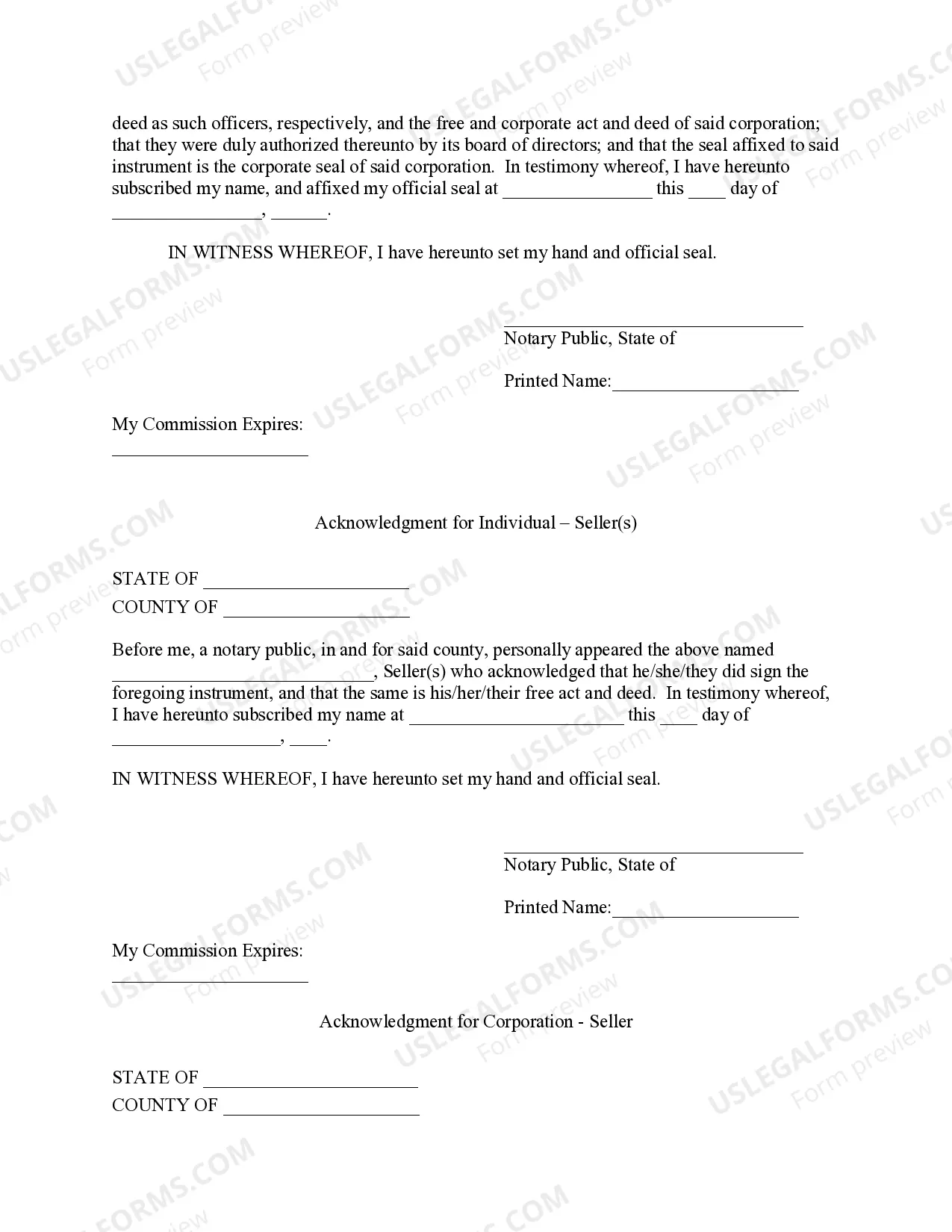
- Ensure all parties sign the contract and have it notarized if required.
Does this document require notarization?
Yes, this form must be notarized to be legally valid. The notarization process confirms the identities of the signatories and their agreement to the terms. US Legal Forms offers integrated online notarization, providing a secure, convenient option available 24/7 without the need for in-person meetings.
Get your form ready online
Our built-in tools help you complete, sign, share, and store your documents in one place.
Make edits, fill in missing information, and update formatting in US Legal Forms—just like you would in MS Word.
Download a copy, print it, send it by email, or mail it via USPS—whatever works best for your next step.
Sign and collect signatures with our SignNow integration. Send to multiple recipients, set reminders, and more. Go Premium to unlock E-Sign.
If this form requires notarization, complete it online through a secure video call—no need to meet a notary in person or wait for an appointment.
We protect your documents and personal data by following strict security and privacy standards.

Make edits, fill in missing information, and update formatting in US Legal Forms—just like you would in MS Word.

Download a copy, print it, send it by email, or mail it via USPS—whatever works best for your next step.

Sign and collect signatures with our SignNow integration. Send to multiple recipients, set reminders, and more. Go Premium to unlock E-Sign.

If this form requires notarization, complete it online through a secure video call—no need to meet a notary in person or wait for an appointment.

We protect your documents and personal data by following strict security and privacy standards.
Common mistakes to avoid
- Failing to provide a complete description of the property involved in the sale.
- Not specifying the duration of access rights clearly.
- Leaving out management practices that must be adhered to during timber removal.
- Neglecting to sign the contract or ensure all parties have signed.
- Misunderstanding the liability clauses related to damage during logging operations.
Why use this form online
- Convenient access to a legally vetted template drafted by licensed attorneys.
- Editable format allows users to tailor the contract to specific needs.
- Immediate download for swift action, ensuring timely transactions.
- Reduces the need for costly legal fees while still providing legal protection.
- This form is legally enforceable under Ohio law and must adhere to state regulations concerning timber sales.
- All parties should be aware of their rights and responsibilities outlined in the contract to ensure compliance.
Summary of main points
- The Ohio Timber Sale Contract is essential for formalizing timber sales.
- It includes specific clauses related to property access, management practices, and environmental considerations.
- Both parties must understand their obligations to prevent potential disputes.
Looking for another form?
Form popularity
FAQ
As a general rule, the taller the tree, the more valuable it is. Tall trees with no branches along most of the height of their trunk will be the most valuable and sold as sawlogs for wood veneer. Although rare, wide diameter trees can be worth a small fortune if they are tall and straight.
Hire the help! Hire a professional Ohio consulting forester to represent you. Know your Timber Tract Boundaries! Know your Timber Volume. Timber species. Timber Quality and Quantity. Forest Issues. Find a Timber Buyer. Timber Sale Contract Negotiations.
In logging contracts, payment is most often based on either dollars per unit or a percentage of the value of the wood. Historically, loggers have worked on a percentage basis, and 50 percent of the value of the wood was standard operating proce- dure.
To estimate the value of your timber, take the volume, divided by 1,000, and multiply it by the price quoted in your states standing timber stumpage report.
The term "timber sale" is used to refer to any significant harvest of wood products involving an exchange of monies. Timber sales may involve sales of trees used to make lumber (sawtimber), fuelwood, whole tree chips, pulp, or any combination of these products.
As a guide timber harvesting costs are commonly between $20 and $40 per cubic metre depending on the type of machinery used, the type of the logs and the site conditions. Harvesting costs are generally lower for large plantations of large diameter logs on easy accessible country.
It's generally much easier to sell trees in a woodlot harvest, where many trees are sold and harvested at the same time. To cut down your tree, a timber buyer must bring in laborers, a log truck, skidder, loader, and other equipment. The buyer must cut the logs and haul them to the mill to sell.
Step 1: Get helP. Step 2: Get a plaN. Step 3: Get to know your timber. Step 4: Set your limits. Step 5: Find your buyers. Step 6: Start selling. Step 7: Put it in writing. Step 8: Check in on harvest day.
Depending on the type of trees and the market when the timber is sold, you could earn $500 to $2000 per acre (at $1500, you would be looking at $60 per year in income if you were to annualize it over 25 years).