Ohio Residential Rental Lease Application
What is this form?
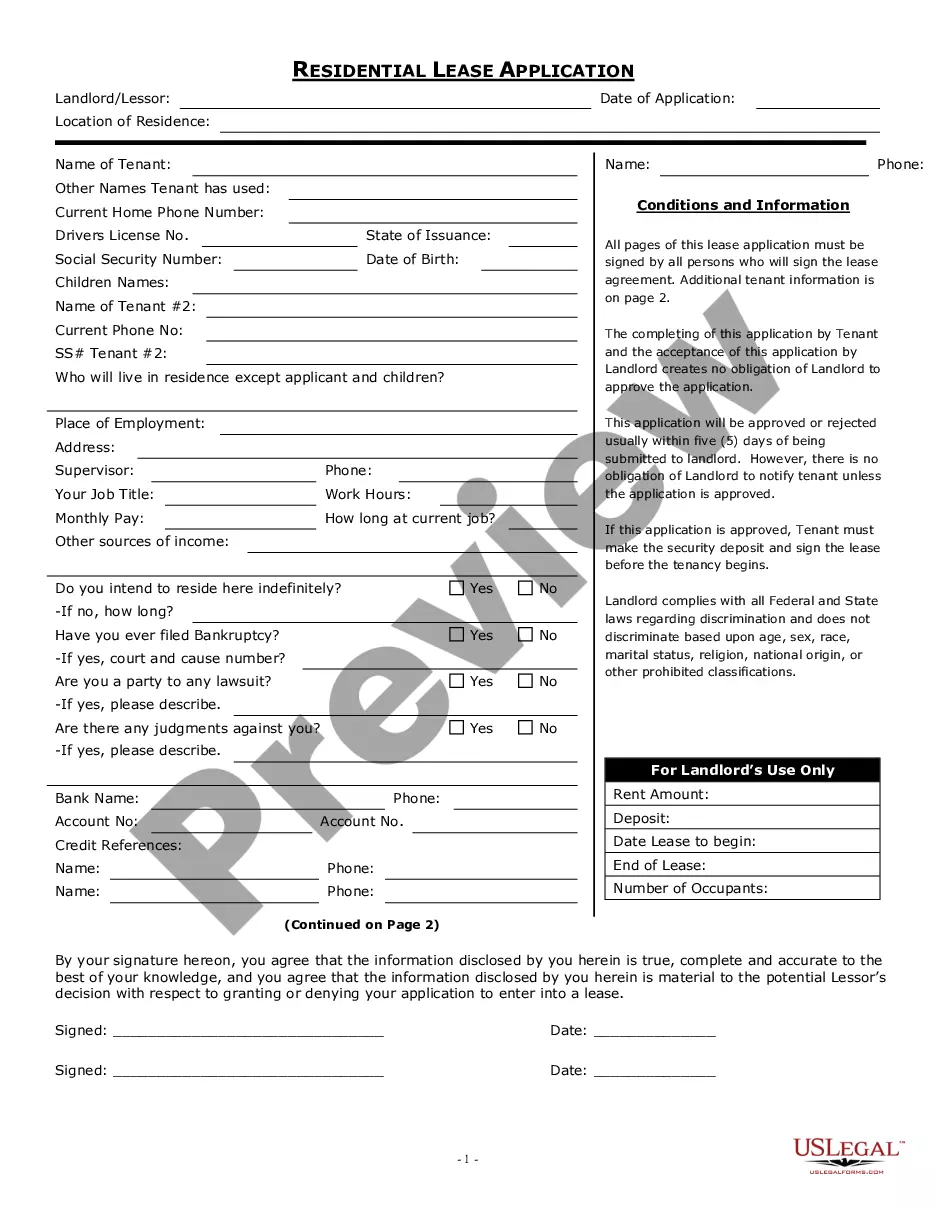
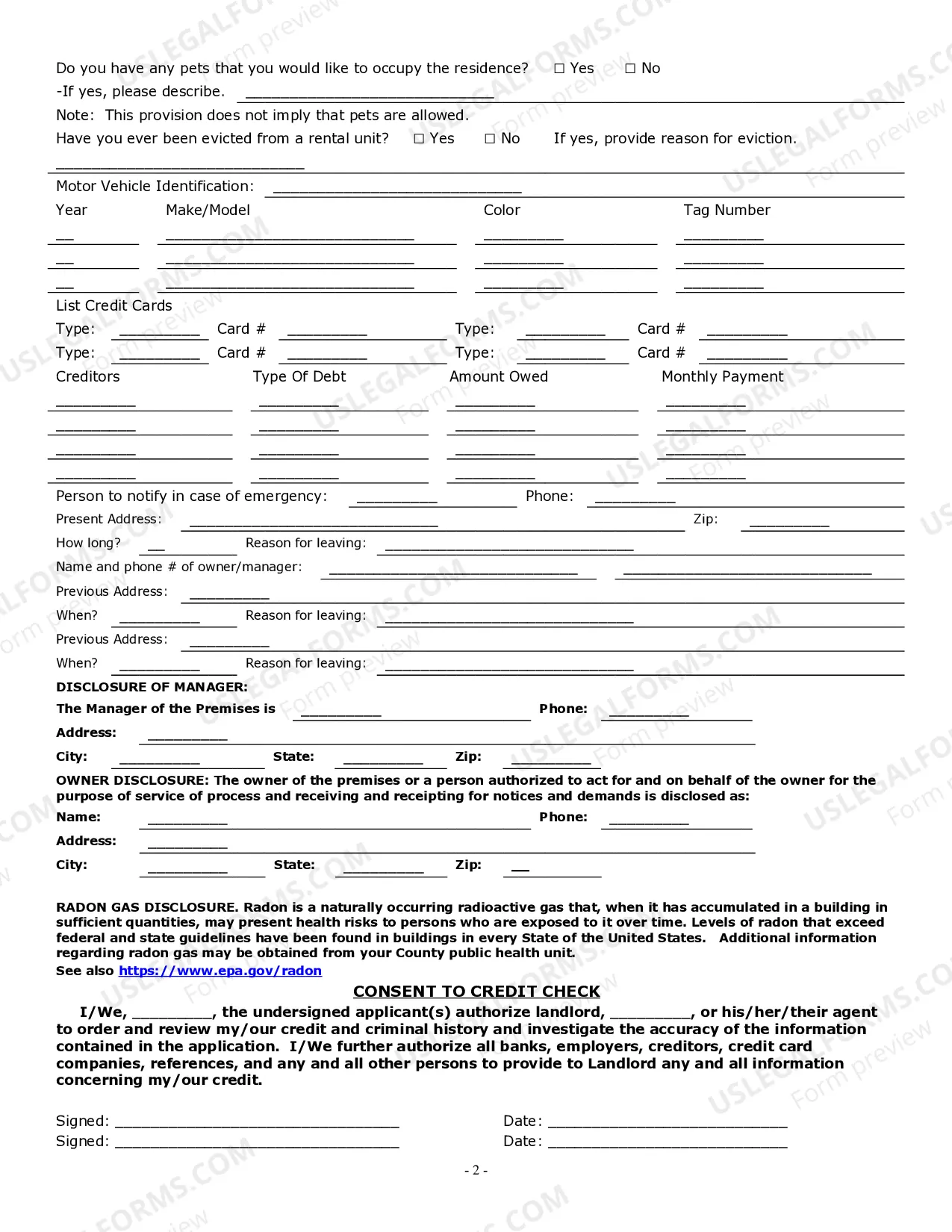
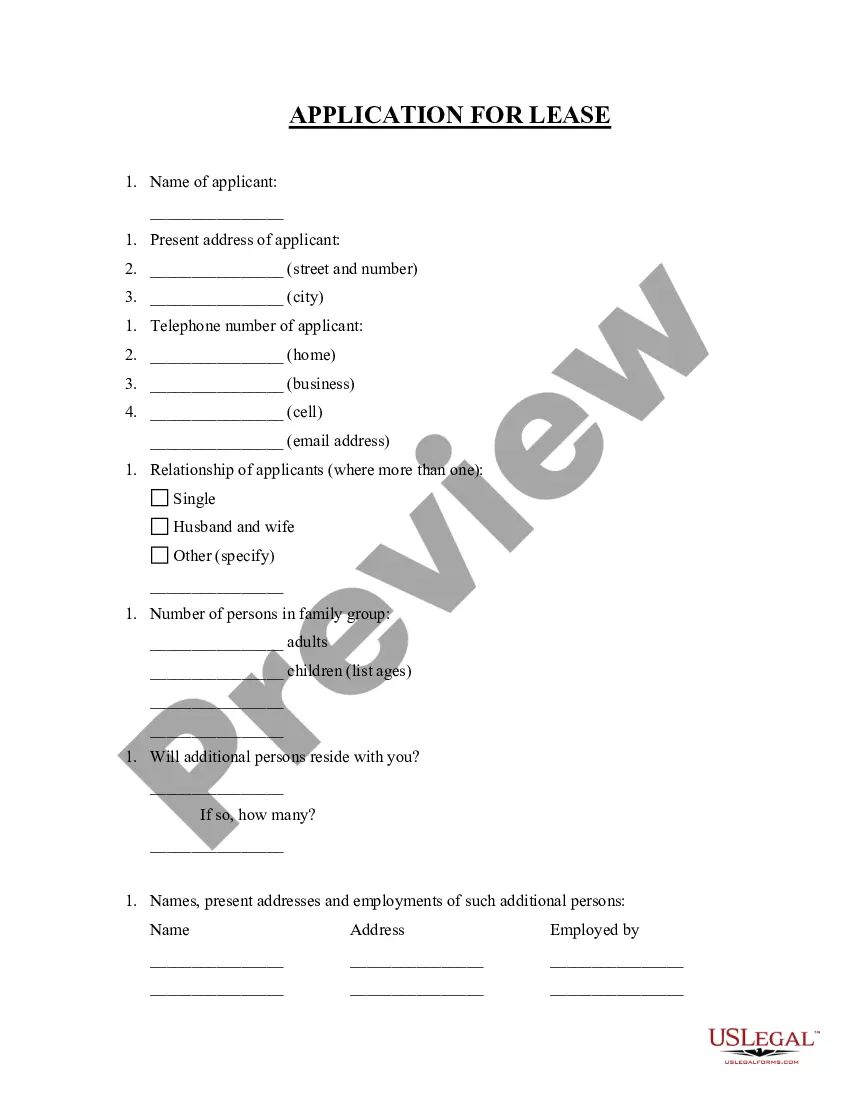
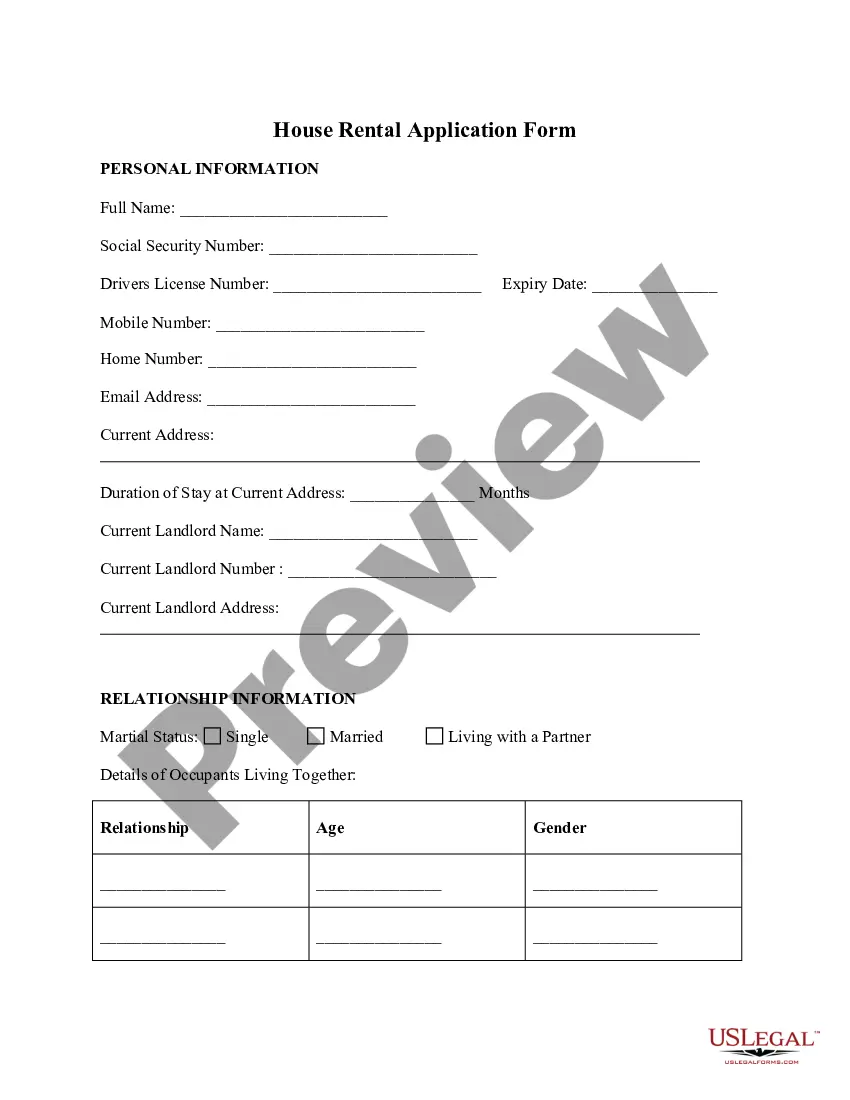
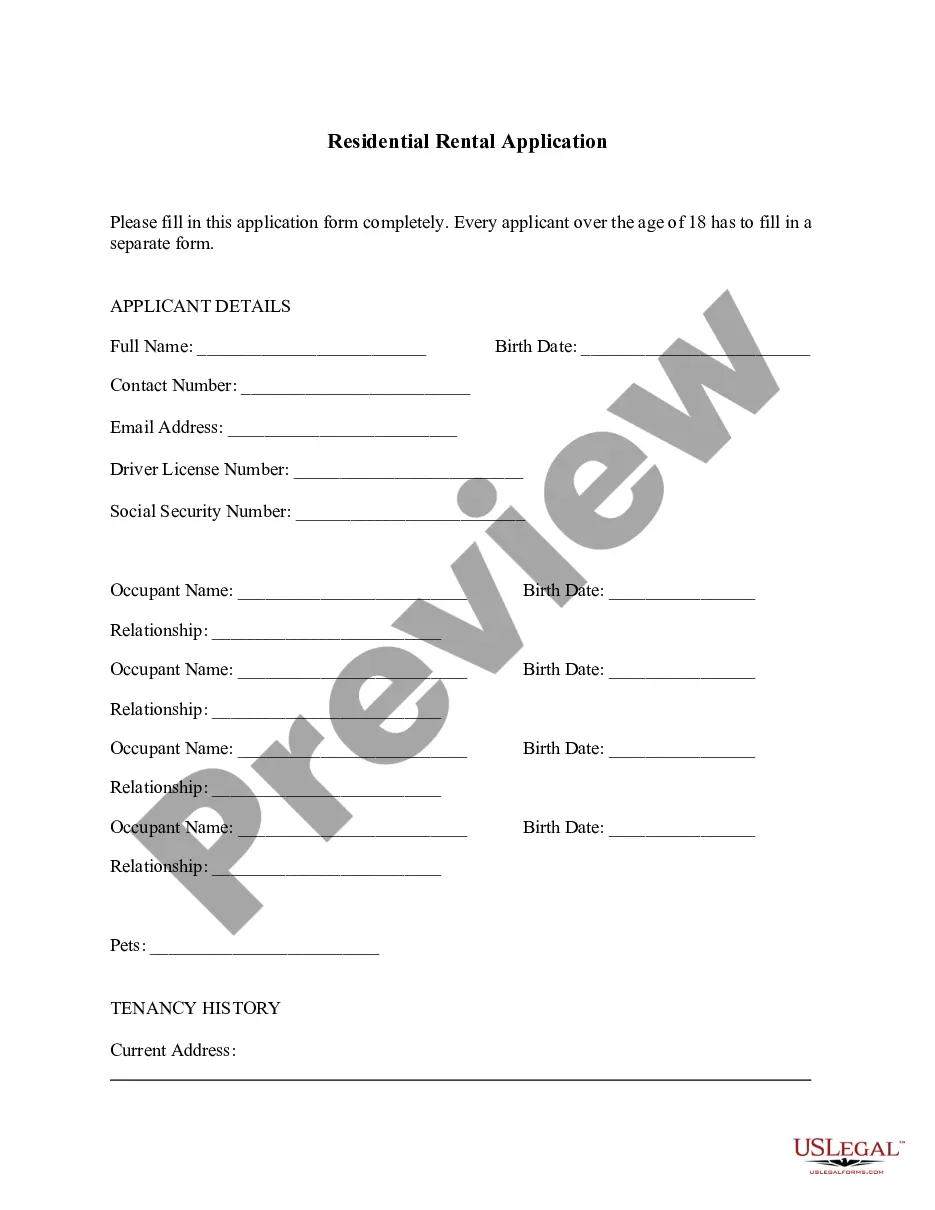
The Residential Rental Lease Application is a legal document that prospective tenants complete to apply for a rental property. This form allows landlords to gather essential information about applicants to evaluate their suitability as tenants. Unlike other lease documents, this application focuses solely on tenant information and does not create any obligations for the landlord to approve the application.
Key components of this form
- Applicant's personal information, including name, address, and contact details.
- Authorization for the landlord to conduct background checks, including credit history.
- Disclosure of required personal information relevant to the rental process.
- Sections for the landlord's use to record details about the application, including rent amount and leasing dates.
- Signature fields where the applicant certifies the truthfulness of their information.

When to use this form
Who should use this form
This form is intended for:
- Individuals applying to rent a residential property.
- Landlords or property managers seeking to evaluate potential tenants.
- Anyone needing to comply with tenant screening processes before a lease is drafted.
How to prepare this document
- Provide your personal details accurately, including your name and contact information.
- Disclose relevant financial information necessary for the landlord's evaluation.
- Sign the application, certifying the accuracy of the information provided.
- Authorize a credit and background check by completing the appropriate sections.
- Submit the completed application to the landlord along with any required fees.
Notarization guidance
This form does not typically require notarization unless specified by local law. Ensure you verify any local regulations that may apply to your situation.
Get your form ready online
Our built-in tools help you complete, sign, share, and store your documents in one place.
Make edits, fill in missing information, and update formatting in US Legal Forms—just like you would in MS Word.
Download a copy, print it, send it by email, or mail it via USPS—whatever works best for your next step.
Sign and collect signatures with our SignNow integration. Send to multiple recipients, set reminders, and more. Go Premium to unlock E-Sign.
If this form requires notarization, complete it online through a secure video call—no need to meet a notary in person or wait for an appointment.
We protect your documents and personal data by following strict security and privacy standards.

Make edits, fill in missing information, and update formatting in US Legal Forms—just like you would in MS Word.

Download a copy, print it, send it by email, or mail it via USPS—whatever works best for your next step.

Sign and collect signatures with our SignNow integration. Send to multiple recipients, set reminders, and more. Go Premium to unlock E-Sign.

If this form requires notarization, complete it online through a secure video call—no need to meet a notary in person or wait for an appointment.

We protect your documents and personal data by following strict security and privacy standards.
Common mistakes
- Not providing complete and accurate information, which may lead to application denial.
- Failing to sign the application, which is essential for processing.
- Overlooking the authorization for background and credit checks.
Why use this form online
- Convenient access to the rental application from anywhere, anytime.
- Editable fields allow for easy updates before submission.
- Reliable templates created by licensed attorneys ensure legal compliance.
Legal use & context
- This Residential Rental Lease Application is legally binding once submitted, but it does not guarantee approval of the rental application.
- Landlords are required to adhere to Fair Housing laws, ensuring non-discrimination in the application process.
Quick recap
- The Residential Rental Lease Application is essential for evaluating prospective tenants.
- Complete and accurate information increases the likelihood of application approval.
- Always adhere to state regulations and landlord requirements during the application process.
Looking for another form?
Form popularity
FAQ
Commercial leases in Ohio must be signed by the lessor, and the lessor's signature must be acknowledged before a notary or other official, according to Revised Code 5301.01. In addition, per Revised Code 5301.08, the acknowledgment is unnecessary if the lease term is three years or less.
As long as the contract spells out specific details and both parties have signed that they agree to the contract's terms, a handwritten contract is legally binding and enforceable in court.
Mostbut not allstates require the lease to be in writing to be considered valid. Among the states that require written leases, valid ones must include a description of the property. The property's physical address is considered a valid description. Leases must include starting and ending dates.
Terms. The lease should state the length of the agreement. Rent. The amount of rent and when it is due. Deposits and fees. The names of all tenants. Occupancy limits. Restrictions on disruptive activity. Pets. Maintenance and repairs.
The lease agreement or contract offered by the landlord once the application has been approved is a legally binding document. It becomes legally binding once it is signed by the applicants and landlord.It also explains what items the landlord is responsible for and what the tenants are responsible for.
Names of all tenants. Limits on occupancy. Term of the tenancy. Rent. Deposits and fees. Repairs and maintenance. Entry to rental property. Restrictions on tenant illegal activity.
Collect each party's information. Include specifics about your property. Consider all of the property's utilities and services. Know the terms of your lease. Set the monthly rent amount and due date. Calculate any additional fees. Determine a payment method. Consider your rights and obligations.
If you're thinking of renting out your property, or you're a tenant, and the current owner doesn't already have an agreement drawn up, it's possible to create your own rental contract.
A lease serves as a binding, legal agreement between the property owner and the tenant. As such, it is very important to make sure it thoroughly addresses the rules, policies, and conflict resolution procedures for living in the rental property, and clearly defines tenant and landlord responsibilities.