Nevada Notice of Dishonored Check - Civil - Keywords: bad check, bounced check
What this document covers
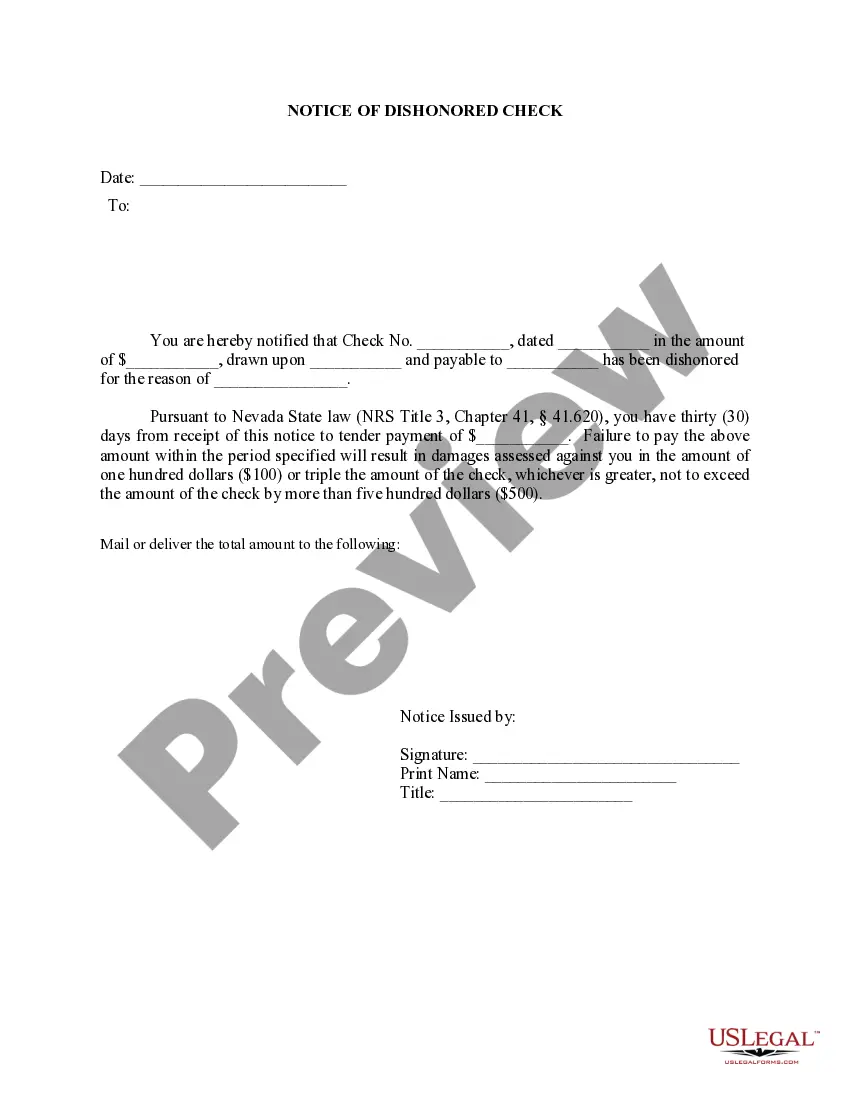
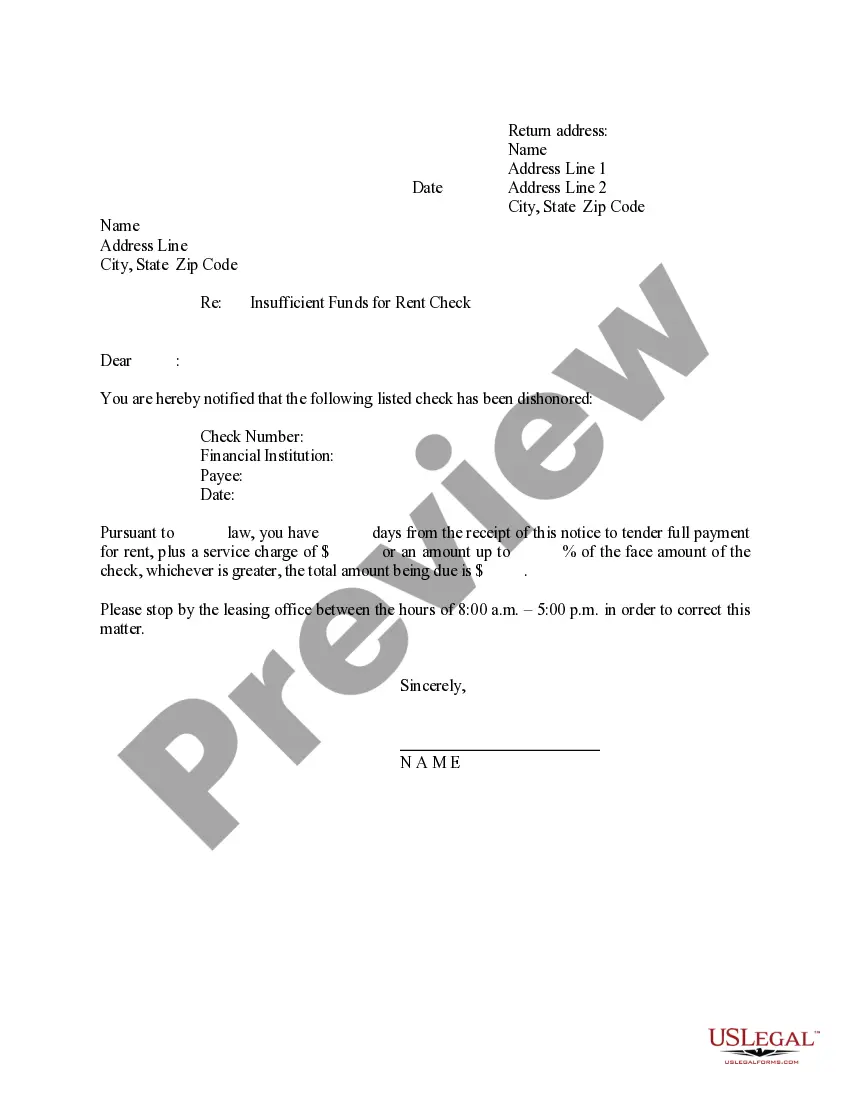
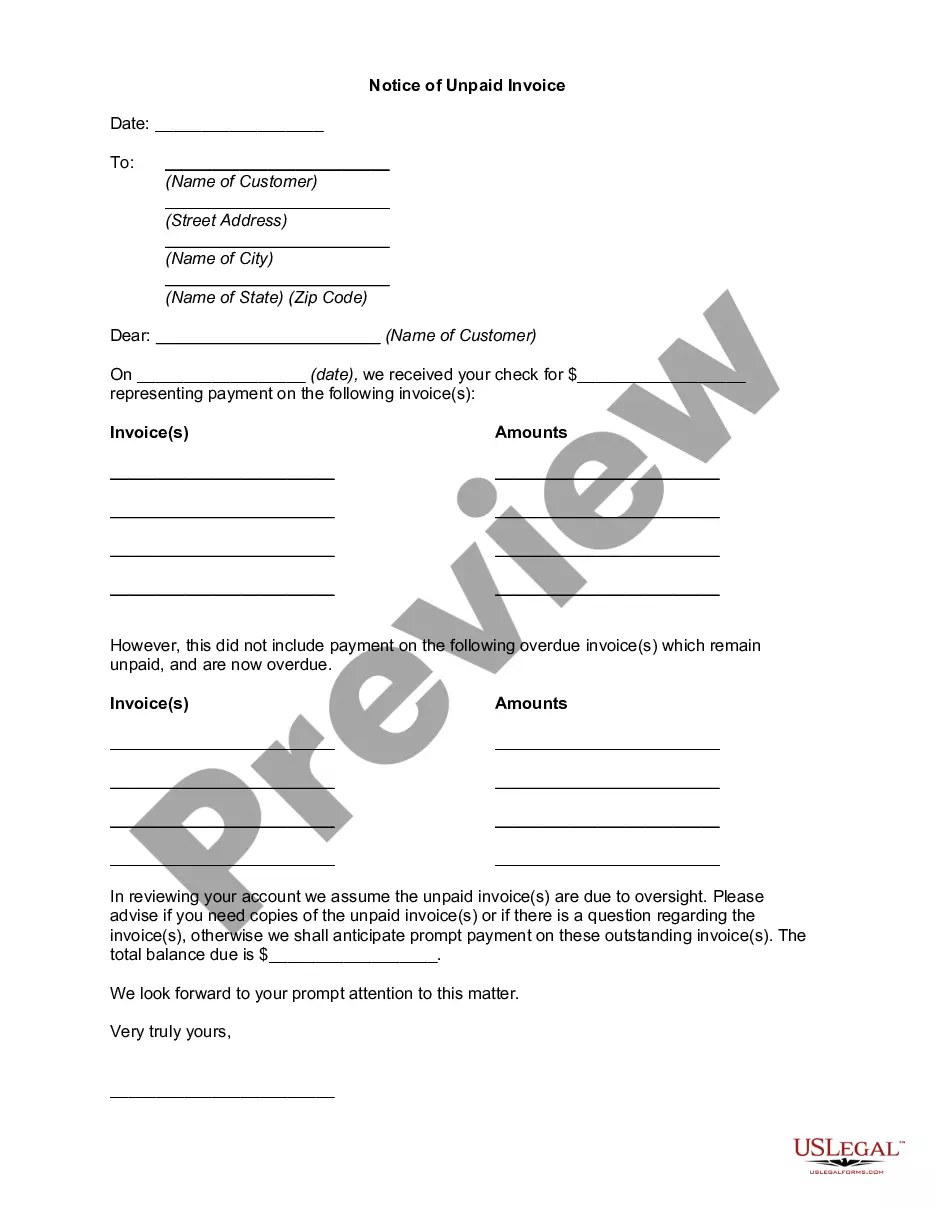
The Notice of Dishonored Check, commonly known as a bad check or bounced check notice, is a formal document used to inform a debtor that their check has not been honored by the bank. This typically occurs due to insufficient funds or the account being closed. Issuing this notice is often a necessary step for individuals or businesses looking to recover the amount owed, in accordance with state law.
Main sections of this form
- The sender's name and contact information.
- The recipient's name and contact information.
- Details of the dishonored check, including the check number and amount.
- The reason for dishonor (e.g., insufficient funds).
- A deadline for the debtor to make payment before further action is taken.

Situations where this form applies
This form should be used when a check has been returned unpaid by the bank. It is crucial in situations where a business or individual has attempted to deposit a check, only to find it was dishonored. By sending this notice, the sender is formally warning the debtor of the dishonor and providing them an opportunity to rectify the situation, potentially avoiding further legal action.
Intended users of this form
- Business owners who have received checks that have bounced.
- Individuals who are owed money and have received a dishonored check.
- Anyone wanting to formally notify a debtor about their bad check.
Instructions for completing this form
- Identify the parties involved by entering your name and contact information, followed by the debtor's details.
- Provide the specifics regarding the dishonored check, including the check number and amount.
- State the reason for the dishonor as indicated by the bank.
- Set a clear deadline by which the debtor should respond or make payment.
- Sign and date the notice to complete the form.
Does this form need to be notarized?
Notarization is not commonly needed for this form. However, certain documents or local rules may make it necessary. Our notarization service, powered by Notarize, allows you to finalize it securely online anytime, day or night.
Get your form ready online
Our built-in tools help you complete, sign, share, and store your documents in one place.
Make edits, fill in missing information, and update formatting in US Legal Forms—just like you would in MS Word.
Download a copy, print it, send it by email, or mail it via USPS—whatever works best for your next step.
Sign and collect signatures with our SignNow integration. Send to multiple recipients, set reminders, and more. Go Premium to unlock E-Sign.
If this form requires notarization, complete it online through a secure video call—no need to meet a notary in person or wait for an appointment.
We protect your documents and personal data by following strict security and privacy standards.

Make edits, fill in missing information, and update formatting in US Legal Forms—just like you would in MS Word.

Download a copy, print it, send it by email, or mail it via USPS—whatever works best for your next step.

Sign and collect signatures with our SignNow integration. Send to multiple recipients, set reminders, and more. Go Premium to unlock E-Sign.

If this form requires notarization, complete it online through a secure video call—no need to meet a notary in person or wait for an appointment.

We protect your documents and personal data by following strict security and privacy standards.
Common mistakes to avoid
- Failing to include the check details, leading to confusion.
- Not providing sufficient time for the debtor to make payment.
- Omitting your contact information.
Why complete this form online
- Convenient access to legal forms from anywhere.
- Editable templates that allow customization to fit specific needs.
- Reliable and secure document preparation without the need for a lawyer.
Legal use & context
- This form serves as a record of notification, which may be necessary for any subsequent legal actions.
- Sending this notice demonstrates a good faith effort to collect the owed amount.
- It may help establish terms for potential repayment agreements.
Summary of main points
- A Notice of Dishonored Check is essential for communicating a bounced check.
- It allows an opportunity for resolution before pursuing legal action.
- Understand state-specific laws regarding the use of this notice.
Looking for another form?

Form popularity
FAQ
Writing bad checks can lead to several theft charges, but with the help of a skilled defense attorney, you can work to reduce or even dismiss charges.
Writing a bad check is a crime if the check writer knew that there were insufficient funds to cover the check and intended to defraud you.If the check writer does not pay you within 30 days, you may file a lawsuit.
Contact the bank that placed the negative information on your report. If the information is true, it isn't obligated to change or remove the information. You can, however, write a short explanation of the circumstances surrounding the bad check for inclusion in your report.
If someone writes you a bad check and you deposit the check at the bank, or cash it at your bank you will be penalized. They will charge you a fee for the bounced check and it may take a couple days for it to reflect.If you are worried about bad checks, insist on getting paid in cash.
Under criminal penalties, you can be prosecuted and even arrested for writing a bad check. A bounced check typically becomes a criminal matter when the person who wrote it did so intending to commit fraud, such as writing several bad checks in a short time frame knowing there is no money to cover them.
Passing bad checks or casino markers can result in thousands of dollars in fines, in addition to restitution, and potentially up to 4 years in prison.If you cannot immediately pay off a debt, you should obtain legal assistance as soon as possible after being accused of passing a worthless check or bad casino marker.
People who write bad checks are normally charged fees by their banks and could be on the hook for any fees incurred by the payee. Knowingly writing a bad check may constitute a misdemeanor or felony, depending on the amount of the check and the state in which it was written.
Writing bad checks is a crime. Penalties for people who tender checks knowing there are insufficient funds in their accounts vary by state. Some states require an intent to fraud. But in the majority of states, the crime is considered a misdemeanor.