Nevada Amendment to Postnuptial Property Agreement
What this document covers
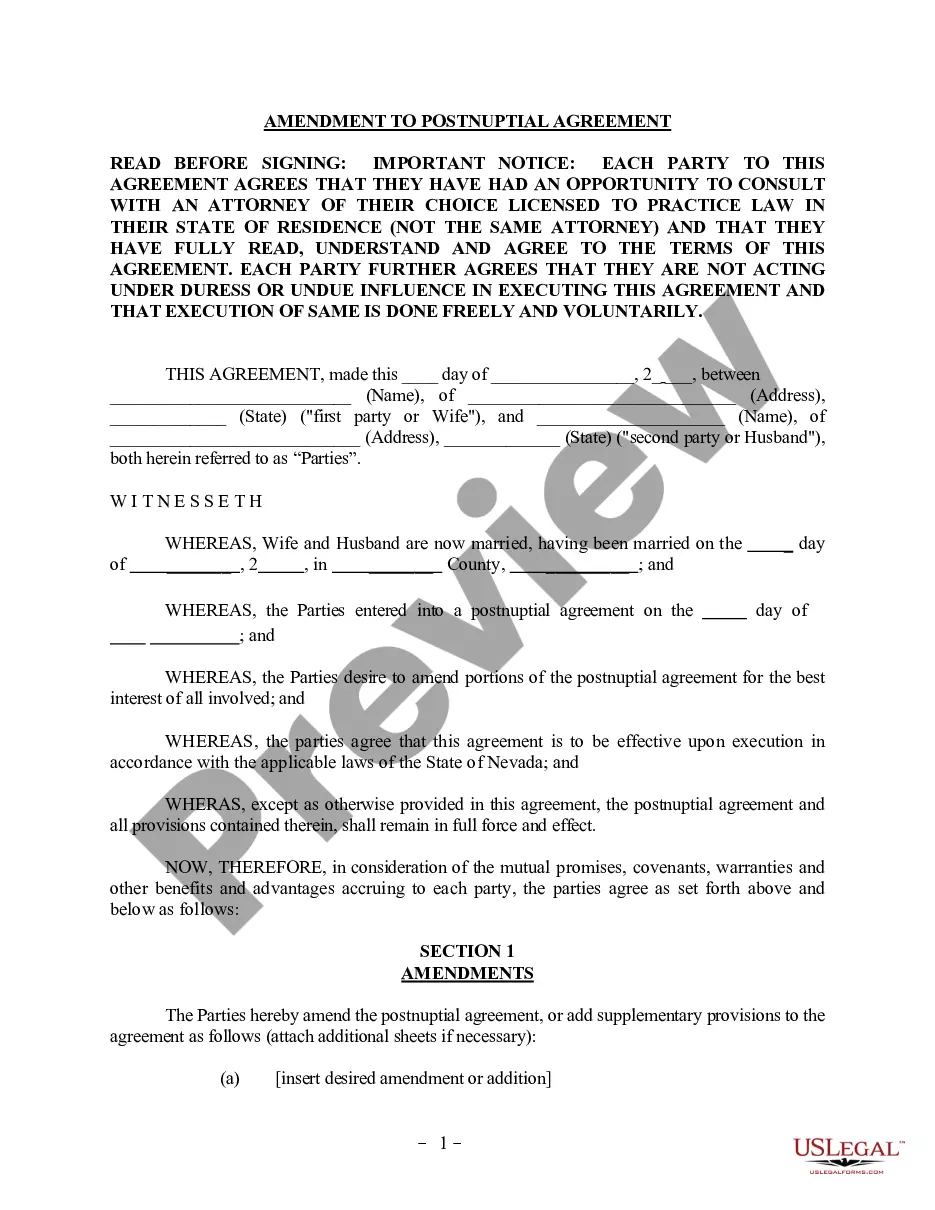
The Amendment to Postnuptial Property Agreement is a legal document designed for spouses who wish to make modifications or additions to an existing postnuptial agreement. This form allows couples to update their agreement as their circumstances change, ensuring their property rights and obligations remain clear and legally enforceable. Unlike a new postnuptial agreement, this form specifically addresses changes to an existing document, which can be more efficient for parties already in a contractual relationship.
Main sections of this form
- Identification of the parties involved and date of execution.
- Statement of effectiveness upon execution under Nevada law.
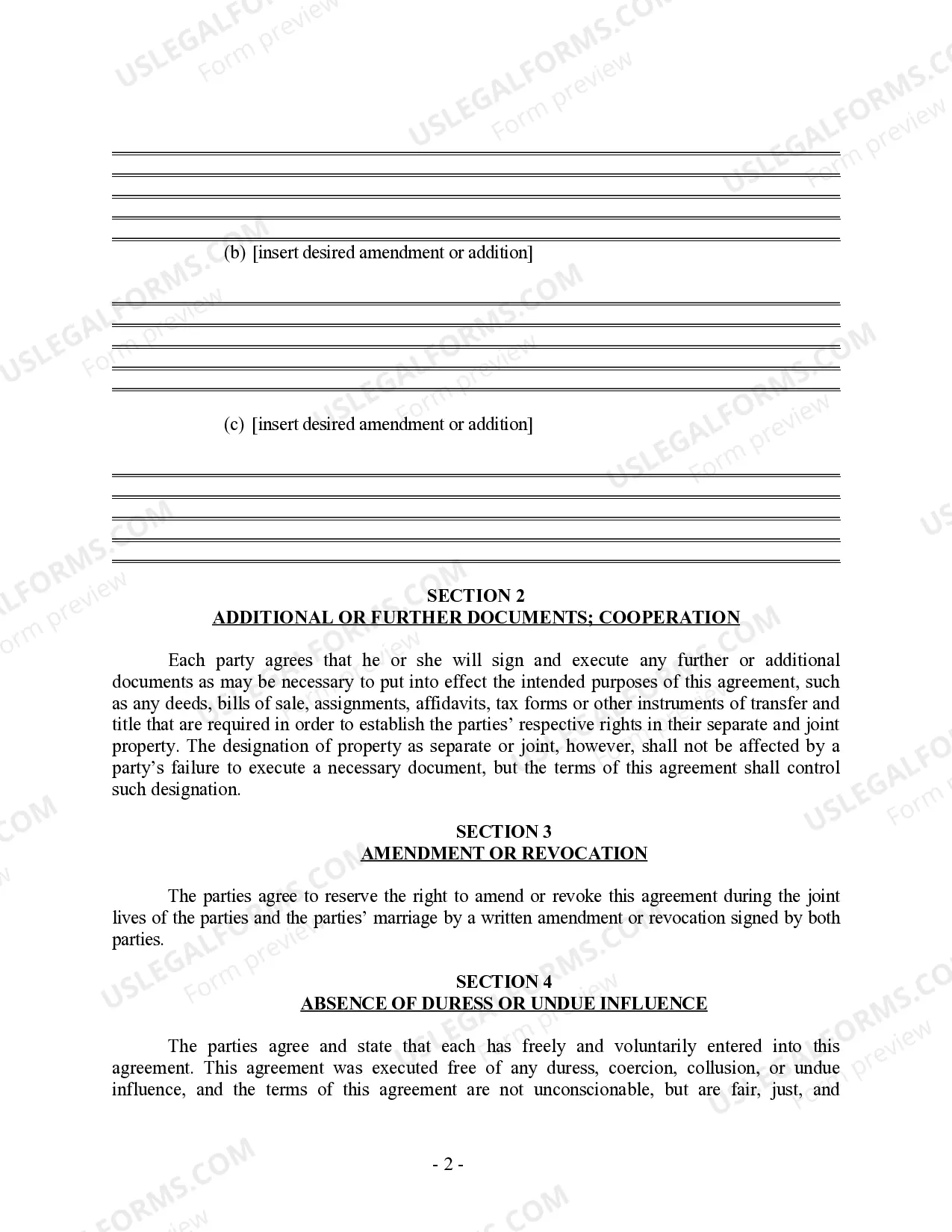
- Specific amendments or additions to the existing postnuptial agreement.
- Clauses regarding the cooperation of parties in executing further documents.
- Provisions for amendments or revocation of the agreement.
- Assurance of voluntary agreement free from duress or undue influence.
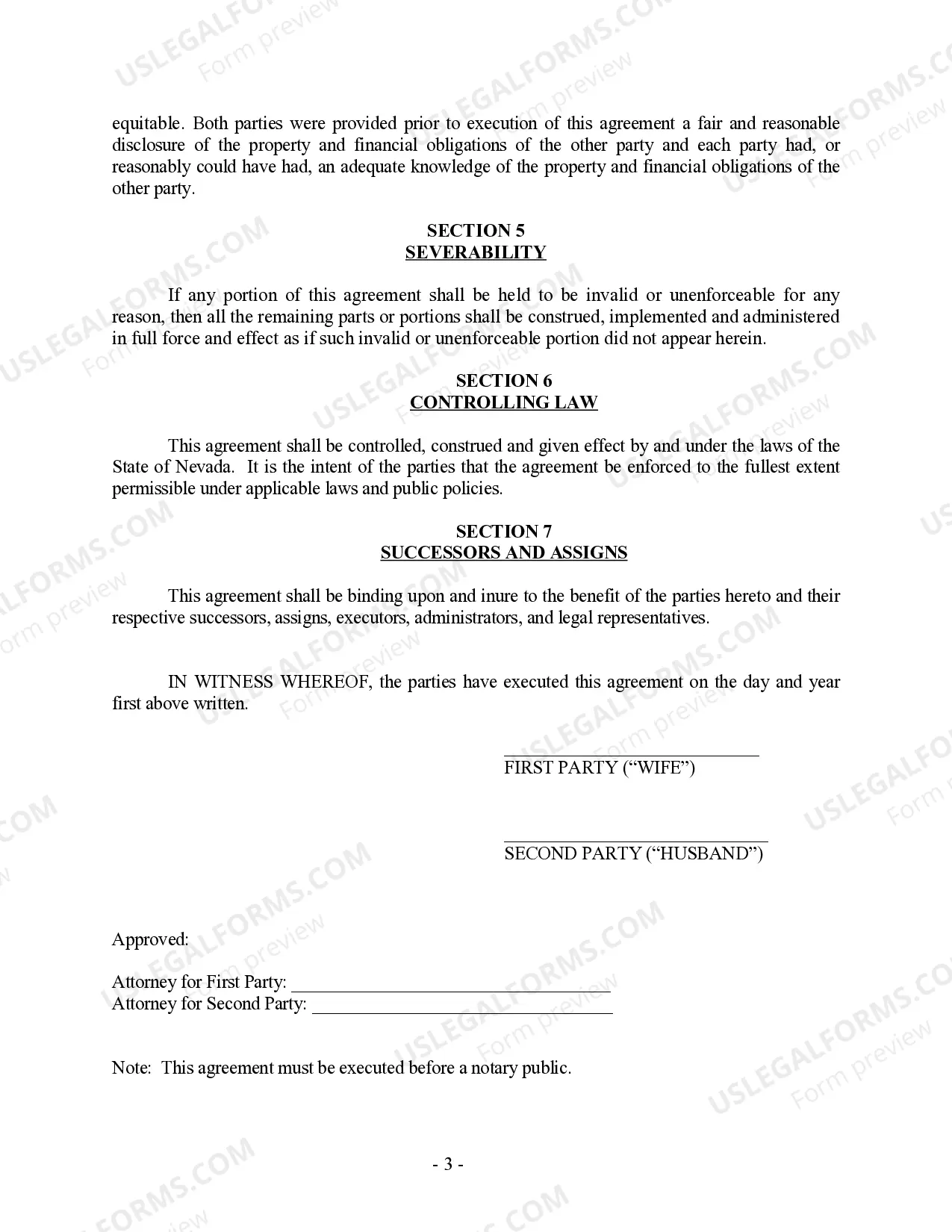
- Severability clause for invalid or unenforceable provisions.
- Statement of controlling law specifying Nevada as the jurisdiction.
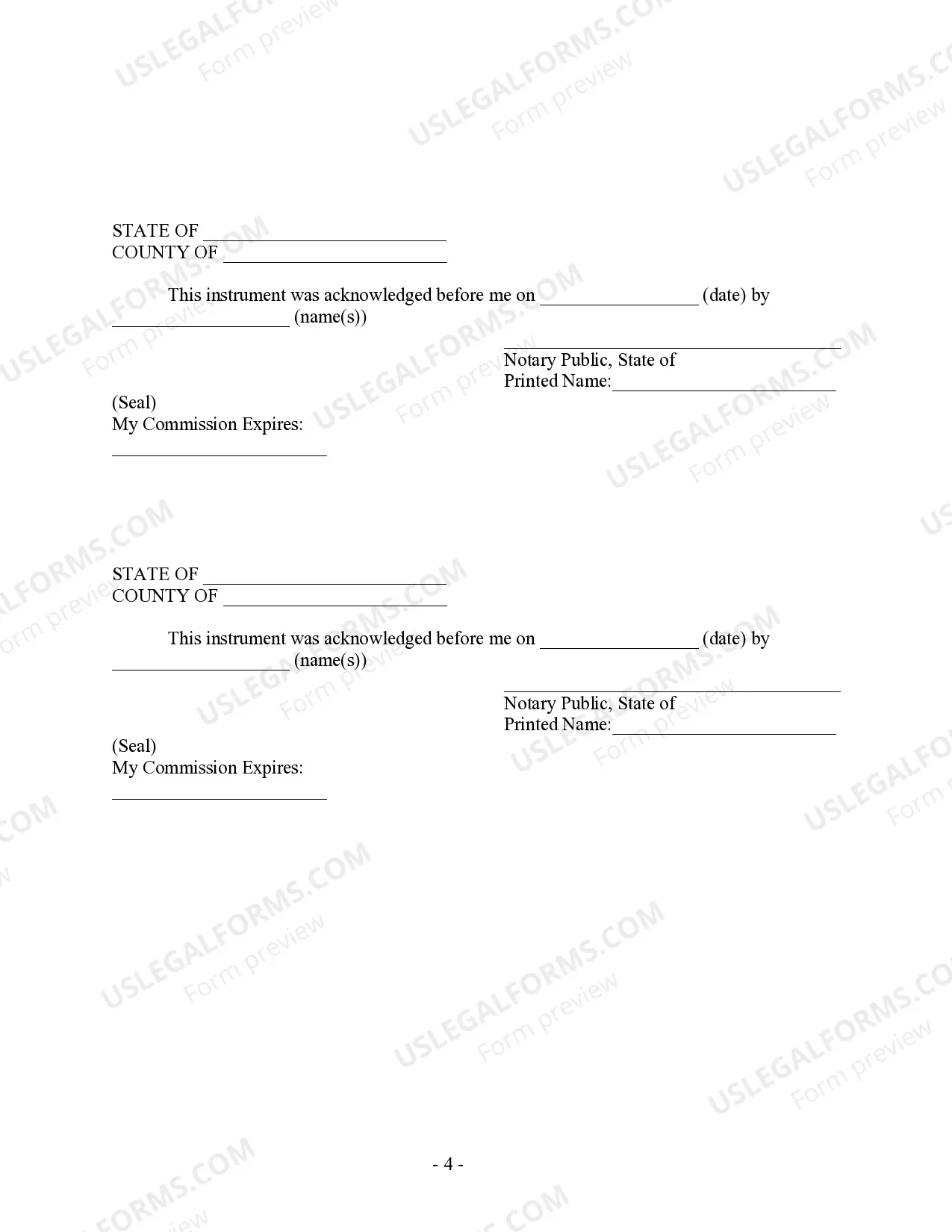
- Signatures of both parties along with notary acknowledgment sections.
When this form is needed
This form should be used in situations where married couples have an existing postnuptial agreement that they wish to modify. This may occur due to changes in financial situations, the addition of new properties, changes in marital status, or other significant life changes. It is important for both parties to agree on any modifications to ensure that the changes reflect their current intentions and obligations.
Who can use this document
- Married couples who have a postnuptial property agreement in place.
- Spouses looking to update or clarify property rights and obligations.
- Individuals who wish to document changes in their marital or financial circumstances.
- Couples who want to ensure that their agreement adheres to current legal standards.
Instructions for completing this form
- Enter the names of both parties and the date of the amendment.
- Clearly state the specific amendments or additions to the existing postnuptial agreement.
- Ensure both parties sign the document in the presence of a notary public.
- Check the notary sections for completion to ensure the document is properly acknowledged.
- Keep a copy of the executed amendment for your records.
Does this form need to be notarized?
This form needs to be notarized to ensure legal validity. US Legal Forms provides secure online notarization powered by Notarize, allowing you to complete the process through a verified video call, available anytime.
Get your form ready online
Our built-in tools help you complete, sign, share, and store your documents in one place.
Make edits, fill in missing information, and update formatting in US Legal Forms—just like you would in MS Word.
Download a copy, print it, send it by email, or mail it via USPS—whatever works best for your next step.
Sign and collect signatures with our SignNow integration. Send to multiple recipients, set reminders, and more. Go Premium to unlock E-Sign.
If this form requires notarization, complete it online through a secure video call—no need to meet a notary in person or wait for an appointment.
We protect your documents and personal data by following strict security and privacy standards.

Make edits, fill in missing information, and update formatting in US Legal Forms—just like you would in MS Word.

Download a copy, print it, send it by email, or mail it via USPS—whatever works best for your next step.

Sign and collect signatures with our SignNow integration. Send to multiple recipients, set reminders, and more. Go Premium to unlock E-Sign.

If this form requires notarization, complete it online through a secure video call—no need to meet a notary in person or wait for an appointment.

We protect your documents and personal data by following strict security and privacy standards.
Common mistakes
- Failing to consult with independent legal counsel before executing the amendment.
- Not having the document notarized as required.
- Overlooking the need for both parties to sign the amendment.
- Leaving out specific details of the amendments which can lead to confusion.
- Not keeping a copy of the revised agreement for future reference.
Why use this form online
- Convenient access to legal forms that can be downloaded instantly.
- Editable format allows for customization to specific needs.
- Drafted by licensed attorneys to ensure compliance with relevant laws.
- Availability of resources and guidance to help during the completion process.
Legal use & context
- This amendment is legally binding once executed and notarized.
- It is important to ensure that both parties have full knowledge of each other's financial obligations before signing.
- Changes made by this amendment must comply with state laws to be enforceable.
Quick recap
- The Amendment to Postnuptial Property Agreement allows for modifications to an existing postnuptial agreement.
- Both parties must sign the document in front of a notary for it to be legally valid.
- This amendment can help couples address changing circumstances in their marriage.
Looking for another form?


Form popularity
FAQ
It needs to be in writing. An oral contract is often difficult to enforce legally in any case. It needs to be signed and notarized. It needs to be fair and reasonable. There must be full disclosure of assets by both spouses. Both parties agree to the terms of the postnuptial agreement.
Per , since postnuptial agreements generally handle the same issues that prenuptial agreements address, the same circumstances that can cause a court to void part or all of a prenuptial agreement also apply to a postnuptial. Like a prenuptial, a postnuptial agreement should be in written form.
Postnuptial agreements must be in writing. Voluntary Both parties to a postnuptial agreement must have signed the agreement voluntarily and intentionally.Generally speaking, to make a postnuptial agreement valid, both parties' signatures need to be notarized.
Postnuptial agreements are generally enforceable if the parties of the document adhere to all state laws regarding inheritance, child custody, visitation and monetary support if a divorce does occur.If any state laws are in violation within the postnuptial, the judge may throw out the entire document.
Attorneys will charge on average $1,000 for a simple postnuptial document and the costs can rise to around $3,000. Postnuptial agreements that are complicated in nature and require ongoing and prolonged negotiations and especially when substantial provisions and assets are involved, costs can start at around $10,000.
As long as both parties are in agreement to the terms of the post nuptial contract, and have the ability to put those terms into a legal document, most states don't make it a legal requirement to have an attorney.
Postnuptial agreements are generally enforceable if the parties of the document adhere to all state laws regarding inheritance, child custody, visitation and monetary support if a divorce does occur.This may also come with a will or other legal document.