New Mexico Agreement for Payment of Unpaid Rent
About this form
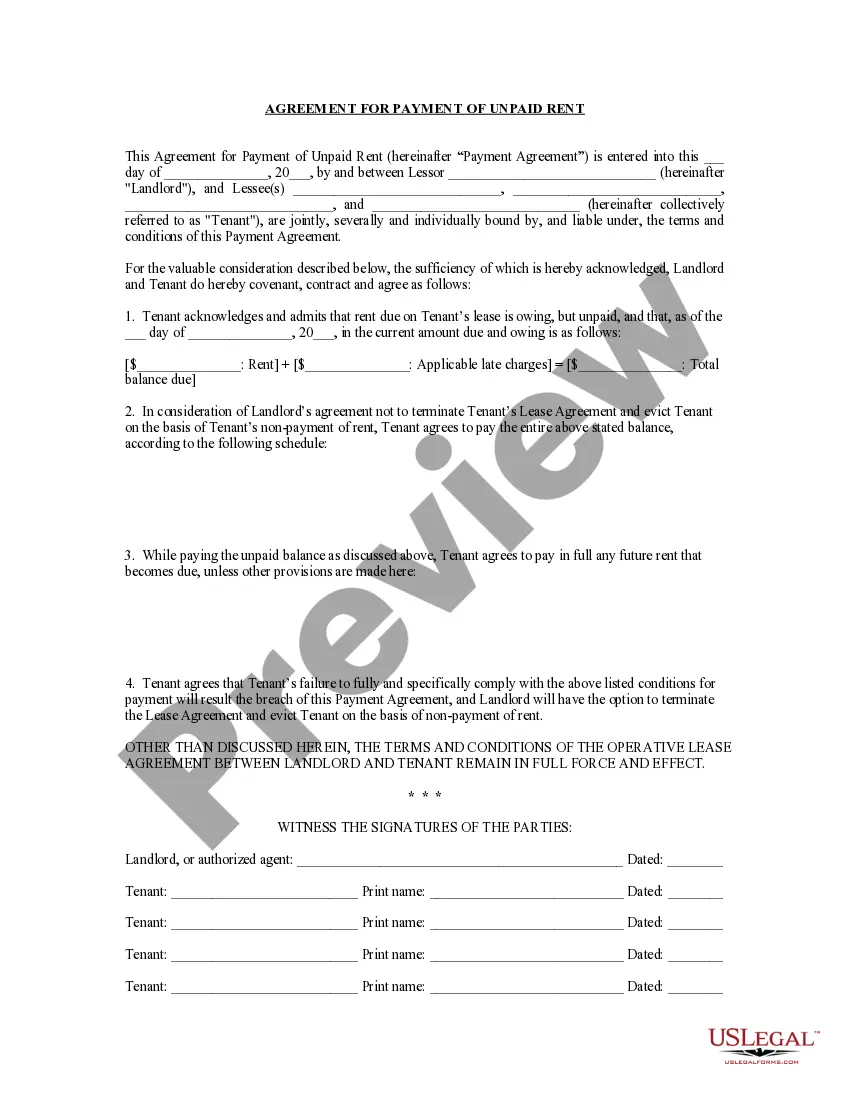
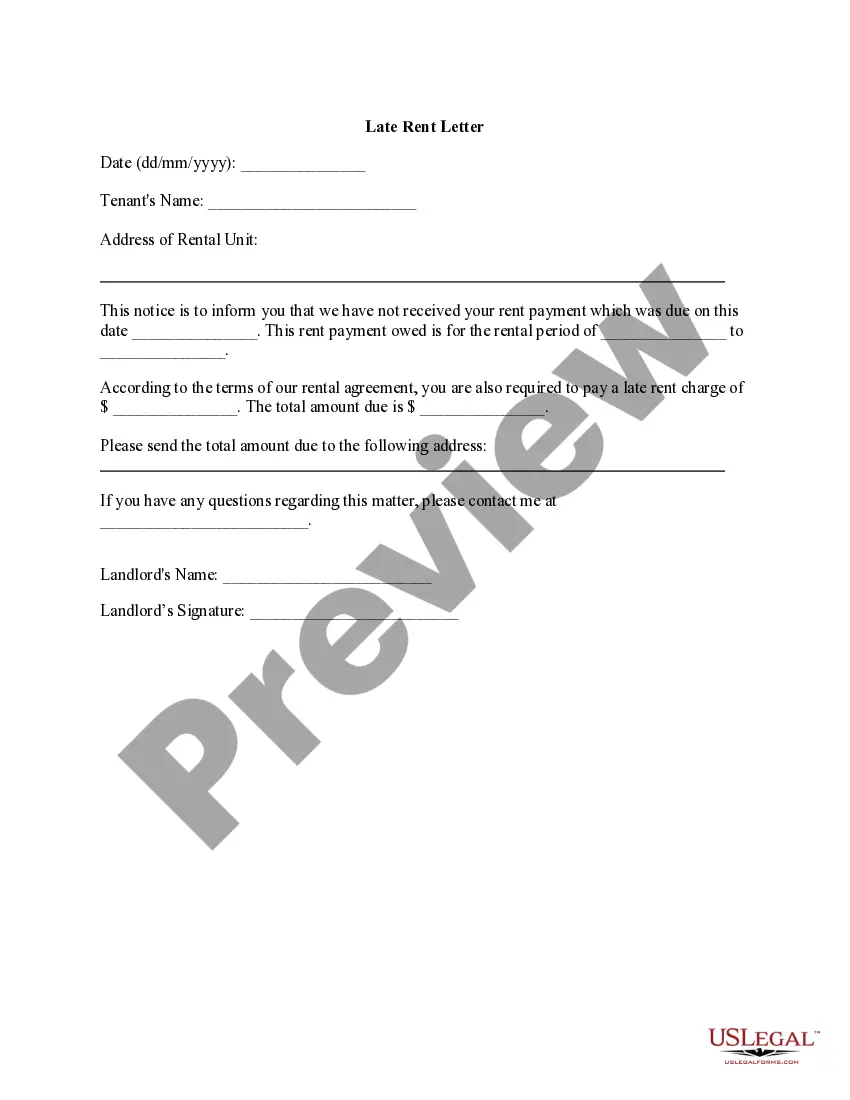
The Agreement for Payment of Unpaid Rent is a legal document between a landlord and a tenant. It outlines a repayment plan for overdue rent, allowing tenants to pay their outstanding balance while providing landlords assurance against eviction during this period. This agreement helps both parties avoid immediate eviction proceedings and lays out clear terms for repayment, distinguishing it from standard lease agreements or eviction notices.
Key components of this form
- Identification of parties: Names of the landlord (Lessor) and tenant(s) (Lessee(s)).
- Statement of amount owed: Acknowledgment of unpaid rent and any applicable late charges.
- Payment structure: Terms detailing how and when the overdue rent will be paid.
- Continuation of lease terms: Clarification that the original lease or rental agreement remains in effect.
- Signatures: Required signatures from both the landlord and tenants, along with dates.

Common use cases
This form should be used when a tenant has fallen behind on rent payments but wishes to establish a structured plan for repayment. It is particularly useful when the landlord wants to avoid immediate eviction while allowing the tenant the opportunity to settle their outstanding balance. Using this agreement can help maintain the landlord-tenant relationship and foster communication regarding the repayment process.
Who should use this form
- Landlords who are willing to accept partial payments from tenants.
- Tenants facing financial difficulties and need time to repay overdue rent.
- Real estate professionals managing rental properties.
Steps to complete this form
- Identify the parties by filling in the names of the landlord and all tenants involved.
- Enter the date on which the agreement is made.
- Specify the total amount of unpaid rent and any additional late fees due.
- Outline the payment plan, including deadlines for each payment.
- Have all parties sign and date the agreement to make it legally binding.
Does this document require notarization?
Notarization is generally not required for this form. However, certain states or situations might demand it. You can complete notarization online through US Legal Forms, powered by Notarize, using a verified video call available anytime.
Get your form ready online
Our built-in tools help you complete, sign, share, and store your documents in one place.
Make edits, fill in missing information, and update formatting in US Legal Forms—just like you would in MS Word.
Download a copy, print it, send it by email, or mail it via USPS—whatever works best for your next step.
Sign and collect signatures with our SignNow integration. Send to multiple recipients, set reminders, and more. Go Premium to unlock E-Sign.
If this form requires notarization, complete it online through a secure video call—no need to meet a notary in person or wait for an appointment.
We protect your documents and personal data by following strict security and privacy standards.

Make edits, fill in missing information, and update formatting in US Legal Forms—just like you would in MS Word.

Download a copy, print it, send it by email, or mail it via USPS—whatever works best for your next step.

Sign and collect signatures with our SignNow integration. Send to multiple recipients, set reminders, and more. Go Premium to unlock E-Sign.

If this form requires notarization, complete it online through a secure video call—no need to meet a notary in person or wait for an appointment.

We protect your documents and personal data by following strict security and privacy standards.
Common mistakes to avoid
- Failing to specify the payment structure clearly.
- Not including all tenants on the agreement, which can lead to disputes.
- Neglecting to sign and date the agreement, making it void.
Why use this form online
- Accessible anytime, providing convenience for both landlords and tenants.
- Editable for personalized agreements that suit specific situations.
- Reliability of using professionally drafted forms compliant with state laws.
Looking for another form?

Form popularity
FAQ
A landlord cannot legally evict you without a court order, whether or not you have a lease.) How long does it take for a landlord to evict a tenant? A landlord can evict a tenant only by going through a formal eviction proceeding, which can take a few weeks from start to finish.
Co-tenants usually cannot evict each other, even if one of the co-tenants stops paying the rent or is violating the lease that they both signed. If the person you want to evict is not a tenant, but is a household member or authorized occupant, you may be able to evict that person.
If you are having problems paying the rent contact your local Housing NSW. They may be able to help you. You can also seek help from a financial counsellor to plan a budget to manage your financial situation.
Landlord must give notice to terminate the tenancy: Month-to-month: 30 days. Week-to-week: seven days. Eviction: three days for failure to pay rent; seven days for noncompliance with rental agreement.
The notice must state that the tenant has three days to either pay the rent or the lease will terminate and the landlord will file an eviction lawsuit (see N.M. Stat. Ann. § 47-8-33(D)). If the tenant does not pay the rent within the three-day time period, the landlord can then proceed with the eviction.
Under normal circumstances, when tenants don't pay rent, landlords have the option of terminating the tenancy (by serving the tenant with either a pay rent or quit notice or an unconditional quit notice, depending on the applicable laws).
The notice must state that the tenant has three days to either pay the rent or the lease will terminate and the landlord will file an eviction lawsuit (see N.M. Stat. Ann. § 47-8-33(D)). If the tenant does not pay the rent within the three-day time period, the landlord can then proceed with the eviction.
1) Stay calm and respectful. While dealing with these cases can be extremely stressful, it's important to approach the situation as calmly as possible. 2) Have an in-person meeting with your tenant. 3) Act quickly. 4) Keep proper documentation. 5) Do not accept partial payments if you plan to evict.
Renters' Rights in New Mexico Landlord/tenant laws are in place to protect the rights of tenants in New Mexico and every other state. These rights cover discrimination, security deposits, rent disclosure, and notice before landlord entry. Some minor variances can exist between states, however.