New Mexico Assignment of Lease from Lessor with Notice of Assignment
Overview of this form
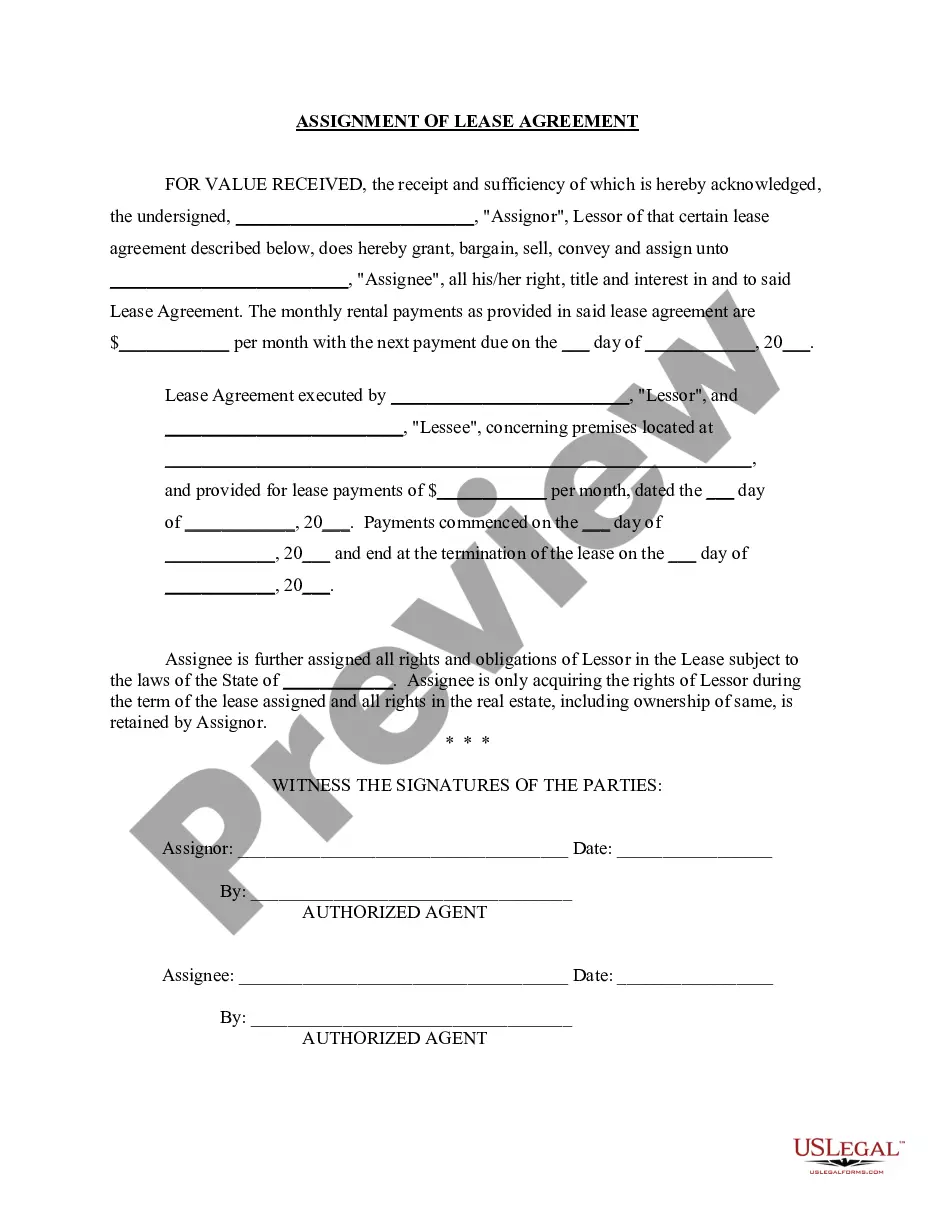
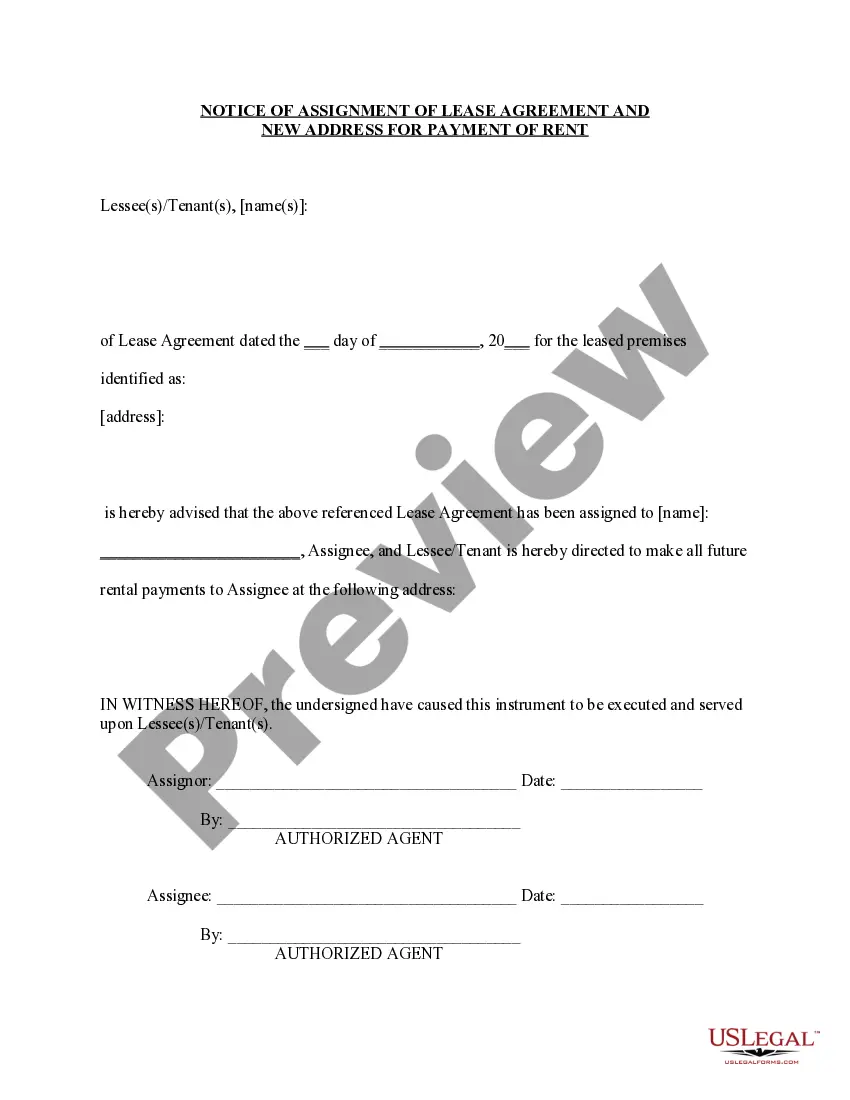
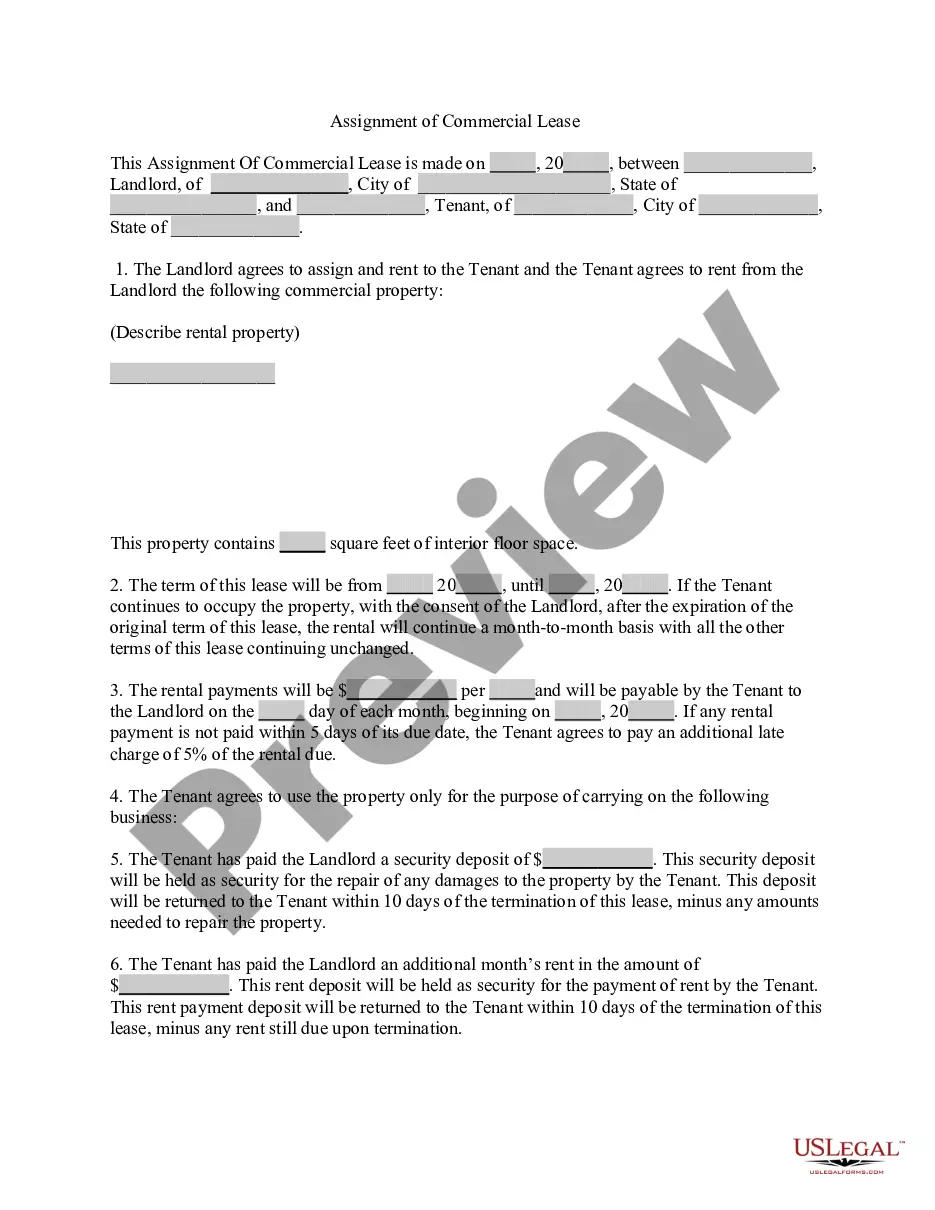
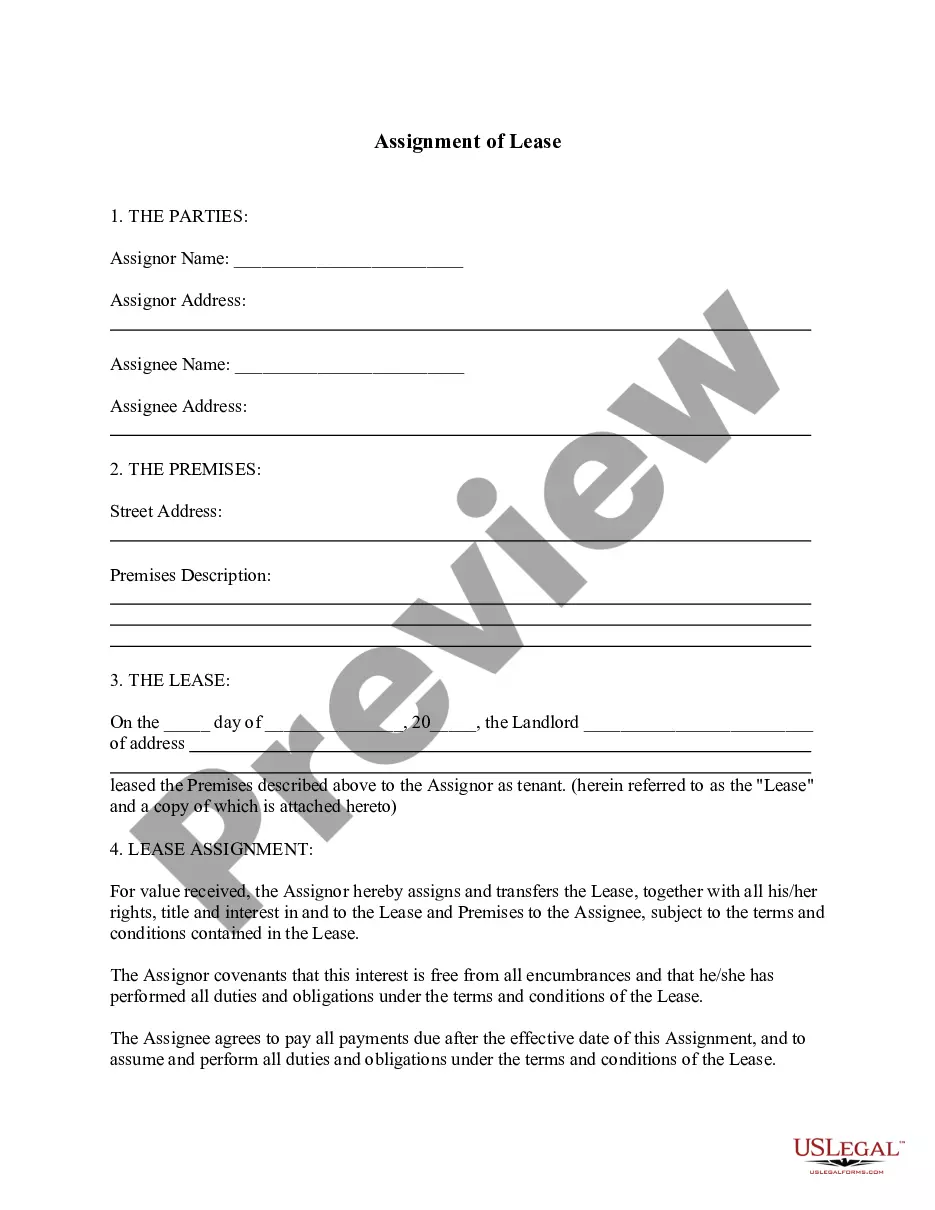
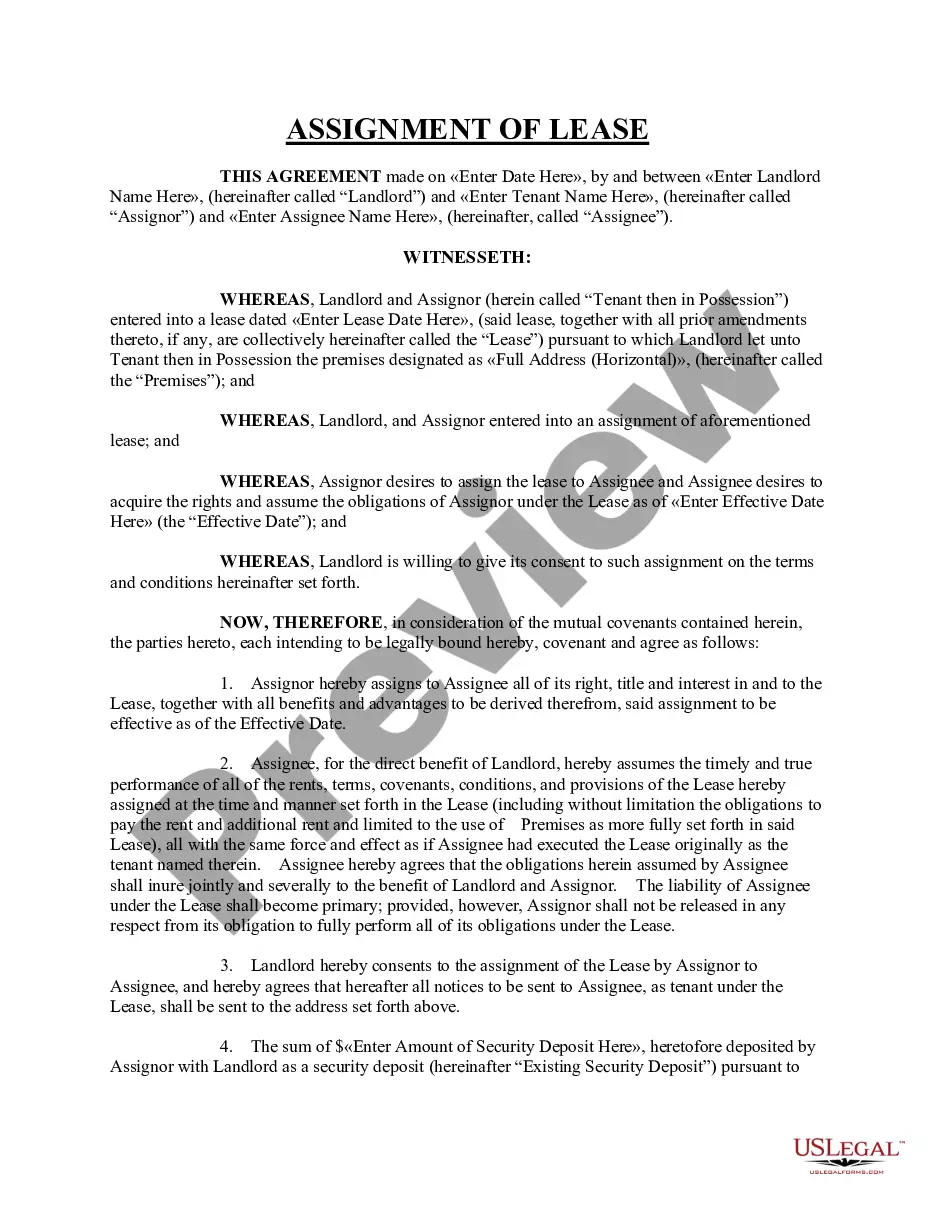
The Assignment of Lease from Lessor with Notice of Assignment is a legal document used when a lessor (the original landlord) transfers their rights and responsibilities under a lease agreement to a new lessor (the assignee). This form is essential to notify the tenant of the assignment and any changes in rent payment addresses. Unlike a lease transfer where the ownership may also change, this form allows the original lessor to retain ownership of the property while transferring only their contractual rights during the lease term.
Key parts of this document
- Identification of Assignor (original lessor) and Assignee (new lessor).
- Details of the original lease agreement, including payment terms and effective dates.
- Statement regarding the retention of ownership by the Assignor.
- Confirmation of the rights and obligations assumed by the Assignee.
- Signatures of both parties and date of execution.
Situations where this form applies
This form should be used when a lessor wishes to assign their lease rights to another party. Common scenarios include a lessor who is unable to continue managing the lease due to personal circumstances or when a property is sold, and the new lessor needs to be officially recognized in the lease agreement. Additionally, it is used to formally notify the tenant of the change in the party responsible for the lease.
Intended users of this form
- Property owners looking to assign their lease to another party.
- New lessors who are taking over an existing lease.
- Tenants needing to be notified of a change in their lease terms and payment address.
- Real estate professionals managing lease agreements.
Steps to complete this form
- Identify the parties involved: the Assignor (original lessor) and the Assignee (new lessor).
- Fill in the details of the original lease agreement, including rental payments and dates.
- Include information about where rent payments should be sent after the assignment.
- Ensure both parties sign and date the form to make it legally valid.
- Communicate the assignment to the tenant as required by the lease terms.
Does this form need to be notarized?
This form does not typically require notarization unless specified by local law. It is advisable to check state-specific requirements to confirm if notarization is necessary for your lease assignment.
Get your form ready online
Our built-in tools help you complete, sign, share, and store your documents in one place.
Make edits, fill in missing information, and update formatting in US Legal Forms—just like you would in MS Word.
Download a copy, print it, send it by email, or mail it via USPS—whatever works best for your next step.
Sign and collect signatures with our SignNow integration. Send to multiple recipients, set reminders, and more. Go Premium to unlock E-Sign.
If this form requires notarization, complete it online through a secure video call—no need to meet a notary in person or wait for an appointment.
We protect your documents and personal data by following strict security and privacy standards.

Make edits, fill in missing information, and update formatting in US Legal Forms—just like you would in MS Word.

Download a copy, print it, send it by email, or mail it via USPS—whatever works best for your next step.

Sign and collect signatures with our SignNow integration. Send to multiple recipients, set reminders, and more. Go Premium to unlock E-Sign.

If this form requires notarization, complete it online through a secure video call—no need to meet a notary in person or wait for an appointment.

We protect your documents and personal data by following strict security and privacy standards.
Typical mistakes to avoid
- Failing to notify the tenant about the assignment, which can lead to confusion over payment obligations.
- Not including the necessary details of the original lease agreement.
- Neglecting to have both parties sign the form, rendering it invalid.
- Assuming all lease rights can be transferred without checking the lease agreement for restrictions.
Why use this form online
- Convenience of immediate access and downloading from anywhere.
- Editability to ensure all details are accurate and tailored to the specific situation.
- Prepared by licensed attorneys to ensure legal compliance and validity.
- Easy to understand wording for users without legal expertise.
Legal use & context
- The Assignment of Lease is legally enforceable as long as it follows state laws regarding lease agreements.
- Make sure to review the original lease for any clauses that might restrict assignment.
- Keep a copy of the signed document for your records to prevent future disputes.
Summary of main points
- The form facilitates the temporary transfer of lease rights without changing property ownership.
- Clear communication with tenants about payment changes is essential.
- Completion requires accurate details and signatures from all parties involved.
Looking for another form?
Form popularity
FAQ
Under a typical lease assignment, you transfer all of your space to someone else for the entire remaining term of the lease, and the new tenant pays rent directly to the landlord.Once your landlord has agreed to allow a full assignment, you'll need to secure what the law so often requires: a piece of paper.
Most often, the lease won't permit assignment without the landlord's approval, but leases often state that the landlord cannot unreasonably withhold consent. As long as you produce a tenant who's shown a history of payment under prior leases and has been a model tenant, a landlord should consent to assignment.
The landlord's lawyer usually prepares the agreement. However, the outgoing tenant or the incoming tenant pays these costs, not the landlord.
An assignment is when the tenant transfers their lease interest to a new tenant using a Lease Assignment. The assignee takes the assignor's place in the landlord-tenant relationship, although the assignor may remain liable for damages, missed rent payments, and other lease violations.
Can the landlord refuse consent to an Assignment? Most leases will say that the Landlord cannot unreasonably withhold consent. According to section 19 (1A) of the Landlord and Tenant Act 1927 the landlord can insert conditions in the lease, which need to be met in the case of an assignment.
This might include financial statements, business history and professional references; and. there is an agreement about who is liable for the costs of the deed of assignment. The landlord's lawyer usually prepares the agreement. However, the outgoing tenant or the incoming tenant pays these costs, not the landlord.
An assignment of a lease is a complete transfer of the right to be the tenant under the lease. The third-party assignee becomes the "tenant" under the lease, taking over all of the leased premises, substituting for the old tenant.
The difference between assignment and transfer is that assign means it's legal to transfer property or a legal right from one person to another, while transfer means it's legal to arrange for something to be controlled by or officially belong to another person.