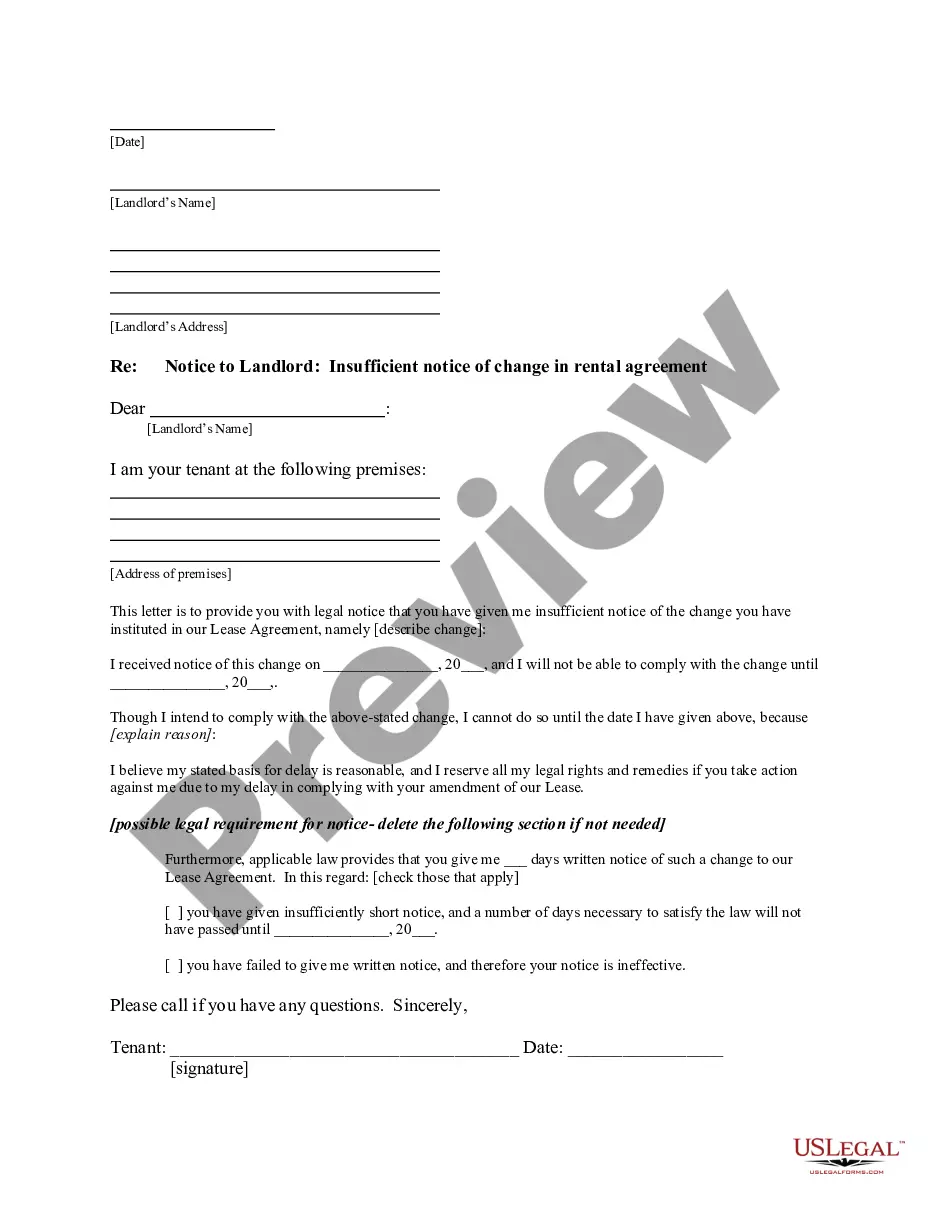
New Mexico Letter from Tenant to Landlord about Insufficient Notice of Change in Rental Agreement for other than rent increase
What is this form?
This form is a Letter from Tenant to Landlord regarding insufficient notice of changes in a rental agreement, excluding rent increases. It serves to notify the landlord that the provided notice does not meet legal requirements, allowing the tenant to delay compliance with the change until proper notice is given.
Key parts of this document
- Identification of the tenant and landlord
- Statement regarding the insufficient notice provided by the landlord
- Specification of the necessary number of notice days according to applicable law
- Signed date and signature of the tenant
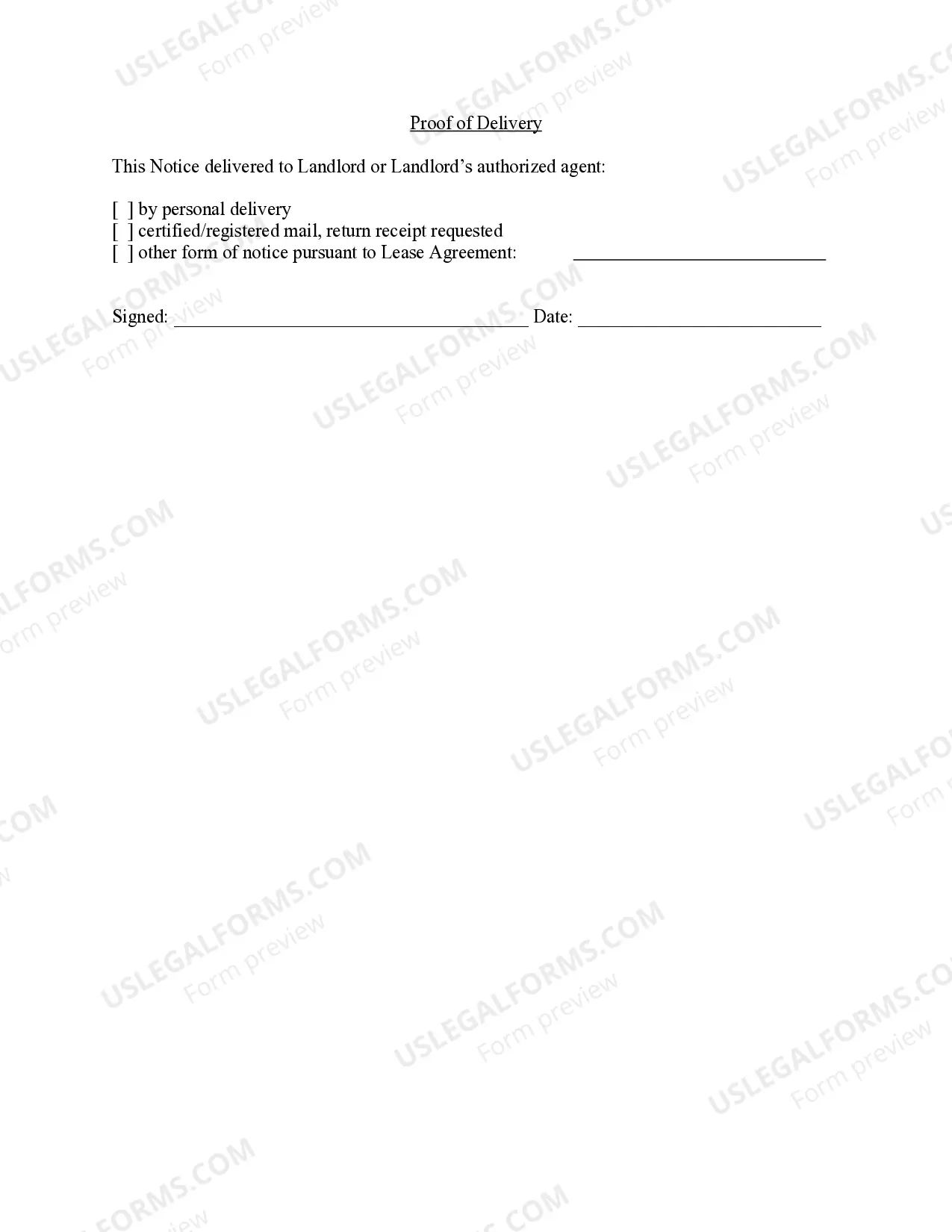
- Proof of delivery method (personal delivery or certified mail)

When to use this form
This form is needed when a landlord makes changes to a rental agreement but fails to provide adequate notice as required by law. If you have received a change notification that does not comply with the legal notice period, this letter allows you to formally communicate with your landlord about the issue.
Who should use this form
- Tenants who have received a notice of change in their rental agreement
- Individuals who feel their landlord has not provided sufficient notice regarding changes
- Renters looking to assert their rights under the lease agreement
Instructions for completing this form
- Identify the parties involved by entering the tenant's and landlord's names and addresses.
- State the date of the letter and the date by which the notice should have been provided.
- Clearly explain how the landlord's notice was insufficient.
- Specify the required notice period according to applicable law.
- Sign and date the letter to make it official.
- Choose a delivery method and document it for proof of delivery.
Is notarization required?
This form usually doesn’t need to be notarized. However, local laws or specific transactions may require it. Our online notarization service, powered by Notarize, lets you complete it remotely through a secure video session, available 24/7.
Get your form ready online
Our built-in tools help you complete, sign, share, and store your documents in one place.
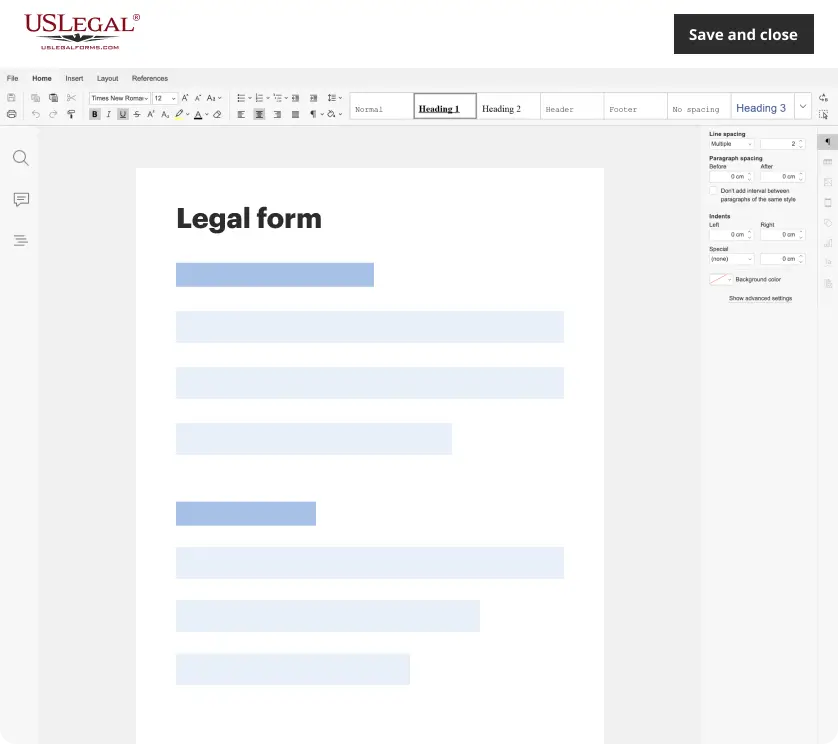
Make edits, fill in missing information, and update formatting in US Legal Forms—just like you would in MS Word.
Download a copy, print it, send it by email, or mail it via USPS—whatever works best for your next step.
Sign and collect signatures with our SignNow integration. Send to multiple recipients, set reminders, and more. Go Premium to unlock E-Sign.
If this form requires notarization, complete it online through a secure video call—no need to meet a notary in person or wait for an appointment.
We protect your documents and personal data by following strict security and privacy standards.
Make edits, fill in missing information, and update formatting in US Legal Forms—just like you would in MS Word.
Download a copy, print it, send it by email, or mail it via USPS—whatever works best for your next step.
Sign and collect signatures with our SignNow integration. Send to multiple recipients, set reminders, and more. Go Premium to unlock E-Sign.
If this form requires notarization, complete it online through a secure video call—no need to meet a notary in person or wait for an appointment.
We protect your documents and personal data by following strict security and privacy standards.
Typical mistakes to avoid
- Failing to specify the number of days required for notice
- Not signing the letter
- Confusing the reasons for the insufficient notice
- Using the wrong address for the landlord
Benefits of completing this form online
- Convenience of downloading and completing at your own pace
- Editability to customize the letter to your specific situation
- Access to legally vetted content created by licensed attorneys
What to keep in mind
- This form is vital for tenants needing to respond to insufficient notice of lease changes.
- Properly completed forms can protect tenant rights and clarify responsibilities.
- Ensure to follow state-specific rules for notification and compliance.
Looking for another form?
Form popularity
FAQ
Who Can Amend the Lease? When a landlord and tenant sign a lease agreement it forms a legally binding contract. The lease cannot be altered except through another written agreement signed by both parties unless the original lease specifically gives a party the power to change something on their own.
1 attorney answer No, not without the landlord's agreement to amend the lease to shorten its duration, or a signed lease termination agreement. Under California law, all leases have the implied...
If you are a leaseholder, you cannot change the lease terms without agreeing such change with your landlord. The reason for this is that as the lease is a contract between two parties, the leaseholder and the landlord, both parties must agree to change (referred to also as variation) of the terms of the lease.
A rental verification helps landlords and property managers to verify the rental history of their applicant. This is done through a background check combined with a phone call verification.Calling the previous and current landlord is an important step of the rental verification.
A lease is automatically void when it is against the law, such as a lease for an illegal purpose. In other circumstances, like fraud or duress, a lease can be declared void at the request of one party but not the other.
Your landlord can change a rental agreement at any time during the term of the agreement, with or without your consent. Changes must be made with adequate notice; notice periods are 30 days in most states. Changing a lease is harder because both parties must consent to almost any change.
If you think your landlord is violating the Fair Housing Act, you can get that landlord in trouble by filing a complaint at HUD.gov. Your remedy for breach of quiet enjoyment is to terminate the lease and move or sue in small claims court.
The landlord verification form is a document used by a landlord when verifying the previous rental information of an applicant for tenancy. The requesting landlord must send the form to the applicant's current or past landlord in order to obtain all details related to the tenancy of the individual.
Tenant's name. Property address. Landlord name and contact information. Date the letter is written. Date the rent increase will take effect. Amount of rent increase. Current cost of rent.