New Jersey General Durable Power of Attorney for Property and Finances or Financial Effective upon Disability
Understanding this form
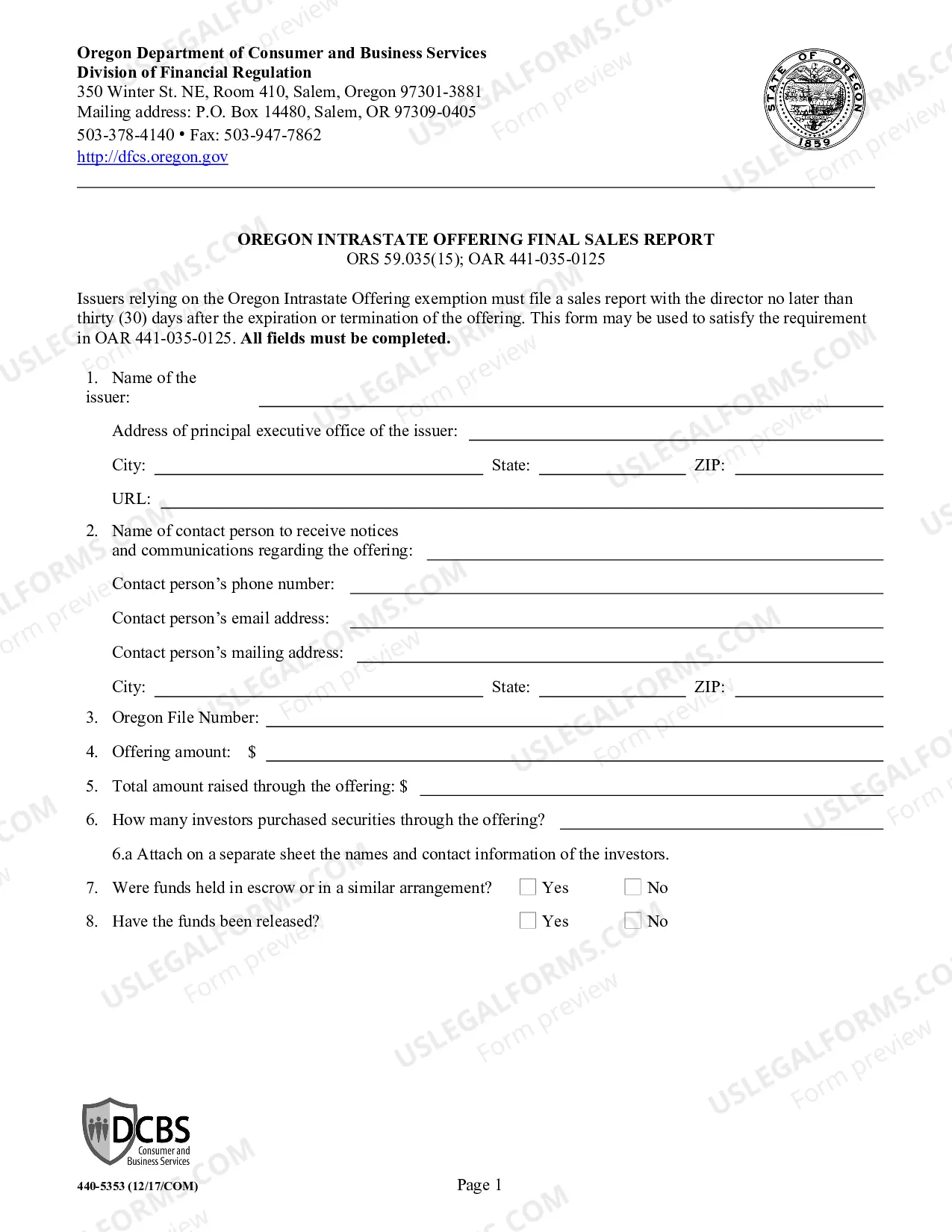
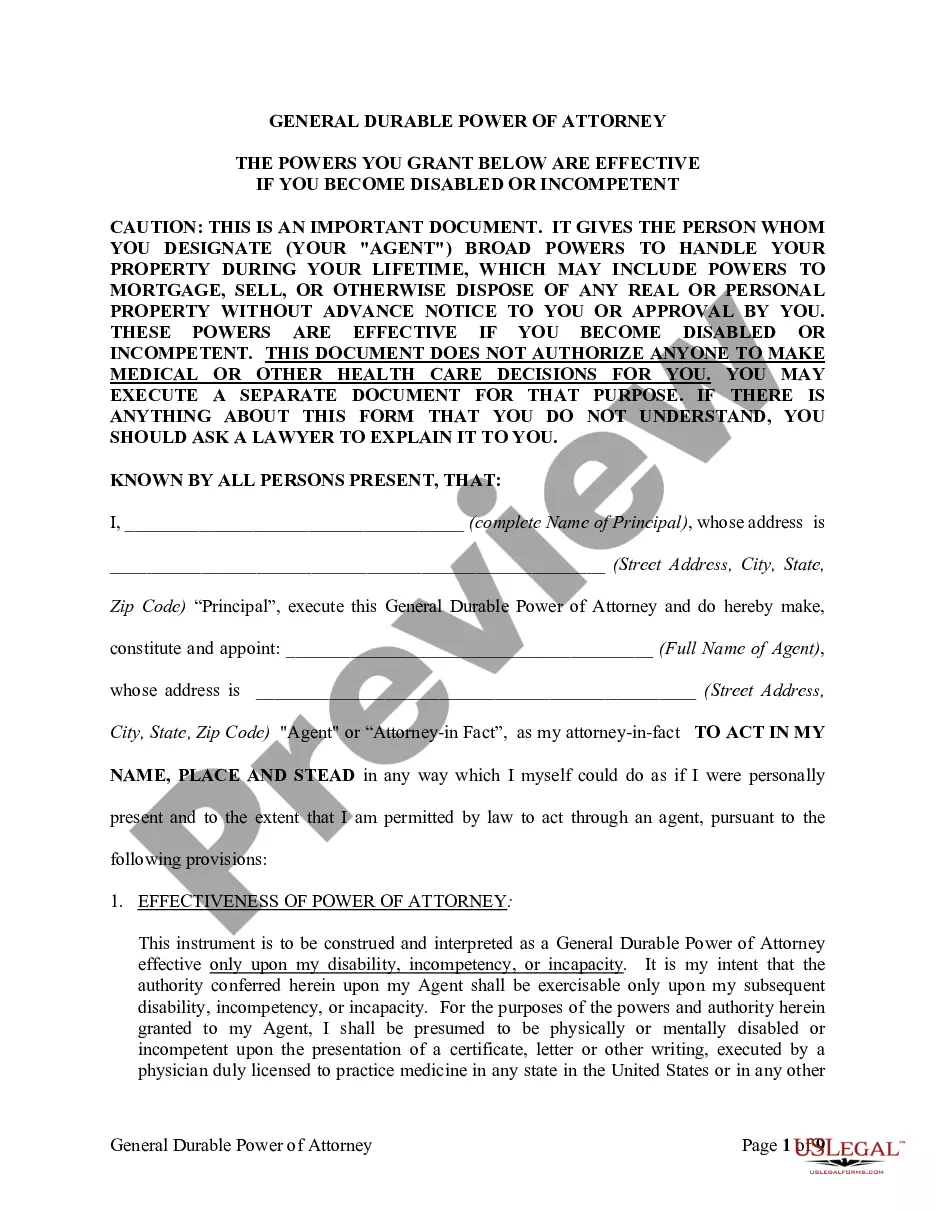
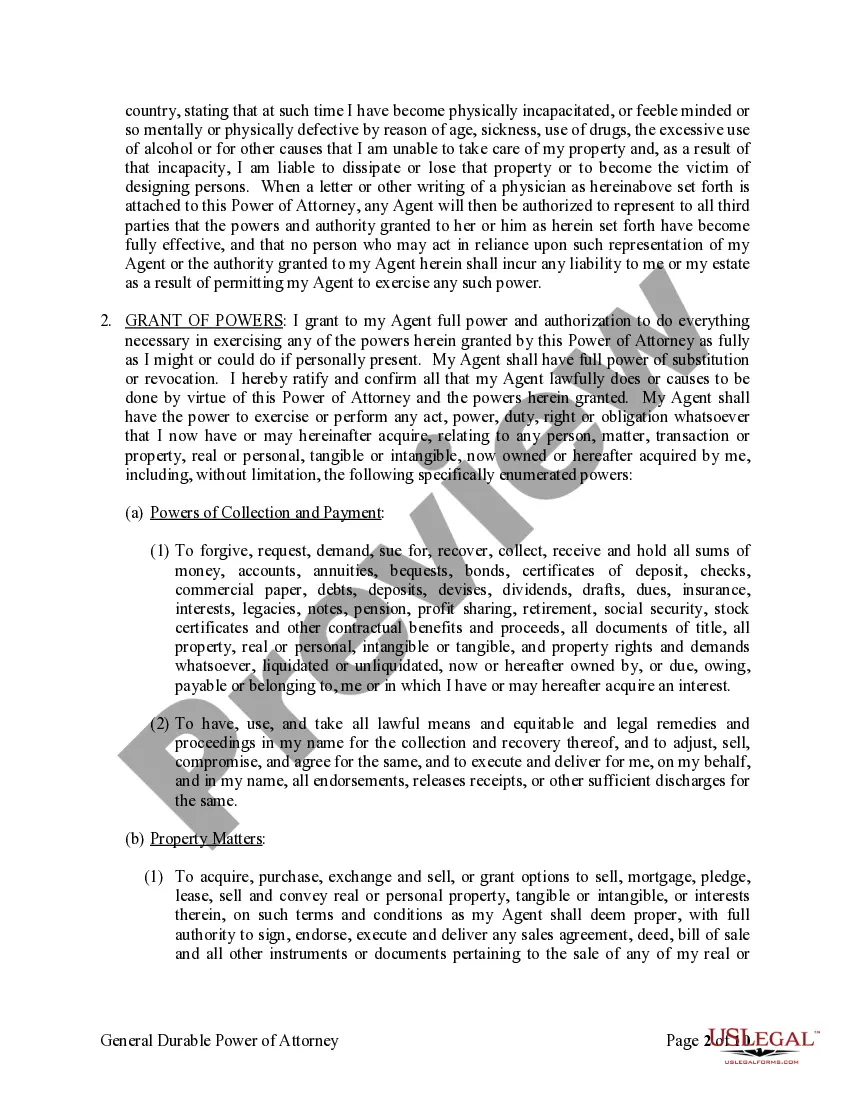
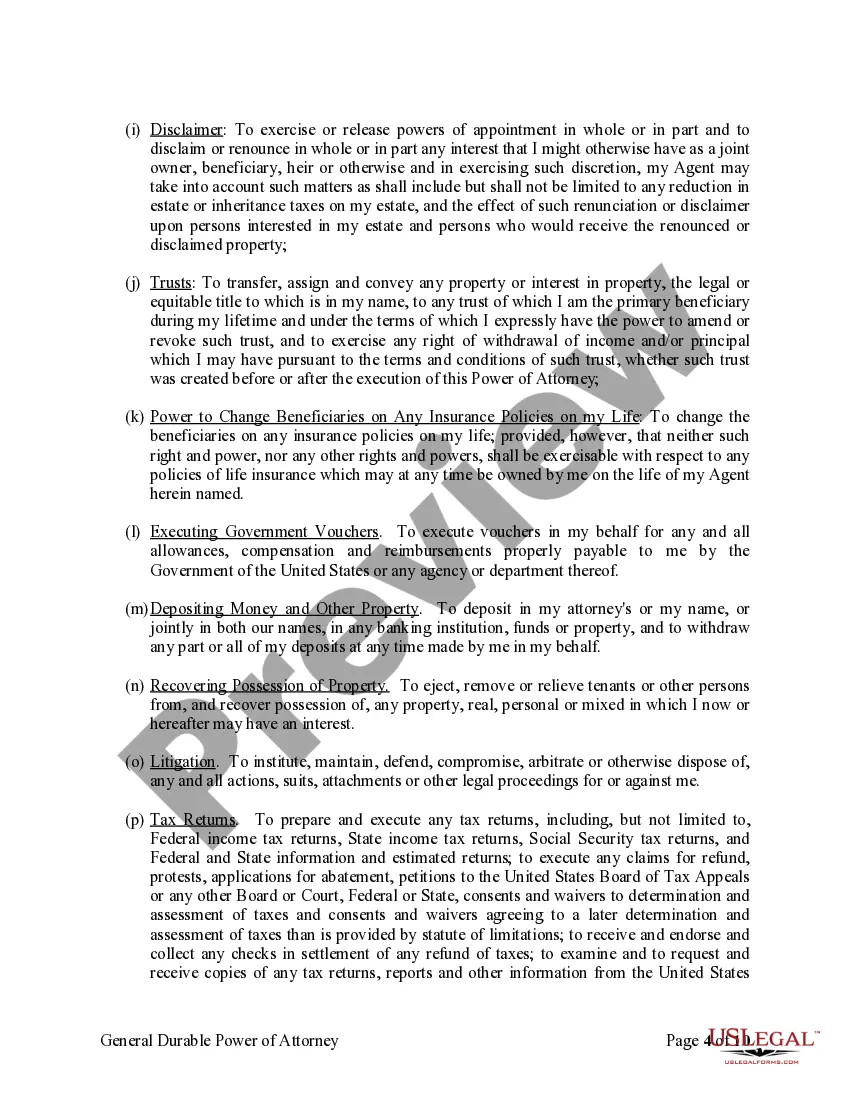
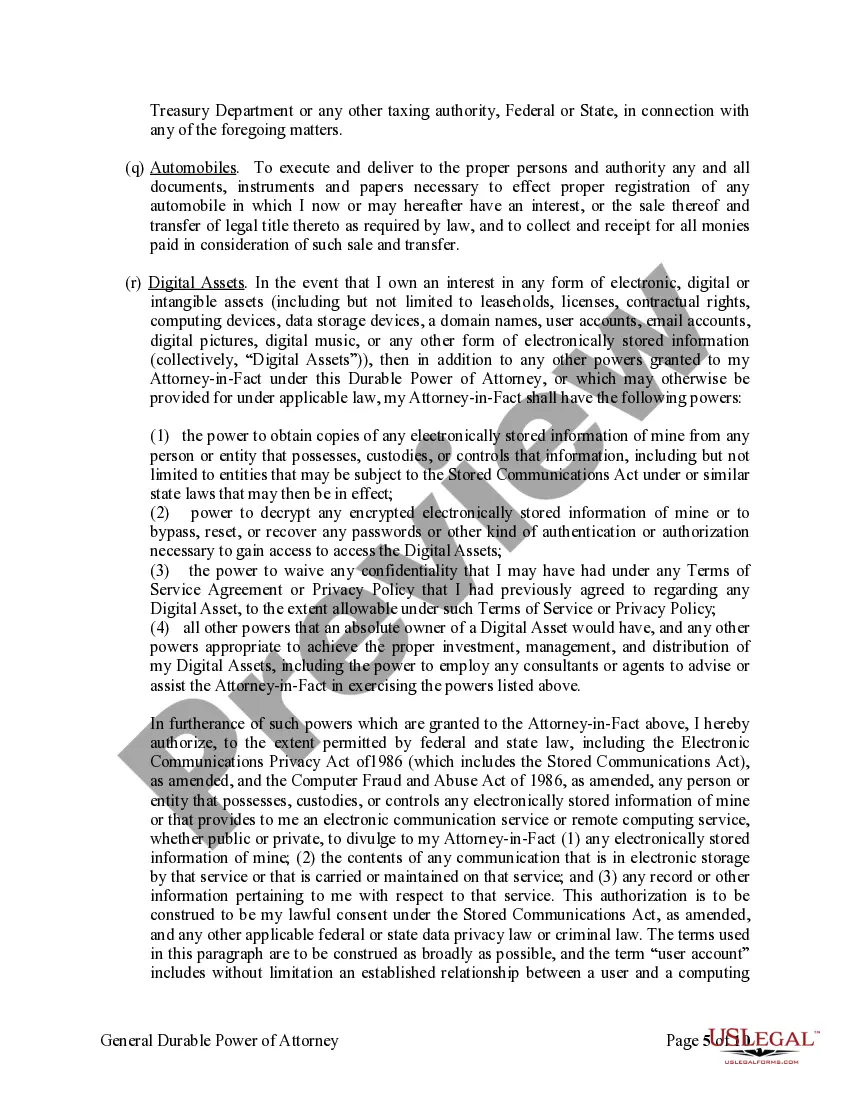
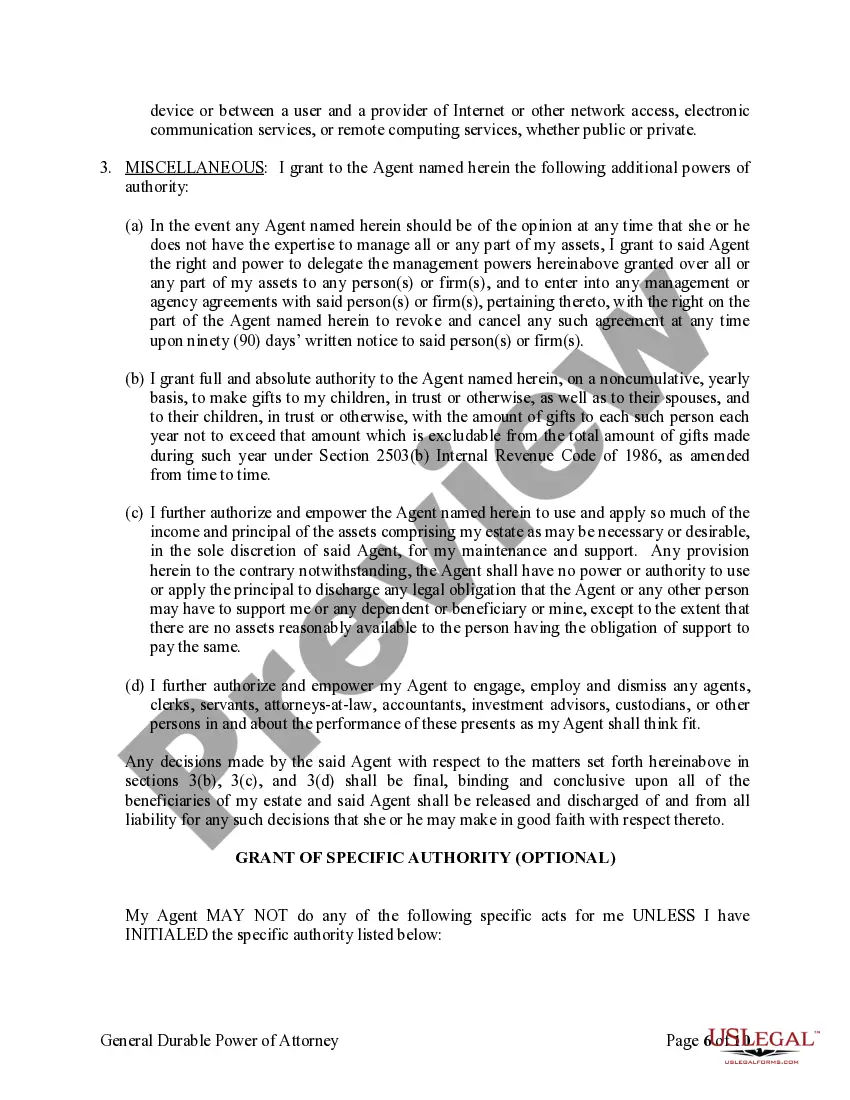
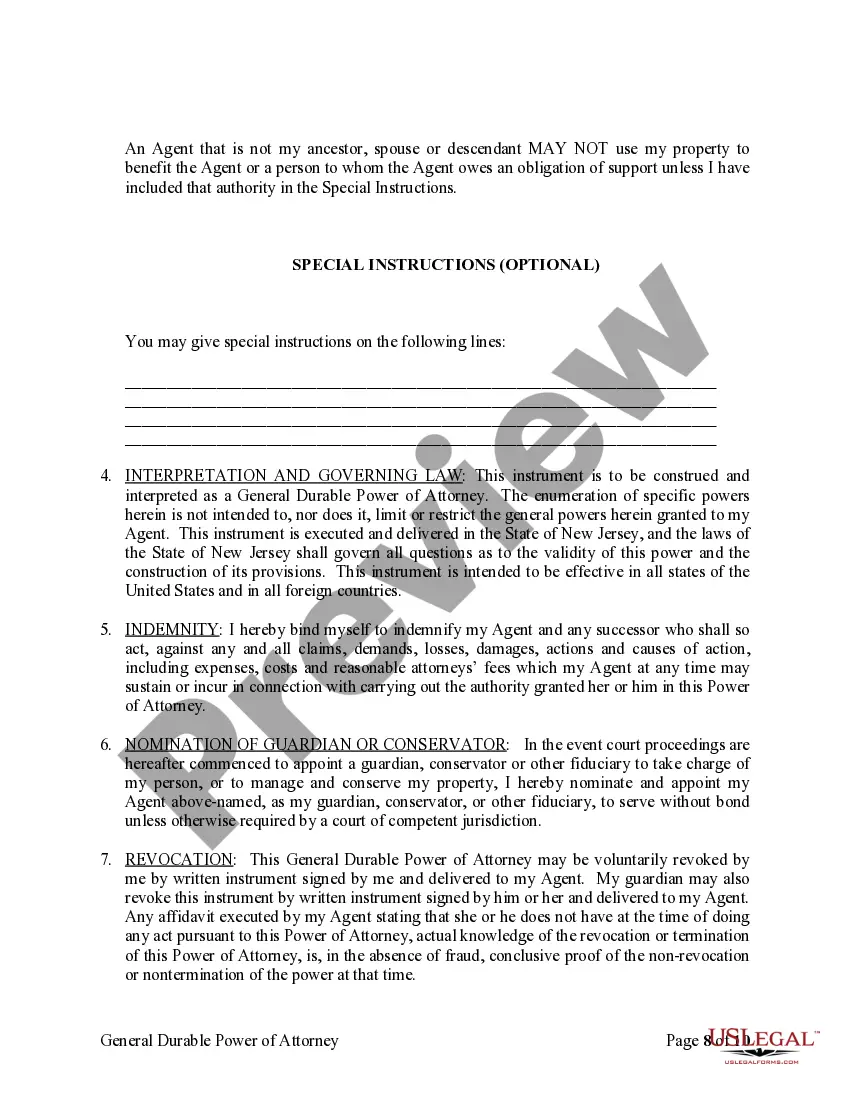
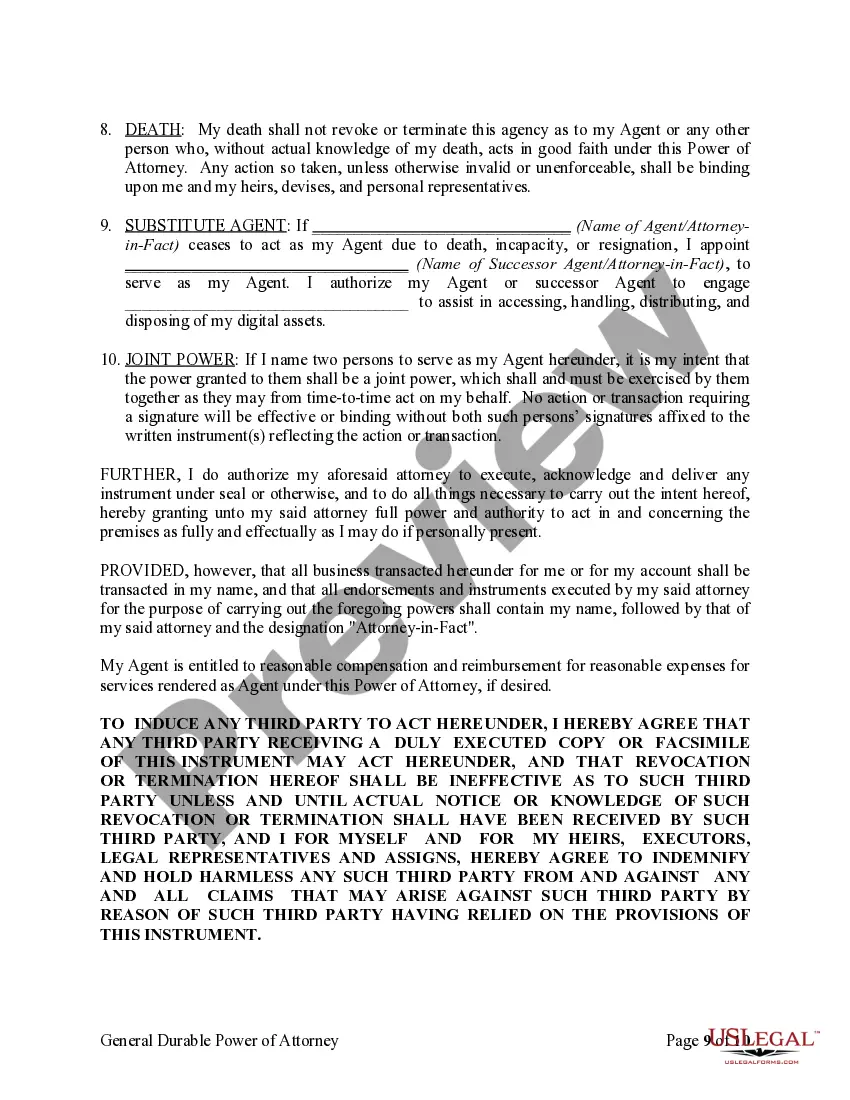
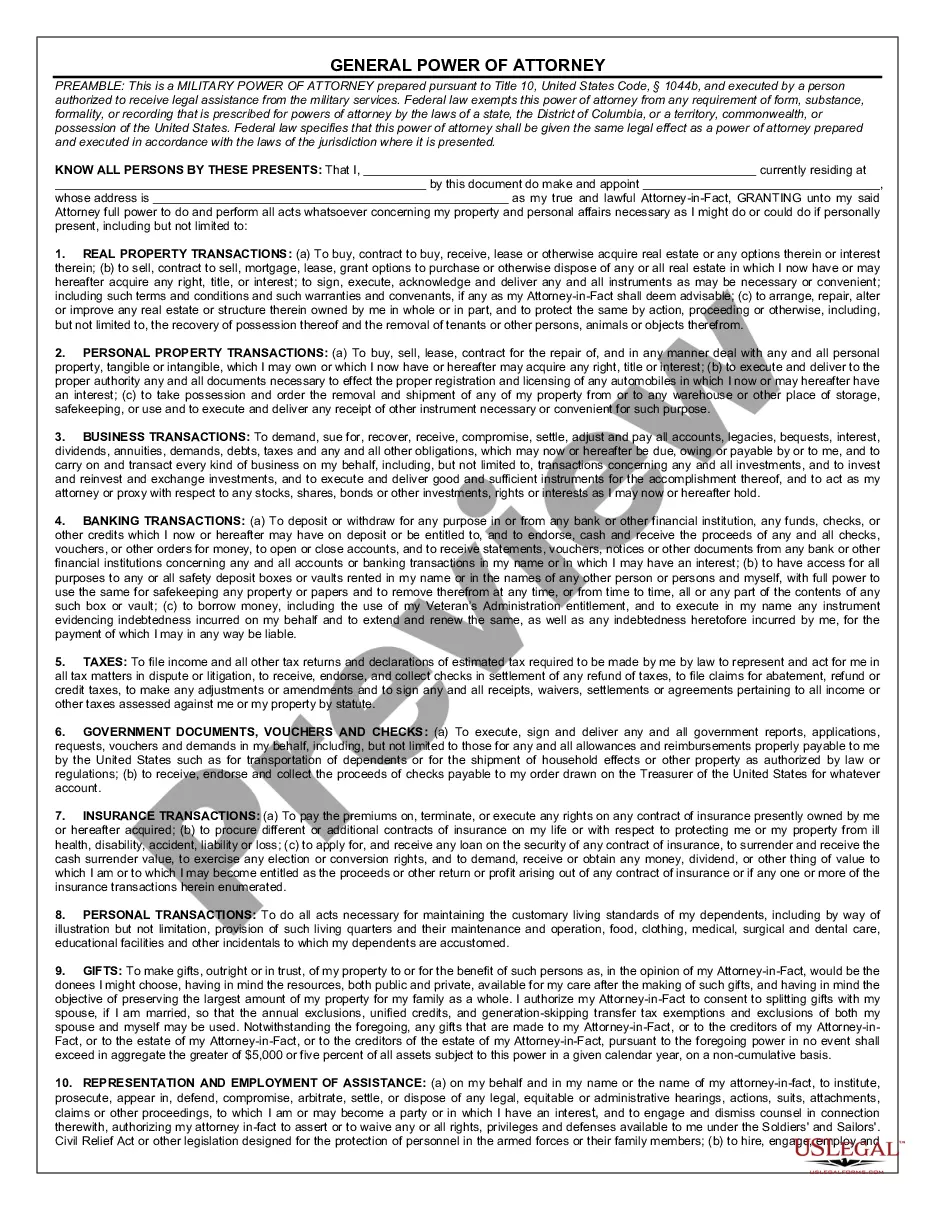
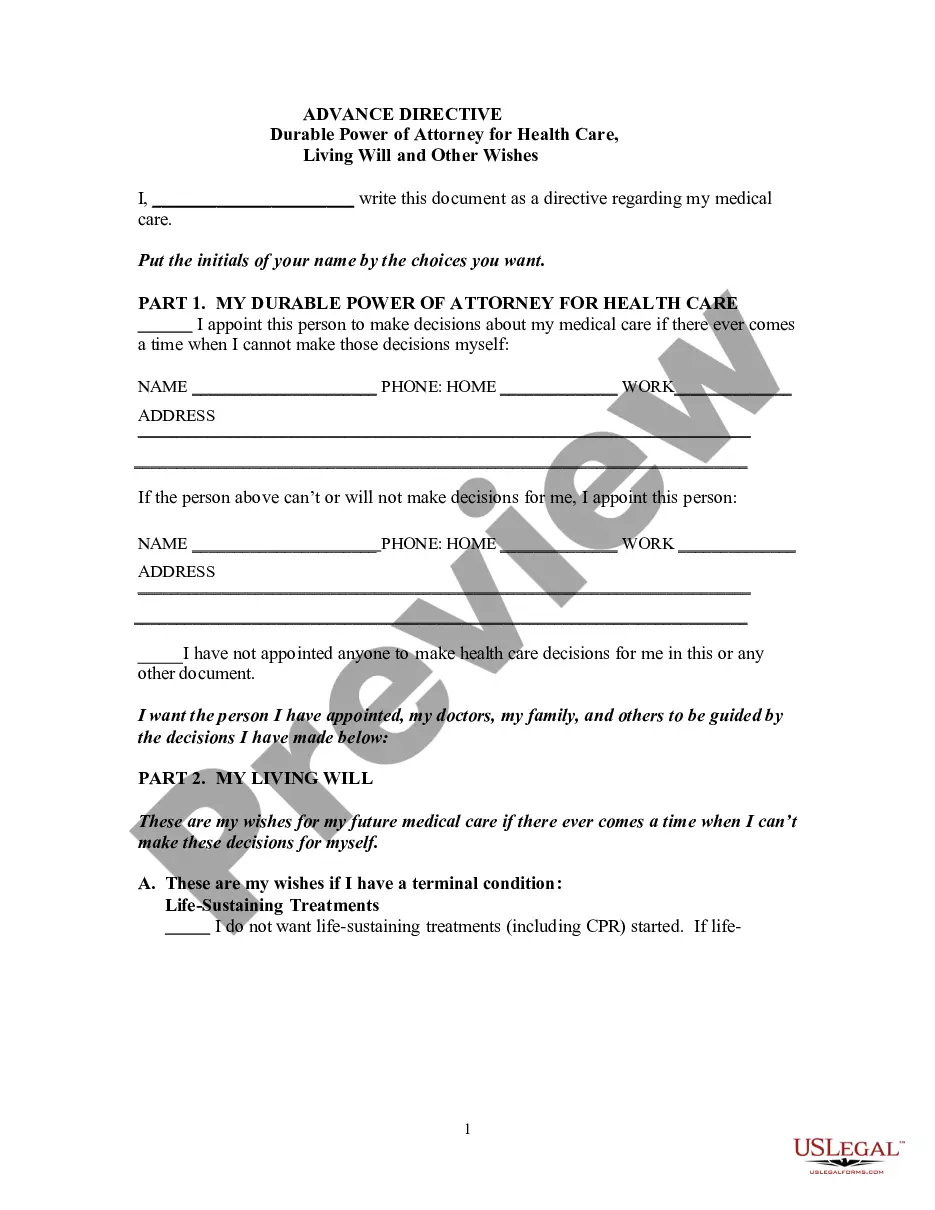
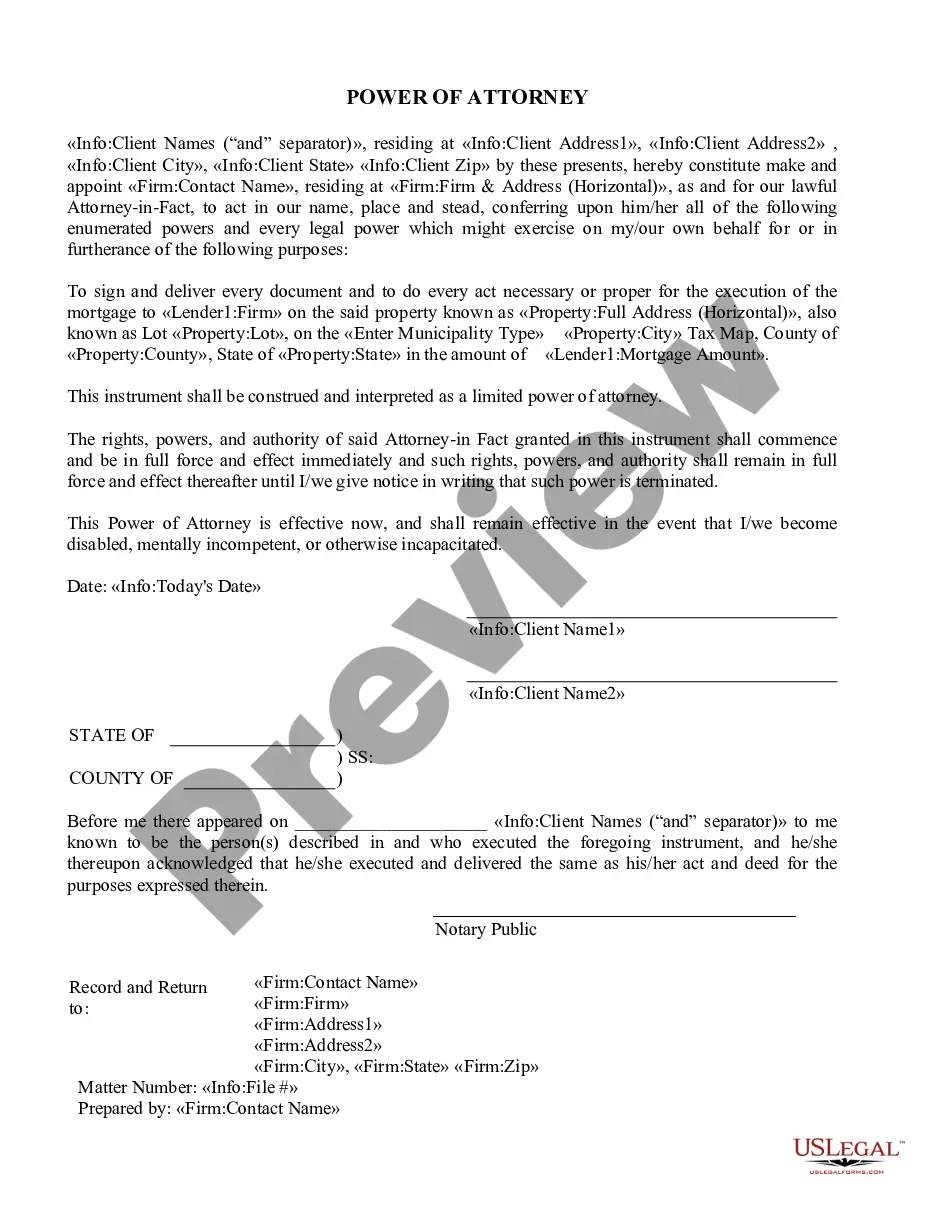
The General Durable Power of Attorney for Property and Finances Effective upon Disability is a legal document that allows you to appoint an agent or attorney-in-fact to manage your financial and property matters when you become disabled, incompetent, or incapacitated. Unlike other powers of attorney that are effective immediately, this form only takes effect under specified conditions. Importantly, it does not cover health care decisions, which require a separate document.
What’s included in this form
- Designation of the principal and agent with full contact information.
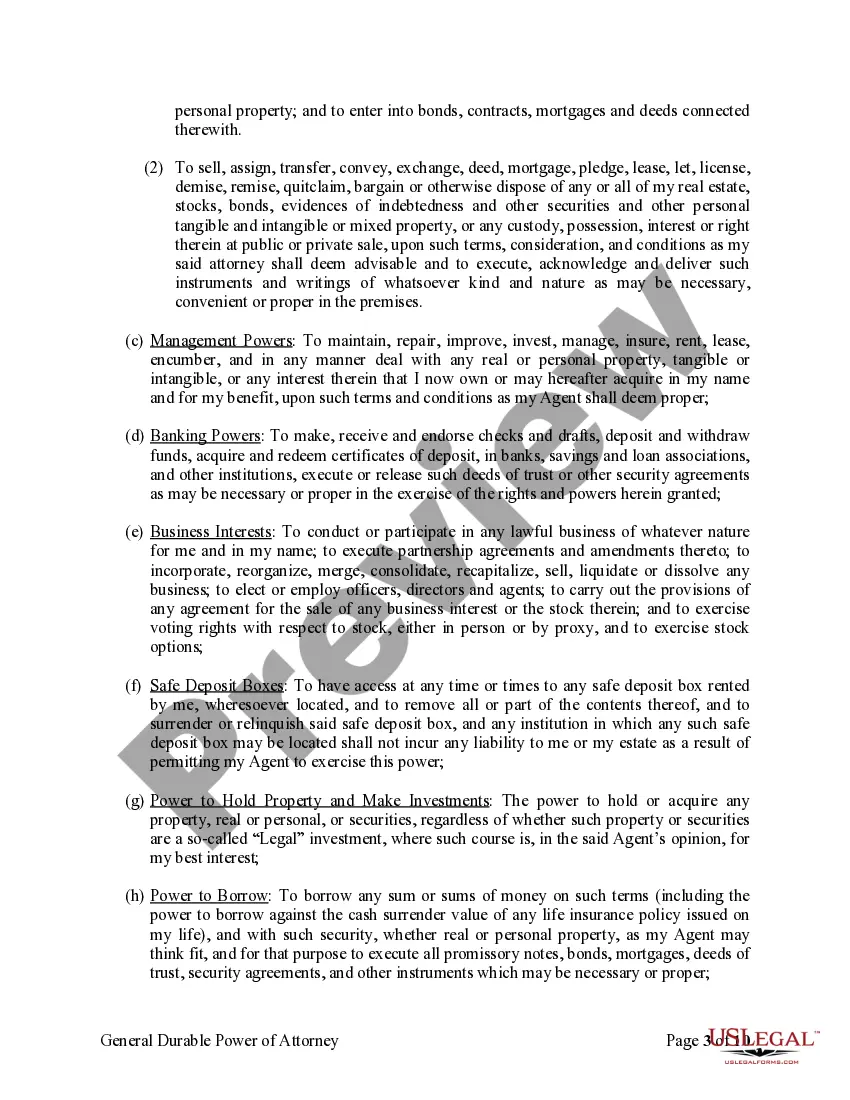
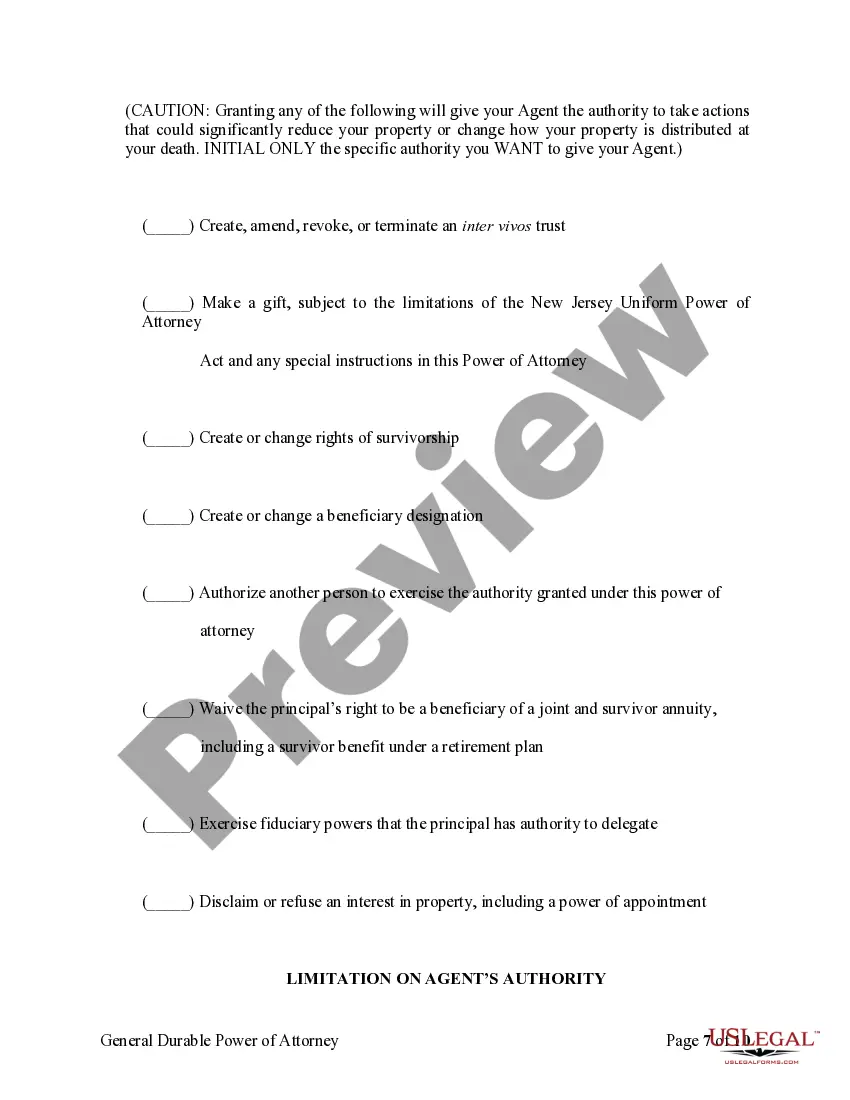
- Specification of powers granted to the agent, covering financial and property matters.
- Conditions under which the power of attorney becomes effective.
- Provisions for revocation and the effect of the principal's death.
- Legal protections for the agent from liability when acting in good faith.
When to use this form
This form is essential for individuals who want to ensure their financial affairs are handled appropriately in the event of incapacitation. Use this document when you wish to designate someone you trust to manage your property, investments, and other financial transactions should you become disabled. This helps prevent complications and ensures your financial matters are taken care of according to your preferences.
Who this form is for
- Individuals who own property and want to ensure it is managed correctly during incapacity.
- People seeking to designate a trusted family member or friend as their financial agent.
- Anyone who wants to prepare for potential future incapacity with clear instructions.
Steps to complete this form
- Identify yourself as the principal and provide your contact information.
- Name your chosen agent and include their contact details.
- Clearly specify the powers you grant to your agent regarding financial matters.
- Indicate any limitations on the authority you are granting, if applicable.
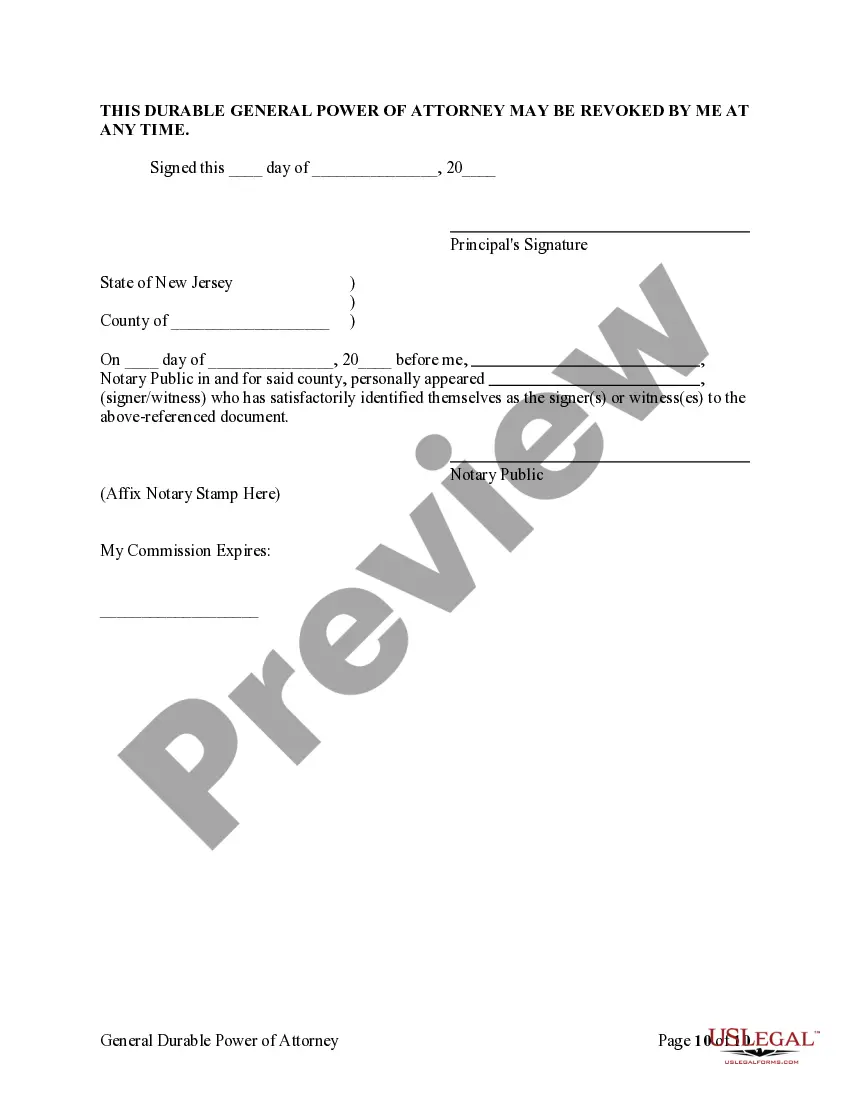
- Sign and date the document in the presence of a notary public if required.
Is notarization required?
Yes, this form must be notarized to be legally valid in New Jersey. This ensures the authenticity of your signature and the integrity of the document. US Legal Forms offers integrated online notarization services, making the process simple and secure through video calls without the need for travel.
Get your form ready online
Our built-in tools help you complete, sign, share, and store your documents in one place.
Make edits, fill in missing information, and update formatting in US Legal Forms—just like you would in MS Word.
Download a copy, print it, send it by email, or mail it via USPS—whatever works best for your next step.
Sign and collect signatures with our SignNow integration. Send to multiple recipients, set reminders, and more. Go Premium to unlock E-Sign.
If this form requires notarization, complete it online through a secure video call—no need to meet a notary in person or wait for an appointment.
We protect your documents and personal data by following strict security and privacy standards.

Make edits, fill in missing information, and update formatting in US Legal Forms—just like you would in MS Word.

Download a copy, print it, send it by email, or mail it via USPS—whatever works best for your next step.

Sign and collect signatures with our SignNow integration. Send to multiple recipients, set reminders, and more. Go Premium to unlock E-Sign.

If this form requires notarization, complete it online through a secure video call—no need to meet a notary in person or wait for an appointment.

We protect your documents and personal data by following strict security and privacy standards.
Mistakes to watch out for
- Failing to specify the effective date of the power of attorney.
- Not clearly defining the powers granted to the agent.
- Forgetting to sign the document in front of a notary, if required.
- Neglecting to inform the agent about their responsibilities.
Benefits of using this form online
- Convenient access allows you to complete the form at your own pace.
- Edit and customize the document to suit your specific needs.
- Reliable templates drafted by licensed attorneys ensure legal compliance.
Quick recap
- The General Durable Power of Attorney is designed to manage your financial affairs if you become incapacitated.
- It is crucial to appoint a trusted agent who understands your wishes regarding financial management.
- Ensure that the document complies with state laws and is signed in front of a notary public.
- Consider discussing your financial circumstances and any limitations you wish to impose on your agent with a legal advisor.
Looking for another form?
Form popularity
FAQ
In order to ensure the validity of the Power of Attorney, it should be notarized. However, if this is not possible, you should still complete the form to the best of your ability. A notary is someone who simply acknowledges that a person is signing a document.In addition, any attorney in New Jersey is a notary.
Most states offer simple forms to help you create a power of attorney for finances. Generally, the document must be signed, witnessed and notarized by an adult. If your agent will have to deal with real estate assets, some states require you to put the document on file in the local land records office.
In New Jersey, all power of attorney documents require that both the principal and the attorney-in-fact are competent and be of sound mind at the point at which they are executed. They must be signed in the presence of at least 2 witnesses and in the presence of a licensed Notary of the State of New Jersey.
Determine if one is needed. Under a few circumstances, a power of attorney isn't necessary. Identify an agent. Take a look at the standard forms. Notarize the written POA, keep it stored safely, and provide copies to important people. Review the POA periodically.
Draft a list of special powers. Decide what powers are springing. Pick an agent and a successor agent. Note the expiration date. Compile the information into one document. Execute the power of attorney letter.
In many states, notarization is required by law to make the durable power of attorney valid. But even where law doesn't require it, custom usually does. A durable power of attorney that isn't notarized may not be accepted by people with whom your attorney-in-fact tries to deal.
A N.J. lawyer is an ex-officio notary and can take acknowledgements, administer oaths.
Include their address, relationship to you, phone number, or email address. Also specify whether the durable power of attorney applies to financial decisions, health care decisions, legal decisions, or all three areas. Include any instructions you would like to leave for your agent.
Choose an agent. Before you begin to fill out the form, you have some decisions to make. Decide on the type of authority. You can choose whether you want your POA to be broad or narrow. Identify the length of time the POA will be in effect. Fill out the form. Execute the document.