New Jersey Paternity Law and Procedure Handbook
What this document covers
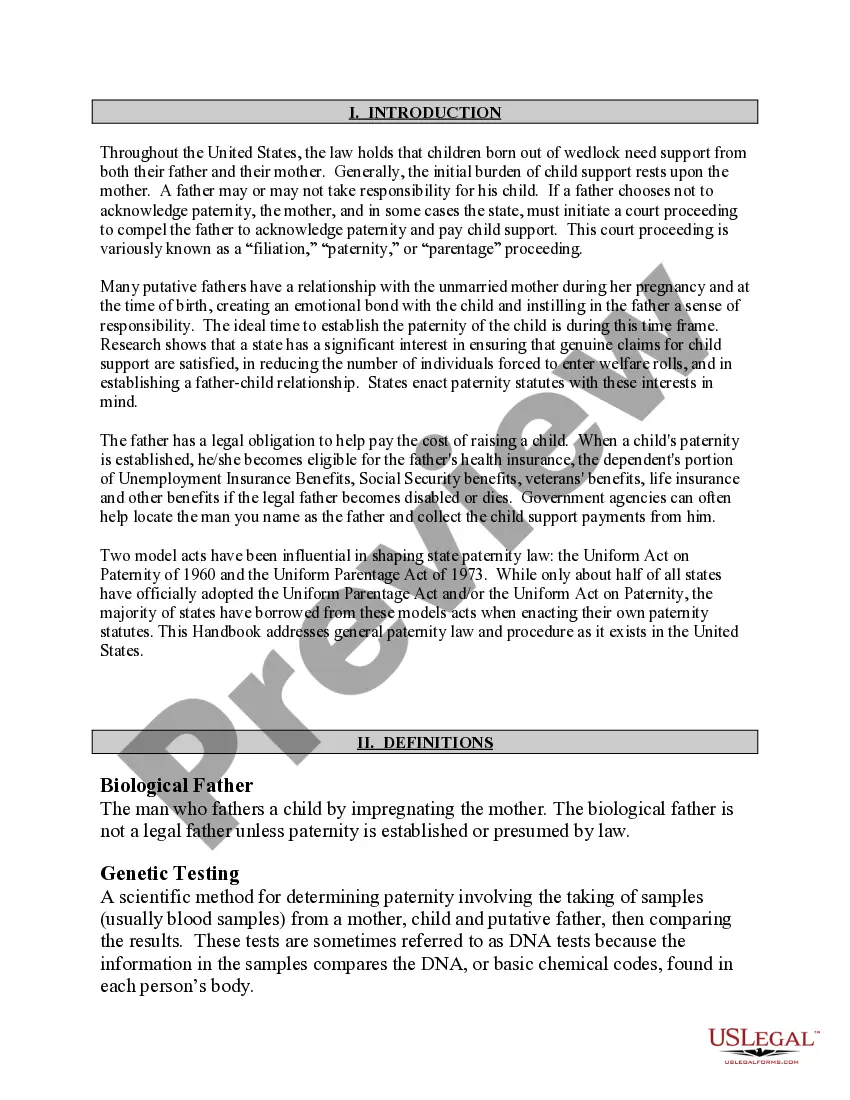
The Paternity Law and Procedure Handbook is a comprehensive resource that outlines the laws and procedures related to establishing paternity across the United States. This handbook serves as a guide for individuals seeking to understand their rights and responsibilities regarding paternity, and how to legally acknowledge fatherhood. Unlike other legal documents, this handbook provides not only general laws but also state-specific resources for those looking to navigate the paternity establishment process confidently.
What’s included in this form
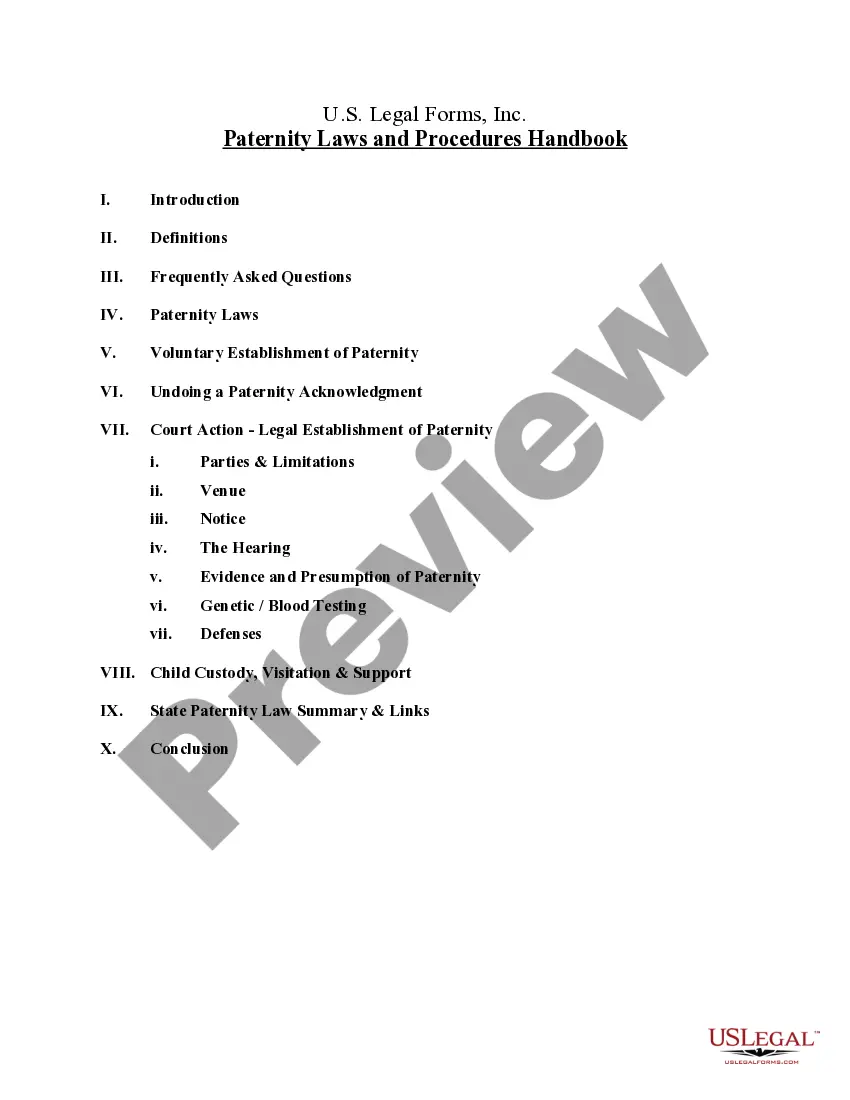
- Introduction to paternity law and its significance.
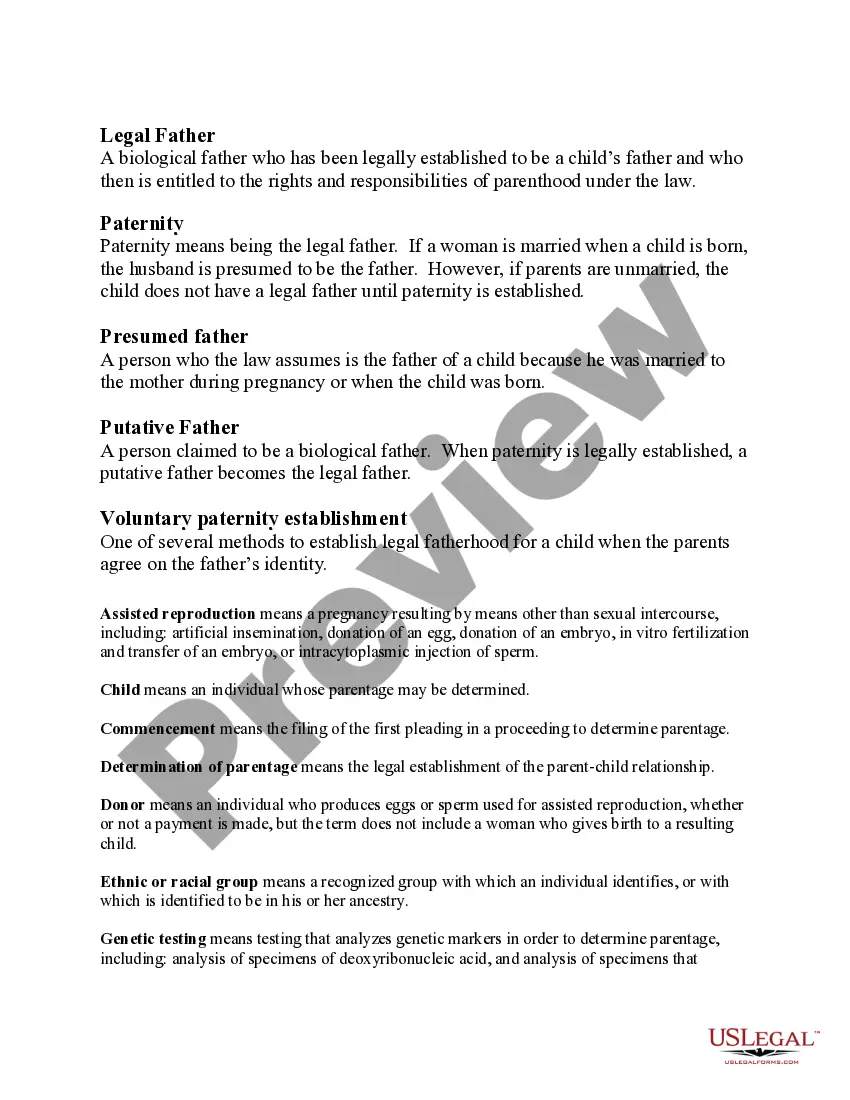
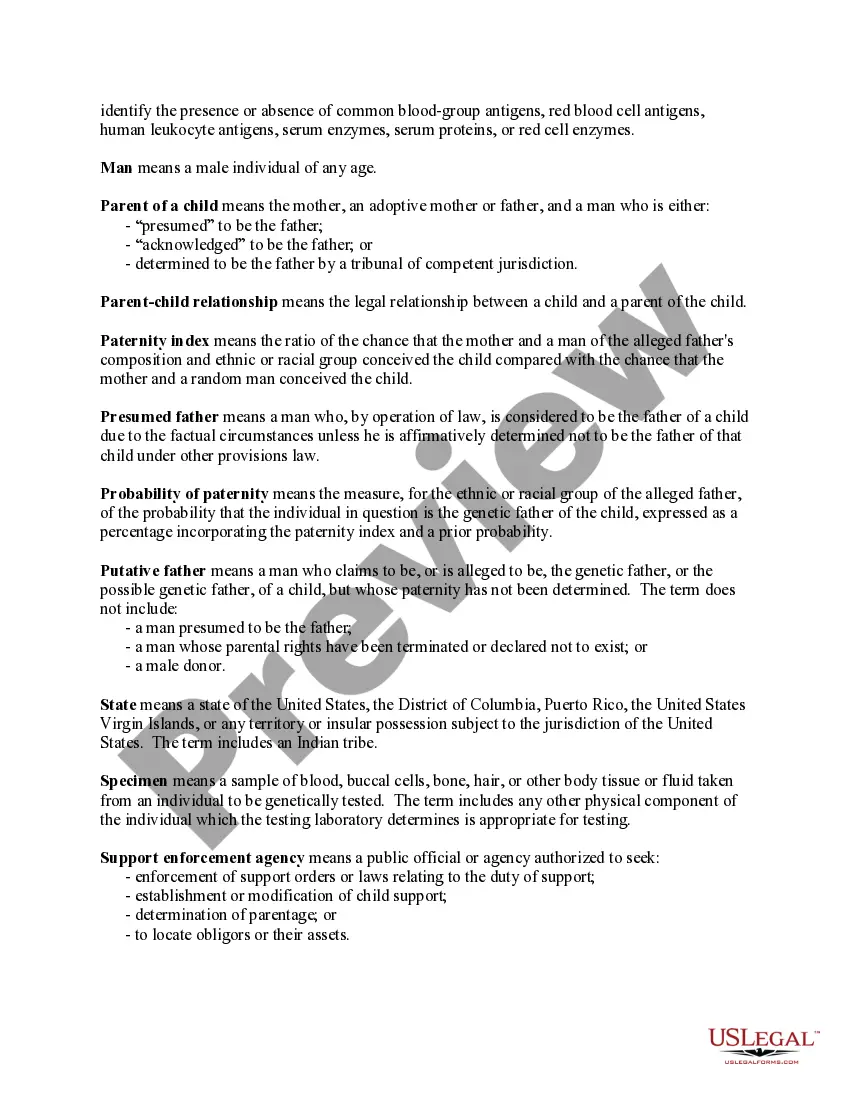
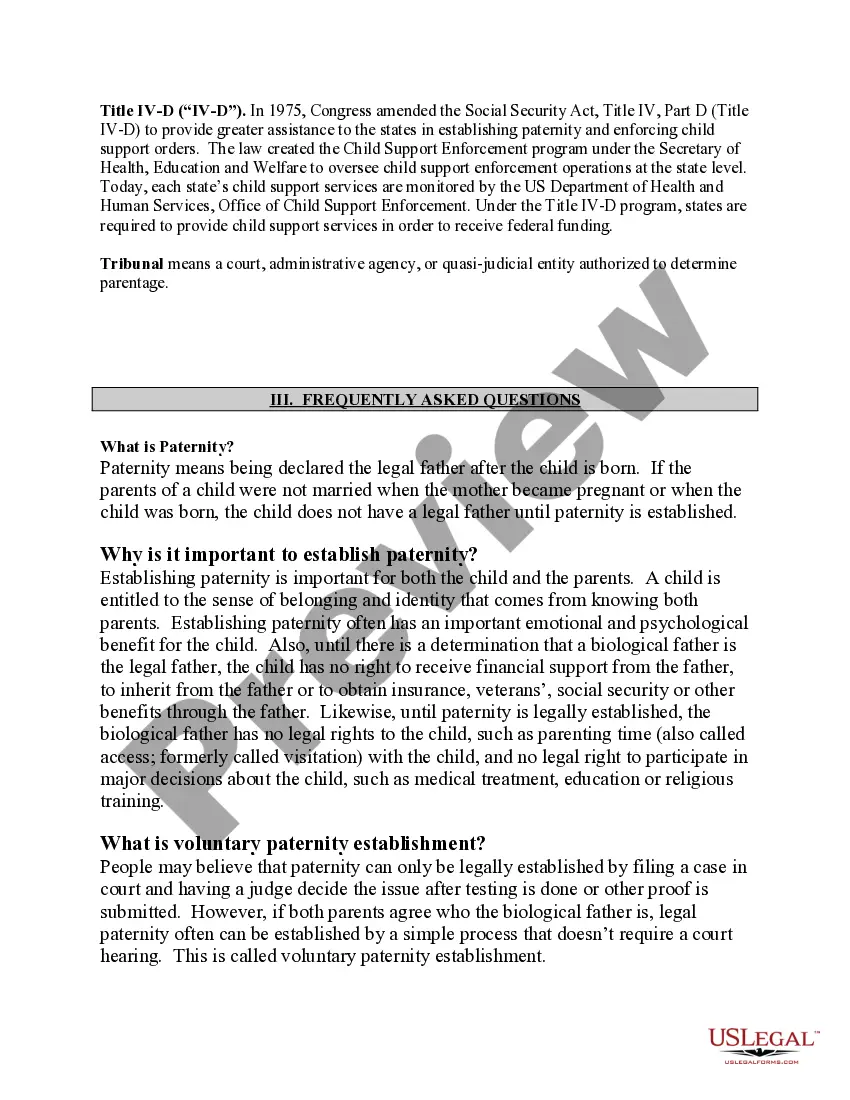
- Definitions of key terms such as biological father, legal father, and voluntary paternity establishment.
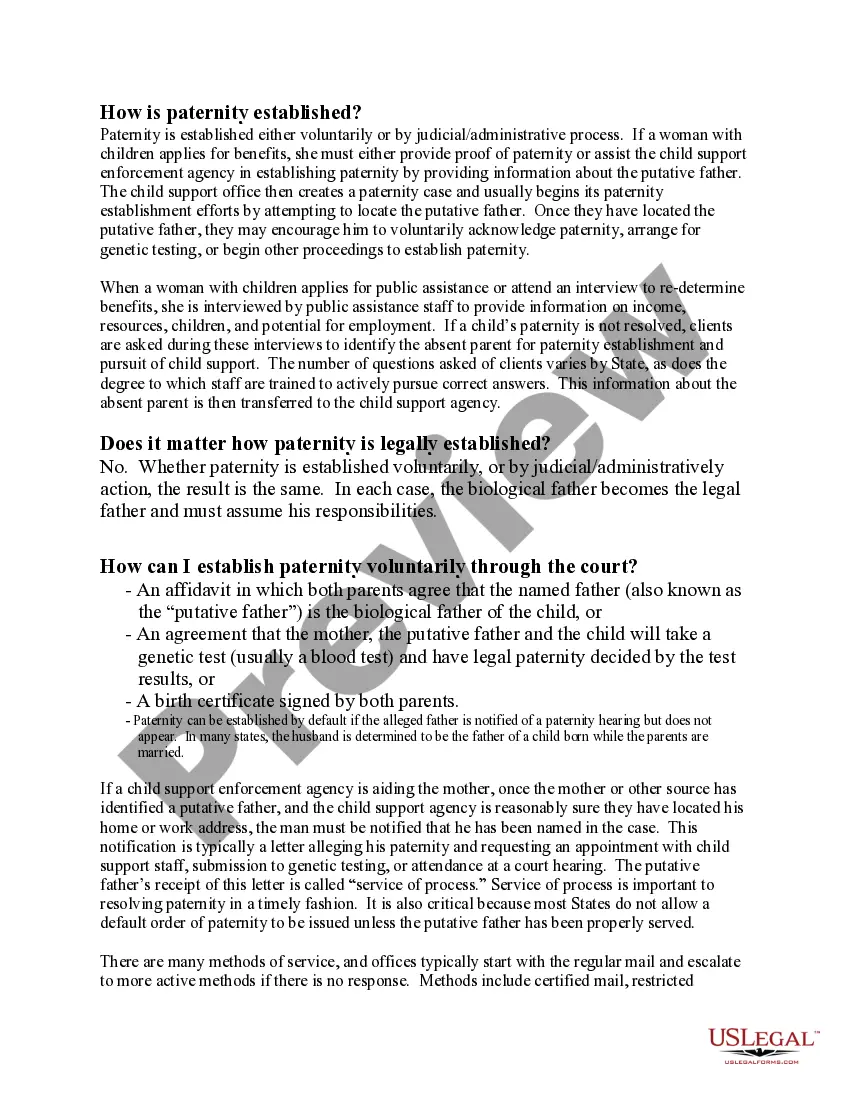
- Frequently asked questions that clarify the paternity establishment process.
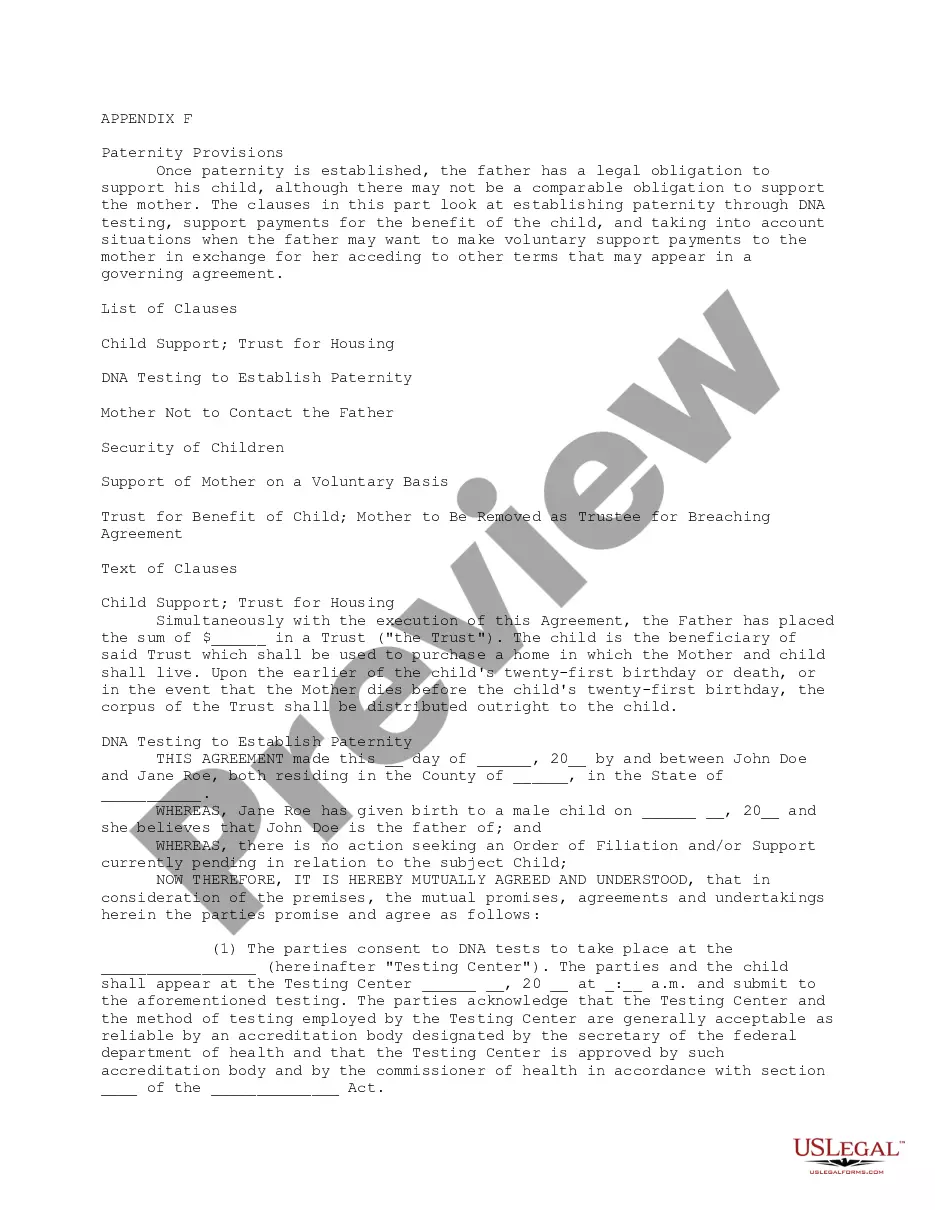
- Detailed descriptions of voluntary and court-based paternity establishment methods.
- A summary of paternity laws specific to each state.
- Information regarding child custody, visitation, and support obligations post-paternity determination.

Common use cases
This handbook is essential for situations where a father wishes to establish legal paternity for a child born out of wedlock. It is useful when there are disputes over fatherhood, financial support, or custody rights. Individuals applying for public assistance for children may also need to reference this handbook to fulfill legal requirements surrounding paternity establishment.
Intended users of this form
- Unmarried parents seeking to establish paternity.
- Fathers who want to acknowledge their parental rights and fulfill child support obligations.
- Legal representatives assisting clients in paternity cases.
- Individuals involved in child custody disputes related to paternity.
How to complete this form
- Read the introduction to understand the importance of establishing paternity.
- Familiarize yourself with the definitions section to grasp key terms.
- Review the frequently asked questions for common concerns and procedures.
- Follow the steps outlined in the voluntary or court action sections based on your chosen method for establishing paternity.
- Utilize the state-specific summary to identify necessary steps and resources in your location.
Does this document require notarization?
This form does not typically require notarization to be legally valid. However, some jurisdictions or document types may still require it. US Legal Forms provides secure online notarization powered by Notarize, available 24/7 for added convenience.
Get your form ready online
Our built-in tools help you complete, sign, share, and store your documents in one place.
Make edits, fill in missing information, and update formatting in US Legal Forms—just like you would in MS Word.
Download a copy, print it, send it by email, or mail it via USPS—whatever works best for your next step.
Sign and collect signatures with our SignNow integration. Send to multiple recipients, set reminders, and more. Go Premium to unlock E-Sign.
If this form requires notarization, complete it online through a secure video call—no need to meet a notary in person or wait for an appointment.
We protect your documents and personal data by following strict security and privacy standards.

Make edits, fill in missing information, and update formatting in US Legal Forms—just like you would in MS Word.

Download a copy, print it, send it by email, or mail it via USPS—whatever works best for your next step.

Sign and collect signatures with our SignNow integration. Send to multiple recipients, set reminders, and more. Go Premium to unlock E-Sign.

If this form requires notarization, complete it online through a secure video call—no need to meet a notary in person or wait for an appointment.

We protect your documents and personal data by following strict security and privacy standards.
Avoid these common issues
- Failing to understand the significance of voluntary paternity acknowledgments leading to unintended consequences.
- Not seeking legal advice when unsure about paternity establishment procedures.
- Ignoring deadlines for contesting paternity acknowledgments.
Why complete this form online
- Convenience of accessing necessary legal information from home.
- Editability allows for personalization based on individual circumstances.
- Reliable, attorney-drafted content ensures legal compliance.
Key takeaways
- Establishing paternity is crucial for legal rights and responsibilities of parents.
- A variety of resources and laws are available to guide you through the process.
- Consult state-specific resources to comply with local laws regarding paternity.
Looking for another form?
Form popularity
FAQ
A notarized "Certificate of Parentage" (also called a "Voluntary Acknowledgment") form signed by both parents is the simplest and most cost-effective way to establish paternity. By signing this document, both the mother and father agree and acknowledge that they are the child's parents.
Fill out your court forms. Fill out 1 of these court forms too if the complaint asks for child support: Have your forms reviewed. Make at least 2 copies of all your forms. Serve your papers on the LCSA/DCSS. Have the person who served your Answer fill out the Proof of Service.
California created the first paid leave legislation that went into effect in 2004. The law offers six weeks of paid family leave (for a birth, adoption or a sick family member). The typical benefit is 60 to 70 percent of your weekly salary up to $1,216104 per week as of 2018.
Starting July 1, 2020, the new law increases the paid family leave insurance program to 12 weeks and increases intermittent FLI from 42 days to 56 days.
The FMLA gives mothers and fathers the right to take time off to bond with a new child, whether biological, adopted, or foster. This is part of the total 12-week leave entitlement.New Jersey has its own parental leave law, which allows eligible employees to take up to 12 weeks off to care for a new child.
The New Jersey paid family leave program provides partial wage replacements to employees for a limited amount of time. Employees currently receive two-thirds of their average weekly earnings, up to a maximum set by state law.
The process is easy. It's available to parents if the mother was not married at any time during her pregnancy. To establish paternity at the hospital, parents simply complete a Certificate of Parentage with the birth certificate coordinator. This adds the father's name to the child's birth certificate.
An acknowledgment of paternity will require some basic information including the child's full name, mother's full name, and father's full name. The father's date of birth, address, and Social Security number are also needed. The AOP must be signed and notarized by both parents.
New Jersey's recently approved plan gives workers 2/3 of their salary, up to $504 per week, for up to six weeks. One leave per 12-month period can be taken in order to care for a newborn, adopted child, or sick family member.