New Jersey Letter from Landlord to Tenant for Failure to use electrical, plumbing, sanitary, heating, ventilating, air conditioning and other facilities in a reasonable manner
Understanding this form
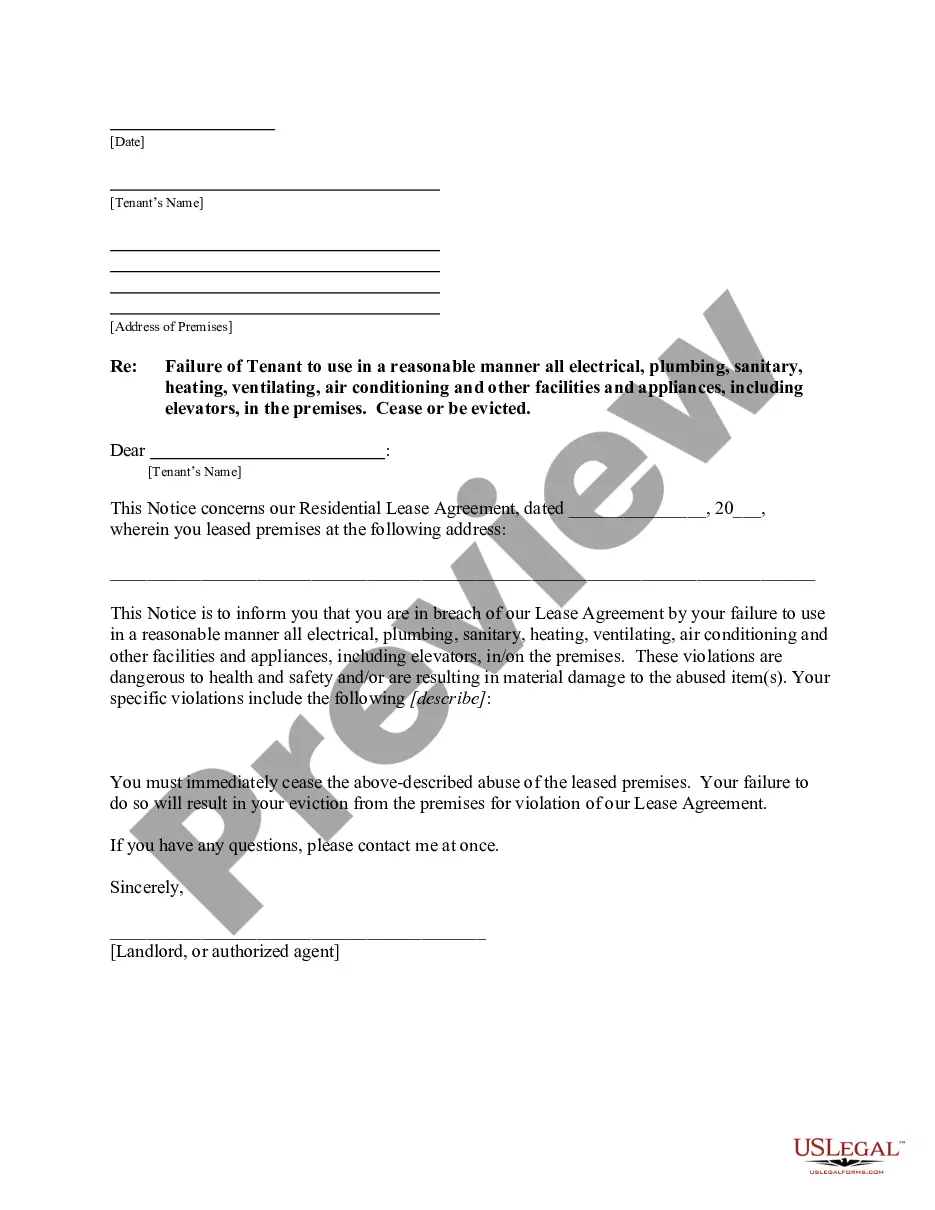
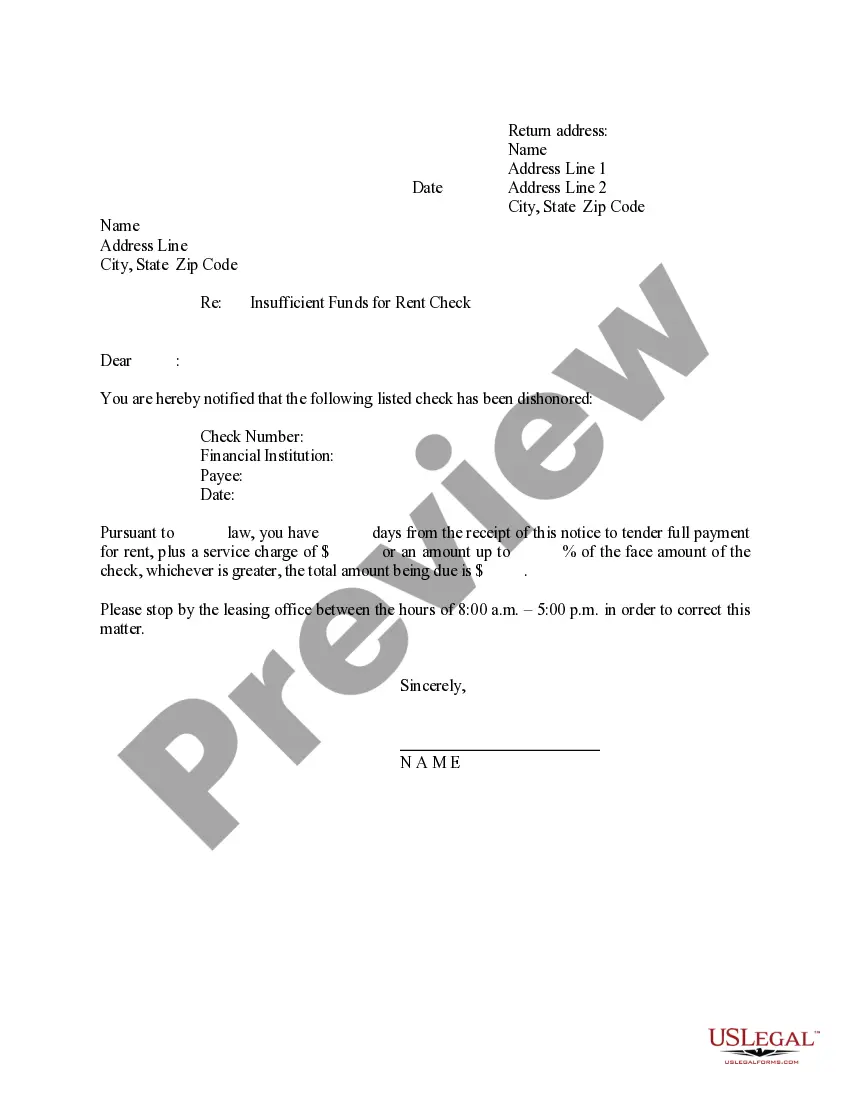
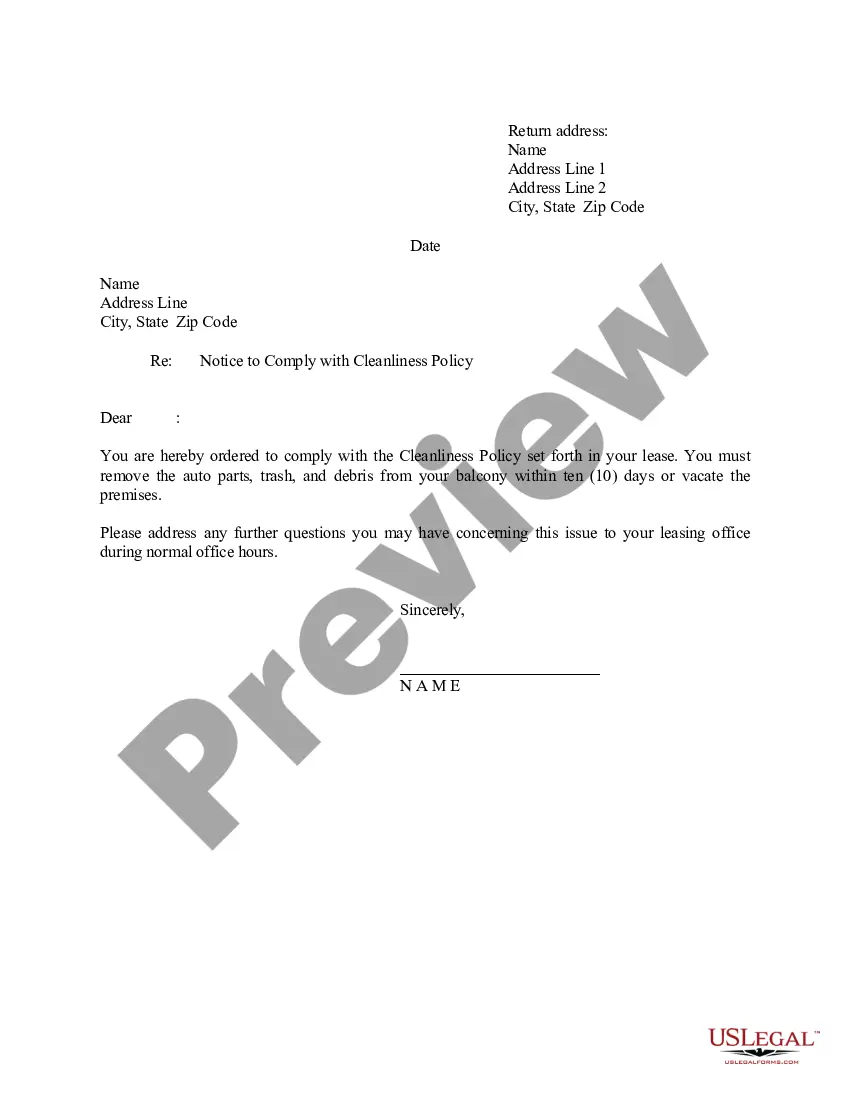
This form is a Letter from Landlord to Tenant concerning the failure to use electrical, plumbing, sanitary, heating, ventilating, air conditioning, and other facilities in a reasonable manner. It serves as a cease or eviction notice, informing the tenant of their lease violations and the consequences of continued misuse of essential facilities. The purpose of this letter is to formally address the situation, contrasting with informal communication methods.
Key parts of this document
- Identification of the landlord and tenant involved.
- Details of the lease agreement highlighting the specific terms violated.
- A description of the appliances and facilities misused by the tenant.
- A warning about potential eviction if the tenant fails to remedy the situation.
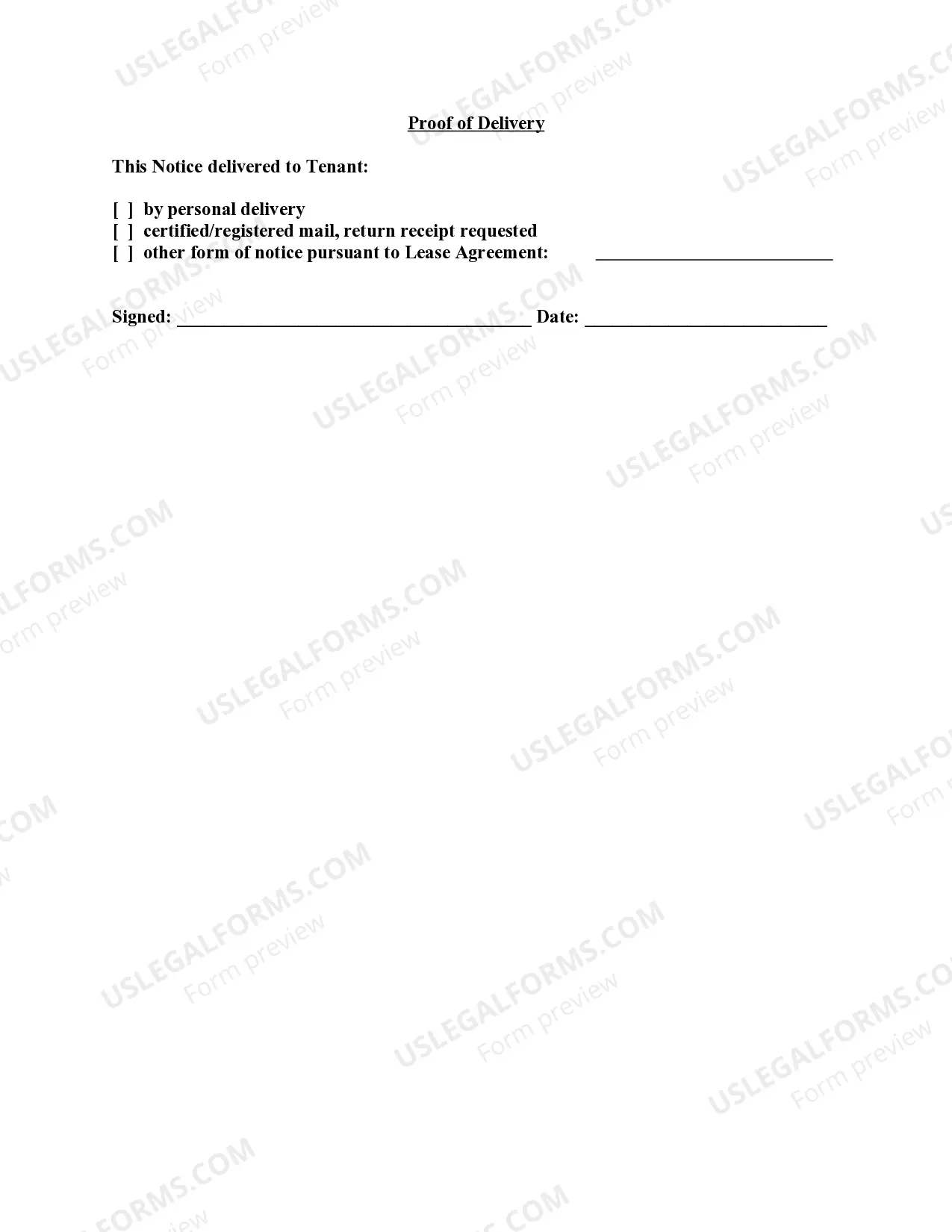
- A section for proof of delivery to confirm the tenant receives the notice.


When to use this document
This form should be used when a landlord observes that a tenant is not utilizing the required electrical, plumbing, or heating systems properly, thus violating the lease agreement. It is applicable in situations where informal reminders or discussions have not resolved the misuse, and the landlord seeks formal action to ensure compliance or initiate eviction proceedings if necessary.
Who needs this form
- Landlords who have identified serious misuse of facilities by their tenants.
- Property managers responsible for maintaining tenant lease agreements.
- Real estate professionals acting on behalf of landlords in managing properties.
Completing this form step by step
- Identify the parties by entering the landlord's name and the tenant's name.
- Specify the property address where the tenant resides.
- Clearly state the facilities and appliances involved in the misuse.
- Include a warning about the consequences of continued misuse, specifically mentioning eviction.
- Sign the letter, providing the landlord's or authorized agent's name.
- Follow up with proof of delivery by documenting how the notice was delivered.
Is notarization required?
This form does not typically require notarization to be legally valid. However, some jurisdictions or document types may still require it. US Legal Forms provides secure online notarization powered by Notarize, available 24/7 for added convenience.
Get your form ready online
Our built-in tools help you complete, sign, share, and store your documents in one place.
Make edits, fill in missing information, and update formatting in US Legal Forms—just like you would in MS Word.
Download a copy, print it, send it by email, or mail it via USPS—whatever works best for your next step.
Sign and collect signatures with our SignNow integration. Send to multiple recipients, set reminders, and more. Go Premium to unlock E-Sign.
If this form requires notarization, complete it online through a secure video call—no need to meet a notary in person or wait for an appointment.
We protect your documents and personal data by following strict security and privacy standards.

Make edits, fill in missing information, and update formatting in US Legal Forms—just like you would in MS Word.

Download a copy, print it, send it by email, or mail it via USPS—whatever works best for your next step.

Sign and collect signatures with our SignNow integration. Send to multiple recipients, set reminders, and more. Go Premium to unlock E-Sign.

If this form requires notarization, complete it online through a secure video call—no need to meet a notary in person or wait for an appointment.

We protect your documents and personal data by following strict security and privacy standards.
Avoid these common issues
- Failing to provide sufficient detail about the specific misuse of facilities.
- Not delivering the notice in a manner that ensures the tenant receives it.
- Using vague language that does not clearly outline the lease violations.
- Neglecting to include a proper signature or identification of the landlord.
Benefits of using this form online
- Convenience of immediate access and download from anywhere.
- Editability allows customization to fit specific situations and details.
- Reliability, as forms are drafted by licensed attorneys to ensure legal compliance.
Legal use & context
- This form serves as a formal notification and may be essential for legal proceedings related to eviction.
- It helps document communication attempts with the tenant, which can be beneficial if disputes arise.
- Proper use of this form can aid in the enforcement of lease terms and maintenance of property standards.
Key takeaways
- This form is essential for addressing tenant misuse of property facilities.
- Proper completion is crucial for effective communication and legal enforcement.
- Landlords should familiarize themselves with their state's regulations regarding eviction and tenant rights.
Looking for another form?
Form popularity
FAQ
Start a written record. The problems with my landlord started almost immediately after I moved in. Check your lease agreement. If your landlord agreed to something in your lease, he has to follow it. Send written requests. Decide if you have a case. Seek legal assistance. File a civil lawsuit. Fight discrimination.
Introduce the problem clearly. Begin your letter by stating specifically why you are writing. Provide a brief description of the specific problem, then detail any efforts you have made prior to the letter to notify your landlord of the problem or to fix the problem yourself.
Fundamental responsibilities of landlords include: providing and maintaining the property in a clean and reasonable standard; giving proper receipts and maintaining records of all transactions pertaining to the tenancy; paying council rates and taxes; maintaining locks to ensure the property's security; and lodging the
You are legally required to keep rental premises livable in New Jersey, under a legal doctrine called the implied warranty of habitability. If you don't take care of important repairs, such as a broken heater, tenants in New Jersey may have several options, including the right to withhold rent or repair and deduct.
State law regulates several rent-related issues, including late fees, the amount of notice (at least 30 days in New Jersey) landlords must give tenants to raise the rent and how much time (30 days in New Jersey) a tenant has to pay overdue rent or move before a landlord can file for eviction.
Notice to Terminate the Lease A month-to-month tenant must give written notice of lease termination at least one full month prior to moving. Most yearly leases require a 60 to 90 day notice from the tenants in order to terminate the lease.
For other tenant/landlord affairs information, residents may contact the NJ Department of Community Affairs, Division of Codes & Standards, Landlord/Tenant Divsion by phone 609-292-7899, on their website at www.nj.gov/dca or by mail at P.O. Box 805, Trenton NJ 08625.
If making a formal complaint to your landlord doesn't solve your problem you might be able to complain to your local council. Your local council can only help with complaints about: repairs that cause a risk to your health and safety not being done (e.g faulty electrical wiring not being fixed) illegal eviction.
However, it's important to know that even without a lease your landlord is still required to give you a 30-day notice for ending your lease or for increasing your rent. If you refuse to pay the increase in your rent, the landlord has the right to legally begin the eviction process.