New Jersey Letter from Landlord to Tenant for Failure of to dispose all ashes, rubbish, garbage or other waste in a clean and safe manner in compliance with community rules
About this form
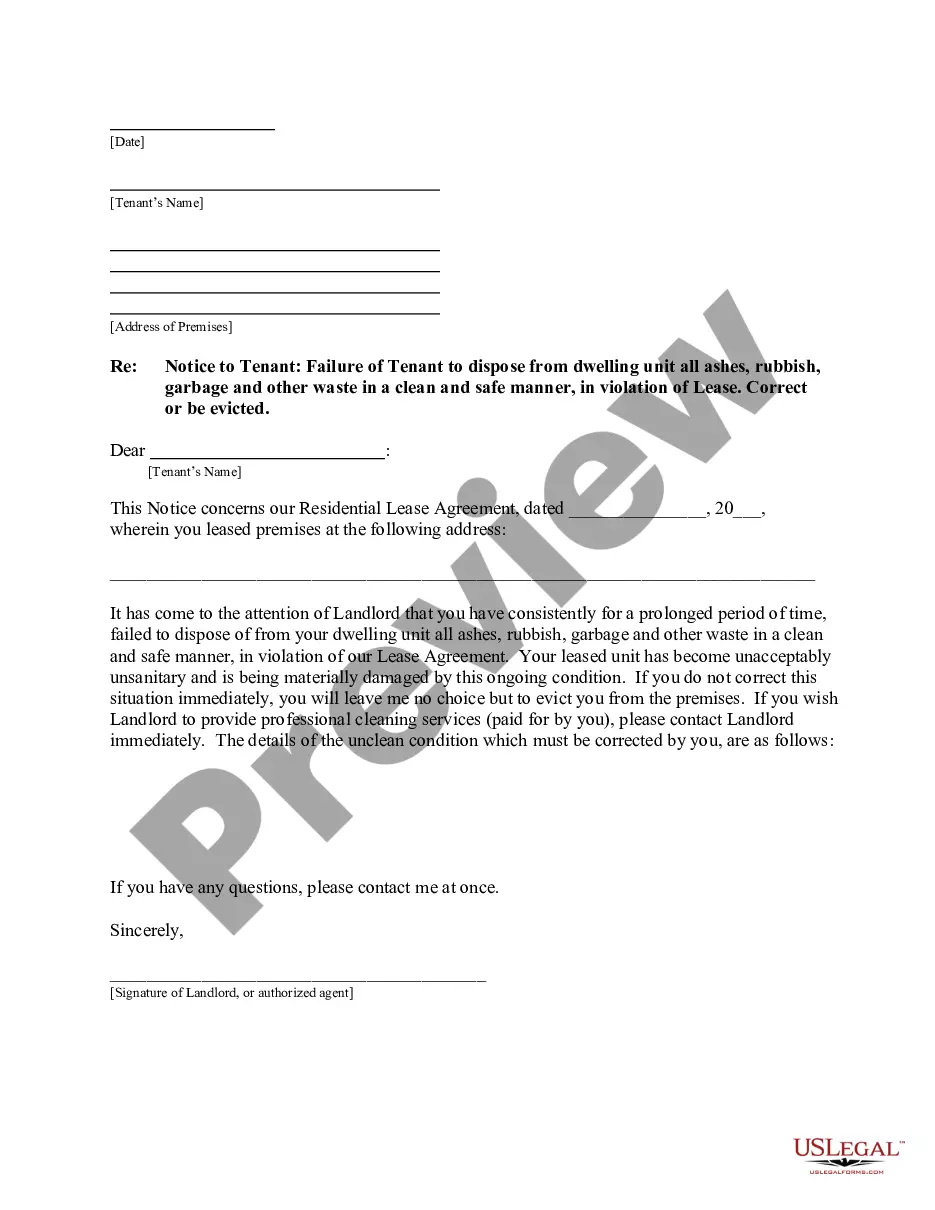
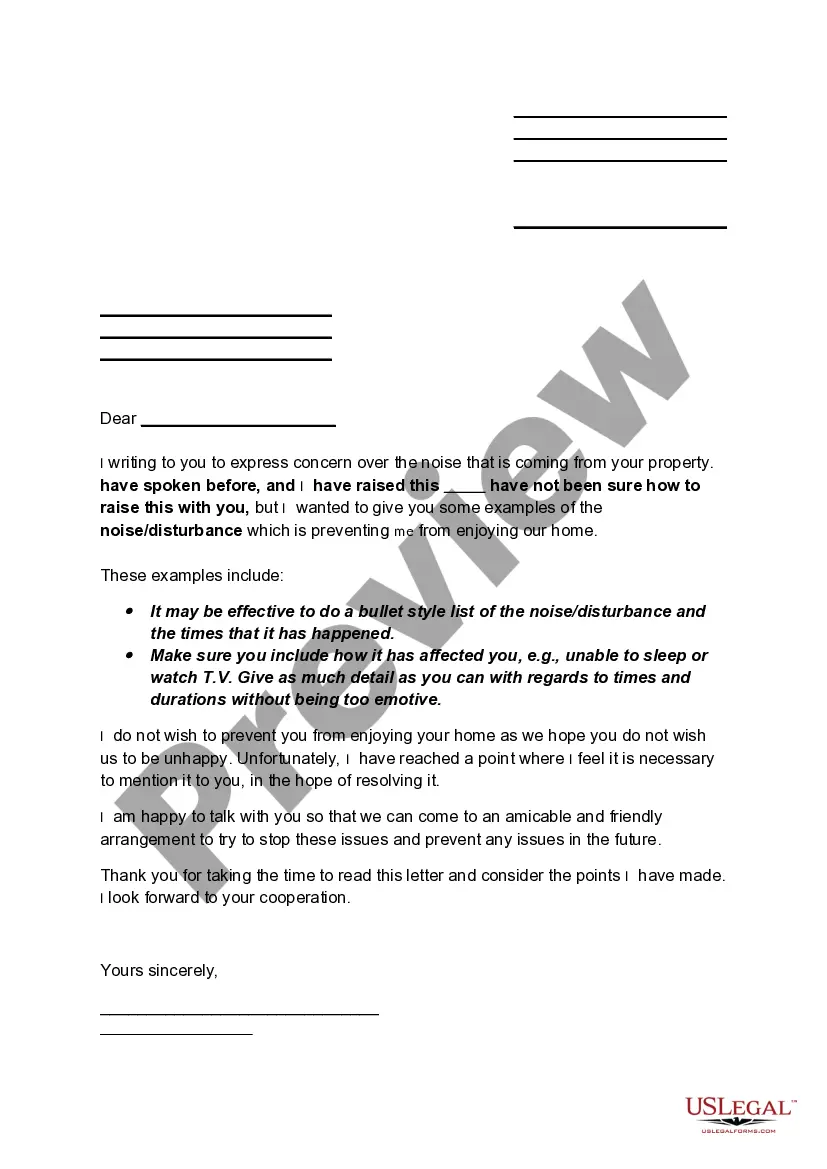
This letter from the landlord to tenant addresses the failure to properly dispose of waste, such as ashes, rubbish, and garbage, in accordance with community rules. It serves as a formal notice requiring the tenant to rectify unsanitary conditions or face potential eviction. Unlike other eviction notices, this form specifically outlines the tenant's obligations regarding waste disposal and provides a chance for correction before legal actions are taken.
Key components of this form
- Identification of the landlord and tenant.
- Description of the unsanitary conditions and violations of the lease agreement.
- Notice of the requirement to correct the waste disposal issues.
- Statement of potential eviction if the issue is not resolved.
- Offer for professional cleaning services at the tenant's expense.


When to use this form
This form should be used when a landlord has observed persistent issues with a tenant's waste disposal practices that violate lease agreements or community standards. It is appropriate to issue this letter before proceeding to eviction, allowing the tenant an opportunity to address the issue and maintain the health and cleanliness of the property.
Who should use this form
- Landlords who have a tenant failing to comply with waste disposal regulations.
- Property managers tasked with ensuring adherence to community cleanliness standards.
- Real estate professionals involved in rental agreements and property management.
How to complete this form
- Identify the parties involved: include the landlord's and tenant's names and addresses.
- Describe the unsanitary conditions that need to be corrected.
- Specify the timeframe in which the tenant must rectify the issue.
- Provide information on contacting the landlord for cleaning services if needed.
- Sign and date the letter to formalize the notice.
Notarization guidance
Notarization is generally not required for this form. However, certain states or situations might demand it. You can complete notarization online through US Legal Forms, powered by Notarize, using a verified video call available anytime.
Get your form ready online
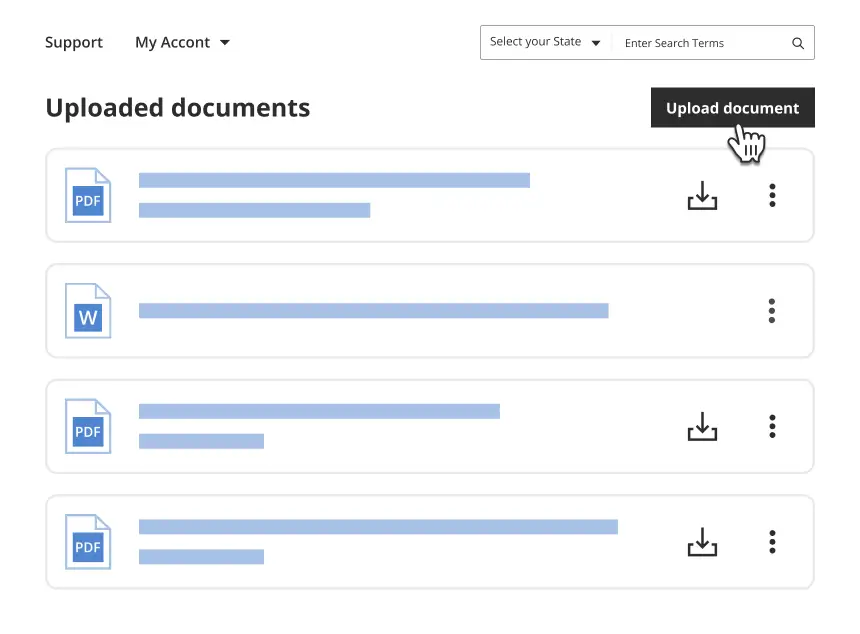
Our built-in tools help you complete, sign, share, and store your documents in one place.
Make edits, fill in missing information, and update formatting in US Legal Forms—just like you would in MS Word.
Download a copy, print it, send it by email, or mail it via USPS—whatever works best for your next step.
Sign and collect signatures with our SignNow integration. Send to multiple recipients, set reminders, and more. Go Premium to unlock E-Sign.
If this form requires notarization, complete it online through a secure video call—no need to meet a notary in person or wait for an appointment.
We protect your documents and personal data by following strict security and privacy standards.
Make edits, fill in missing information, and update formatting in US Legal Forms—just like you would in MS Word.
Download a copy, print it, send it by email, or mail it via USPS—whatever works best for your next step.
Sign and collect signatures with our SignNow integration. Send to multiple recipients, set reminders, and more. Go Premium to unlock E-Sign.

If this form requires notarization, complete it online through a secure video call—no need to meet a notary in person or wait for an appointment.
We protect your documents and personal data by following strict security and privacy standards.
Typical mistakes to avoid
- Not providing specific examples of unsanitary conditions.
- Failing to include a deadline for remediation.
- Neglecting to sign and date the letter.
- Using vague language that may confuse the tenant.
Benefits of using this form online
- Convenient access to a legally drafted template.
- Edit and customize the form to fit specific circumstances quickly.
- Reliable structure that ensures all necessary legal points are covered.
Legal use & context
- This form serves as a formal notice to tenants and is an important step in the eviction process.
- Providing this notice allows tenants the opportunity to correct their behavior before legal action is taken.
- Proper documentation may assist in a landlord's case should further action be necessary.
Summary of main points
- The letter from landlord to tenant addresses waste disposal failures.
- It serves as a formal warning before eviction proceedings.
- Landlords should use this form when cleanup is necessary to maintain community standards.
Looking for another form?
Form popularity
FAQ
You don't have an unlimited amount of time to file a claim. You'll have to bring it within the statute of limitations period for your particular case. For example, the New Jersey statute of limitations periods is six years for contracts and property damage cases, and two years for personal injury matters.
Generally, process servers make at least three attempts to serve somebody.
Under the California Rules of Court, the plaintiff generally must serve the summons and complaint within 60 days after filing the lawsuit.
Once you have filed a complaint with the court in New Jersey you have 15 days to issue a summons from the date of the Track Assignment Notice. If you fail to do so your action may be dismissed. The summons must be served together with a copy of the complaint to the defendant, namely the person you are suing.
Defendant(s) must file an answer to the complaint along with the appropriate filing fee within 35 days after service of the complaint. After the complaint is served and an answer is filed, the discovery period begins.
The process server would, at the appropriate time, approach your spouse with the papers and say something along the lines of, "Mrs. Smith, I have papers for you." The process server would then hand the papers to your spouse, and your spouse has thus been properly served under New Jersey law.
4:4-7, service may be made by mailing a copy of the summons and complaint by registered or certified mail, return receipt requested, to the usual place of abode of the defendant or a person authorized by rule of law to accept service for the defendant or, with postal instructions to deliver to addressee only, to
In lieu of settlement by motion or consent, the party proposing the form of judgment or order may forward the original thereof to the judge who heard the matter and shall serve a copy thereof on every other party not in default together with a notice advising that unless the judge and the proponent of the judgment or
The reporter citations generally should be followed by parentheses with the jurisdiction, the abbreviated name of the court, and the year of decision. The name of a state should be omitted if it appears in the reporter title.