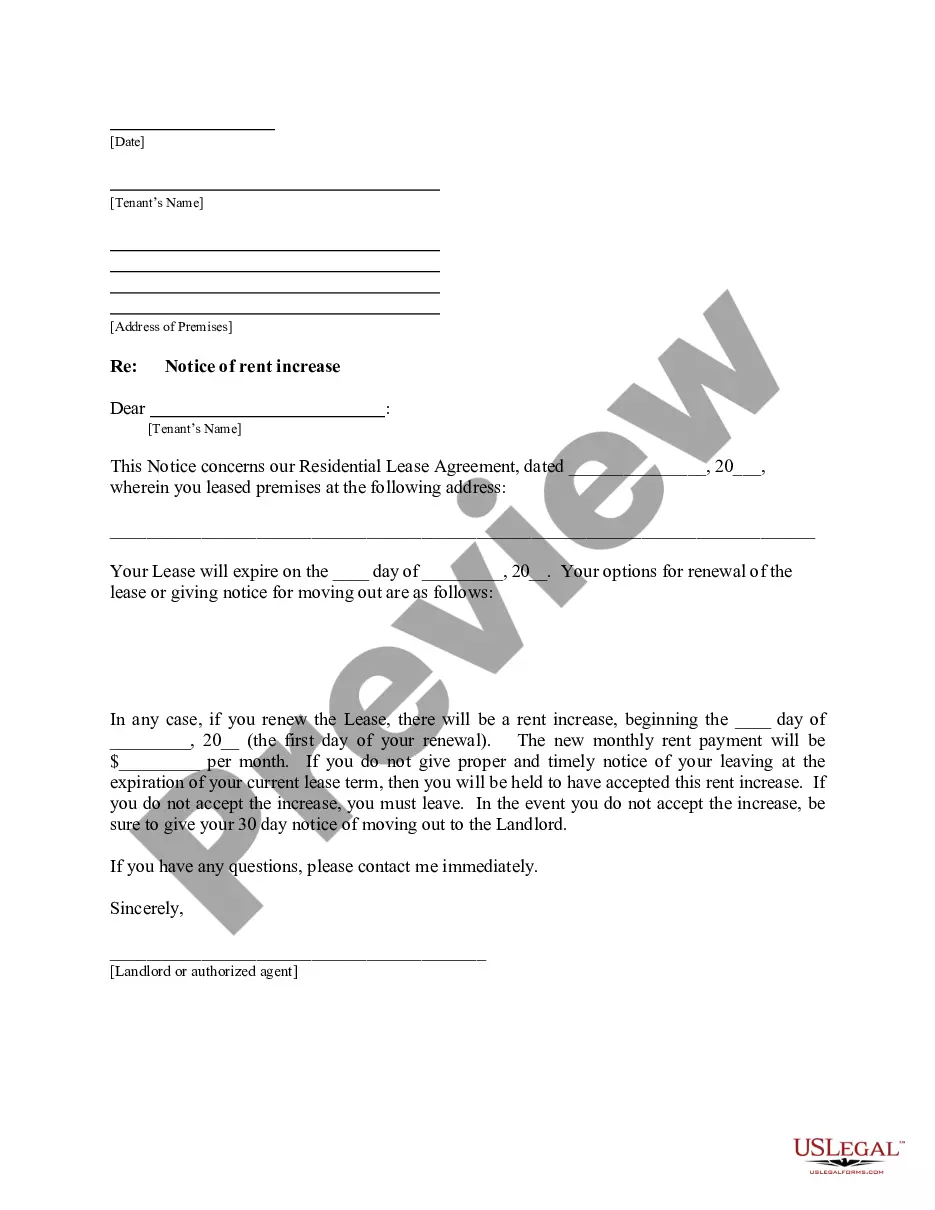
New Hampshire Letter from Landlord to Tenant about Intent to increase rent and effective date of rental increase
What is this form?
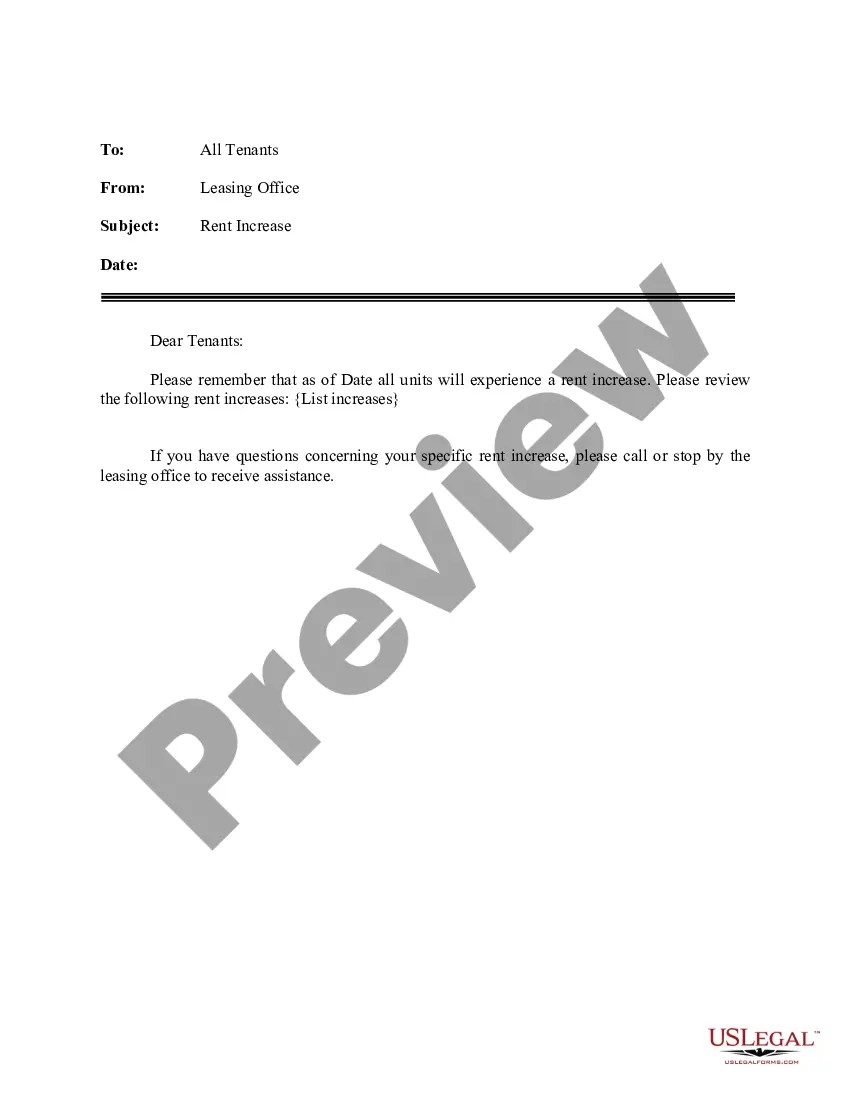
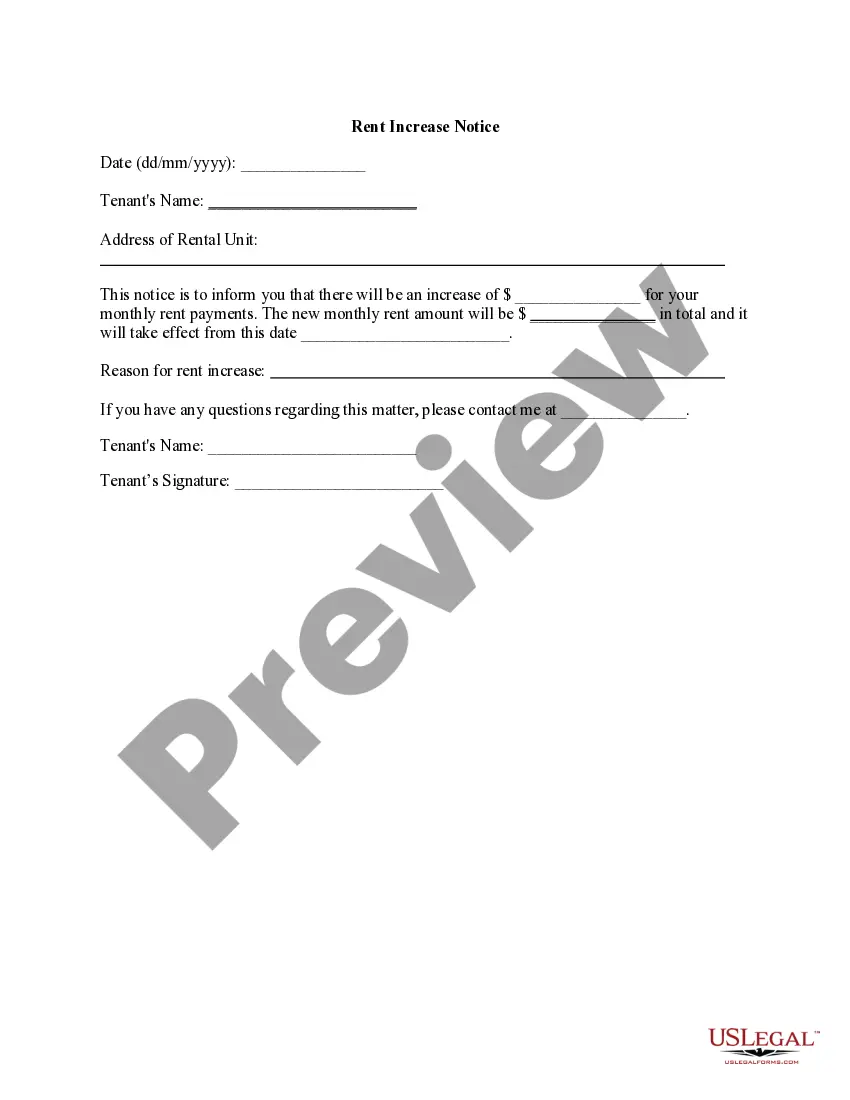
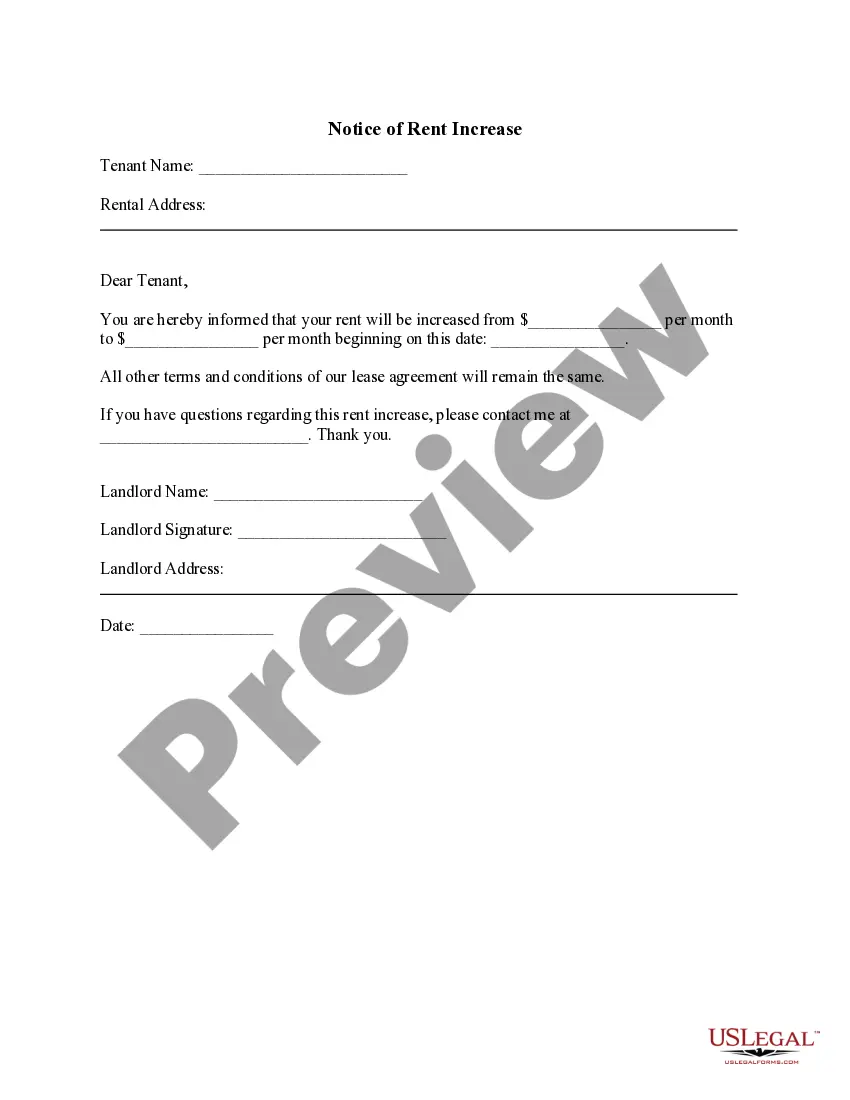
This form is a notice from the landlord to the tenant regarding an intent to increase rent at the expiration of their lease. It clearly stipulates the new rental amount, the effective date of this increase, and the tenant's options to either remain in the property or vacate. This form differs from a standard lease renewal in that it specifically addresses rent adjustments rather than the terms of the lease itself.
Form components explained
- Identification of the rental property address
- Expiration date of the current lease
- Details of the new rent amount
- Effective date for the increased rent
- Options for the tenant regarding lease continuation or vacating
- Contact information for the landlord or authorized agent
When to use this document
This form should be used by landlords when they intend to inform tenants of a rent increase following the expiration of their lease. It is essential for landlords to provide this notice in a timely manner, allowing tenants the opportunity to decide whether to renew the lease at the new rental rate or to move out before the lease ends.
Intended users of this form
This form is intended for:
- Landlords planning to increase rent on residential properties
- Property managers acting on behalf of landlords
- Tenants who wish to understand their rights regarding lease renewals and rent increases
How to prepare this document
- Enter the date of the lease agreement
- Specify the property address being rented
- Indicate the expiration date of the current lease
- Write the new rent amount and the date it will take effect
- Provide your contact information as the landlord or authorized agent
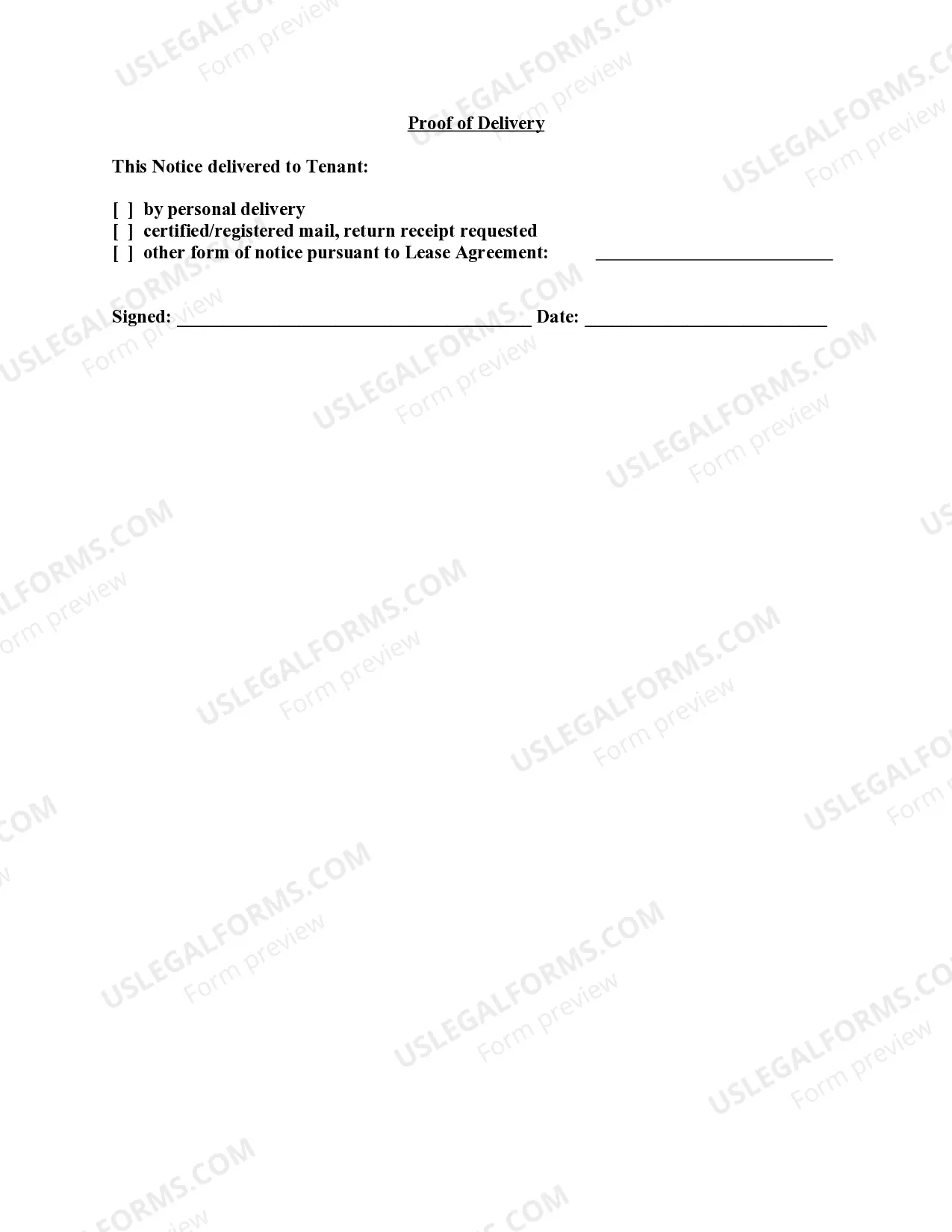
- Deliver the notice to the tenant in accordance with state requirements
Is notarization required?
Notarization is not commonly needed for this form. However, certain documents or local rules may make it necessary. Our notarization service, powered by Notarize, allows you to finalize it securely online anytime, day or night.
Get your form ready online
Our built-in tools help you complete, sign, share, and store your documents in one place.
Make edits, fill in missing information, and update formatting in US Legal Forms—just like you would in MS Word.
Download a copy, print it, send it by email, or mail it via USPS—whatever works best for your next step.
Sign and collect signatures with our SignNow integration. Send to multiple recipients, set reminders, and more. Go Premium to unlock E-Sign.
If this form requires notarization, complete it online through a secure video call—no need to meet a notary in person or wait for an appointment.
We protect your documents and personal data by following strict security and privacy standards.

Make edits, fill in missing information, and update formatting in US Legal Forms—just like you would in MS Word.

Download a copy, print it, send it by email, or mail it via USPS—whatever works best for your next step.

Sign and collect signatures with our SignNow integration. Send to multiple recipients, set reminders, and more. Go Premium to unlock E-Sign.

If this form requires notarization, complete it online through a secure video call—no need to meet a notary in person or wait for an appointment.

We protect your documents and personal data by following strict security and privacy standards.
Avoid these common issues
- Failing to provide the notice within the required time frame
- Not clearly specifying the new rent amount
- Omitting essential contact information
- Ignoring local laws regarding rent increases
Benefits of using this form online
- Immediate access to a legally drafted form
- Ability to customize the form easily for your specific situation
- Time-saving compared to drafting a notice from scratch
- Convenience of downloading and printing from your own device
Main things to remember
- The form is essential for notifying tenants of a rent increase.
- It provides clear options for tenants regarding their lease.
- Compliance with local laws is crucial when using this form.
- Using this form online simplifies the process of managing rental agreements.
Looking for another form?
Form popularity
FAQ
Essentially, this means your landlord can only raise rents if they're in line with the current market. The AST often has a section suggesting how much rents could increase by. The percentage is typically between 0.5 and 5%, with market rents expected to be somewhere in that bracket after a 12-month AST comes to an end.
The Ontario Ministry of Municipal Affairs and Housing sets this guideline every year. The guideline limits how much your landlord can increase your rent that year. In 2019, the limit is 1.8%. In 2020, the limit will be 2.2%.
Tenant's name. Property address. Landlord name and contact information. Date the letter is written. Date the rent increase will take effect. Amount of rent increase. Current cost of rent.
The name of your tenant. The date. The property address. The lease expiration date. The date the rent increase will take effect. The amount of the increase. The current rental amount. Date the new rent will be due.
Essentially, this means your landlord can only raise rents if they're in line with the current market. The AST often has a section suggesting how much rents could increase by. The percentage is typically between 0.5 and 5%, with market rents expected to be somewhere in that bracket after a 12-month AST comes to an end.
In most states, a landlord must give tenants notice at least 30 days before they'll enforce a rent increase. However, in other states like California, the notice can increase to 60 days' notice if the increase is more than 10% of the current rent rate.
Annual Increases Permitted Under California's Rent Control Laws: Commencing on January 1, 2020, unless otherwise permitted by California law, a Landlord cannot increase the gross rental rate for a rental unit over a continuous 12-month period more than the change in the regional cost of living index where the property
Remember you're a business. Do your research. Raise the rent all at once or incrementally. Don't negotiate or ask tenants what they think a fair rent increase would be. Be courteous and firm. Find a template you like. Send a formal letter by certified mail. Give the tenant notice.