Nebraska Letter from Landlord to Tenant for Failure to use electrical, plumbing, sanitary, heating, ventilating, air conditioning and other facilities in a reasonable manner
Understanding this form
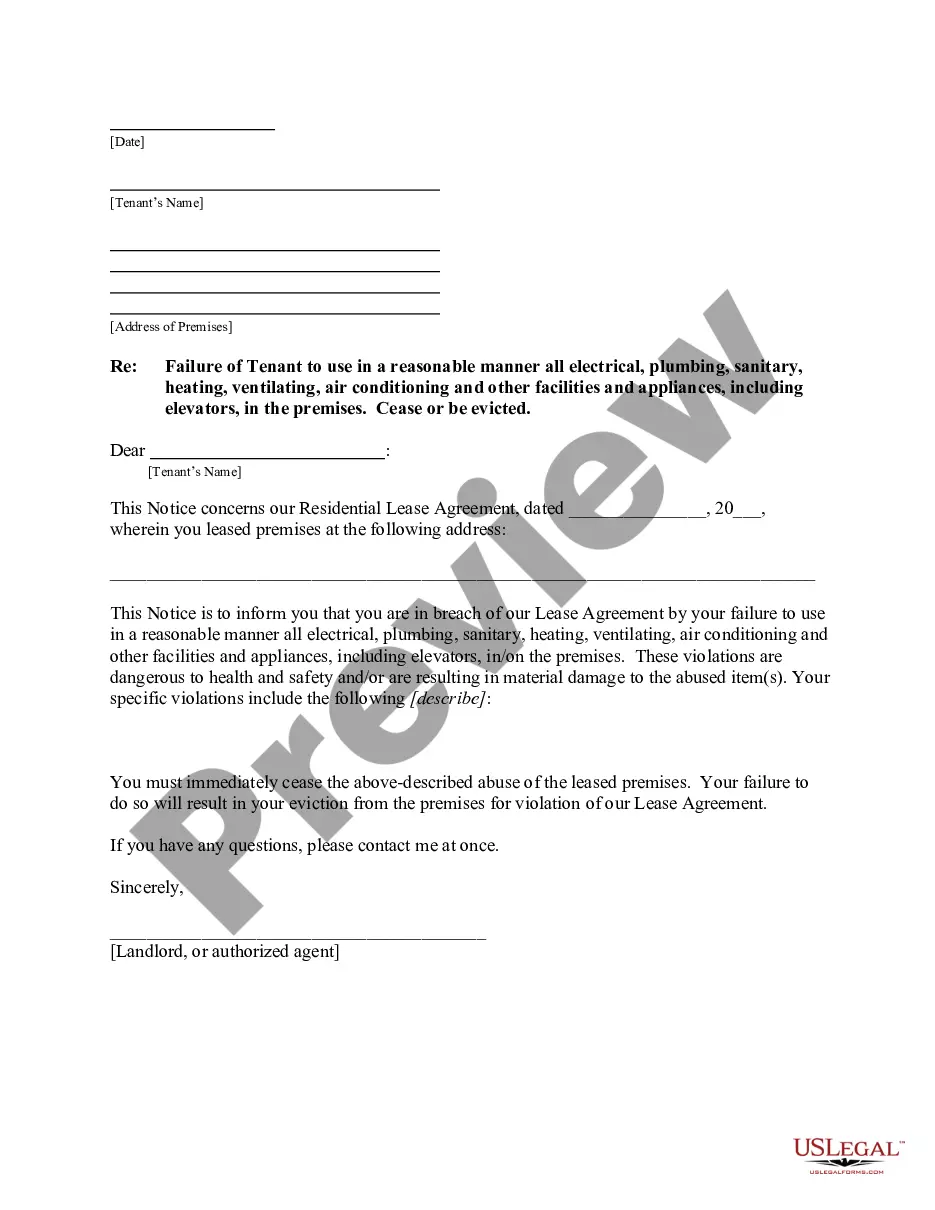
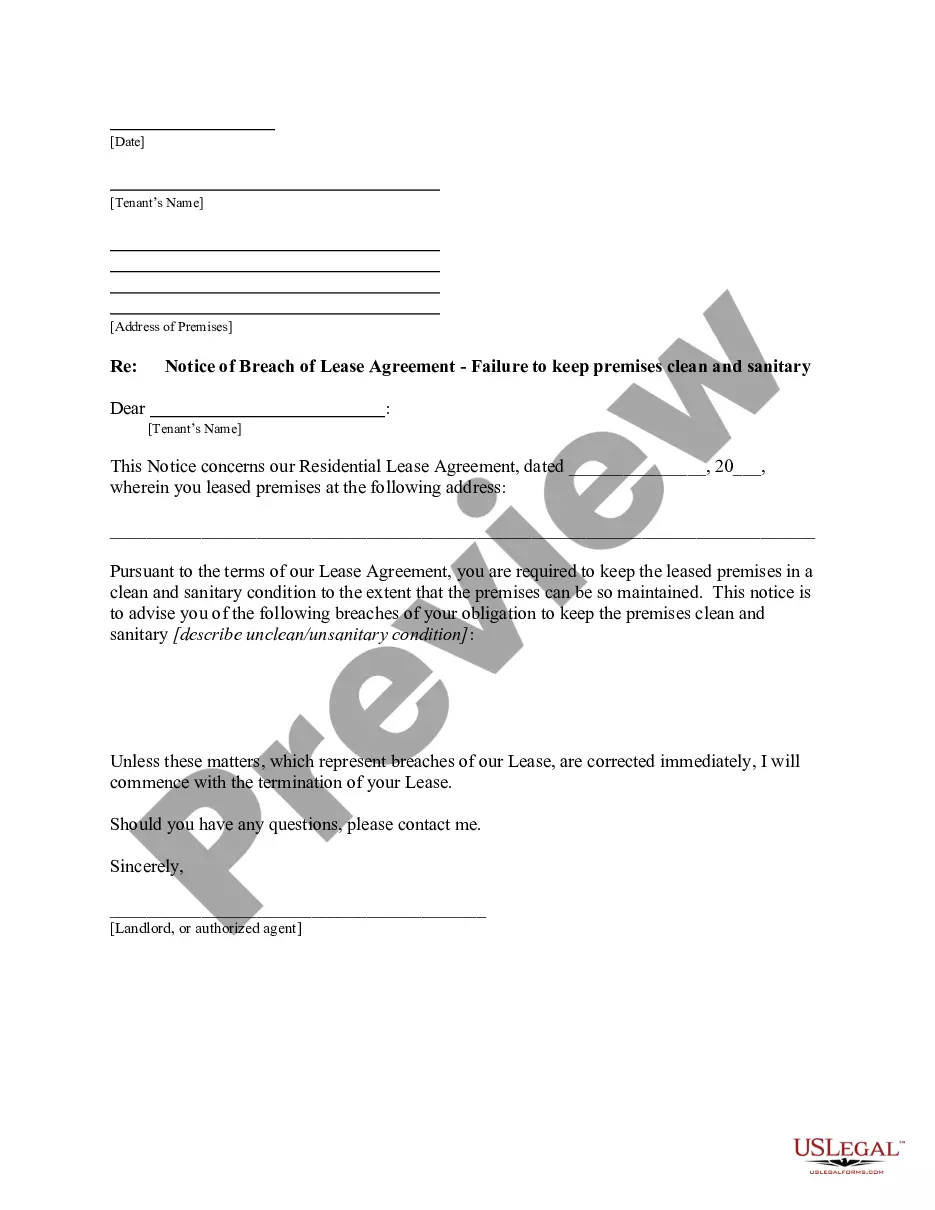
This form is a notice from the landlord to the tenant addressing the tenant's failure to properly use electrical, plumbing, sanitary, heating, ventilating, air conditioning, and other facilities in a reasonable manner as stipulated in the lease. This notice serves as a warning that continued misuse could lead to eviction, distinguishing it from other notices that may not address specific facility misuse.
Key components of this form
- Identification of the landlord and tenant.
- Details of the facility misuse.
- Consequences of continued misuse, including potential eviction.
- Contact information for further communication.
- Proof of delivery method specified.




Common use cases
This form should be used when a tenant fails to use property facilities, such as electrical and plumbing systems, in accordance with the lease agreement. It is appropriate when the landlord needs to address specific issues of misuse and serves as a formal step prior to beginning eviction proceedings.
Who needs this form
- Landlords managing residential properties.
- Property managers acting on behalf of landlords.
- Tenants who have received similar complaints and need to respond.
Completing this form step by step
- Identify the landlord and tenant by entering their names and addresses.
- Specify the details of the facility misuse in clear terms.
- State the consequences of continued misuse, emphasizing potential eviction.
- Include the landlord's contact information for any follow-up questions.
- Choose a proof of delivery method: personal delivery or mail.
Does this document require notarization?
In most cases, this form does not require notarization. However, some jurisdictions or signing circumstances might. US Legal Forms offers online notarization powered by Notarize, accessible 24/7 for a quick, remote process.
Get your form ready online
Our built-in tools help you complete, sign, share, and store your documents in one place.
Make edits, fill in missing information, and update formatting in US Legal Forms—just like you would in MS Word.
Download a copy, print it, send it by email, or mail it via USPS—whatever works best for your next step.
Sign and collect signatures with our SignNow integration. Send to multiple recipients, set reminders, and more. Go Premium to unlock E-Sign.
If this form requires notarization, complete it online through a secure video call—no need to meet a notary in person or wait for an appointment.
We protect your documents and personal data by following strict security and privacy standards.

Make edits, fill in missing information, and update formatting in US Legal Forms—just like you would in MS Word.

Download a copy, print it, send it by email, or mail it via USPS—whatever works best for your next step.

Sign and collect signatures with our SignNow integration. Send to multiple recipients, set reminders, and more. Go Premium to unlock E-Sign.

If this form requires notarization, complete it online through a secure video call—no need to meet a notary in person or wait for an appointment.

We protect your documents and personal data by following strict security and privacy standards.
Typical mistakes to avoid
- Failing to provide specific examples of the misuse.
- Not including accurate contact information for the landlord.
- Overlooking the method of delivery for proof of receipt.
Advantages of online completion
- Convenient access to professionally drafted forms.
- Easy download and customizable to meet specific needs.
- Reliable legal backing from licensed attorneys.
Quick recap
- This form helps landlords address tenant misuse of critical facilities.
- It serves as a warning before potential eviction processes.
- Completion involves clear communication and adherence to state laws.
Looking for another form?
Form popularity
FAQ
Nebraska Eviction is 3 Days or 30 Days And it must state that the tenant may halt the eviction process by paying the rent or curing the violation within the notice period.
Mitch MesserNebraska is listed there at #7 of the most tenant-friendly states; California is #19, by comparison.
Alabama. According to a 2019 report by tax-rates.org, Alabama has a property tax rate of 0.33%, making it one of the best places to invest in real estate. Arizona. Florida. Illinois. Pennsylvania. Ohio.
Kansas is relatively landlord-friendly because of the lack of rent control and limit on rental fees. Landlords can also generally set their own entry procedures.
Vermont ranked first among the renter-friendly states, followed closely by Delaware and Hawaii who were tied for second place. Rhode Island, Arizona, D.C., Maine and Alaska Statutes also seem to take good care of their renters according to our analysis.
Louisiana. Property Taxes: Louisiana has a median property tax rate of 0.18% and is the lowest in the nation. West Virginia. Property Taxes: West Virginia has a median property tax rate of 0.49%, making it the state with the sixth-lowest property taxes in the country. Arkansas.
If you think that the landlord is discriminating against you for one of these reasons, call the Nebraska Fair Housing Center at 1-800-639-6675, or 402-934-6675 in Omaha. You may also file a complaint with the Nebraska Equal Opportunity Commission at 1-800-642-6112. 3.
Tenant Rights to Withhold Rent in Nebraska Tenants may withhold rent or exercise the right to repair and deduct if a landlord fails to take care of important repairs, such as a broken heater. For specifics, see Nebraska Tenant Rights to Withhold Rent or Repair and Deduct.
Step 1: make a formal complaint. You can make a formal complaint by writing a letter to your landlord. Step 2: complain to your local council. If making a formal complaint to your landlord doesn't solve your problem you might be able to complain to your local council.