Montana Performance Horse Lease Agreement
About this form
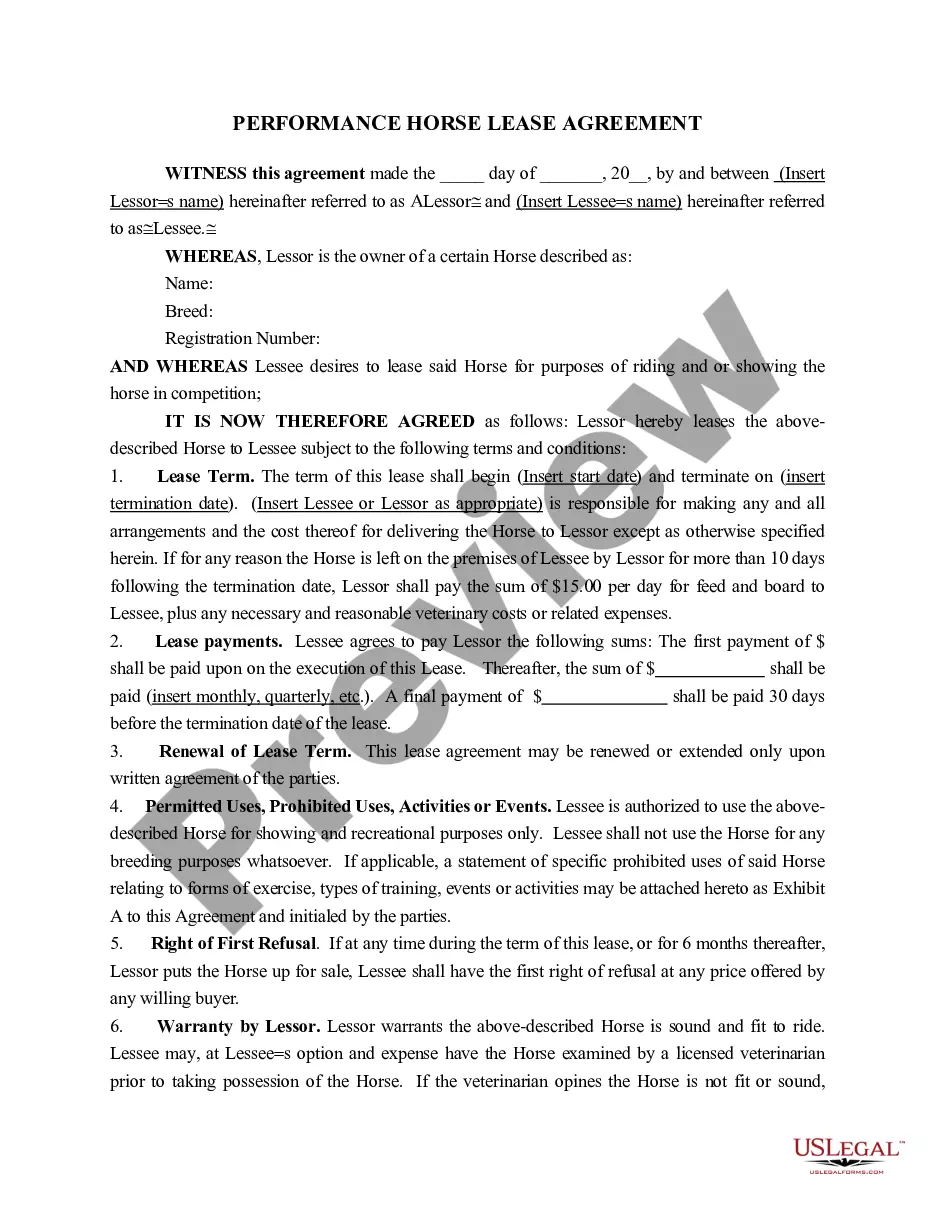
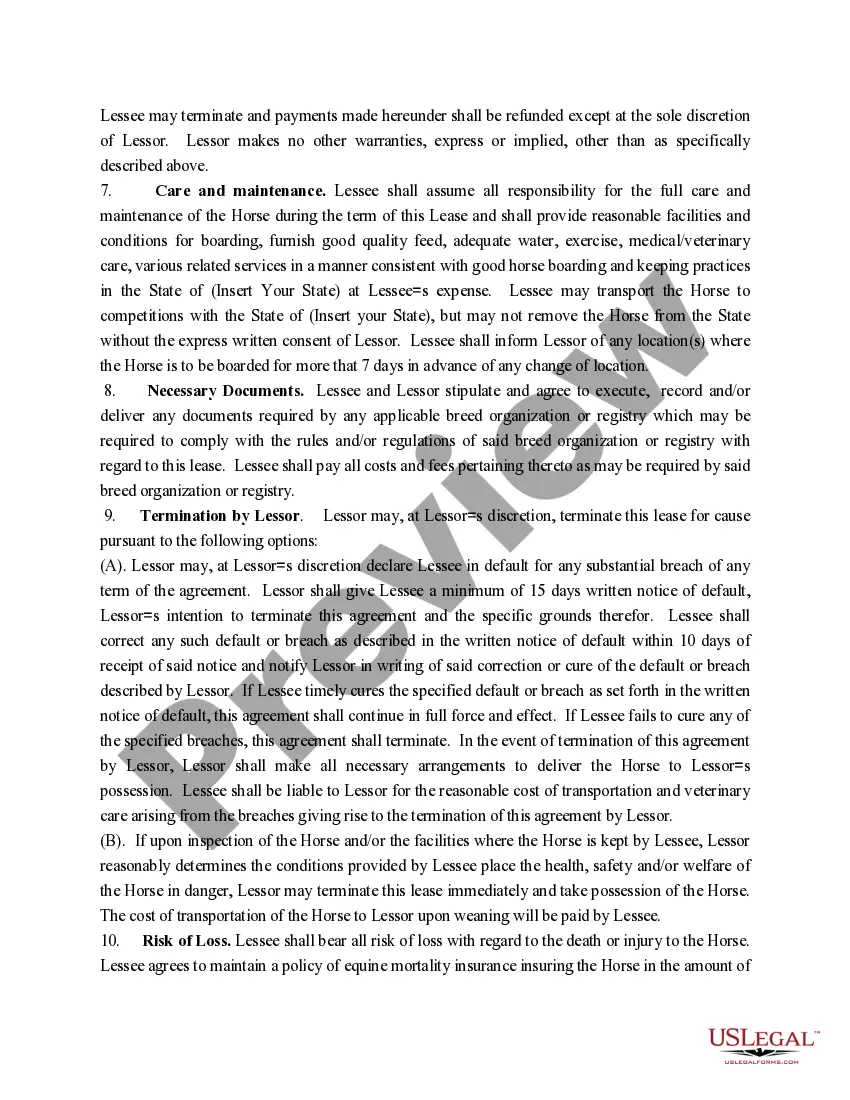
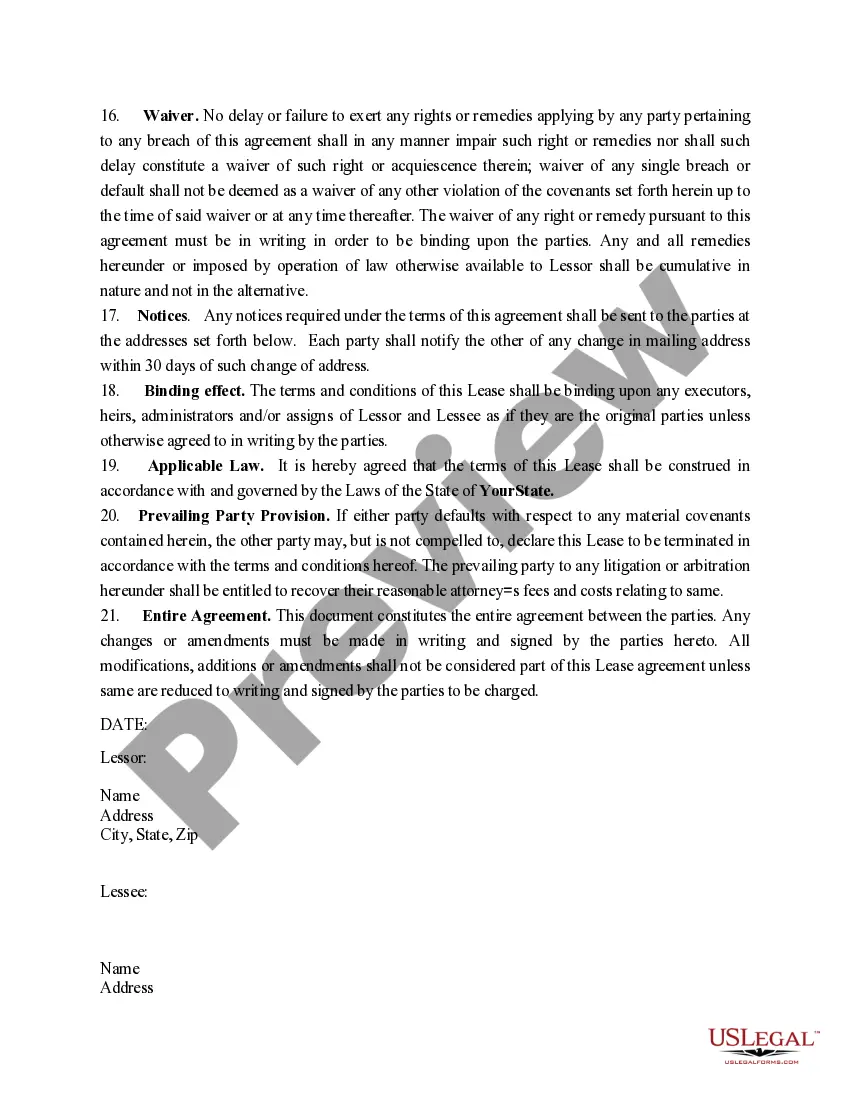
The Performance Horse Lease Agreement is a legal document used when a lessee wishes to lease a horse, specifically for riding or competing in shows. Unlike other lease agreements, this form contains specific provisions related to the safety and care of the horse, lease payments, and permitted activities. It ensures clarity on responsibilities and protections for both the horse's owner (lessor) and the person leasing the horse (lessee).
Form components explained
- Lease term: Specifies the duration of the lease.
- Lease payments: Details the payment structure, including initial and final payments.
- Permitted uses: Outlines how the horse may be used, prohibiting breeding activities.
- Right of first refusal: Grants lessee the first option to purchase the horse if offered for sale.
- Health and safety provisions: Allows lessor to terminate the lease if the horse's welfare is at risk.
When this form is needed
This form is essential for horse owners who wish to lease their horse for competition or recreational purposes and need a clear agreement outlining the terms of the lease. It is also useful for lessees who want to ensure their responsibilities are documented, protecting their interests and the horseâs welfare during the lease period.
Who should use this form
This agreement is suitable for:
- Horse owners looking to lease their horses for riding or competition.
- Individuals or entities wishing to lease a horse for showing or recreational purposes.
- Lessees who want a formal document protecting their rights and responsibilities in a horse lease arrangement.
How to prepare this document
- Identify the parties: Fill in the names and addresses of both the lessor and the lessee.
- Specify the property: Enter details about the horse, including breed and registration number.
- Enter dates: Clearly state the start and termination dates of the lease.
- Outline payment terms: Input the payment amounts and schedule for lease payments.
- Include specific uses: Note any prohibited activities or special considerations as needed.
Notarization guidance
This form does not typically require notarization unless specified by local law.
Get your form ready online
Our built-in tools help you complete, sign, share, and store your documents in one place.
Make edits, fill in missing information, and update formatting in US Legal Forms—just like you would in MS Word.
Download a copy, print it, send it by email, or mail it via USPS—whatever works best for your next step.
Sign and collect signatures with our SignNow integration. Send to multiple recipients, set reminders, and more. Go Premium to unlock E-Sign.
If this form requires notarization, complete it online through a secure video call—no need to meet a notary in person or wait for an appointment.
We protect your documents and personal data by following strict security and privacy standards.

Make edits, fill in missing information, and update formatting in US Legal Forms—just like you would in MS Word.

Download a copy, print it, send it by email, or mail it via USPS—whatever works best for your next step.

Sign and collect signatures with our SignNow integration. Send to multiple recipients, set reminders, and more. Go Premium to unlock E-Sign.

If this form requires notarization, complete it online through a secure video call—no need to meet a notary in person or wait for an appointment.

We protect your documents and personal data by following strict security and privacy standards.
Common mistakes to avoid
- Failing to specify the permitted uses of the horse accurately.
- Not entering clear payment terms, leading to confusion later.
- Overlooking the need for a renewal clause if extension options are desired.
Advantages of online completion
- Convenience: Downloadable anytime, anywhere.
- Editability: Easily fill in relevant information to fit specific needs.
- Reliability: Drafted by licensed attorneys, ensuring legal soundness.
Legal use & context
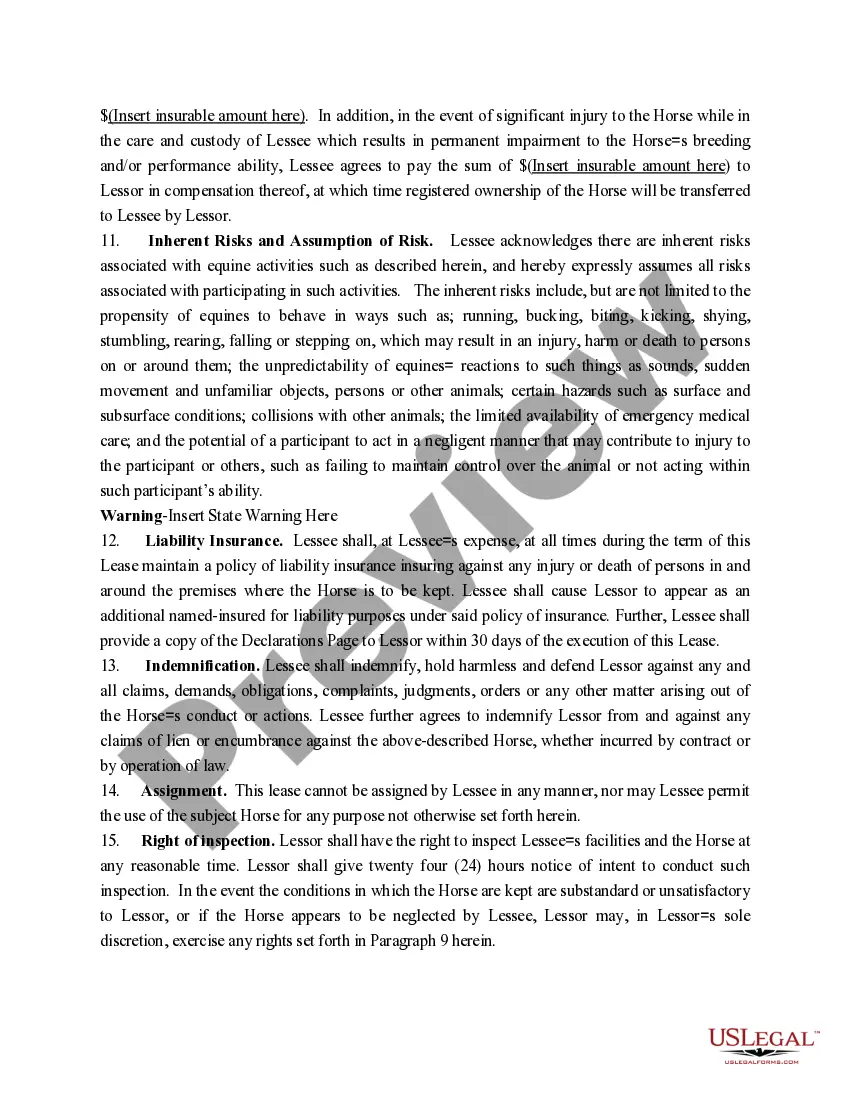
- The lease agreement should outline duties regarding care, maintenance, and handling of the horse.
- It helps clarify legal responsibilities and liabilities for both parties.
- This agreement may be necessary to protect against disputes regarding the horse's use and welfare.
Main things to remember
- The Performance Horse Lease Agreement formalizes the arrangement between lessees and lessors.
- It outlines important terms, payments, and responsibilities to protect both parties.
- Using this form online provides ease and legal assurance for both horse owners and lessees.
Looking for another form?
Form popularity
FAQ
FULL LEASE: For $400 per month, you will have full, exclusive use of the horse. Full-leases require that you also pay to the costs of routine farrier and health care, which will vary according to the horse's needs.
Full Leasing a Horse When you full lease a horse you pay an agreed upon fee for exclusive access to the horse. This means you are the only one riding the horse.
A free lease means that the horse is leased to someone without any payment to the owner. When you have a free lease you retain ownership and control of your horse but your horse, in best case scenarios, is still cared for and loved. Everyone wins. The owner has good care for the horse they love.
When you full lease a horse you pay an agreed upon fee for exclusive access to the horse. This means you are the only one riding the horse.Oftentimes a full-lease also comes with the additional costs of board, veterinary expenses and shoeing expenses. It is pretty much exactly like owning the horse yourself.
Leasing a horse is nearly always less expensive than buying one.Leasing often allows riders of all levels to get a better quality horse than they might buy. Horse owners don't usually sell their best or most promising horses, but do lease them out when they don't have time for them or need some extra income.
Option #1: The person leasing the horse is responsible for all of the horse's expenses (board, feed, veterinary, farrier, etc). The person leasing the horse may ride or use the horse any time they'd like. Full leases rarely restrict riding days, times, or horse-related events, like attending a horse show.
Lease-to-Buy Equine Contract To purchase the horse, the buyer will pay the full purchase price during the lease term. During this time, the buyer will continue making lease payments per the parties' agreement, which will potentially go toward the total purchase price of the horse.