Mississippi Letter from Landlord to Tenant for Failure to use electrical, plumbing, sanitary, heating, ventilating, air conditioning and other facilities in a reasonable manner
Understanding this form
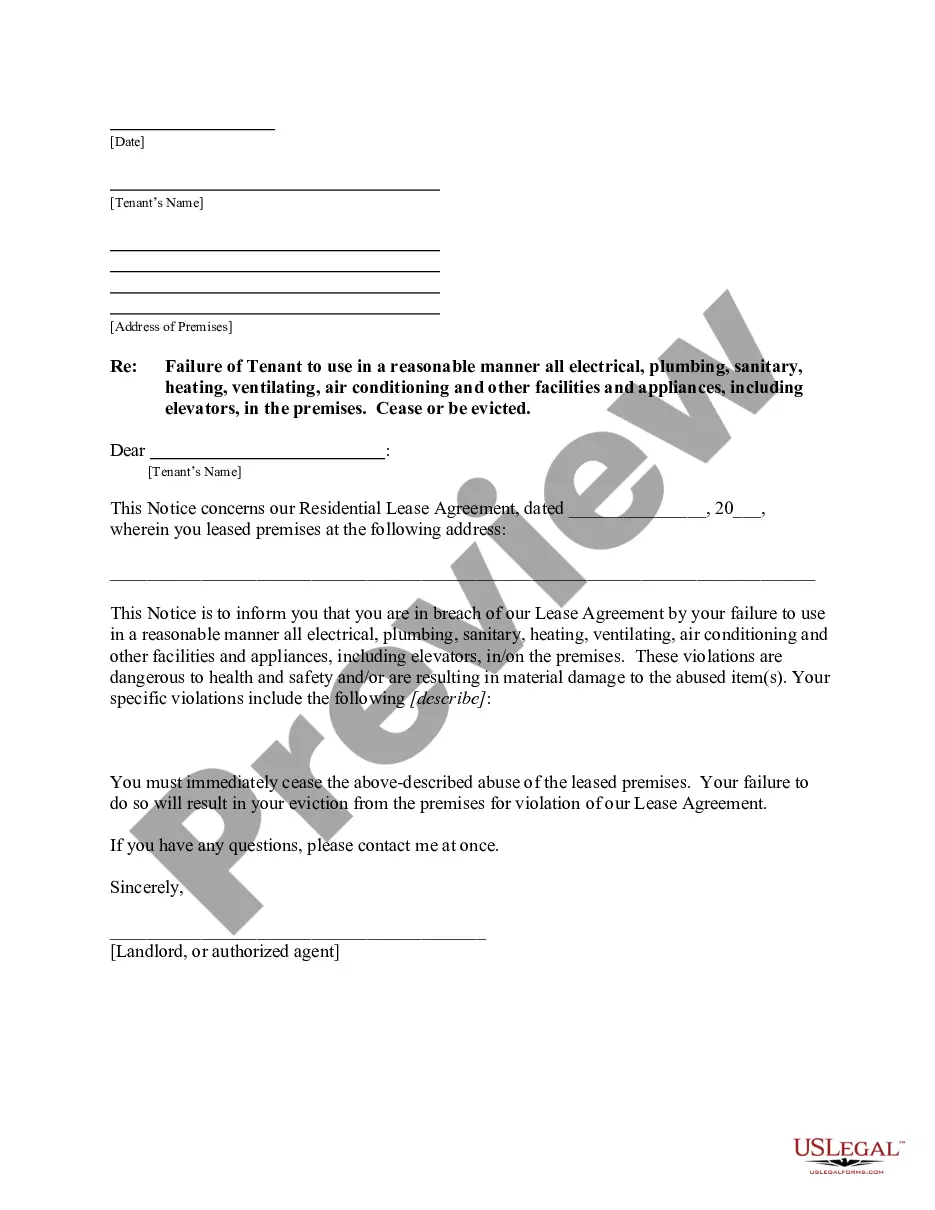
This form is a notice from a landlord to a tenant regarding their failure to use essential facilities and appliances, such as electrical, plumbing, and heating systems, in a reasonable manner. The notice serves as a formal warning that continued misuse may lead to eviction. Unlike other notices, this form specifically addresses the proper usage of communal and private amenities as outlined in the lease agreement.
Main sections of this form
- Contact information for the landlord or authorized agent.
- Statement outlining the tenant's misuse of facilities.
- Warning regarding potential eviction if misuse continues.
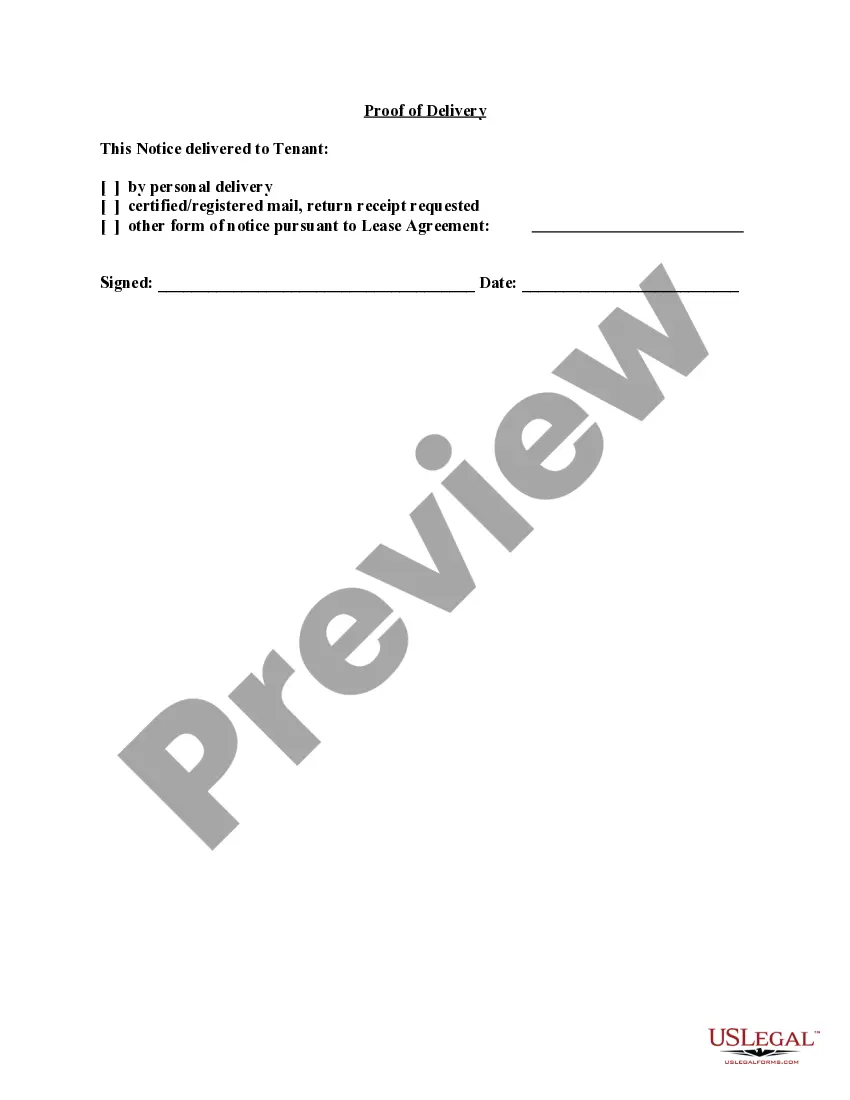
- Proof of delivery method for the notice to the tenant.
- Signature line for the landlord or authorized agent.



When to use this document
This notice should be used when a tenant is not utilizing essential services, such as heating, plumbing, or electrical systems, in accordance with the terms of the lease. It is appropriate in situations where the landlord has observed repeated instances of misuse and wishes to formally address the issue before considering eviction as a last resort.
Who needs this form
- Landlords who have tenants that are misusing property facilities.
- Property managers acting on behalf of landlords.
- Real estate professionals dealing with tenant issues.
Steps to complete this form
- Identify and enter the date of the notice.
- Fill in the contact information of the landlord or authorized agent.
- Describe the specific instances of misuse by the tenant.
- Clearly state the consequences of continued misuse, including possible eviction.
- Sign the notice at the bottom to validate it.
- Choose a method of proof of delivery, such as certified mail or personal delivery.
Does this document require notarization?
This form does not typically require notarization unless specified by local law. Landlords should verify any specific requirements in their jurisdiction.
Get your form ready online
Our built-in tools help you complete, sign, share, and store your documents in one place.
Make edits, fill in missing information, and update formatting in US Legal Forms—just like you would in MS Word.
Download a copy, print it, send it by email, or mail it via USPS—whatever works best for your next step.
Sign and collect signatures with our SignNow integration. Send to multiple recipients, set reminders, and more. Go Premium to unlock E-Sign.
If this form requires notarization, complete it online through a secure video call—no need to meet a notary in person or wait for an appointment.
We protect your documents and personal data by following strict security and privacy standards.
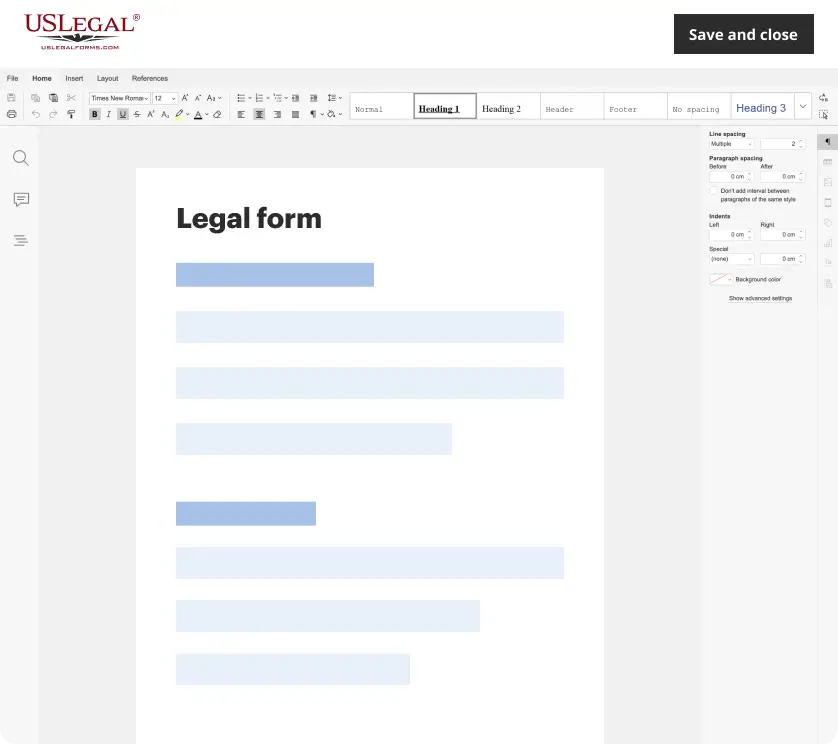
Make edits, fill in missing information, and update formatting in US Legal Forms—just like you would in MS Word.
Download a copy, print it, send it by email, or mail it via USPS—whatever works best for your next step.
Sign and collect signatures with our SignNow integration. Send to multiple recipients, set reminders, and more. Go Premium to unlock E-Sign.
If this form requires notarization, complete it online through a secure video call—no need to meet a notary in person or wait for an appointment.
We protect your documents and personal data by following strict security and privacy standards.
Typical mistakes to avoid
- Not providing specific examples of misuse in the notice.
- Failing to include proper contact information for the landlord.
- Neglecting to sign the notice before delivery.
- Incorrectly addressing the tenant in the notice.
Advantages of online completion
- Immediate access to a legally drafted template.
- Easy customization to fit specific situations.
- Convenience of downloading and printing from home.
- Peace of mind with a compliant legal document.
Legal use & context
- This form serves as a formal warning and may be necessary for legal proceedings regarding eviction.
- It helps to establish a paper trail of communications regarding tenant behavior.
- Using this form appropriately can help landlords enforce the terms of the lease agreement.
Summary of main points
- The form is essential for landlords to address tenant misuse of facilities.
- Clear documentation can prevent further disputes and support future eviction actions.
- Available for easy downloading, ensuring compliance with legal standards.
Looking for another form?
Form popularity
FAQ
The big take-away is that in most circumstances a landlord cannot enter a property without agreement from the tenant. And If the landlord ignores the law and enters the property without permission, the tenant may be able to claim damages or gain an injunction to prevent the landlord doing it again.
When you rent a property from a landlord it becomes your home. They should only enter the property without you being present, if you have given permission for them to do so, or in a genuine emergency.
Notice to terminate a week-to-week lease. A one-week written notice is required. Notice to terminate a month-to-month lease. 30-day written notice is required. Notice to terminate a yearly lease with no end date.
Indiana. Indiana laws allow landlords to hold on to security deposits for 45 days to give them time to determine any damages caused by tenants. Colorado. Colorado is one of few states that allow landlords to access the rental property without an advance notice requirement. Georgia.
Only in an emergency can a landlord enter the residence without consent. Consent to enter may be granted within the terms of the lease.The landlord has 45 days to return the deposit but may deduct rent owed or reasonable costs for cleaning the unit or repairing damage caused by the tenant.
Your landlord or their representatives may be allowed reasonable access to carry out inspections or repairs, but must first get your permission. According to Section 11, from The Landlord and Tenant Act 1985, your landlord needs to give you at least 24 hour notice before they come around and visit for any reason.
Mississippi is another landlord-friendly state, there's no limit for how much a landlord can charge for a security deposit, and landlords have 45 days to return the security deposit at the end of a tenancy.
The landlord must give the tenant a 30 day written notice of eviction which must (1) state specifically what the tenant has done that is a breach of the lease or the landlord-tenant act; (2) state that the lease will terminate in 30 days if the tenant has not remedied the breach in some way.