Minnesota Quitclaim Deed from Corporation to LLC
What this document covers
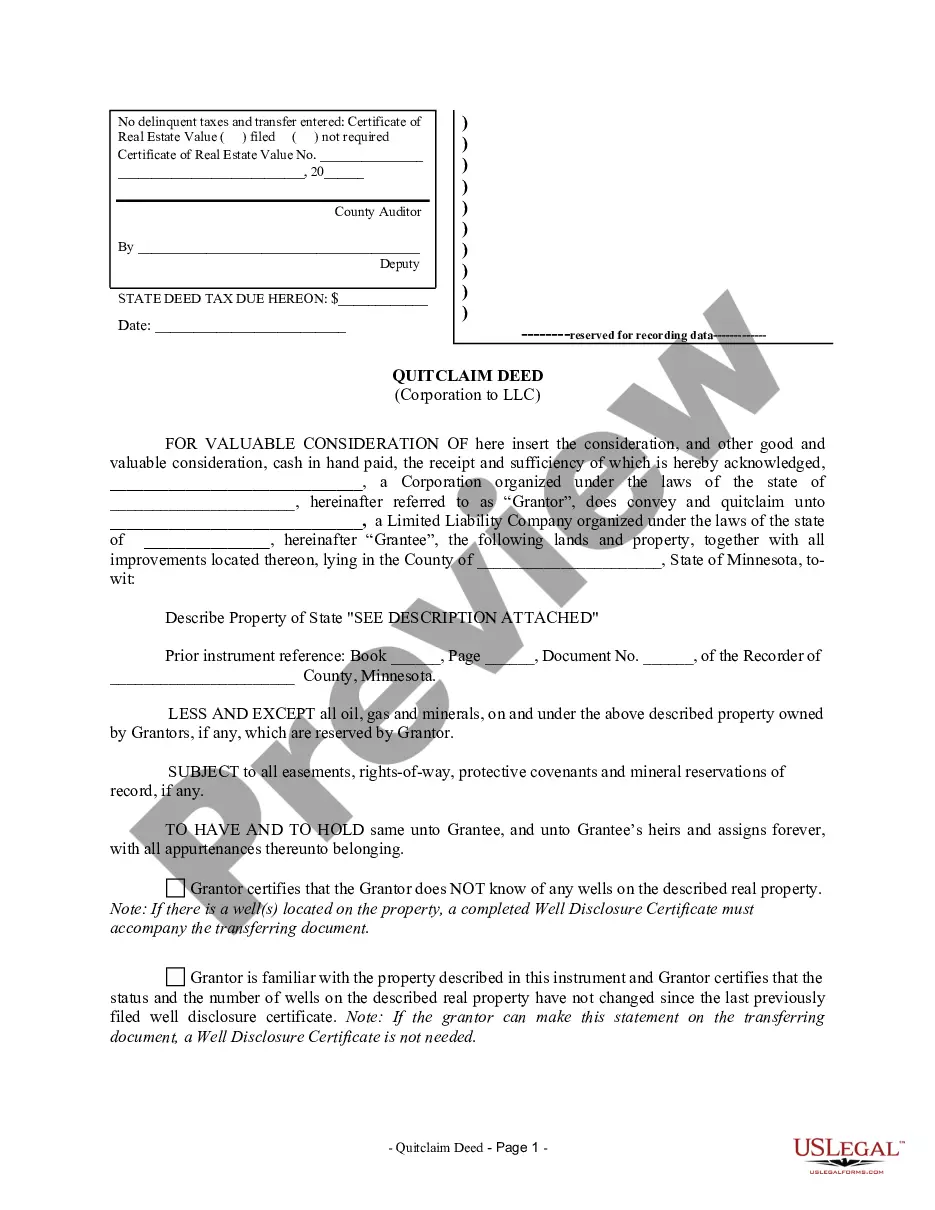
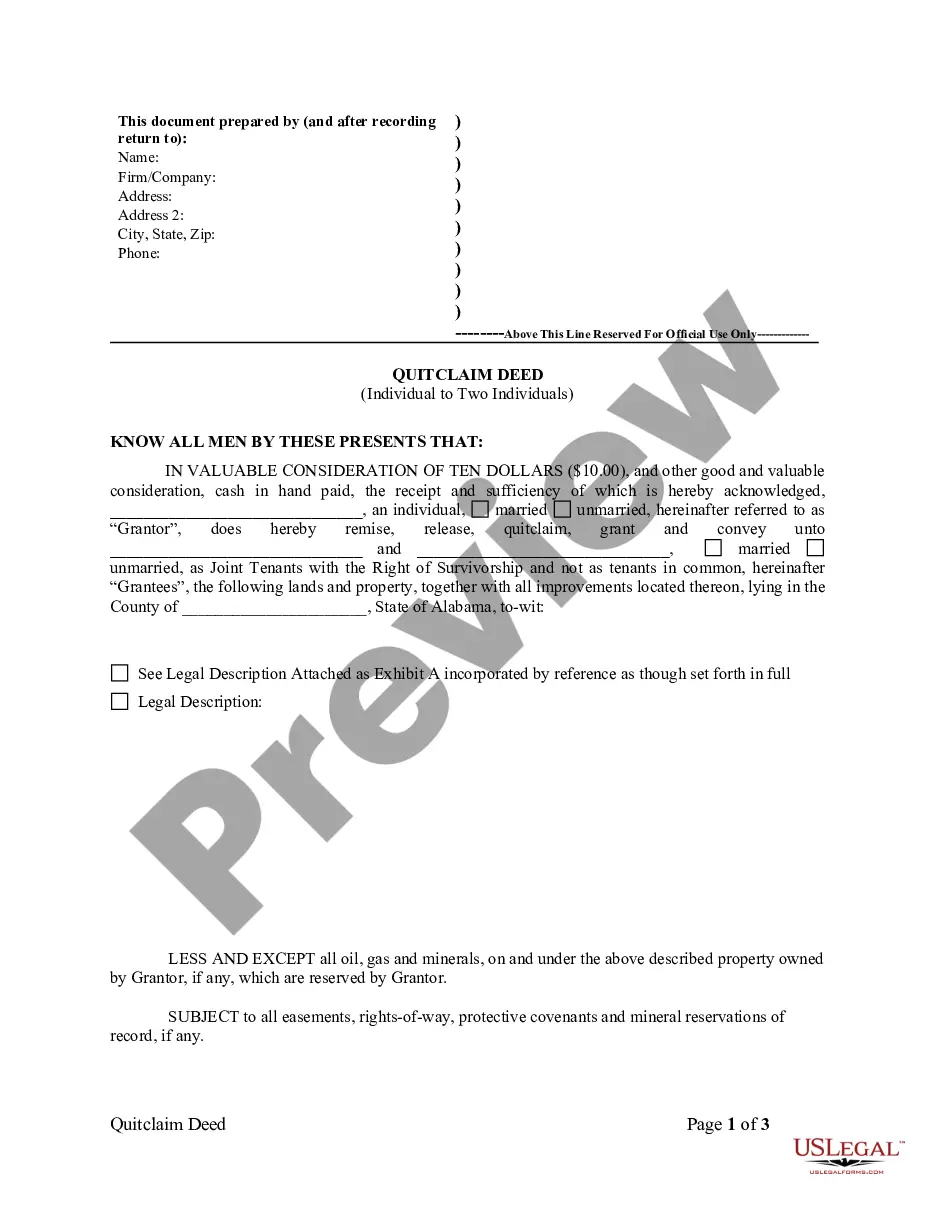
The Quitclaim Deed from Corporation to LLC is a legal document used to transfer property ownership from a corporation to a limited liability company (LLC). This form allows the corporation, as the Grantor, to convey the property rights without providing warranties about the title. It is particularly useful in real estate transactions where the Grantor may wish to simplify the transfer process and avoid the complexities associated with traditional deeds. Unlike other deeds, a quitclaim deed does not assure that the property title is clear of liabilities or other claims.
Key components of this form
- Identification of the Grantor (Corporation) and Grantee (LLC).
- Description of the property being transferred.
- Statement regarding the consideration (payment) for the property.
- Clauses outlining reservations for oil, gas, and minerals.
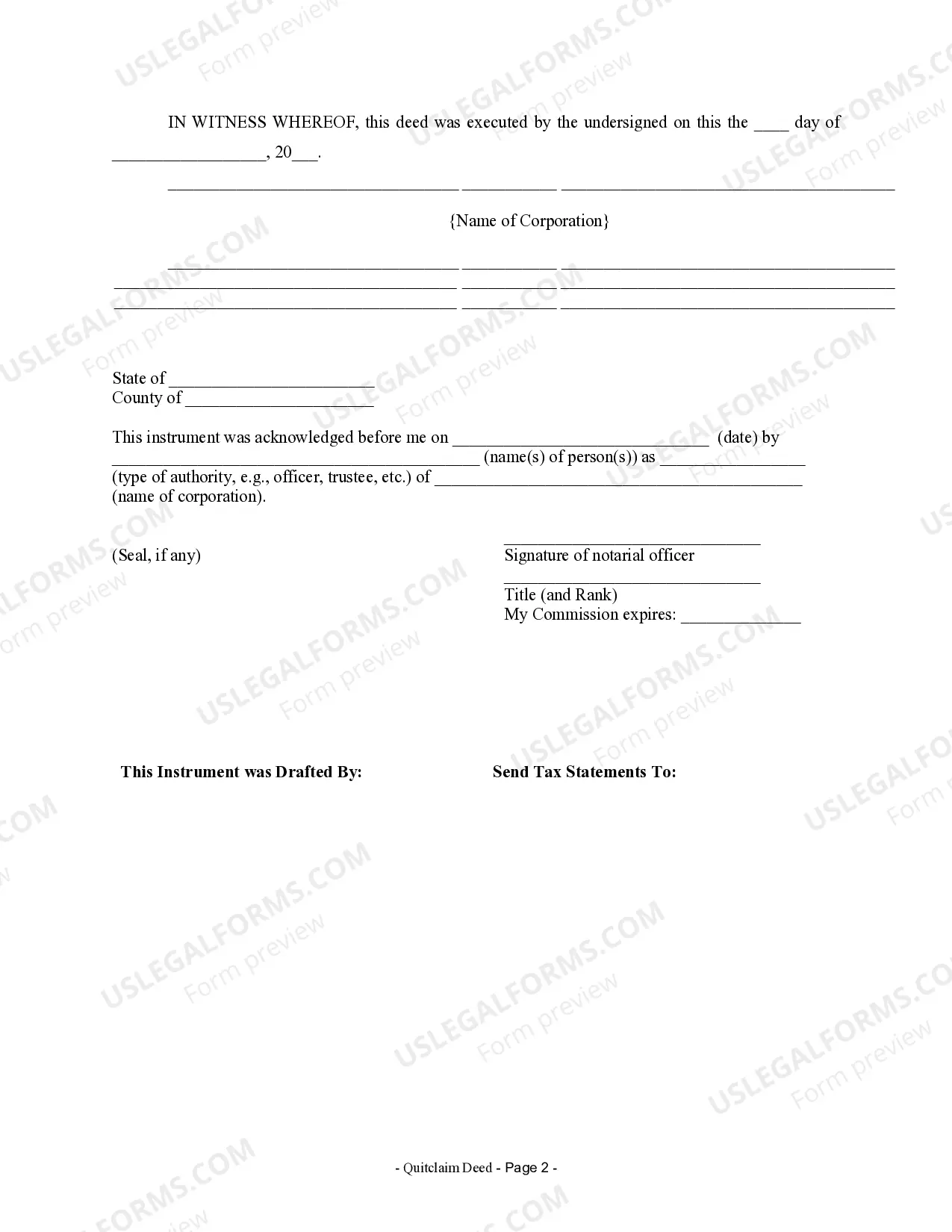
- Notarization section for legal acknowledgment.


Situations where this form applies
This form should be used when a corporation is transferring real property to an LLC. It is applicable in various scenarios, such as restructuring business ownership, consolidating property holdings under an LLC, or facilitating asset transfers between business entities. Always ensure that this form is suitable for your specific transaction by being aware of any implications regarding title and property rights.
Who should use this form
This quitclaim deed is intended for:
- Corporations looking to transfer property assets to an LLC.
- Business owners seeking to simplify property transactions.
- Individuals managing corporate real estate within limited liability structures.
How to complete this form
- Identify the parties involved: the corporation as Grantor and the LLC as Grantee.
- Provide a detailed description of the property being conveyed.
- Specify any consideration being exchanged for the property.
- Complete the notarization section with the appropriate signature and date.
- Ensure that all relevant state-specific information is included for compliance.
Notarization requirements for this form
This document requires notarization to meet legal standards. US Legal Forms provides secure online notarization powered by Notarize, allowing you to complete the process through a verified video call, available 24/7.
Get your form ready online
Our built-in tools help you complete, sign, share, and store your documents in one place.
Make edits, fill in missing information, and update formatting in US Legal Forms—just like you would in MS Word.
Download a copy, print it, send it by email, or mail it via USPS—whatever works best for your next step.
Sign and collect signatures with our SignNow integration. Send to multiple recipients, set reminders, and more. Go Premium to unlock E-Sign.
If this form requires notarization, complete it online through a secure video call—no need to meet a notary in person or wait for an appointment.
We protect your documents and personal data by following strict security and privacy standards.

Make edits, fill in missing information, and update formatting in US Legal Forms—just like you would in MS Word.

Download a copy, print it, send it by email, or mail it via USPS—whatever works best for your next step.

Sign and collect signatures with our SignNow integration. Send to multiple recipients, set reminders, and more. Go Premium to unlock E-Sign.

If this form requires notarization, complete it online through a secure video call—no need to meet a notary in person or wait for an appointment.

We protect your documents and personal data by following strict security and privacy standards.
Mistakes to watch out for
- Failing to include a clear description of the property.
- Not specifying the consideration for the transfer.
- Omitting the notarization, leading to potential legal issues.
- Not reviewing state-specific requirements before usage.
Benefits of using this form online
- Convenience of downloading and completing the form at your own pace.
- Access to reliable legal templates drafted by licensed attorneys.
- Editability allows for customization to fit specific needs.
Looking for another form?

Form popularity
FAQ
Yes, you can file a Minnesota Quitclaim Deed from Corporation to LLC online, making the process more convenient. Many platforms, including uslegalforms, provide easy-to-use templates and guidance for filing your deed electronically. This allows you to complete the necessary paperwork from the comfort of your home, saving you time and effort. However, ensure that you follow your local county's specific requirements for online submissions.
While it is not legally required to have a lawyer when executing a Minnesota Quitclaim Deed from Corporation to LLC, having legal guidance can simplify the process. A lawyer can ensure that all necessary documents are correctly prepared and filed, reducing the risk of errors. Furthermore, legal advice helps you understand the implications of transferring property ownership. Therefore, if you have any uncertainties, consulting a lawyer is a wise choice.
Yes, you can use a Minnesota Quitclaim Deed from Corporation to LLC to transfer ownership of a house to an LLC. This type of transfer can provide liability protection for the property and streamline management. However, it's important to follow proper legal procedures and ensure that all documentation is correctly filed. UsLegalForms offers resources and templates that can help simplify this process for you.
A Minnesota Quitclaim Deed from Corporation to LLC cannot be used in certain situations, such as when there are existing liens against the property. Additionally, if the property is held in a trust or if there are specific restrictions in the original deed, a quitclaim deed may not be appropriate. It's essential to consult with a legal professional to ensure that the quitclaim deed meets all legal requirements and is suitable for your specific circumstances.
A quit claim deed can be voided under certain circumstances, such as if it was executed under duress or if one party lacked the legal capacity to sign. Additionally, if the deed does not meet state requirements or if there is evidence of fraud, it could also be rendered void. To prevent such issues, using a Minnesota Quitclaim Deed from Corporation to LLC should be done with careful consideration and, ideally, professional guidance.
Yes, executing a quit claim deed to transfer property to an LLC is entirely feasible and often straightforward. This process allows property owners to effectively convey their interests in the property to the LLC without extensive legal hurdles. When utilizing a Minnesota Quitclaim Deed from Corporation to LLC, it’s essential to accurately complete the deed to avoid potential legal disputes.
While a quit claim deed can facilitate quick property transfers, it does come with disadvantages. It does not provide any warranties regarding the title, meaning that if there are any claims against the property, the new owner may face unexpected issues. Additionally, without proper documentation and legal advice, using a Minnesota Quitclaim Deed from Corporation to LLC could lead to complications down the line.
To transfer ownership of property to an LLC, you typically start by drafting a quit claim deed. This deed must clearly state the property being transferred and the parties involved. After completing the Minnesota Quitclaim Deed from Corporation to LLC, you should file it with the county recorder's office to ensure the transfer is legally recognized.
Yes, you can use a quit claim deed to transfer property ownership to an LLC. This type of deed allows for a quick and straightforward transfer without needing extensive legal documentation. When executing a Minnesota Quitclaim Deed from Corporation to LLC, ensure that all parties involved understand the implications of the transfer.
Many individuals choose to put their property in an LLC to protect their personal assets from liabilities associated with the property. This separation can limit personal liability should any legal issues arise. Additionally, using an LLC can offer tax benefits and simplify the process of transferring ownership, such as through a Minnesota Quitclaim Deed from Corporation to LLC.