Michigan Marital Domestic Separation and Property Settlement Agreement Minor Children no Joint Property or Debts where Divorce Action Filed
Understanding this form
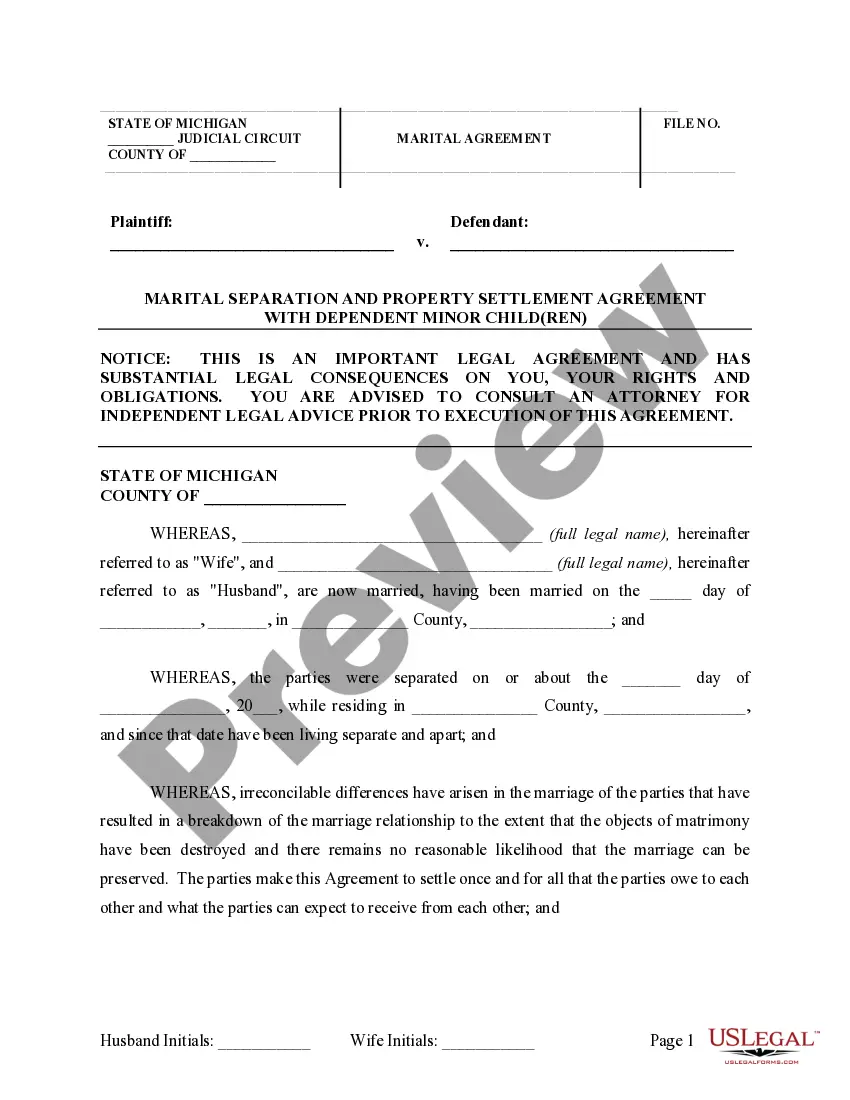
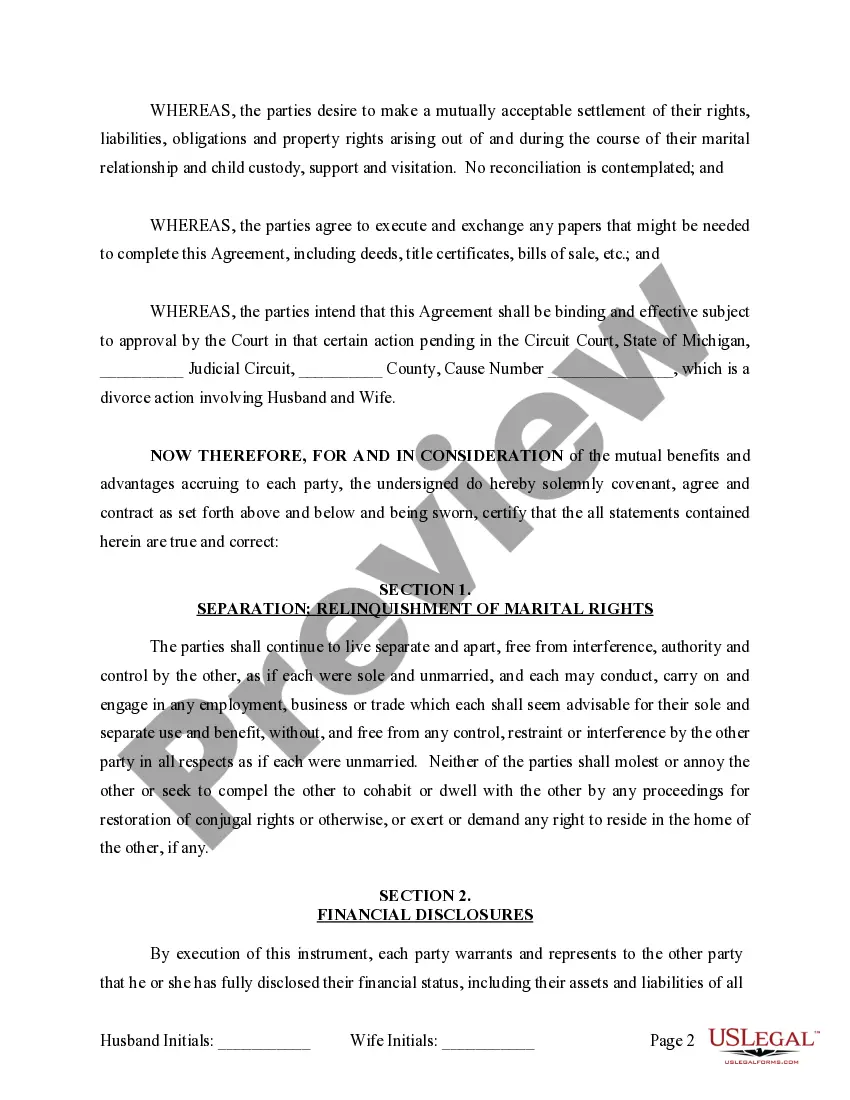
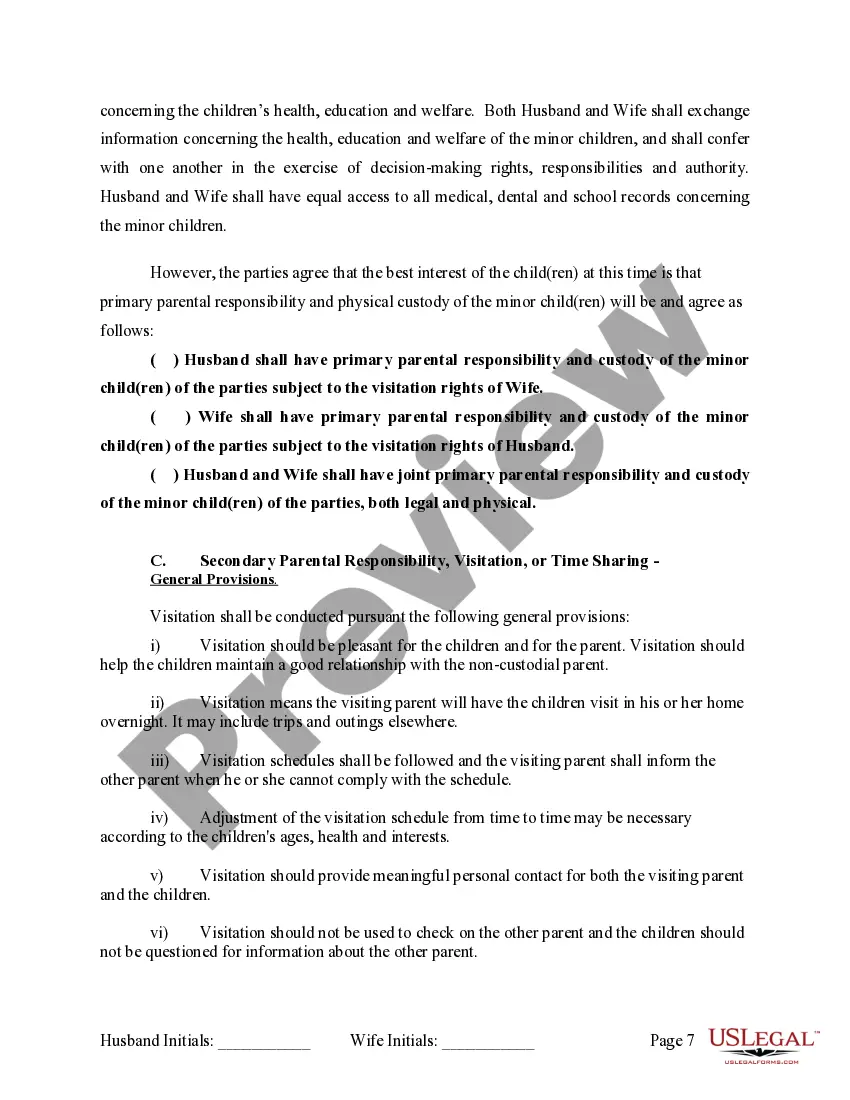
The Marital Domestic Separation and Property Settlement Agreement is a legal document for married individuals with minor children who wish to separate while having no joint property or debts. This form is specifically designed for use in the context of a divorce action that has been filed or is anticipated. It outlines agreements regarding child custody, visitation rights, child support, and any potential alimony payments, making it distinct from other separation agreements that may involve shared assets or debts.
What’s included in this form
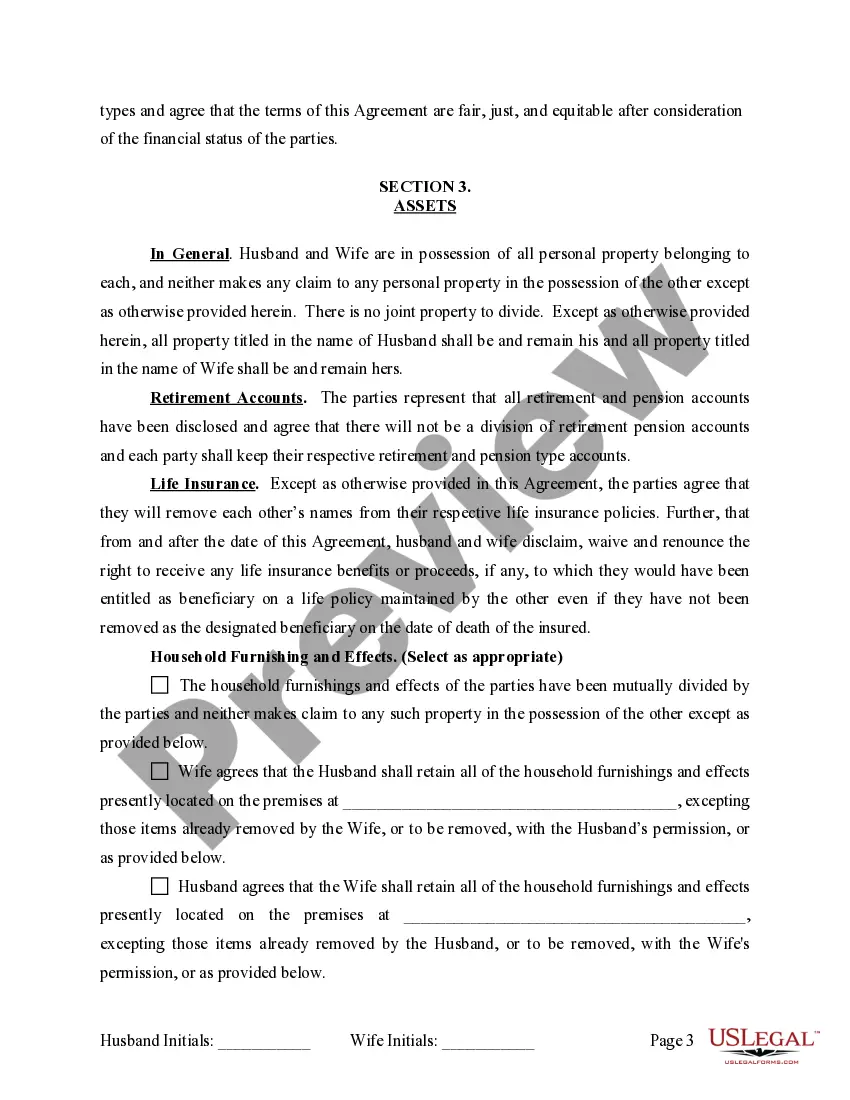
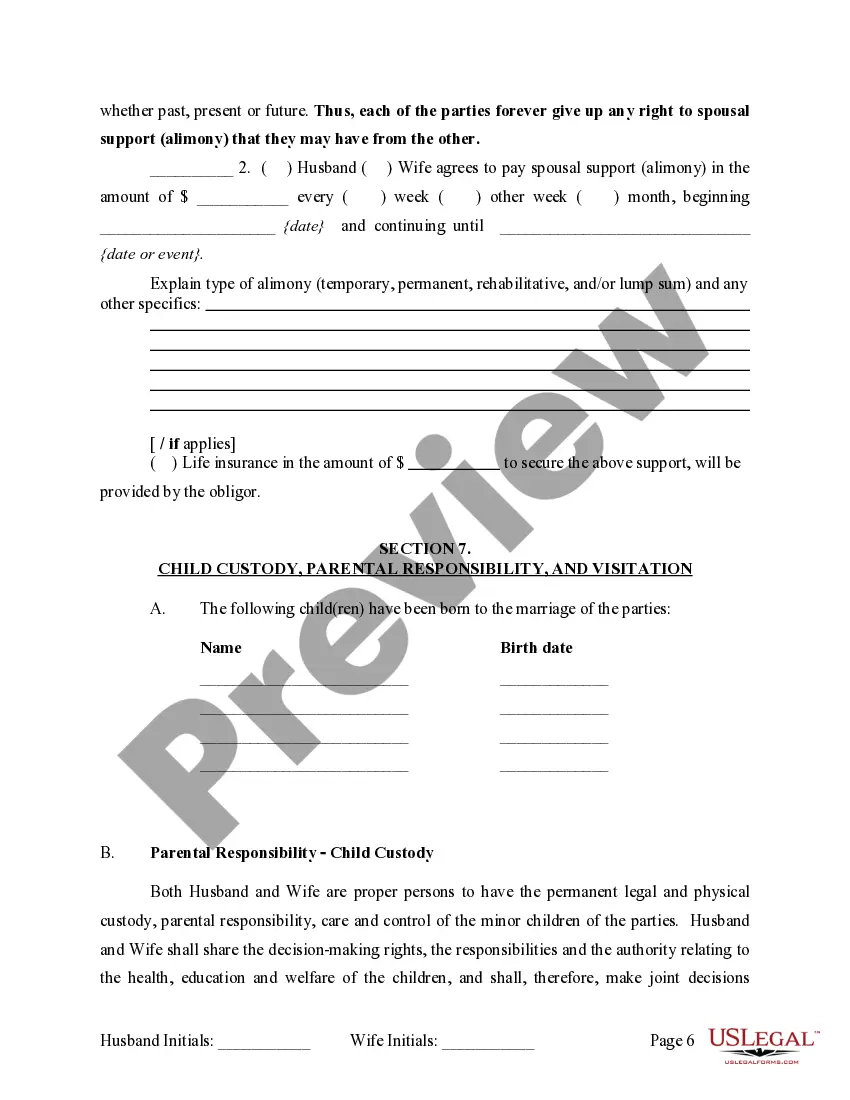
- Clearly defined custody arrangements for minor children.
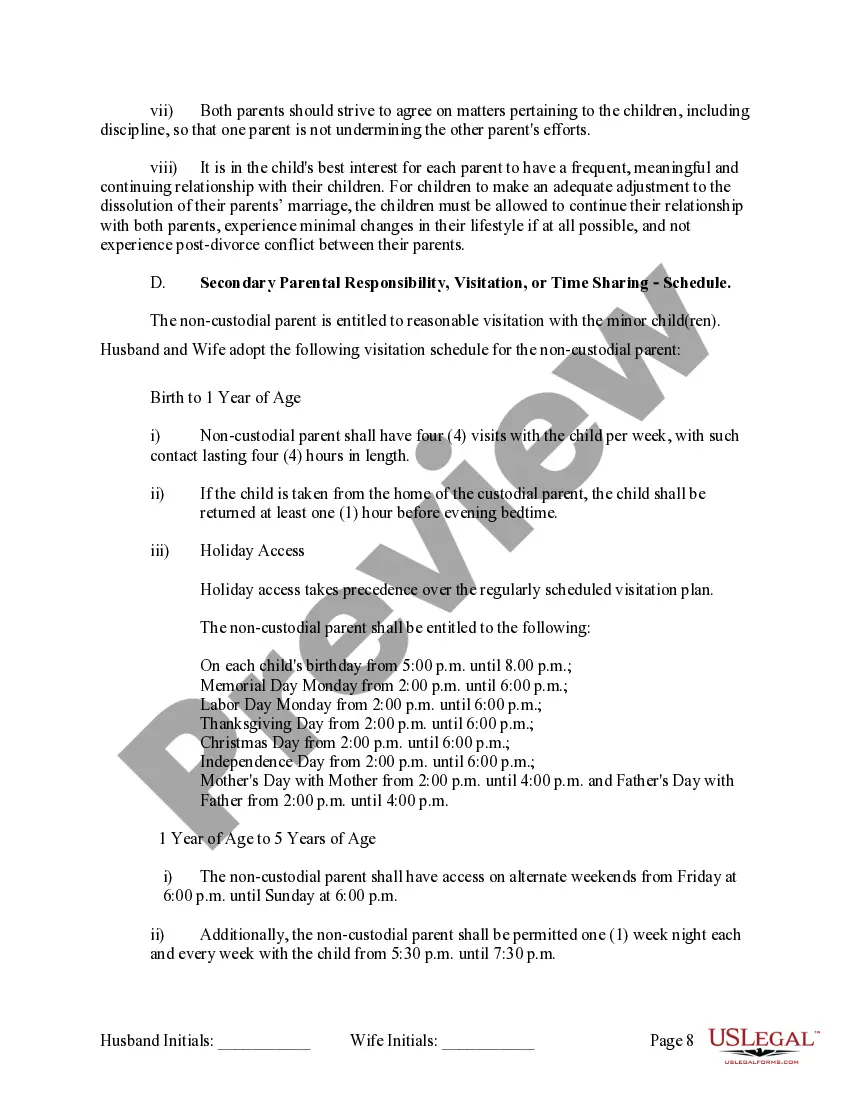
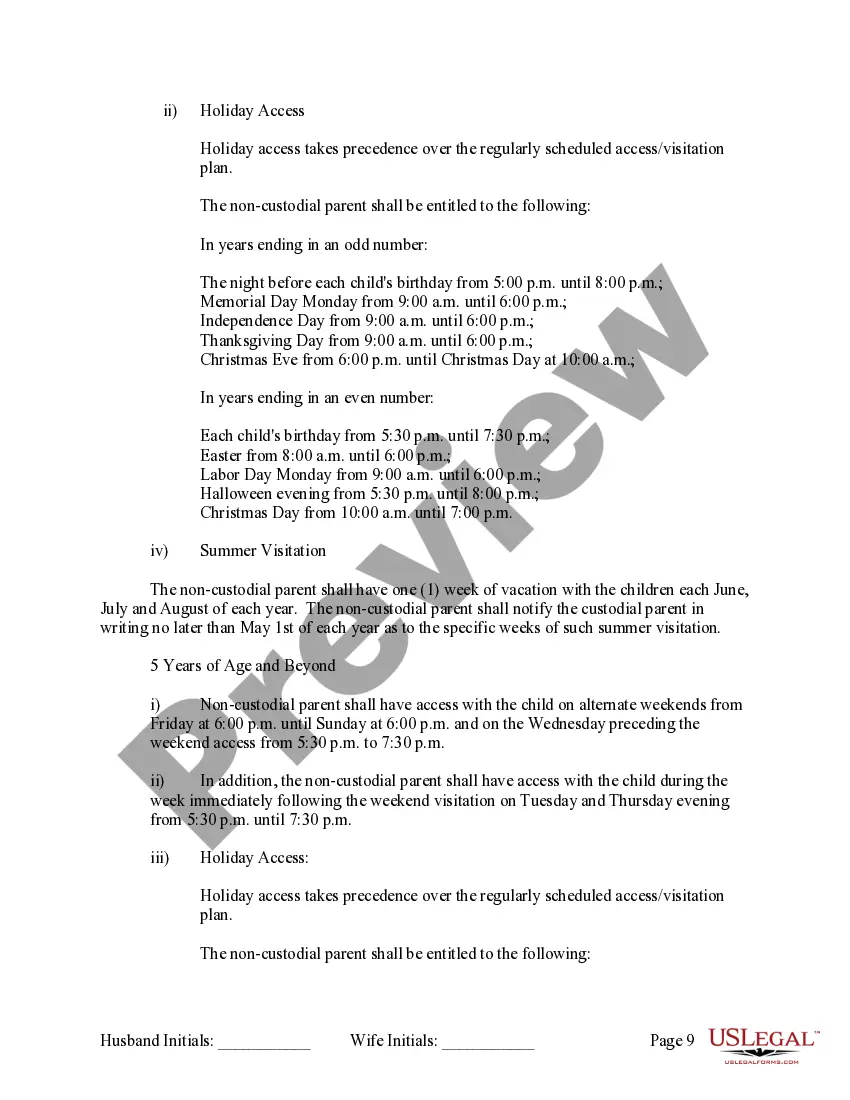
- Visitation rights and schedule for both parents.
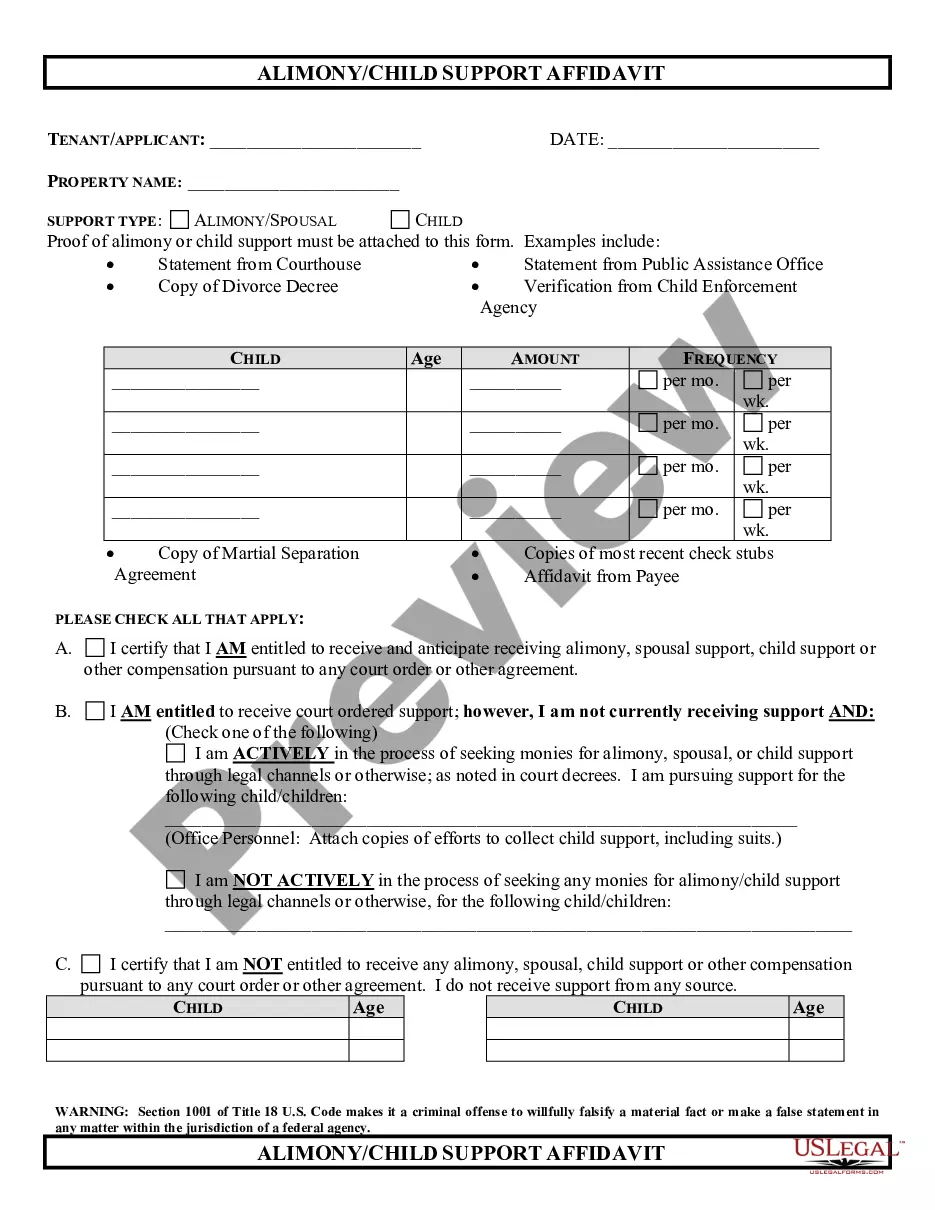
- Details on child support obligations, including amounts and payment frequency.
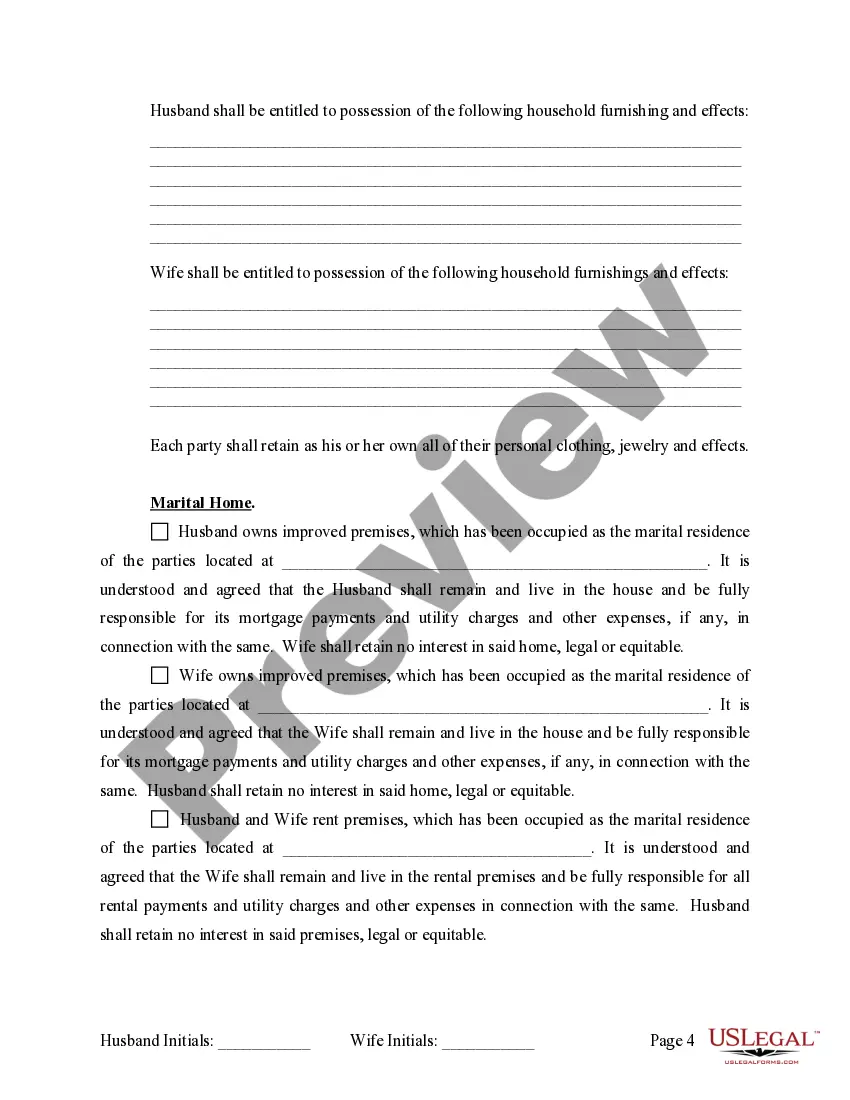
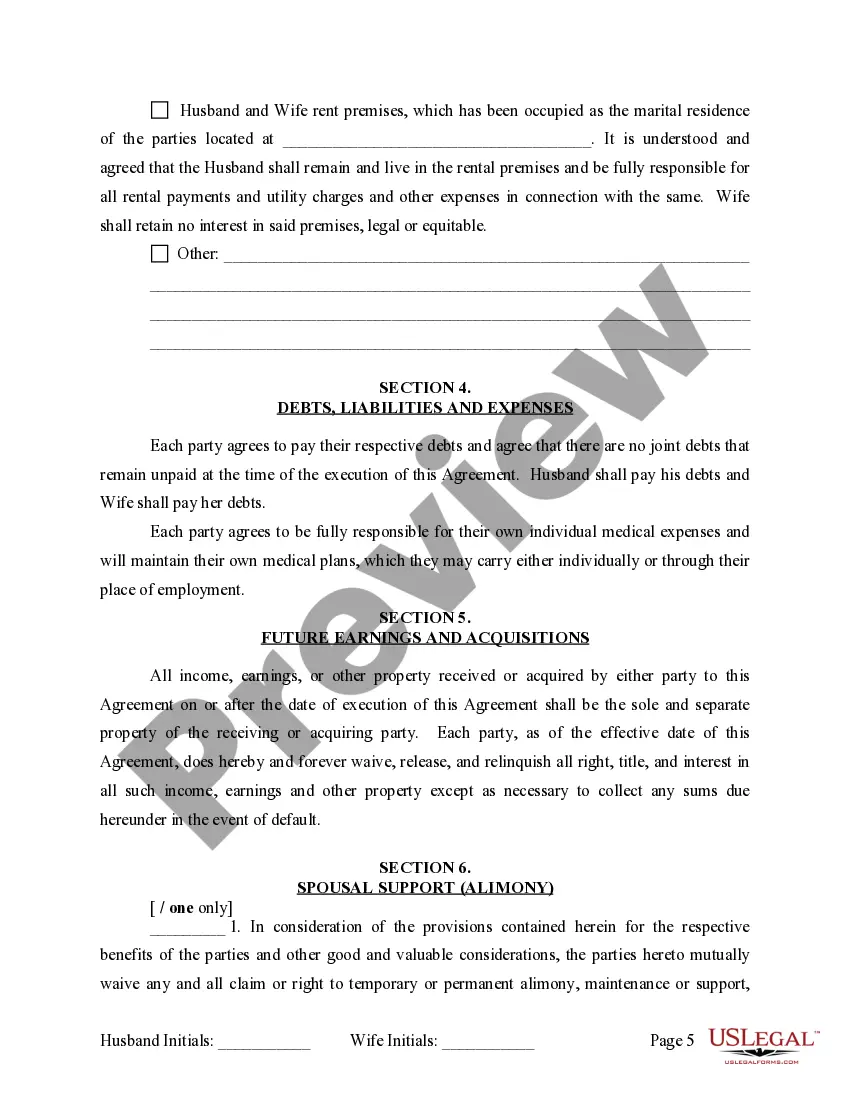
- Stipulations concerning any spousal support (alimony).
- Provisions regarding the maintenance of separate debts by each party.
- Legal signatures and notarization requirements necessary for validation.

Common use cases
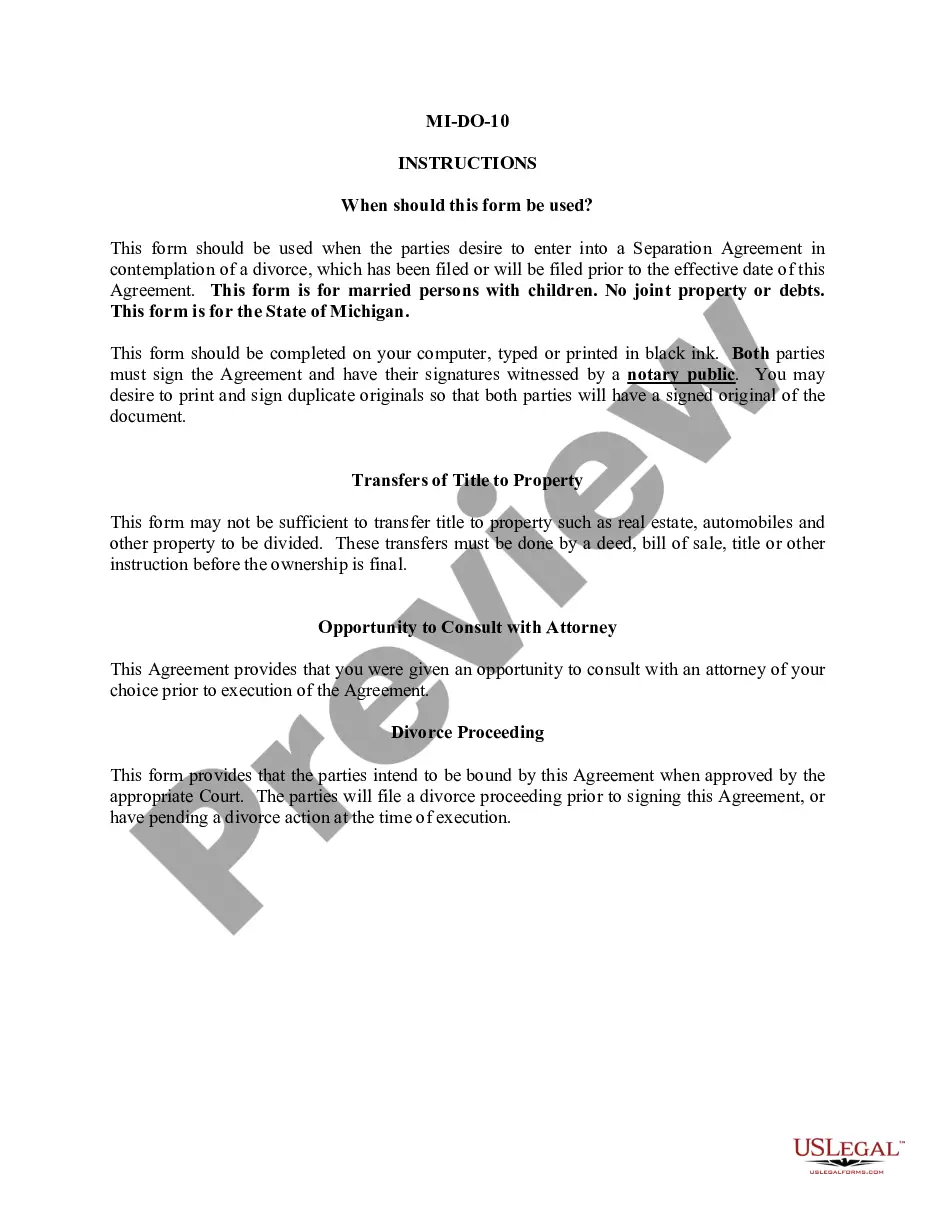
This form should be used when a couple has filed for or intends to file for divorce and wishes to formalize their arrangements regarding minor children. It is particularly relevant for those who do not have shared property or debts, allowing them to settle child-related matters comprehensively without complicating issues of joint ownership.
Who can use this document
- Married couples with dependent minor children.
- Couples who have filed or plan to file for divorce.
- Parties without joint property or outstanding debts.
- Individuals seeking to establish custody and child support arrangements.
How to prepare this document
- Identify both parties involved in the separation agreement and their contact information.
- Detail the custody arrangement for minor children and outline visitation rights.
- Specify the child support amount, frequency of payments, and any agreement regarding alimony.
- Ensure both parties understand their responsibilities regarding individual debts.
- Sign the document in the presence of a notary public to ensure legal validity.
Is notarization required?
Yes, this form must be notarized to be legally valid. Both parties must sign the agreement in the presence of a notary public to ensure its authenticity. US Legal Forms offers integrated online notarization services available 24/7, which provides a secure video call and legal equivalence without the need to travel.
Get your form ready online
Our built-in tools help you complete, sign, share, and store your documents in one place.
Make edits, fill in missing information, and update formatting in US Legal Forms—just like you would in MS Word.
Download a copy, print it, send it by email, or mail it via USPS—whatever works best for your next step.
Sign and collect signatures with our SignNow integration. Send to multiple recipients, set reminders, and more. Go Premium to unlock E-Sign.
If this form requires notarization, complete it online through a secure video call—no need to meet a notary in person or wait for an appointment.
We protect your documents and personal data by following strict security and privacy standards.

Make edits, fill in missing information, and update formatting in US Legal Forms—just like you would in MS Word.

Download a copy, print it, send it by email, or mail it via USPS—whatever works best for your next step.

Sign and collect signatures with our SignNow integration. Send to multiple recipients, set reminders, and more. Go Premium to unlock E-Sign.

If this form requires notarization, complete it online through a secure video call—no need to meet a notary in person or wait for an appointment.

We protect your documents and personal data by following strict security and privacy standards.
Avoid these common issues
- Failing to accurately describe custody arrangements or visitation schedules.
- Neglecting to include all dependent children in the agreement.
- Not having the agreement notarized, which may be necessary for legal acceptance.
- Overlooking state-specific requirements which could affect enforceability.
Why complete this form online
- The ability to access the form anytime, allowing for convenient completion.
- Editability enables users to fill in essential details at their own pace.
- Reliability of forms drafted by licensed attorneys ensures accuracy in legal language.
- Store the completed documents securely online for quick retrieval.
Looking for another form?
Form popularity
FAQ
To start the separation process in Michigan, first consider drafting a Michigan Marital Domestic Separation and Property Settlement Agreement, especially if you have minor children and no joint property or debts. This document outlines the terms of your separation, including child custody and support arrangements. Next, file for a divorce action to officially initiate the process, which can provide you with legal protection and clarity moving forward. Utilizing a platform like USLegalForms can simplify this process by guiding you in creating the necessary legal agreements.
Leaving your house during a divorce can complicate your legal and financial situation. Staying in your home allows you to maintain stability, especially if minor children are involved, which is crucial in discussions around the Michigan Marital Domestic Separation and Property Settlement Agreement Minor Children no Joint Property or Debts where Divorce Action Filed. Leaving can weaken your position in settlement negotiations and may affect custody considerations. It's essential to think carefully before making such a significant decision.
Creating a divorce settlement agreement template involves outlining the terms of your separation clearly. A crucial element to include is the Michigan Marital Domestic Separation and Property Settlement Agreement Minor Children no Joint Property or Debts where Divorce Action Filed, ensuring clarity about child custody and support. You can utilize platforms like uslegalforms to access templates that guide you through this process, making it easier to customize your agreement. Utilizing a structured approach ensures that both parties understand their rights and responsibilities.
Many people often cite communication as the biggest regret during a divorce. If you and your spouse overlook discussing crucial issues such as the Michigan Marital Domestic Separation and Property Settlement Agreement Minor Children no Joint Property or Debts where Divorce Action Filed, misunderstandings can arise. Failing to communicate can lead to unresolved feelings and disputes over child custody and assets. Prioritizing open dialogue can help prevent these regrets.
When you move out during a divorce, it may impact your rights regarding the Michigan Marital Domestic Separation and Property Settlement Agreement Minor Children no Joint Property or Debts where Divorce Action Filed. By leaving your shared space, you could unintentionally give the impression that you have abandoned your marital home, potentially affecting custody arrangements and property claims. Staying put allows you to maintain a firm position in negotiations, as it signals your commitment to a fair settlement process. Therefore, consider consulting professionals to help you navigate these complex emotional and legal waters.
Marital Settlement Agreements, reached between the parties in writing and signed by the parties, become legally binding when approved by the court at the time of the final court hearing.Once approved by the court, such post judgment stipulations do become legally binding and enforceable between the parties.
As explains, Michigan is not one of the community property states.It is important for you to understand that everything you and your spouse acquired during your marriage, and whatever debts you undertook to acquire them, is considered to be marital property even though it is not community property.
If there are enough joint assets available, the spouse who wants to remain in the house can buy out the other spouse's interest. In other words, one spouse keeps the house, and the other gets to keep more of the other assets to balance things out.
Marital property is any property, or debt, acquired during the marriage (from the date of the wedding until the judgment of divorce is entered). Marital property is subject to division between the parties. Property division in Michigan follows the rule of equitable distribution.
So, who gets the house in Divorce is closely linked to child custody, with the Court typically awarding the right to the primary care-giver. It is hoped that by allowing a child to remain in their home, the disruption caused by the divorce will be minimised.