Michigan Letter from Landlord to Tenant as Notice to remove unauthorized inhabitants
About this form
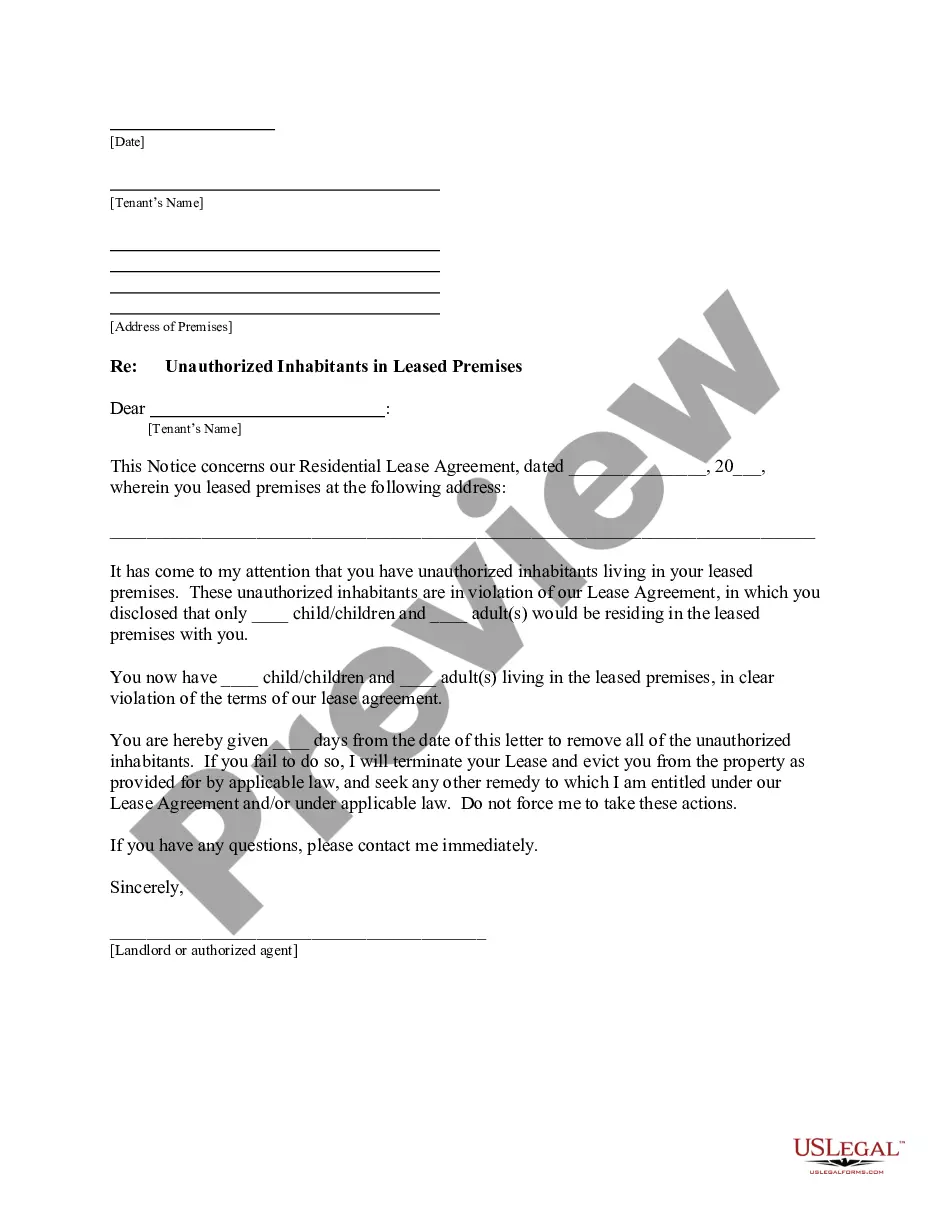
This form is a letter from a landlord to a tenant, serving as a formal notice to remove unauthorized inhabitants from the rental property. This notice is crucial in enforcing lease terms regarding occupancy limits. It differs from other notices as it specifically addresses violations related to unauthorized individuals living on the premises, which can lead to lease termination and eviction if not resolved. Utilizing a "Notice to Remove Unauthorized Inhabitants" helps landlords maintain control over their properties and ensure compliance with lease agreements.
Main sections of this form
- Identification of the residential lease agreement and property address.
- Details of unauthorized inhabitants in violation of the lease.
- Designated timeframe for the tenant to remove unauthorized inhabitants.
- Consequences of failing to comply, including lease termination and eviction rights.
- Contact information for the landlord or authorized agent.

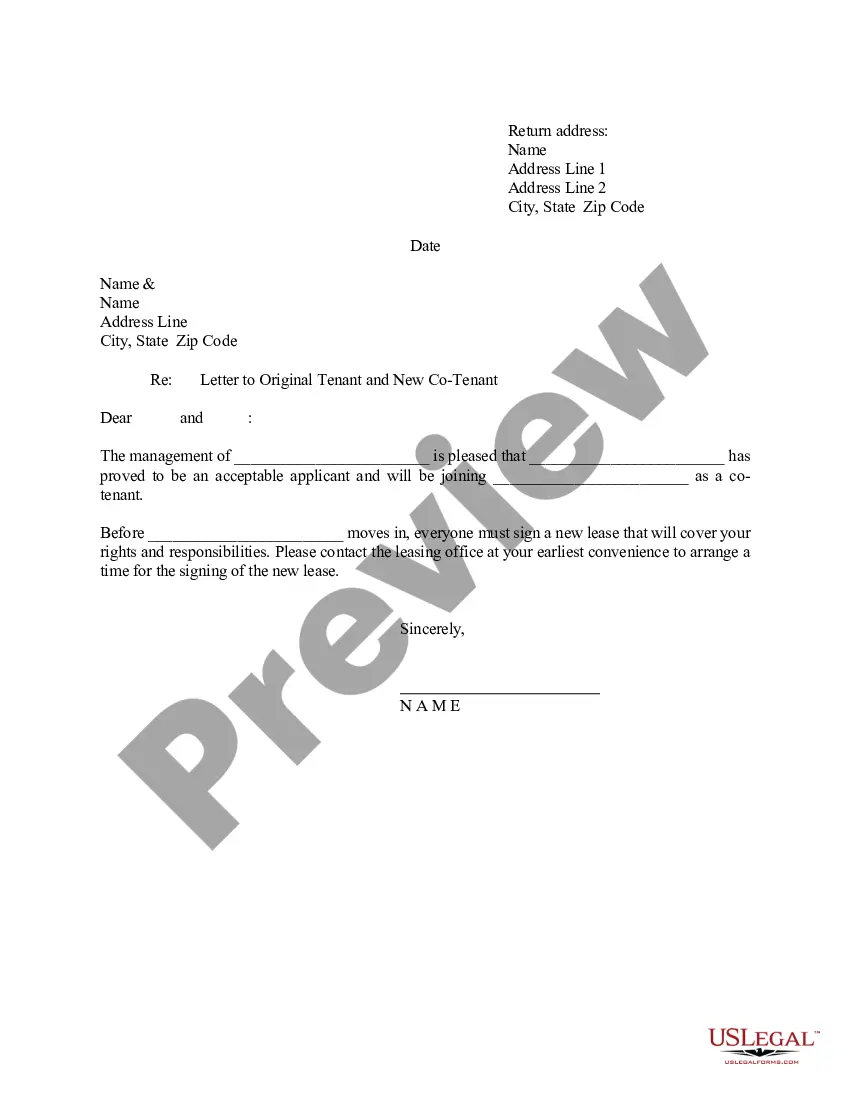
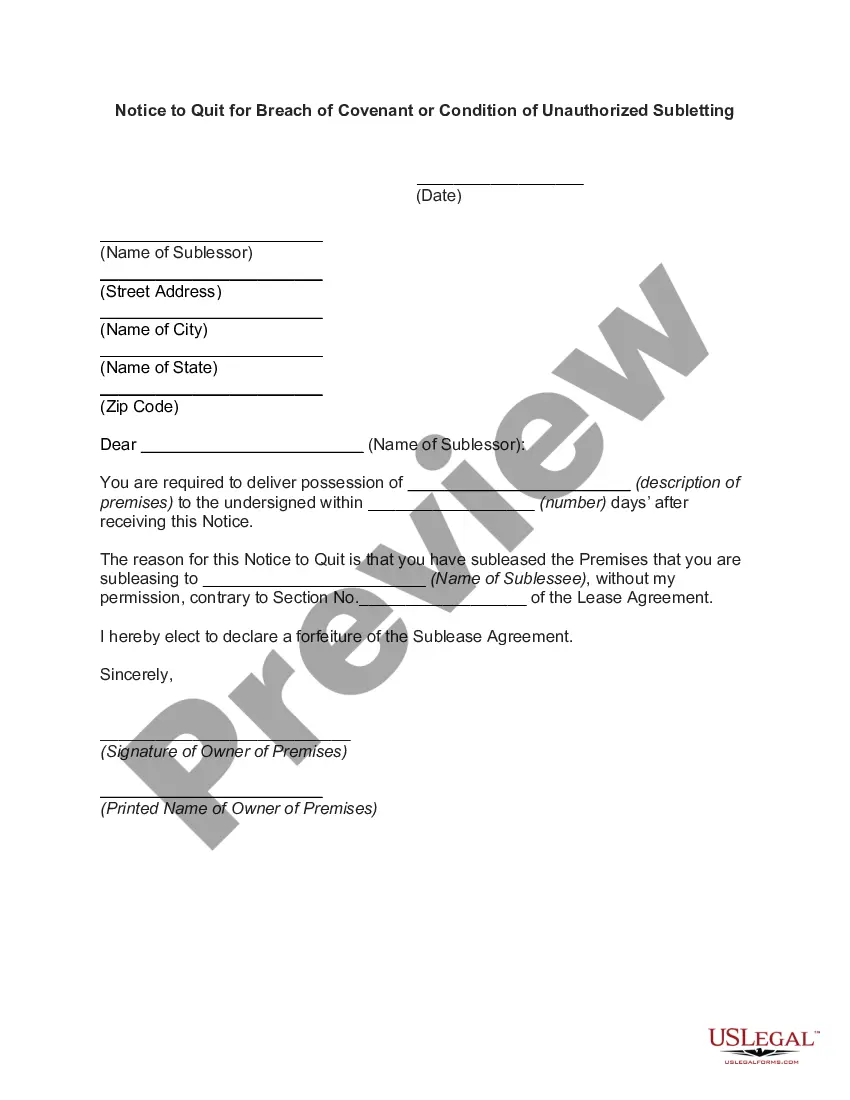

When this form is needed
This form should be used when a landlord discovers unauthorized individuals living in a rented property, in violation of the lease agreement. Situations may include adult family members moving in without authorization, guests staying beyond their allowed time, or tenants failing to inform the landlord of additional residents. Using this notice is a critical step in addressing unauthorized occupancy before pursuing further legal actions.
Intended users of this form
- Landlords managing rental properties.
- Property managers acting on behalf of landlords.
- Real estate professionals involved in lease enforcement.
- Tenants needing to inform the landlord of expected changes in residence.
Instructions for completing this form
- Identify and enter the date of the residential lease agreement.
- Specify the full address of the leased premises.
- Document the names and relationship of authorized residents as per the lease.
- State the number of unauthorized inhabitants currently residing in the property.
- Provide a deadline for the removal of unauthorized residents.
- Sign the letter as the landlord or authorized agent.
Is notarization required?
This form does not typically require notarization unless specified by local law. However, having it notarized may add a layer of authenticity and can be beneficial in legal disputes.
Get your form ready online
Our built-in tools help you complete, sign, share, and store your documents in one place.
Make edits, fill in missing information, and update formatting in US Legal Forms—just like you would in MS Word.
Download a copy, print it, send it by email, or mail it via USPS—whatever works best for your next step.
Sign and collect signatures with our SignNow integration. Send to multiple recipients, set reminders, and more. Go Premium to unlock E-Sign.
If this form requires notarization, complete it online through a secure video call—no need to meet a notary in person or wait for an appointment.
We protect your documents and personal data by following strict security and privacy standards.

Make edits, fill in missing information, and update formatting in US Legal Forms—just like you would in MS Word.

Download a copy, print it, send it by email, or mail it via USPS—whatever works best for your next step.

Sign and collect signatures with our SignNow integration. Send to multiple recipients, set reminders, and more. Go Premium to unlock E-Sign.

If this form requires notarization, complete it online through a secure video call—no need to meet a notary in person or wait for an appointment.

We protect your documents and personal data by following strict security and privacy standards.
Common mistakes to avoid
- Failing to specify the exact number of unauthorized inhabitants.
- Not providing a clear deadline for compliance.
- Using vague language that lacks legal clarity.
- Neglecting to document delivery proof of the notice to the tenant.
Benefits of using this form online
- Convenient access to legal templates from anywhere.
- Editable format to customize details specific to your situation.
- Time-efficient process, reducing the risk of errors in legal documents.
- Access to forms drafted by licensed attorneys to ensure legal compliance.
Looking for another form?
Form popularity
FAQ
You can only evict your roommate if they aren't on the lease or are your subtenant. Most of the laws relevant to leased apartments in Texas can be found in Title 8, Chapter 92 of the Texas Property Code. This law says that a lease can be oral or written, and can be made between a tenant and a subtenant.
Eviction begins when the parents fill out two copies of Michigan Form DC 100c, Notice to Quit to Recover Possession of Property. The parents fill out one and give it to the child and keep one for their own records. This notice must be delivered to the adult child or to another adult resident who can pass it on.
In the case of month-to-month leases, or if the tenant doesn't have a lease, then the landlord must give one rental period's notice before filing to evict. The next step is to prepare a summons and complaint, then file it in the district court where the dwelling is located.
Your landlord or their representatives may be allowed reasonable access to carry out inspections or repairs, but must first get your permission. According to Section 11, from The Landlord and Tenant Act 1985, your landlord needs to give you at least 24 hour notice before they come around and visit for any reason.
In the state of Michigan, if tenants hold over, or stay in the rental unit after the rental term has expired, then the landlord may be required to give tenants notice before evicting them. This can include tenants without a written lease and week-to-week and month-to-month tenants.
Your landlord can't enter your home without permission except in an emergency. If there is a problem that your landlord needs to enter your home to fix, you should be given notice a reasonable time before the landlord plans to enter.
Putting all this together, you can see that even if the tenant does not show up to contest the eviction hearing, it will take an absolute minimum of four weeks to get an eviction in Michigan. In reality, an official eviction is likely to take longer, in the region of six to eight weeks.
Step 1 (Optional) Send a Warning Letter. Step 2 (1st Legal Step to an Eviction) Send a Legal Notice. Step 3 Filing a Complaint. Step 4 The Hearing. Step 5 The Physical Eviction/Writ of Restitution. Eviction Forms. Classes. Online Class.