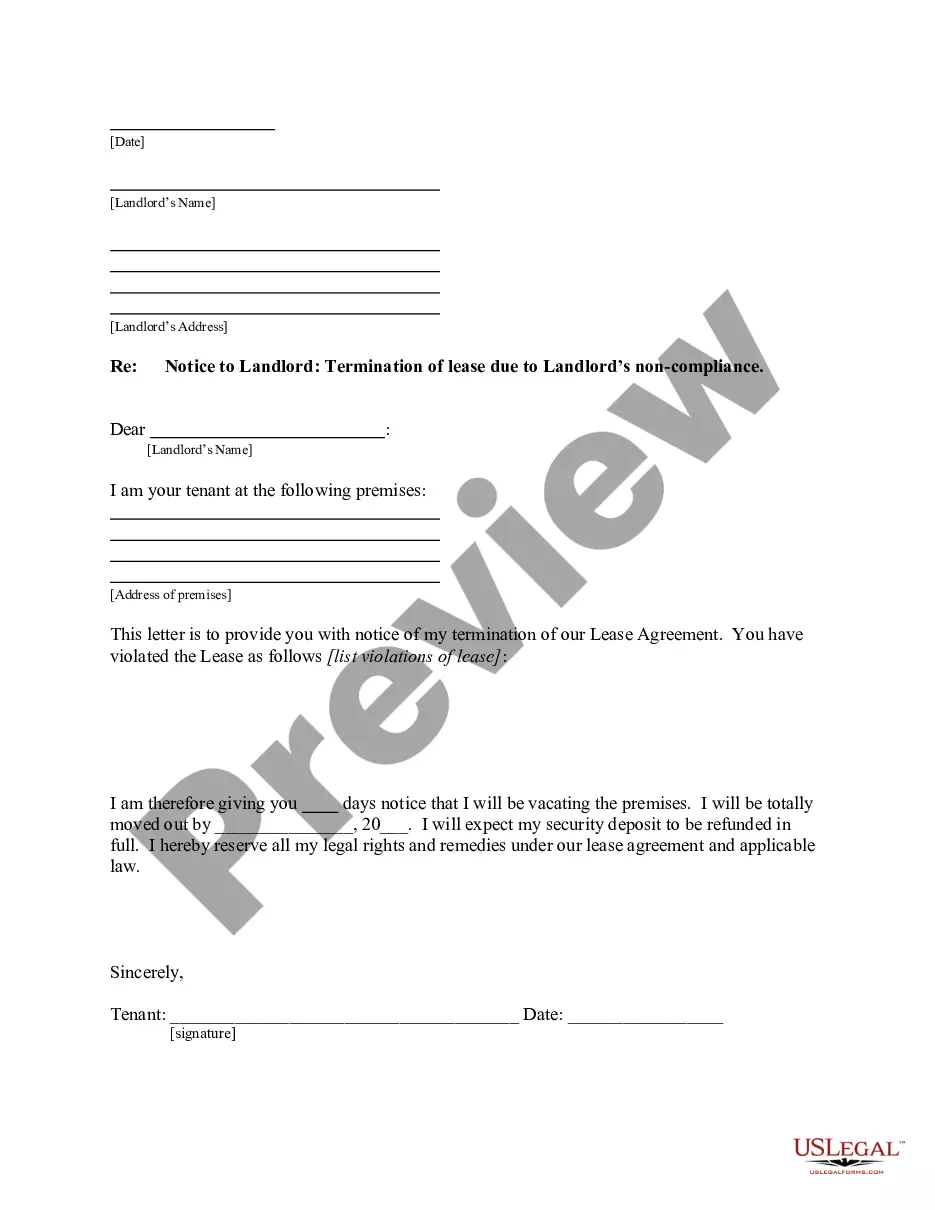
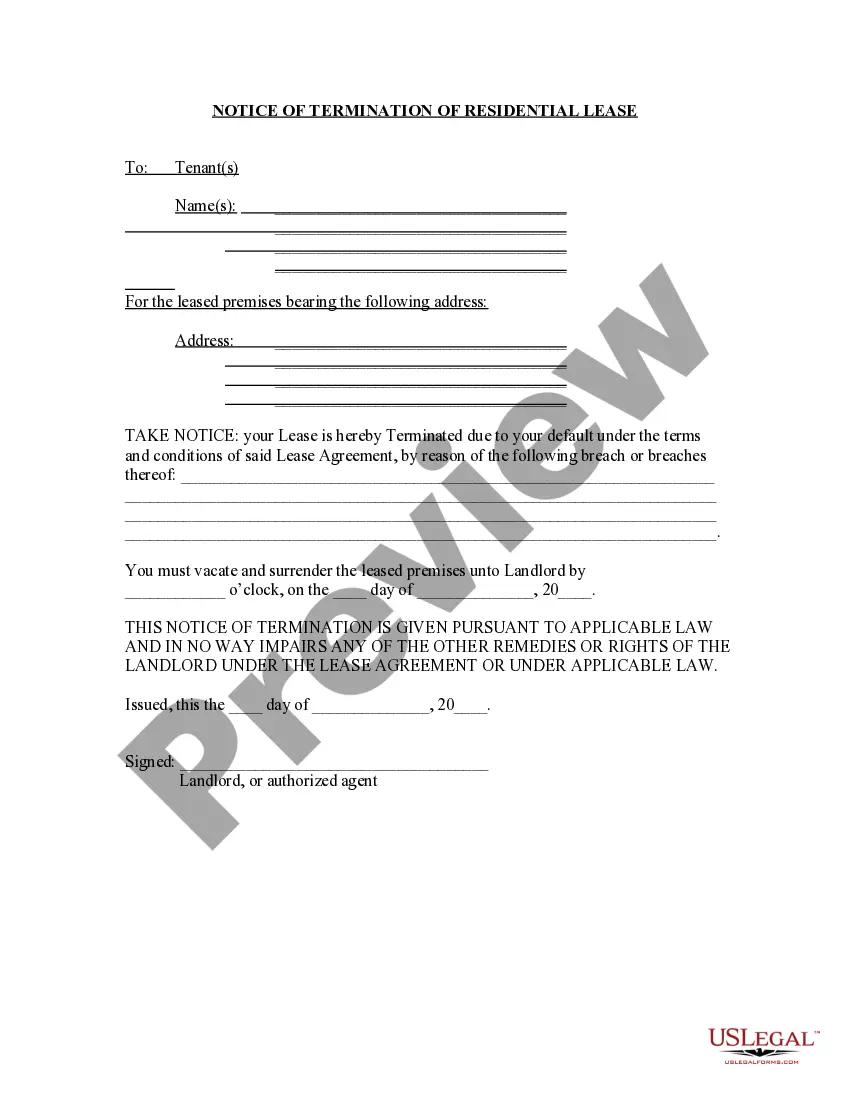
Michigan Letter from Tenant to Landlord containing Notice of termination for landlord's noncompliance with possibility to cure
What is this form?
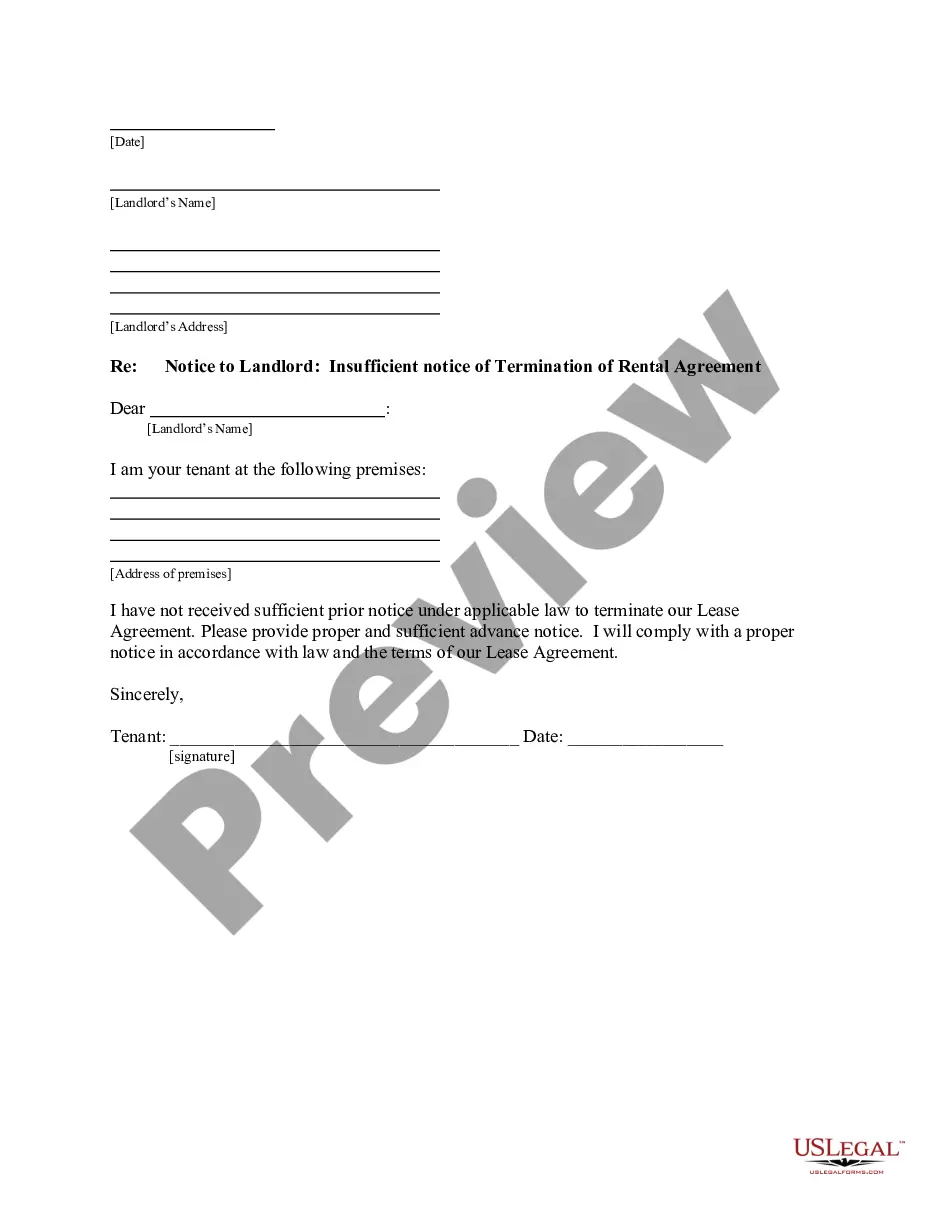
This letter serves as a formal notice from a tenant to a landlord regarding the termination of a lease due to the landlord's noncompliance with the lease agreement. It is essential for tenants who have experienced breaches of contract to communicate their intent to vacate the premises, offering landlords an opportunity to remedy the situation. This notice also specifies the potential for the landlord to cure the noncompliance, distinguishing it from other termination notices that may not provide this chance.
Key components of this form
- Tenant's name and signature
- Notice date
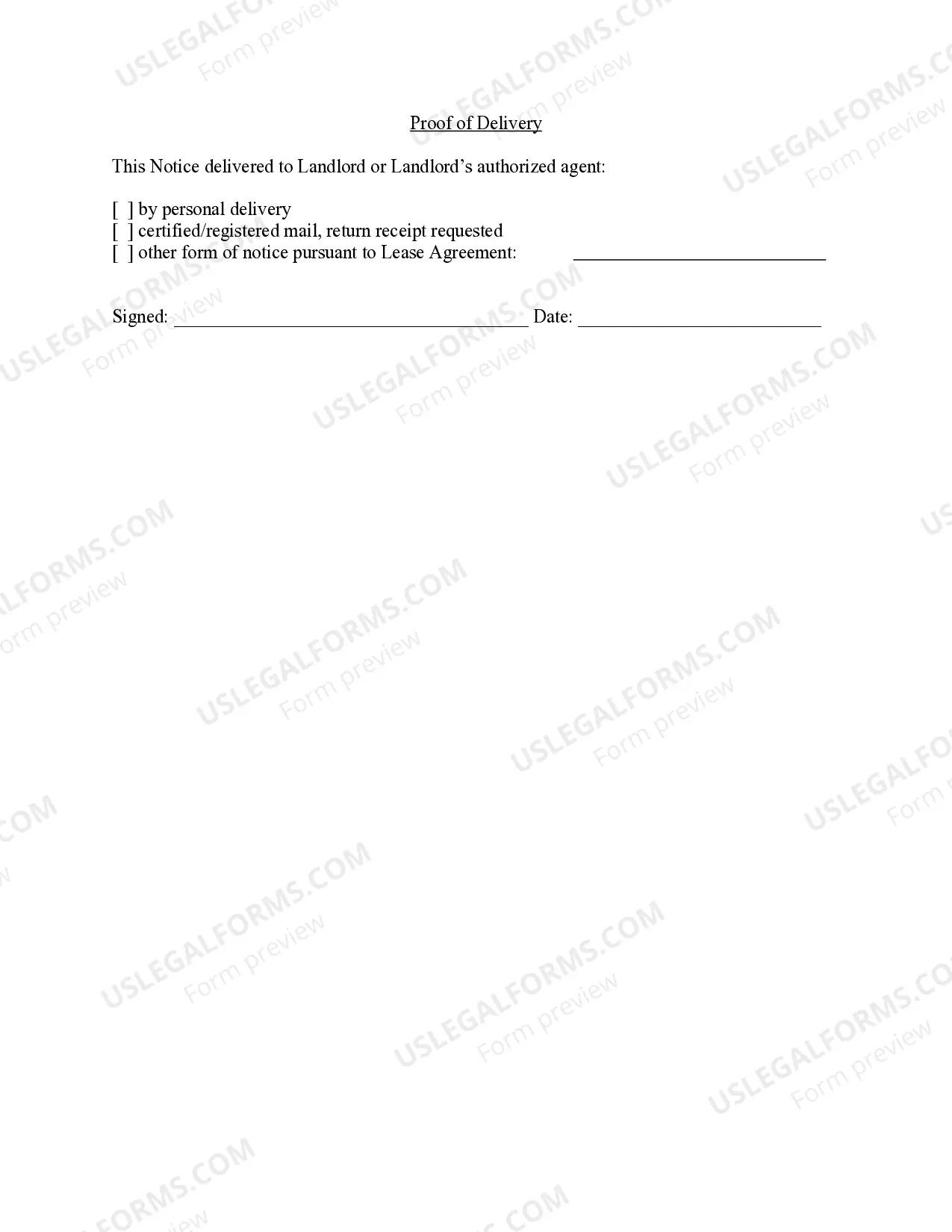
- Delivery method to the landlord or authorized agent
- Details of the landlord's noncompliance
- Statement of intent to vacate



Situations where this form applies
This form is ideal for tenants who need to address significant issues with their landlord, such as failure to make necessary repairs or violations of lease terms. If the landlord has not complied with the lease agreement despite previous requests for resolution, this notice can serve as a crucial step toward legally terminating the lease while allowing the landlord a chance to rectify the breach.
Intended users of this form
- Tenants facing noncompliance issues with their landlord
- Individuals seeking to terminate their lease legally
- Residents who want to communicate noncompliance effectively before vacating the property
How to complete this form
- Identify the tenant's name and provide the date of notice.
- Clearly outline the landlord's noncompliance that led to this notice.
- Specify the delivery method used to inform the landlord.
- Sign the notice to validate the intent of termination.
- Keep a copy of the notice for your records.
Does this form need to be notarized?
This form usually doesn’t need to be notarized. However, local laws or specific transactions may require it. Our online notarization service, powered by Notarize, lets you complete it remotely through a secure video session, available 24/7.
Get your form ready online
Our built-in tools help you complete, sign, share, and store your documents in one place.
Make edits, fill in missing information, and update formatting in US Legal Forms—just like you would in MS Word.
Download a copy, print it, send it by email, or mail it via USPS—whatever works best for your next step.
Sign and collect signatures with our SignNow integration. Send to multiple recipients, set reminders, and more. Go Premium to unlock E-Sign.
If this form requires notarization, complete it online through a secure video call—no need to meet a notary in person or wait for an appointment.
We protect your documents and personal data by following strict security and privacy standards.

Make edits, fill in missing information, and update formatting in US Legal Forms—just like you would in MS Word.

Download a copy, print it, send it by email, or mail it via USPS—whatever works best for your next step.

Sign and collect signatures with our SignNow integration. Send to multiple recipients, set reminders, and more. Go Premium to unlock E-Sign.

If this form requires notarization, complete it online through a secure video call—no need to meet a notary in person or wait for an appointment.

We protect your documents and personal data by following strict security and privacy standards.
Mistakes to watch out for
- Failing to provide specific details about the landlord's noncompliance.
- Not properly delivering the notice as required by law.
- Neglecting to keep a personal copy of the notification.
- Omitting the date which can affect the notice's validity.
Why use this form online
- Convenient access to professionally drafted forms.
- Editable templates that allow for personal customization.
- Secured and reliable downloads with legal compliance.
- Immediate availability, helping you act quickly in urgent situations.
Legal use & context
- The letter serves as a legal notice, which can be used as evidence if disputes arise later.
- Failure to provide proper notice may result in complications if either party seeks legal remedies.
- This form helps protect the tenant's rights when a landlord is noncompliant with the lease.
Key takeaways
- The letter notifies the landlord of noncompliance and the tenant's intent to vacate.
- It provides the landlord an opportunity to cure the noncompliance before termination.
- Completing the form accurately is essential for legal protection.
- Always adhere to state-specific requirements for such notices.
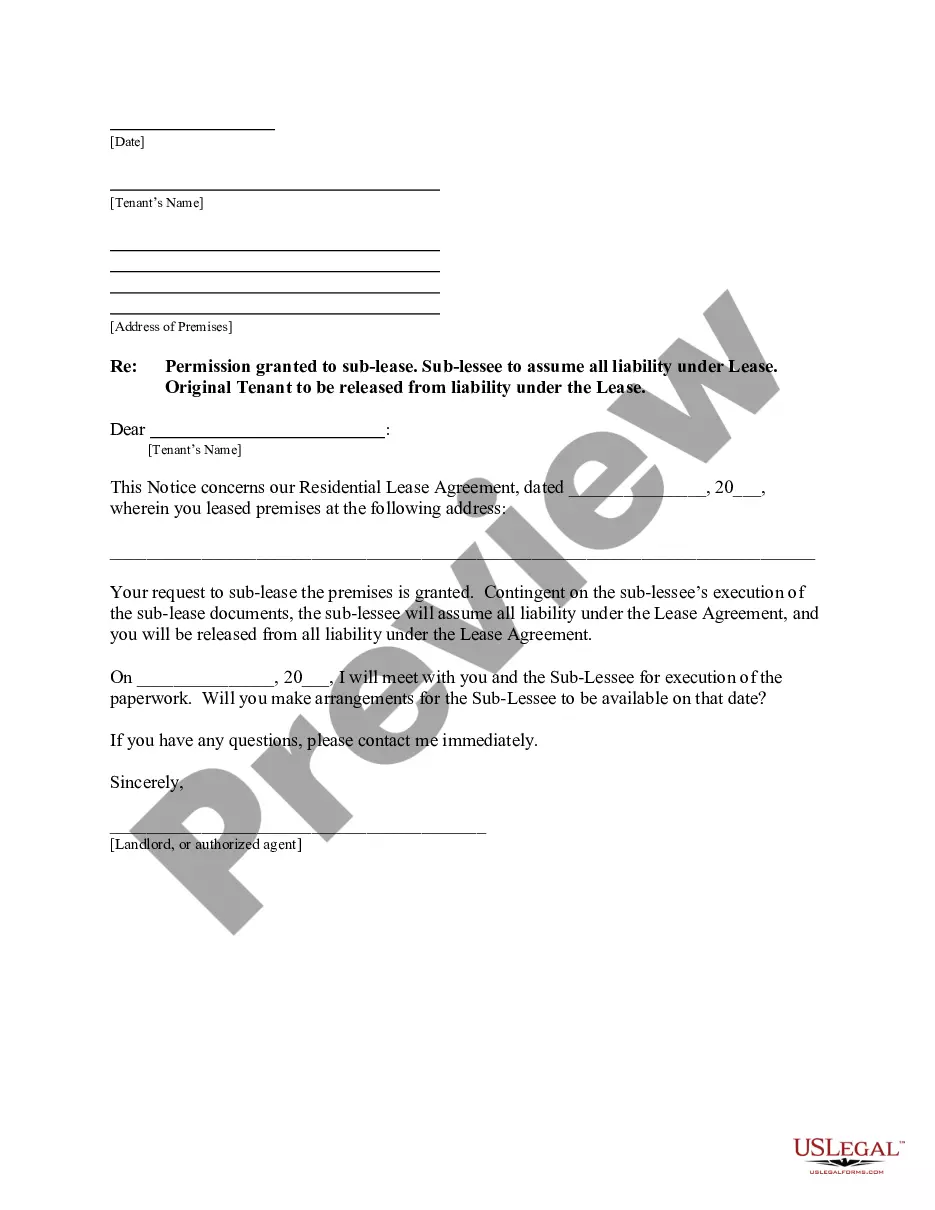
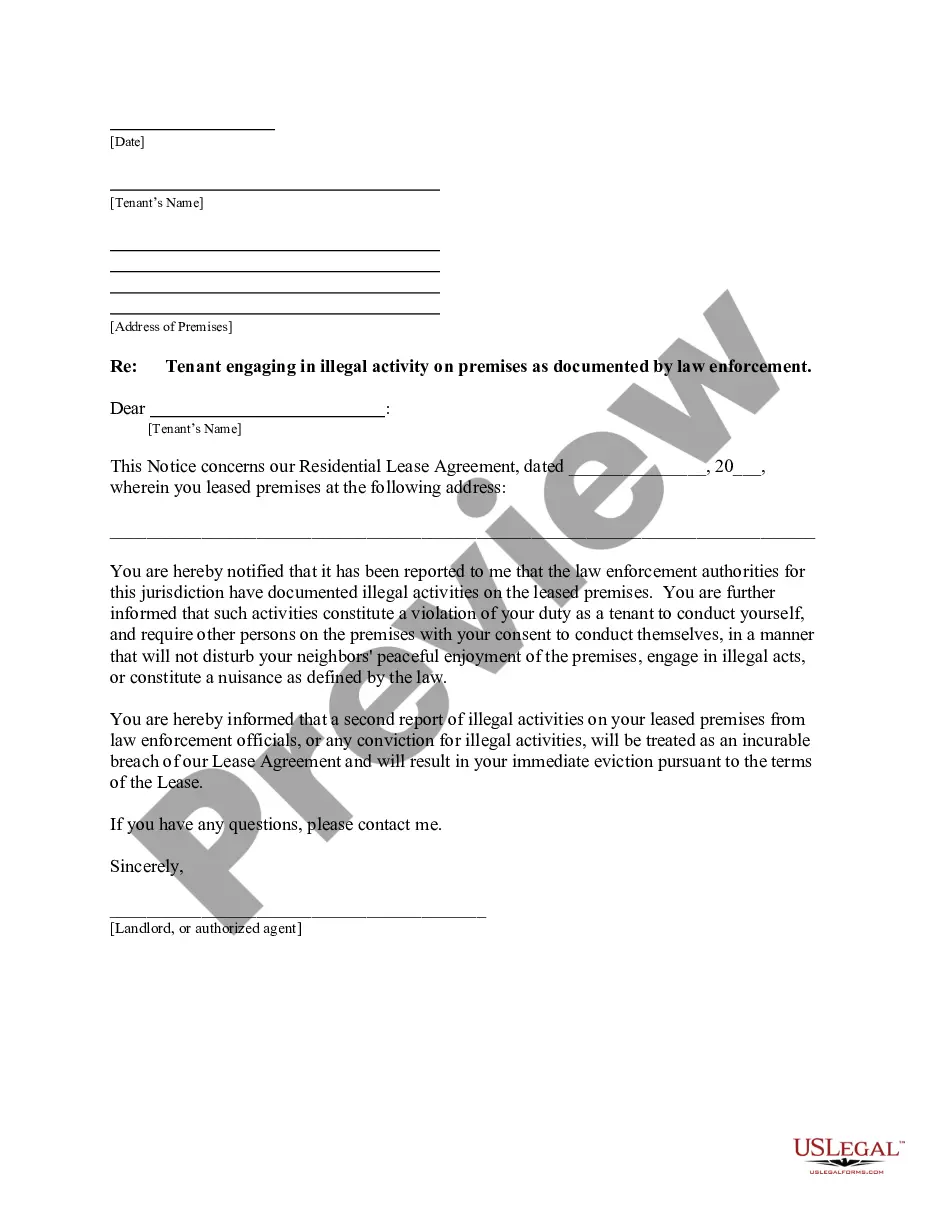
Looking for another form?
Form popularity
FAQ
Tenant Rights to Withhold Rent in MichiganTenants may withhold rent or exercise the right to repair and deduct if a landlord fails to take care of important repairs, such as a broken heater. For specifics, see Michigan Tenant Rights to Withhold Rent or Repair and Deduct.
Introduce the problem clearly. Begin your letter by stating specifically why you are writing. Provide a brief description of the specific problem, then detail any efforts you have made prior to the letter to notify your landlord of the problem or to fix the problem yourself.
Review Your Lease Before You Sign. Research Local Laws. Keep Records. Pay Your Rent. Maintain Respectful Communication. Seek an Agreeable Solution. Request Repairs in Writing. What Do You Think?
If you're seeking damages for emotional distress caused by a landlord's discrimination, or punitive damages for especially blatant and intentional discrimination, a lawsuit may well be your best bet. Understand what's involved in suing your landlord. You may file a lawsuit in either federal or state court.
In Michigan, the landlord must give the tenant at least 7 days' notice before filing to evict for non-payment of rent, for causing damage to the home, or for creating a health hazard.
Injury at Rental Property: You could have a case for a lawsuit against your landlord if you are injured at the rental property due to a landlord's neglect. Filing an Illegal Eviction: You can countersue your landlord if you feel your landlord is trying to evict you illegally.
If you think your landlord is violating the Fair Housing Act, you can get that landlord in trouble by filing a complaint at HUD.gov. Your remedy for breach of quiet enjoyment is to terminate the lease and move or sue in small claims court.
Persons who have complaints against landlords/property owners can file a complaint with the Michigan Attorney General's Consumer Protection Division at 517-373-1140.