Louisiana Assignment to Living Trust
Overview of this form
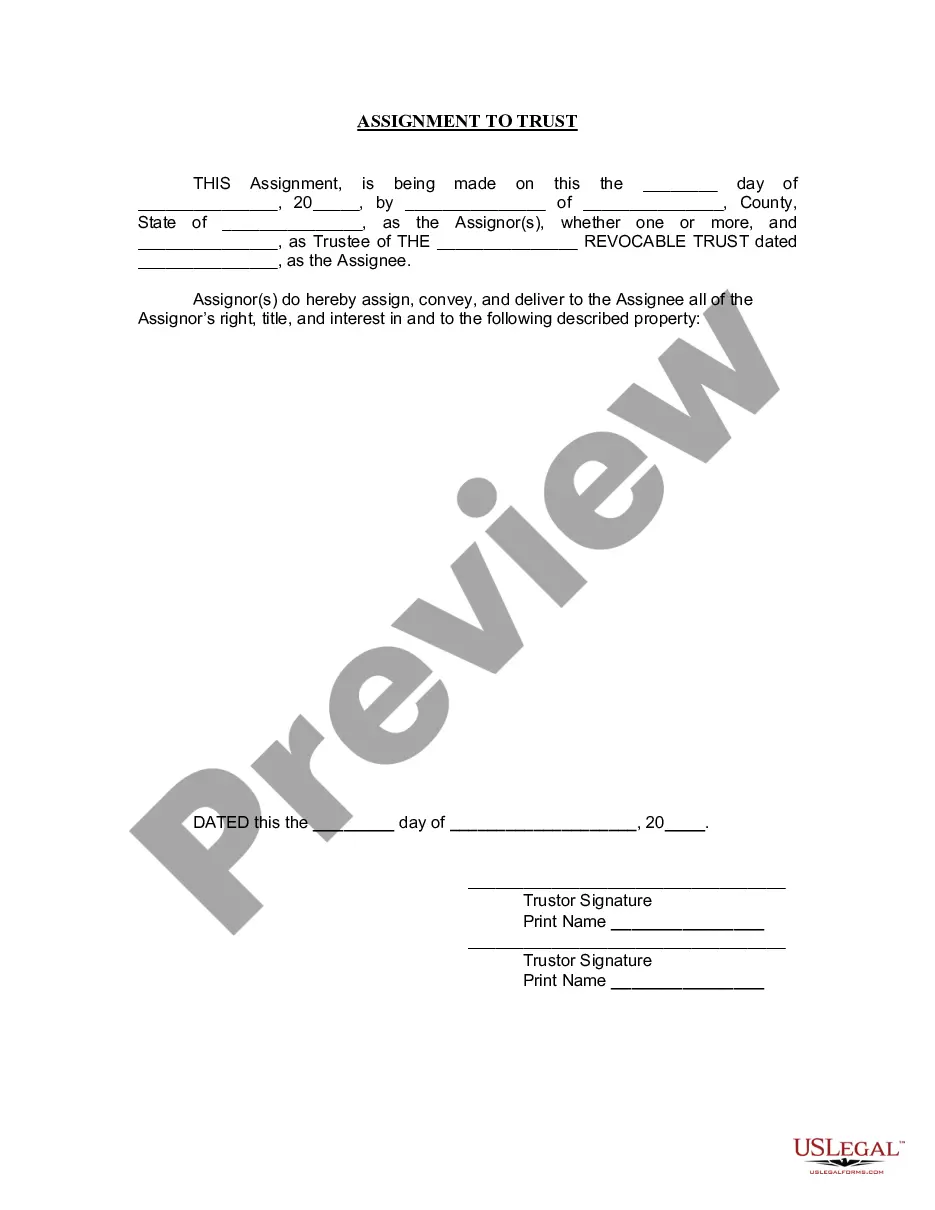
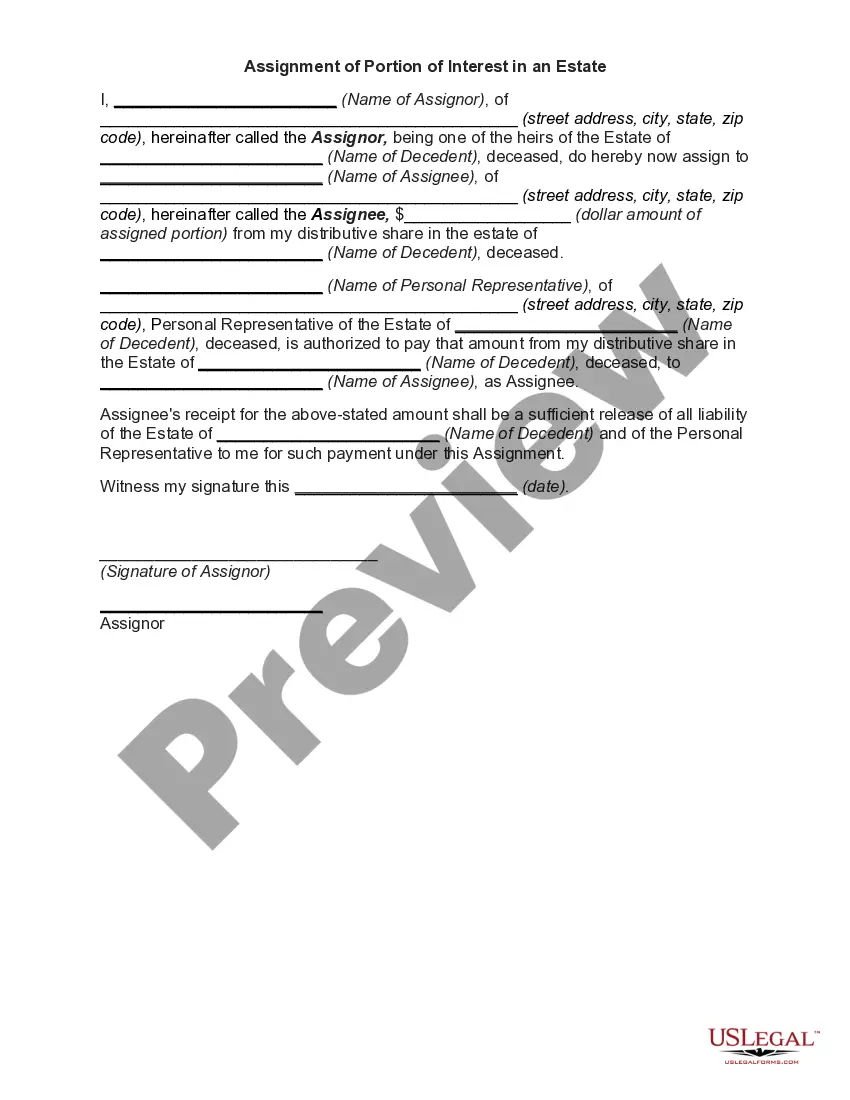
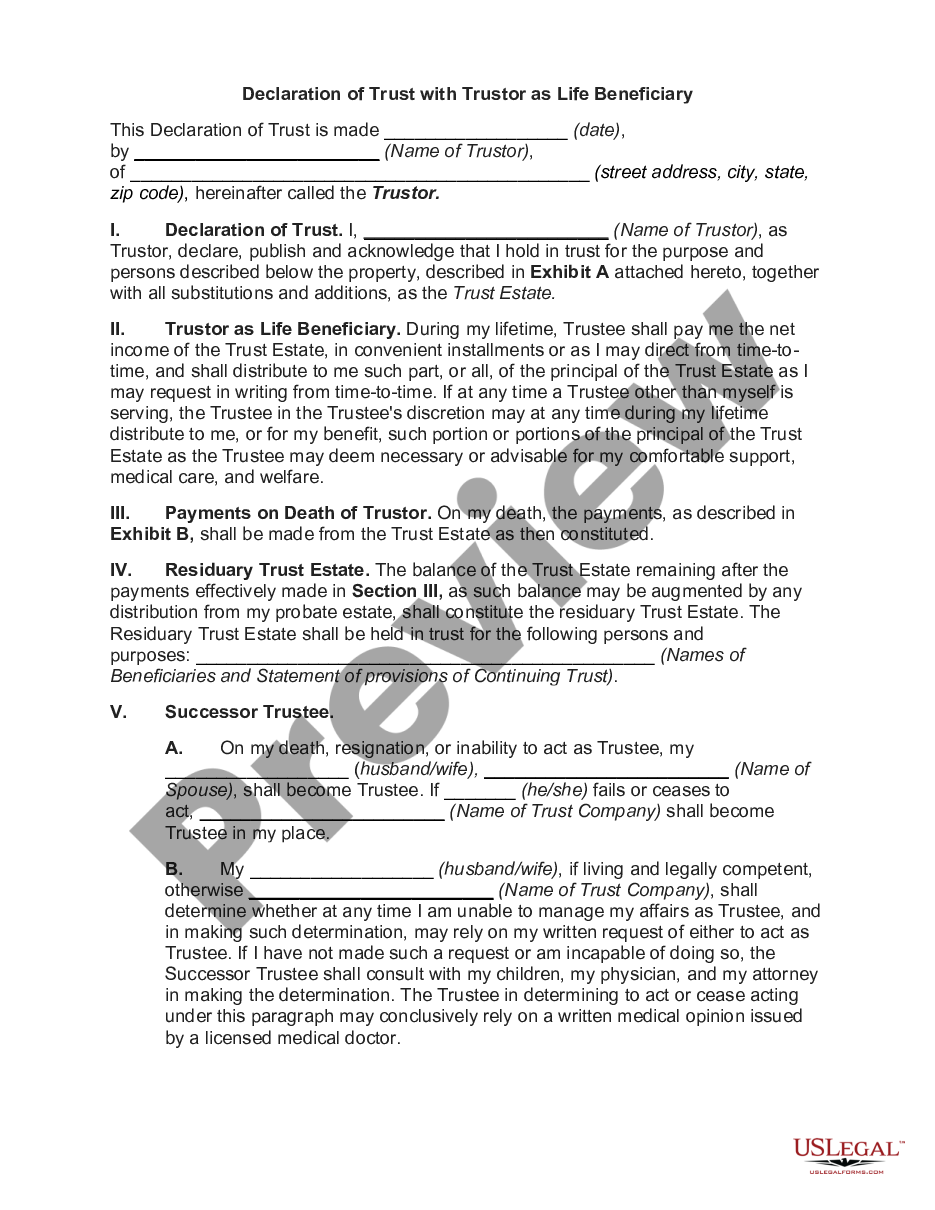
The Assignment to Living Trust form is a legal document that transfers ownership of specific property from an individual to a living trust. Unlike a will, a living trust operates during the individualâs lifetime, making it an effective tool for estate planning. This form is essential for ensuring that the assigned property is managed according to the trust's terms and can help avoid the probate process upon death.
What’s included in this form
- Date of assignment
- Assignorâs name and address
- Trusteeâs name and trust information
- Signature of the Assignor
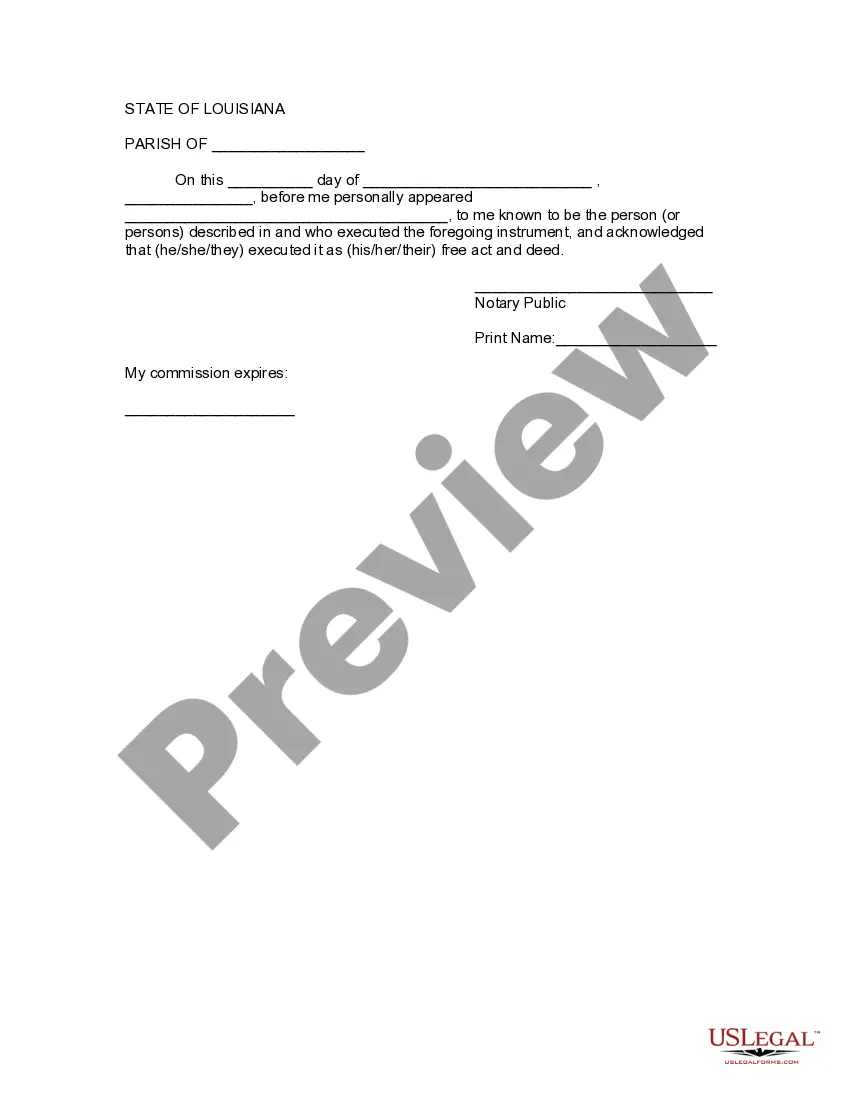
- Notary section for acknowledgment
Common use cases
This form is utilized when an individual wishes to transfer their property into a living trust. It is commonly used in estate planning to ensure that assets are managed according to the terms of the trust during the individual's lifetime and to simplify the process of passing on assets to beneficiaries after death.
Who needs this form
- Individuals establishing a living trust
- Trustors wishing to transfer property into their trust
- People involved in estate planning processes
How to complete this form
- Identify the date of the assignment.
- Enter the Assignor's name and address.
- Specify the name of the Trustee and the trust information.
- Have the Assignor sign the document.
- Complete the notary acknowledgment section.
Notarization guidance
Yes, this form must be notarized to be legally valid. The signature of the Assignor must be verified by a notary public, ensuring that the document is executed freely and voluntarily.
Get your form ready online
Our built-in tools help you complete, sign, share, and store your documents in one place.
Make edits, fill in missing information, and update formatting in US Legal Forms—just like you would in MS Word.
Download a copy, print it, send it by email, or mail it via USPS—whatever works best for your next step.
Sign and collect signatures with our SignNow integration. Send to multiple recipients, set reminders, and more. Go Premium to unlock E-Sign.
If this form requires notarization, complete it online through a secure video call—no need to meet a notary in person or wait for an appointment.
We protect your documents and personal data by following strict security and privacy standards.

Make edits, fill in missing information, and update formatting in US Legal Forms—just like you would in MS Word.

Download a copy, print it, send it by email, or mail it via USPS—whatever works best for your next step.

Sign and collect signatures with our SignNow integration. Send to multiple recipients, set reminders, and more. Go Premium to unlock E-Sign.

If this form requires notarization, complete it online through a secure video call—no need to meet a notary in person or wait for an appointment.

We protect your documents and personal data by following strict security and privacy standards.
Common mistakes
- Failing to include the date of the assignment.
- Not providing complete names and addresses for all parties.
- Omitting the Trustee's information.
- Not having the signature properly notarized.
Benefits of completing this form online
- Convenience of instant downloading and printing.
- Editability for customized needs specific to your circumstances.
- Reliable templates drafted by licensed attorneys.
Main things to remember
- The Assignment to Living Trust form is essential for transferring property into a living trust.
- It is vital for estate planning and can help avoid probate.
- Both signatures and notarization are crucial for the form's validity.
Looking for another form?


Form popularity
FAQ
The advantages of placing your house in a trust include avoiding probate court, saving on estate taxes and possibly protecting your home from certain creditors. Disadvantages include the cost of creating the trust and the paperwork.
The process of funding your living trust by transferring your assets to the trustee is an important part of what helps your loved ones avoid probate court in the event of your death or incapacity. Qualified retirement accounts such as 401(k)s, 403(b)s, IRAs, and annuities, should not be put in a living trust.
How To Establish A Trust. You will need to retain an estate attorney to draft and execute your trust document. For a simple revocable or irrevocable trust, it may cost anywhere from $2,000 $5,000.
Locate your current deed. Use the proper deed. Check with your title insurance company and lender. Prepare a new deed. Sign in the presence of a notary. Record the deed in the county clerk's office. Locate the deed that's in trust. Use the proper deed.
Decide which type of trust you want. Take stock of your property. Pick a trustee. Create a trust document, either by yourself using a computer program or with the help of a lawyer. Sign the trust in front of a notary public. Put your assets inside the trust.
Determine the Current Title and Vesting to Your Property. Prepare a Deed. Be Aware of Your Lender and Title Insurance. Prepare a Preliminary Change of Ownership Report. Execute Your Deed. Record Your Deed. Wait for the Deed to be Returned. Keep the Property in the Trust.
When you create a DIY living trust, there are no attorneys involved in the process. You will need to choose a trustee who will be in charge of managing the trust assets and distributing them.You'll also need to choose your beneficiary or beneficiaries, the person or people who will receive the assets in your trust.
When you set up a Living Trust, you fund the trust by transferring your assets from your name to the name of your Trust. Legally your Trust now owns all of your assets, but you manage all of the assets as the Trustee.