Kansas Bill of Sale in Connection with Sale of Business by Individual or Corporate Seller
About this form
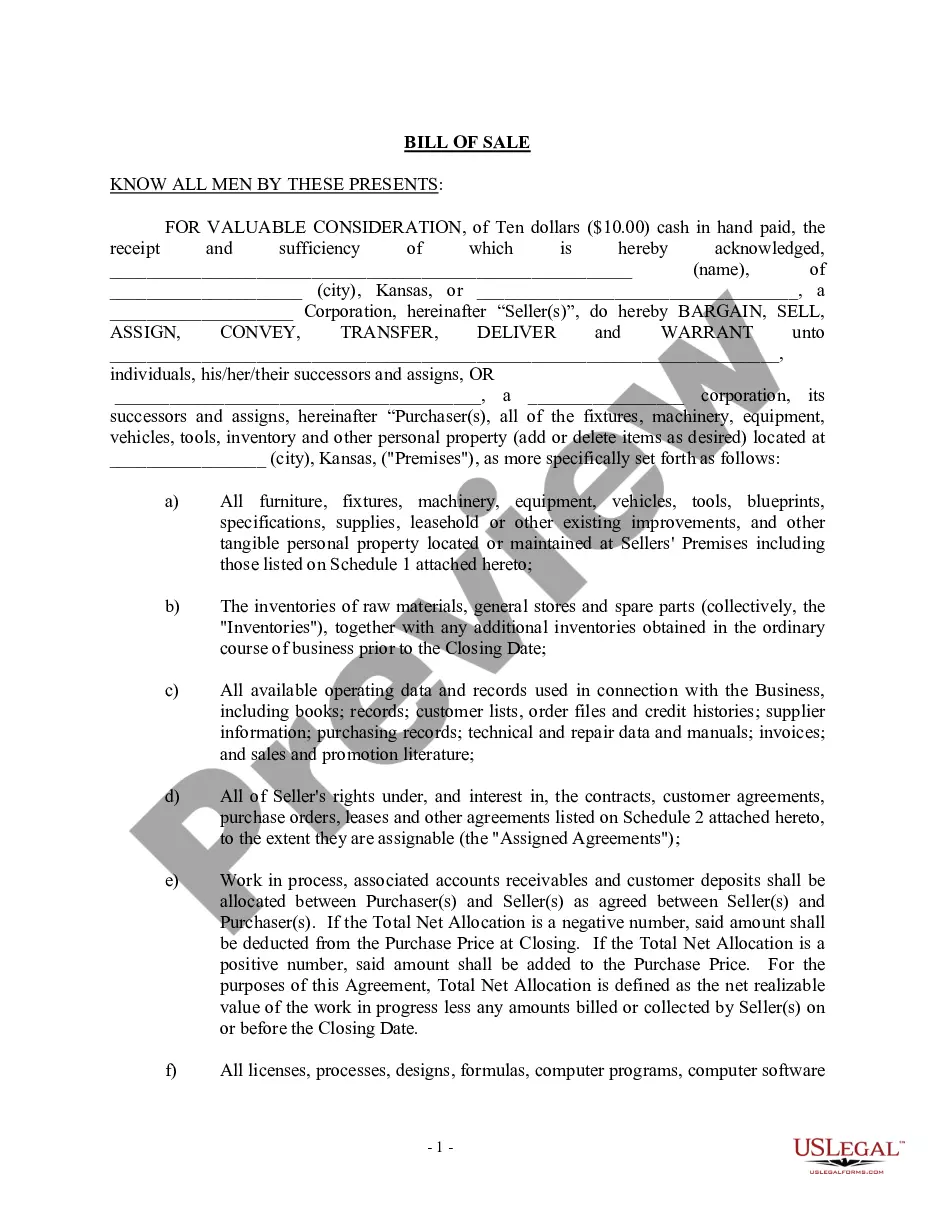
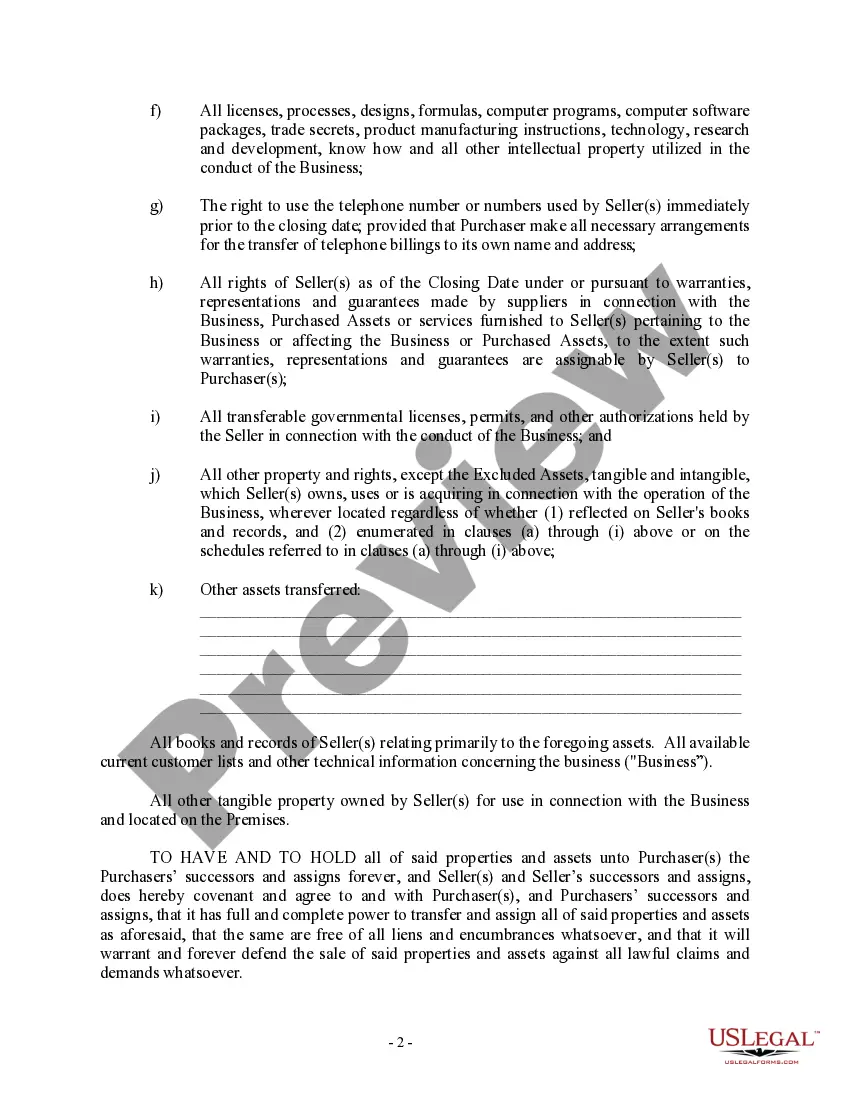
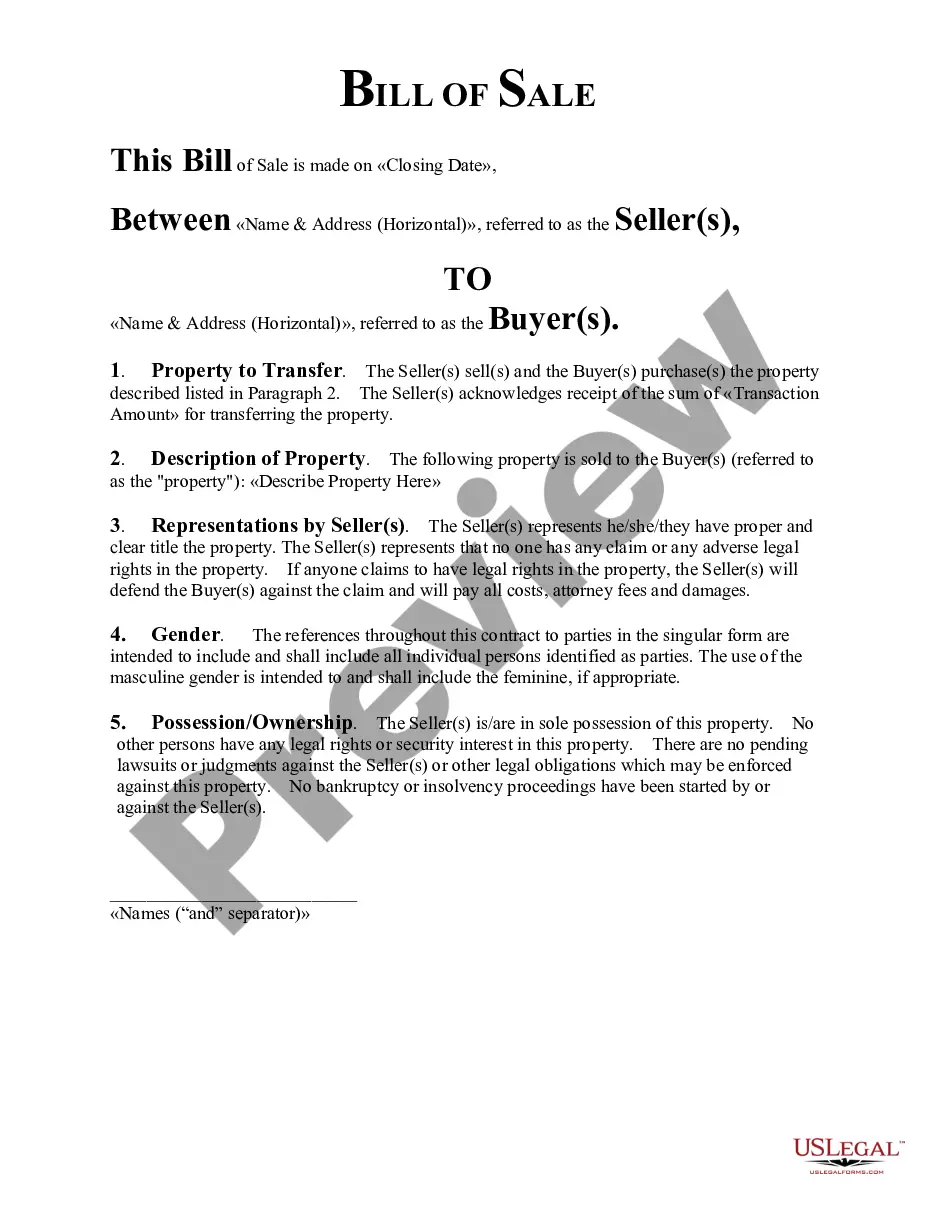
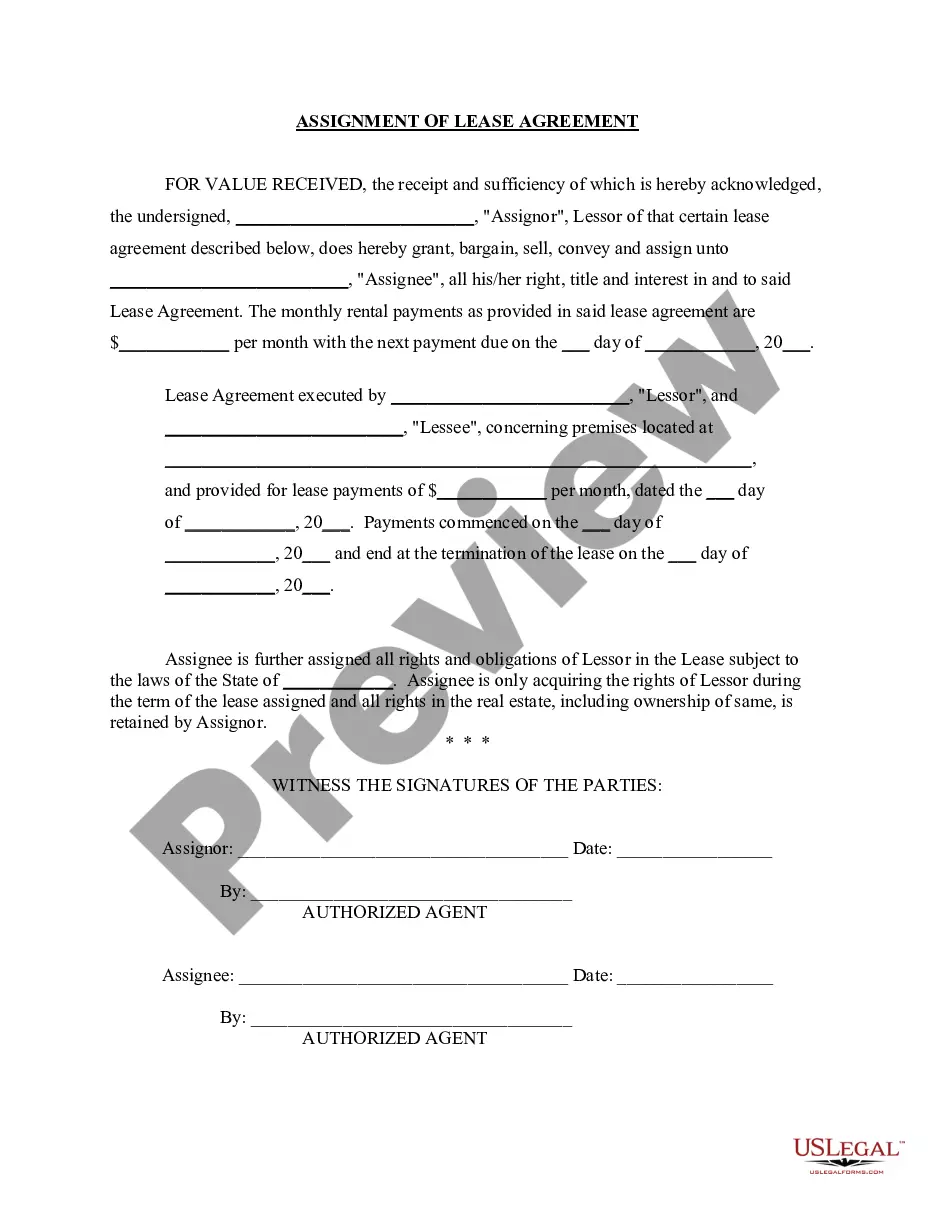
The Bill of Sale in Connection with Sale of Business is a legal document that facilitates the transfer of ownership of a business from one party to another. This form covers not only tangible assets, such as equipment and inventory, but also intangible assets, including licenses, intellectual property, and customer lists. Unlike standard sales agreements, this bill of sale specifically addresses the unique components involved in transferring an entire business entity, making it essential for both individual and corporate sellers and buyers.
Form components explained
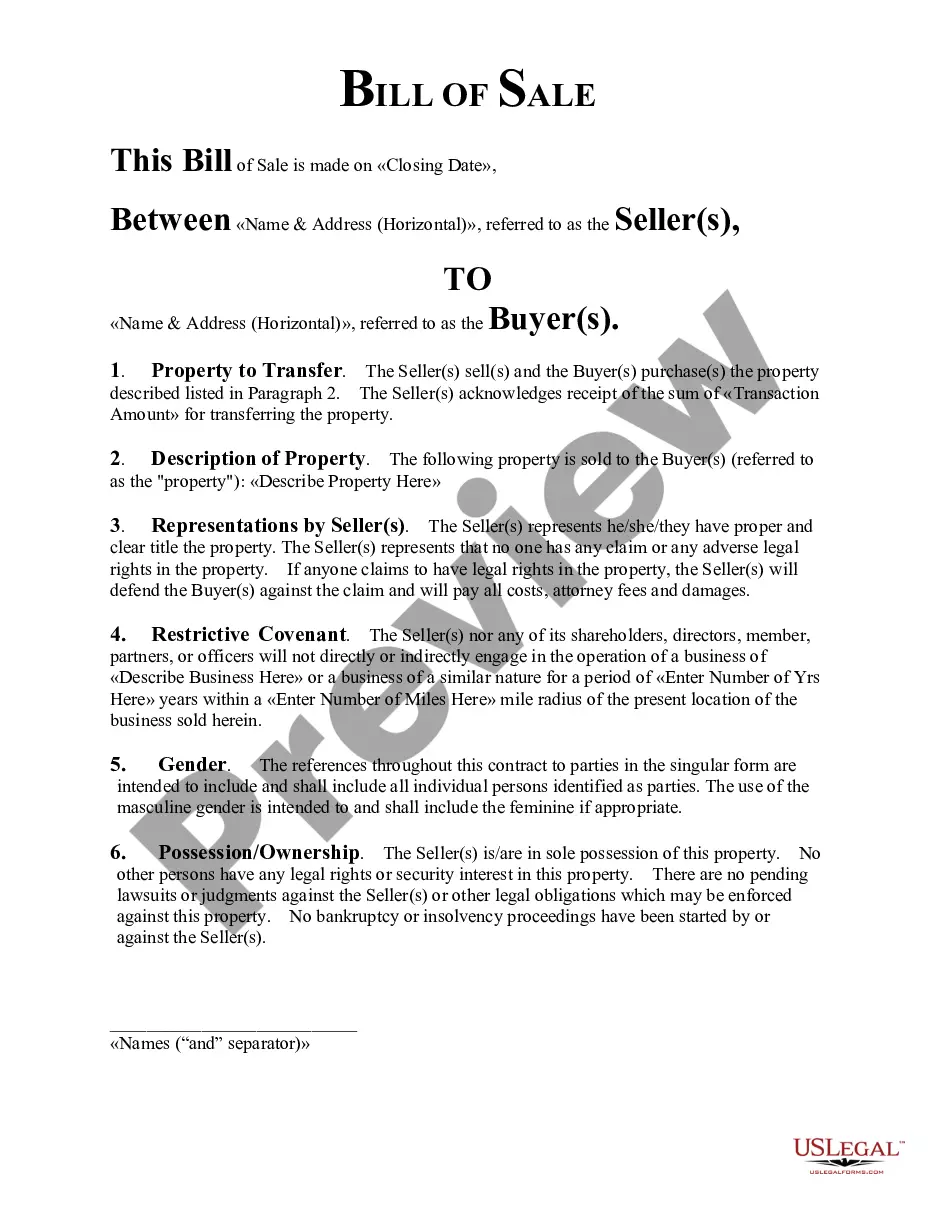
- Identification of the seller and purchaser
- Detailed listing of assets being sold, both tangible and intangible
- Provision for the allocation of work-in-progress and accounts receivable
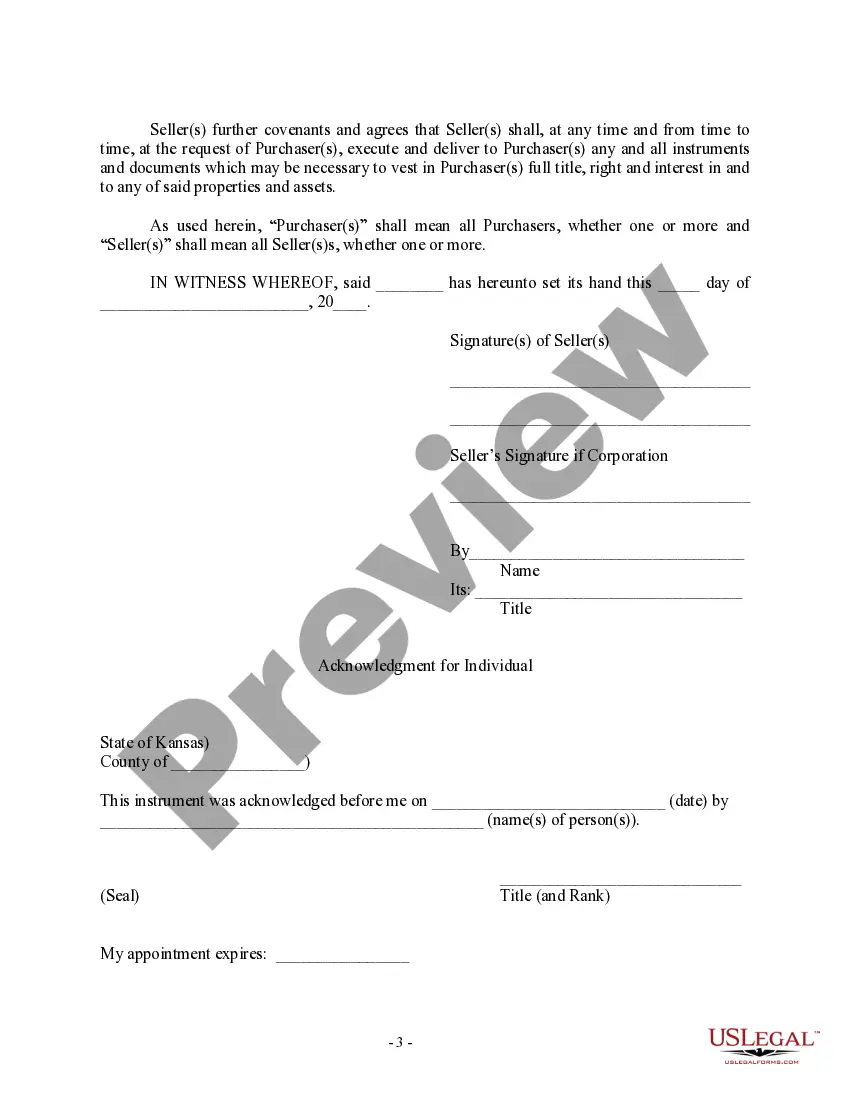
- Covenants by the seller regarding the transfer of rights and property
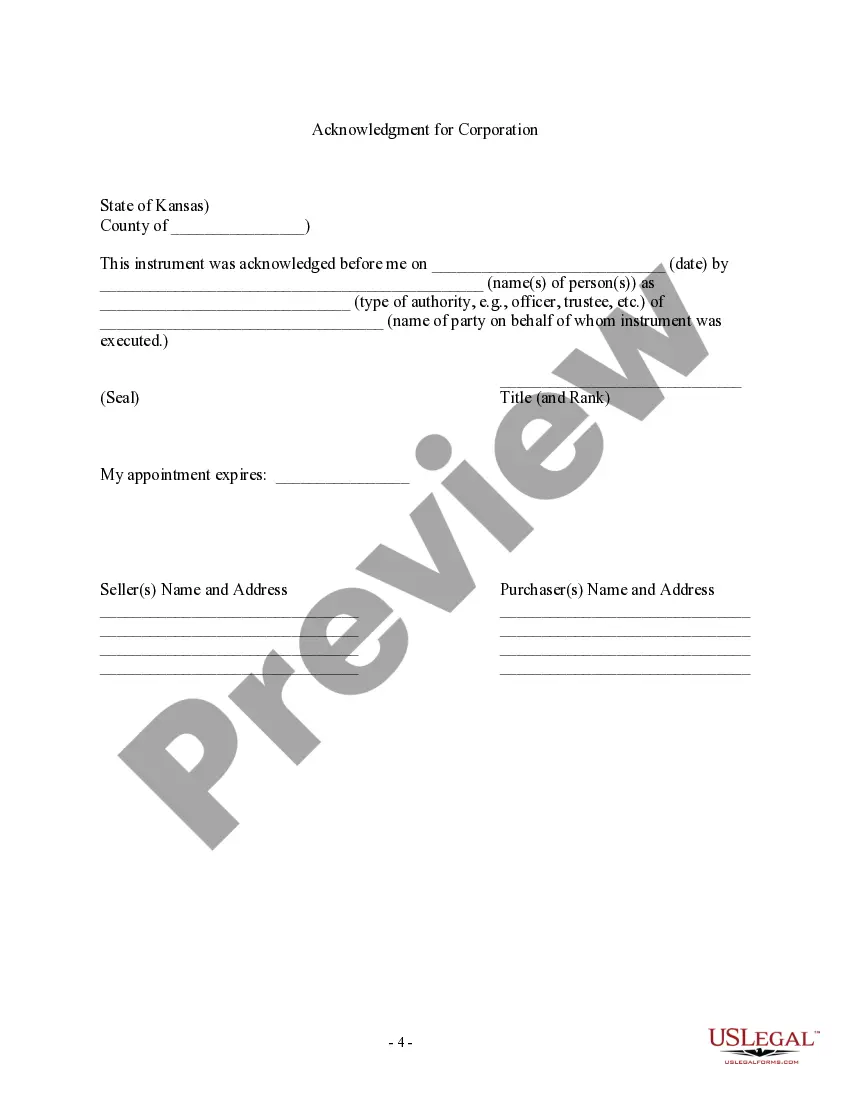
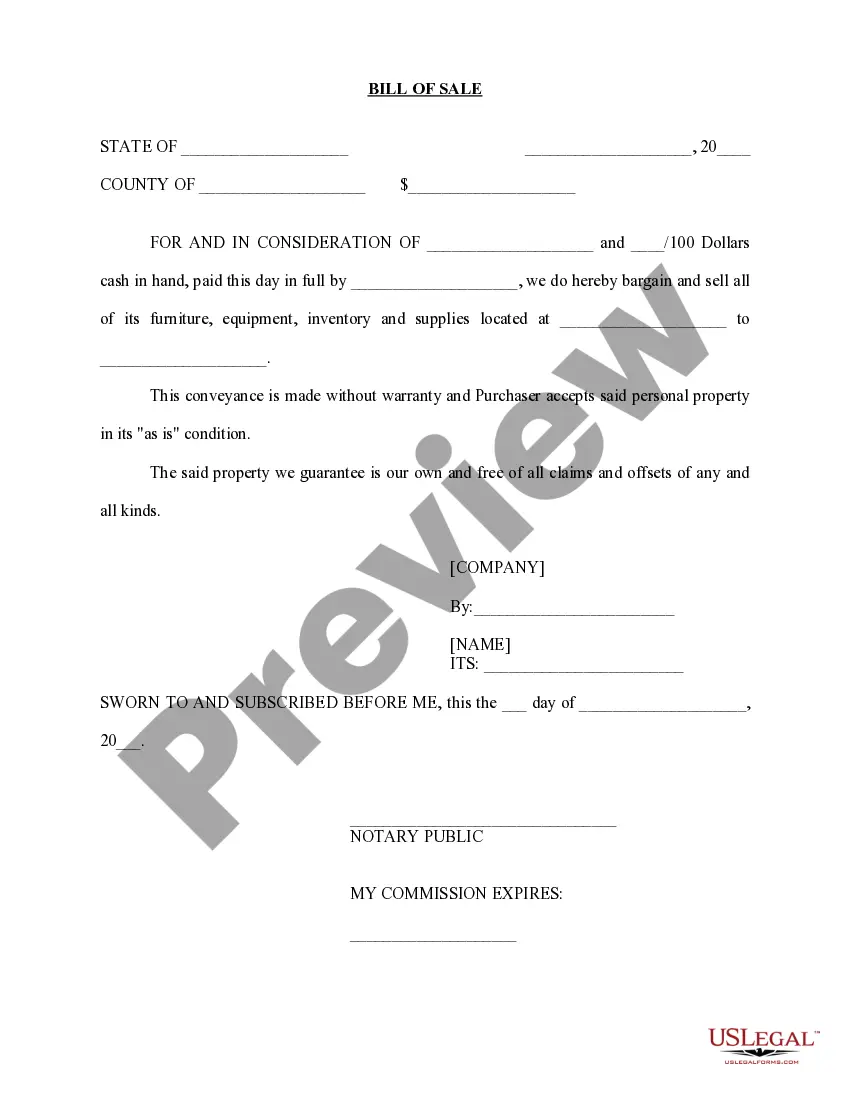
- Sections for notarization and signatures

Common use cases
This bill of sale should be used when an individual or corporation is selling their business, including all associated assets and liabilities. It is particularly useful when the sale involves not just physical property, but also intellectual property and contractual agreements related to the business operations. This form is important for ensuring that both parties have a clear understanding of what is being sold and the terms of the sale.
Who this form is for
This form is intended for:
- Individuals who own a business and wish to sell it.
- Corporations planning to transfer ownership of their business.
- Buyers interested in acquiring an entire business along with its assets.
How to complete this form
- Identify the seller and purchaser and provide their addresses.
- List all assets being transferred in detail, including physical and intangible items.
- Detail the allocation of work-in-progress and accounts receivable if applicable.
- Ensure all relevant parties sign the document in the designated areas.
- Have the form notarized to ensure its legal validity where required.
Does this form need to be notarized?
To make this form legally binding, it must be notarized. Our online notarization service, powered by Notarize, lets you verify and sign documents remotely through an encrypted video session.
Get your form ready online
Our built-in tools help you complete, sign, share, and store your documents in one place.
Make edits, fill in missing information, and update formatting in US Legal Forms—just like you would in MS Word.
Download a copy, print it, send it by email, or mail it via USPS—whatever works best for your next step.
Sign and collect signatures with our SignNow integration. Send to multiple recipients, set reminders, and more. Go Premium to unlock E-Sign.
If this form requires notarization, complete it online through a secure video call—no need to meet a notary in person or wait for an appointment.
We protect your documents and personal data by following strict security and privacy standards.
Make edits, fill in missing information, and update formatting in US Legal Forms—just like you would in MS Word.
Download a copy, print it, send it by email, or mail it via USPS—whatever works best for your next step.
Sign and collect signatures with our SignNow integration. Send to multiple recipients, set reminders, and more. Go Premium to unlock E-Sign.

If this form requires notarization, complete it online through a secure video call—no need to meet a notary in person or wait for an appointment.
We protect your documents and personal data by following strict security and privacy standards.
Avoid these common issues
- Failing to list all relevant assets, which can lead to disputes later.
- Not having the form notarized when required, which may affect its enforceability.
- Inadequately defining terms regarding warranties and guarantees associated with the sale.
- Missing signatures from all necessary parties involved in the transaction.
Benefits of using this form online
- Convenient access to legal documents anytime and anywhere.
- Editable templates allow for easy customization to fit specific needs.
- Reliable forms created by licensed attorneys ensure legal compliance.
Legal use & context
- This form serves as a legally binding agreement outlining the transfer of business ownership.
- It provides essential protections against future claims regarding the assets involved in the sale.
- The terms included can help in the event of disputes between the seller and purchaser post-sale.
What to keep in mind
- The Bill of Sale is essential for transferring ownership of a business, including tangible and intangible assets.
- Use this form to clearly outline all aspects of the sale to prevent misunderstandings.
- Ensure notarization for the document to hold legal weight in the transaction.
Looking for another form?
Form popularity
FAQ
In general, Kansas does not require bills of sale, title assignments, and applications to be notarized. However, it has the right to request notarization in unusual circumstances, such as if document information is incomplete or questionable.
Can a bill of sale be handwritten? If your state does not provide a bill of sale form, yes, you can handwrite one yourself. As long as the document includes all of the necessary parts of a bill of sale and is signed by both parties and a notary, it is valid. Some states require a bill of sale while others don't.
Date of Sale. Buyer's name and address. Seller's name and address. Business name and details, which include: State of incorporation. Address of the business's main headquarters. Assets, shares, personal property and other interests included with the company.
When writing a bill of sale, make sure it contains: the seller's name and address, the buyer's name and address, a description of the item being sold and if it's for a vehicle make sure to include, the vehicle identification number, the date of transaction, the previous owner, the amount paid, the method of payment and
A California Bill of Sale must include both a buyer's and a seller's disclosure. They must be read. If the parties agree to the sale, the document must be signed, witnessed, and notarized. The date of the signatures should also be listed.
Sign two copies of the bill of sale, one for you and one for the other party. Although not strictly required, consider bringing a third party with you when the bill of sale is signed. If questions arise about the sale, that person can serve as a reporter of the transaction.
In Kansas, you need a bill of sale to register a vehicle only if the vehicle is an antique that is 35 years or older and if it doesn't have a title. In that instance, you would complete Form TR-312.For a used vehicle, you will complete the titling and registration process at the County Treasurer's Office.
A bill of sale used as an ownership document does not need to be notarized.If you are using a Kansas title as your primary ownership document, take it to your local county treasurer's motor vehicle office. The Kansas title will be accepted, and your title and registration will be issued.
1Date of Sale.2Buyer's name and address.3Seller's name and address.4Business name and details, which include: State of incorporation. Address of the business's main headquarters. Assets, shares, personal property and other interests included with the company.