Indiana Marital Legal Separation and Property Settlement Agreement Adult Children Parties May have Joint Property or Debts where Divorce Action Filed
About this form
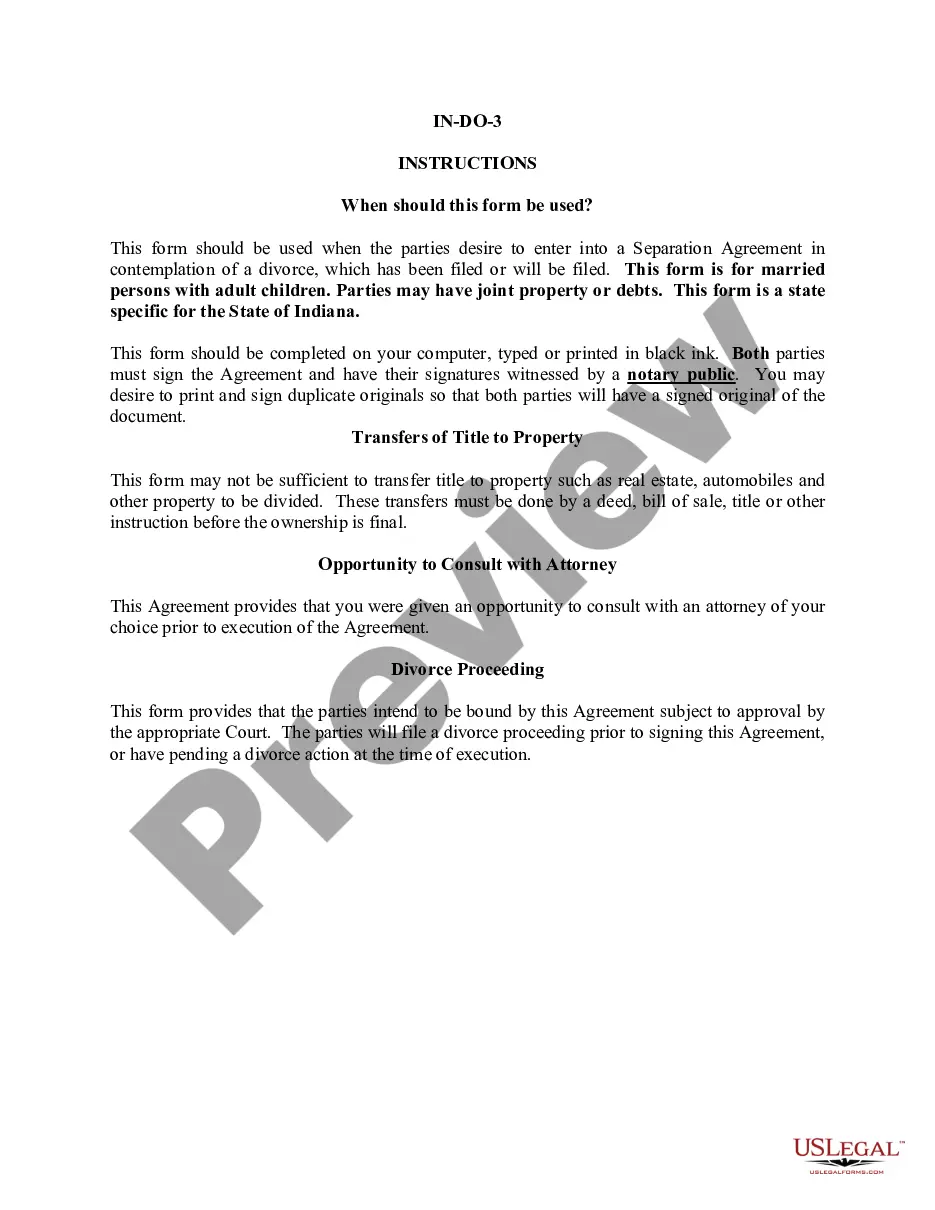
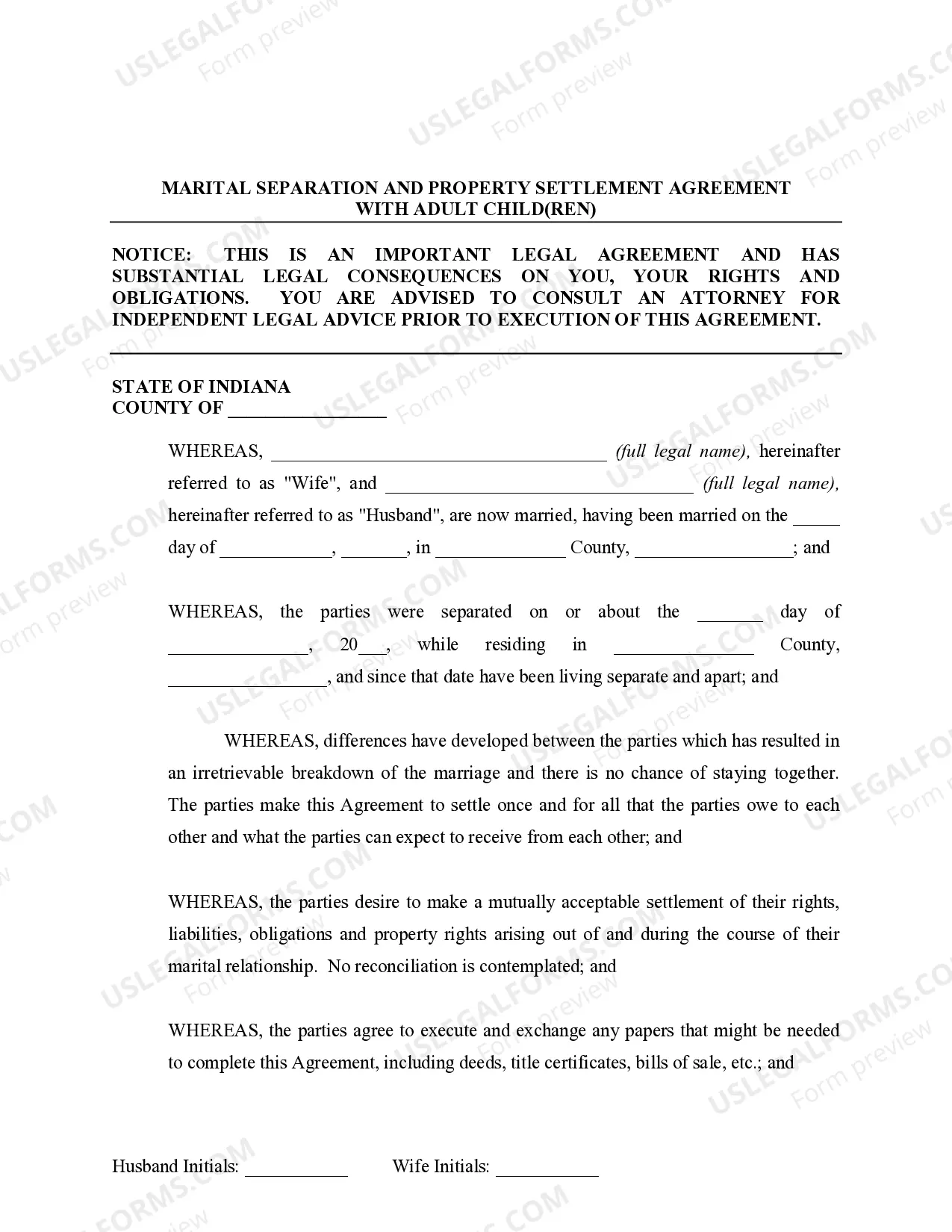
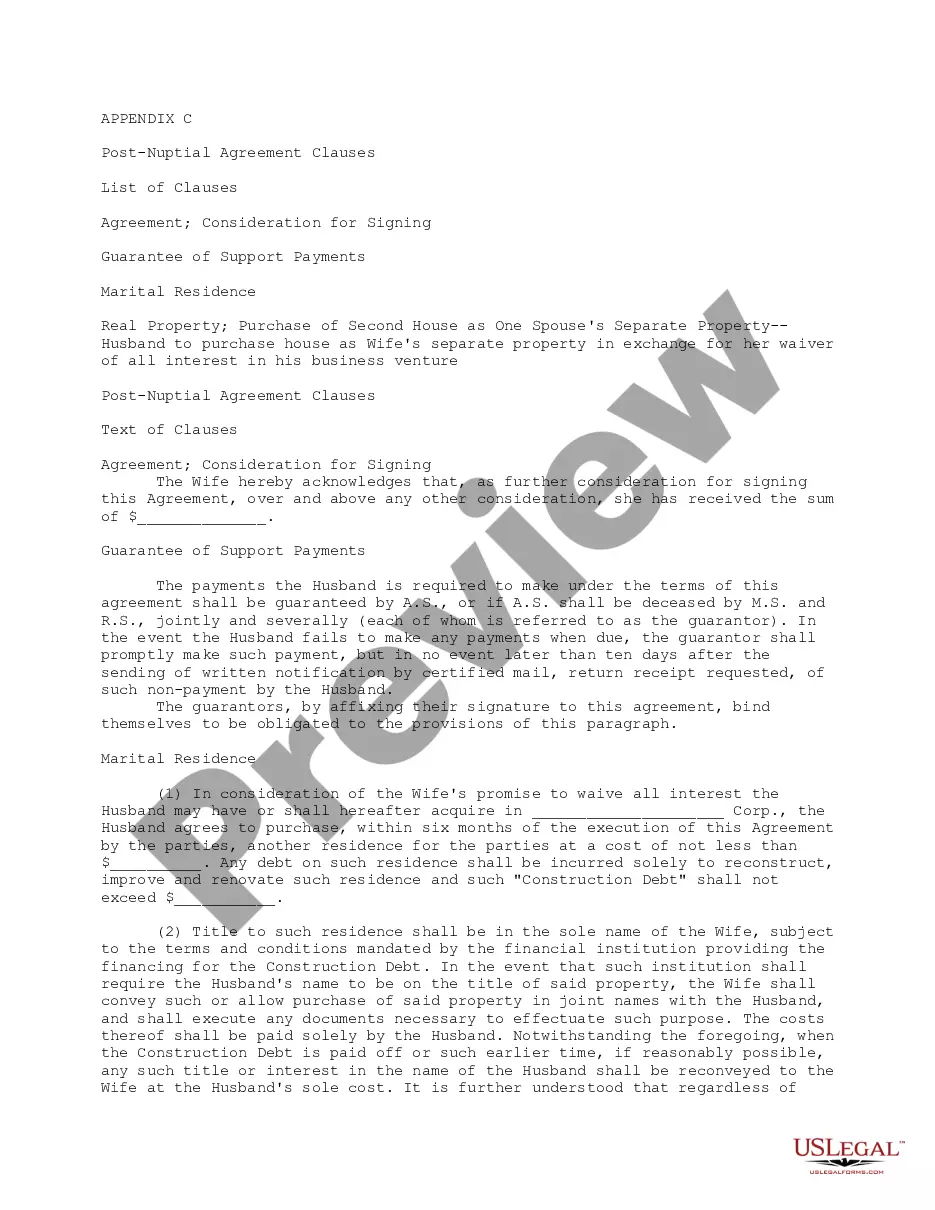
This Marital Legal Separation and Property Settlement Agreement is designed for couples with adult children who are moving toward divorce. This form specifically addresses the division of joint property and debts, allowing both parties to outline their financial obligations and rights clearly. It is distinct from other forms as it focuses on marriages involving adult children, ensuring that their needs and interests are recognized during the separation process.
What’s included in this form
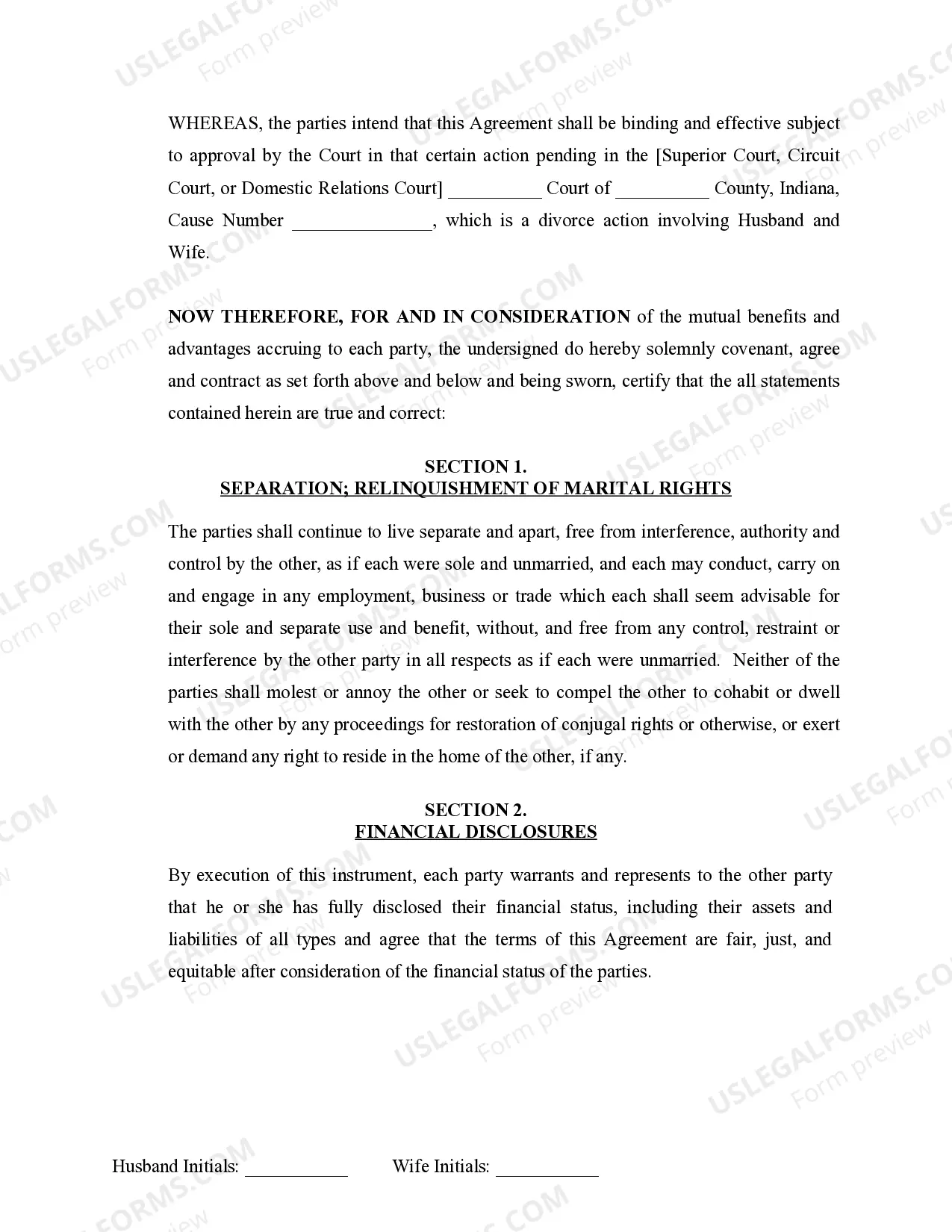
- Separation terms that outline living arrangements and marital rights.
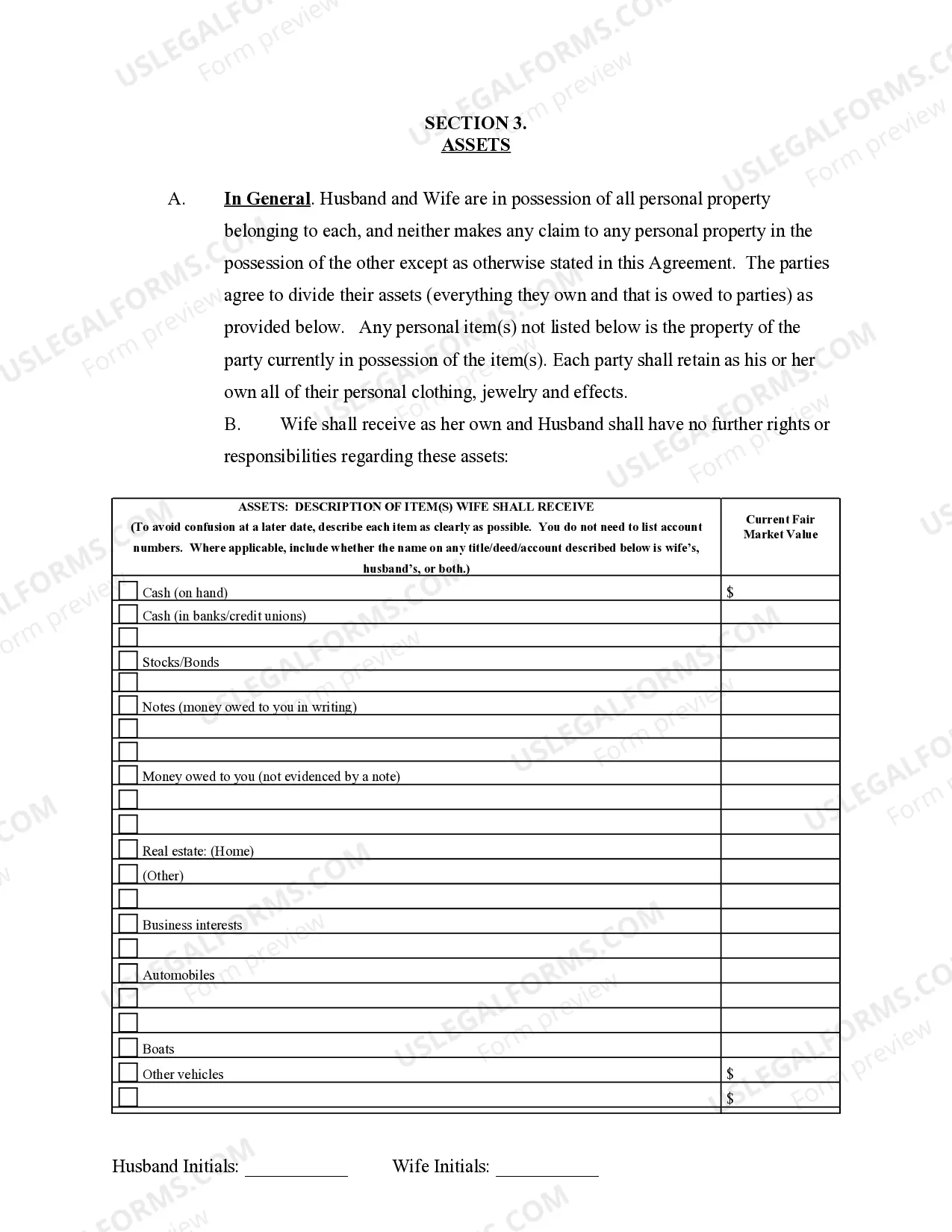
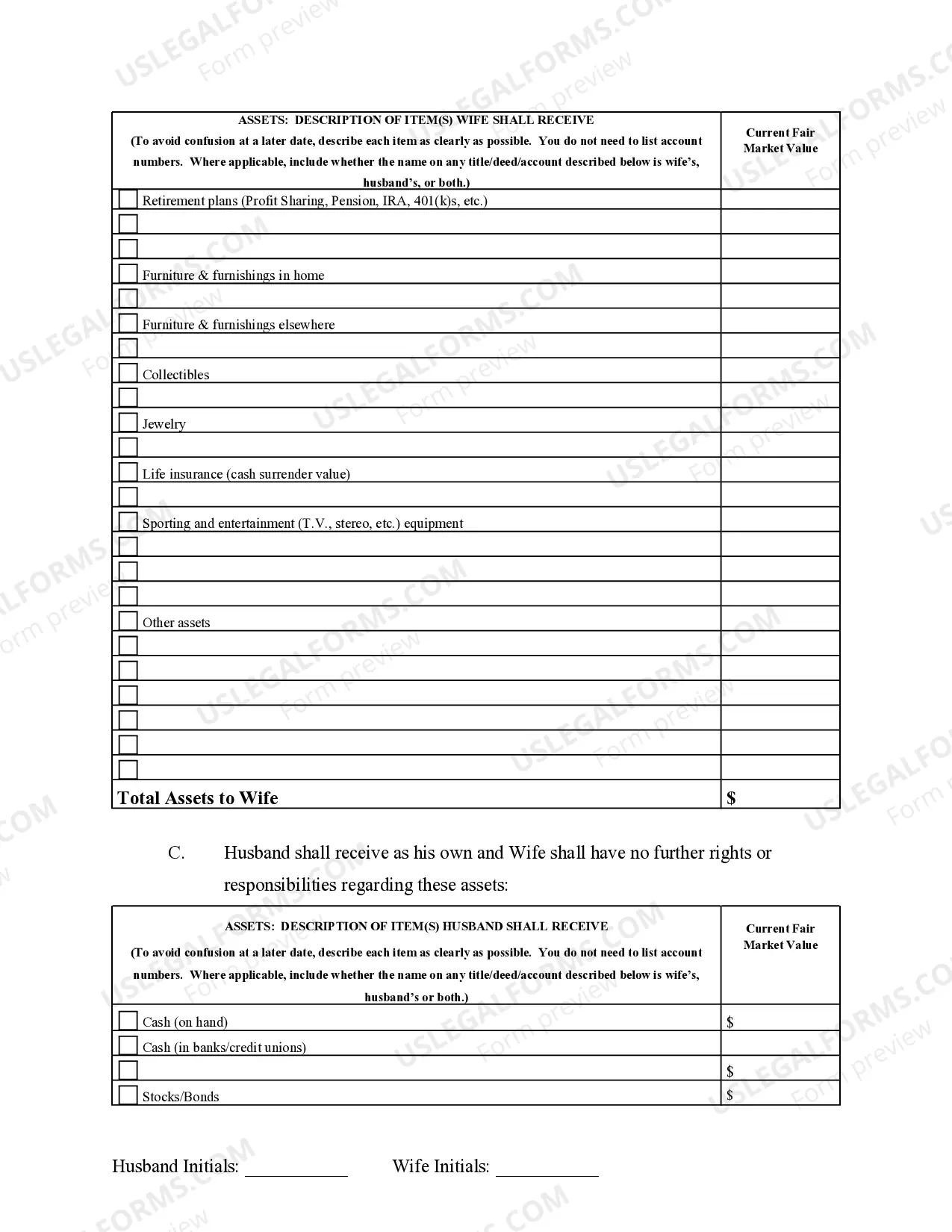
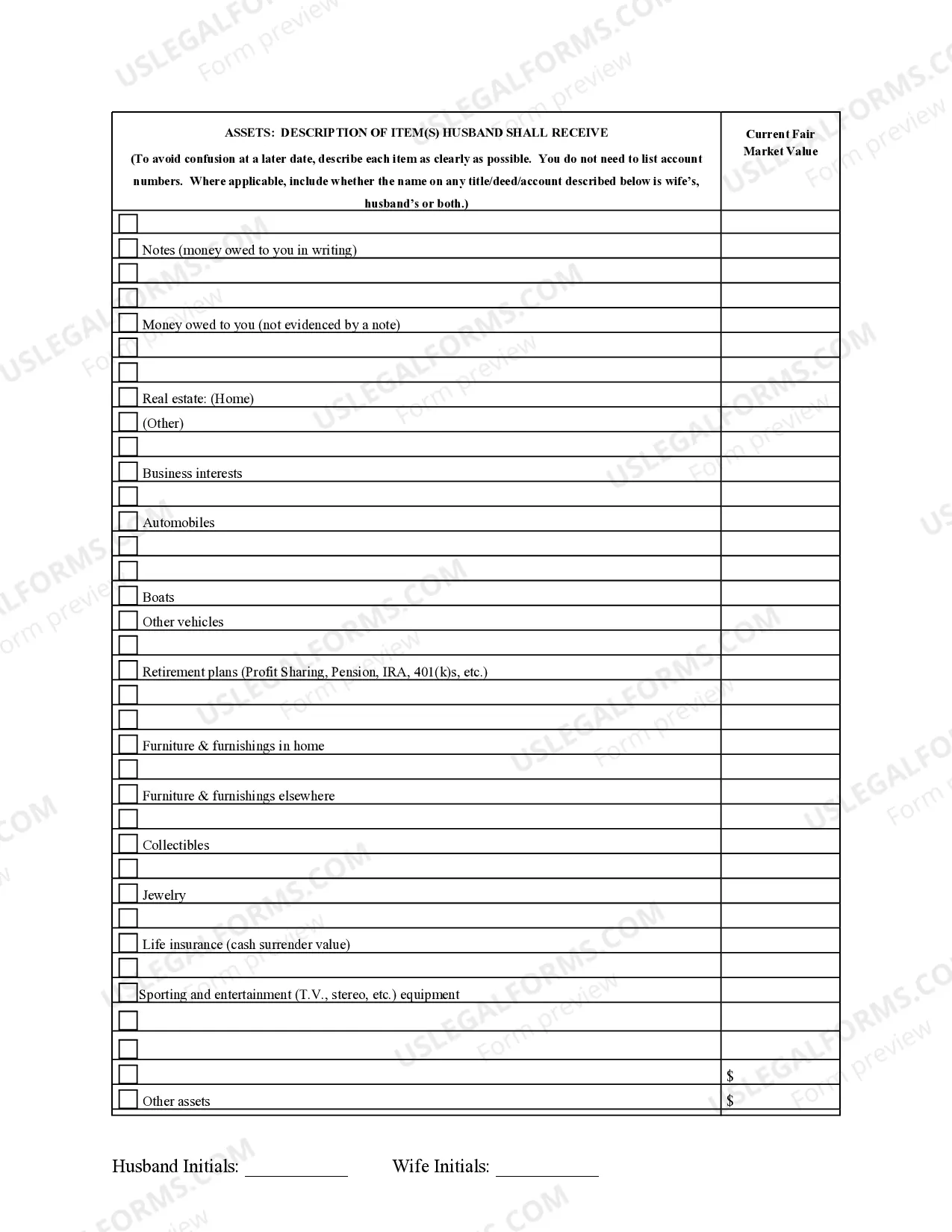
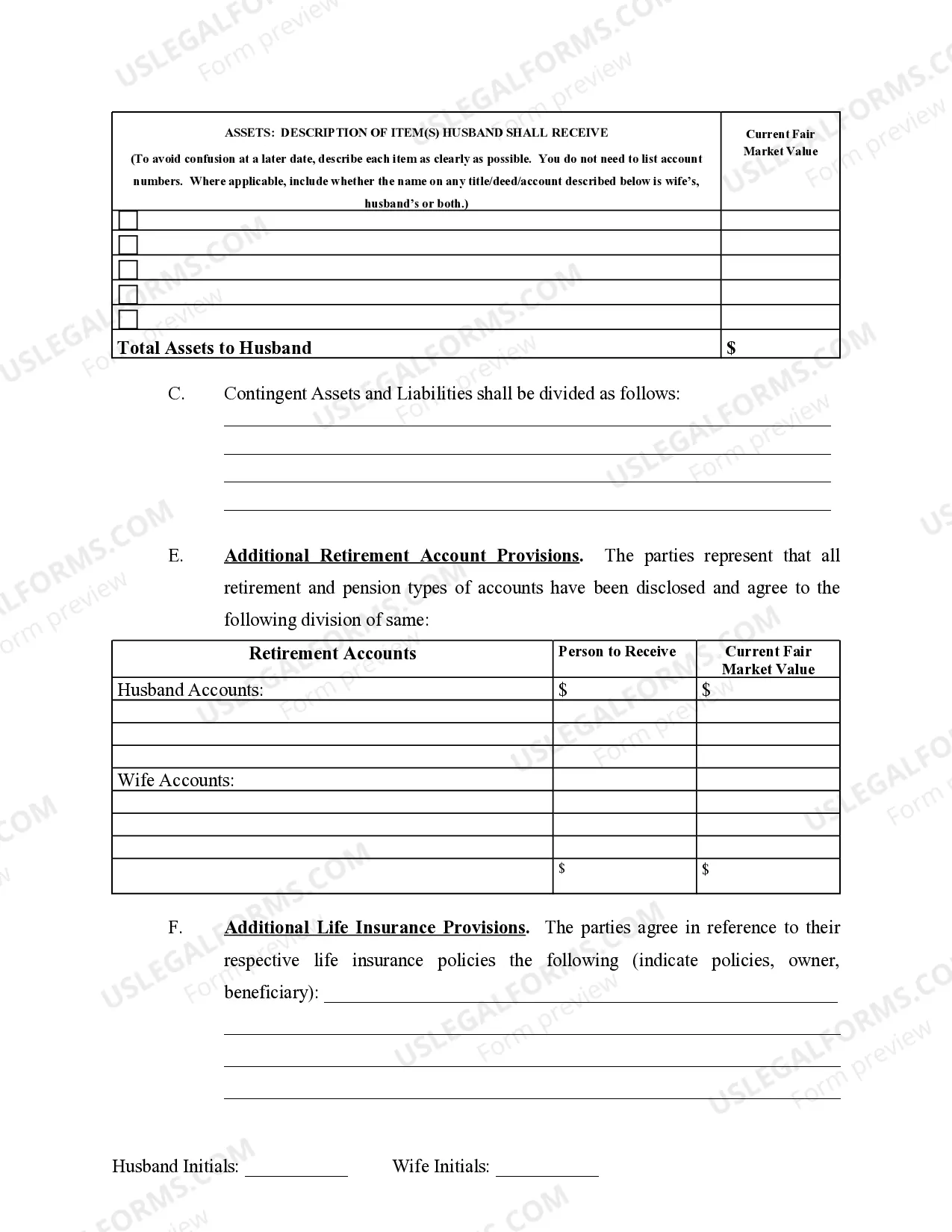
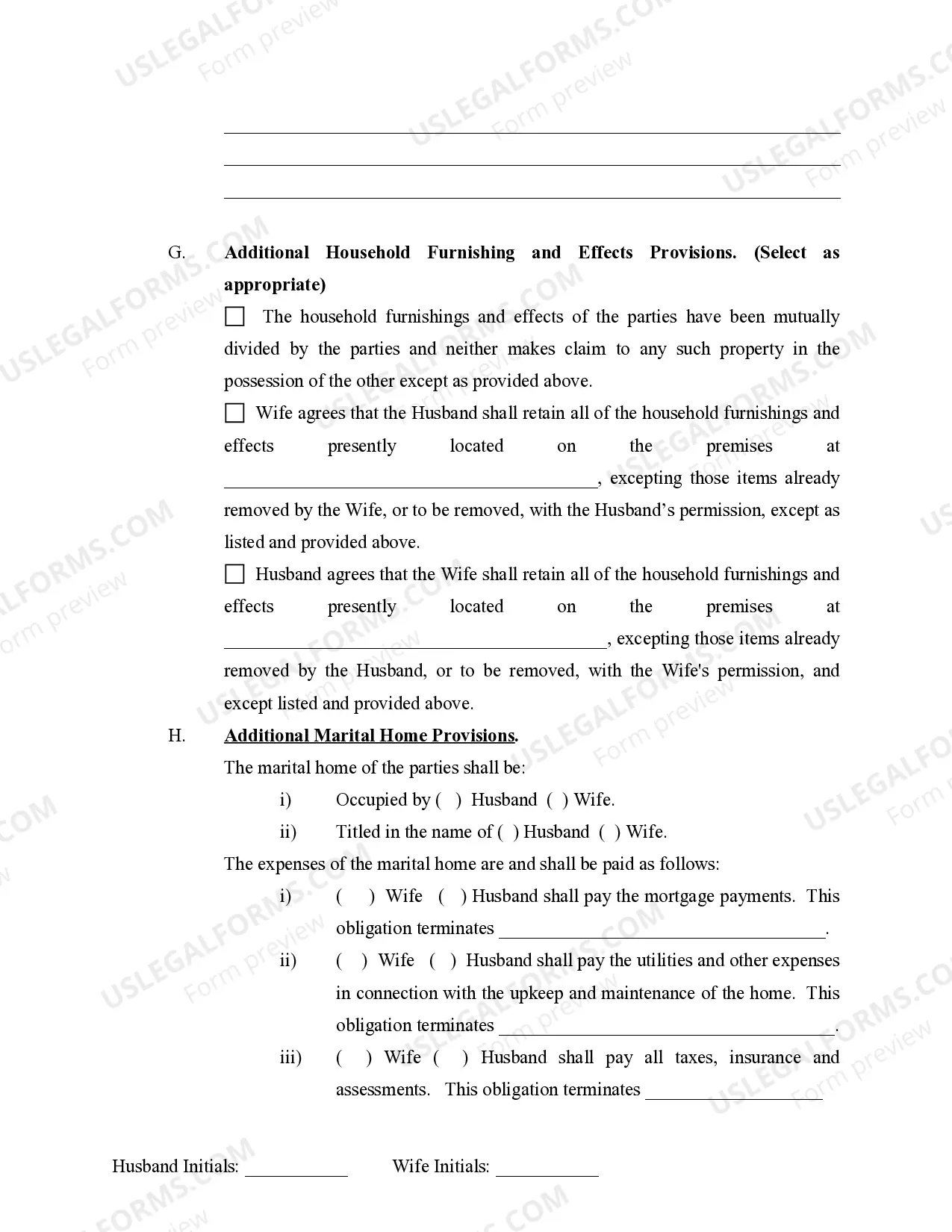
- Detailed asset division including personal property, real estate, and financial accounts.
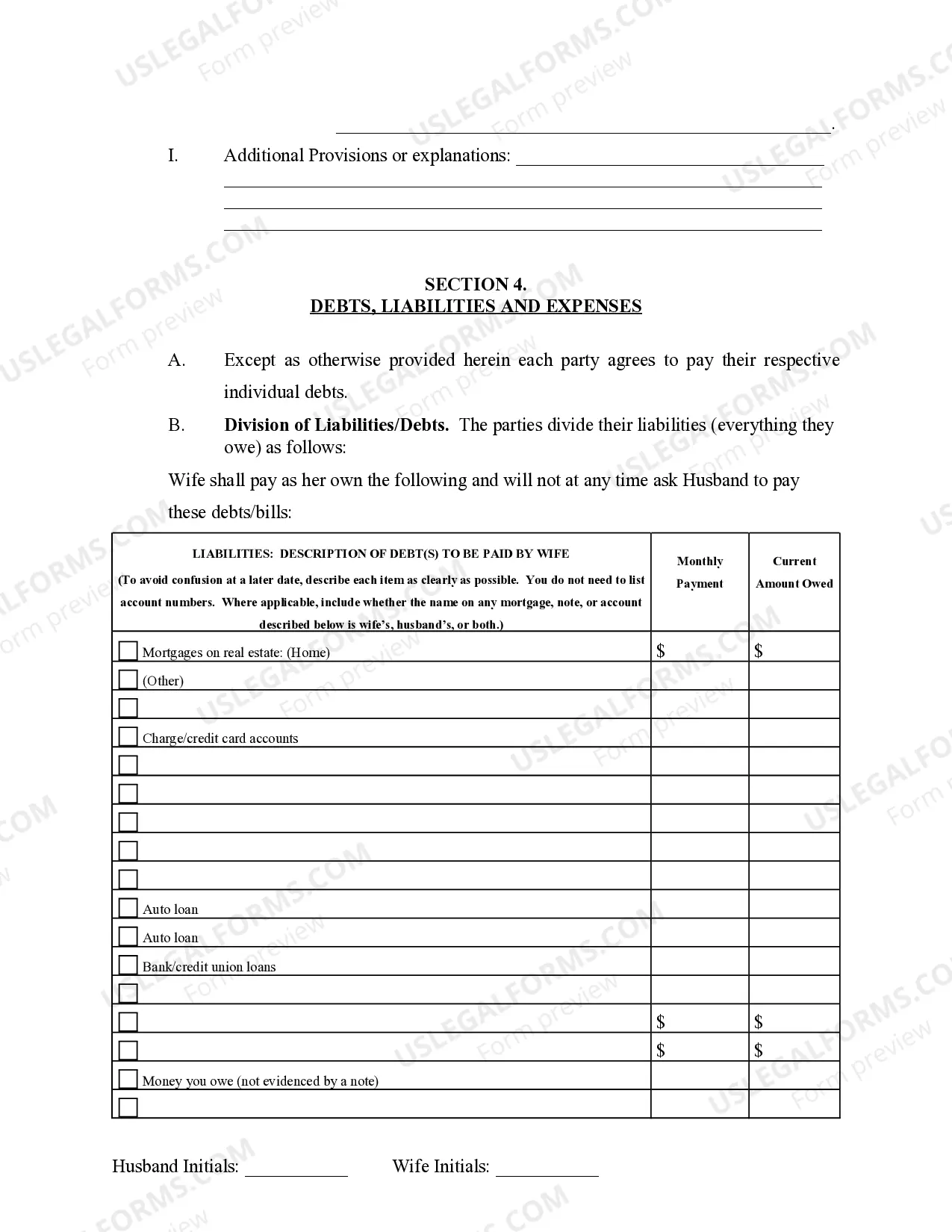
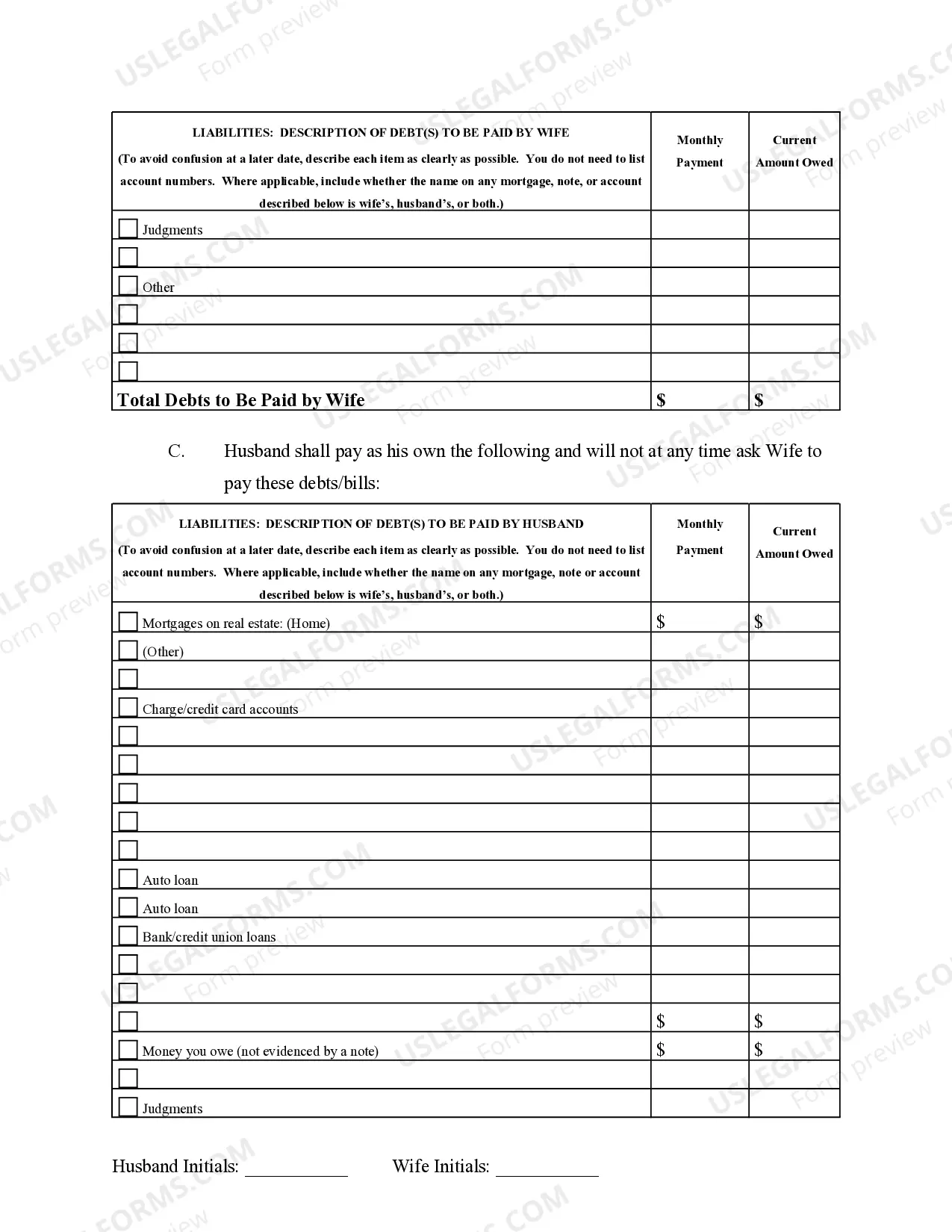
- Liabilities section specifying debts each party agrees to pay.
- Provisions for future earnings, ensuring all income post-agreement is separately owned.
- Spousal support details, if applicable, outlining payment amounts and schedules.
- Sections addressing tax liabilities related to joint filings.

Common use cases
This form should be used when both parties are ready to formalize a legal separation as part of the divorce process. It is particularly useful when there are adult children involved, and both parties seek to resolve property division and debt repayment amicably. It may also be needed to clarify each party's responsibilities and rights as they transition to living separately while ensuring that their adult children's interests are considered.
Who can use this document
- Married couples with adult children who are planning to divorce.
- Couples who have joint property or shared debts that need to be separated.
- Parties wishing to create a binding agreement outlining their financial responsibilities post-separation.
- Individuals who want to ensure clear terms regarding spousal support, if applicable.
How to complete this form
- Identify the parties involved, including legal names and marriage details.
- Clearly describe the division of assets and liabilities, including property, debts, and individual financial responsibilities.
- Detail any spousal support arrangements, if applicable.
- Print and sign the completed form in black ink; ensure both parties have a signed copy.
- Have the Agreement notarized to meet legal requirements.
Does this document require notarization?
This form needs to be notarized to ensure legal validity. US Legal Forms provides secure online notarization powered by Notarize, allowing you to complete the process through a verified video call, available anytime.
Get your form ready online
Our built-in tools help you complete, sign, share, and store your documents in one place.
Make edits, fill in missing information, and update formatting in US Legal Forms—just like you would in MS Word.
Download a copy, print it, send it by email, or mail it via USPS—whatever works best for your next step.
Sign and collect signatures with our SignNow integration. Send to multiple recipients, set reminders, and more. Go Premium to unlock E-Sign.
If this form requires notarization, complete it online through a secure video call—no need to meet a notary in person or wait for an appointment.
We protect your documents and personal data by following strict security and privacy standards.
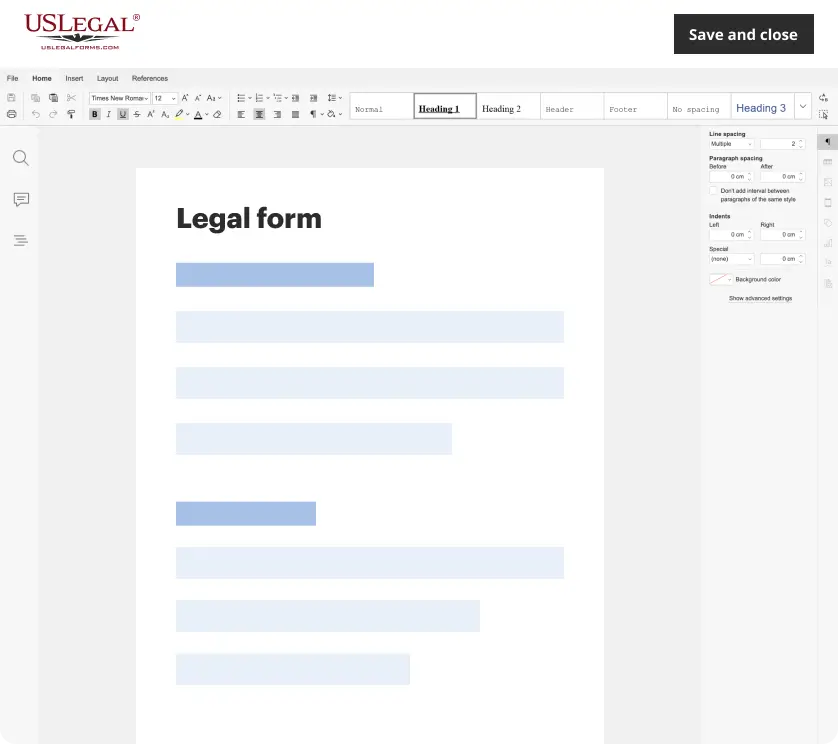
Make edits, fill in missing information, and update formatting in US Legal Forms—just like you would in MS Word.
Download a copy, print it, send it by email, or mail it via USPS—whatever works best for your next step.
Sign and collect signatures with our SignNow integration. Send to multiple recipients, set reminders, and more. Go Premium to unlock E-Sign.

If this form requires notarization, complete it online through a secure video call—no need to meet a notary in person or wait for an appointment.
We protect your documents and personal data by following strict security and privacy standards.
Typical mistakes to avoid
- Failing to completely disclose all assets and liabilities, which can lead to disputes later.
- Not having the Agreement notarized, which is necessary for it to be legally binding.
- Overlooking sections that may need additional detail, such as property descriptions or debt amounts.
- Missing signatures from both parties, which invalidates the Agreement.
Benefits of using this form online
- Convenience of downloading and completing the form at your own pace.
- Editable fields allow for easy customization of asset and liability descriptions.
- Reliability of having a document drafted by licensed attorneys, ensuring legal accuracy.
- Immediate availability of resources to assist in understanding the terms and implications of the Agreement.
Quick recap
- This form is specifically for married couples with adult children preparing for divorce.
- It facilitates the fair division of property and financial responsibilities.
- Notarization is essential for the Agreement to be effective.
- Using this form can help avoid future disputes over shared assets and debts.
Looking for another form?
Form popularity
FAQ
The 60-day divorce law in Indiana mandates a waiting period before a divorce can be finalized. After filing, at least 60 days must pass before the court can grant a divorce, allowing time for negotiation and reflection. This timeframe is crucial for couples to communicate and consider an Indiana Marital Legal Separation and Property Settlement Agreement Adult Children Parties May have Joint Property or Debts where Divorce Action Filed, which can aid in amicable resolutions.
The truth is that if one person wants a divorce, it can happen.The court needs to agree to grant the divorce, not the other person in the marriage. As long as the necessary financial and legal issues get resolved, the divorce can be completed with one person never agreeing to it.
You can get a divorce even if your spouse does not want it. Once the court issues a Decree of Divorce, you are considered divorced. Your spouse's consent is not necessary.
One of the main legal advantages that a person gains by filing the divorce petition before his or her spouse does is that the filer can request a Standing Order from the court when filing the petition.If the matter should go to a hearing, the person who files the petition usually presents his or her case first.
Either spouse may file for legal separation in Indiana. One of the spouses must be a resident of Indiana for at least six months and one of the spouses must have been a resident of the county where the petition is filed for at least 3 months.
Yes. It does not matter who files for divorce; the wife can get her maiden or former name back as part of the final divorce as long as she asks the court to do this.
The court will generally divide the marital property in half, and each spouse will get one half of the total property. This doesn't mean each item will be split in half; one spouse might get the car and the other spouse might get the furniture.
A legal separation is not required prior to an Indiana divorce, although a legal separation may provide the divorce court with the evidence it needs of a marriage's irretrievable breakdown.