Indiana Mutual Wills Package of Last Wills and Testaments for Man and Woman living together not Married with Adult Children
About this form
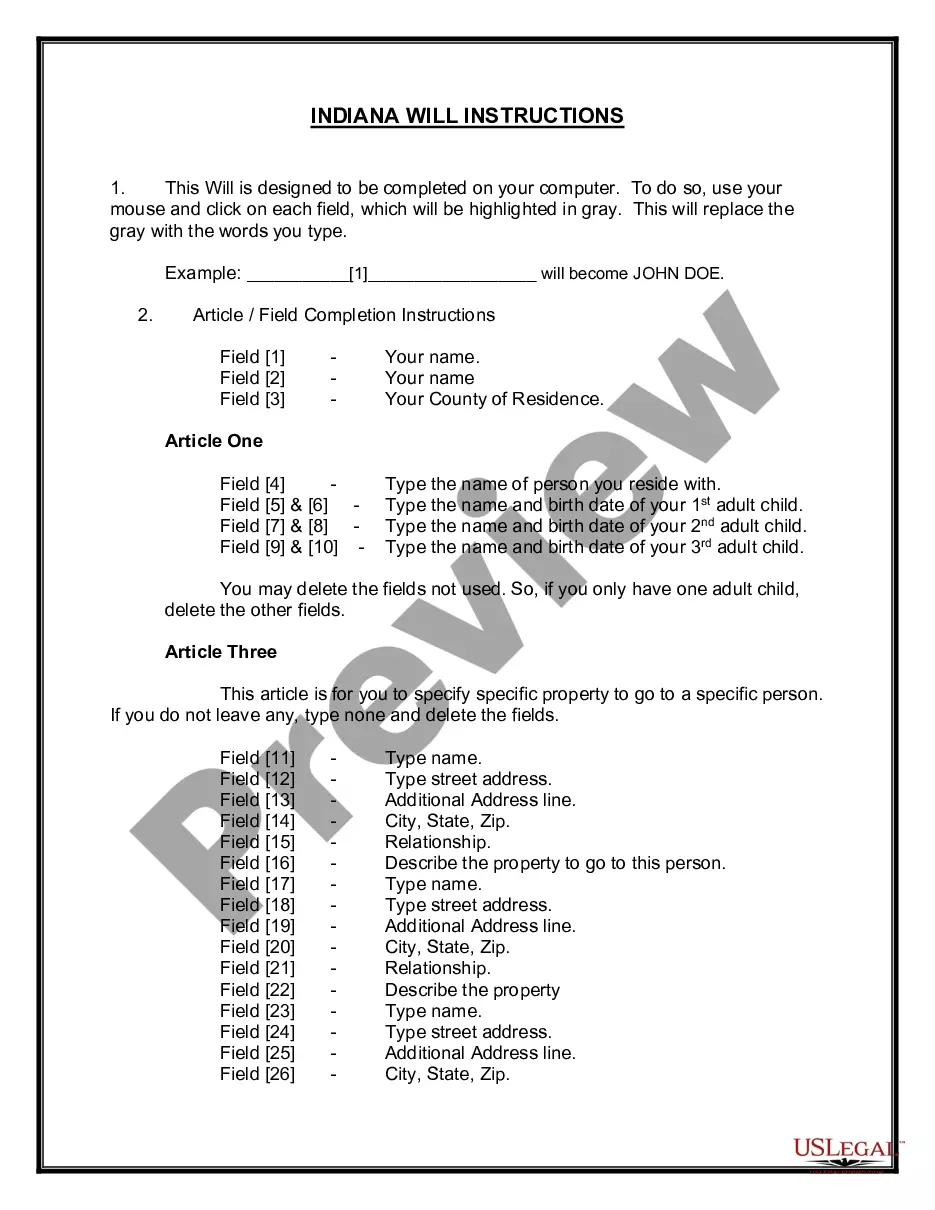
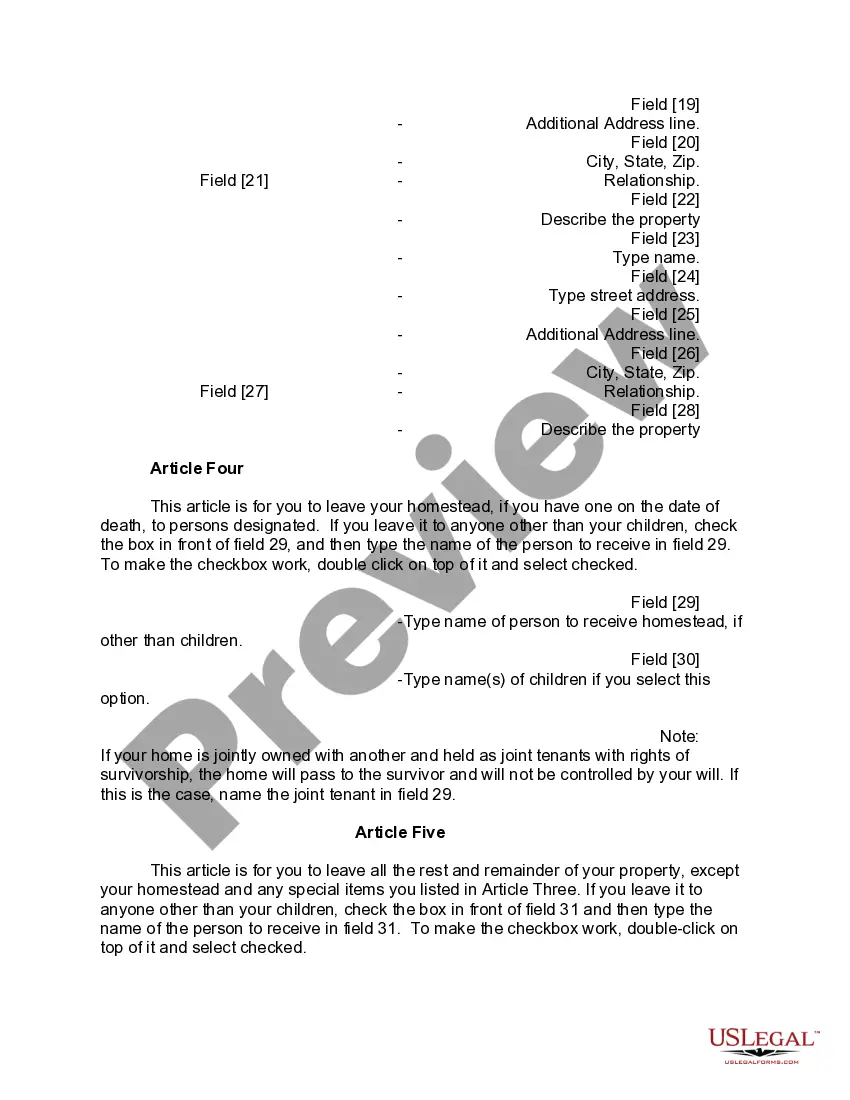
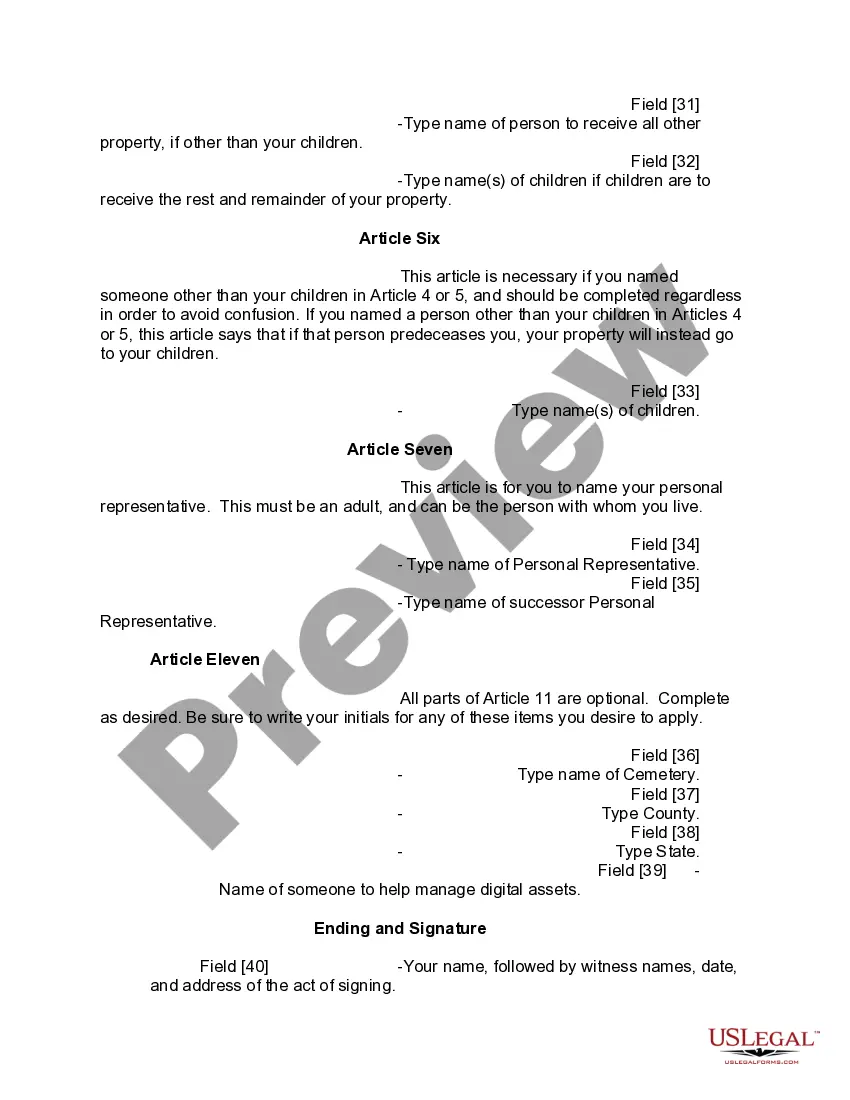
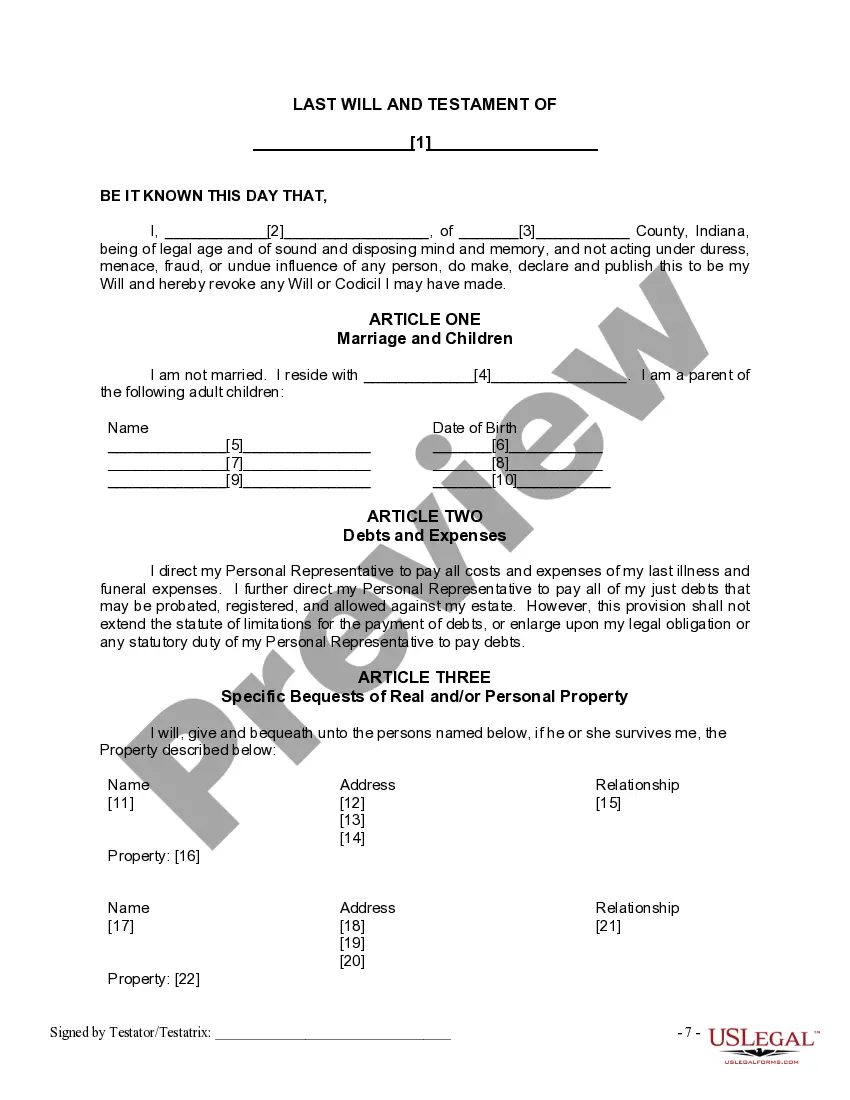
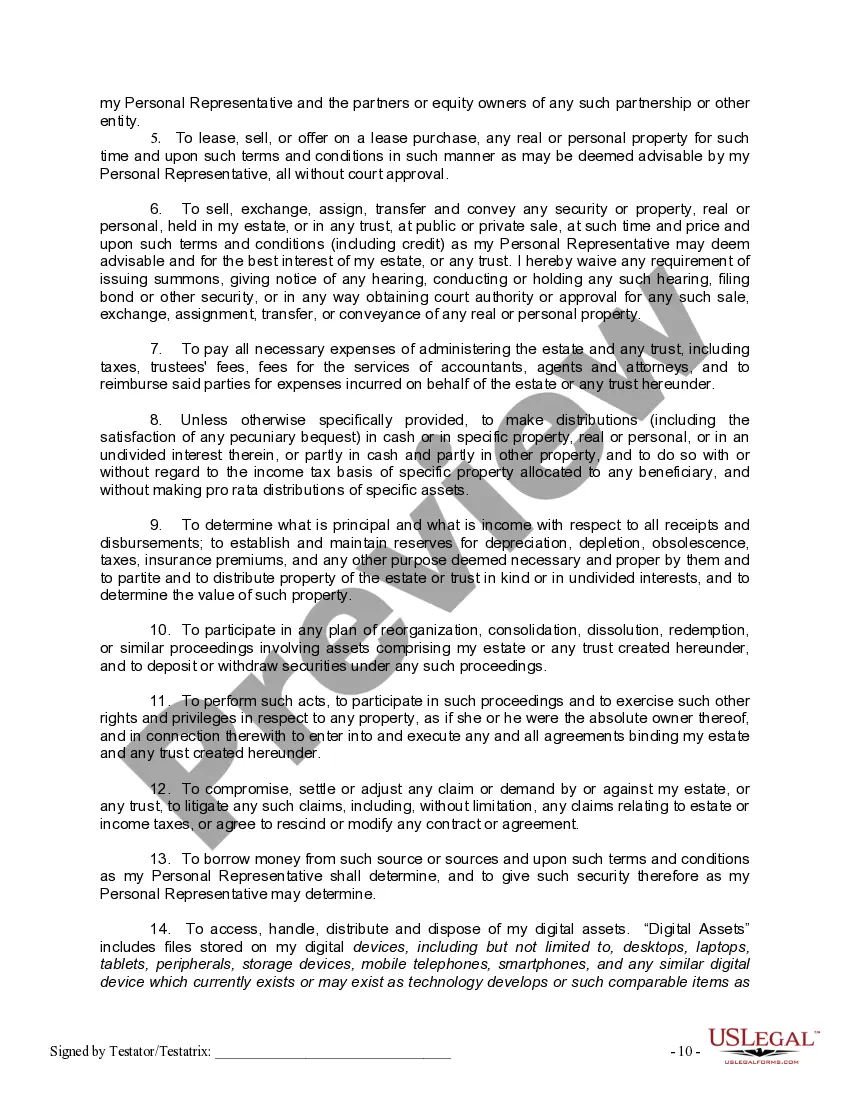
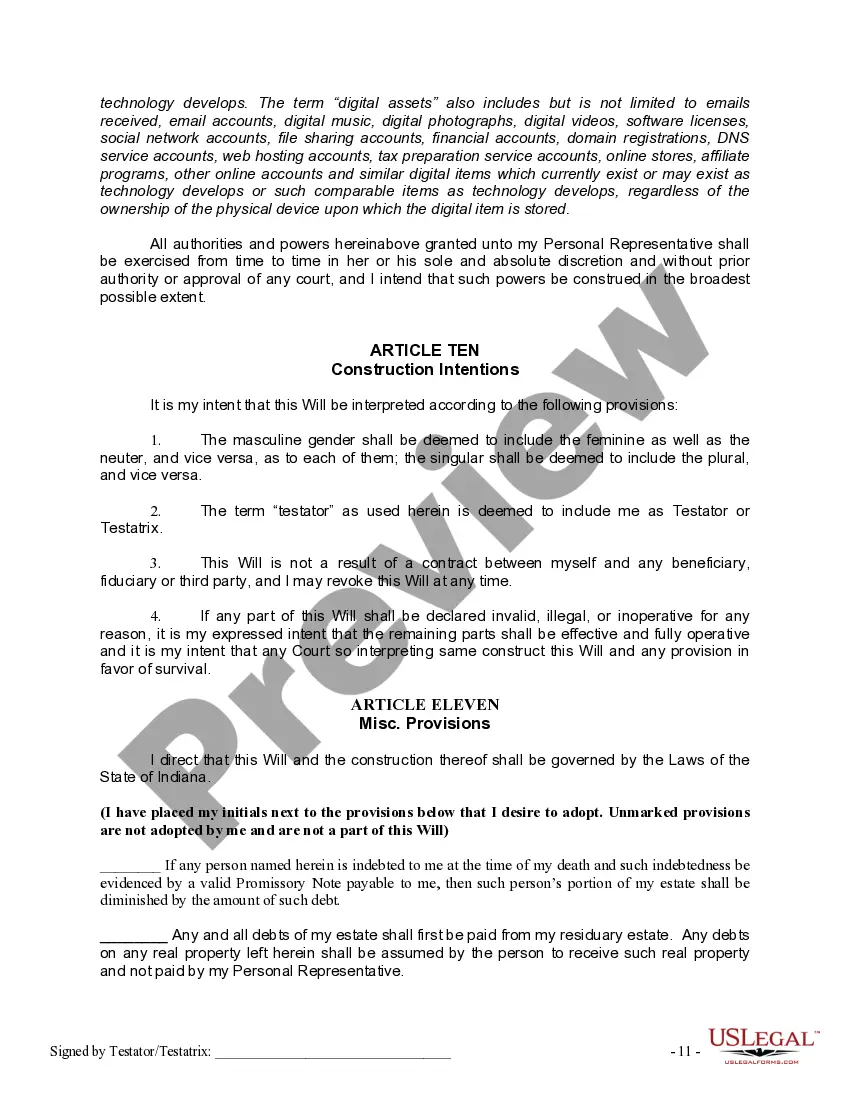
This Mutual Wills Package of Last Wills and Testaments is designed for a man and woman living together who are not married and have adult children. It enables both individuals to create mutual wills, ensuring that each party can leave their property to the other while also considering their adult children. This package includes two wills along with state-specific instructions to guide users through the process, making it distinct from standard wills that do not include mutual provisions.
Key components of this form
- Personal information section for each party, including names and addresses.
- Declaration of the testator's marital status and children.
- Article detailing debts and expenses of the estate.
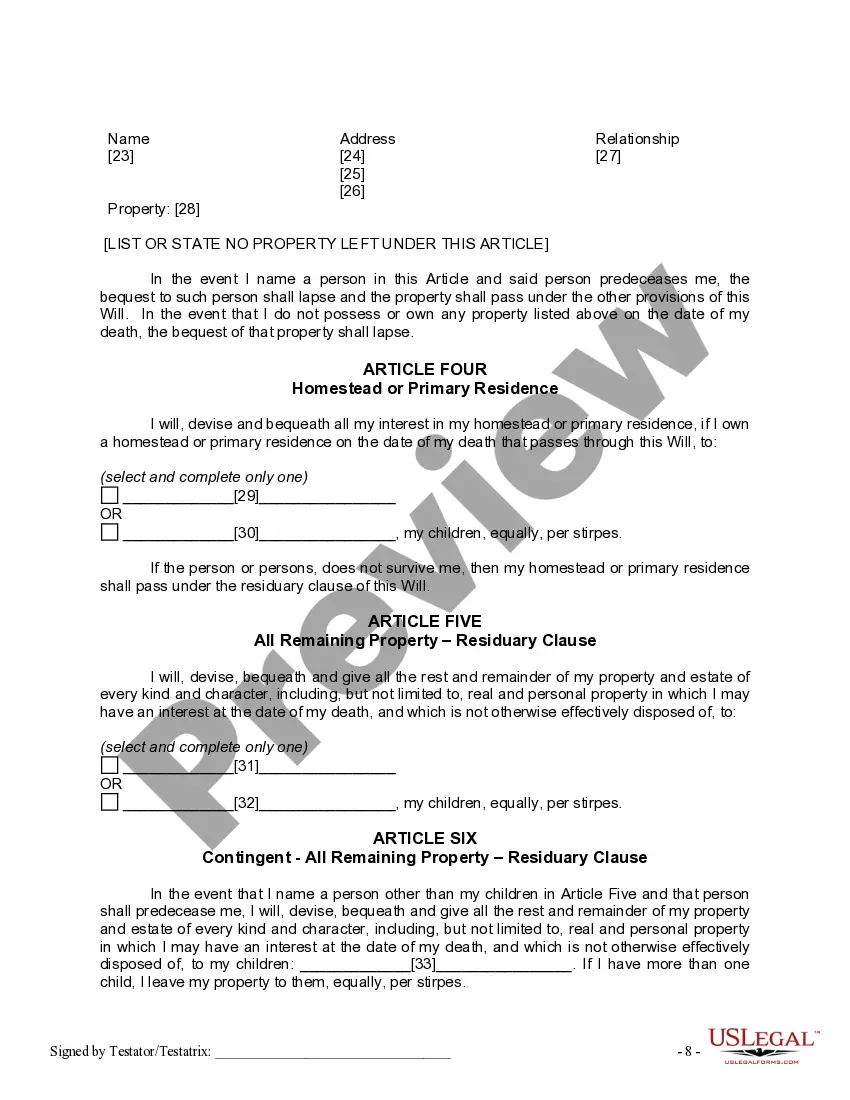
- Specific bequests for real and personal property.
- Residuary clause covering remaining property distribution.
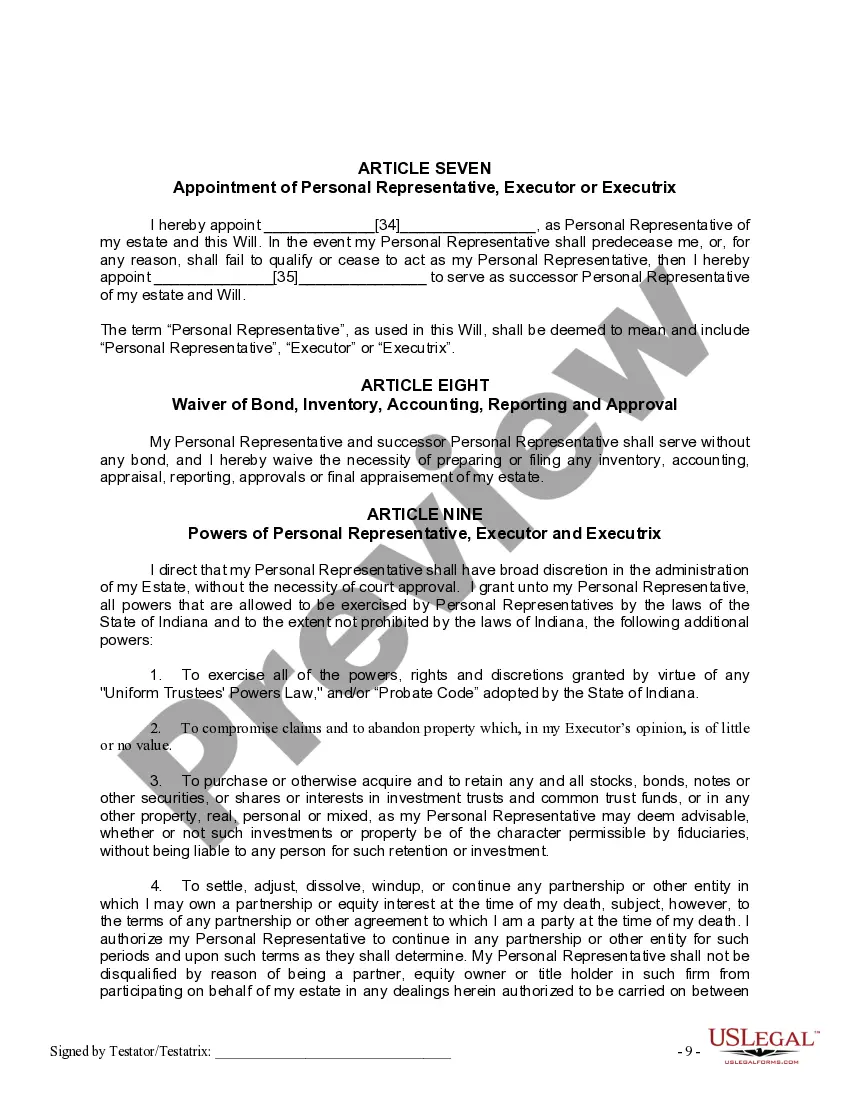
- Appointment of a personal representative for will execution.
- Notary and witness requirements for validation.





When to use this form
You should use this Mutual Wills Package when you are living with your partner without being legally married and wish to ensure that your assets are passed to one another upon death, while also planning for your adult children. This form is particularly useful if you want to establish mutual provisions to avoid potential issues in inheritance and to protect the interests of your children from previous relationships or other family members.
Intended users of this form
- Unmarried couples living together who want to outline mutual benefits in their wills.
- Individuals with adult children seeking to delineate property distribution clearly.
- Parties wishing to ensure that their partner is financially secure after their passing.
- Individuals who want to mitigate potential disputes among heirs regarding asset distribution.
Steps to complete this form
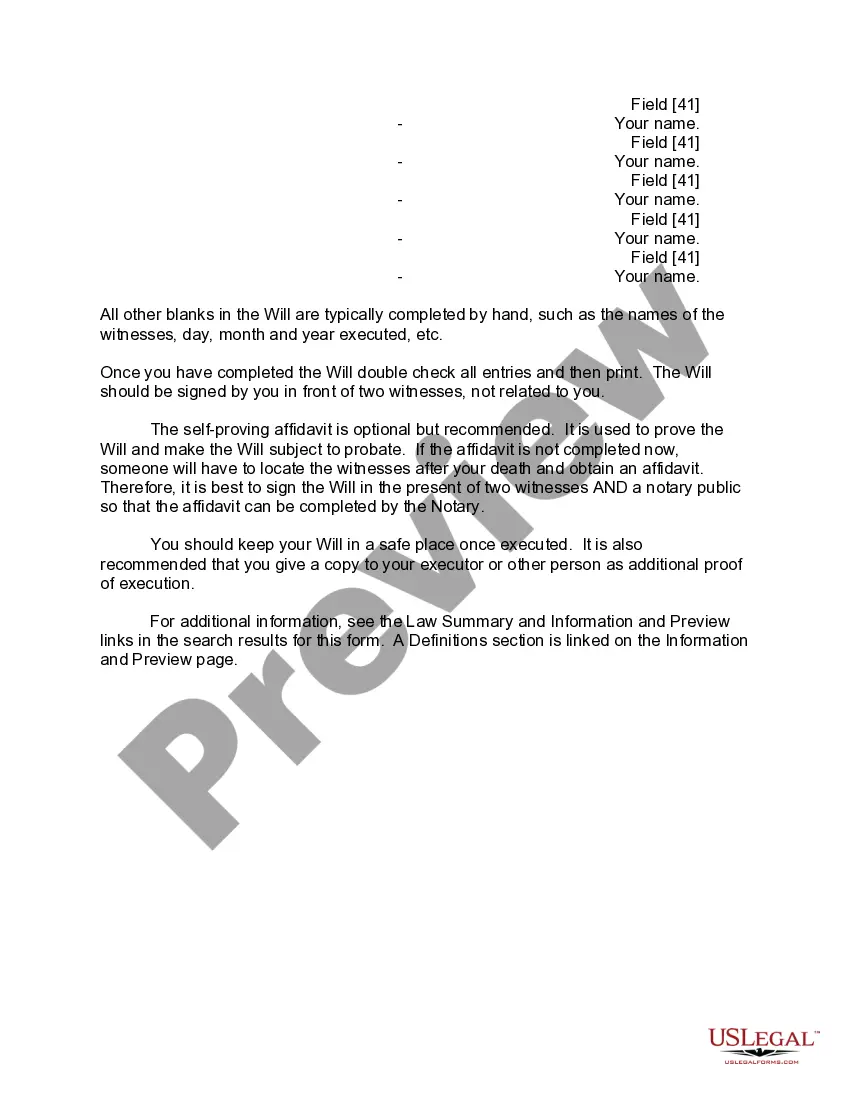
- Fill in the names and addresses of both parties at the beginning of each will.
- Specify the adult childrenâs names and their date of birth in the designated sections.
- Outline any debts and expenses the personal representative is instructed to pay.
- List specific bequests and the names of beneficiaries clearly.
- Complete the appointment of a personal representative to manage the estate.
- Ensure both wills are witnessed by two individuals and notarized if required.
Notarization guidance
Yes, this form must be notarized to be legally valid in Indiana if a self-proving affidavit is included. The package allows for integrated online notarization through US Legal Forms, ensuring a secure and convenient process available twenty-four hours a day.
Get your form ready online
Our built-in tools help you complete, sign, share, and store your documents in one place.
Make edits, fill in missing information, and update formatting in US Legal Forms—just like you would in MS Word.
Download a copy, print it, send it by email, or mail it via USPS—whatever works best for your next step.
Sign and collect signatures with our SignNow integration. Send to multiple recipients, set reminders, and more. Go Premium to unlock E-Sign.
If this form requires notarization, complete it online through a secure video call—no need to meet a notary in person or wait for an appointment.
We protect your documents and personal data by following strict security and privacy standards.

Make edits, fill in missing information, and update formatting in US Legal Forms—just like you would in MS Word.

Download a copy, print it, send it by email, or mail it via USPS—whatever works best for your next step.

Sign and collect signatures with our SignNow integration. Send to multiple recipients, set reminders, and more. Go Premium to unlock E-Sign.

If this form requires notarization, complete it online through a secure video call—no need to meet a notary in person or wait for an appointment.

We protect your documents and personal data by following strict security and privacy standards.
Avoid these common issues
- Failing to have the wills signed in the presence of required witnesses.
- Not properly naming beneficiaries or failing to specify property details.
- Neglecting to update or revoke previous wills if applicable.
- Forgetting to review state-specific legal requirements which may affect validity.
Benefits of completing this form online
- Convenience of online access and immediate downloads for quick estate planning.
- Editable templates that allow customization to fit unique situations and preferences.
- Peace of mind knowing the documents are prepared in compliance with Indiana law.
Summary of main points
- This Mutual Wills Package is ideal for unmarried couples with adult children.
- It allows both partners to secure mutual benefits in asset distribution after death.
- State-specific instructions are included to comply with Indiana laws.
- Witness and notarization requirements are essential for legal validity.
Looking for another form?

Form popularity
FAQ
The primary benefit of a living will is that it allows you to voice your desires regarding what treatments should be administered or withheld at the end of life. Physicians are required to comply with your wishes within the reasonable scope of medical practice.
You do not need a lawyer to make a living will, although you can get one from a lawyer if you prefer to. Every state has its own requirements for making a living will, so if you make one on your own, make sure you find a form that meets your state's requirements.
Although both terms contain the word will," a living will and a last will and testament are two separate documents that serve entirely different purposes: A living will concerns health care preferences while you are alive, whereas a last will expresses your wishes for the distribution of your property after your death
A living will is a legal document that tells others what your personal choices are about end-of-life medical treatment. It lays out the procedures or medications you wantor don't wantto prolong your life if you can't talk with the doctors yourself.