Illinois Letter from Tenant to Landlord containing Notice to landlord to withdraw retaliatory rent increase
Understanding this form
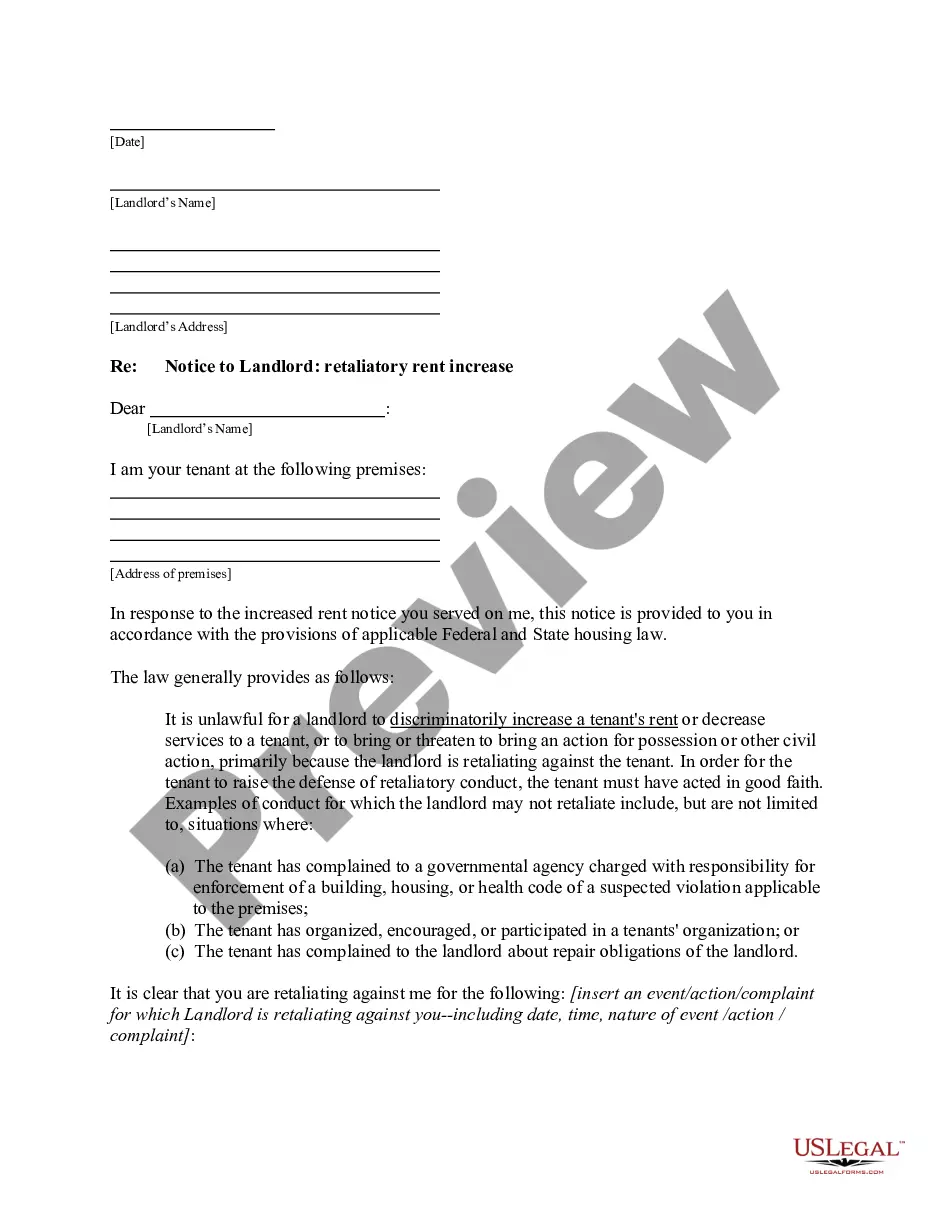
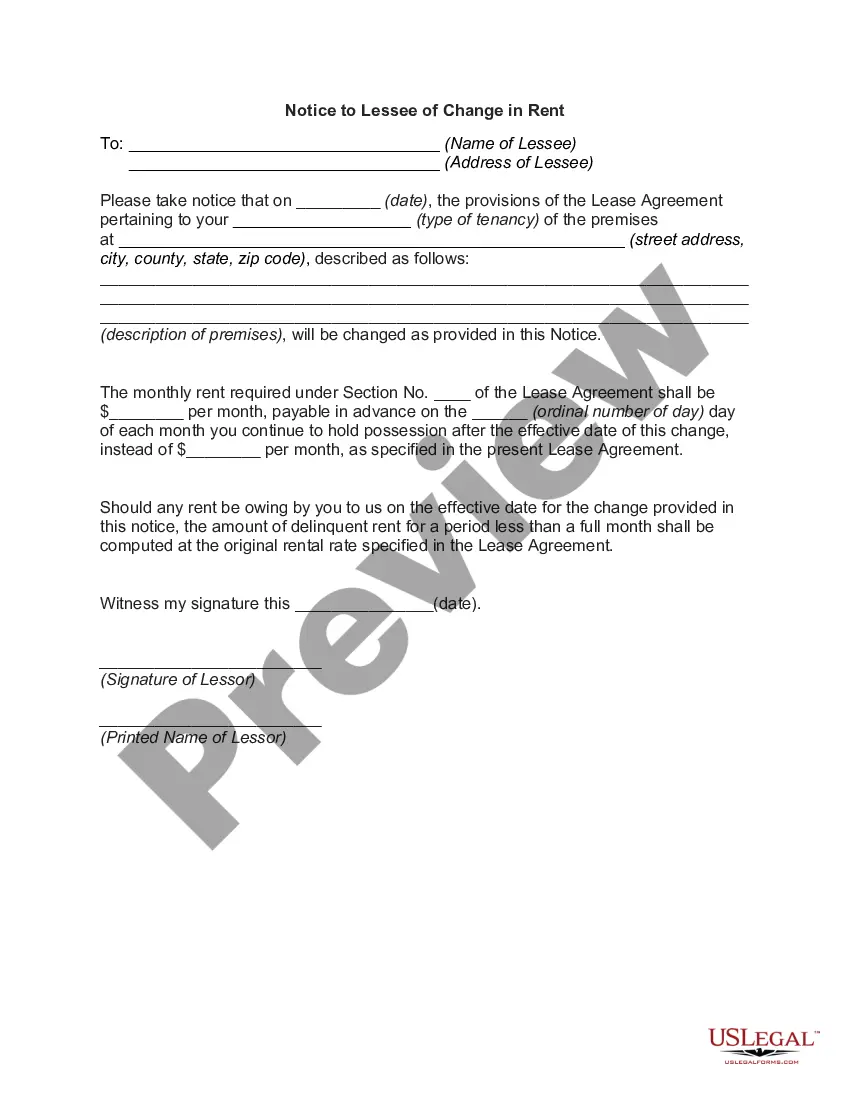
This Letter from Tenant to Landlord containing Notice to landlord to withdraw retaliatory rent increase is a legal document used by tenants to formally notify landlords of unlawful rent increases motivated by retaliation. This form is essential for tenants who believe their landlord is attempting to discriminate against them by raising the rent or reducing services after the tenant has exercised their legal rights, such as making complaints about living conditions. It serves as a protective measure for tenants under state housing laws.
What’s included in this form
- Contact information for both tenant and landlord.
- Date of notice issuance.
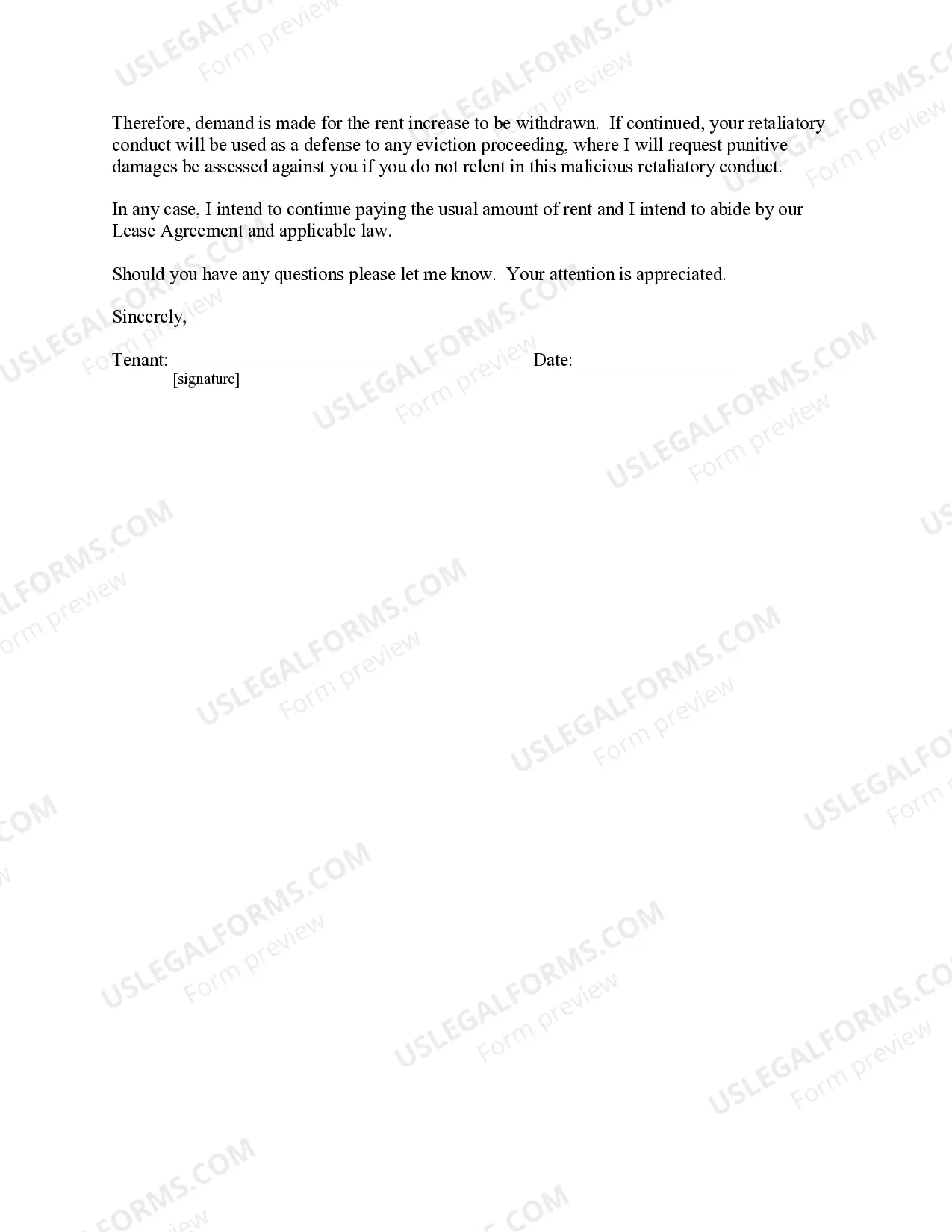
- Declaration that the tenant will continue paying the usual amount of rent.
- Reference to the tenant's good faith actions that provoked the retaliatory increase.
- Signature line for the tenant.

Common use cases
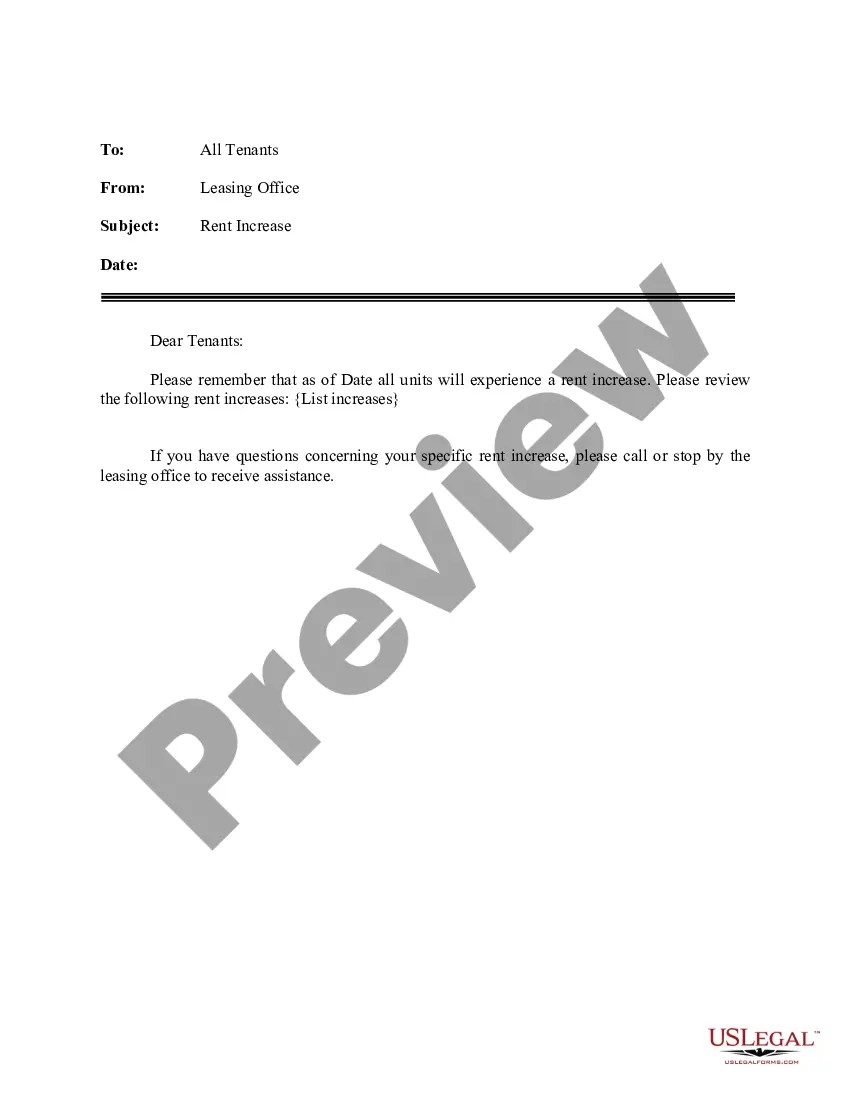
This form should be used when a tenant has experienced a rent increase that they believe is retaliatory. Common scenarios include instances where the tenant has filed complaints about health or safety violations, organized tenants' rights efforts, or raised issues with the landlord about necessary repairs. If a tenant is facing an increase in rent shortly after these actions, they can use this form to communicate their concerns clearly and formally to the landlord.
Intended users of this form
- Tenant experiencing an unjustified rent increase.
- Individuals residing in rental properties who have made good faith complaints to their landlord or relevant agencies.
- Residents involved in tenant organization activities.
How to prepare this document
- Fill in your name and contact information at the top of the letter.
- Add the landlordâs name and address to ensure clear communication.
- Indicate the date of issuance of the notice.
- Clearly state your intention to continue paying the agreed monthly rent.
- Sign and date the document to confirm its authenticity.
Does this form need to be notarized?
This form does not typically require notarization unless specified by local law. It is advisable to check local regulations to ensure compliance with state-specific requirements.
Get your form ready online
Our built-in tools help you complete, sign, share, and store your documents in one place.
Make edits, fill in missing information, and update formatting in US Legal Forms—just like you would in MS Word.
Download a copy, print it, send it by email, or mail it via USPS—whatever works best for your next step.
Sign and collect signatures with our SignNow integration. Send to multiple recipients, set reminders, and more. Go Premium to unlock E-Sign.
If this form requires notarization, complete it online through a secure video call—no need to meet a notary in person or wait for an appointment.
We protect your documents and personal data by following strict security and privacy standards.

Make edits, fill in missing information, and update formatting in US Legal Forms—just like you would in MS Word.

Download a copy, print it, send it by email, or mail it via USPS—whatever works best for your next step.

Sign and collect signatures with our SignNow integration. Send to multiple recipients, set reminders, and more. Go Premium to unlock E-Sign.

If this form requires notarization, complete it online through a secure video call—no need to meet a notary in person or wait for an appointment.

We protect your documents and personal data by following strict security and privacy standards.
Common mistakes to avoid
- Failing to include proper contact information for both parties.
- Not dating the notice, which can affect the timeline of any disputes.
- Omitting specific references to the retaliatory rent increase and the actions that prompted it.
Benefits of completing this form online
- Convenience of filling out the form at your own pace without the pressure of in-person meetings.
- Editability allows for easy adjustments to reflect personal situations.
- Access to templates drafted by licensed attorneys ensures legal compliance.
- The letter acts as formal documentation of the tenantâs objections to retaliatory practices.
- Using this form may strengthen the tenant's case in a dispute regarding rental increases.
- It is important to keep a copy of the letter for record-keeping and potential legal action.
Quick recap
- This letter serves to notify the landlord of unlawful retaliatory rent increases.
- It is essential for tenants to assert their rights in response to retaliatory actions.
- Completing and sending this notice can help protect tenants from unfair practices.
Looking for another form?
Form popularity
FAQ
Know your state's landlord/tenant laws. Read and respond to the court summons. Try to work out a settlement. Consider legal counsel. Show up for court. Look sharp and provide evidence.
You may file a complaint online, call us toll-free at (800) 669-9777 or (800) 877-8339, or email ComplaintsOffice05@hud.gov.
If your landlord breaches the warranty of habitability or the warranty of quiet enjoyment, you may be able to sue her to recover monetary damages.In some states, such as California and Arizona, you may be able to seek emotional distress damages if the landlord's actions were particularly egregious.
Start a written record. The problems with my landlord started almost immediately after I moved in. Check your lease agreement. If your landlord agreed to something in your lease, he has to follow it. Send written requests. Decide if you have a case. Seek legal assistance. File a civil lawsuit. Fight discrimination.
If you're seeking damages for emotional distress caused by a landlord's discrimination, or punitive damages for especially blatant and intentional discrimination, a lawsuit may well be your best bet. Understand what's involved in suing your landlord. You may file a lawsuit in either federal or state court.
If you live anywhere else in Illinois, it's illegal for tenants to withhold rent for repairsno matter how serious the issue. State law in Illinois allows you to make repairs and deduct the cost from your rent, as long as it's less than $500 or half a month's rent (whichever is lower).
In Illinois, if there is no lease or if the lease does not specify a move out date, the Landlord must give at least 30 days of notice to a tenant that the landlord wants to move out. This notice must be in writing and must arrive to the tenant at least 30 days prior to their move out date.
State law regulates several rent-related issues, including the amount of notice (at least 30 days in Illinois) landlords must give tenants to raise the rent and how much time (five days in Illinois) a tenant has to pay rent or move before a landlord can file for eviction.
Tell Them The Problem & Consequences. Explain the reason that you want the tenant to go. Offer Them a Way Out. Let the tenant know that you are willing to give them a lump sum of cash in agreement for leaving the property. The Release.