Idaho Revised Uniform Anatomical Gift Act Donation
About this form
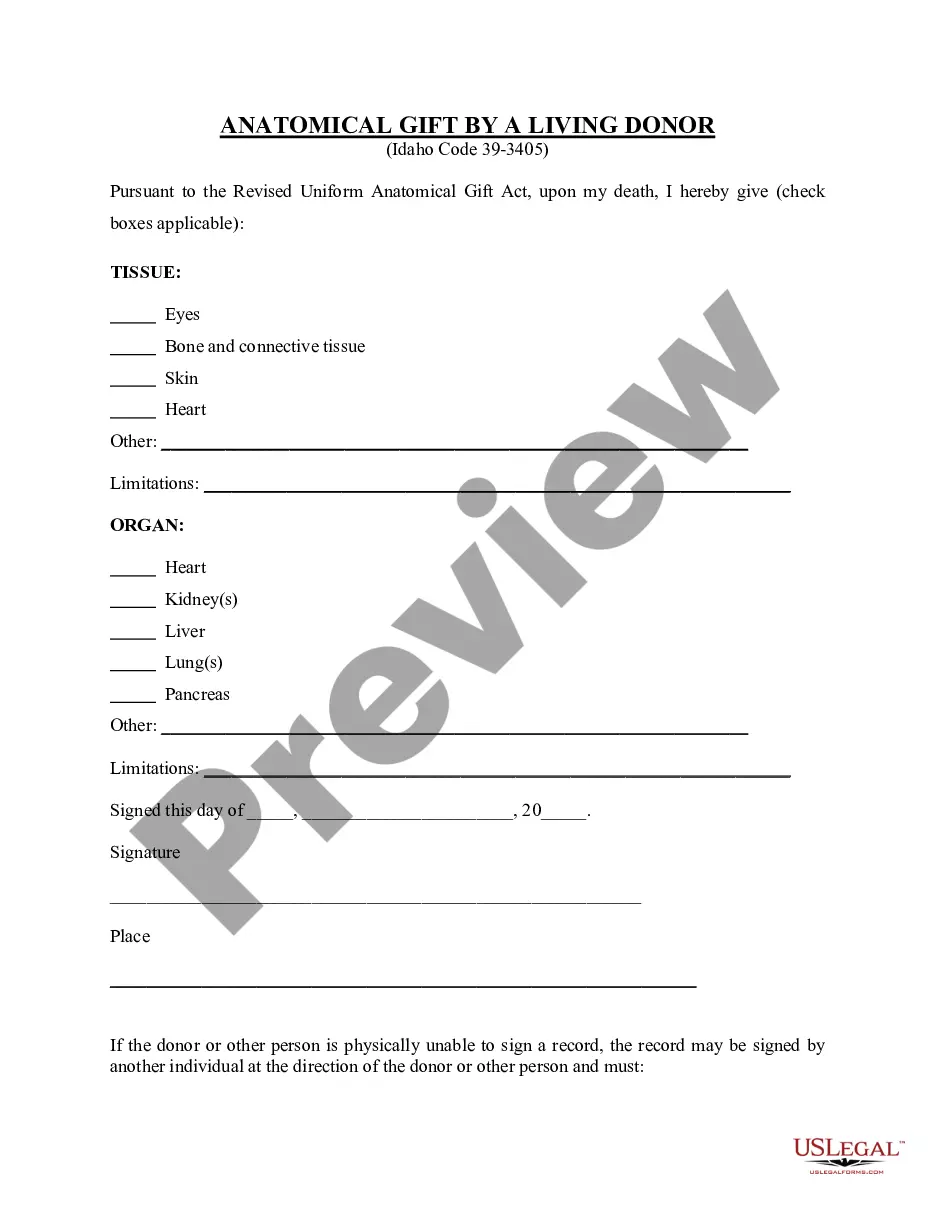
The Revised Uniform Anatomical Gift Act Donation form is a legal document that allows an individual to specify the organs and body parts they wish to donate upon death. This form differs from other forms by designating anatomical gifts for purposes such as transplantation, research, and education. It is essential for individuals over the age of eighteen to formally document their wishes regarding organ donation, with specific witnessing and notarization requirements that ensure the document's validity.
Main sections of this form
- Date of signing: The date when the document is executed.
- Donor's signature: The individual's acknowledgment and consent to the donation.
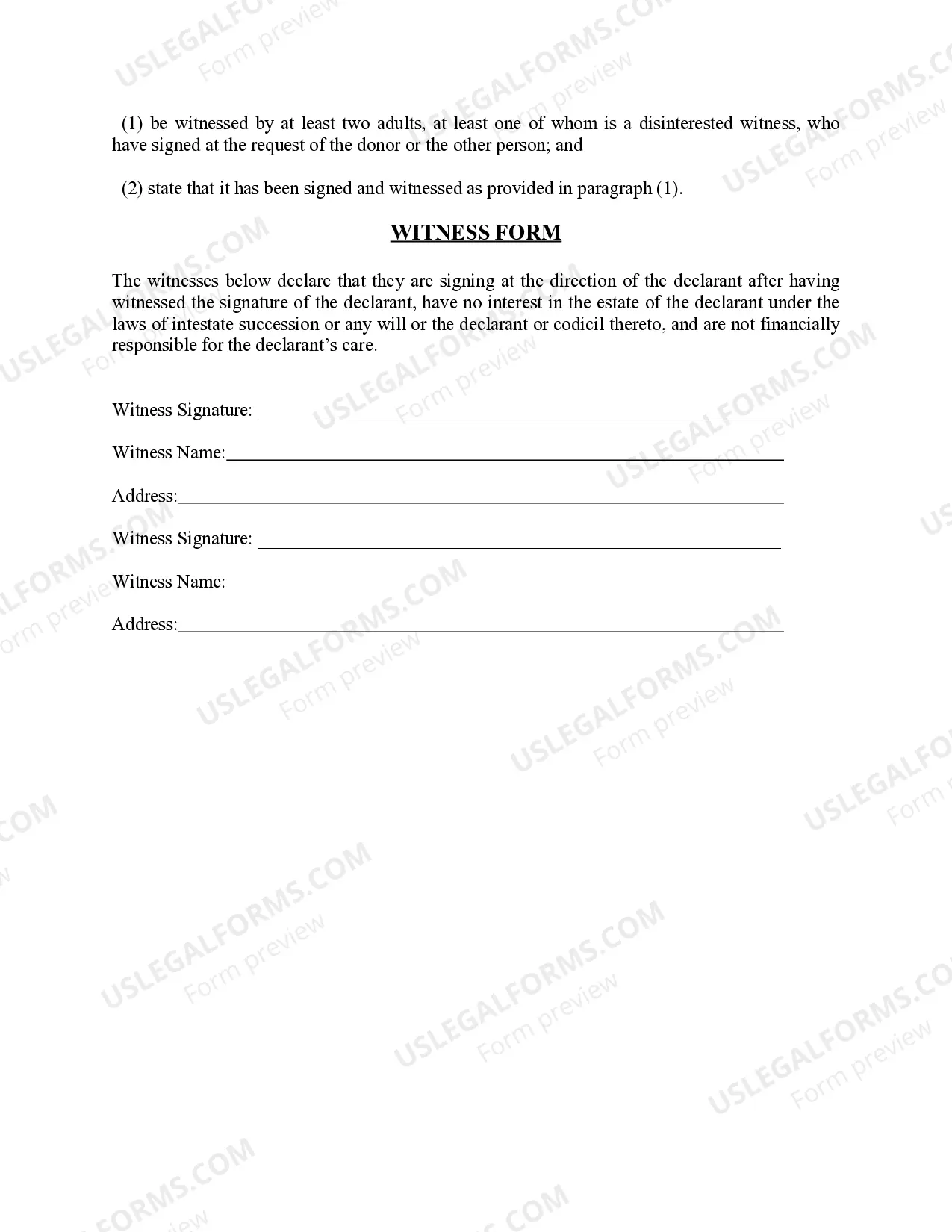
- Witness section: Signatures of witnesses who validate the signing process.
- Notarization: Required for the document to be legally binding.
- Instructions for alternate signature: Guidance if the donor cannot sign themselves.
When to use this document
This form should be used when an individual wishes to make a formal declaration regarding the donation of their organs or body parts after their death. It is particularly relevant when preparing for medical procedures that might require an anatomical gift, or for individuals seeking to ensure that their wishes are honored in the event of their death.
Who needs this form
- Individuals aged eighteen and older who wish to donate organs or body parts.
- Parents or guardians considering making an anatomical gift on behalf of a minor.
- Medical professionals who need clear documentation for patient organ donation wishes.
Completing this form step by step
- Enter the date of signing in the designated section.
- The donor must sign the document to indicate their consent.
- Provide the names and addresses of at least two witnesses who will sign the form.
- Ensure that one witness is a disinterested party, as required.
- Complete the notarization process to validate the document.
Notarization requirements for this form
Yes, this form must be notarized to be legally valid. Notarization adds an additional layer of authenticity to the document, confirming the identity of the signer. US Legal Forms provides an integrated online notarization service available 24/7, making the process secure and convenient without the need for travel.
Get your form ready online
Our built-in tools help you complete, sign, share, and store your documents in one place.
Make edits, fill in missing information, and update formatting in US Legal Forms—just like you would in MS Word.
Download a copy, print it, send it by email, or mail it via USPS—whatever works best for your next step.
Sign and collect signatures with our SignNow integration. Send to multiple recipients, set reminders, and more. Go Premium to unlock E-Sign.
If this form requires notarization, complete it online through a secure video call—no need to meet a notary in person or wait for an appointment.
We protect your documents and personal data by following strict security and privacy standards.

Make edits, fill in missing information, and update formatting in US Legal Forms—just like you would in MS Word.

Download a copy, print it, send it by email, or mail it via USPS—whatever works best for your next step.

Sign and collect signatures with our SignNow integration. Send to multiple recipients, set reminders, and more. Go Premium to unlock E-Sign.

If this form requires notarization, complete it online through a secure video call—no need to meet a notary in person or wait for an appointment.

We protect your documents and personal data by following strict security and privacy standards.
Mistakes to watch out for
- Failing to sign the document, which invalidates the donation wishes.
- Omitting witness signatures or not meeting the required number of witnesses.
- Not being clear about which organs or body parts are being donated.
- Neglecting to notarize the document, if required by jurisdiction.
Why use this form online
- Convenience of downloading and filling out the document at your own pace.
- Editability allows you to ensure all details are accurate before finalizing.
- Immediate access to reliable legal forms drafted by licensed attorneys.
- Secure storage of your completed document for future reference.
Quick recap
- The Revised Uniform Anatomical Gift Act Donation form is essential for legally documenting your organ donation wishes.
- Proper completion and notarization are vital to ensuring the validity of the document.
- Consult local laws to understand any specific requirements that may apply in your area.
Looking for another form?
Form popularity
FAQ
An example of the Uniform Anatomical Gift Act in action is when an individual completes a donor card or designates their wishes in a living will. By doing so, they formally consent to donate their organs after death, benefiting others in need of transplants. The Idaho Revised Uniform Anatomical Gift Act Donation illustrates this process, allowing easy recognition and respect for the donor’s wishes, while also supporting a broader understanding of the impact of organ donation.