Florida Letter from Landlord to Tenant for Failure of to dispose all ashes, rubbish, garbage or other waste in a clean and safe manner in compliance with community rules
What is this form?
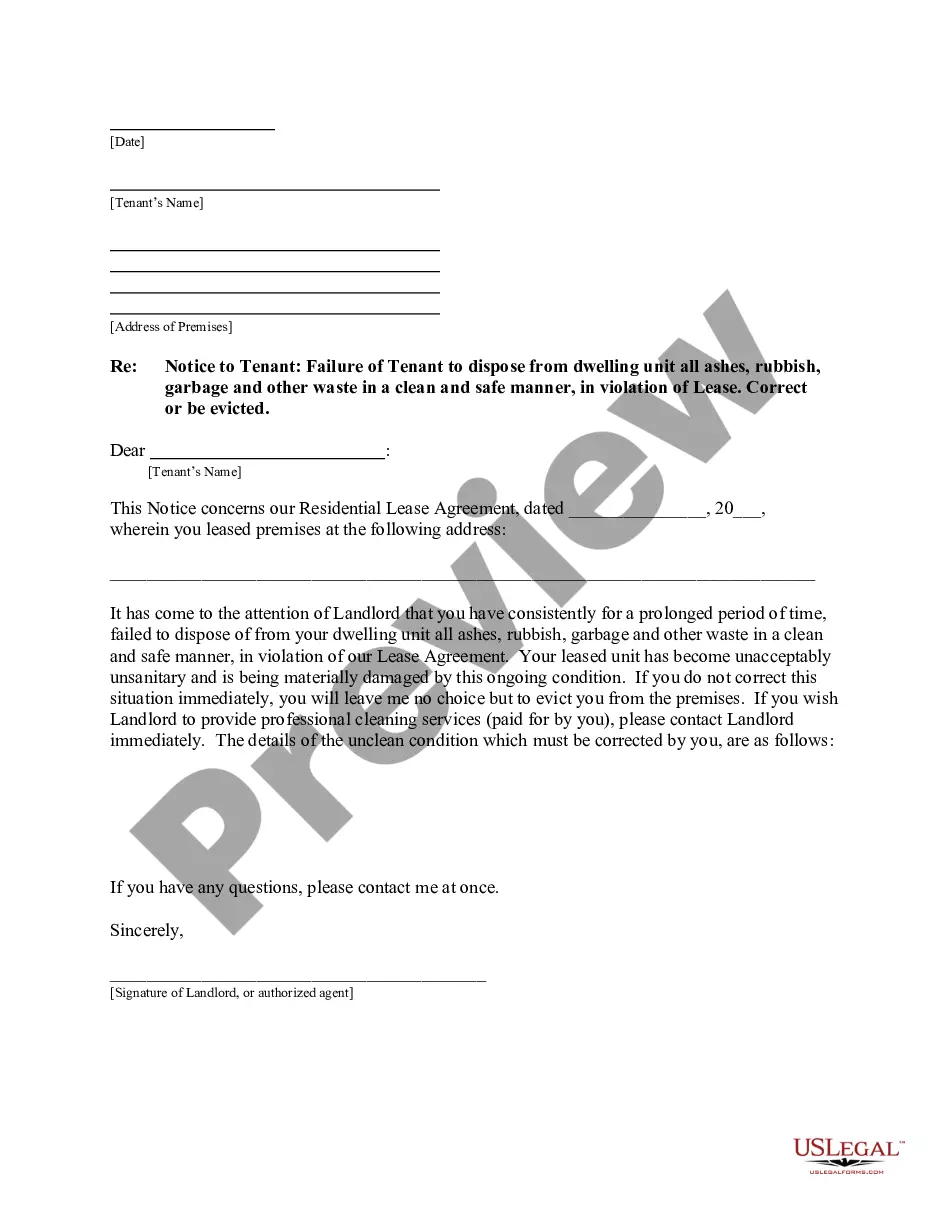
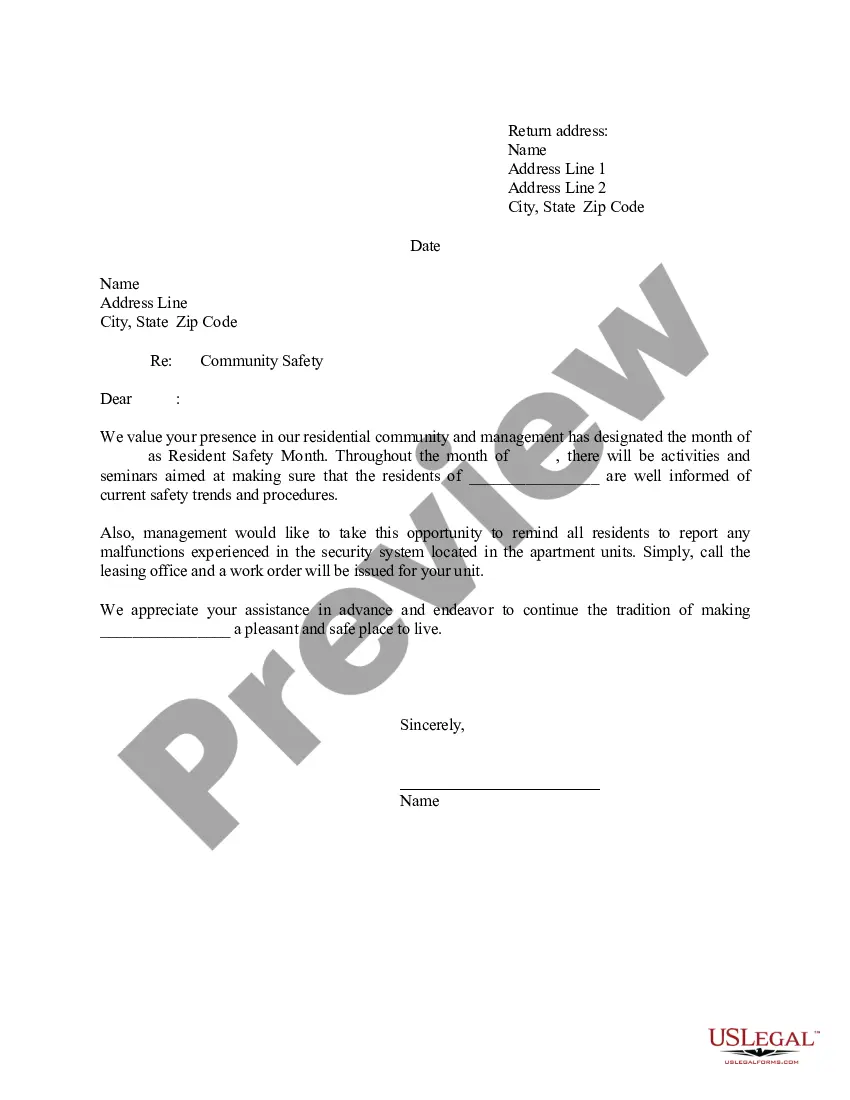
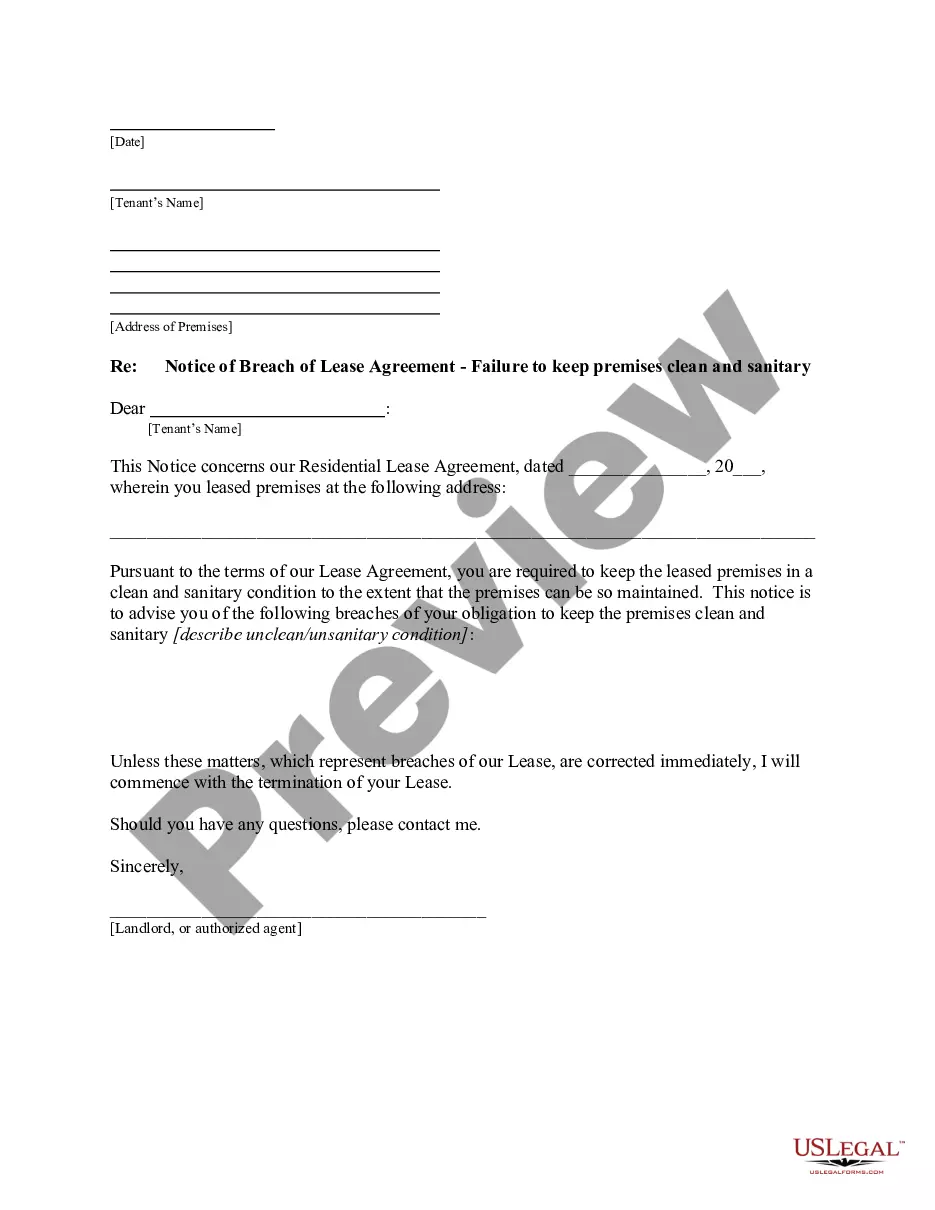
This form is a letter from a landlord to a tenant that addresses the failure to properly dispose of waste, including ashes, rubbish, and garbage. It serves as a formal notice that demands compliance with community standards and the lease agreement. Unlike other letters, this one specifically focuses on sanitation issues and outlines the potential consequences of continued neglect, such as eviction.
Key parts of this document
- Identification of the landlord and tenant
- Details of the violation concerning waste disposal
- Mention of the lease agreement violation
- Consequence of eviction if the issue is not resolved
- Offer for professional cleaning services at the tenant's expense


Common use cases
This form should be used when a landlord notices that a tenant is failing to dispose of waste in a clean and safe manner. It is applicable in situations where the tenant's negligence is damaging the property and may lead to health and safety concerns for other residents. Sending this letter is often a necessary step before initiating eviction proceedings.
Who this form is for
- Landlords experiencing issues with tenant waste disposal
- Property managers overseeing rental units
- Tenants who need to understand their obligations regarding waste management
Instructions for completing this form
- Identify the parties: Enter the names of the landlord and tenant.
- Specify the property: Provide the address of the rental unit.
- Outline the violation: Clearly describe the issues related to waste disposal.
- State the consequences: Explain the potential eviction if the situation is not rectified.
- Offer solutions: Mention options for professional cleaning at the tenant's expense, if necessary.
Does this form need to be notarized?
Notarization is generally not required for this form. However, certain states or situations might demand it. You can complete notarization online through US Legal Forms, powered by Notarize, using a verified video call available anytime.
Get your form ready online
Our built-in tools help you complete, sign, share, and store your documents in one place.
Make edits, fill in missing information, and update formatting in US Legal Forms—just like you would in MS Word.
Download a copy, print it, send it by email, or mail it via USPS—whatever works best for your next step.
Sign and collect signatures with our SignNow integration. Send to multiple recipients, set reminders, and more. Go Premium to unlock E-Sign.
If this form requires notarization, complete it online through a secure video call—no need to meet a notary in person or wait for an appointment.
We protect your documents and personal data by following strict security and privacy standards.
Make edits, fill in missing information, and update formatting in US Legal Forms—just like you would in MS Word.
Download a copy, print it, send it by email, or mail it via USPS—whatever works best for your next step.
Sign and collect signatures with our SignNow integration. Send to multiple recipients, set reminders, and more. Go Premium to unlock E-Sign.
If this form requires notarization, complete it online through a secure video call—no need to meet a notary in person or wait for an appointment.
We protect your documents and personal data by following strict security and privacy standards.
Typical mistakes to avoid
- Failing to provide specific details about the waste disposal issues.
- Not including appropriate dates for compliance.
- Neglecting to follow up after sending the notice.
- Using vague language that does not clearly state the consequences.
Benefits of using this form online
- Convenience: Easily fill out and download the form from anywhere.
- Editability: Customize the content to suit your specific situation.
- Reliability: Access templates that are drafted by licensed attorneys.
Legal use & context
- This form serves as a legal document notifying tenants of lease violations.
- It provides necessary documentation that may be needed for eviction proceedings.
- Using this form helps establish a paper trail of the landlord's attempts to address sanitation issues.
Summary of main points
- This form is essential for addressing waste disposal issues with tenants.
- Landlords must clearly outline violations and consequences.
- Using this form helps protect the property and maintain community standards.
Looking for another form?
Form popularity
FAQ
Yes, a landlord can request that a tenant maintain cleanliness as stipulated in the lease agreement. It is advisable to document such requests formally, using a Florida Letter from Landlord to Tenant for Failure of to dispose all ashes, rubbish, garbage or other waste in a clean and safe manner in compliance with community rules. This provides a clear record of communication and expectations, which can be useful if further action is needed.
A cleanliness clause might state that tenants are required to dispose of all ashes, rubbish, garbage, or other waste in a clean and safe manner in compliance with community rules. Such a clause ensures that tenants are aware of their responsibilities and the potential consequences of failing to comply. You could refer to a Florida Letter from Landlord to Tenant for Failure of to dispose all ashes, rubbish, garbage or other waste in a clean and safe manner in compliance with community rules for guidance on drafting this clause effectively.
When writing a formal letter to a tenant, start with an appropriate greeting and clearly state your concerns. Utilize the Florida Letter from Landlord to Tenant for Failure of to dispose all ashes, rubbish, garbage or other waste in a clean and safe manner in compliance with community rules as a template for structure. Use clear language, maintain professionalism, and establish a call to action to encourage the tenant to respond or resolve the issue at hand. This fosters good tenant relations.
A clean up notice should be straightforward and informative. Emphasize the need for adherence to community guidelines, referencing the Florida Letter from Landlord to Tenant for Failure of to dispose all ashes, rubbish, garbage or other waste in a clean and safe manner in compliance with community rules. Outline the specific areas that require cleaning, set a deadline, and explain the next steps should the tenant fail to comply. This ensures clarity and accountability.
Begin your letter by addressing the tenant respectfully and stating the purpose clearly. Use the Florida Letter from Landlord to Tenant for Failure of to dispose all ashes, rubbish, garbage or other waste in a clean and safe manner in compliance with community rules as a guide to outline expectations for cleanliness. Be direct about what needs to be cleaned, and encourage open communication to resolve any misunderstandings. This makes it easier for tenants to comply with community standards.
To write a cleanup notice, start by stating the specific issues regarding cleanliness in your property. Mention the community rules that have been violated, and reference the Florida Letter from Landlord to Tenant for Failure of to dispose all ashes, rubbish, garbage or other waste in a clean and safe manner in compliance with community rules. Be sure to explain the consequences of non-compliance and provide a reasonable deadline for the tenant to address these concerns.
You can communicate your expectations clearly in a friendly yet firm manner. A Florida Letter from Landlord to Tenant for Failure of to dispose all ashes, rubbish, garbage or other waste in a clean and safe manner in compliance with community rules can serve as a formal reminder. Include specific details about the areas that require attention and a timeline for compliance. This approach encourages tenants to understand the importance of maintaining cleanliness.
Yes, you can file a complaint against your landlord in Florida if they fail to comply with their responsibilities, particularly as highlighted in the Florida Letter from Landlord to Tenant for Failure to dispose all ashes, rubbish, garbage, or other waste in a clean and safe manner in compliance with community rules. You can submit a complaint to local housing authorities or the Florida Department of Business and Professional Regulation. Utilizing online resources, like USLegalForms, can help you prepare the necessary documents for your case.
To take legal action against your landlord, gather all relevant documentation, including your lease, correspondence, and photos showing violations related to the Florida Letter from Landlord to Tenant for Failure to dispose all ashes, rubbish, garbage, or other waste in a clean and safe manner in compliance with community rules. You may consider filing a complaint in small claims court or seeking a lawyer for significant issues. Ensure you are fully informed about your rights as a tenant before proceeding.
In Florida, you can report your landlord to local housing authorities or the Florida Department of Business and Professional Regulation. If your landlord ignores issues related to the Florida Letter from Landlord to Tenant for Failure to dispose all ashes, rubbish, garbage, or other waste in a clean and safe manner in compliance with community rules, it is important to seek assistance. These organizations can provide guidance on tenant rights and help facilitate communication with your landlord.