Delaware Statement of Claim - Individual
Understanding this form
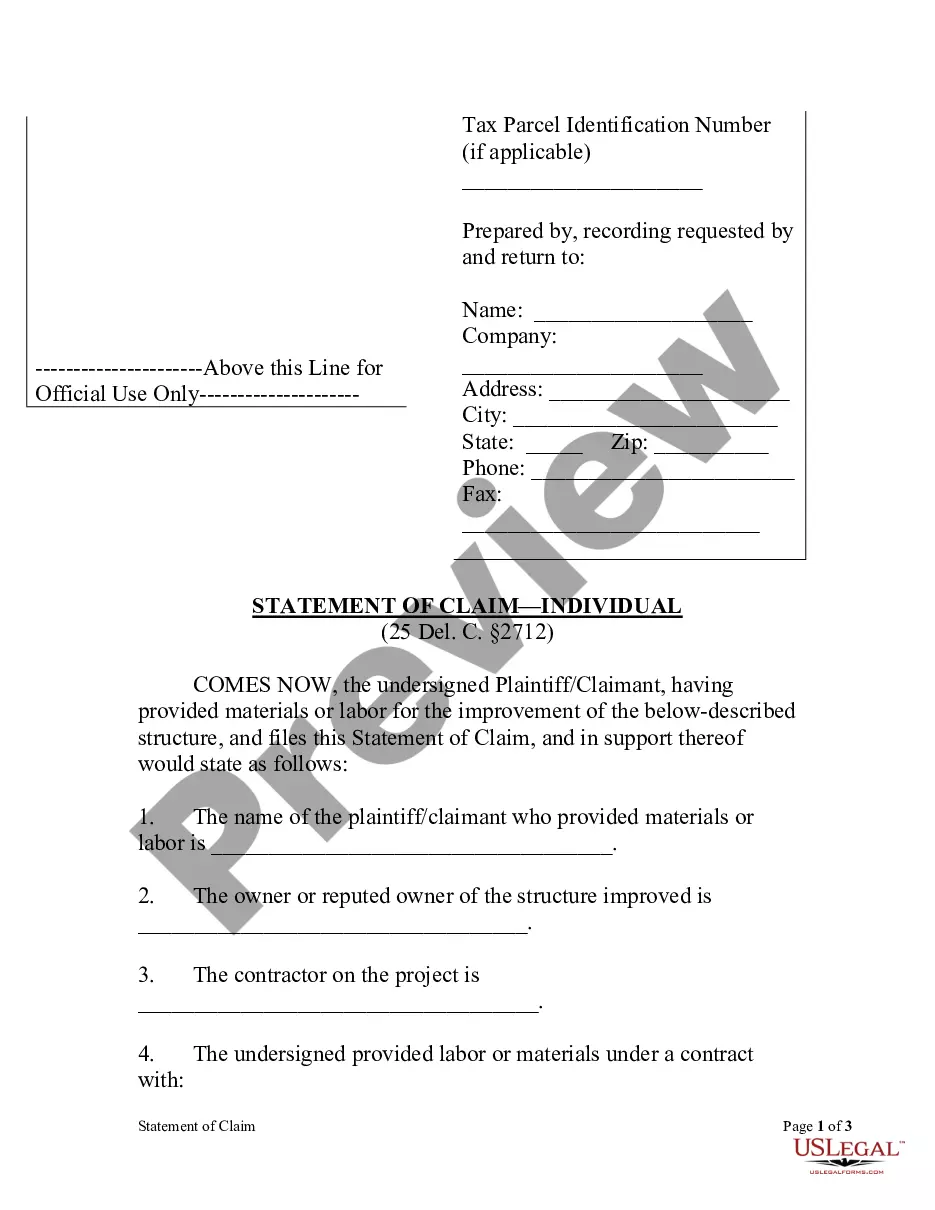
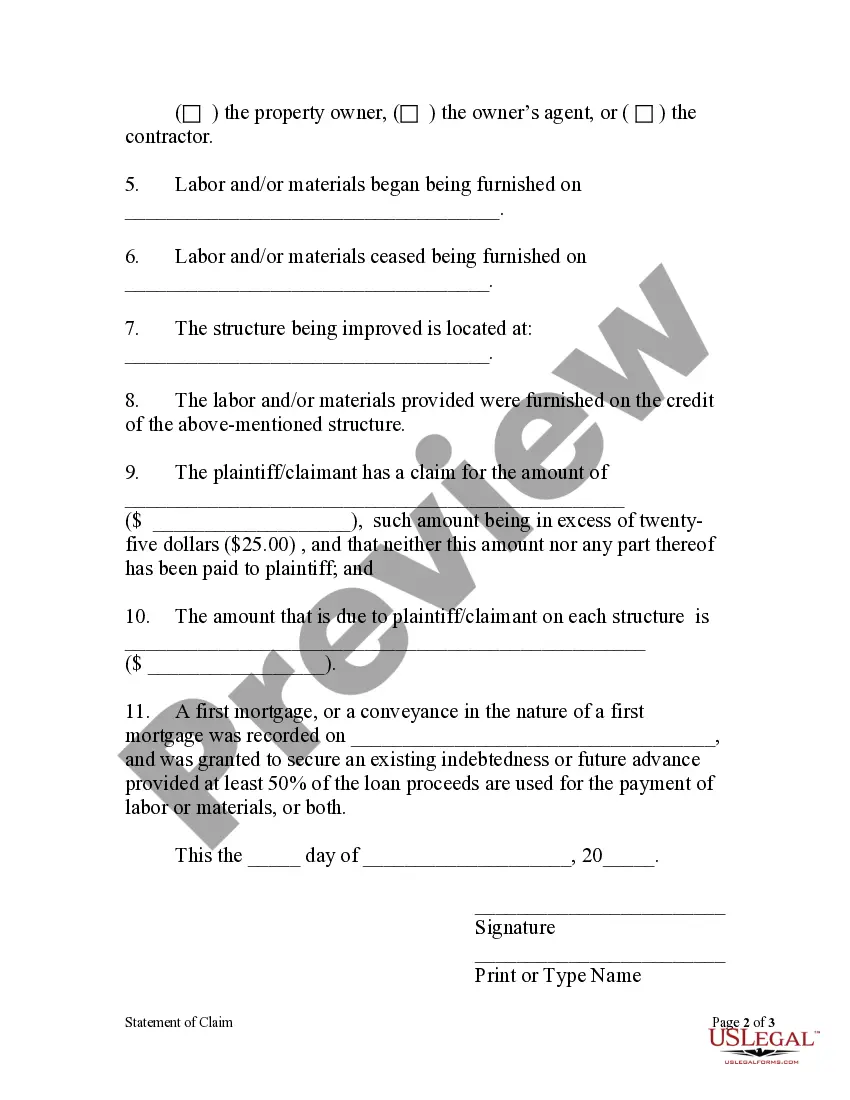
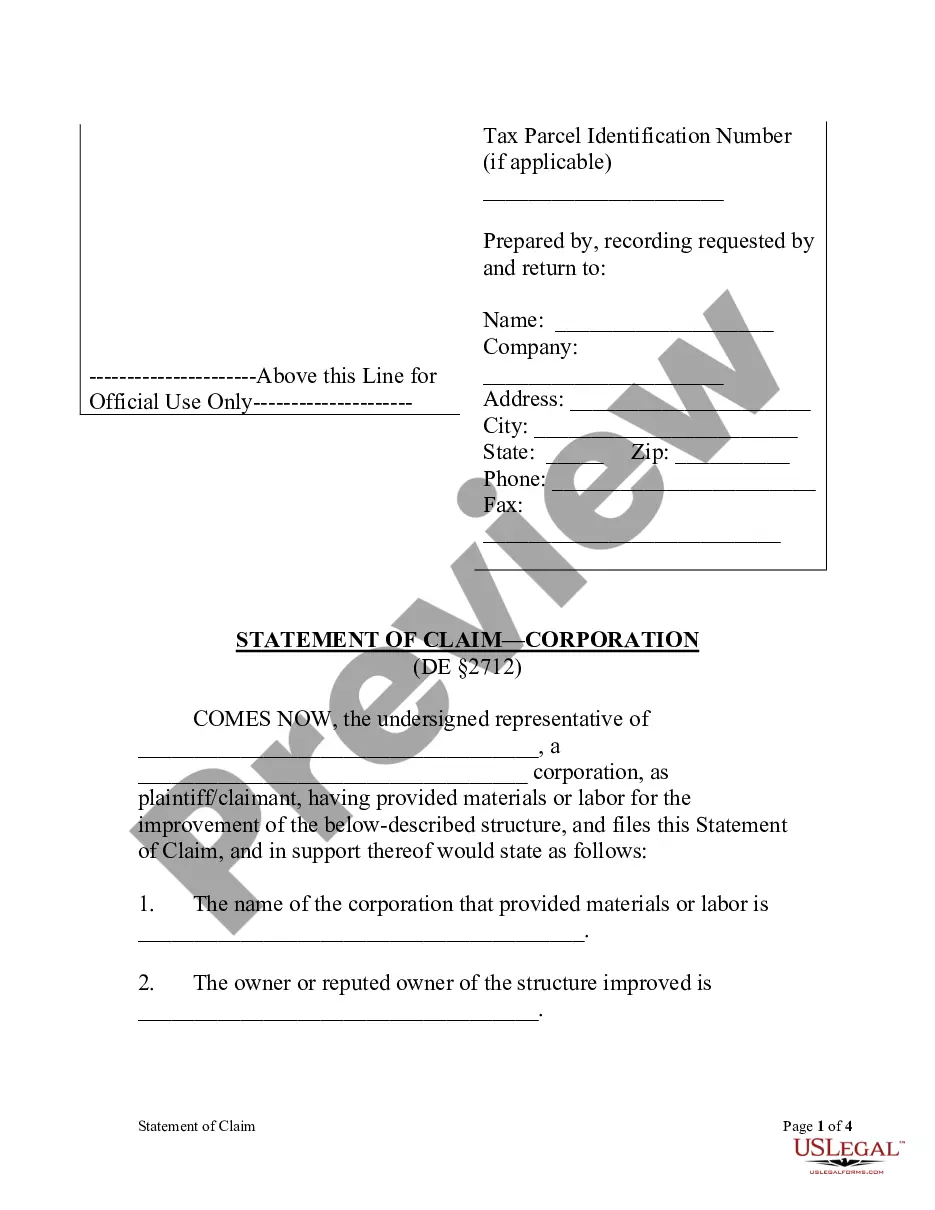
The Statement of Claim - Individual is a legal document filed by an individual lien claimant to assert a claim for unpaid labor or materials related to property improvement. This form serves as a formal statement that can also act as a complaint in the Superior Court Prothonotary's office. Unlike other claims, this form specifically addresses situations where the claimant has provided tangible contributions to a structure, outlining necessary details about the claim and the parties involved.
Key parts of this document
- Identification fields for the claimant, owner, and contractor involved in the project.
- Sections to detail the dates labor or materials were supplied.
- Specific location details of the structure being improved.
- Financial claim amounts that specify what is owed.
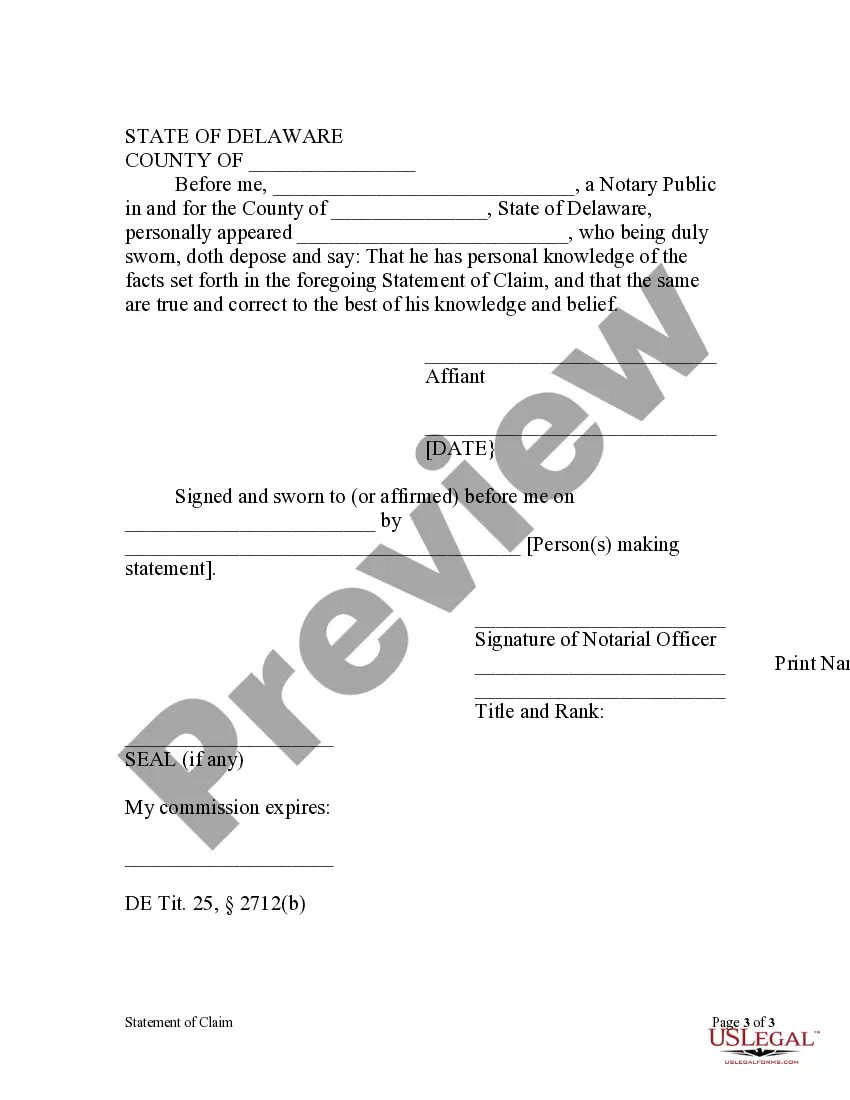
- Notary public section for legal verification, ensuring the form is executed properly.
When this form is needed
This form should be used when an individual has provided labor or materials for the improvement of a structure and wishes to file a claim asserting their right to payment. It is especially relevant when the contractor was working under a contract with the property owner, and there has been no payment after the completion of work. It is important to file the claim within the specified time frames: within ninety days following the completion of work or within thirty days after the expiration of a ninety-day period for certain types of contractors.
Who this form is for
- Individuals who have supplied labor or materials to a construction project.
- Contractors and subcontractors seeking to claim unpaid amounts from property owners.
- Those needing to formalize their claim in court to ensure legal acknowledgment.
Instructions for completing this form
- Identify and enter the name of the plaintiff/claimant who provided labor or materials.
- Provide the name of the owner or reputed owner of the structure.
- Specify the contractor involved in the project.
- Fill in the dates when labor and material were provided.
- Clearly state the amount due and ensure all financial figures are accurate.
- Sign the form in front of a notary public to complete the filing process.
Is notarization required?
Yes, this form must be notarized to be legally valid. This ensures that the claims made are confirmed to be accurate and that the claimant's identity is verified. US Legal Forms provides integrated online notarization, making it easy to complete this requirement via a secure video call at any time.
Get your form ready online
Our built-in tools help you complete, sign, share, and store your documents in one place.
Make edits, fill in missing information, and update formatting in US Legal Forms—just like you would in MS Word.
Download a copy, print it, send it by email, or mail it via USPS—whatever works best for your next step.
Sign and collect signatures with our SignNow integration. Send to multiple recipients, set reminders, and more. Go Premium to unlock E-Sign.
If this form requires notarization, complete it online through a secure video call—no need to meet a notary in person or wait for an appointment.
We protect your documents and personal data by following strict security and privacy standards.

Make edits, fill in missing information, and update formatting in US Legal Forms—just like you would in MS Word.

Download a copy, print it, send it by email, or mail it via USPS—whatever works best for your next step.

Sign and collect signatures with our SignNow integration. Send to multiple recipients, set reminders, and more. Go Premium to unlock E-Sign.

If this form requires notarization, complete it online through a secure video call—no need to meet a notary in person or wait for an appointment.

We protect your documents and personal data by following strict security and privacy standards.
Common mistakes to avoid
- Failing to file the claim within the required time limits.
- Incomplete identification of the parties involved.
- Omitting signatures or notary verification.
- Incorrectly stating the amount due or failing to adjust for any payments received.
Why complete this form online
- Convenient access to legal forms that can be downloaded anytime.
- Editable templates that allow you to input specific information easily.
- Secure processing and storage of your documents for future reference.
Key takeaways
- The Statement of Claim - Individual is crucial for asserting your rights to unpaid wages or materials.
- Timely filing is essential to protect your interests.
- This form requires notary public verification for legal effectiveness.
- Online access makes it easier to complete and submit the form accurately.
Looking for another form?
Form popularity
FAQ
To fill out a statement in support of a claim, begin by clearly stating the basis for your support. Include corroborating facts and relevant evidence, such as dates and specific incidents that strengthen your argument. When crafting your Delaware Statement of Claim - Individual, ensure that this statement effectively complements your main claim, providing additional context and support.
Rule 41 in Delaware governs the dismissal of actions and can significantly impact claims, including the Delaware Statement of Claim - Individual. It allows a party to voluntarily dismiss a case, which may affect future claims and legal strategies. Understanding this rule can help you navigate your legal process more effectively.
When formatting a Delaware Statement of Claim - Individual, use clear headings and sections to organize your document. Start with the title, followed by a summary of the parties involved and the background of the claim. Use numbered paragraphs for details, ensuring each claim is presented logically and cohesively.
An example of a statement of claim might include a tenant filing against a landlord for failure to make necessary repairs in a rented property. The tenant would detail the issues, include dates of communication, and outline the desired outcome, such as compensation. This format ensures clarity and helps to establish a strong Delaware Statement of Claim - Individual.
Rule 12 in Delaware refers to the processes for responding to a complaint in civil litigation. It allows defendants to challenge the legal sufficiency of claims before addressing them on the merits. This rule is crucial in the context of a Delaware Statement of Claim - Individual, as it provides a pathway to potentially dismiss claims that lack legal grounds.
To fill out a Delaware Statement of Claim - Individual, start by gathering all relevant information, including the details of the parties involved and a clear description of your claims. Make sure to include any supporting evidence or documentation that backs up your claim. Finally, complete the form neatly, ensuring all sections are filled accurately before submission.
In Delaware, certain serious crimes, like murder, do not have a statute of limitations, meaning they can be prosecuted at any time. Other felonies, such as rape and some sexual offenses, also fall under this category. Understanding this aspect can guide individuals in legal matters, especially if considering a Delaware Statement of Claim - Individual for related issues. It is essential to consult with legal experts for detailed advice on these serious matters.
The statute of limitations for civil suits in Delaware varies based on the nature of the claim. Most civil claims, including personal injury and breach of contract, have a three-year limitation period. Utilizing a Delaware Statement of Claim - Individual allows you to file within this timeframe, preserving your right to seek justice. Ensuring you are aware of these limitations can protect your interests and strengthen your case.
Rule 29 in the Delaware Superior Court relates to the management of civil cases and emphasizes the importance of scheduling and cooperation among parties. This rule aims to streamline the court process, ensuring efficiency and effectiveness. When filing a Delaware Statement of Claim - Individual, being familiar with such rules can help you navigate your case more effectively. Understanding the procedural requirements can be beneficial for a successful outcome.
The timeframe to sue someone in Delaware varies by the nature of the claim. For most personal injury or breach of contract claims, you have three years from the date of the incident to file. Using a Delaware Statement of Claim - Individual efficiently helps ensure you file within this period to protect your rights. Always check the specific limitations for your case type to avoid any issues.