District of Columbia Agreed Cancellation of Lease
About this form
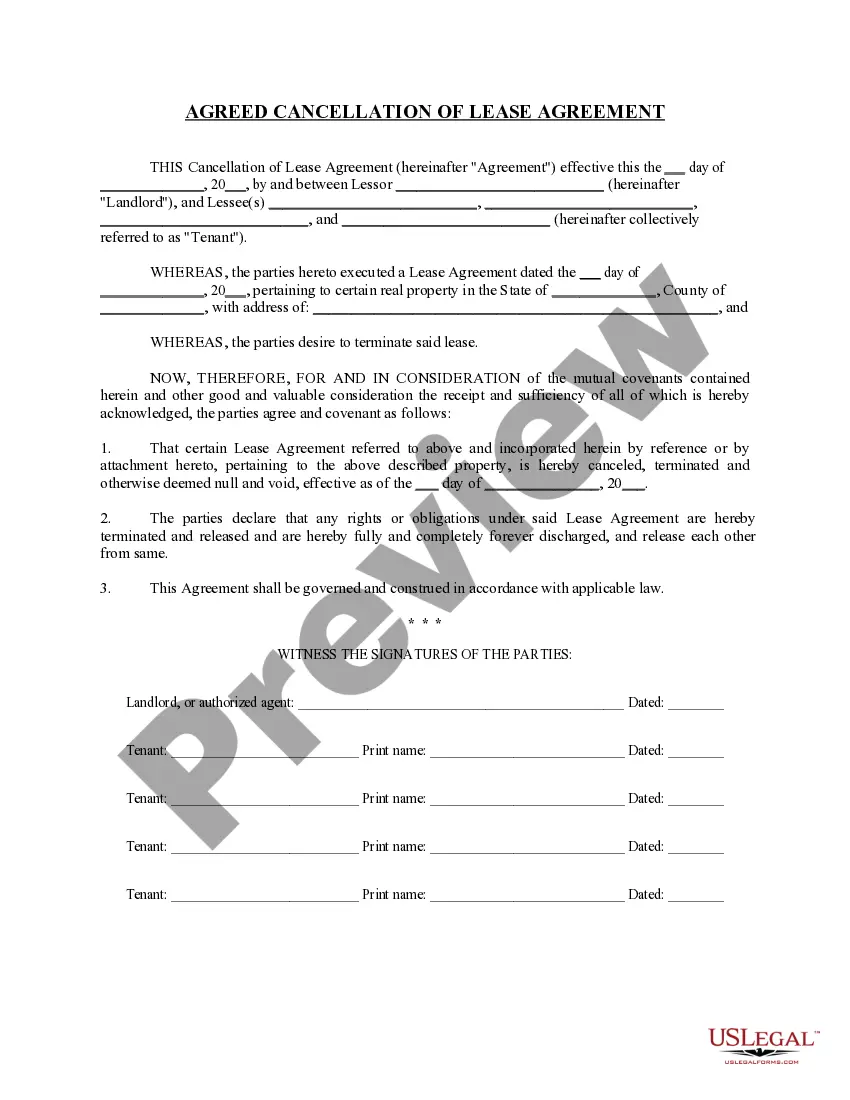
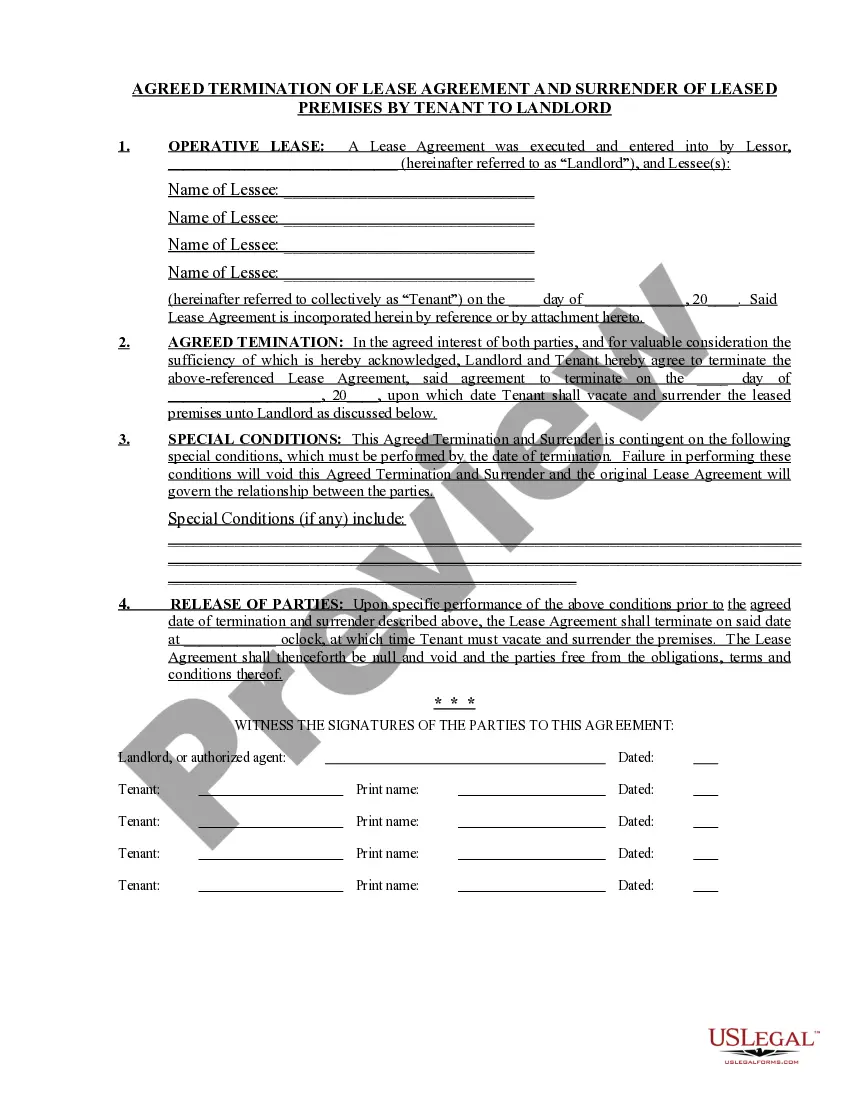
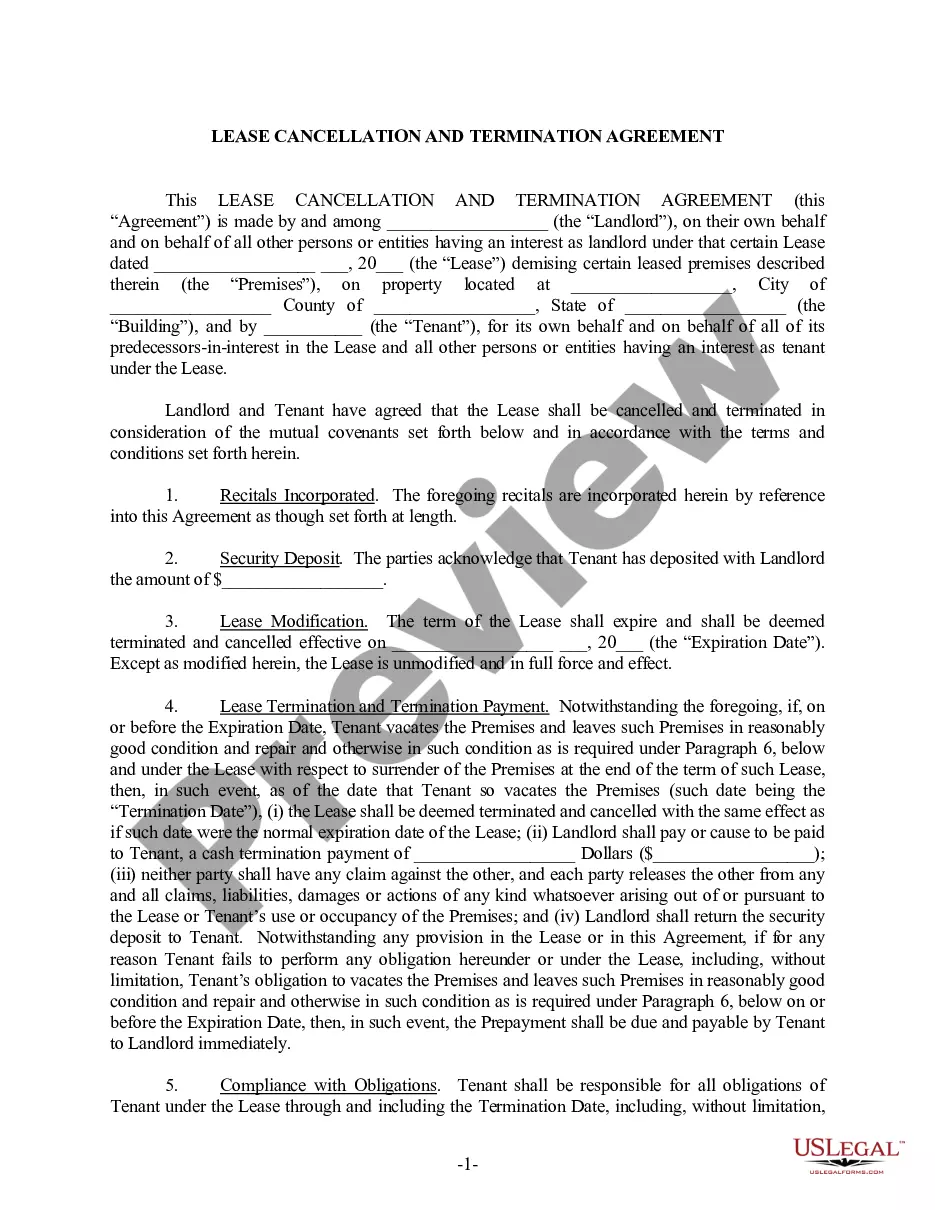
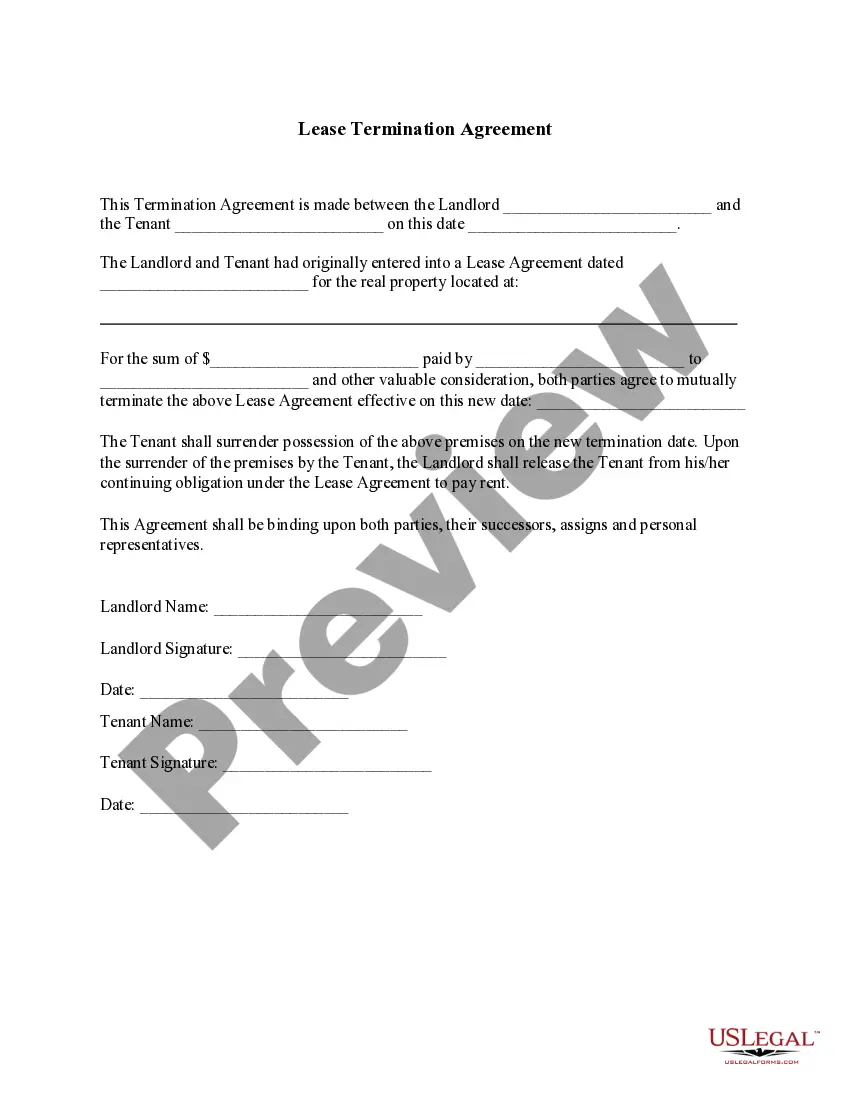
The Agreed Cancellation of Lease form is a legal document used by landlords and tenants to mutually terminate a lease agreement. This document allows both parties to cancel the lease without any further obligations or consequences. It is distinct from other lease termination forms because it highlights the friendly and mutual decision to end the lease, rather than addressing disputes or violations.
What’s included in this form
- Effective date of the cancellation.
- Names and roles of the parties involved (Landlord and Tenant).
- Reference to the original lease agreement.
- Clear statement of cancellation and termination of obligations.
- Signatures of all parties involved, along with dates.
Situations where this form applies
This form should be used when both the landlord and tenant agree to cancel their lease agreement amicably. Common scenarios include tenants vacating the property early with landlord consent, or when both parties decide to end the lease for reasons unrelated to any disputes. Utilizing this form allows for a clear and documented end to the tenancy, promoting transparency and reducing potential future conflicts.
Who should use this form
- Landlords looking to officially terminate a lease with tenants.
- Tenants who require confirmation of their lease termination.
- Property managers facilitating the lease cancellation process.
How to complete this form
- Identify the parties involved: enter the landlord's and tenant's names.
- Specify the property: include the address of the leased property.
- Fill in the effective date of cancellation.
- Review the mutual agreement clause to ensure understanding of terms.
- Sign and date the form to finalize the cancellation.
Does this document require notarization?
This form does not typically require notarization to be legally valid. However, some jurisdictions or document types may still require it. US Legal Forms provides secure online notarization powered by Notarize, available 24/7 for added convenience.
Get your form ready online
Our built-in tools help you complete, sign, share, and store your documents in one place.
Make edits, fill in missing information, and update formatting in US Legal Forms—just like you would in MS Word.
Download a copy, print it, send it by email, or mail it via USPS—whatever works best for your next step.
Sign and collect signatures with our SignNow integration. Send to multiple recipients, set reminders, and more. Go Premium to unlock E-Sign.
If this form requires notarization, complete it online through a secure video call—no need to meet a notary in person or wait for an appointment.
We protect your documents and personal data by following strict security and privacy standards.

Make edits, fill in missing information, and update formatting in US Legal Forms—just like you would in MS Word.

Download a copy, print it, send it by email, or mail it via USPS—whatever works best for your next step.

Sign and collect signatures with our SignNow integration. Send to multiple recipients, set reminders, and more. Go Premium to unlock E-Sign.

If this form requires notarization, complete it online through a secure video call—no need to meet a notary in person or wait for an appointment.

We protect your documents and personal data by following strict security and privacy standards.
Mistakes to watch out for
- Not including all tenant names if there are multiple tenants.
- Failing to specify the date of cancellation.
- Not signing the form by all parties involved.
Advantages of online completion
- Convenient access to the form from any device without the need for in-person visits.
- Editable fields allow personalization for your specific situation.
- Reliable formatting ensures compliance with legal standards.
Legal use & context
- This document serves as proof that both parties have agreed to cancel the lease.
- It releases both parties from any future obligations related to the lease.
- The form should be stored with other important rental documentation for future reference.
Key takeaways
- The Agreed Cancellation of Lease is essential for documenting the mutual decision to terminate a lease.
- This form is usable across multiple jurisdictions but may require local compliance checks.
- Ensure all parties accurately fill out and sign the document to avoid issues later on.
Looking for another form?

Form popularity
FAQ
While a formal lease agreement is not required for month-to-month tenancies, having one can provide essential protections for both parties. A written agreement outlines the responsibilities and rights of each party and can prevent disputes. If you find yourself in a situation where you need clarity regarding the District of Columbia Agreed Cancellation of Lease, having a lease agreement can be invaluable.
The month-to-month clause in a lease allows the tenant and landlord the flexibility to change the rental terms each month. This clause helps ensure that both parties can terminate the agreement or make amendments with proper notice. It is essential to review this clause carefully, as it often contains stipulations directly related to the District of Columbia Agreed Cancellation of Lease.
Yes, a landlord can terminate a month-to-month lease in DC, but they must follow the appropriate legal process. Typically, landlords must provide a written notice to the tenant that specifies the termination date. This notice must comply with local regulations and be provided within a specific timeframe, often ranging from 30 to 60 days, depending on various factors. Knowing about the District of Columbia Agreed Cancellation of Lease can help you understand your rights in this situation.
In Washington, DC, a tenant may remain in the property after the lease expires under certain conditions. If the landlord does not notify you about the lease termination, you may continue to stay on a month-to-month basis. However, this is contingent on the original terms of your lease and any agreements related to the District of Columbia Agreed Cancellation of Lease.
In DC, a month-to-month tenancy allows you to stay in your residence without a formal lease agreement. This arrangement can be beneficial because it offers flexibility for both tenants and landlords. However, if the landlord wishes to make changes or terminate the lease, they must provide proper notice as defined under local laws. Understanding the District of Columbia Agreed Cancellation of Lease can offer clarity on how these laws affect your rental situation.
If you believe a lease termination is unjust, you can appeal by filing a dispute with your local housing authority. Gather any relevant documents that support your case, including the original lease and correspondence with your landlord. Additionally, consider seeking legal counsel to navigate the appeal process effectively, specifically if the District of Columbia Agreed Cancellation of Lease is involved.
Yes, a landlord can terminate a lease in Washington, DC, but they must follow specific legal procedures. Reasons for termination may include non-payment of rent or lease violations. Utilizing the District of Columbia Agreed Cancellation of Lease can help streamline this process and ensure both parties understand their rights and responsibilities.
An agreement regarding cancellation of lease is a specific document detailing the mutual decision to terminate a lease. This agreement should include important information, such as the effective date of cancellation and any stipulations. The District of Columbia Agreed Cancellation of Lease ensures that all parties have a clear understanding and practice fair dealings.
A lease cancellation clause can specify conditions under which a tenant may terminate the lease early. For instance, it may state that if one party provides 30 days' notice, the lease can be canceled without penalties. In the District of Columbia Agreed Cancellation of Lease, including such clauses can provide both parties with peace of mind.
The agreement for cancellation of lease is a written document that outlines the terms under which a lease is terminated. In the District of Columbia, such an agreement typically requires both the landlord and tenant to sign, confirming their consent to end the lease. This agreement protects both parties and establishes a clear end to their rental arrangement.