Colorado Letter from Landlord to Tenant as Notice of Abandoned Personal Property
About this form
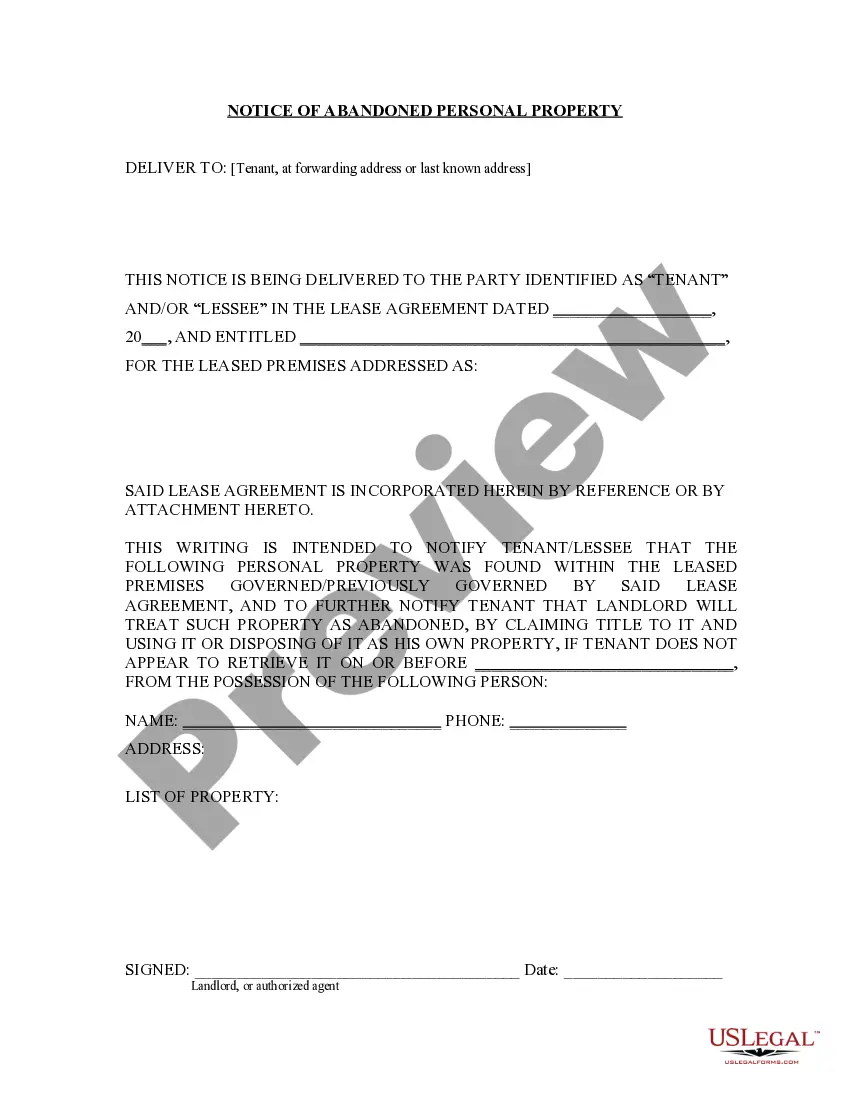
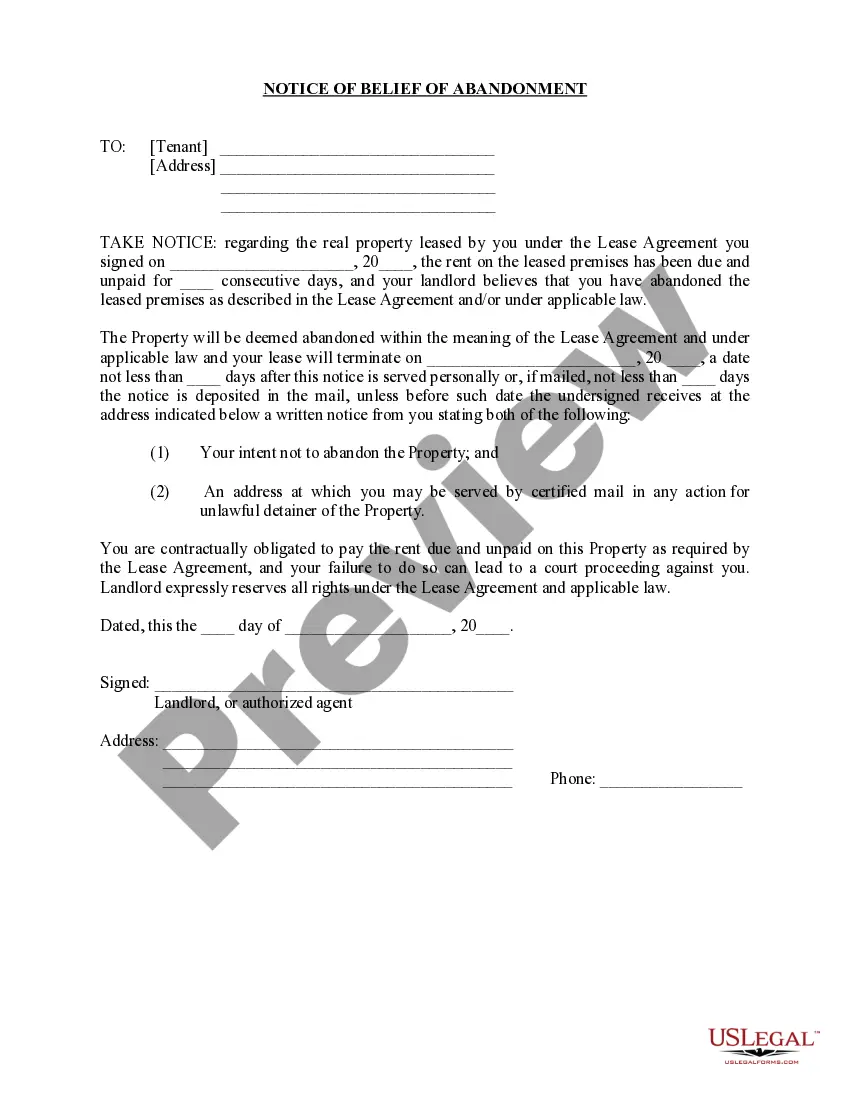
This form, known as a letter from landlord to tenant as notice of abandoned personal property, serves as an official communication from a landlord to a tenant. Its primary purpose is to inform the tenant about personal items left behind in the leased premises and provide specific guidance on retrieving those items. If the tenant fails to act, the landlord may treat the property as abandoned and dispose of it accordingly. This form is essential for landlords to ensure compliance with state laws regarding abandoned property.
Key parts of this document
- A notification section detailing the abandoned property found in the leased premises.
- Specific instructions for the tenant on how to retrieve their items.
- A deadline by which the tenant must claim their property.
- A clause notifying the tenant of the landlord's intent to claim the abandoned property if not retrieved in time.
- Space for both landlord and tenant signatures to acknowledge the notice.

Situations where this form applies
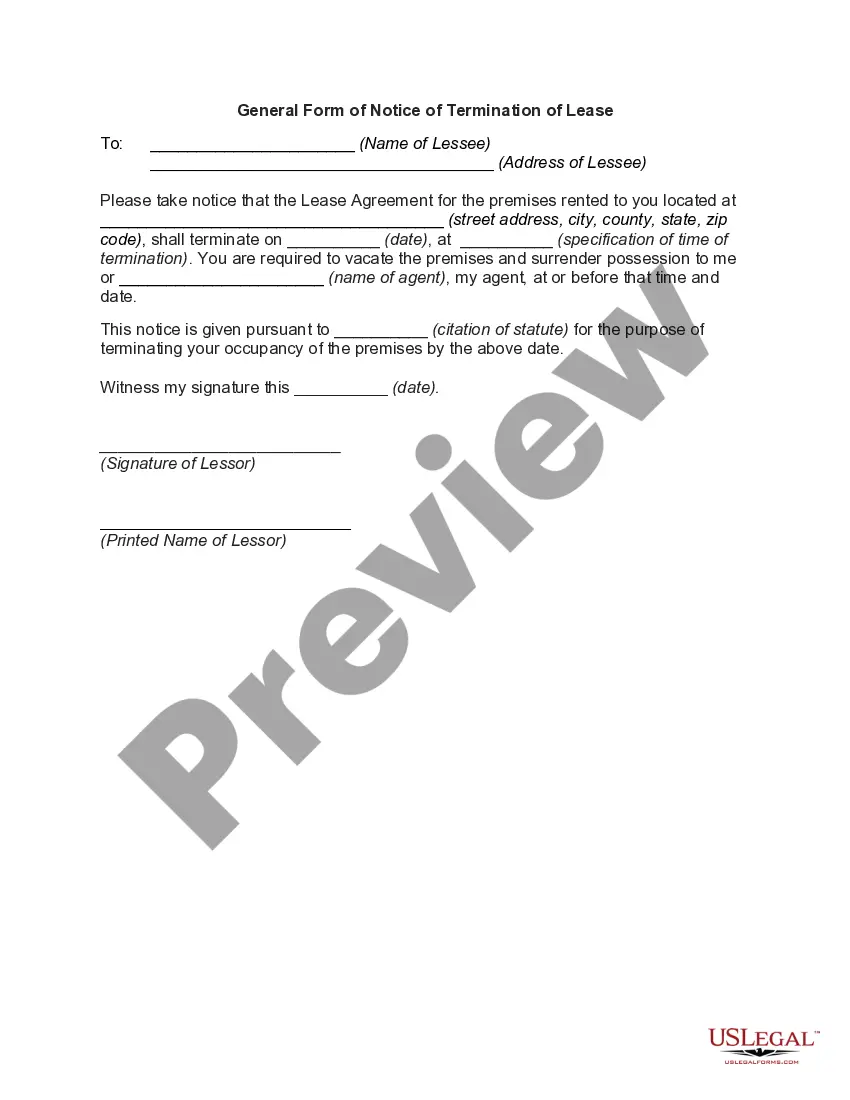
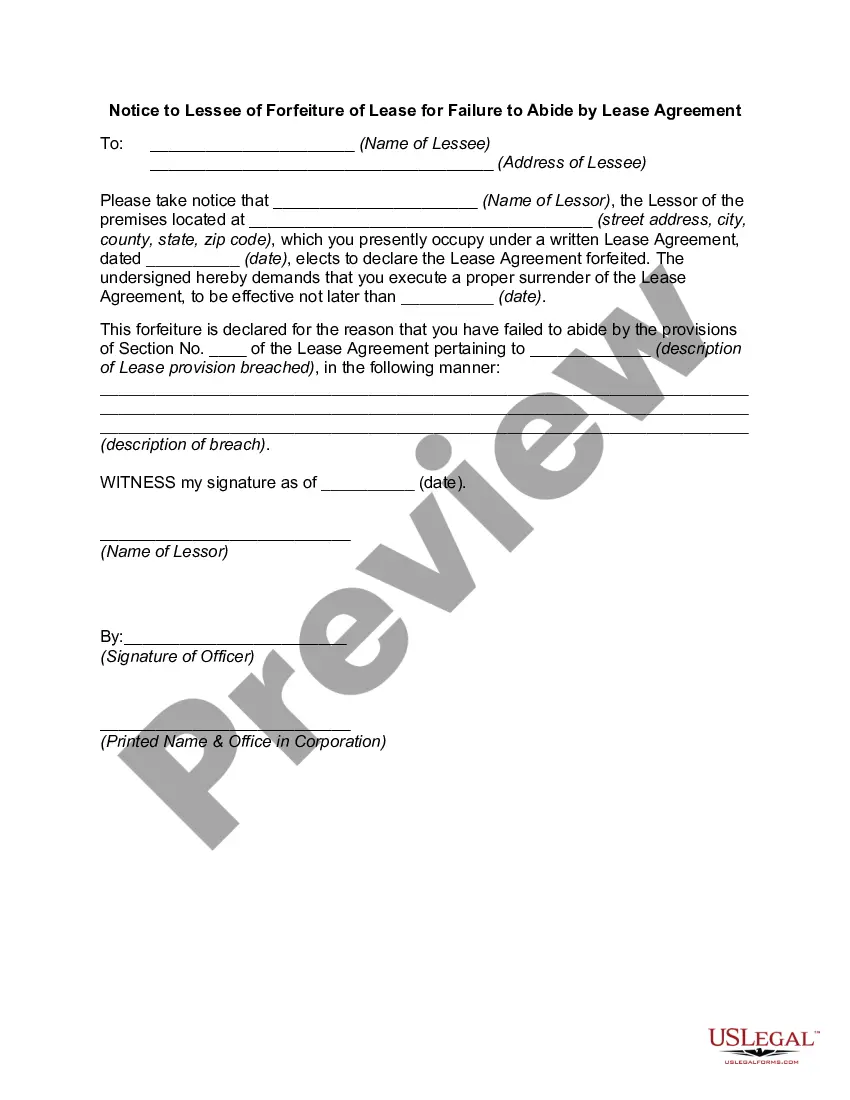
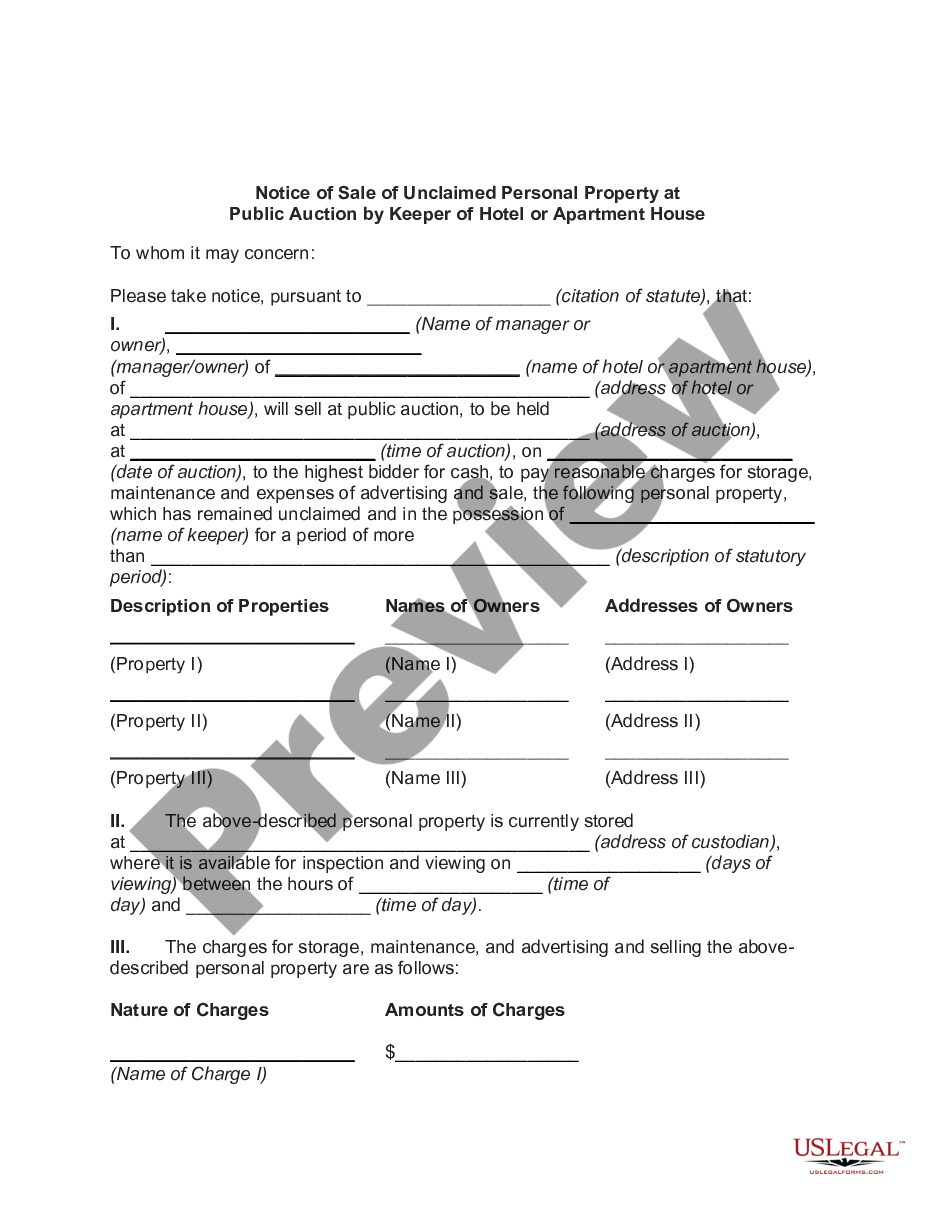
You should use this form when a tenant has vacated the rental property and left behind personal belongings. It is particularly important if those items are taking up space or creating liability issues for the landlord. This notice helps clarify the landlordâs intentions and provides the tenant an opportunity to reclaim their possessions within a specified timeline.
Who can use this document
- Landlords who have tenants abandon property after moving out.
- Property managers seeking to ensure legal compliance when dealing with abandoned items.
- Real estate professionals managing rental properties on behalf of owners.
Instructions for completing this form
- Identify the tenant's name and the rental property address.
- List the items of personal property that were left behind.
- Specify a deadline for the tenant to retrieve their property.
- Include relevant dates and signatures of both the landlord and tenant.
- Send the notice to the tenant using a reliable delivery method, ensuring receipt confirmation.
Does this form need to be notarized?
This form does not typically require notarization unless specified by local law. Ensure that you check your jurisdictionâs requirements to confirm proper execution.
Get your form ready online
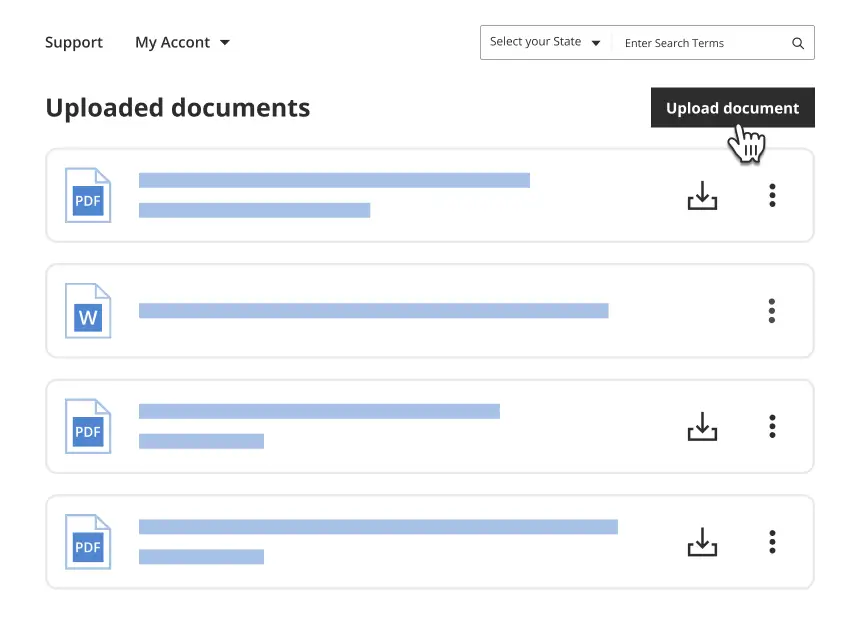
Our built-in tools help you complete, sign, share, and store your documents in one place.
Make edits, fill in missing information, and update formatting in US Legal Forms—just like you would in MS Word.
Download a copy, print it, send it by email, or mail it via USPS—whatever works best for your next step.
Sign and collect signatures with our SignNow integration. Send to multiple recipients, set reminders, and more. Go Premium to unlock E-Sign.
If this form requires notarization, complete it online through a secure video call—no need to meet a notary in person or wait for an appointment.
We protect your documents and personal data by following strict security and privacy standards.
Make edits, fill in missing information, and update formatting in US Legal Forms—just like you would in MS Word.
Download a copy, print it, send it by email, or mail it via USPS—whatever works best for your next step.
Sign and collect signatures with our SignNow integration. Send to multiple recipients, set reminders, and more. Go Premium to unlock E-Sign.

If this form requires notarization, complete it online through a secure video call—no need to meet a notary in person or wait for an appointment.
We protect your documents and personal data by following strict security and privacy standards.
Common mistakes to avoid
- Failing to clearly outline the items considered abandoned.
- Not providing a reasonable amount of time for the tenant to reclaim their property.
- Neglecting to follow up with proper delivery methods to ensure the tenant receives the notice.
Why complete this form online
- Immediate access to a legally valid template drafted by licensed attorneys.
- Edit and customize the form to meet your specific needs and circumstances.
- Convenient access from any device without the need for physical paperwork.
- This notice provides legal documentation of the landlord's intent regarding abandoned property.
- Proper completion and delivery of this form can protect landlords from liability related to the property.
- Failure to provide this notice may affect the landlordâs rights to dispose of or claim ownership over the property.
Key takeaways
- This form serves as a formal notice regarding abandoned property by a tenant.
- Landlords must provide clear instructions and a deadline for property retrieval.
- Using this form helps protect landlords legally while allowing tenants a chance to reclaim their belongings.
Looking for another form?
Form popularity
FAQ
This form is a formal landlord-to-tenant notice used in Colorado when a tenant vacates and leaves personal items behind. It notifies the tenant of the abandoned items, provides specific retrieval instructions, and includes a deadline by which the tenant must claim the property. It also allows the landlord to claim or dispose of items if they aren’t retrieved, with space for signatures.
The form establishes a deadline by which the tenant must claim the abandoned personal property after vacating. If the items aren’t retrieved by that deadline, the landlord may treat them as abandoned and dispose of them in line with applicable laws. The form helps ensure Colorado-compliant handling of left-behind items.
This form is designed to help landlords comply with Colorado’s abandoned-property rules by sending a clear notice of abandoned items, listing retrieval steps, and stating the landlord’s intent to claim if not retrieved. It does not replace state law; owners should consult an attorney for specific requirements.
The form functions as the notice to inform the tenant about abandoned items and provides a retrieval deadline, aiding compliance with Colorado practices. The exact statutory notice period may differ by case; tenants and landlords should verify requirements under state law or seek legal counsel.
Under this form, abandonment is indicated when a tenant vacates and leaves personal belongings and fails to claim them by the deadline stated in the notice. The landlord may then treat the items as abandoned and dispose of them in accordance with applicable Colorado rules.
This form is tailored to Colorado, including a specific retrieval deadline and an explicit landlord’s intent to claim abandoned property if not retrieved, plus space for both parties to sign. It emphasizes the retrieval process and ensures the notice aligns with the form components.